Disclosure: As an Amazon Associate, dailyhomedecorating.com earns from qualifying purchases. Links on this page are affiliate links; they cost you nothing extra. Prices and availability change often, so check the current Amazon listing before you buy.
Most gas grill reviews read like a catalogue with adjectives. These gas grill reviews take the field model by model, from a compact two-burner for couples to a premium cabinet grill for households that cook outdoors all year, and each verdict names who the grill serves and who should walk past it. No single winner is crowned, because the right grill for a townhouse patio is the wrong grill for a family of six, and pretending otherwise is how patios fill with regret.
Every model here is treated in prose, positioned by tier, and judged on the same criteria: zone control, build, ignition, grates, and the ownership rhythm of cleaning and parts. Read the verdicts against your own cooking, check the safety section before any of them earns a place on your patio, and use the comparison notes to see where money genuinely buys performance and where it only buys shine.
Key Takeaways
- Best all-round pattern: a solid three-burner from a maker with strong parts support.
- Value four-burners win on space, lose on long-term finish.
- Premium money should buy build and heat manners, not decoration.
- Compact two-burners are the honest answer for couples and small patios.
- Every verdict assumes the safety and cleaning discipline in this article.
In this guide
How These Reviews Judge a Grill
Each grill is judged the way owners live with it. Does it hold two zones without fuss? Does the lid feel engineered or stamped? Do the grates sear and release? Does it light first time in month eighteen, not just in the showroom? And when a burner or bar eventually wears, can you actually buy the part? Showroom impressions fade in a season; these criteria are still deciding your dinners in year five, so they carry the weight in every verdict below.
Even heat is tested with bread, not brochures. Lay slices across the whole grate over medium heat, close the lid for a couple of minutes, and read the toast like a map: pale corners and scorched centers tell you exactly where your grill runs cool and hot. Every grill has a personality map, and learning yours matters more than chasing a mythical perfectly even model. Once you know the hot corner, you rotate food through it deliberately, park delicate items in the calm zones, and turn the grill’s quirks into a system instead of a surprise.
Construction quality announces itself in the details. A lid that closes with a solid, even thunk and no side play holds heat and keeps temperatures steady. A cook box of thick cast aluminum or quality stainless resists warping and rust far longer than thin painted steel. Wheels should roll without wobbling, doors should align, and the grease tray should slide smoothly instead of binding. None of this is glamorous, but grills live outdoors in rain and sun, and the models that survive a decade are the ones built like they expected weather. Pay for structure before paying for gadgets.
The Field in Context
Size a grill by your biggest regular cook, not your biggest imaginable party. Count the burgers, chicken pieces, and vegetable baskets that must fit at once on an ordinary busy evening, then add a margin for the occasional gathering, remembering you can cook in batches for a crowd but you cannot shrink a huge grill for a Tuesday. Oversized grills burn more propane heating empty space, take longer to preheat, and dominate small patios. Undersized grills force juggling and cold food. The sweet spot for most households is a mid-sized three or four burner cooking surface that swallows a family dinner with room to spare.
Money in a gas grill divides into structure, heat system, and decoration, and only the first two cook dinner. Entry-level models from reputable makers grill beautifully for years when their burners and lids are sound, even with plain shelves and simple carts. Mid-range money buys thicker materials, better grates, enclosed storage, and smoother ignition. Premium money buys heavy stainless construction, refined fit, and features like sear zones and rotisserie burners. The trap is decoration priced as performance: lights, windows, and novelty panels add cost without adding a single better meal. Spend on the box, the burners, and the grates, in that order.
Propane is the default fuel for good reasons: tanks are everywhere, exchanges take two minutes, the grill can live anywhere in the yard, and heat output stays consistent from a full tank to a nearly empty one. The discipline propane asks in return is simple. Keep a spare tank so a mid-cook empty never ruins dinner, check the gauge or lift the tank to judge fullness, store spares upright outdoors, and run the soap-bubble leak test whenever you swap. Households that treat the tank as part of the appliance, not an afterthought, almost never have a grilling evening spoiled by fuel.
Ownership Patterns Across the Models
Across the whole field, one pattern repeats: owners who brush grates hot, empty trays, and cover their grills report a decade of service from mid-priced machines, while neglected premium grills die young with rusted burners and seized valves. The model matters, but the rhythm matters almost as much, and it is the one part of these reviews you control completely after purchase. Buy the grill whose upkeep you will actually perform.
Cleaning a gas grill is mostly a rhythm, not a project. After each cook, while the grates are still hot, brush them clean and let the residue burn off for a few minutes before shutting down. Every few weeks, empty the drip tray and wipe the grease channel, because accumulated fat is flare-up fuel. A few times a season, pull the grates and heat deflectors, scrape the cook box into the tray, and wash components in warm soapy water. Deep-clean once a year before storage or at season start. Small, regular effort keeps flavors clean and fires where they belong.
Warranties tell you what the manufacturer expects to fail. Burners and cook boxes carry the longest coverage on quality grills, while igniters, grates, and small parts carry shorter terms, because those are the wear items. Read the pattern, not just the headline years: a brand confident in its burners for a decade is telling you where its engineering money went. Keep your receipt, register the grill, and photograph the model plate, because the day a burner rusts through in year six, that paperwork is the difference between a free replacement and a new grill.
A fitted cover is the cheapest lifespan extender a grill can own. Rain drives into seams, pollen cakes onto shelves, and sun fades and embrittles plastic knobs and side tables. A breathable, properly sized cover sheds the weather while letting moisture escape so the cook box does not stew. Take the cover off after storms to let everything dry, and never cover a grill that is still warm or damp. Pair the cover habit with an end-of-season clean and a tank stored upright outdoors, and spring startup becomes a pleasure instead of an archaeology dig.
Matching Models to Households
Couples who grill twice a week should read the compact verdicts first and resist upselling. Families should anchor on three and four burner models with forgiving grates. Sear obsessives should weight grate mass and heat retention over raw area. Entertainers should count simultaneous pieces, not square inches on a box. The mini-reviews below are written so each household can find its own pattern quickly and ignore the rest without missing anything that matters.
Two-zone cooking is the single technique that transforms gas grilling. Set one side to high and the other to low or off entirely. Sear steaks and chops over the fierce side until the crust forms, then slide them to the gentle side to finish without burning. Keep burgers warm on the cool side while buns toast. Park delicate fish and vegetables away from direct flame while sausages render beside them. Once two-zone cooking clicks, flare-ups stop being emergencies, thick cuts stop coming out raw-centered, and the grill starts behaving like a real outdoor kitchen instead of a bonfire with a lid.
Dedicated sear zones concentrate intense heat under a small area so steaks get a steakhouse crust while the rest of the grill runs gentler. They genuinely work, and for households that grill thick ribeyes and tuna steaks often, the upgrade earns its keep. For everyone else, a fully preheated cast-iron grate over burners at maximum delivers a deeply respectable crust at no extra cost. Decide by your menu, not by showroom drama: the sear zone is a specialist tool, delightful for specialists, decorative for the rest of us.
A side burner sounds like pure bonus and sometimes is: sauces simmer, corn boils, and onions caramelize without a trip indoors. But side burners also add cost, another ignition point, another set of parts to clean, and a wind-exposed ring that struggles in breezes. Honest cooks should ask how often they truly cook a side dish outdoors. If the answer is weekly, choose the side burner and enjoy it. If the answer is twice a summer, spend the same money on better grates or an extra burner in the main box, where it will serve you at every single cook.
Gas Grill Reviews: Model by Model
Each model below is presented in prose, positioned by tier, with no fabricated specifications: burner layouts and features are described in general terms, and publication will attach verified listings only where the data supports them.

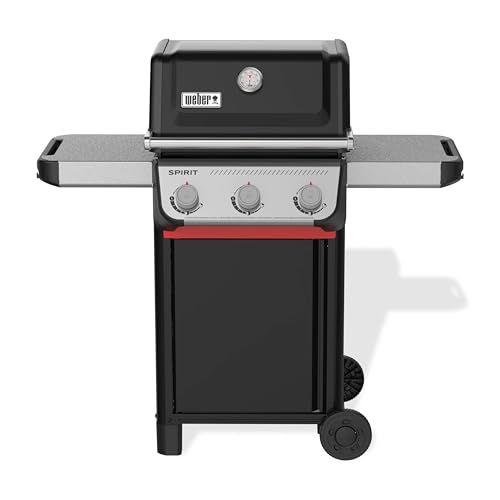
Weber Spirit E-210 — compact two-burner for small households
The Weber Spirit E-210 is the small-format representative, a two-burner propane grill that covers couples and small families with the same design language as its bigger siblings. Folding side tables shrink its footprint for storage, and two burners still allow a simple hot-and-hold zone arrangement for weeknight dinners. It sips propane compared with big four-burner models and preheats quickly, which suits spontaneous midweek cooking. Best for: couples, small patios, and first-time owners. Not suited for: multi-zone roasting or party batches, where its grates fill up fast.
Tier positioning: compact two-burner for small households. Check price on Amazon when listings are linked at publication.

Weber Spirit II E-310 — mid-range three-burner benchmark
The Weber Spirit II E-310 is the grill this category is measured against, a three-burner propane model sized for real family cooking without swallowing a patio. Its open-cart design keeps the tank accessible and the silhouette light, the porcelain-enameled cast-iron grates sear convincingly, and the burner layout makes a true two-zone fire easy to hold. Parts availability is a quiet superpower: burners, bars, and igniters are obtainable years later, which turns maintenance from a hunt into an errand. Best for: households of three to six who grill several times a week. Not suited for: cooks who regularly feed a dozen at once or who want a fully enclosed outdoor-kitchen look.
Tier positioning: mid-range three-burner benchmark. Check price on Amazon when listings are linked at publication.
Char-Broil Performance Series 4-Burner — value four-burner for big family cooks
The Char-Broil Performance Series 4-Burner represents the value end of the full-size market, where the money goes into cooking area and burner count rather than heavy materials. Four burners give genuine zone flexibility and room for party-sized batches, and a side burner handles sauces and sides. The honest trade-off is longevity of finish and components compared with pricier rivals, which regular cleaning and a good cover largely repay. Best for: budget-conscious families who need space more than heirloom build. Not suited for: coastal salt air or buyers expecting a decade of untouched shine.
Tier positioning: value four-burner for big family cooks. Check price on Amazon when listings are linked at publication.

Broil King Baron 440 Pro — heavy-grate searing specialist
The Broil King Baron 440 Pro speaks to cooks who care about the cook box itself: a deep, heavy box that holds heat like an oven and thick grates that lay down serious sear marks. Its burner system is known for even front-to-back heat, which makes it a favorite for cooks who roast as much as they grill. It represents the enthusiast tier, where the premium buys thermal mass and temperature manners rather than decoration. Best for: sear-focused cooks and outdoor roasters. Not suited for: buyers who want the lightest, most minimal cart on the patio.
Tier positioning: heavy-grate searing specialist. Check price on Amazon when listings are linked at publication.
Napoleon Rogue 425 — compact premium with folding shelves
The Napoleon Rogue 425 answers a specific problem: premium cooking in a footprint that folds down when space is tight. Its side shelves fold for storage, the grates carry Napoleon’s distinctive wave pattern that helps small items stay put, and the build quality sits clearly above entry level. It is the representative for apartment patios, townhouses, and anyone whose grill must earn a small footprint every day of the year. Best for: smaller patios that refuse to compromise on cooking quality. Not suited for: cooks who need maximum area for very large gatherings.
Tier positioning: compact premium with folding shelves. Check price on Amazon when listings are linked at publication.

Weber Genesis E-325 — premium step-up for frequent grillers
The Weber Genesis E-325 sits a tier above the Spirit line, with a larger cooking surface, a sear zone for steakhouse crusts, and an enclosed cabinet that hides the tank and stores tools. It is built for the household that grills year-round and notices construction details: the lid feel, the grate weight, the way temperatures hold when the lid opens on a cold evening. Treat it as the premium representative of the classic propane format, the grill you buy when the entry model taught you exactly what you wanted more of. Best for: committed grillers and larger families. Not suited for: small balconies or first-time buyers still learning their habits.
Tier positioning: premium step-up for frequent grillers. Check price on Amazon when listings are linked at publication.
Safety First: The Non-Negotiable Gas Grill Rules
Outdoor use only, every single time. A gas grill belongs outside in open air, well away from the house, the garage, eaves, porch roofs, and anything that can trap heat or gas. Never grill inside a garage with the door open, never under a covered patio unless the manufacturer explicitly allows the clearance, and never on a balcony where local rules forbid it. Propane is heavier than air, so leaked gas pools low and waits for a spark. Give the grill clear space on every side, keep it level on a stable surface, and treat the placement decision as a safety decision, not a styling one.
Leak-check before the season and after every tank change. Mix dish soap and water, brush it over the hose, regulator, and connections, open the tank valve with the burners off, and watch. Growing bubbles mean gas is escaping: close the valve, let everything air out, and fix or replace the faulty part before the grill is lit again. Inspect hoses for cracks, stiffness, and insect nests, because spiders love the inside of burner tubes. This five-minute ritual is the cheapest insurance in all of outdoor cooking.
Lid open before ignition, always. Gas that collects under a closed lid can ignite in a sudden fireball when you finally spark it. Open the lid, turn on one burner, ignite, confirm the flame, then light the remaining burners in sequence. If a burner refuses to light after a couple of attempts, turn everything off, keep the lid open, and wait several minutes for gas to clear before trying again. Never lean over the grill while lighting it, and keep children and pets well back during ignition.
Grease fires: burners off, lid down, never water. If fat flares into a real fire, turn the burners off if you can reach the knobs safely, close the lid to starve the flames of oxygen, and close the tank valve if the fire persists. Water on burning grease spreads the fire; a pan lid, baking soda on a small flare, or a rated fire extinguisher are the correct tools. Prevention beats reaction: empty the drip tray regularly, scrape grates after cooking, and give fatty cuts space so drippings do not overwhelm one spot.
Tanks live upright, outdoors, and ventilated. Store spare propane tanks standing upright outside the house, never in a garage, shed corner piled with gear, basement, or car trunk left in the sun. Keep the valve closed and the cap on, away from heat sources and ignition. Transport tanks upright and secured, and drive them home promptly. When a tank feels light, exchange or refill it at a proper station rather than guessing. And whatever the weather, never leave a lit grill unattended: a grill needs a cook, not an audience that wandered indoors.
Going Deeper: Heat Management in Practice
Preheating is not optional ceremony; it is half the cooking. Ten to fifteen minutes with the lid down brings grates to searing temperature, burns off residue from the last cook, and makes food release cleanly instead of tearing. Cold grates grab protein, shred fish, and weld cheese to the bars. Judge readiness by behavior, not by the lid thermometer alone: a hand held a few inches above the grate should feel heat you cannot comfortably keep there for long on high. Build preheating into your routine the way you build it into oven cooking, and half of all sticking complaints disappear overnight.
The thermometer in the lid measures the air near the top of the cook box, not the temperature at the grate where your food actually sits, and the gap between the two can be surprisingly wide. Treat the dial as a rough weather report. For serious work, an instant-read thermometer for the food itself matters far more than any gauge on the grill, because doneness lives inside the chicken breast, not in the dome. Probe the thickest part, away from bone, rest meat before carving, and let carryover heat finish the job gently on the platter.
Wind is the gas grill’s natural enemy. Gusts steal heat, push flames sideways, blow out low burners, and turn the lid thermometer into fiction. Site the grill where buildings or fences break the worst of the breeze while keeping it safely away from walls and never inside a garage. Cook with the lid down more in wind, watch low settings for flame-outs, and relight promptly and safely with the lid open if a burner dies. A grill that holds temperature on a breezy evening is one whose cook planned for the weather instead of cursing it.
Going Deeper: Grates, Burners and the Parts That Wear
Cooking grates come in three main materials, and each cooks a little differently. Porcelain-enameled cast iron holds heat beautifully and leaves deep sear marks, but the coating chips if you bang it with metal tools, and chipped spots rust. Bare cast iron sears hardest of all and rewards cooks who season and oil it faithfully. Stainless steel rod grates heat a touch less aggressively yet shrug off weather, wire brushes, and years of neglect, which is why busy households often end up happiest with them. Whatever the material, thicker, heavier grates store more heat and recover faster when cold food lands.
Between the burners and the grates sits the system that manages drippings: angled flavorizer bars, heat tents, or plates that vaporize juices into the smoky sizzle that makes grilled food taste grilled. This system also shields burners from corrosive drips and spreads heat more evenly. It is a wear part. When bars rust through, flare-ups spike and hot spots appear, so inspect them each spring, wire-brush off scale, and replace them when holes appear. Keeping this layer healthy is the difference between a five-year grill and a ten-year grill.
Ignition sounds trivial until it fails on a rainy Friday with guests arriving. Push-button electronic igniters that spark each burner independently are the most convenient and the easiest to troubleshoot, because one dead module does not kill the whole grill. Battery-powered systems need an occasional battery swap, which is a small price for reliable starts. Whatever system a grill uses, learn the manual lighting hole location before you need it, keep a long lighter in the drawer, and remember the golden rule: lid open, gas on briefly, light promptly, and if it does not catch, turn everything off and let the gas clear.
Going Deeper: Cooking More Than Burgers
Vegetables are where a gas grill quietly outshines every indoor method. Direct heat blisters peppers, chars corn in its husk, caramelizes onion slabs, and gives zucchini and asparagus the smoky edges that make people eat vegetables voluntarily. A perforated grill basket or sturdy skewers keep small pieces out of the fire, a light coat of oil prevents sticking and drying, and the cool zone lets thick items like potato wedges finish without scorching. Season after grilling as well as before, because charred edges love a final sprinkle of salt and a squeeze of citrus.
Fish tests a grill and a cook. Fillets stick when grates are dirty, cold, or dry, so preheat thoroughly, brush the grates clean, oil the fish rather than the metal, and do not move the fillet until it releases on its own. Firm fish like salmon, swordfish, and tuna steaks grill directly with confidence; delicate sole and flounder belong in a basket, on a plank, or in a foil packet with aromatics. Skin-on fillets placed skin down are the forgiving middle path, crisping the skin while the flesh cooks gently through.
Resting is the step weeknight cooks skip and steakhouse cooks never do. Off the heat, muscle fibers relax and juices redistribute instead of flooding the cutting board. Tent thick steaks, chops, and roasts loosely and give them a few quiet minutes while you set the table and finish the sides. The grill rewards this patience twice: the meat eats juicier, and the pause lets you clean the grates while they are still hot, which is the easiest moment of the entire cook to do it. Build the rest into your timing and everything downstream gets calmer.
A rear rotisserie burner turns a gas grill into a self-basting roaster for whole chickens, pork loins, and leg of lamb, with drippings falling into a pan instead of onto the burners. The results are spectacularly juicy, and the show alone entertains guests. The trade-offs are setup time, counterweight balancing, and another burner to maintain. If Sunday roasts outdoors sound like your idea of happiness, prioritize a model designed for rotisserie cooking with a proper rear burner. If weeknight speed is your life, the standard burners will carry you perfectly well.
Going Deeper: Ownership, Season After Season
Gas grills work all winter, and cold-weather cooks are some of the most satisfying. Expect longer preheats, keep the lid closed against the wind, position the grill out of gusts while keeping it safely clear of the house, and budget extra propane because cold tanks and cold air both tax output. Snow brushed off the cover, a cleared path to the patio, and a headlamp for early darkness turn winter grilling from ordeal into ritual. The reward is real: a seared steak in January tastes like a small victory over the season.
Going Deeper: Fuel, Placement and Everyday Discipline
Natural gas models trade mobility for endless fuel: no tanks, no refills, no mid-cook surprises, just a hose connection to the house line installed by a qualified professional. The grill stays where the line is, forever, which suits a fixed outdoor kitchen perfectly and frustrates anyone who rearranges the patio seasonally. Conversion between propane and natural gas is not a casual swap; orifices and regulators differ, and only manufacturer-approved kits fitted correctly belong anywhere near this job. Choose the fuel by your layout and habits first, then shop models, because changing your mind later is the expensive direction.
Flare-ups are burning fat, nothing more mysterious. They happen when drippings hit hot surfaces faster than they can vaporize, and they are managed, not feared. Move food to a cooler zone, close the lid briefly to cut oxygen, and let the fat burn off. Trim excess fat, pat marinated food dry, and keep a clean drip tray so fuel for flares stays scarce. Never spray water into a grease fire, and never carry a flaming pan across the patio. A cook who understands flare-ups stays calm, keeps the lid strategy ready, and serves food that tastes of sear, not soot.
Four tools do ninety percent of gas grill work: long tongs that keep hands away from heat, a wide sturdy spatula, a brass or stainless brush or coil cleaner for the grates, and an instant-read thermometer. Add a spray bottle of water for minor flare management on the grates only, heat-resistant gloves for moving hot grates and pans, and a chimney-free mindset, because gas needs no fire-starting kit. Buy tools long enough that your knuckles stay out of the fire zone, sturdy enough not to flex under a heavy brisket, and simple enough to wash without a manual.
Ownership Realities Nobody Mentions in the Store
How long should a gas grill last? With sound construction, a cover habit, and wear parts replaced as they age, a mid-range grill serves a decade; premium builds stretch beyond that. The cook box and frame are the skeleton, burners and bars the consumables, and the igniter the occasional small annoyance. Neglect inverts the math: an uncovered budget grill in coastal air can be scrap in three seasons. Lifespan is therefore less a specification than a relationship between build quality and owner behavior, which is why the same model earns fierce loyalty from one street and complaints from the next.
Secondhand gas grills deserve special caution, because you inherit the previous owner’s maintenance and mistakes. Inspect burners, hoses, and the regulator with fresh suspicion, replace the hose and any doubtful part without debating it, and run the full soapy-water leak test before the first lighting in your yard. Check that the tank is in date and the valve modern, and walk away from any grill with rust in the cook box floor or a history you cannot verify. A cheap grill that needs its entire gas system replaced is not cheap, and safety parts are never the place to save.
Accessories divide into the essential, the delightful, and the drawer clutter. Essential: the cover, the spare tank, long tongs, a spatula, a brush or coil cleaner, gloves, and an instant-read thermometer. Delightful, when your menu calls for them: a griddle plate, a basket for vegetables and fish, a rotisserie kit, a pizza stone. Clutter: most novelty gadgets with a single trick and a celebrity name. Buy in that order, let your actual cooking nominate each purchase, and your accessory shelf will stay as honest as your grill choice.
Apartment and townhouse cooks face rules before they face choices. Many buildings and local codes restrict or forbid gas grills on balconies, limit tank sizes, or require distances from the structure that a small balcony cannot offer. Read the lease and the local fire rules before buying anything, because the finest compact grill is worthless if it cannot legally live where you do. Where gas is allowed, small two-burner models with folding shelves are the honest fit; where it is not, the same cooking ambitions belong to an electric grill or a shared courtyard setup.
Household Safety Culture Around the Grill
Households with children need a grill routine, not just a grill. Establish the hot zone as a no-go area whenever the grill is lit or cooling, because a cook box stays burn-hot long after the knobs turn off. Light and tend the grill with children at a distance, keep the tank valve closed when the grill is idle, and store lighters and tools out of reach. Teach older children the rules as kitchen rules: the grill is an oven that lives outside, and it commands the same respect, which, taught early, becomes permanent common sense.
Pets and grills mix poorly by default. Dogs station themselves under drip trays, cats investigate warm shelves, and both appear exactly when your hands are full of hot food. Keep animals away from the cooking area while the grill runs and while it cools, dispose of grease and drippings where no pet can reach them, and never leave a lit grill unattended with a loose dog in the yard. The safety rules in this article protect the whole household, and the four-legged members are simply the ones least able to read them.
Grill placement is also a neighborly art. Smoke and cooking smells drift, and a grill parked under a neighbor’s open window or against a shared fence makes enemies out of people who might have become guests. Keep the grill in open air on your own space, mind the wind direction on big cooks, and never let placement convenience override the safety clearances from the house, garage, and eaves. The cook who respects both the fire code and the fence line gets invited to more patios than the one who treats placement as an afterthought.
Finally, keep a simple log in your head of what worked: which zone ran hot, which marinade scorched, which cut needed two more minutes in the cool zone. Gas grilling rewards this quiet record-keeping more than any other outdoor method, precisely because its heat is repeatable. The cook who notes the lessons of one dinner serves a better next dinner, and within a single season the grill stops being equipment and becomes a system you understand, which is when outdoor cooking turns from occasional success into reliable craft.
In the Kitchen’s Shadow: More Ways a Gas Grill Earns Its Keep
A gas grill makes genuinely good pizza, which surprises people until they try it. The closed lid turns the cook box into a fierce little oven, a preheated stone or steel evens the bottom heat, and two-zone control lets you slide the pie away from direct flame while the toppings finish. Keep toppings dry and modest, because a loaded raw pizza steams its own crust. Work in small pies rather than one giant one, rotate for even browning, and let the stone recover between rounds. Pizza night alone justifies the grill for many households.
Breakfast on a gas grill is the trick nobody expects and everybody repeats. A cast-iron skillet or flat griddle plate over the burners handles eggs, pancakes, bacon, and hash browns while the kitchen stays cool and un-smoky. The grill’s size lets you cook for a crowd in one pass, and the coffee tastes better outside as a matter of natural law. Keep temperatures moderate, because breakfast foods punish scorching, and use the cool zone as a warming shelf for finished batches while the last eggs set.
A gas grill reheats leftovers better than the appliances people usually reach for. Pizza regains its crust over low direct heat with the lid down. Sliced steak warms gently in the cool zone without cooking further into sadness. Roasted vegetables recrisp at the edges, and yesterday’s chicken becomes today’s salad topping with a quick char. Because the grill is already part of the household rhythm, using it for leftovers costs no setup drama, and the results quietly outperform the microwave in every category except raw speed.
Dessert is the gas grill’s party trick. Halved peaches, pineapple spears, and stone fruit caramelize over clean medium heat in minutes, their sugars darkening into something that tastes like far more effort than it was. Pound cake slices toast beautifully for strawberry shortcake, and a skillet cobbler bakes happily in the closed grill while the table clears. Keep the grates clean so dessert does not taste of dinner, moderate the heat, and remember that fruit goes from caramelized to burnt while you are telling one short story.
Technique Notes From Many Summers
Chicken is the gas grill’s examination subject, because it punishes both undercooking and scorching. Bone-in pieces belong over indirect heat after a brief sear, where they can render and cook through without the skin carbonizing. Boneless breasts want a hot, fast cook and an early exit, pulled the moment they are done and rested before slicing. Dark meat forgives; white meat keeps score. An instant-read thermometer removes the guesswork entirely, and brining or a simple salt-ahead seasoning keeps lean cuts juicy against the grill’s drying heat.
Burgers reveal a grill’s manners quickly. A hot grate, a gentle hand, and no pressing: pressing squeezes juice into the fire and buys you a flare-up and a dry patty in one motion. Make patties slightly wider than the buns to allow for shrinkage, season boldly, and flip once when the meat releases cleanly. Cheese goes on in the final minute under a closed lid. Toast the buns on the cool zone while the patties rest, and the humble burger becomes a reliable test that your zones, preheat, and patience are all working.
Steak is where sear, rest, and slicing decide everything. Bring the meat toward room temperature while the grill preheats fully, salt it well, and cook over the hottest zone your grill can honestly hold. Thick cuts finish in the cool zone after the crust forms, which is two-zone cooking earning its reputation. Rest the steak, slice against the grain, and finish with the juices from the board. A gas grill treated this way produces steak that silences most arguments about fuel, at least until the charcoal devotees start talking about smoke.
Kabobs and skewers suit gas grills beautifully because the zones let you manage mixed ingredients. Group items with similar cooking times on the same skewer instead of alternating everything decoratively, because peppers and chicken do not finish together no matter how pretty the pattern looks. Flat or double skewers stop the spinning that makes turning a wrestling match. Leave small gaps between pieces so heat circulates, oil the food rather than flooding the grates, and use the cool zone to hold finished skewers while the last batch catches up.
A Closer Look: What to Inspect on a Gas Grill Before You Commit
Listings present a gas grill at its best, so this section slows the assessment down and looks at the evidence an individual model offers: its construction, its finish, its listing detail and the checks you can run before and just after it arrives. The aim is a verdict based on inspection rather than impression.
Start With Your Space and Your Routine
Take a photograph of the space before you order and mark the intended position of the gas grill on it, then revisit that photo whenever a listing tempts you toward a larger or different style. Keep a short note of the questions each listing leaves unanswered, and treat a seller who answers them clearly as a better prospect than one who repeats general claims. Households with children or pets put different demands on a gas grill than the listing photographs suggest, so judge edges, stability and cleanability against your real household, not a styled one. Read the listing for what it does not say as carefully as for what it does, because missing information about materials, assembly or care is itself a useful signal when you compare gas grill options.
A closer look at any single gas grill should start with the unglamorous evidence: the underside, the back, the inside and the fittings, because review photographs concentrate on the angles that flatter it most. The best gas grill for a rented home may differ from the best for an owned one, because fixings, marks and alterations carry different consequences in each case. Apply the same checks to each shortlisted example, whether that is the Weber Spirit E-210; the Broil King Baron 440 Pro; the Char-Broil Performance Series 4-Burner, because consistent testing is what makes the differences between models visible. A return is easiest when you have kept the packaging until you are sure, so give the gas grill a fair trial period in its real position before you break down boxes and dispose of padding.
When Small Problems Appear
Consider the busiest version of the day, not the calmest one, and ask whether the gas grill still works when people are hurrying, carrying things or sharing the same space. A slight wobble, a stiff action or a small misalignment on day one rarely improves on its own, so address it during setup while adjustments are still easy to make. If a part of the gas grill can be replaced, refreshed or re-covered separately, that option can extend its useful life well beyond the point where a sealed design would be thrown out. Dust, moisture, sunlight and heat each age Patio & Outdoor Living items in different ways, so match the finish and material of the gas grill to the conditions of the room or outdoor spot it will occupy.
Compare how each option handles the in-between moments, such as being half full, partly open, moved aside or used in a hurry, because daily life happens mostly in those moments. Pay attention to how the gas grill is described for the parts you cannot see, and treat vague language there as a reason to ask questions rather than as reassurance. If you shop with someone else, agree the must-haves together before looking, so that the gas grill you choose is a shared decision rather than one person’s compromise discovered later. Recheck any adjustable part of the gas grill after the first week of use, once materials have settled and the household has stopped being careful with it.
If two options look nearly identical, compare the parts you will touch every day, since those contact points decide whether a gas grill feels solid or flimsy after the novelty wears off.
A Short Decision Checklist
- How the gas grill will be cleaned in an ordinary week
- Who will use the gas grill most, and any limits they have
- Where the gas grill and its accessories will be stored when not in use
- The measured space, including clearance to use and clean around the gas grill
- Packaging kept until the gas grill has passed its first trial in place
- What your current arrangement does well that the gas grill must not lose
- Delivery path, from the door to the final position
- The one feature you will not compromise on
Taken together, these checks take only a little time, yet they answer the questions that decide whether the gas grill suits your home, your household and your routine, and they do so before money changes hands rather than after.
Frequently Asked Questions
What size gas grill does a family of four need?
Most families of four thrive on a three-burner grill: room for a full dinner at once, a genuine two-zone fire, and space to add vegetables beside the main course. Two-burner models work when meals stay simple and batches are acceptable; four-burner models earn their footprint when gatherings are frequent. Think in terms of your busiest ordinary evening rather than your largest party, because you can batch-cook for guests but you preheat empty space every single night on an oversized grill.
How long does a propane tank last on a gas grill?
It depends on burner count, settings, and weather, but a standard household tank typically carries a family through many weeks of regular weeknight grilling. The practical habits matter more than the arithmetic: keep a spare tank so an empty never interrupts dinner, judge fullness by weight or a gauge rather than hope, and remember that long high-heat sessions and windy cold days burn fuel faster. When the flame weakens and the tank feels light, swap early and refill the spare at your convenience.
How often should I clean a gas grill?
Brush the grates after every cook while they are hot, empty the drip tray every few weeks, and do a deeper clean of grates, heat deflectors, and the cook box a few times each season. Once a year, inspect burners for blocked ports and rust, check hoses for cracks, and test all connections with soapy water. This rhythm keeps flavors clean, holds flare-ups down, and catches wear while parts are cheap. A grill cleaned in small regular steps never needs the dreaded full-day rescue scrub.
Is natural gas better than propane for a grill?
Neither is better in the abstract; they suit different homes. Propane is portable, available everywhere, and lets the grill live anywhere in the yard, at the cost of tank swaps and refills. Natural gas never runs out and suits a fixed outdoor kitchen, but the grill is anchored to the line and installation belongs to a qualified professional. Heat and cooking results are effectively equivalent when each model is set up correctly. Choose by layout and habit, and never attempt an unapproved conversion between the two.
How do I stop flare-ups on a gas grill?
Manage the fat and you manage the flares. Trim excess fat, keep the drip tray clean, cook in two zones so food can retreat from flames, and close the lid briefly to starve a flare of oxygen. Pat wet marinades dry, because dripping liquid carries fat into the fire. Small licks of flame kissing the food are normal grilling; sustained fire is a signal to move the food and clean the grill soon. Never use water on a grease fire, and keep an extinguisher rated for grease nearby.
What should I do if grease catches fire in my grill?
Turn the burners off if the knobs are safely reachable, close the lid to cut off oxygen, and close the tank valve if the fire continues. Never use water on burning grease, because it splashes the fire outward. A small flare can be smothered with the lid or treated with baking soda; a real fire calls for a grease-rated extinguisher or the fire service. Afterwards, let everything cool completely, then clean the drip tray and cook box, because leftover grease is the fuel for the next incident.
Related Guides and Next Reads
our single-model deep-dive gas grill review
best grill covers to protect your investment
best under-grill mats for decks and patios