Disclosure: As an Amazon Associate, dailyhomedecorating.com earns from qualifying purchases. Links on this page are affiliate links; they cost you nothing extra. Prices and availability change often, so check the current Amazon listing before you buy.
The chandelier vs pendant light question is the most common fork in ceiling lighting, and it is usually asked wrong — as if the two were rival answers to the same question. They are not. A chandelier is a room’s centre: one branched fixture that gives a space its visual anchor and its ambient light together. A pendant is a room’s tool: one or more single-source fixtures hung to put a pool of light exactly where a task or a surface demands it. The quick verdict: choose the chandelier where a room wants a centre — over the dining table, in the entry, above the seating group; choose pendants where a surface wants light — over the island, the sink, the desk, the bedside; and in open-plan homes, expect the honest answer to be both, each doing the job the other does badly. Everything below compares the two criterion by criterion, with a verdict at the end of each, so the decision for your room rests on your facts rather than on a showroom’s preference.
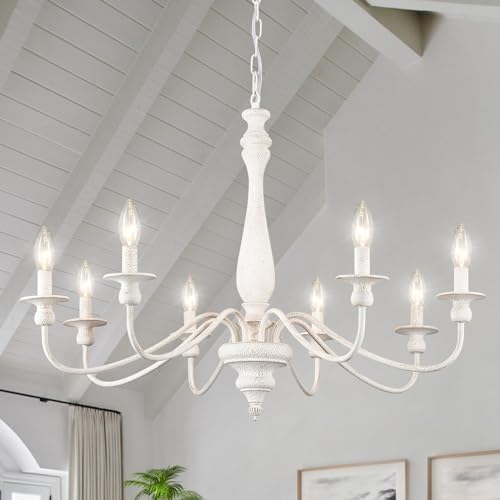
Key Takeaways
- Chandeliers light rooms; pendants light places. Most disappointments come from asking one to do the other’s job.
- Over a dining table the chandelier wins on composition and evenness; over a kitchen island, pendants win on task light and flexibility.
- Pendants are cheaper to buy, easier to install and simpler to change; chandeliers repay their extra effort with presence no pendant matches singly.
- Ceiling height discriminates: pendants tolerate lower ceilings over surfaces; chandeliers need either a table beneath or seven feet of clearance.
- The two combine well — a chandelier as the room’s centre with pendants at its working edges is the mature open-plan answer.
In this guide
Chandelier vs Pendant Light: The Side-by-Side
| Criterion | Chandelier | Pendant light |
|---|---|---|
| Primary job | Room centre + ambient light | Focused light over a surface or spot |
| Light pattern | Multi-source, wide, soft shadows | Single-source pools, defined edges |
| Best positions | Dining table, entry, living centre, bedroom | Island, sink, desk, bedside, reading corner |
| Visual presence | High — the room’s anchor | Moderate singly, high in composed groups |
| Installation | One box, but weight, assembly and box rating matter | One box per pendant; light, simple, but multiples multiply the work |
| Flexibility later | Low — a commitment measured in years | High — shades and fixtures swap easily |
| Cleaning | The category’s highest (crystal, beads) | Low — a shade to wipe |
| Cost shape | One significant fixture + installation | Smaller units, but groups add up |
| Low ceilings | Over tables only | Over surfaces only — same rule, smaller scale |
The table’s most important row is the first. A chandelier that is asked to light a worktop will fail charmingly; a pendant asked to crown a dining room will fail plainly. Keep the jobs separate in your mind and most of the criteria below settle themselves.
Light Quality and Spread
The chandelier’s light arrives from many small sources at once, which softens shadows, evens faces and fills a room with ambient glow that has no single point of glare — the quality that makes dining rooms and entries feel composed. Its weakness is focus: ambient light is nobody’s task light, and reading, chopping or paperwork under a chandelier alone is possible but never excellent. The pendant’s light is the inverse: a defined pool, bright where it lands, with shadow at its edges — superb over an island where knives and pans need seeing, over a desk, over a page. Its weakness is atmosphere: a room lit only by pendants reads as a series of lit spots in a dim field, which suits a kitchen’s working hours and flatters no one’s dinner party. In practice the pendant’s pool can be softened with a wide shade or an opal bulb, and the chandelier’s ambience can be supplemented by lamps — each can borrow a little of the other’s virtue, at the cost of admitting the other was needed. Verdict: chandelier for ambient quality, pendant for task quality — and layered rooms use both.
Presence and Composition
A chandelier composes a room from the ceiling down: it declares the centre, gathers the furniture beneath it into a group, and gives the doorway view a subject. This is a power no single pendant possesses, because a pendant’s scale is deliberately modest — it is punctuation, not the sentence. But pendants compose in a different grammar: repetition. A row of three over an island, a pair flanking a bed, a cluster at varied heights in a stairwell — repetition creates rhythm, and rhythm is its own kind of presence, more architectural and less ceremonial than the chandelier’s. The chandelier’s presence is also a commitment: it is the room’s most visible object and the hardest to change, so its style sets the room’s terms for years. The pendant’s presence is revisable — shades swap in minutes, fixtures in an afternoon — which makes pendants the natural choice for households whose taste is still moving. Verdict: chandelier for a single commanding centre; pendants for rhythm, repetition and rooms whose style is still evolving.
Installation and the Ceiling
Both fixtures hang from ceiling boxes, and there the resemblance ends. A chandelier concentrates everything into one installation: one box that must be rated for real weight — a braced, fixture-rated box for the heavier crystal designs — one wiring job, but also substantial assembly on the decorative side and a measured hanging height. A pendant is light and simple per unit, often a genuine like-for-like swap, but groups multiply the questions: three pendants over an island may need three boxes where the ceiling currently has one, and adding boxes is electrician work with ceiling repair behind it. Renters feel the difference sharply: one pendant in an existing box is a modest, reversible favour to ask a landlord; a chandelier is a negotiation. Both share the non-negotiable safety grammar — breaker off, tester verification, supported weight — set out in full in how to install chandelier. Verdict: pendant for ease per fixture; chandelier for one-and-done permanence where the box allows it.
Cost, Honestly Counted
Neither side wins the money argument outright, because their cost shapes differ. The chandelier is one significant purchase plus its ecosystem — bulbs as a matched set, a dimmer, possibly a box upgrade, possibly an electrician — and then very little for a decade. Pendants are individually gentler, but honest accounting counts the group: three island pendants with their bulbs, their possible extra boxes and their installation can approach a mid-tier chandelier’s bundle, while delivering a completely different kind of value. Where pendants genuinely save is at the single-fixture scale — one bedside, one reading corner — and in reversibility: a pendant mistake is a small, sellable object, while a chandelier mistake is a project. Where the chandelier saves is in consolidation: one fixture doing the centre-and-ambient job that would otherwise take a ceiling light plus lamps plus the room’s missing focal point to replace. Verdict: pendants for small, reversible budgets; the chandelier’s bundle is competitive exactly where its job is genuinely needed.
Flexibility and Change
Houses change their minds, and the two fixtures answer change oppositely. The pendant is the flexible citizen: raise it, lower it, re-shade it, move it to another room’s box in an afternoon, group it or split the group. The chandelier is the committed citizen: chosen by arithmetic, installed as a project, and expected to serve through several redecorations — which its classic families do gracefully and its fashionable ones do not. Households in motion — renters, first-home owners still finding their taste, rooms awaiting renovation — should weight flexibility heavily, and it is pendants. Households furnishing a settled room for a settled decade should weight it lightly, and there the chandelier’s permanence converts from cost to virtue: buy once, correctly, and the question never reopens. Verdict: pendants for lives in motion; chandeliers for rooms at rest.
Cleaning and Upkeep
The shortest criterion and the least close. A pendant’s upkeep is a wiped shade and an occasional bulb; even a group of them is an hour a year. A chandelier’s upkeep is the category’s standing tax — crystal drops and bead strands collecting dust in the least reachable place in the room, on the schedules detailed in chandelier pros and cons. Metal and drum chandeliers narrow the gap considerably, and no chandelier is unmaintainable; but a household choosing between the two on a low ceiling’s margin should know that the pendant also wins the decade’s cleaning ledger outright. Verdict: pendant, decisively — the one criterion with no conditions attached.
Strengths and Trade-Offs of Each Side
The chandelier’s strengths: it gives a room a centre and composes the furniture beneath it; its multi-source light is the softest, most flattering ambient light available from a ceiling; and it consolidates presence, light and long-term value into one durable, repairable purchase. Its trade-offs: installation is a project with a genuine safety dimension; cleaning is a recurring appointment; and its style is a years-long commitment that fashionable designs can make regrettable.
The pendant’s strengths: it puts light precisely where work and life happen; it installs easily, changes cheaply and composes in flexible groups; and it asks almost nothing in upkeep. Its trade-offs: singly, it cannot anchor a room or light one evenly; its pools leave the rest of the room dim by design; and groups quietly accumulate cost and ceiling boxes until the “cheap” option has spent like a fixture.
Who Each Option Suits — and Who Should Skip Each
The chandelier suits the dining room that hosts, the entry that greets, the bedroom being made into a retreat and the living room with a seating group to crown — in houses with the ceiling height and the settled tenure to honour its commitment. Skip it where ceilings are low over open floor, where the tenancy is short, or where the room’s centre already belongs to a view or a screen. The pendant suits kitchens and their islands above all, then desks, bedsides, reading corners, hallways and every surface that works for a living; it suits renters and the style-undecided as the reversible choice. Skip pendants as a dining room’s sole centrepiece — the room will feel lit but uncomposed — and skip them anywhere their pool would glare into seated eyes at the height you can actually hang them. The full decision framework, with sizing for both, is in chandelier buying guide, and the step-by-step choice procedure in how to choose a chandelier.
How to Decide: Questions That Branch
Answer in order; the first decisive answer usually settles it. One: what is beneath the fixture? A table people gather around points to the chandelier; a surface people work at points to pendants; open floor with seven feet of clearance admits either and asks the next question. Two: does the room have a centre, or does it need one? A room that feels unfinished despite good furniture is asking for the chandelier’s anchor; a room that feels composed but dim at its edges is asking for pendants. Three: how high is the ceiling, honestly measured? Low ceilings push both options over surfaces and push the chandelier out of open floor entirely. Four: how long will this arrangement serve? Under two years favours pendants’ reversibility; beyond five favours the chandelier’s permanence. Five: whose temperament maintains the house? A household that will not dust drops should let the pendant — or a metal chandelier — win by default. Six: what does the ceiling already offer? One central box in a dining room is the chandelier’s birthplace; a row of boxes over an island is the pendants’.
Where to Buy: Representative Models for Each Side
For the chandelier side: Saint Mossi Modern K9 Crystal Raindrop Chandelier
The contemporary crystal reference: a rectangular field of staggered drops that gives a dining room its centre and its softest light in one fixture, at a mid-tier position. It represents the chandelier side at full strength — maximum presence, maximum ambient quality, and the family’s full assembly and cleaning commitment accepted knowingly. Check price on Amazon for the current listing, and budget the dimmer and bulb set alongside it.

For the chandelier side, softly: MRHYSWD Farmhouse Wood Bead Chandelier
The bead design makes the chandelier’s case in a warmer dialect — centre and composition without glamour, light without sparkle — and it is the chandelier-side answer for casual rooms where crystal would argue with the furniture. Light for its size, kind to older ceiling boxes, and the survey’s easiest chandelier to live with day to day. Check price on Amazon; note the style flavour as part of the purchase.
For the pendant side: Globe Electric Pendant Light
Globe Electric’s pendant range represents the pendant side’s virtues plainly: single-source fixtures in the metal-and-glass idiom that kitchens and islands are furnished with, hung singly over a sink or in a composed row over a worktop. The representative purchase is rarely one — it is the matched set, with shades chosen for the pool you want: open metal for drama and direction, opal glass for softness. Check price on Amazon for the current listing of the configuration you need, and count the group’s full cost, boxes included, before comparing it against a chandelier’s bundle.

For the pendant side, refined: Kichler Pendant Light
Kichler’s pendant designs carry the pendant idea upmarket — finer finishes, more deliberate silhouettes, the fixtures chosen when a pendant must hold its own in a finished room rather than merely light a worktop. A pair of Kichler pendants flanking a bed, or a single one composing a reading corner, shows the pendant side at its most decorative; even here, the honest note stands that the effect is rhythm and focus, not the room-centring anchor the chandelier provides. Check price on Amazon, and compare against the chandelier side only where the jobs genuinely overlap — over the dining table.
Final Recommendation by Use Case
Dining room: chandelier, sized to the table, dimmed — the comparison’s clearest verdict, with the models surveyed in chandelier reviews. Kitchen island: pendants, in a row, at task brightness — equally clear. Entryway: chandelier, because the room’s whole job is impression. Bedroom: chandelier for the retreat effect where the ceiling allows, pendants at the bedside for reading — the room that most often wants both. Living room: chandelier where a seating group defines a centre; pendants where the room is a passage of activities rather than a composition. Apartment: pendants by default for reversibility, a compact chandelier where the tenancy and the landlord allow the upgrade — sized options are gathered at best chandelier for apartments. Open plan: both, zoned — the chandelier declaring the dining area, pendants working the kitchen’s surfaces, each relieving the other of the job it does badly. That last answer is the comparison’s real conclusion: the two fixtures are not rivals for a crown but colleagues in a layered room, and the households that understand this stop choosing between them and start placing them.
Scale and Proportion
The two fixtures fail by scale in opposite directions, and knowing the failure modes helps a buyer audition each honestly. The chandelier’s failure is timidity: sized by fear rather than by the rule — room length plus width in feet read as inches — it arrives as an apologetic object that composes nothing, and the room is worse than unlit-by-it because money and a ceiling centre have been spent on a shrug. The pendant’s failure is loneliness: one modest fixture centred over a dining table, correctly hung and perfectly nice, reads as a placeholder for the fixture the room is waiting for. Groups cure the pendant’s failure by rhythm; nothing cures the chandelier’s except the right diameter. Proportion rules differ accordingly. The chandelier is sized to the room and checked against the furniture; pendants are sized to the surface — a shade roughly a third of the island’s width per unit is the working start — and checked against each other, since a row lives or dies by its spacing and its shared hanging height. Verdict: the chandelier demands the braver purchase; pendants demand the more careful arrangement. Households confident in measurement should not fear the first; households confident in composition need not fear the second.
Control, Dimming and Smart Behaviour
Both fixtures live on ordinary circuits and both accept modern control, but their control personalities differ in ways daily life notices. The chandelier is a single light with many bulbs: one dimmer governs the whole composition, scenes are simple — full, dinner, late — and smart behaviour arrives through one smart dimmer that treats the frame as one instrument. The pendant group is several lights pretending to be one: on a shared circuit they dim together like the chandelier, but they also permit per-fixture smart bulbs, varied colour temperatures across a row, and the playful asymmetries — one lit pendant over a sleeping kitchen’s sink at midnight — that a single fixture cannot perform. The pendant’s flexibility has a shadow: mismatched smart bulbs across a row drift in colour and behaviour, and the discipline of matched sets applies to pendants exactly as it does to the chandelier’s frame. The chandelier’s simplicity has a shadow too: its whole light is one decision, so a room needing two moods at once — bright island, dim table — must add the pendant layer anyway, which is the hybrid conclusion arriving by the control road. Verdict: chandelier for unified scenes; pendants for granular control; open plans, again, for both on separate dimmers.
Durability and Lifespan
Both fixtures are among the longest-lived objects a house contains, and their longevity differs in texture rather than in years. The chandelier’s life is singular and cumulative: one frame, maintained, outlasts redecorations and often tenancies, its only consumable the standard bulbs it shares with every lamp in the house. Its failure modes are slow and visible — a finish dulling under wrong cleaners, a fitting loosening across years of thermal cycles — and both are managed by the annual check this cluster’s guides repeat like a refrain. The pendant’s life is modular: shades dent, cords fray at their entries, a single unit in a row can fail and be replaced without its siblings noticing, provided the design remains in production — the pendant’s one longevity risk, since fashionable pendant lines turn over faster than chandelier families and a discontinued shade can orphan a row’s symmetry. The prudent pendant buyer purchases a spare shade at the outset for exactly this reason, mirroring the chandelier buyer’s spare drops. Verdict: the chandelier for singular permanence; pendants for repairable modularity, with a spare shade bought on day one.
Safety, Compared Plainly
The safety comparison reduces to weight and reach. The chandelier concentrates weight — in large crystal designs, very real weight — over the places people gather, which is why its installation grammar is the stricter one: a fixture-rated, braced box verified before hanging, hardware torqued and checked annually, and an electrician wherever doubt exists. The pendant’s lightness relaxes the box question almost to nothing, but pendants introduce their own geography of risk: hung over islands and stairs, they must clear raised arms, tall cooks and carried platters, and glass shades over food preparation deserve a moment’s thought that a dining chandelier never asks for. Both fixtures share the foundational rules — power off at the breaker, verified with a tester, never work on a live circuit, support the fixture’s weight with your hands or a helper rather than with the wires at every moment of the installation. Neither fixture, correctly installed, is a hazard; both, casually installed, are exactly the kind of hazard that gives ceiling lighting its occasional headlines. Verdict: pendants forgive more; the chandelier demands — and rewards — the full safety discipline.
The Doorway Test
Stand in the doorway of the room in question, at the hour the light matters, and the comparison often settles itself in five seconds. If the room’s problem is visible from the door — no centre, no subject, furniture floating in an uncomposed field — the chandelier is the answer and the pendants are garnish. If the room composes beautifully from the door and fails only at its surfaces — the island dim at its ends, the desk in shadow, the bedside dark — pendants are the answer and a chandelier would be a beautiful distraction from the actual lack. The doorway test works because it separates the two jobs with the eye rather than the catalogue: centres are seen from doors; tasks are seen from chairs. Buyers who run it before shopping make this comparison’s correct decision more reliably than buyers who memorise its criteria, which is why every section of this page is, in the end, an attempt to teach the test.
Room-by-Room Duels
The criteria above are the theory; rooms are the practice, and four rooms stage this duel often enough to deserve individual rulings. The kitchen first, because it is the pendant’s homeland with one chandelier-shaped exception. Over the island and the worktops, pendants win without a serious contest — task light, wipeable shades, no crystal anywhere near the cooking plume. But many kitchens contain a breakfast table, and over that table the duel reopens: a small chandelier — bead or metal, never fabric, never precious crystal — gives the eating corner a centre inside a working room, and households that install one report the corner becoming the kitchen’s social heart while the pendants handle the labour a metre away. The kitchen’s verdict is therefore not pendant but pendants-plus, in the room where plus is most often forgotten.
The bedroom stages the duel at its most intimate. The chandelier’s case: the room’s whole purpose after dark is rest and retreat, a central soft light serves it, and the fixture over the bed is the room’s portrait. The pendant’s case: reading happens at the bedside, not the centre, and a pair of pendants frees the nightstands, focuses the page light and leaves the ceiling’s centre free for calm emptiness or a quieter fixture. The ruling depends on the household’s habits with unusual honesty — readers in bed take the pendants or the combination; households for whom the bedroom is purely for sleep take the chandelier and its dimmer. The bathroom, briefly, belongs to neither contestant in most homes — moisture, codes and mirror lighting rule it — and this comparison declines to pretend otherwise; where a large bathroom has a freestanding tub and a dry zone, a small chandelier rated for the environment is a known luxury, chosen as décor with professional advice on the electrical specifics.
The hallway and stairwell stage the duel nobody expects. A single pendant at a landing is a competent, forgettable answer. A chandelier in a stairwell with height is a transformation — the one fixture seen from two floors, through the door, every arrival and departure — and stairwells are where the chandelier’s presence-per-effort ratio peaks. Conversely, the long low hallway belongs to a rhythm of pendants or flush lights, and forcing a chandelier’s centre onto a corridor misreads both the room and the fixture. The duel’s deepest pattern is visible across all four rooms: the chandelier wins where a space is a destination, the pendant wins where a space is a station or a surface, and the wise house assigns each room its nature before assigning it its light.
The Hybrid Strategies
Because the mature answer is so often both, the workable hybrids deserve naming. The zoned open plan: chandelier over the dining zone, pendants over the kitchen island, one finish family across both, independent dimming per zone — the reference arrangement for the contemporary house, and the one this comparison recommends most often in practice. The centre-and-satellites plan for a large living room: a chandelier composing the seating group, a pendant composing a reading corner or a desk alcove within the same room, the hierarchy kept clear by scale. The pair substitution: two small chandeliers where one pendant row was planned over a long table, or the reverse — chosen when the room’s length makes a single centre unconvincing. And the staged plan for households in transition: pendants now, in the boxes that exist, with the dining room’s central box kept and capped ready for the chandelier the household intends when the tenancy becomes ownership or the renovation completes. Each hybrid respects the same law — one centre per room, task light at surfaces, hierarchy visible at a glance — and each fails when that law is broken, however good the individual fixtures are. Modern-proportioned examples of the chandelier side of these arrangements are collected at best chandelier for modern homes.
Common Misreadings of This Comparison
Three errors recur wherever this duel is discussed, and correcting them is part of the comparison’s value. The first misreading treats the two as price rivals — pendant cheap, chandelier dear — and decides by budget alone. As the cost criterion showed, groups of pendants with their boxes spend like fixtures, and a single pendant over a dining table is not a cheap chandelier but an absent one; the budget question is real but it is the last question, not the first. The second misreading treats them as style rivals — pendant modern, chandelier traditional — which a single glance at the category refutes: sputnik chandeliers are as modern as objects get, and lantern pendants are as traditional. Style lives inside each family, not between them. The third misreading is the subtlest: treating the comparison as exclusive at the level of the house, so that choosing chandeliers for the dining room somehow forbids pendants at the island. Houses are not monogamous. The comparison is per ceiling position, and the same house will usually award different positions to different winners — which is why this page’s final recommendations are written room by room, and why the value question for the chandelier side alone is argued separately in is a chandelier worth it.
And the Third Contestant: Flush and Semi-Flush Lights
No honest staging of this duel should hide the fixture class that beats both contestants in the rooms neither can serve. Flush and semi-flush ceiling lights surrender presence almost entirely — they are the ceiling’s apology, a glow without an object — and in exchange they take the rooms the hanging fixtures cannot: eight-foot ceilings over open floor, hallways, small bedrooms, every space where headroom is the law. Their light is ambient like the chandelier’s but flatter, their upkeep is the lowest in ceiling lighting, and their installation is the simplest swap in the house. The mature lighting plan treats them as the default for circulation spaces and low rooms, reserving the chandelier for the rooms that deserve a centre and pendants for the surfaces that deserve a pool. Naming them here matters because the most common bad outcome of the chandelier-versus-pendant debate is a household forcing one of the two into a room that was asking, all along, for the quiet third option.
Bulbs: The Variable Both Camps Share
One variable sits underneath this entire comparison and can overturn any of its verdicts in practice: the bulbs. A chandelier fitted with cold, mismatched, non-dimmable bulbs loses its light-quality crown to a pendant fitted with warm, quality ones, and the reverse is equally true — which means the comparison’s conclusions all carry a silent condition, that both fixtures are bulbed as their designs intend. The disciplines are shared: warm colour temperatures where people gather and eat; cooler only where work demands it; matched sets bought together with spares; dimmability verified against the actual dimmer, in the actual room, before the ladder leaves. The differences are of degree. The chandelier multiplies bulb decisions by its socket count, so its bulb budget and its batch discipline matter more; the pendant concentrates its whole effect in one or a few bulbs, so a single poor bulb is more visible. Neither fixture can rescue a bad bulb choice, and both are routinely blamed for one — the most useful habit a buyer can take from this page is to budget and choose bulbs with the same seriousness as the fixture, whichever side of the duel wins the room.
Two Worked Rooms
Theory settles faster with addresses, so consider two real-shaped rooms and watch the criteria vote. The first is a twelve-by-sixteen-foot dining room in a settled house: nine-foot ceiling, a table seating six, one central ceiling box of verified rating, a household that entertains monthly and eats together nightly. The doorway test fails the room instantly — good furniture, no centre — and every criterion falls into line behind it: ambient light quality wants the multi-source fixture; composition wants the anchor; the tenure justifies the commitment; the box permits the weight; the cleaning temperament, interrogated honestly, accepts crystal’s schedule or chooses the bead design’s forgiveness. The chandelier wins this room on points so complete that the pendant is never really a contestant — it appears only as a possible future addition over a sideboard, in a supporting role it plays well.
The second room is a rented open-plan flat: one long space, kitchen at one end with an island, a dining table in the middle, eight-foot ceilings, a landlord amenable to small reversible changes and to nothing else. Here the criteria vote the other way with equal completeness. The island’s work wants pendant pools; the tenancy forbids the chandelier’s installation economics; the low ceiling confines anything hanging to positions over surfaces; and the household’s taste, by its own report, is still travelling. Pendants over the island and a compact pendant or small flush solution over the table serve the flat honestly now, and the chandelier belongs to the household’s next, owned home — where, if the dining room there resembles the first room above, it will win without a contest. Two rooms, two unanimous verdicts in opposite directions: that is what a criterion-based comparison is for, and it is why this page refuses to name a universal winner. Readers whose rooms resemble neither should locate the criteria on which their room differs and let those criteria cast the deciding votes — the method travels even where the examples do not. Apartment-sized chandelier options, for the households whose landlord says yes after all, are gathered in the apartment shortlist linked from the final recommendations.
Where the Choice Is Really Made: Chandelier Versus the Alternative in Practice
Comparisons are usually argued on headline features, but the better test puts the chandelier and the alternative through the same rooms, the same tasks and the same awkward moments. This section sets out that shared test, so the decision rests on differences that will actually be felt.
Start With Your Space and Your Routine
Measure the space where the chandelier will live, including the clearance needed to use it, move around it and clean behind or beneath it, and keep those numbers beside you while you compare options. Do not let a single impressive feature distract you from a basic mismatch in size, capacity or care needs, since basics decide satisfaction long after features stop being novel. Consider the busiest version of the day, not the calmest one, and ask whether the chandelier still works when people are hurrying, carrying things or sharing the same space. Read the listing for what it does not say as carefully as for what it does, because missing information about materials, assembly or care is itself a useful signal when you compare chandelier options.
A head-to-head comparison only helps if both options are judged on the same day, in the same space and against the same list of tasks, so write the shared criteria down before weighing the chandelier against the alternative. Storage is part of ownership, so decide now where the chandelier, its accessories and its seasonal extras will go when they are not in use, and measure that space too. Apply the same checks to each shortlisted example, whether that is the Globe Electric Pendant Light; the Saint Mossi Modern K9 Crystal Raindrop Chandelier; the MRHYSWD Farmhouse Wood Bead Chandelier, because consistent testing is what makes the differences between models visible. Recheck any adjustable part of the chandelier after the first week of use, once materials have settled and the household has stopped being careful with it.
Plan where the packaging and any old item being replaced will go on delivery day, a small step that prevents a rushed, careless first setup of the new chandelier. Ask how the chandelier will be cleaned on an ordinary week, with the products and time you actually have, not with a special routine you are unlikely to keep up. Check the dimensions given in the listing against your own measurements rather than relying on the room name in a photograph, since staged photos routinely make Home Decor & Lighting pieces look smaller than they are. Small problems are easiest to solve in order: check position first, then adjustment, then cleaning, and only then conclude that the chandelier itself is at fault.
When Small Problems Appear
If you are replacing an older chandelier, list what failed or frustrated you about it, and check each item on that list against the new listing before you order its successor. Ask what you would give up, not just what you would gain, by choosing the chandelier over the alternative, since every either-or choice in Home Decor & Lighting trades one kind of convenience for another. Households with children or pets put different demands on a chandelier than the listing photographs suggest, so judge edges, stability and cleanability against your real household, not a styled one. Compare how each option handles the in-between moments, such as being half full, partly open, moved aside or used in a hurry, because daily life happens mostly in those moments.
Where the chandelier has moving parts, work them through their full range during your first checks, listening and feeling for roughness that a photograph cannot show. When something about the chandelier starts to annoy you, note whether the cause is the product itself, its position, or the way it is being used, since each cause has a different and usually cheaper fix. A return is easiest when you have kept the packaging until you are sure, so give the chandelier a fair trial period in its real position before you break down boxes and dispose of padding. If the chandelier needs assembly, read the instruction preview if one is offered, count the steps honestly against the time you have, and check whether a second pair of hands is recommended.
If a part of the chandelier can be replaced, refreshed or re-covered separately, that option can extend its useful life well beyond the point where a sealed design would be thrown out. If the chandelier and its rival each win on different days of the week, choose by your busiest day, because that is when the wrong choice will be felt most sharply. Where the chandelier meets the floor, the wall or another surface, check what protects both sides, because scuffs and marks in those contact zones are the most common early complaint. If the listing offers accessories for the chandelier, decide which ones solve a problem you already have, and set aside the ones that only solve problems the listing itself invented.
A Short Decision Checklist
- Packaging kept until the chandelier has passed its first trial in place
- Where the chandelier and its accessories will be stored when not in use
- What your current arrangement does badly that the chandelier must fix
- Delivery path, from the door to the final position
- Assembly needs, tools required and whether help is needed
- The one feature you will not compromise on
- The material and finish, matched to light, moisture and wear in its spot
- The measured space, including clearance to use and clean around the chandelier
Taken together, these checks take only a little time, yet they answer the questions that decide whether the chandelier suits your home, your household and your routine, and they do so before money changes hands rather than after.
Frequently Asked Questions
Can pendants replace a chandelier over a dining table?
A composed row or pair of pendants can light a dining table well and look deliberately modern doing it — the light is more focused, the composition more architectural, the ceremony less. What is lost is the single centre: the table reads as lit rather than crowned, and the room’s anchor weakens. For long tables and contemporary schemes the trade can be right; for a room whose problem is feeling unfinished, the chandelier remains the cure. Judge by which problem your room actually has.
Which is cheaper, a chandelier or pendant lights?
Singular against singular, the pendant — usually by a wide margin. But honest comparisons count the installation each room needs: a group of pendants with extra ceiling boxes and an electrician can meet a mid-tier chandelier’s full bundle coming the other way. The chandelier’s costs concentrate in one fixture and one project; pendants spread theirs across units, bulbs and boxes. Either way, count bulbs, dimmers and installation, not just the fixture in the box.
Which works better with low ceilings?
Both obey the same law — nothing may hang into headroom over open floor — so both retreat to positions over furniture. Over a table or island, a pendant’s smaller scale and adjustable cord usually fit low ceilings more gracefully; a chandelier needs its shallowest designs and shortest suspensions, and even then the margin is thinner. In a low room with no table beneath the box, the honest answer is neither: a flush or semi-flush fixture serves better than a compromised version of either contestant.
Can I hang a chandelier and pendants in the same room?
Yes — it is the standard open-plan solution and often the best one. The discipline is hierarchy: one fixture leads (almost always the chandelier, over the gathering zone), the pendants support at the working surfaces, and finishes are coordinated so the room reads as one scheme rather than two purchases. Keep their light layers independently dimmable so each zone can fall into evening at its own pace. Mixed without hierarchy, the two compete; mixed with it, each covers the other’s weakness.
Which gives better light for reading and tasks?
The pendant, and it is not close — focused light delivered at the surface is precisely its design. A chandelier’s ambient glow is the light you read in incidentally, pleasantly, for a chapter in an armchair with a lamp’s help; it is not the light you sew, chop or study by. Rooms should be layered accordingly: chandelier for the room’s base and mood, pendants or lamps where eyes work. Asking either fixture to do both jobs is the original error this comparison exists to correct.
Which adds more to a home’s appeal?
A well-chosen chandelier in a dining room or entry, because it photographs as the room’s subject and signals a finished house. Pendants add appeal cumulatively and quietly — a good island row reads as competence rather than ceremony. Neither should be bought for resale arithmetic; both should be bought for the household’s evenings. But if two otherwise equal homes differ in the dining room’s ceiling, the one with the chandelier is the one visitors describe on the way home.
The Last Word
Comparisons in this category are usually written to crown a winner, and this one declines, because the evidence declines: the chandelier and the pendant are answers to different questions that happen to share a ceiling. What the comparison can crown is a method — name the job before naming the fixture, measure before admiring, count the whole bundle before comparing prices, and let each room’s nature cast the deciding vote. Households that shop by that method rarely regret either purchase; households that shop by photograph regret both in rotation. If your room has voted chandelier, the buying guide and the reviews survey will take you the rest of the way; if it has voted pendant, buy the row with the same care — matched, measured, dimmed — and the room will thank you at the surface where it works and the doorway where it greets.
One more practical observation, earned from watching households live with both: the fixture you notice is the fixture you chose wrong. A right chandelier disappears into the room’s sense of rightness, surfacing only in compliments; a right pendant disappears into the work it lights, surfacing only when a guest asks how the island got so pleasant to cook at. Disappearance, paradoxically, is the success state for both contestants — which is the final reason the comparison cannot crown one of them. They are not competing to be seen. They are competing, each in its own rooms, to be forgotten beautifully.
Finally, keep the comparison in proportion. Both fixtures are mature, safe when installed with ordinary care, inexpensive to run on modern bulbs, and capable of serving for decades. The difference between a good outcome and a great one in either camp is rarely the fixture class itself; it is the fit between the fixture, the room’s job and the household’s habits. Get the fit right and this duel ends the way it should — not with a winner, but with a room that works at noon, glows at dinner, and never makes you think about its ceiling at all.
Measure twice, hang once, dim always — the duel’s whole wisdom in six words, applicable to whichever fixture your room elects.


