Disclosure: As an Amazon Associate, dailyhomedecorating.com earns from qualifying purchases. Links on this page are affiliate links; they cost you nothing extra. Prices and availability change often, so check the current Amazon listing before you buy.
Every November, the same households discover the same arithmetic: the basement that smelled of mildew in August needs a dehumidifier, and black friday dehumidifer deals promise it at the year’s lowest price — the misspelling in that search is the season’s own, preserved in this article’s title because it is how half the country types it at midnight. The event genuinely is the dehumidifier’s best buying season. It is also the season of the wrong machine bought quickly, and the difference between the two outcomes is decided before the sales open.
This guide is therefore written to be read before the event: the sizing maths that chooses the machine, the models worth watching and why, the features that justify their premiums and the ones that do not, and the traps — documented, annual, reliable — that the countdown sets. Households that arrive at the sale with a model chosen and a fair price known will buy well in ten minutes. Households that arrive with only a budget will buy a discount, and the basement will grade it by spring.
A note on this site’s discipline, because it matters most during a sale: no static prices are printed here, deliberately — during Black Friday a printed price is a lie by lunchtime. Every pick below is covered in prose under the programme’s verification rules, with the comparison method taught in full, so the household can read the day’s actual numbers with educated eyes.
Black Friday Dehumidifer Deals: The Short Version
| Pick | Known for |
|---|---|
| hOmeLabs 50-Pint Dehumidifier | The value reference to watch |
| Frigidaire 50-Pint Dehumidifier | The finished appliance pick |
| Midea Cube 50-Pint | The clever-form pick |
| hOmeLabs 30-Pint Dehumidifier | The single-room pick |
The Black Friday dehumidifier deal worth having is a correctly sized, Energy Star machine from a maker whose filters, pumps and warranties will still exist in five years — bought at the season’s discount rather than a bigger, wronger machine bought because its discount was deeper. This guide names the models to watch, the sizing maths that must precede the sale, and the traps the event sets every year: last-generation clearances dressed as bargains, pint ratings measured in conditions your basement will never see, and discounts calculated from prices nobody ever paid.
In this guide
Size the room before the sale starts
Dehumidifiers are rated in pints per day, and the rating that matters is the current standard’s — measured at the cooler, damper conditions a real basement offers, which is why modern ratings read lower than the heroic numbers of a decade ago for the same machine. The sizing rule is a marriage of area and wetness: a moderately damp room of a few hundred square feet asks for the thirty-pint class; a wet basement, a laundry’s output or a whole lower floor asks for the fifty. Undersizing is the category’s cardinal error — a small machine running constantly, removing too little, dying young — and no discount redeems it.
Measure the space now, in the calm before the event: the room’s dimensions, its dampness honestly graded (a smell, a film, standing water’s memory), and the drainage the machine will use. A bucket emptied daily is a chore that households abandon by February; a hose to a floor drain, or a built-in pump lifting water to a sink, is the difference between a dehumidifier that serves for years and one that serves until its bucket’s novelty expires. Choose the drainage before the model, because it eliminates half the catalogue at a stroke.
Energy is the third pre-decision: a dehumidifier is an appliance that runs for months, and its efficiency — the Energy Star list is the honest register — compounds across every season it serves. The sale’s discount is paid once; the electricity is paid forever. A cheaper, thirstier machine can cost more than its efficient rival before the second winter, which is why this guide grades efficiency above the discount in its criteria and advises the household to do the same at the till.
The models to watch, and what each is for
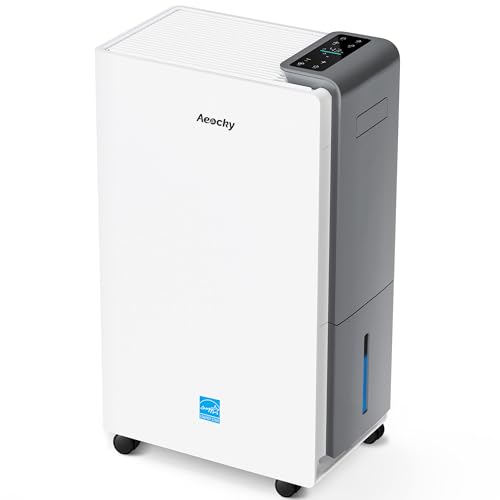
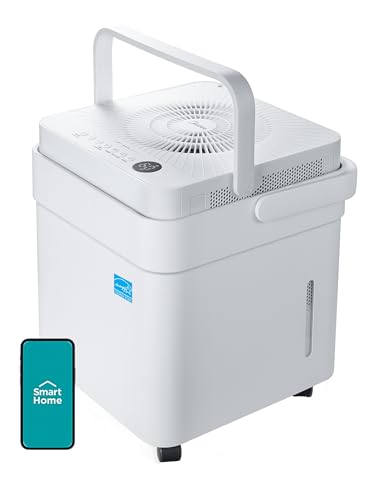
The fifty-pint class is where the event’s real competition happens, because it is the size most damp homes actually need. The hOmeLabs fifty-pint has been the value reference for years — a straightforward, well-reviewed workhorse whose sale price is the number the rest of the class is graded against. The Frigidaire fifty-pint brings the appliance-maker’s finish, a reputation for quieter manners and controls a household finds kindlier at 6 a.m. The Midea Cube rewrites the form entirely — a liftable bucket design that stores small, pumps in its higher trims, and suits homes whose drainage is a sink above the machine’s station.
The thirty-pint class serves the single damp room — the bedroom over a crawl space, the laundry, the bathroom’s overflow — and the same names recur at the smaller size, with the same characters: hOmeLabs for value, Frigidaire for finish, and a field of store brands beneath them that this guide advises grading by warranty and efficiency rather than by the depth of their discounts. A thirty bought for a wet basement is the event’s commonest false economy; a fifty bought for a bedsit is its second. The sizing section above is the whole defence.
Beyond the classes sit the specialists the event also discounts: whole-house units for ducted systems, commercial machines for flooded renovations, and the small thermoelectric boxes sold for wardrobes and gun safes — honest tools for tiny spaces that are marketed, every November, at rooms a hundred times their parish. The household that knows its pints cannot be sold a wardrobe box for a basement, which is the precise knowledge this guide exists to transfer.
The event’s traps, named in advance
The first trap is the phantom anchor: a discount calculated from a list price the model has not carried since its launch, sometimes ever. The defence is the model’s autumn price history, which tracking tools keep and thirty seconds reveals — a deal is the distance from the price the machine actually sells at, and during Black Friday that distance is often respectable and rarely miraculous. Buy the respectable distance on the right machine and the event has served you; chase the miraculous percentage and it has used you.
The second trap is the bundle and the badge: extended warranties of doubtful value added at the till, ‘smart’ features whose app will be abandoned by spring, and last-generation stock whose rating was measured under the old, flattering standard — so its fifty pints are not the current fifty pints the sizing maths assumes. The defences are the criteria below, applied without hurry: efficiency register checked, rating standard checked, warranty read, drainage solved.
The third trap is the countdown itself. Dehumidifiers are not concert tickets; the class’s stock is deep, its models return to sale at the New Year and the spring events, and a household that misses its machine loses a discount, not a dehumidifier. The family that walks away from a wrong deal loses nothing but an evening — a sentence worth remembering at midnight, with the basement’s smell in mind and the credit card in hand.
The week before: a prepared household’s diary
Monday: the room measured, its wetness graded without optimism, the drainage walked. Tuesday: the class decided — thirty or fifty — and written at the top of the list where the banners cannot reach it. Wednesday: two models shortlisted, their autumn prices witnessed in a tracking tool, their efficiency register entries confirmed. Thursday: the filters’ prices checked, the warranties skimmed, the returns terms of the chosen channels read. Friday, when the event opens, the household buys in ten minutes what the unprepared will spend the weekend approximating — and spends the weekend, instead, installing it.
The diary is this guide’s whole philosophy in miniature: the event rewards preparation at a rate no other shopping week matches, because its theatre is specifically designed to convert the unprepared household’s uncertainty into the retailer’s margin. Every hour of the diary is an hour of that conversion refused. Households that keep the diary once tend to keep it for every durable purchase afterward, which is a habit worth more than any single deal in this article.
After the event: the installation audit
The deal is not finished at the till; it is finished when the machine has run its first week and the bucket has testified. Measure the first week’s water against the room’s promise: a correctly sized machine in a wet basement announces itself in pints, and a wrong one announces itself just as plainly — in a bucket that barely fills, or in a room whose smell survives the machine’s diligence. The returns window is still open during that week, and the audit exists to use it on evidence rather than on regret.
The audit’s second half is documentary: the warranty registered, the receipt filed with the price paid and the channel, the filter’s model recorded, the first filter’s spare ordered while the event’s pricing still lingers. A deal’s value is partly paperwork, and the household that files it has bought not just a machine but a decade of serviceability — the thing the discount was actually for.
The deals that recur: a short calendar of the class
Households that miss the event — or that read this guide in the spring, with the damp already rising — should know the class’s calendar: the New Year sales clear the same stock, the spring events price the same benchmarks competitively as the humid season approaches, and the makers’ own outlets move last-generation machines at honest distances year-round. Black Friday is the class’s deepest water, but it is not its only water, and a household that has sized its room and shortlisted its models can fish any of them with the same method.
That calendar is also the countdown’s antidote, worth memorising before the event rather than after it: no dehumidifier deal is the last of its kind, and the household that knows it cannot be stampeded. The basement will still be damp in January, and the machine that dries it will still be buyable — at a fair price, in daylight, by a household that chose it.
The Picks in Detail: Black Friday Dehumidifer Deals Contenders
hOmeLabs 50-Pint Dehumidifier — The value reference to watch
The hOmeLabs fifty-pint is the class’s benchmark: a straightforward Energy Star workhorse with a humidistat, a bucket-or-hose choice and a sale history that makes it the number every rival’s discount is graded against. Covered in prose under this programme’s verification discipline — its ASIN was title-verified in the site’s API cache, with imagery confirmation pending at publish QC — it is the first model to price-check when the event opens.
Its character is value rather than finish: controls that are plain, manners that are adequate, a build that assumes a basement rather than a showroom. Households whose damp is serious and whose budget is real should start their event here, and climb only for a named reason — quieter manners, a pump, a form that fits the room — rather than for a deeper percentage elsewhere.
Strengths
- The fifty-pint class’s value benchmark
- Energy Star efficiency at a working price
- Bucket or hose drainage flexibility
Trade-offs
- Plain controls and working manners
- No built-in pump in the base trim
- A basement appliance’s finish, honestly
Best for: damp basements and value-first households
Not suited for: households needing a pump or showroom finish
Positioning: black friday dehumidifer deals — no linked listing is offered for the hOmeLabs 50-Pint Dehumidifier; it is covered in prose, so check the maker’s own current terms before deciding.
Frigidaire 50-Pint Dehumidifier — The finished appliance pick
Frigidaire’s fifty-pint brings the major-appliance maker’s polish to the class: kindlier controls, a reputation for quieter running, and a finish that sits more comfortably in a lived-in room than the value tier’s. Its Black Friday pricing rarely beats the value reference’s, and this guide’s position is that the premium buys manners and finish rather than drier air — a legitimate purchase, knowingly made.
Households whose dehumidifier must live in a bedroom’s or a studio’s company, rather than a basement’s, will find that premium easier to justify than households with a utility room. Either way, it is the same honest fifty pints, from a maker whose service network is a specification in itself across a decade’s ownership.
Strengths
- Major-appliance finish and service network
- Kinder controls and quieter reputation
- The same honest fifty pints
Trade-offs
- Premium over the value benchmark
- Discounts rarely the deepest
- Pump availability varies by trim
Best for: lived-in rooms and finish-conscious households
Not suited for: pure value chasers with a basement station
Positioning: black friday dehumidifer deals — Frigidaire 50-Pint Dehumidifier is described rather than linked; this programme links only verified listings, so confirm its terms with the maker.
Midea Cube 50-Pint — The clever-form pick
The Cube’s design is the class’s one genuine idea in years: a compact body whose liftable bucket nests for storage, with pump-equipped trims that lift water to a sink — solving, in one form, the two complaints (bulk, drainage) that retire more dehumidifiers than damp does. Its event pricing is the watch for households whose station has no floor drain.
The form asks its own questions — the bucket’s lift is a feature only if the household’s arms agree, and the design’s novelty means a shorter service record than the benchmarks’. Households that prize the drainage solution should audition it in the store’s aisle before the event if they can, because the Cube is bought by the hand as much as by the specification.
Strengths
- Liftable bucket and pump trims solve drainage
- Stores smaller than any rival
- A genuine design idea, well executed
Trade-offs
- Novelty means a shorter record
- The lift must suit the household’s arms
- Pricing rarely the class’s lowest
Best for: homes draining to a sink, small storage, design-led buyers
Not suited for: floor-drain basements served by the benchmarks
Positioning: black friday dehumidifer deals — no linked listing is offered for the Midea Cube 50-Pint; it is covered in prose, so check the maker’s own current terms before deciding.
hOmeLabs 30-Pint Dehumidifier — The single-room pick
The thirty-pint sibling serves the parish the fifties overwhelm: the one damp bedroom, the laundry, the room over the crawl space. Its event role is specific — it is the machine to buy when the sizing maths, honestly done, says thirty — and its value character matches its big sibling’s, with the same plain manners at a smaller scale.
The warning attached to this pick is the guide’s refrain: a thirty bought for a fifty’s job is the event’s most expensive bargain, running constantly, drying inadequately and dying young. Size by the room and the wetness, never by the discount’s depth — the sentence this whole article exists to make unforgettable.
Strengths
- Right-sized for the single damp room
- Value character at a smaller scale
- Easier handling and storage
Trade-offs
- A trap if bought for a basement’s job
- Same plain finish as its sibling
- Bucket duty arrives sooner
Best for: single damp rooms, laundries and bedrooms
Not suited for: wet basements and whole lower floors
Positioning: black friday dehumidifer deals — the hOmeLabs 30-Pint Dehumidifier appears as a prose pick rather than a linked one; the maker’s own current listing is the place to confirm its terms.
How the Black Friday Dehumidifer Deals Field Compares
The event’s arithmetic deserves one honest paragraph. Retailers anchor discounts to list prices that dehumidifiers rarely sell at, so a dramatic percentage can describe an ordinary price; the only comparisons that matter are against the model’s own price across the autumn, which price-tracking tools record, and against the rival models at their sale prices on the day. This site prints no static prices — they stale within hours during the event — so this guide teaches the comparison instead of quoting it, and the models below are the ones worth comparing.
The second comparison is generational. Black Friday clears last year’s models beside this year’s, and in dehumidifiers the generations differ in the things that matter — the refrigerant and its efficiency, the rating standard the pints were measured under, the pump and the warranty. A cleared model at a deep discount can be the event’s best buy or its most elegant trap, and the difference is knowable in advance: it is the criteria below, applied to the specific unit, in daylight, before the countdown starts.
Buying Guide: Judging Black Friday Dehumidifer Deals on the Right Criteria
A deal is graded against the machine’s fitness for the room it will serve, because a dehumidifier’s job is measured in pints of water removed from your air, not in percentages removed from a price. The criteria below order the purchase the way the water does: size first, efficiency second, features third, and the discount last — where it belongs.
Size before discount deserves its own line in your notes. pints matched to the room’s area and wetness under the current rating standard — the decision the whole purchase hangs on, made in daylight before the event opens Applied to the picks above, this is why the fifty-pint class leads the watch list and the thirty follows it: the classes were chosen by the country’s basements, not by the event’s banners.
Efficiency as a running cost is where black friday dehumidifer deals stops being marketing and becomes measurable, because the Energy Star register over the badge on the box, because the discount is paid once and the electricity forever — a thirsty bargain can cost more than its rival by the second winter The Energy Star register is the sale’s one incorruptible document — compiled before the event, indifferent to it — and households should let it veto any machine the countdown tries to sell them.
Judge drainage solved in advance before anything else on the page: bucket, hose to a floor drain, or a pump to a sink — chosen before the model, because drainage is the chore that retires dehumidifiers and the feature that cannot be added later The Cube’s presence on the watch list is this criterion’s doing: its pump and liftable bucket answer the drainage question for the sink-only house, which is a third of the market the floor-drain machines cannot serve.
Judge the honest discount before anything else on the page: the distance from the model’s real autumn selling price, checked against its price history — never the distance from a list price nobody has paid since launch The benchmarks named in this guide earn that status partly by having the most-tracked prices in the class — their histories are public, so their deals can be graded, which is a form of honesty the obscure listing cannot offer.
The generation and rating standard test separates a considered buy from a hopeful one, since last year’s clearance graded on its refrigerant, its efficiency and the standard its pints were measured under, because fifty old pints are not fifty current ones Last year’s fifty and this year’s fifty are different machines wearing one number; the criterion exists because the event’s deepest discounts reliably attach to the older meaning of the word.
Maker and warranty is where black friday dehumidifer deals stops being marketing and becomes measurable, because a brand whose parts, service and warranty will exist in five years, bought from a channel whose returns survive January — the event’s excitement ends, and the ownership does not The watch list’s makers share a trait beyond their machines: they will answer a service call in the fifth year — a specification the event’s one-season brands, however discounted, cannot print.
Black Friday Dehumidifer Deals in Real Households
The wet basement, first event is the situation readers describe most often. The founding brief: standing damp, a smell with tenure, a floor drain available. The fifty-pint class, hose drainage, the value benchmark priced against the finished pick — and the purchase made in the event’s first hours only because the model was chosen the week before.
The bedsit with a sink is the situation readers describe most often. No floor drain, one room, a wardrobe’s worth of storage: the Cube’s parish exactly. The pump trim, the liftable bucket, the storage that disappears — a case where the form is the function, and the event’s discount on it is genuinely the year’s opportunity.
The laundry room’s overflow is the situation readers describe most often. A thirty-pint job with a hose to the laundry sink: the single-room pick, bought small on purpose. This household’s discipline — sizing down where the maths allows — is as much the guide’s lesson as sizing up, because an oversized machine short-cycles and dies as surely as an undersized one drowns.
Picture the second home, closed for winter for a moment. A house that must dry itself unattended: pump drainage, a humidistat, a maker’s reliability graded above every discount, and a neighbour with a key. The event serves this household too, but its criteria are a reliability table, and the countdown’s theatre should be allowed to pass it by entirely if the right machine is not in it.
The renter’s damp corner: No drains to modify, a landlord to persuade, a bucket that will actually be emptied because the machine stands where the household passes. The value pick, the bucket’s rhythm accepted, and the deposit’s protection as the purchase’s real return — damp documented and dried is a tenancy defended.
How To Get Black Friday Dehumidifer Deals Right, Step by Step
Step 1: Measure and grade the room this week. Dimensions, wetness honestly graded, the drainage options walked and tested. Write the pints class the maths returns at the top of the shopping list, where the event’s percentages cannot reach it.
Step 2: Shortlist two models, not ten. The benchmark for your class and one alternative with a named virtue — finish, pump, form. Price both across the autumn with a tracking tool so the event’s numbers arrive pre-graded.
Step 3: Check the registers in daylight. Energy Star listing, the rating standard behind the pints, the warranty’s terms and the maker’s service footprint — the four documents that outlive the sale, read before the sale begins.
Step 4: Buy the machine, not the bundle. Decline the till’s additions — doubtful warranty extensions, accessories at event prices — unless they were on the list before the event. The list is the household’s; the countdown is the retailer’s.
Step 5: Install it like infrastructure. Level station, drainage run and tested, humidistat set to the room’s honest target, the bucket’s alarm understood. The first week’s water — measure it if you can — is the machine’s report card and the sizing’s confirmation.
Step 6: Keep the event’s paperwork. Receipt, warranty registration, the price paid — filed where January’s returns and the fifth year’s service call can find them. A deal’s value is partly documentary, and the file is the household’s half of it.
Mistakes That Undermine Black Friday Dehumidifer Deals
Sizing by the discount. The deepest percentage in the event is routinely attached to the wrong size for the rooms shopping it. Pints are physics; percentages are theatre; the basement will grade the physics by spring.
Trusting the anchor price. A discount measured from a price nobody paid is a measurement of nothing. Thirty seconds with the model’s price history converts the event’s loudest claims into their honest size — respectable, usually; miraculous, rarely.
Forgetting the drainage sounds harmless in the showroom and expensive at home. The bucket-only machine in a wet basement becomes a daily chore, then a neglected chore, then a mouldy ornament with a full bucket. Solve the water’s exit before the machine’s entrance, always.
Buying the wardrobe box for the basement. Small thermoelectric units are honest tools for tiny sealed spaces and are marketed every November at rooms a hundred times their capacity. Their pints are measured in ounces; the basement’s are not.
Letting the countdown decide. Stock is deep, the models return to sale, and a wrong dehumidifier is worse than a missed discount. The household that walks away from a bad deal at midnight has won the event’s only game that matters.
Going Deeper on Black Friday Dehumidifer Deals
Black Friday is best understood as an information contest disguised as a price contest. The retailer knows the model’s price history, its generation, its rating standard and its stock depth; the shopper who knows the same four things buys well, and the shopper who knows only the percentage buys theatre. This guide’s whole structure — sizing before models, registers before discounts — is an attempt to hand the household the retailer’s side of the information table before the countdown starts.
The dehumidifier is an unusually honest test of that contest because its performance is measurable in a bucket. Within a week of installation the machine reports, in pints of actual water, whether the sizing was right and the purchase sound — a feedback loop most appliances never offer. Households should use it: measure the first week’s water, compare it to the room’s promise, and let the event’s returns window arbitrate any disappointment while arbitration is still free.
There is also a seasonal irony worth naming: the dehumidifier bought in November serves a damp that peaked in August, in a house whose next test arrives with spring. The event’s timing is the retailer’s, not the water’s — which is another way of saying the purchase should be made on the room’s calendar, with the discount treated as a rebate on a decision already taken, rather than as the decision’s cause.
So the best Black Friday dehumidifier deal is a correctly sized, efficient machine from a durable maker, bought at an honest distance from its real price, with its drainage solved and its paperwork filed. Bought that way, the event is what it advertises: the year’s best day to dry a house. Bought any other way, it is a discount in search of a basement — and the basement, by spring, will have graded it in mildew, the only review the season cannot spin.
Black Friday’s deepest mechanism is the conversion of uncertainty into urgency: a household unsure of its size, its model or its fair price experiences the countdown as information — as if the deadline knew something. It does not; it knows only the calendar. This guide’s whole structure — measure, shortlist, witness the prices, solve the drainage — is an attempt to return the household’s uncertainty to its proper, unhurried state before the theatre opens, because a certain household cannot be stampeded and an uncertain one cannot be saved by any discount. The deal is the by-product. The certainty is the product.
There is also a word for the season’s misspelling, preserved in this article’s title with intent. The household typing ‘dehumidifer’ at midnight is not careless; it is hurried, tired and damp-basemented, shopping at the exact moment the event designed for it. A guide that meets that household with respect — with the sizing done simply, the traps named plainly, the method taught in the order the water would teach it — is doing the only job worth doing in sale season. The spelling is the season’s. The dry basement, by spring, should be the household’s.
The guide’s last word returns to its first: the deal is a rebate on a decision, and the decision is about water. A household that knows its room’s volume, its wetness and its drainage owns the event; a household that knows only its budget is owned by it. Between those two conditions lies the whole of this article — the sizing, the registers, the tracked prices, the named traps — and the distance is crossable in a single calm week, which is why the guide was published, deliberately, before the banners.
One more consideration belongs to the event’s sociology: the dehumidifier is bought, overwhelmingly, by the household member who manages the house’s fabric — the one who knows where the damp lives, what the basement smells of in August, and what a valeting of the problem would cost. The event’s theatre is aimed at that person’s tiredness in November, when the damp is a memory and the discount is a screen’s glow. This guide was written for that person, in daylight, in the belief that the house’s fabric-keeper deserves the same rigour in their shopping as they bring to the house itself.
The gift and rental angles of the season
The event’s dehumidifiers are also bought, in quiet numbers, for other people’s damp: the landlord equipping a tenancy before the winter inspection, the adult child drying a parent’s basement as the year’s practical gift. Those purchases deserve the guide’s full discipline rather than its relaxation — a gift machine with the wrong pints is a chore wearing a bow, and a tenancy’s machine with an orphaned filter is a deposit dispute in waiting. Size the other household’s room as honestly as your own, and file its paperwork where its keeper can find it.
Rentals add one criterion of their own: the machine must be operable by a tenant who never reads manuals, which favours the benchmarks’ plain controls and a drainage arrangement that cannot be misassembled. The event is the landlord’s cheapest week to meet that standard across a portfolio, and the guide’s watch list was, in part, graded with the portfolio in mind.
What this guide would buy, in one paragraph
Pressed for the summary its criteria imply: the fifty-pint benchmark for the wet basement with a floor drain, bought at its tracked autumn distance; the finished maker’s fifty where the machine must live among people; the Cube where the water must be lifted to a sink; the thirty only where the maths — done in daylight, written down — says thirty. Every sentence of that paragraph is a criterion wearing a recommendation’s clothes, and households whose facts differ should follow the criteria rather than the paragraph, which is what criteria are for.
The paragraph’s exclusions matter as much: no wardrobe box for a basement, no phantom anchor at any depth, no countdown purchase without the drainage solved. A guide is known by what it refuses, and this one’s refusals are the event’s most reliable traps, named in advance, in the hope that naming is enough.
The second-hand and open-box question
The event generates a January echo: returned and open-box dehumidifiers, sold at distances that tempt the spring shopper. The guide’s method applies unchanged, with two additions — the filter’s state inspected as a consumable already partly spent, and the warranty’s transferability read rather than assumed. An open-box benchmark with a fresh filter’s price added can still be the season’s best arithmetic; an open-box orphan with a spent filter and no warranty is a countdown purchase in its second, sadder form.
Households should also know that the echo is where the phantom anchor goes to die: a returned machine’s price is set by what a person will pay for a specific unit on a specific day, which is the most honest pricing the class ever receives. Graders of the event’s theatre may find the echo market educational beyond its bargains.
Field Notes on Black Friday Dehumidifer Deals
The dehumidifier is an unusually honest test of that contest because its performance is measurable in a bucket. Within a week of installation the machine reports, in pints of actual water, whether the sizing was right and the purchase sound — a feedback loop most appliances never offer. Households should use it: measure the first week’s water, compare it to the room’s promise, and let the event’s returns window arbitrate any disappointment while arbitration is still free.
As a rule, the pint rating’s modern standard measures machines at cooler, damper conditions than the old one, so a current fifty-pint unit removes more real basement water than a heroic seventy-pint rating from a decade ago a dehumidifier’s first week is measurable in a bucket: the water it actually collects is the purchase’s report card, and households that measure it can still use the returns window if the grade is poor the bucket is the category’s retirement plan: more dehumidifiers are abandoned over a daily bucket than over any failure, which is why drainage outranks almost every feature in this guide energy compounds where discounts do not: a machine that runs six months a year for a decade pays its electricity bill forty times over for every once it pays its purchase price
One more consideration: the event’s phantom anchors are measurable too — a model’s price history is public, kept by tracking tools, and thirty seconds with it converts the loudest banner into its honest size November’s discount serves August’s damp on the retailer’s calendar rather than the water’s, which is why the prepared household treats the sale as a rebate on a decision, never as the decision itself in the end the season’s best deal is legible in spring, in a dry basement and a silent humidistat — the one Black Friday review that is never written in percentages the dehumidifier is the rare appliance whose sale season and use season are strangers — bought in November’s theatre for August’s damp — which is why its buyers are uniquely dependent on preparation rather than on the testimony of current need
Worth knowing: a model’s price history is the event’s only honest document, and it is kept by strangers for free: the tracking tools’ existence has done more for Black Friday shoppers than any consumer law of the decade the bucket test in the first week is the purchase’s referendum — water does not respond to marketing — and households that measure it hold, briefly, a power over the retailer that the returns window makes real in the end the event is a test of whether a household can want something slowly in a week designed for wanting it fast — and the dry basement, next August, is the certificate of the households that passed the class’s benchmarks have become the event’s yardsticks partly because their prices are the most witnessed — a machine whose history is public cannot be phantom-anchored, so transparency compounds like a feature
One detail matters here: a dehumidifier bought well announces itself twice: in the first week’s bucket, and in the following August, when the basement’s old smell fails to return and the household realises the event, for once, kept its promise the prepared household’s ten-minute purchase looks, from outside, like luck — the right machine at the year’s floor — and is, from inside, a week’s diary keeping its appointment a wrong-sized machine’s true cost includes its replacement’s full price, so the event’s most expensive dehumidifier is routinely the cheap one bought twice — an arithmetic the countdown never prints the class’s stock depth means the event’s sold-out banner, where it appears, is a property of a listing rather than of the market — the same machine, at a neighbouring channel, at a comparable distance, is the rule rather than the exception
Set against that, and the guide’s method outlives its season: measure, shortlist, witness, solve the water’s exit — a protocol for every durable purchase the house will ever make, taught by a basement
Black Friday Dehumidifer Deals: Cases Worth Studying
The basement that graded two purchases. A household bought the event’s deepest discount two Novembers running: first a thirty-pint machine at a miraculous percentage, which ran constantly and dried nothing, returned in January; then a correctly sized fifty at a respectable one, whose first week filled its bucket on schedule and whose second spring arrived without the smell. Their summary — that they had bought a percentage and then a dehumidifier — is this guide’s thesis with a receipt attached.
Final Recommendation on Black Friday Dehumidifer Deals
Watch the fifty-pint class first — the hOmeLabs benchmark for value, the Frigidaire for finish, the Midea Cube where drainage demands its form — and the thirty-pint class only where the sizing maths honestly puts you. Check each against its autumn price history, its efficiency register and its rating standard, and let the countdown do its worst: a prepared household is immune to theatre.
Size in daylight, shortlist two, solve the drainage, and buy the machine rather than the percentage. The deal of the year is not the deepest discount in the event; it is the dry basement in August, bought in November, at a fair price — and that deal is available to every household that reads the guide before the sale.
Frequently Asked Questions About Black Friday Dehumidifer Deals
When do Black Friday dehumidifier deals start?
The event has stretched across November in recent years, with the deepest pricing typically around the day itself and the following Monday — but dehumidifier stock is deep and the class returns to sale at New Year and spring events. The household that has sized its room and shortlisted its models can buy whenever its number appears, rather than by the calendar’s panic. The prepared household’s start date is earlier than the event’s: the week the room is measured and the shortlist is priced — because the deal is graded against the autumn, and the autumn must be witnessed to be used.
Are Black Friday dehumidifier deals actually cheaper?
Against the models’ real autumn prices, usually yes — respectably, not miraculously. Against the list prices the banners cite, the percentages flatter. Check the model you chose against its price history, and grade the deal by that distance: it is the only honest measure, and this guide’s criteria are built on it. For the class’s tracked benchmarks, the event’s prices are the year’s floor more often than not — the honest discount exists, and this guide’s method exists to separate it from the theatre around it.
What size dehumidifier do I need?
By area and wetness under the current rating standard: the thirty-pint class for a moderately damp single room, the fifty for a wet basement or a whole lower floor. Undersizing is the expensive error — a small machine running constantly and drying inadequately — and no discount redeems it, which is why the sizing precedes the sale in this guide’s order. Bring the room’s measurements and its wetness grade to the answer, not the event’s sizing chart, which is drawn to sell the size with the deepest stock rather than the size with the driest basement.
Should I buy last year’s model on clearance?
Often the event’s best buy — if its efficiency, refrigerant and rating standard check out against the current generation’s. Fifty pints under the old, flattering standard are not fifty current pints, so grade the clearance by the registers, not by the percentage, and it can serve a decade. Grade its filter and parts availability as well as its rating standard: a cleared model whose consumables are already orphaned is a discount on a countdown, whatever its pints.
Is a built-in pump worth it?
Where the drainage is a sink or a drain above the machine’s station, the pump converts a daily chore into infrastructure and is worth its premium many times over. Where a floor drain sits beside the machine, a hose does the same work free — the drainage decision precedes the model decision, and this guide’s how-to walks it in that order. Price the pump against five years of bucket journeys, honestly counted — for most sink-drained households the arithmetic is not close, and the pump’s premium is the event’s most defensible upsell.
Why does this guide print no prices?
Because during the event a printed price is stale within hours, and this site’s rule — no static prices, in any article — exists precisely for sales like this one. The models, the sizing and the comparison method are the durable content; the day’s numbers are yours to read with them in hand, at the till, where they are true. The rule protects the reader in both directions: a stale low price manufactures a false bargain, a stale high one conceals a real one — the method, unlike the number, is true on the day it is used.
Reading: black friday dehumidifer deals — from our own guides: getting rid of dog smells in the house do portable air conditioners have to vent outside basement dehumidifiers whole house dehumidifiers air purifier Black Friday deals humidifier Black Friday deals