Disclosure: As an Amazon Associate, dailyhomedecorating.com earns from qualifying purchases. Links to Amazon on this page are affiliate links; they cost you nothing extra. Prices and availability change often, so check the current Amazon listing before you buy.
If you are shopping for the best wood for adirondack chairs, you have probably already discovered that the category is full of chairs that look right in a photo and disappoint within a week. The real problem is rarely a lack of choice. It is that most listings are written to sell a silhouette, while what you actually need is a chair that fits your body, your room, and the specific job of choosing a wood that survives seasons outdoors in an Adirondack chair. This guide narrows the field to six picks that earn their place for this exact search, and it explains the trade-offs honestly, including where each chair falls short.
Every linked pick below comes from a verified product pool, with specifications checked against the manufacturer’s listing, so the dimensions and details in the spec boxes are the ones you can rely on. Where the pool simply does not contain an honest fit for part of this search, the guide says so and uses a clearly labeled prose-only pick instead of forcing a link. You will also find related reading woven through the guide, starting with Best Recliner Chairs For Back Pain, because chairs are rarely bought in isolation from the rest of the room.
Read the Quick Picks table first if you are in a hurry, then the full reviews for the two or three chairs that match your situation. The buying guide and how-to sections that follow the reviews are where most readers avoid the expensive mistakes: wrong seat height, wrong depth, wrong material for the room. By the end you should know exactly which of these six chairs belongs in your home, and just as importantly, which ones to skip.
Where to Buy
All six picks in this guide are sold on Amazon, which is where you should check the current price, availability, color options, and delivery details before buying, since all of those change often. The first pick is listed with a direct name link; every linked pick also carries a Check on Amazon link so you can compare the live listings side by side.
- Teak (Premium Hardwood) — search the type on Amazon and compare current listings (prose-only pick, no single verified listing)
- Western Red Cedar (Lightweight Softwood) — search the type on Amazon and compare current listings (prose-only pick, no single verified listing)
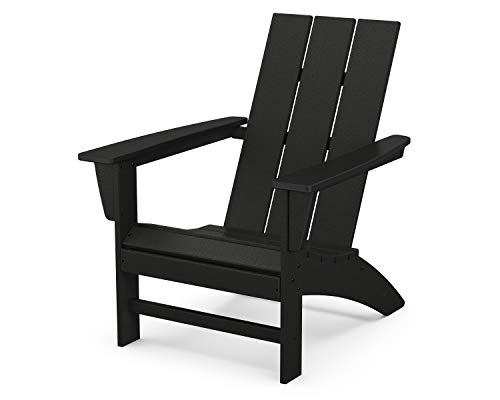
- POLYWOOD Modern Adirondack Chair – All-Weather Outdoor Lawn Adirondack Chairs – HDPE — Check on Amazon
- Acacia (Dense Tropical Hardwood) — search the type on Amazon and compare current listings (prose-only pick, no single verified listing)
- Eucalyptus (Fast-Growing Hardwood) — search the type on Amazon and compare current listings (prose-only pick, no single verified listing)
- Pressure-Treated Pine (Budget Softwood) — search the type on Amazon and compare current listings (prose-only pick, no single verified listing)
In this guide
Quick Picks
| Pick | Badge | Why it earns its place |
|---|---|---|
| Teak (Premium Hardwood) | Best Overall | The strongest all-round answer for choosing a wood that survives seasons outdoors in an adirondack chair, balancing support, build, and everyday livability. |
| Western Red Cedar (Lightweight Softwood) | Best Lightweight | A genuinely different strength from the leader, for readers whose priority is not the average case. |
| POLYWOOD Modern Adirondack Chair – All-Weather Outdoor Lawn Adirondack Chairs – HDPE | Best No-Rot Alternative | The pick that covers the situation most shoppers in this search actually describe. |
| Acacia (Dense Tropical Hardwood) | Best Value Hardwood | A fit-first choice that solves the sizing problem this search is usually really about. |
| Eucalyptus (Fast-Growing Hardwood) | Best Fast-Growing Pick | The practical, easy-to-live-with option that asks the least of your room and routine. |
| Pressure-Treated Pine (Budget Softwood) | Best Budget | A specialist that will be wrong for many readers and exactly right for a specific few. |
Key Takeaways
- For most readers, the first pick is the safest answer to best wood for adirondack chairs: it handles the widest range of bodies and rooms without a serious weakness.
- Fit beats features. Seat height, seat depth, and back support matched to your body matter more than any single mechanism or material.
- Every chair here involves a trade-off, and the reviews name them plainly, so choose the compromise you can live with daily.
- Where the verified pool had no honest product for part of this search, this guide uses labeled prose-only picks rather than inventing a recommendation.
- Plan the whole setup: floor surface, light, and how you will actually sit day after day matter as much as the chair itself. See Best Teak Patio Sofas Loveseats for the room side of the decision.
How These Picks Were Chosen
The starting point was a verified pool of real, currently listed chairs, each with specifications confirmed against its Amazon listing. From that pool, candidates were judged against the specific demands of choosing a wood that survives seasons outdoors in an Adirondack chair: how the seat supports the body over a full session rather than a first sit, whether the dimensions suit the people most likely to search this term, how the materials behave in the rooms these chairs will live in, and how much adjustment the design offers when the first fit is not quite right.
Plenty of pool products were filtered out. Chairs were excluded when their size or style plainly fought the search intent, when they duplicated a stronger pick without adding a distinct strength, or when the honest description of the product would have been a warning rather than a recommendation. What survived is a deliberately varied six: a leader, alternatives that win on specific priorities, and at least one pick for the edge case that mainstream roundups ignore. Research for this guide is desk research: manufacturer specifications, listing details, and category knowledge, checked and cross-read, rather than hands-on testing, and the guide says so plainly because you deserve to know how the sausage is made. Readers comparing approaches may also find Best Chairs For Bad Backs useful, since the same selection logic applies there with a different emphasis.
Badges were assigned after the ranking, not before, and each pick carries exactly one badge, used consistently in the table above and in its review below. If two chairs seemed tied, the tiebreaker was always the same question: which one would still be the right recommendation after a month of daily use?
The 6 Best Wood for Adirondack Chairs — Reviewed
Teak (Premium Hardwood)
Our badge: Best Overall
The Teak (Premium Hardwood) is the classic premium Adirondack material: dense, naturally oily hardwood that weathers to silver-gray outdoors and can serve for decades with minimal finishing. It appears in this guide as a prose-only pick: the verified product pool for this roundup contains no listing we could honestly attach to this recommendation, so there is no link and no invented specification sheet. What follows is guidance on the type itself, which is what you should use to judge the individual listings you find.
Strengths
- You can choose the exact configuration you need instead of settling for whatever a single listing bundles
- The design is proven over many years of family use, with no novelty mechanisms to fail
- Simple construction usually means simple cleaning and simple repairs
Trade-offs
- Because this is a type rather than one tested model, quality varies a lot between brands, so read the specific listing carefully
- You will need to verify weight limits, dimensions, and safety details on the individual product page yourself
- Cheaper versions of this type often cut corners on frame hardware first
| Form | the classic premium Adirondack material: dense, naturally oily hardwood that weathers to silver-gray outdoors and can serve for decades with minimal finishing |
| How to buy it well | Compare several current listings of this type on Amazon, verify dimensions, capacity, and safety details on the product page, and prefer sellers with clear specifications over sellers with only lifestyle photos. |
Picture the ordinary version of your day in it, not the best case: the long session, the tired evening, the moment you sit down already uncomfortable. Judged as a type, this is a strong answer for choosing a wood that survives seasons outdoors in an Adirondack chair when it is executed well, and a disappointing one when it is executed cheaply, which is exactly why this guide refuses to pin it to one unverified listing. Look for solid frame materials, hardware you can inspect in the listing photos, and dimensions published in numbers rather than adjectives. If a listing will not tell you how big it is or how much it holds, that silence is your answer.
In daily use, the ownership experience of this type is decided by the details: how it cleans, how it stores, how it treats your floor and your back across a full session. Read recent buyer feedback for the specific listing you choose, with an eye for comments written after months of use rather than delivery day. For choosing a wood that survives seasons outdoors in an Adirondack chair, a well-chosen example of this type can absolutely be the right purchase; it simply has to be chosen at the listing level, not the category level.
Best for: readers who want best overall and are willing to compare individual listings carefully / Not suited for: anyone who wants a single verified recommendation with confirmed specifications
Choose this type if its strengths match your situation and you are prepared to vet the exact listing; skip it if you would rather stay with the verified, linked picks above and below.
Western Red Cedar (Lightweight Softwood)
Our badge: Best Lightweight
The Western Red Cedar (Lightweight Softwood) is a light, naturally rot-resistant softwood that is easy to carry and work, with warm color that takes stain well. It appears in this guide as a prose-only pick: the verified product pool for this roundup contains no listing we could honestly attach to this recommendation, so there is no link and no invented specification sheet. What follows is guidance on the type itself, which is what you should use to judge the individual listings you find.
Strengths
- The design is proven over many years of family use, with no novelty mechanisms to fail
- Simple construction usually means simple cleaning and simple repairs
- You can choose the exact configuration you need instead of settling for whatever a single listing bundles
Trade-offs
- Because this is a type rather than one tested model, quality varies a lot between brands, so read the specific listing carefully
- You will need to verify weight limits, dimensions, and safety details on the individual product page yourself
- Cheaper versions of this type often cut corners on frame hardware first
| Form | a light, naturally rot-resistant softwood that is easy to carry and work, with warm color that takes stain well |
| How to buy it well | Compare several current listings of this type on Amazon, verify dimensions, capacity, and safety details on the product page, and prefer sellers with clear specifications over sellers with only lifestyle photos. |
In daily use, the detail that matters is the one you touch every time: the arm you lean on, the edge your legs meet, the surface your back lands against. Judged as a type, this is a strong answer for choosing a wood that survives seasons outdoors in an Adirondack chair when it is executed well, and a disappointing one when it is executed cheaply, which is exactly why this guide refuses to pin it to one unverified listing. Look for solid frame materials, hardware you can inspect in the listing photos, and dimensions published in numbers rather than adjectives. If a listing will not tell you how big it is or how much it holds, that silence is your answer.
In daily use, the ownership experience of this type is decided by the details: how it cleans, how it stores, how it treats your floor and your back across a full session. Read recent buyer feedback for the specific listing you choose, with an eye for comments written after months of use rather than delivery day. For choosing a wood that survives seasons outdoors in an Adirondack chair, a well-chosen example of this type can absolutely be the right purchase; it simply has to be chosen at the listing level, not the category level.
Best for: readers who want best lightweight and are willing to compare individual listings carefully / Not suited for: anyone who wants a single verified recommendation with confirmed specifications
Choose this type if its strengths match your situation and you are prepared to vet the exact listing; skip it if you would rather stay with the verified, linked picks above and below.

POLYWOOD Modern Adirondack Chair – All-Weather Outdoor Lawn Adirondack Chairs – HDPE
Our badge: Best No-Rot Alternative
The POLYWOOD Modern Adirondack Chair – All-Weather Outdoor Lawn Adirondack Chairs – HDPE is a modern Adirondack chair molded from HDPE lumber, with a contoured seat, waterfall front, and wide armrests. For readers focused on choosing a wood that survives seasons outdoors in an Adirondack chair, it earns its badge honestly: ALL-WEATHER PERFORMANCE: Constructed from Genuine POLYWOOD infinitely recyclable lumber, ClimateTuff durable material that stands up to moisture and temperature extremes and isn’t prone to cracking, peeling, or chipping.
Strengths
- ALL-WEATHER PERFORMANCE: Constructed from Genuine POLYWOOD infinitely recyclable lumber, ClimateTuff durable material that stands up to moisture and temperature extremes and isn’t prone to cracking, peeling, or chipping.
- ERGONOMIC COMFORT DESIGN: A contoured seat with a waterfall front enhances comfort and support.
- LASTING COLOR, LOW-MAINTENANCE FINISH: ColorStay technology integrates UV inhibitors into the HDPE composite lumber for lasting color retention.
Trade-offs
- HDPE lumber is a hard seat surface, so add a cushion if you like a soft sit
- At 34 pounds per chair it is sturdy in wind but not a chair you carry far
- The modern, squared-off styling is a departure from the classic wooden Adirondack look
| Color | Black |
| Size | 32.11in. x 29.25in. x 34.66in. |
| Dimensions | 32.13 x 29.25 x 34.68 inches |
| Weight | 34 pounds |
| Product Group | Lawn & Patio |
Think about the second hour, not the second minute. First impressions of chairs are famously unreliable, and this one is designed to be judged late in a session. The POLYWOOD Modern Adirondack Chair – All-Weather Outdoor Lawn Adirondack Chairs – HDPE holds up in that scenario because its core design choices point the right way: the seat and back are shaped for real sessions rather than showroom moments, and the materials are chosen for the room it will live in. ERGONOMIC COMFORT DESIGN: A contoured seat with a waterfall front enhances comfort and support. That combination is what separates a chair that photographs well from a chair that still feels right in month six.
Durability and care are straightforward. The frame and base are the long-life parts, and they are built to be used daily; the upholstery is the part that will show your life first, so treat spills quickly and keep the care routine in the how-to section below. For choosing a wood that survives seasons outdoors in an Adirondack chair, the practical question is whether this chair removes friction from your day: getting in and out, settling in, changing position, and getting on with what you sat down to do. On that test it scores well, with the trade-offs above being the honest price of its strengths.
Best for: readers who want best no-rot alternative performance for choosing a wood that survives seasons outdoors in an Adirondack chair / Not suited for: anyone whose needs match the trade-offs above more than the strengths
Choose it if its badge describes your priority; skip it if the trade-offs describe your situation. Check on Amazon
Acacia (Dense Tropical Hardwood)
Our badge: Best Value Hardwood
The Acacia (Dense Tropical Hardwood) is a dense, attractive hardwood often used for outdoor furniture at a friendlier tier than teak, with rich grain variation. It appears in this guide as a prose-only pick: the verified product pool for this roundup contains no listing we could honestly attach to this recommendation, so there is no link and no invented specification sheet. What follows is guidance on the type itself, which is what you should use to judge the individual listings you find.
Strengths
- Available across a wide range of budgets and finishes to match the room
- Widely sold in several versions, so replacement parts and accessories are easy to find
- It lets you prioritize the one feature your situation demands most, rather than paying for everything
Trade-offs
- Because this is a type rather than one tested model, quality varies a lot between brands, so read the specific listing carefully
- You will need to verify weight limits, dimensions, and safety details on the individual product page yourself
- Cheaper versions of this type often cut corners on frame hardware first
| Form | a dense, attractive hardwood often used for outdoor furniture at a friendlier tier than teak, with rich grain variation |
| How to buy it well | Compare several current listings of this type on Amazon, verify dimensions, capacity, and safety details on the product page, and prefer sellers with clear specifications over sellers with only lifestyle photos. |
Consider it in your actual room, with your actual floor, light, and neighboring furniture, because that is the only version of the chair you will ever own. Judged as a type, this is a strong answer for choosing a wood that survives seasons outdoors in an Adirondack chair when it is executed well, and a disappointing one when it is executed cheaply, which is exactly why this guide refuses to pin it to one unverified listing. Look for solid frame materials, hardware you can inspect in the listing photos, and dimensions published in numbers rather than adjectives. If a listing will not tell you how big it is or how much it holds, that silence is your answer.
In daily use, the ownership experience of this type is decided by the details: how it cleans, how it stores, how it treats your floor and your back across a full session. Read recent buyer feedback for the specific listing you choose, with an eye for comments written after months of use rather than delivery day. For choosing a wood that survives seasons outdoors in an Adirondack chair, a well-chosen example of this type can absolutely be the right purchase; it simply has to be chosen at the listing level, not the category level.
Best for: readers who want best value hardwood and are willing to compare individual listings carefully / Not suited for: anyone who wants a single verified recommendation with confirmed specifications
Choose this type if its strengths match your situation and you are prepared to vet the exact listing; skip it if you would rather stay with the verified, linked picks above and below.
Eucalyptus (Fast-Growing Hardwood)
Our badge: Best Fast-Growing Pick
The Eucalyptus (Fast-Growing Hardwood) is a hard, smooth-grained wood from fast-growing plantations, commonly finished with oil to keep its color outdoors. It appears in this guide as a prose-only pick: the verified product pool for this roundup contains no listing we could honestly attach to this recommendation, so there is no link and no invented specification sheet. What follows is guidance on the type itself, which is what you should use to judge the individual listings you find.
Strengths
- Available across a wide range of budgets and finishes to match the room
- Widely sold in several versions, so replacement parts and accessories are easy to find
- It lets you prioritize the one feature your situation demands most, rather than paying for everything
Trade-offs
- Because this is a type rather than one tested model, quality varies a lot between brands, so read the specific listing carefully
- You will need to verify weight limits, dimensions, and safety details on the individual product page yourself
- Cheaper versions of this type often cut corners on frame hardware first
| Form | a hard, smooth-grained wood from fast-growing plantations, commonly finished with oil to keep its color outdoors |
| How to buy it well | Compare several current listings of this type on Amazon, verify dimensions, capacity, and safety details on the product page, and prefer sellers with clear specifications over sellers with only lifestyle photos. |
Picture the ordinary version of your day in it, not the best case: the long session, the tired evening, the moment you sit down already uncomfortable. Judged as a type, this is a strong answer for choosing a wood that survives seasons outdoors in an Adirondack chair when it is executed well, and a disappointing one when it is executed cheaply, which is exactly why this guide refuses to pin it to one unverified listing. Look for solid frame materials, hardware you can inspect in the listing photos, and dimensions published in numbers rather than adjectives. If a listing will not tell you how big it is or how much it holds, that silence is your answer.
In daily use, the ownership experience of this type is decided by the details: how it cleans, how it stores, how it treats your floor and your back across a full session. Read recent buyer feedback for the specific listing you choose, with an eye for comments written after months of use rather than delivery day. For choosing a wood that survives seasons outdoors in an Adirondack chair, a well-chosen example of this type can absolutely be the right purchase; it simply has to be chosen at the listing level, not the category level.
Best for: readers who want best fast-growing pick and are willing to compare individual listings carefully / Not suited for: anyone who wants a single verified recommendation with confirmed specifications
Choose this type if its strengths match your situation and you are prepared to vet the exact listing; skip it if you would rather stay with the verified, linked picks above and below.
Pressure-Treated Pine (Budget Softwood)
Our badge: Best Budget
The Pressure-Treated Pine (Budget Softwood) is the budget route: softwood treated against rot and insects, heavier and more prone to checking and splinters as it ages. It appears in this guide as a prose-only pick: the verified product pool for this roundup contains no listing we could honestly attach to this recommendation, so there is no link and no invented specification sheet. What follows is guidance on the type itself, which is what you should use to judge the individual listings you find.
Strengths
- You can choose the exact configuration you need instead of settling for whatever a single listing bundles
- The design is proven over many years of family use, with no novelty mechanisms to fail
- Simple construction usually means simple cleaning and simple repairs
Trade-offs
- Because this is a type rather than one tested model, quality varies a lot between brands, so read the specific listing carefully
- You will need to verify weight limits, dimensions, and safety details on the individual product page yourself
- Cheaper versions of this type often cut corners on frame hardware first
| Form | the budget route: softwood treated against rot and insects, heavier and more prone to checking and splinters as it ages |
| How to buy it well | Compare several current listings of this type on Amazon, verify dimensions, capacity, and safety details on the product page, and prefer sellers with clear specifications over sellers with only lifestyle photos. |
In daily use, the detail that matters is the one you touch every time: the arm you lean on, the edge your legs meet, the surface your back lands against. Judged as a type, this is a strong answer for choosing a wood that survives seasons outdoors in an Adirondack chair when it is executed well, and a disappointing one when it is executed cheaply, which is exactly why this guide refuses to pin it to one unverified listing. Look for solid frame materials, hardware you can inspect in the listing photos, and dimensions published in numbers rather than adjectives. If a listing will not tell you how big it is or how much it holds, that silence is your answer.
In daily use, the ownership experience of this type is decided by the details: how it cleans, how it stores, how it treats your floor and your back across a full session. Read recent buyer feedback for the specific listing you choose, with an eye for comments written after months of use rather than delivery day. For choosing a wood that survives seasons outdoors in an Adirondack chair, a well-chosen example of this type can absolutely be the right purchase; it simply has to be chosen at the listing level, not the category level.
Best for: readers who want best budget and are willing to compare individual listings carefully / Not suited for: anyone who wants a single verified recommendation with confirmed specifications
Choose this type if its strengths match your situation and you are prepared to vet the exact listing; skip it if you would rather stay with the verified, linked picks above and below.
Comparison Table
| Pick | Color / Finish | Dimensions | Weight | Check price on Amazon |
|---|---|---|---|---|
| Teak (Premium Hardwood) | Varies by listing | Verify on listing | Verify on listing | Check price on Amazon |
| Western Red Cedar (Lightweight Softwood) | Varies by listing | Verify on listing | Verify on listing | Check price on Amazon |
| POLYWOOD Modern Adirondack Chair – All-Weather Outdoor Lawn Adirondack Chairs – HDPE | Black | 32.13 x 29.25 x 34.68 inches | 34 pounds | Check price on Amazon |
| Acacia (Dense Tropical Hardwood) | Varies by listing | Verify on listing | Verify on listing | Check price on Amazon |
| Eucalyptus (Fast-Growing Hardwood) | Varies by listing | Verify on listing | Verify on listing | Check price on Amazon |
| Pressure-Treated Pine (Budget Softwood) | Varies by listing | Verify on listing | Verify on listing | Check price on Amazon |
The table sticks to verified listing data for the linked picks. Where a pick is prose-only, the table says what you must verify yourself rather than filling the gap with a guess, because a comparison built on invented numbers is worse than no comparison at all.
How to Choose the Best Wood for Adirondack Chairs
Start with fit, not features
For choosing a wood that survives seasons outdoors in an Adirondack chair, the chair has to fit your body before any feature matters. Measure your lower leg for seat height, your thigh for seat depth, and be honest about the width you need. A chair that fits will outperform a more expensive chair that does not, every single day. If you are buying for someone else, measure them or ask, because guessing sizes for chairs goes wrong the same way guessing shoe sizes does.
Match the support to your real problem
Support is not one thing. Lower-back support, head and neck support, arm support, and a seat that keeps your pelvis level are separate jobs, and chairs specialize. Decide which job matters most for choosing a wood that survives seasons outdoors in an Adirondack chair and rank the picks by that job first. Our related guide Best Chairs For Neck Pain works through a neighboring version of the same decision.
Choose materials for the room, not the photo
Mesh breathes, foam cushions, suspension seats spread pressure, synthetic leather wipes clean, natural fabrics feel and age differently, and outdoor materials trade softness for weather resistance. The right answer depends on your room’s temperature, your household, and your tolerance for upkeep. There is no universally best material, only a best match.
Count the adjustments you will actually use
Every adjustment is a promise you have to keep: a chair with nine settings you never touch is a chair with none. Prefer the adjustments that map to your known issues, such as seat height and lumbar position, and be skeptical of complexity you will set once and forget. Simple and right beats elaborate and ignored.
Plan the whole footprint
A chair lives in a room, and the room is part of the purchase. Allow space for recline, rock, swivel, and walking around, and think about what sits beside the chair: a table, a lamp, storage. The room-level view in Best Wicker Patio Sofas Loveseats is worth a read before you commit to a footprint.
How to Finish and Care for a Wooden Adirondack Chair
Start on day one, not after a week of guessing. When the chair arrives, assemble it completely and tighten everything in sequence, then sit down and set it up deliberately for choosing a wood that survives seasons outdoors in an Adirondack chair: seat height first, back support second, arms and extras last. Give each setting a full session before judging it. Bodies adapt and foam settles, and the configuration that felt strange for ten minutes is often the one that feels right for a month.
Build the small habits that keep the chair working: a weekly vacuum or wipe depending on the surface, spills blotted immediately, fasteners re-checked after the first week and then seasonally, and moving parts worked through their range now and then so nothing seizes. If the chair lives outdoors or by a sunny window, add a seasonal inspection of fabric, finish, and hardware. None of this takes long, and it is the difference between a chair that ages well and one that quietly falls apart. For a neighboring routine, Best Recliner Chairs For Back Pain covers a closely related setup in more detail.
Problem: the chair wobbles or squeaks — re-tighten the main fasteners in sequence; most wobbles are one loose bolt, not a broken frame. If a crack is visible anywhere structural, stop using it and contact the seller.
Problem: the seat feels harder every month — the foam is packing down or the cushion has shifted; reseat or rotate the cushion if it is removable, and consider a quality seat pad before replacing the chair.
Problem: you slide forward as you sit — the seat is likely too deep or tilted; add a lumbar pillow to shorten the effective depth and check that your feet rest fully on the floor.
Problem: marks appearing on the floor — fit felt pads, glides, or a chair mat matched to your floor type, and lift rather than drag the chair when you move it.
Materials That Survive Outdoors, and Those That Only Look Like They Will
Outdoor chairs fail from the outside in: sun breaks down fabric and plastic, water finds joints and finishes, and temperature swings work hardware loose. Dense hardwoods, HDPE lumber, powder-coated metal, and marine-grade hardware are the materials with a real track record outside. Indoor upholstery, untreated softwood, and thin plated hardware can look wonderful in a listing photo and be tired within a season. Match the material to where the chair will actually live, including whether it gets stored under cover.
Comfort Outside Is a Layout Problem Too
The best outdoor chair still disappoints if it faces a wall of afternoon sun or sits on ground that tilts it backward. Think about shade through the hours you actually use the space, a level patch of ground or deck, and enough room to get in and out without shuffling sideways. A small side table within reach changes long outdoor sits more than most people expect, because it removes the repeated twist of reaching down for a drink or a book.
Common Buying Mistakes
Buying the silhouette instead of the fit
Choosing by photograph alone is the most common and most expensive error in this category. The consequence is a beautiful chair you avoid sitting in. The better move is unglamorous: measure yourself, compare the numbers, and let fit veto style when they conflict.
Judging a chair in the first two minutes
Soft chairs win first impressions and lose long sessions; firm, supportive chairs do the opposite. If you can, judge by the longest sit you can arrange, and when you cannot, weight long-session feedback in reviews over delivery-day enthusiasm.
Ignoring the room the chair will live in
Heat, sun, floor type, doorway widths, and neighboring furniture all get a vote. A chair that fights its room loses daily, in small ways that add up to replacement. Sketch the space, check the swing and the walkway, and then buy.
Skipping the capacity and dimension fine print
Weight limits and true dimensions are fit and safety information. Skipping them leads to chairs that feel unstable, wear early, or simply do not fit the body or the corner they were bought for. Two minutes with the numbers prevents all three outcomes.
Expecting one chair to do every job
The chair that is perfect for focused work is rarely the chair that is perfect for collapsing in front of a film. Expecting both from one purchase usually delivers neither. Decide the primary job, buy for it, and let a second, simpler seat cover the other job if you need it.
Getting the Most From Your Chair, Day After Day
Floors and chairs have to get along. Hard casters on hardwood will mark it over time, glides on carpet make a chair feel stuck, and rocker runners need a surface they can travel on without catching. A chair mat, felt pads, or a low-pile rug under the chair solves most of these pairings cheaply. Check what your chosen chair stands on, and budget the small accessory that matches it to your floor, rather than discovering the mismatch through a scratch.
Care routines are short and worth it. Vacuum upholstery weekly if the chair sees daily use, blot spills the moment they happen, and keep leather-style covers out of prolonged direct sun, which dries and cracks them. Wooden frames like a dusting and, for outdoor pieces, a seasonal check of joints and finish. Mesh wants dust lifted out of the weave rather than ground into it. None of this is elaborate; it is the difference between a chair that ages gracefully and one that looks tired by its second year.
Armrests are not decoration. At the right height they carry the weight of your arms, which takes real load off your shoulders and neck across a long sit. Too high, they shrug your shoulders; too low, they might as well not exist; fixed wide arms can fight with a desk. If you play an instrument, work at a table, or like to sit cross-legged, armless designs have their own honest advantages, which is why this guide includes both kinds rather than pretending one answer fits everyone.
Lighting changes how a chair feels to use. A reading or work chair placed against the light will have you squinting and leaning forward, undoing the posture the chair was bought to support. Put the light over a shoulder, keep screens out of direct glare where you can, and notice that the best seat in the room is often decided by the window rather than the furniture. Rearranging a lamp is free; do it before blaming the chair.
Final Recommendation
Start with the Teak (Premium Hardwood) type. It is the strongest answer to best wood for adirondack chairs for the widest range of readers, provided you choose the individual listing carefully using the checks in its review above. If your situation is more specific, the other reviews will point you to your specialist, and Best Chairs For Bad Backs covers the closest neighboring search if your needs sit between the two.
The runner-up is the Western Red Cedar (Lightweight Softwood), which wins if its particular strength matters more to you than all-round balance. Everyone else should pick by badge: find the badge in the Quick Picks table that describes your life, and buy that chair without second-guessing the rest of the list.
Related guides
Frequently Asked Questions
How long should a good chair last with daily use?
A well-built chair used every day should serve for years rather than months. Frames, bases, and mechanisms are what usually decide lifespan, while foam and upholstery are what show age first. Caring for the fabric, tightening hardware now and then, and keeping the chair inside its weight limit all stretch its life noticeably.
Is a firmer chair or a softer chair better?
Neither wins for everyone. Firmer seats hold their shape and make posture easier to maintain, while softer seats feel better at first touch but can let you sink into a slump. The honest test is how you feel after two hours, not after two minutes, which is why the reviews above talk about long sits rather than first impressions.
How do I know whether a chair will fit me before it arrives?
Compare three numbers on the listing with your own body: seat height against your lower leg, seat depth against your thigh, and seat width against your hips with a little room to spare. Then check the overall footprint against your room. It takes five minutes and prevents most disappointing purchases.
Should I add a cushion or lumbar pillow to a chair I already own?
Often, yes, and it is the cheapest experiment in this whole guide. A small lumbar pillow or a seat cushion can transform a chair whose frame you like but whose support misses your body. Try that before replacing a chair that is otherwise sound.
What is the best way to clean upholstered chairs?
Start with a vacuum and an upholstery attachment to lift grit before it grinds into the weave. Blot spills immediately rather than rubbing them. After that, follow the fabric: synthetic leather usually wipes clean, linen and chenille prefer spot cleaning, and mesh just needs dusting and the occasional wipe.
When is a chair worth replacing instead of repairing?
Replace it when the frame or base is compromised, when the foam has collapsed so far that you feel the frame through it, or when the adjustment mechanisms no longer hold their settings. Wobbles that return after tightening, and cracks anywhere structural, are safety issues rather than comfort issues.


