Disclosure: As an Amazon Associate, dailyhomedecorating.com earns from qualifying purchases. Links to Amazon on this page are affiliate links; they cost you nothing extra. Prices and availability change often, so check the current Amazon listing before you buy.
People searching for the best vacuum for area rugs usually blame the machine, but after a few hundred rug cleanings a different truth emerges: the best vacuum for area rugs is mostly a rug decision. A vacuum can only clean what a rug lets go of. Low, dense piles surrender their grit in two passes; deep shag hides debris below the reach of any brush; lightweight rugs surf ahead of the vacuum head instead of being cleaned by it; delicate weaves ask for suction-only respect that a beater bar cannot give. Choose rugs that cooperate with vacuuming and an ordinary machine performs like a premium one — choose rugs that fight it and no appliance budget will save your Saturdays.
So this guide reviews six verified rugs ranked by vacuum compatibility: how completely they release dirt, how predictably they behave under a brush roll, how their makers instruct you to vacuum them, and how their weight and backing keep them planted while you work. Layered on top is the full technique guide — settings by pile, fringe and edge protocol, and the mistakes that age rugs early. If your floors mix rugs with bare wood, Best Vacuum For Hardwood Floors And Area Rugs covers the combination routine, and Best Vacuum For Rugs And Hardwood Floors approaches the same pairing from the rug side.
Read the reviews with your own floor in mind: note which of your current rugs surf, which hide grit, and which have quietly trained you to avoid vacuuming them at all. Those confessions are your real requirements list, and one of the six constructions below will match it almost word for word — most readers find their problem rug described in the first two reviews and its replacement in the next one, and the technique sections then make sure the new rug never becomes the next problem.
Where to Buy
All six rugs are sold on Amazon, where you can check the current price and availability and confirm pile and care details on the listing before you buy. Start with our top pick, the Loloi Layla Olive/Charcoal 7′-6″ x 9′-6″ Area Rug | LAY-03 Printed Approx. 8×10 Green Livi — Check on Amazon. The other five are the SAFAVIEH Madison (Check on Amazon), the Unique Loom Sofia (Check on Amazon), the Lahome Insect 5×7 (Check on Amazon), the Tumble Lisa Washable Rug (Check on Amazon), and the nuLOOM Moroccan Blythe (Check on Amazon).
In this guide
Quick Picks
| Pick | Badge | Why it earns its place |
|---|---|---|
| Loloi Layla Olive/Charcoal 7′-6″ x 9′-6″ Area Rug | LAY-03 Printed Approx. 8×10 Green Livi | Best Overall | Printed low pile releases dirt completely and behaves under any vacuum setting. |
| SAFAVIEH Madison Area Rug 8×10 | Best for Busy Homes | Low-shedding polypropylene at 3/8-inch pile — the maker even specifies no-beater-bar care. |
| Unique Loom Sofia Collection Area Rug – Salle Garnier (7′ 1″ x 10′ Rectangle | Best Budget | Quarter-inch polypropylene on jute backing: planted, predictable, easy to finish fast. |
| Lahome Insect 5×7 Area Rugs | Best for Pet Owners | 0.19-inch pile gives hair and crumbs nowhere to hide, and it washes when vacuuming is not enough. |
| Tumble Lisa Washable Area Rug | 9×12 Living Room Bedroom Area Rug | Best Premium | Pad-anchored and washable: vacuums flat without surfing, then resets in the laundry. |
| nuLOOM 5×7 Moroccan Blythe Area Rug | Best Compact | Small polypropylene footprint that a quick pass genuinely finishes. |
Key Takeaways
- Pile height is destiny: the lower and denser the pile, the more completely any vacuum cleans it.
- Weight and backing keep a rug planted; a rug that travels with the vacuum is a rug half cleaned.
- Maker instructions are the cheat sheet — “vacuum without a beater bar” is a compatibility specification, not fine print.
- Washable rugs are the ultimate vacuum hack: what suction misses, the laundry resets.
- Technique still matters: slow passes, edge discipline and the right brush setting double any rug’s cleanability.
- Every pick here was ranked by how it behaves under a vacuum, not by how it photographs — because the rug you clean weekly is the real rug, and the showroom version exists for exactly one afternoon.
How These Picks Were Chosen
We filtered the verified pool by vacuum behavior first. Deep shag and delicate hand-woven naturals — wonderful rugs with stricter vacuum rules — were excluded from the linked set because this keyword promises easy, effective vacuuming; they are discussed in the technique sections instead, where their settings belong. The six that remained share low or low-medium piles, stable backings or pads, and maker care notes that describe ordinary vacuuming rather than specialist handling. Within that set we ranked by completeness of dirt release, tendency to stay planted, and how forgiving each rug is of an imperfect technique day.
Before the reviews, one expectation deserves setting: no rug vacuums itself clean in a single theatrical pass, and any guide promising that is selling something. What the best vacuum-compatible rugs offer is a slope, not a miracle — each weekly pass removes nearly everything the week deposited, so cleanliness compounds instead of debt. Households feel that slope within a month: the rug that releases its dirt stops looking tired between deep cleans, the room smells fresher without anyone naming why, and the machine spends its life doing maintenance instead of archaeology. That compounding is what you are actually shopping for.
An honesty note on method: no appliance is linked or recommended by model anywhere in this guide, because the pool contains rugs, not vacuums. Appliance guidance is given as general technique — suction, brush-roll and setting principles that apply to any decent machine — while every product claim about a rug comes from its verified pool data. That is the same rug-compatibility framing this program uses whenever a vacuum keyword meets a rug pool, and it keeps the advice both useful and truthful.
The 6 Best Vacuum for Area Rugs — Reviewed
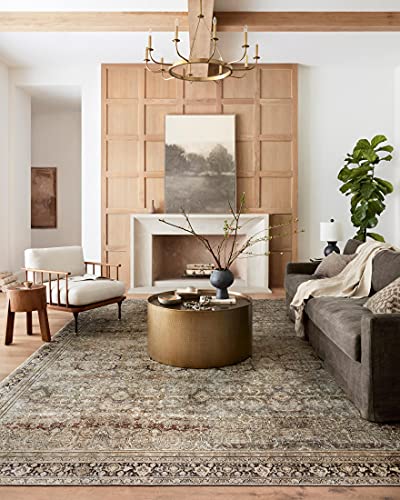
Loloi Layla Olive/Charcoal 7′-6″ x 9′-6″ Area Rug | LAY-03 Printed Approx. 8×10 Green Livi
Our badge: Best Overall
The Loloi Layla Olive/Charcoal 7′-6″ x 9′-6″ Area Rug | LAY-03 Printed Approx. 8×10 Green Livi is the easiest rug in the pool to vacuum well, and it is not close. Its printed construction keeps pile to a whisper, so suction reaches the base where grit actually lives, the brush roll has nothing to grab or tangle, and a standard pass leaves the surface genuinely clean rather than cosmetically tidied. Power-loomed consistency adds non-shedding manners, so the vacuum is removing your dirt, not the rug itself, week after week.
Technique with the Layla is gloriously ordinary: medium suction, brush on or off, two slow passes in overlapping lanes, done. It stays put better than most thin rugs because of its size and drape, though a pad underneath — which the maker suggests for cushion and placement — turns good behavior into perfect behavior, especially on slick hardwood. In dining rooms, where crumbs are a daily event, this is the rug that keeps vacuuming a five-minute errand instead of a project.
Strengths
- Near-zero pile releases dirt completely to any vacuum
- Non-shedding surface means cleaning removes dirt, not rug
- Large, draping format stays planted during passes
Trade-offs
- Thin build benefits from a pad for grip and cushion
- Printed surface shows vacuum tracks briefly on the nap
- Arrives with temporary creases that need days to relax
| Color | Olive / Charcoal |
| Size | 7’6″ x 9’6″ (Rectangular) |
Choose the Layla if your priority is a big, beautiful rug that your existing vacuum already knows how to clean. Skip it only if you crave plush depth — and then accept the deeper cleaning contract that comes with pile, as the technique sections below explain.
Best for: dining rooms, living rooms and anyone who wants vacuuming finished fast / Not suited for: plush-comfort seekers
Choose this if you want the vacuum question to disappear. Check on Amazon
SAFAVIEH Madison Area Rug 8×10
Our badge: Best for Busy Homes
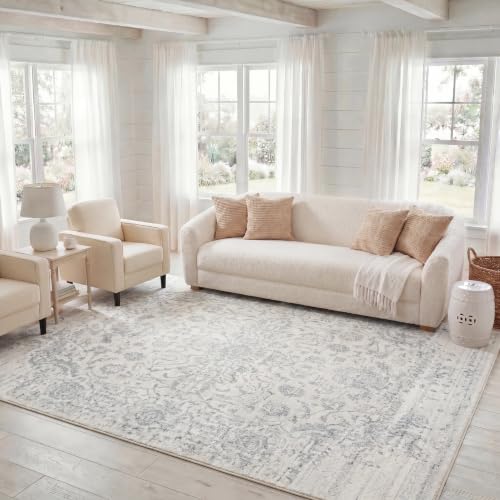
The SAFAVIEH Madison Area Rug 8×10 earns its place with a specification most rugs never state: its maker instructs vacuuming without a beater bar, which tells you exactly how this rug wants to be cleaned — and a rug that tells you its rules is a rug that will cooperate. The 3/8-inch polypropylene pile is low enough for suction to finish the job, dense enough to look tailored, and low-shedding enough that weekly passes stay quick across a full 8×10 of living room.
In practice the Madison rewards a suction-forward routine: brush roll off or raised, slow lanes, edges approached from the rug outward so the head does not catch and flip a corner. Its weight helps it stay planted, and a pad completes the stability story while protecting the floor beneath. For busy homes — kids, pets, a robot vacuum running between human passes — this predictable behavior is the whole point: the Madison never surprises your routine.
Strengths
- Maker-specified no-beater-bar care removes guesswork
- Low-shedding polypropylene keeps passes productive
- Substantial 8×10 format stays put underfoot and under vacuum
Trade-offs
- Brush-roll devotees must change their default setting
- Silver-ivory palette shows dark grit between passes
- Needs the same crease-relaxing patience on arrival as most rolled rugs
| Color | Silver/Ivory |
| Size | 8′ x 10′ (Rectangular) |
Choose the Madison when you want a tailored, traditional look that still cleans like a workhorse. It is the interior designer’s answer to a vacuum question — proof the two conversations can be the same one.
Best for: busy living rooms and robot-vacuum households / Not suited for: anyone unwilling to switch off a beater bar
Choose this for specified, predictable cleanability. Check on Amazon

Unique Loom Sofia Collection Area Rug – Salle Garnier (7′ 1″ x 10′ Rectangle
Our badge: Best Budget
The Unique Loom Sofia Collection Area Rug – Salle Garnier (7′ 1″ x 10′ Rectangle pairs a quarter-inch polypropylene pile with a jute backing, and that backing is its vacuum superpower: it gives the rug body and flatness, so the head glides across a stable surface instead of pushing a ripple ahead of itself. The maker recommends regular vacuuming and even allows a carpet cleaner with immediate, even drying — a care profile that signals a rug built for ordinary machines and ordinary weeks.
At a quarter inch, grit sits within easy suction reach, pet hair releases instead of weaving in, and the rug’s moderate weight keeps corners honest. On hardwood the jute backing is noted as safe for the floor, and the whole piece behaves like the dependable middle of the rug world: nothing exotic, everything predictable. For rentals, first apartments and family rooms that vacuum twice a week, predictability is the premium feature.
Strengths
- Jute backing keeps the rug flat and planted under the vacuum head
- Quarter-inch pile releases dirt and hair completely
- Maker-approved routine care, including occasional machine cleaning
Trade-offs
- Jute backing should be kept dry — vacuum, don’t soak, the underside
- Comfort is pleasant rather than plush
- Traditional pattern is safe, not statement-making
| Color | Beige/Ivory |
| Size | 7’1″ x 10′ (Rectangular) |
Choose the Sofia when you want a big area rug that treats vacuuming as a non-event. It will not thrill a texture connoisseur; it will delight whoever holds the vacuum.
Best for: rentals, family rooms and twice-a-week vacuum routines / Not suited for: damp rooms where a jute backing would stay wet
Choose this for flat, planted, easy passes. Check on Amazon

Lahome Insect 5×7 Area Rugs
Our badge: Best for Pet Owners
The Lahome Insect 5×7 Area Rugs attacks the pet-hair problem geometrically: at 0.19 inches of pile, there is simply no depth for hair, crumbs or litter to hide in, so a vacuum — or even a quick sweep — recovers nearly everything on the first pass. The maker says the quiet part out loud: pet urine and messes wipe away with a rag, and bigger events go in the washing machine. Add a TPE non-slip backing that keeps the rug from migrating under the vacuum head, and you have the pet household’s ideal cleaning loop.
Daily life with the Lahome is a study in low friction. Hair sits on the surface waiting to be picked up instead of knitting itself into pile; tracked litter stays visible and removable; the rug’s modest size means a full clean takes minutes and a wash cycle resets it completely. Its artificial-wool softness keeps it pleasant for pets to lie on, which matters, because a rug pets avoid is a rug that fails its real job.
Strengths
- Ultra-low pile gives hair and debris nowhere to hide
- Machine washable for accidents vacuuming cannot solve
- TPE backing grips hard floors during passes
Trade-offs
- 5×7 is a zone rug, not a whole-room anchor
- Thin build offers little cushion without a pad
- Insect-and-plant pattern is a specific taste
| Color | Green |
| Size | 5′ x 7′ (Rectangular) |
Choose the Lahome for pet zones, feeding corners, and any room where hair management is the week’s recurring theme. It converts the hardest vacuuming brief in the house into the easiest.
Best for: pet owners, feeding zones and litter-adjacent rooms / Not suited for: anchoring a large living room
Choose this when hair is the enemy. Check on Amazon

Tumble Lisa Washable Area Rug | 9×12 Living Room Bedroom Area Rug
Our badge: Best Premium
The Tumble Lisa Washable Area Rug | 9×12 Living Room Bedroom Area Rug solves the lightweight-rug problem structurally: its included cushioned pad uses a corner-pocket system that anchors the rug flat, so vacuum passes do not surf it across the room or bunch its edges. The low-pile polyester chenille releases everyday dirt to suction readily, and when vacuuming reaches its limit — the spill, the sick pet, the muddy season — the rug goes into a standard washer and dryer and comes back reset. That two-tier cleaning contract is the most complete in this guide.
The spillproof surface deserves its vacuum-relevant credit too: liquids bead rather than soaking to the pad, which means the grit-and-moisture mixture that makes rugs smell old before their time never gets established. Weekly vacuuming stays a surface errand because the deep layer is periodically laundered instead of slowly accumulating. For a 9×12, that is a genuinely different ownership experience from every non-washable large rug.
Strengths
- Included anchoring pad stops vacuum surfing entirely
- Machine washable — the deep clean no vacuum can match
- Spillproof surface keeps dirt dry and vacuum-able
Trade-offs
- Two-piece system takes a minute to re-seat after washing
- Low-pile chenille is soft, not plush
- Premium system pricing logic applies at checkout — check the listing
| Color | Midnight |
| Size | 9×12′ |
Choose the Tumble when your area rug is large, your household is busy, and you want both a calm weekly vacuum and a true reset button. It is the premium pick because it removes problems rather than decorating over them.
Best for: large living rooms, families and pet homes that vacuum weekly and wash seasonally / Not suited for: single-piece-rug traditionalists
Choose this for the complete cleaning system. Check on Amazon

nuLOOM 5×7 Moroccan Blythe Area Rug
Our badge: Best Compact
The nuLOOM 5×7 Moroccan Blythe Area Rug closes the set as the quick-finish specialist: 100% polypropylene, power-loomed in Turkey, at a 5×7 size that a single unhurried pass pattern genuinely completes. Its medium-low profile keeps dirt within suction reach, the fibers are stain resistant for the spots vacuuming leaves behind, and the faded bohemian pattern camouflages the light dust that accumulates between passes in real homes.
Small rugs fail vacuuming in one specific way — they are light enough to get pushed around — and the Blythe mitigates it the honest way: place it under furniture edges, add a pad on slick floors, and vacuum from the center outward. With those basics handled, it is the fastest full clean in this guide, which is why it suits bedrooms, offices and entry-adjacent zones where a five-minute tidy is the entire ambition.
Strengths
- Polypropylene surface releases dirt and resists stains
- Compact size makes a complete clean genuinely quick
- Pattern hides between-pass dust gracefully
Trade-offs
- Lightweight build wants furniture anchoring or a pad
- Too small to anchor a full seating arrangement
- Boho pattern is a defined style commitment
| Color | Blythe Grey |
| Size | 5′ x 7’5″ (Rectangular) |
Choose the Blythe when the room is modest, the routine is brisk, and the rug’s job is to look good while asking almost nothing. In the economy of weekly chores, that is a serious virtue.
Best for: bedrooms, offices and small living spaces / Not suited for: large open-plan rooms
Choose this for the fastest finish. Check on Amazon
Comparison Table
| Pick | Pile / build | Stays planted via | Deep-clean option | Check price on Amazon |
|---|---|---|---|---|
| Loloi Layla | Printed, near-zero pile | Size and drape (+ pad) | Spot clean | Check price on Amazon |
| SAFAVIEH Madison | 3/8″ polypropylene | Weight (+ pad) | Spot clean | Check price on Amazon |
| Unique Loom Sofia | 1/4″ polypropylene | Jute backing | Carpet cleaner allowed, dry fast | Check price on Amazon |
| Lahome Insect | 0.19″ low pile | TPE non-slip backing | Machine washable | Check price on Amazon |
| Tumble Lisa | Low-pile chenille | Included anchoring pad | Machine washable | Check price on Amazon |
| nuLOOM Blythe | Polypropylene, low-medium | Furniture / pad | Spot clean | Check price on Amazon |
How to Choose the Best Vacuum Approach for Area Rugs
Read the pile before you buy the routine
Measure or estimate pile height and density, because they set your vacuum’s job description. Under a quarter inch, almost any machine and setting succeeds. A quarter to a half inch wants adjustable height and honest suction. Above an inch, you are in shake-and-rake territory where vacuuming is one tool among several. Choosing a rug is choosing this routine — decide with your eyes open.
Decide your brush-roll policy per rug
Beater bars agitate low synthetic piles beautifully and abuse delicate fibers, printed surfaces and loop constructions. The Madison’s maker says no beater bar; jute wants the gentlest suction you have; shag wants low settings and patience. Write each rug’s policy on a note inside the vacuum closet if your household has several rug types — the two minutes that saves a rug from the wrong setting is the best investment in this entire topic, a point Best Vacuum For Shag Rugs develops for the deepest piles.
Anchor before you agitate
A rug that moves cannot be cleaned. Pads, corner anchoring, furniture weight and non-slip backings are vacuum accessories as surely as any attachment. Budget and install them with the rug, and your existing vacuum instantly performs a class better.
Match machine style to rug mix
Households with many low-pile rugs thrive with strong-suction canisters and robot vacuums on a schedule. Mixed homes — rugs plus bare floors — want a machine that transitions without drama, which is the whole subject of Best Vacuum For Rugs And Hardwood. Delicate-rug homes want suction control above raw power. Buy the machine for the rugs you actually own.
Plan the deep-clean tier in advance
Vacuuming is maintenance, not resurrection. Decide now how each rug gets its periodic deep clean — laundry, hose, professional, or replacement cycle — so the decision is a plan rather than a crisis response to a smell you can no longer ignore.
How Do You Vacuum an Area Rug Correctly?
Start by removing the loose layer: shake small rugs outdoors, and pick up large debris by hand so the vacuum spends its power on grit, not wrappers. Vacuum the floor around the rug first, so you are not dragging perimeter dirt onto it. Then work the rug in slow, overlapping lanes — half the speed you want to use — first with the nap and then against it, because grit releases on the second direction change. Do edges last, approaching from the rug toward the floor so the head never scoops an edge upward; lift and vacuum under the perimeter monthly, since the grit that migrates underneath is what sands the backing and scratches floors. Empty the vacuum before it is full: suction falls off long before the bin looks dramatic, and area rugs, with their concentrated grit load, expose that falloff first.
Problem: the vacuum pushes the rug ahead of it — The rug is unanchored. Add a pad, anchor corners, or vacuum from the center outward with a foot anchoring the far edge.
Problem: passes leave visible dirt lanes — You are moving too fast or the bin is full. Slow down, overlap by half, and empty the machine; low piles reward patience immediately.
Problem: fringe gets eaten — Never vacuum over fringe. Park the head at the rug’s edge and comb fringe by hand or with a handheld attachment, working outward.
Problem: the rug looks clean but smells stale — Odor lives below the pile. Air the rug outdoors, clean or replace the pad, and use the rug’s deep-clean tier; surface passes cannot fix a foundation problem.
Robot Vacuums and Area Rugs: A Compatibility Field Guide
Robots love exactly the rugs this guide linked: low piles they can climb, stable edges they cannot bunch, and patterns — a genuine bonus — that their cameras read as navigable texture. They struggle with deep shag (wheels and brushes bog), with fringe (a snack), with very light rugs they can push into furniture dams, and with dark rugs over dark floors where cliff sensors may misread. If a robot is your primary cleaner, shop rugs by robot rules first: pile under roughly half an inch, no fringe or tucked fringe, enough weight or pad to stay planted, and a color that contrasts with the floor beneath. The Layla, Madison, Lahome and Blythe all pass that audit, which is not a coincidence — modern rug buying and robot ownership are now the same conversation in most homes.
What About the Rugs This Guide Did Not Link?
Deep shag and hand-woven naturals are excellent rugs with stricter vacuum contracts, and honesty requires naming their terms. Shag wants low suction, no aggressive brush, outdoor shaking and occasional raking. Homes mixing rugs with broad carpeted areas will also find the overlap guidance in Best Vacuums For Hardwood Floors And Carpet useful, since the same settings discipline governs both surfaces. Jute wants gentle suction or a handheld attachment, per its maker’s own instructions, and never a soaking. Wool and delicate hand-knotted pieces — prose-only here, as the pool holds none — want suction-only passes and professional deep cleans. None of this makes them bad purchases; it makes them purchases for households that enjoy the ritual. Buy them with eyes open and they will be loved; buy them expecting Layla manners and they will be resented unfairly.
Common Buying Mistakes
Buying a powerful vacuum to fix a difficult rug
Power cannot repeal pile geometry. A cooperative rug with a modest machine out-cleans a stubborn rug with a flagship machine, every week, with less noise.
Vacuuming every rug on the same setting
One setting for the whole house is how printed surfaces get scuffed and shag gets mangled. Thirty seconds of adjustment per rug is the cheapest care there is.
Skipping the pad and blaming the rug
Surfing, bunching and edge curl under a vacuum are anchoring failures, not rug failures. Anchor first; judge second.
Never cleaning under the rug
The underside accumulates the finest, most abrasive grit. Monthly lifting protects both the backing and the floor — skipping it sands both, silently.
Waiting for visible dirt
Rugs hold damaging grit long before they look dirty. A calendar-based routine beats a appearance-based one for every construction in this guide.
Vacuum Settings Cheat Sheet by Rug Type
Keep this beside the machine. Printed and flatweave rugs (the Layla’s family): brush on or off, medium-high suction, standard height — they forgive nearly everything except a scorched-speed pass. Low-pile synthetics at a quarter to three-eighths inch (Sofia, Madison): brush off or raised for the Madison per its maker, on for durable polypropylene like the Sofia, suction honest and passes slow. Washable low piles (Lahome, Tumble): any reasonable setting, because the laundry is your insurance policy; spend your care on the wash cycle instead. Medium piles: raise the head, keep the brush gentle, and add a cross-direction second pass. Shag and high pile: suction low, brush off or at its gentlest, head high, plus monthly shaking outdoors. The wider machine landscape behind these settings is surveyed in Best Vacuums For Rugs. Hand-woven naturals: suction only, low power or a handheld attachment, exactly as the jute’s maker instructs. Fringe of any kind: never under the head, always hand-finished. Two households in three vacuum every rug identically; the third household, the one whose rugs look new at year five, owns this cheat sheet in some form.
The Under-Rug Problem Nobody Vacuums
Every area rug is a grit sandwich in slow motion. Fine particles migrate through the pile, collect at the backing, and then grind between backing and floor with every footstep — sanding hardwood finishes, scratching tile glaze, and abrading the rug’s own foundation from beneath. Vacuuming the top, however perfectly, does nothing for this layer. The remedy is unglamorous and absolute: monthly, roll the rug back, vacuum the floor and the rug’s underside, check the pad for crumbling or grit load, and only then re-lay. Pads earn special scrutiny because a pad that has begun to disintegrate becomes a grit factory of its own. This single monthly habit is the difference between a rug that protects a floor for a decade and a rug that quietly refinishes it with scratches — and it is the section of rug care most often skipped precisely because the damage is invisible until the rug is moved for an unrelated reason and the floor tells the story all at once.
How Often, How Long, How Thorough: A Realistic Schedule
Translate good intentions into a calendar or they evaporate. Entry-adjacent and pet-zone rugs: two passes a week, five to eight minutes each, plus a monthly under-rug session. Main living rugs: one thorough weekly session — slow lanes, two directions, edges done properly — beats three rushed ones. Bedroom rugs: weekly light, monthly thorough, since their load is dust rather than grit. Dining rugs: after any crumb-heavy gathering, a quick pass keeps the weekly session short. Seasonal deep cleans ride on top: washables into the laundry two to four times a year, hose-ables outdoors in warm months, delicate rugs to professionals annually. Total honest cost for a typical three-rug home: about twenty minutes a week and one longer session a month. Households that claim rug care takes too long are usually describing the price of rescuing neglected rugs, not maintaining kept ones — maintenance is cheap precisely because it never lets a rescue become necessary. Readers whose rugs share the floor with serious pet hair should layer in the routine from Best Lint Remover For Pet Hair, because the best vacuum for area rugs still leaves the sofa and your clothes to another tool.
When the Vacuum Is Not the Answer
Some rug problems wear a vacuuming costume. A rug that smells after cleaning has a pad or floor problem. A rug with a set stain needs targeted treatment or a wash cycle, not a fortieth pass. A rug shedding handfuls at month six has a construction issue no setting will fix. A rug rippling under the head has an anchoring or humidity problem. Learning to say “this is not a vacuum problem” saves machines, rugs and tempers, and it points each issue at its real remedy — which is why this guide keeps returning to systems: rug, pad, floor, machine and calendar, working as one appliance with five parts.
Suction, Agitation and Airflow: What Actually Cleans a Rug
Three forces share the work, and understanding their division of labor explains every setting in this guide. Suction lifts loosened particles into the machine; it is the only force a delicate rug should ever meet. Agitation — the brush roll — loosens what suction alone cannot, vibrating grit out of pile bases and flicking hair free; it is powerful medicine with real side effects on prints, loops and delicate weaves. Airflow carries what the other two free; it falls as filters clog and bins fill, which is why a half-maintained premium machine cleans worse than a fresh mid-range one. When a rug “won’t come clean,” diagnose by force: dirt still bonded needs agitation or washing; dirt loosened but remaining needs suction and airflow; dirt returning within days is migrating from under the rug or from a grit-loaded pad. That three-question diagnosis, applied honestly, resolves most rug-cleaning mysteries without buying anything.
Allergens, Dust and the Case for Slow Passes
Area rugs are a home’s largest soft filter: they trap dust, pollen and dander that would otherwise stay airborne — a comfort benefit for the room and a responsibility for the vacuum routine. Slow passes matter here more than anywhere, because fine particles need dwell time under suction to leave the pile base; a fast cosmetic pass redistributes as much as it removes. Emptying the machine outdoors or into a bag you seal, washing or replacing filters on schedule, and giving bedroom rugs a weekly rather than monthly cadence all serve the same goal: the rug should be a trap that gets emptied, not a reservoir that gets stirred. Households managing sensitivities often pair low-pile, washable rugs — the Lahome and Tumble pattern — with this slower discipline, and the combination outperforms any single heroic appliance purchase aimed at the same problem.
Edges, Corners and Binding: Where Vacuums Do Their Damage
Ask a rug repairer where vacuum damage lives and the answer is always the perimeter. The head scoops a corner and folds it under the brush; the wheels ride a binding until it frays; a caught edge gets chewed in the two seconds before the operator reacts. Prevention is a technique, not a product: approach edges from inside the rug moving outward, never drive onto the rug from the floor at speed, keep one hand free to pin a light corner, and slow down for the final lane as if parking a car. Bound and serged edges tolerate normal life well; fringed edges demand the hand-finishing rule without exception. Corners that curl upward invite the scoop — weight them flat for a few days, use the pad’s anchoring, or apply the reverse-roll patience every maker recommends, because a flat corner is a safe corner. Five years of edge discipline is visible in a rug the way five years of edge abuse is: the center forgives, the perimeter testifies.
Teaching the Household: One Routine, Many Hands
In most homes several people vacuum, and rugs suffer when each improvises. The fix is a two-line house standard posted where the machine lives: which setting for which rug, and the two inviolable rules (fringe by hand, edges outward). Teenagers, partners and house cleaners all perform better with the standard written than with it assumed, and a robot’s schedule can be set to the same map — rugs it may climb, zones it must skip. This sounds administrative because it is, and it works because rug damage is rarely malice; it is uninformed enthusiasm with a powerful appliance. The households whose rugs age gracefully are not luckier; they are merely the ones where the person vacuuming on a busy Tuesday knows what the person who bought the rug intended.
A Word on Handhelds, Sticks and Attachments
The main vacuum gets the lanes; attachments win the details. A handheld or stick earns its keep on stairs rugs, entry runners, and the two feet of rug in front of every sink and sofa where crumbs concentrate — zones that need thirty seconds daily more than they need a weekly production. Crevice tools recover the grit line where rug meets baseboard, upholstery nozzles lift hair from low piles without brush risk, and a soft dusting brush is the only powered tool a delicate weave should ever meet. Households that stage a small stick vacuum near the highest-traffic rug report the paradox of good systems: they vacuum more often and spend less total time, because no session ever grows into a rescue. Match that staging to your own map — the rug by the door, the rug under the high chair, the rug in front of the litter box — and the main machine’s weekly pass becomes the lightest version of itself.
Seasonal Deep-Clean Pairings
Vacuuming carries the year, but each construction deserves a seasonal partner act. Washables get their laundry resets as seasons turn — after mud season, after pollen season, before holiday guests. Polypropylene low piles get an outdoor shake and, where the maker allows, a gentle hose or extraction clean in warm weather, dried fully before returning to the floor. Printed rugs get a slow, deliberate two-direction session and a pad inspection. Naturals get their professional or careful hand-clean window in the driest month. Put these on the same calendar that holds gutter cleaning and filter changes, and no rug in the house ever reaches the state where a routine pass stops being enough — which is, in the end, the entire philosophy of this guide: small, correct, scheduled care, matched to rugs chosen to receive it well.
Final Recommendation
For most homes the vacuum-friendliest area rug is the Loloi Layla Olive/Charcoal 7′-6″ x 9′-6″ Area Rug | LAY-03 Printed Approx. 8×10 Green Livi: nothing to tangle, nothing to hide in, clean in minutes. The runner-up for households that want a deeper clean tier is the Tumble Lisa — Check on Amazon — whose washable, pad-anchored system solves what suction cannot. Choose the Madison for tailored looks with specified care, the Lahome for pets, the Sofia for planted value, and the Blythe for small rooms — and your existing vacuum will suddenly seem like the best vacuum for area rugs, because the rugs finally let it be.
Frequently Asked Questions
Should I use a beater bar on area rugs?
On durable low-pile synthetics, usually yes; on printed, delicate, looped or maker-specified no-beater rugs like the Madison, no. The rug’s own care note outranks habit.
How often should area rugs be vacuumed?
Weekly for most rooms, twice weekly in entry and pet zones, and monthly underneath. Grit damage is cumulative and invisible until it is not, which is why the calendar matters more than the occasional heroic session: small, regular passes remove abrasive particles while they are still near the surface, long before they can work down to the backing and start cutting fibers from below.
Why does my rug still look dirty after vacuuming?
Usually speed, a full bin, or dirt held below a pile the setting cannot reach. Slow overlapping passes in two directions, with an emptied machine, resolve most cases.
Are robot vacuums safe for area rugs?
For low-pile, fringe-free, anchored rugs, yes — they excel at the frequent light passes rugs love. Keep them off deep shag and loose fringe.
Can vacuuming damage a rug?
Yes: aggressive brushes on delicate fibers, eaten fringe, and edge scooping all cause real wear. Correct settings and edge discipline make vacuuming protective instead.
What pile height is easiest to vacuum?
Under a quarter inch is the easiest by a wide margin; up to about half an inch stays cooperative with adjustable machines and honest suction.
How do I vacuum a rug on hardwood without scratching the floor?
Keep the rug anchored on a pad so the machine never pushes it across the boards, vacuum grit off the surrounding floor first so wheels are not rolling it under the rug’s edge, and lift rather than drag the vacuum across exposed floor transitions. Most “vacuum scratches” are grit scratches delivered by movement; remove the grit and the movement, and the floor stays safe.
Is it better to vacuum before or after mopping the surrounding floor?
Before, always. Mopping first turns loose grit into a slurry that feet then carry onto the rug, and damp floor edges can wick into a rug’s perimeter. Vacuum the whole system — floor, rug top, and periodically the underside — then mop the bare floor while the rug’s edges are lifted or the rug is rolled back.


