Best Tenon Saws
The best tenon saws are backed hand saws sized for controlled, relatively deep cuts in furniture and bench joinery. They are often chosen to cut tenon cheeks with the grain and shoulders across the grain, but no single tooth pattern is ideal for every part of the joint. The blade’s usable depth, tooth filing, plate thickness, back, kerf, handle balance, and sharpening support should all match the work.
This guide focuses on tenon backsaws and mortise-and-tenon joinery. It expands on the brief tenon-saw section in our crosscut hand-saw guide by comparing rip, crosscut, and hybrid tenon saws for cheek and shoulder cuts. It is also distinct from our dovetail saw guide, which centers on smaller, shallower joinery cuts, and our Japanese saw guide, which covers pull-stroke saw families including dozuki. Tenon saws are generally larger backsaws intended for deeper cuts in heavier joinery stock.
This is a research-based buying guide, not a hands-on ranking. We did not test current saws, measure cut speed or accuracy, or confirm live prices. Manufacturer dimensions and tooth patterns are model-specific. Check current product listings and instructions before buying.
Affiliate disclosure: This article may contain affiliate links. If you buy through one, DailyHomeDecorating.com may earn a commission at no extra cost to you. Product choices should remain grounded in fit, intended use, and verifiable manufacturer information.
Amazon product examples to compare

ASIN: B0043YHJQ2

ASIN: B0FT3PCJCC
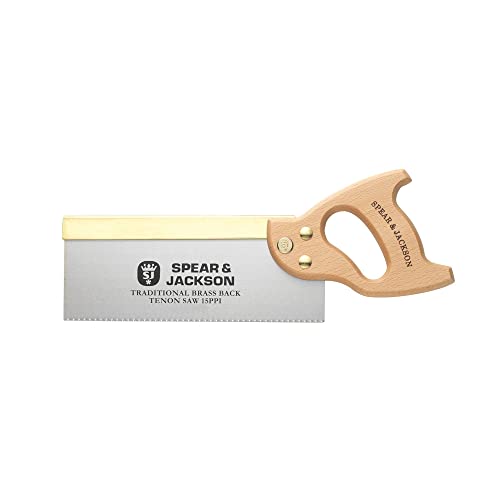
ASIN: B004QN55OS
Certain content that appears on this site comes from Amazon. This content is provided “as is” and is subject to change or removal at any time. Product examples and images are supplied through Amazon Creators API; confirm specifications and availability on the current listing.
Quick answer: match the teeth to the cut you repeat
If most of your work is cutting tenon cheeks along the grain, begin with a rip-filed tenon saw whose depth and tooth pitch suit your stock. If your main task is cutting tenon shoulders across the grain, a crosscut-filed saw may make more sense. If you want one saw to perform both operations, look for a hybrid pattern or accept that the result is a compromise; evaluate the specific tooth geometry and the maker’s intended use.
Then compare the actual cutting depth below the back. A tenon saw can be longer and deeper than a small dovetail saw, but the stiff back limits how far the blade can descend through a board. Check stock thickness against the usable depth, not the overall blade length. Finally, assess plate thickness, kerf, handle comfort, replacement or sharpening options, and whether a guide or bench hook you own fits the saw’s dimensions.
What a tenon saw is
A tenon saw is a backsaw: a relatively thin blade reinforced along its spine by a rigid back. The back helps the blade resist bending and encourages a straight cut, while limiting the maximum depth the saw can reach. The saw’s handle is usually a closed pistol grip, though open handles and different hang angles exist. Its size makes it a bench tool for joinery rather than a general-purpose full-size panel saw.
The name comes from the mortise-and-tenon joint, where a projecting tenon fits into a matching mortise. A tenon typically has two cheeks and one or more shoulders. Cutting those surfaces accurately requires different directions through the grain. A backsaw’s stiffness and controlled stroke can help establish the joint geometry, but it does not make a poor layout or an unstable workpiece accurate.
Terminology overlaps among tenon, carcass, sash, and dovetail saws. Makers may define sizes differently. A small tenon saw can overlap with a large dovetail or carcass saw, and some hybrid tooth patterns are marketed across joinery uses. Compare usable depth, blade length, tooth pattern, and stated tasks rather than relying only on the product label.
Cheeks, shoulders, and the cuts a tenon saw makes
Tenon cheeks: cuts along the grain
The broad side surfaces of a tenon are its cheeks. A rip-filed blade is shaped to sever fibers along the grain and is commonly chosen for cheek cuts. The saw can remove waste between layout lines, after which the cheeks can be pared or tuned with a chisel. A blade with appropriate depth and tooth pitch may help remove material efficiently while remaining controllable.
Tenon cheeks can be long relative to the thickness of the stock, so usable blade depth and stroke length matter. The work should be held securely in a vise or fixture, with the shoulder line visible and the saw able to travel without striking the bench. A saw that is too short or shallow can bottom out against the stock before completing the cut.
Tenon shoulders: crosscuts across the grain
Shoulders are the end faces that seat against the mortised piece. These cuts cross the grain and benefit from crosscut tooth geometry, which slices fibers across rather than tearing them longitudinally. Shoulder accuracy has a direct effect on how closely the joint closes and how much paring is required.
A backsaw’s stiff plate can follow a shoulder line accurately when started with light strokes. Use a marking knife or sharp pencil and establish a shallow kerf on the waste side. Do not force the saw across the line. A crosscut tenon saw is a practical option when shoulder cuts are the main task, but it may be less efficient for long rip cuts along the cheeks.
Haunches, laps, and other bench joinery
Tenon saws can also be used for haunches, small laps, stopped cuts, and other joinery where a backed blade’s depth and stiffness are useful. The exact fit depends on the joint size and access. A deep haunch may exceed the saw’s capacity; a tiny detail may be easier with a dovetail or carcass saw. Match the saw to the geometry rather than trying to use one backsaw for every joint.
Shop cuts beyond tenons
A tenon saw can trim stock to length, cut small shoulders or dados, or make controlled cuts in a miter box if the box accommodates its back. It is not a substitute for a full-size panel saw when breaking down long boards. It also should not be used where the workpiece is too large to support safely or the saw cannot pass through the required depth.
Rip, crosscut, or hybrid tooth filing
Rip-filed tenon saws
Rip teeth are shaped to cut with the grain. They are commonly used for tenon cheeks and other lengthwise joinery cuts. The tooth geometry and rake determine how aggressively the saw enters the wood. A more aggressive filing may remove waste efficiently but can be harder to control for a beginner. A finer or less aggressive tooth pattern may offer more control at the cost of speed.
Veritas lists a dedicated rip tenon saw with tooth details and intended cheek-cutting use in its product information, and Lee Valley’s tenon-saw category identifies rip and crosscut configurations. These examples demonstrate why tooth filing should be a primary buying criterion. They are not universal specifications for all tenon saws.
Crosscut-filed tenon saws
Crosscut teeth have geometry intended to sever fibers across the grain. This can suit shoulders and trimming operations. If you mainly need crisp shoulder lines, a dedicated crosscut saw may help. A crosscut tenon saw can still make some rip cuts, but the filing is not optimized for efficient long cheeks. Choose based on the cuts you make most often.
Hybrid tooth patterns
Some saws use a hybrid or combination pattern intended to work reasonably well across and with the grain. A hybrid can simplify a small hand-tool kit and be useful for mixed joinery. It may be less specialized than separate rip and crosscut saws. Read the maker’s description and consider whether the teeth are hand-sharpenable or impulse hardened. A product described as hybrid does not guarantee equal performance in every cut.
Western push stroke versus Japanese pull stroke
Traditional Western tenon saws cut on the push stroke, with a thicker plate and rigid back helping resist compression. Japanese dozuki saws cut on the pull stroke and use a thin blade with a back for rigidity. The pull stroke can support a narrow kerf, while the push stroke may feel more familiar to users trained on Western backsaws. Both can be used for joinery, but blade direction, tooth geometry, sharpening, and handling differ. Do not mix the technique of one style with the other.
Blade length and usable cutting depth
Overall blade length tells only part of the story. The stiff back sits above the cutting edge and limits how far the blade can enter the work. Product pages may state maximum cut depth or blade depth; compare that number with the thickest cheeks and shoulders you intend to saw. A deep blade can reach further but may be harder to control in very small stock.
Stroke length is another consideration. A longer blade can make longer, smoother strokes on larger tenons, while a shorter saw can be easier to maneuver in tight spaces. The handle and back length affect clearance near a vise, bench, and neighboring parts. If possible, compare the saw dimensions with your bench setup before purchase.
Do not confuse backsaw depth with tenon length. The cheeks are cut parallel to the grain, and the blade needs enough depth below its spine to reach the required shoulder line. Check how the back will pass over the stock and whether the handle clears the vise. A saw that is technically deep enough may still be awkward if the work is clamped near a tall jaw.
Tooth pitch, rake, and set
Teeth per inch
Teeth per inch (TPI) describes spacing, but it does not tell the full story about how a saw cuts. A coarser rip saw may clear waste efficiently in larger tenons, while a finer crosscut pattern may leave a cleaner shoulder. Higher TPI can feel smoother in some materials but may cut more slowly, especially in thick stock. Compare TPI with the maker’s intended application and actual tooth geometry.
Veritas product labels, for example, distinguish a 9-TPI rip tenon saw from a 12-TPI crosscut tenon saw. Lie-Nielsen’s tenon-saw listing provides another product-specific combination of length, depth, and rip filing. Those numbers are examples, not target specifications that every buyer should seek.
Rake and included angle
Rake describes the forward or backward lean of the teeth, while the included angle describes the tooth point geometry. A more aggressive rake can start quickly but may feel grabby; a more relaxed rake may be easier to control. A small amount of fleam can influence crosscut behavior. These terms are most useful when comparing products that disclose them or when ordering a custom saw. Beginners should first choose a saw whose intended cut matches their work.
Tooth set and kerf
Set is the alternating spread of teeth to either side of the plate. It creates a kerf wider than the saw plate, allowing the blade to pass through without binding. More set can increase clearance but also widens the cut and removes more material. A very fine kerf can improve precision but leaves less tolerance for twisting or a wandering stroke.
For joinery, kerf affects layout and fit. Mark the waste side clearly and saw close to, but not through, the finished line. Different saws remove different widths, so test cuts in scrap help you understand the kerf. A new saw with a narrow kerf still needs proper control and accurate marking.
Plate thickness, back, and stiffness
The blade plate’s thickness affects stiffness and kerf. A thicker plate can be more resistant to bending, while a thin plate can remove less material. The back reinforces the plate so the blade can stay thin while remaining straight, but it also adds weight and limits depth. A loose, warped, or poorly fitted back undermines control.
Inspect how the back joins the blade and whether the manufacturer provides instructions for adjustment or replacement. Some saws use a folded steel back; others use brass or molded components. Material alone does not determine quality. Check that the blade sits straight, the back is secure, and the teeth are set consistently. A protective cover is useful because backed saw teeth are easy to damage in a tool drawer.
Handle, balance, and comfort
A tenon saw needs a secure handle that lets the user guide a long, controlled stroke. Handle shape, hang angle, grip size, and balance are personal. A closed handle can provide a familiar grip for a Western push saw, while open-handle designs may allow a different wrist angle. If you can inspect the saw in person, hold it in a normal sawing position and check that the handle clears your bench and vise.
The weight should support the cutting stroke without pulling the saw off line. A heavier back can provide momentum but may tire the hand during extended work. Balance is not a simple ounces-versus-grams comparison; the handle position and blade length affect how the saw feels. If you are learning joinery, a controlled and comfortable saw is more useful than a premium tool that feels awkward in your hand.
How to choose among the best tenon saws
- List your joints. Note tenon cheek length, shoulder direction, stock thickness, and how often you make each cut.
- Choose tooth filing. Select rip for cheek-heavy work, crosscut for shoulder-heavy work, or a hybrid if versatility matters.
- Check usable depth. Compare the maker’s cut depth with your thickest stock and vise position.
- Match tooth pitch to stock. Consider wood species, thickness, finish, and whether speed or control matters more.
- Review kerf and set. A narrow kerf removes less material but demands accurate technique; test on scrap.
- Compare the back and plate. Inspect stiffness, straightness, attachment, and blade protection.
- Handle the saw if possible. Check grip comfort, balance, clearance, and stroke length.
- Consider sharpening. Determine whether the saw is filed for resharpening, has impulse-hardened teeth, or uses a replaceable blade.
- Check instructions and service. Look for care guidance, blade covers, replacement parts, and a clear support route.
- Buy for your current bench work. A dedicated rip and crosscut pair can be useful for frequent joinery, but a single suitable saw may be adequate for occasional projects.
Research method and maker sources
This guide is based on manufacturer product information and care instructions. It is not a hands-on product test or a current-price ranking. Tooth pattern, blade depth, kerf, and availability differ by saw. Confirm details on the exact product page and use the maker’s care recommendations.
Lee Valley’s tenon saw category page explains the role of tenon saws in joinery, the differences between rip and crosscut patterns, and distinctions between Western push-stroke backsaws and Japanese pull-stroke dozuki saws. Its Veritas carcass and tenon saw care sheet includes handling and storage advice for the relevant saw family.
Lie-Nielsen’s Tenon Saw product page describes an example of a rip-filed backsaw, its dimensions, usable depth, and instructions access. Its listing also indicates that product availability can change, so it should be treated as a source of design information rather than an assurance of stock. Veritas product information is also reflected in its rip tenon saw label, which identifies its tooth pattern and intended cheek-cutting use.
OSHA’s handheld saw guidance covers general hand-saw and powered saw hazards, while its woodworking references emphasize safe tool condition and proper stock handling. These sources do not prescribe joinery technique; use maker instructions and sound hand-tool practice.
Set up and use a tenon saw accurately
Mark the joint clearly
Establish a consistent reference face and edge. Mark the shoulder and cheek lines with a marking knife or sharp pencil, then shade the waste. A knife wall can help register the saw teeth. Check measurements from the same reference surfaces and confirm the tenon’s width and thickness before cutting.
Secure stock and establish a kerf
Clamp the workpiece so it cannot shift and so the cut line is visible. Set the saw at the required angle and begin with short, light strokes to establish the kerf. Keep the blade square to the reference face; check the line from both sides if the cut is deep. Do not force a backsaw to correct a tilted start.
Cut cheeks and shoulders deliberately
For a rip-filed cheek, use a steady stroke that follows the layout line along the grain. For a crosscut shoulder, keep the saw aligned to the face and reference edge. Let the teeth remove material rather than leaning on the saw. Stop short of the finished line and pare to fit if needed. A tenon joint can be refined incrementally; removing too much material cannot be undone.
Practice and fit-test
Make practice tenons in scrap of the same species and thickness. Check shoulder squareness and cheek fit with a square, marking gauge, or mating mortise. The saw’s tooth pattern affects the kerf and finish; a test piece teaches you how the saw behaves. Use the saw to establish surfaces and a chisel to make fine adjustments where appropriate.
Sharpening, care, and storage
Some backsaws are designed to be sharpened; others have hardened teeth that limit or prevent conventional filing. Confirm which applies before purchase. Sharpening tools and files must match tooth pitch and pattern. If you are not experienced, use a qualified sharpening service or choose a replaceable-blade model. Do not attempt to reshape a specialty tooth pattern without the right file and knowledge.
Keep the blade clean and dry. Apply rust protection only as directed by the maker. A small amount of suitable wax on the plate may reduce friction, but avoid substances that gum the teeth. Store the saw with its blade guard or cover on. Do not place heavy tools against the teeth or back, and inspect the saw for a bent plate or loose spine before use.
Frequently asked questions
What is a tenon saw used for?
A tenon saw is a backed hand saw used for deeper, controlled joinery cuts, especially tenon cheeks and shoulders. The tooth filing determines whether it is optimized for cuts with or across the grain.
Should I buy a rip or crosscut tenon saw?
Choose rip filing if you mainly cut cheeks along the grain and crosscut filing if you mainly cut shoulders across the grain. A hybrid can handle mixed work with tradeoffs. Consider separate saws if you make both cuts frequently.
What is the difference between a tenon saw and a dovetail saw?
A tenon saw is generally larger and deeper, intended for bigger joinery stock. A dovetail saw typically has a shallower blade and finer tooth pattern for smaller, precise cuts. Actual sizes overlap by manufacturer.
What is the difference between a tenon saw and a carcass saw?
They are both backed saws, and category boundaries overlap. Tenon saws are often deeper and associated with tenon work; carcass saws are often used for cabinet crosscuts and smaller joinery. Compare tooth filing, depth, and stock capacity rather than label alone.
Can one tenon saw cut both cheeks and shoulders?
A hybrid or combination tooth pattern may work for both, and a rip or crosscut saw can perform secondary tasks less efficiently. If accuracy and speed matter across both grain directions, dedicated rip and crosscut patterns may be useful.
Can a Japanese dozuki replace a tenon saw?
It can perform some similar joinery cuts, but it cuts on the pull stroke and may have a thinner blade and narrower kerf. Its usable depth and tooth design vary. Choose based on stock thickness, desired cut, and your preference for push or pull technique.
How deep can a tenon saw cut?
Depth is limited by the blade below the back. Check the exact manufacturer’s maximum cut-depth specification and compare it with your stock. Overall saw length is not the same as usable depth.
What TPI is best for a tenon saw?
There is no universal best TPI. Coarser teeth can remove material efficiently in cheek cuts; finer teeth may help with shoulder finish. Tooth shape, rake, set, wood species, and stock thickness all affect the result.
Can tenon saws be sharpened?
Some can be filed and set; others have hardened teeth or replaceable blades. Check the maker’s instructions and use the correct file and tooth pattern. Professional sharpening is a sensible choice if you are uncertain.
How do I choose among the best tenon saws?
Start with the joint, then compare tooth filing, usable depth, blade length, TPI, kerf, back stiffness, handle comfort, and sharpening support. Test the saw on scrap and verify that its depth fits your stock.
Final buying perspective
The best tenon saw is a backsaw whose depth and tooth pattern match the joinery you make. Rip-filed teeth are a natural fit for cheeks, crosscut filing for shoulders, and hybrid patterns can serve mixed work. Compare usable depth rather than overall length, and account for kerf, tooth set, back stiffness, and sharpening. The right tool helps you establish a controlled cut; careful marking, secure stock, practice, and fitting the joint still determine the result.