Best Crosscut Saws
A crosscut saw is designed to cut across the grain of wood. In a hand-saw context, the phrase usually refers to a hand saw whose teeth are shaped and filed to sever wood fibers across the grain, rather than a rip saw that cuts with the grain. Crosscut saws come in several useful formats: full-size panel or handsaws for breaking down boards, backed carcass or tenon saws for controlled shop cuts, and small fine-tooth saws for joinery shoulders. Choosing the best crosscut saw means matching the form, blade depth, tooth geometry, and cut finish to your work.
This guide focuses on traditional hand crosscut saws for woodworking and carpentry. It is not a roundup of electric miter saws, circular saws, or forestry two-person crosscut saws. It explains panel saws and backed saws, crosscut tooth filing, teeth per inch, blade plate and kerf, handles, cut depth, sharpening, setup, and technique. If your main goal is repeatable machine-powered crosscuts, our miter saw guide covers that different tool category.
Affiliate disclosure: DailyHomeDecorating.com may earn a commission from qualifying purchases made through links. This does not affect the guidance in this article or the price you pay. Product models, tooth configurations, and availability can change; confirm the exact manufacturer listing before purchasing.
Amazon product examples to compare

ASIN: B0F38JJW5J
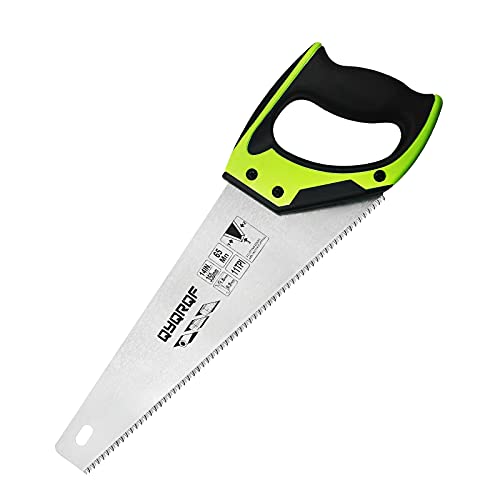
ASIN: B093FFK927

ASIN: B07B4KM1T7

ASIN: B00H2AF4GQ
Certain content that appears on this site comes from Amazon. This content is provided “as is” and is subject to change or removal at any time. Product examples and images are supplied through Amazon Creators API; confirm specifications and availability on the current listing.
Quick answer: which hand crosscut saw should you choose?
Choose a panel saw or general handsaw for ordinary board crosscuts and rough stock breakdown. Choose a backed carcass or tenon saw for more controlled crosscuts in smaller parts, shoulders, and joinery. Choose a fine-tooth small backsaw when the work is shallow and precise. Then match blade length, depth beneath the back, tooth pitch, handle, and sharpening or replacement policy to the work and your skill.
A crosscut pattern is important, but it does not make a saw universally good at every cut across the grain. A short backed saw cannot cut deeper than its spine clearance. A long unbacked saw reaches deeper but needs more guidance. A fine-tooth blade can leave a smoother edge but may cut more slowly, while a coarse blade advances quickly and may leave a rougher finish. For a general hand-tool kit, choose based on the scale and finish you actually need rather than buying the finest tooth count available.
What “crosscut” means
Wood grain runs generally along the length of a board. A crosscut goes across that grain, shortening the board or trimming a part to length. A rip cut runs with the grain, splitting or narrowing stock. The two jobs load saw teeth differently, so hand saws are often filed specifically for one direction. The Disstonian Institute’s historical saw reference describes the basic distinction: a crosscut saw cuts across the grain, while a rip saw cuts with it. Manufacturer product pages such as Veritas’s crosscut saw listings likewise describe crosscut teeth as being filed with alternating bevels to sever fibers.
The word “crosscut saw” can also describe a large forestry saw, a powered chop saw, a circular crosscut machine, or a saw used in a particular cutting operation. Here, “crosscut saw” means a traditional hand saw used for woodworking or carpentry. To avoid ambiguity when shopping, search with terms such as “crosscut hand saw,” “crosscut panel saw,” “crosscut carcass saw,” or “crosscut tenon saw,” and inspect the product description for tooth filing and intended use.
A panel saw may be supplied with rip teeth or crosscut teeth even when the product category only says “handsaw.” Some manufacturers offer a choice of tooth pattern or tooth counts. Do not assume that a saw is crosscut-filed because it has a certain number of teeth per inch or because the listing uses the word “hand saw.” Confirm the specific version.
Hand crosscut saw styles
Panel saws and full-size handsaws
A panel saw is a relatively light, unbacked hand saw used for breaking down boards and making general cuts. Crosscut versions have teeth filed for cutting across grain. The longer blade can complete a longer stroke and pass through thicker stock than a small backsaw. The blade is also more flexible than a backed saw, so it needs a steady start and a straight stroke. A panel saw is often a versatile choice for a shop that needs manual cuts without a powered saw.
Blade length and tooth pitch vary. A longer saw can be efficient on wide boards, but may be harder to start in confined spaces. A finer-tooth panel saw can leave a cleaner edge than a rough framing saw, though “fine” depends on the product and the material. If you want one hand saw for household or shop crosscuts, compare the specific tooth configuration, handle comfort, blade flexibility, sharpening options, and the size of stock you can comfortably support.
Carcass saws
A carcass saw is a backed hand saw used for furniture and cabinet work. It is generally larger than a dovetail saw and can make crosscuts for shoulders, dados, and other joinery operations where a straight, controlled cut matters. Crosscut carcass saws use teeth filed for cutting across the grain; rip versions are also available. The back stiffens the plate and limits the maximum depth of the cut.
The backed format can be easier to start accurately because the spine helps keep the blade straight. It is useful for trimming parts to length and cutting joinery shoulders, but not for deep cuts that run into the back. Veritas describes its carcass saws as a hand-saw option for controlled crosscut joinery work, while Lie-Nielsen describes its carcass saw as intended for precise cuts across the grain and tenon shoulders. These are examples of a family; check each product’s blade depth and tooth filing.
Tenon saws
A tenon saw is another backed saw, typically with a deeper plate than a small dovetail saw. Crosscut tenon saws can trim parts to length and make shoulder cuts on larger joinery. Some manufacturers offer both rip and crosscut versions. A tenon saw’s back provides stiffness but also limits depth; compare usable blade depth with your stock thickness and required cut.
For a furniture maker, a crosscut tenon saw can fill a useful gap between a small dovetail saw and a full-size panel saw. It has more cut depth than many fine dovetail saws but remains controlled for bench work. If you mostly make rough cuts on long construction lumber, a full-size hand saw or powered saw may be more efficient.
Small fine-tooth crosscut saws
Small crosscut saws and gent’s saws are designed for shallow, fine cuts. They can be useful for trimming small pieces, model work, and detailed joinery. Because their blade is short and often backed, they are not intended to cut deep through large stock. Their finer tooth patterns may produce a controlled finish but can be slow in thick or coarse material.
Compare depth of cut, not just overall length. A small backed saw may be physically long enough for a task but unable to pass through the stock because the spine contacts the top surface. Use the manufacturer’s stated capacity or inspect the saw dimensions against your workpiece.
Crosscut tooth geometry
Beveled teeth slice across fibers
Crosscut teeth are generally shaped and filed to sever fibers across the grain, rather than scrape or chisel along them. Alternating bevels create cutting edges on both sides of the kerf. This is one reason crosscut teeth can leave a smoother edge across grain than a rip-filed saw used in the same direction. The exact tooth shape, rake, fleam, set, and pitch vary among saws and manufacturers.
Veritas product documentation illustrates the relationship between filing and use: its crosscut saws have teeth filed with alternating bevels to sever wood fibers. The Veritas Small Crosscut Saw page and its tenon saw product sheet describe crosscut filing and use in shoulder cuts and trimming parts to length. Specifications are model-specific, not universal requirements for every crosscut saw.
Teeth per inch and finish
Teeth per inch (TPI) describes tooth spacing, but does not alone determine cut quality. Finer teeth generally engage the material more gradually and can support a smoother cut in thinner stock. Coarser teeth can remove material faster and provide more room for chips, but may leave a rougher surface. Tooth rake, fleam, set, plate thickness, wood species, sharpness, and technique also matter.
Choose pitch based on stock thickness and desired finish. A blade that is too fine for a thick board may cut slowly or clog; a coarse pattern may tear fibers in thin or delicate parts. Manufacturer charts and descriptions can help identify intended work. If the listing provides only TPI, ask whether the teeth are filed crosscut and what stock thickness the maker considers suitable.
Tooth set and kerf
Tooth set is the offset that gives the teeth clearance beyond the blade plate. It helps prevent the plate from binding, but also determines part of the kerf width. A narrow kerf removes less material but leaves less room for the saw to wander without changing the cut. A wider kerf can improve clearance in some conditions but removes more stock. Check the manufacturer’s specification if kerf is important to the fit of a joint.
For accurate work, mark a clear line and cut on the waste side. The kerf, not the center of the blade plate, removes material. Practice on scrap to learn how the saw tracks and how much material its teeth remove. Avoid twisting the blade to steer it; correct the line gradually while maintaining a straight stroke.
Blade, back, and kerf
Unbacked blade versus backed saw
An unbacked panel saw has no stiffening spine. It can cut deeper and longer stock but relies more on blade thickness, tooth geometry, and the operator’s control to stay straight. A backed saw has a spine that stiffens a thin plate, helping it track in shallow precision cuts. The spine also sets a maximum cut depth. Choose the form around stock thickness, cut length, and desired control.
For small furniture parts, the backed format can help with repeatable shoulders and end cuts. For deeper cuts in thicker boards, an unbacked saw may be necessary. A crosscut backsaw does not become a general-purpose panel saw just because its teeth are crosscut-filed; its back restricts the work. Conversely, a full-size panel saw may cut the depth but require more practice for a tiny shoulder cut.
Plate thickness and stiffness
A thin plate can make a narrow kerf and reduce cutting effort, but it is more sensitive to side pressure. A thicker plate may feel more stable but remove more material. Backed saws use the spine to add stiffness without requiring a thick plate. Consider the tradeoff alongside saw length, tooth set, and workholding. A novice should choose a blade they can control rather than chasing the thinnest possible kerf.
Handle and balance
The handle should let you hold the saw with a relaxed grip and align the blade to the cut. Panel saw handles often support a one-handed stroke, while some long saws are designed to accept a second hand. Backsaws may have pistol-grip or open handles. Fit varies by hand size and preferred posture. If possible, hold the saw before buying and see whether the blade’s weight and handle position feel balanced.
Check that the handle is secure, the blade does not wobble at the handle or spine, and there are no sharp edges or cracks. A comfortable grip helps control but does not compensate for a dull blade, unstable workpiece, or poor line setup. Secure the wood in a vise or with clamps where appropriate and keep the free hand clear of the cut.
How to choose a crosscut saw
- Define the workpiece. Note stock thickness, width, species, and whether you are cutting a board to length, making a shoulder, or trimming a small part.
- Choose the saw format. Panel saw for longer general cuts; carcass or tenon saw for controlled bench work; small fine-tooth saw for shallow precision cuts.
- Confirm crosscut filing. Verify the exact model has crosscut teeth rather than a rip or hybrid pattern.
- Compare usable depth. For backed saws, ensure the spine clears the stock through the required cut depth.
- Match tooth pitch. Consider stock thickness and finish. Use manufacturer guidance rather than TPI alone.
- Check plate and kerf. Compare the blade’s thickness, set, and expected kerf with the accuracy you need.
- Evaluate the handle. Look for a secure connection and a grip that suits your hand and stroke.
- Check sharpening and replacement. Confirm whether teeth can be resharpened and whether the maker offers service or replacement blades.
- Read care instructions. Understand rust prevention, blade protection, sharpening, and storage.
- Practice on scrap. Learn how the saw starts, tracks, and finishes before cutting a project part.
If one saw must cover a range of tasks, a general crosscut panel saw may be more versatile than an extremely fine backsaw. If the priority is clean joinery, a carcass or tenon saw may offer more control. Some woodworkers use a pair of rip and crosscut saws or a ryoba with separate edges. Our Japanese saw guide explains that pull-saw family, including ryoba saws with different tooth patterns on opposite edges.
Technique for straighter crosscuts
Mark from a reliable reference
Use a square or other reliable layout tool to mark across the board. If the cut must meet a specific dimension, measure from a consistent reference edge. Mark the waste side so it is clear which side of the line the kerf should occupy. For joinery shoulders, a marking knife can create a crisp reference line that helps the teeth start and can reduce tear-out at the edge.
Secure and support the stock
Clamp or otherwise secure the workpiece so it cannot shift. Support the piece close to the cut without blocking the saw’s stroke. For a crosscut, the offcut should not fall in a way that pinches the blade or tears fibers at the bottom edge. A sacrificial backing board can help support the exit side for some work. Keep fingers away from the cut and do not hold a small workpiece in a position that puts the hand in the saw path.
Start slowly and establish the kerf
Place the saw at the waste side of the line and use short, light strokes to start the kerf. Keep the blade aligned to the line and square to the face if a square cut is required. A backsaw’s spine can help guide the plate, but it does not automatically set the angle for you. A miter box or saw guide can provide a reference for appropriate cuts, provided it fits the saw and workpiece.
Use steady full strokes
Once the kerf is established, use steady strokes through the work. Let the teeth cut rather than pressing so hard that the blade bends. Use as much of the blade length as is comfortable for a long panel saw, and keep the stroke in the cut plane. If the saw wanders, ease pressure and correct the alignment gradually. Do not twist the blade sideways, as that can widen the kerf or damage the teeth.
Finish without tearing the edge
Near the end of a cut, support the offcut and reduce pressure. If the piece can break free under its own weight, support it or leave a small amount of material to finish in a controlled way. Inspect the cut with a square where squareness matters. For joinery, test the fit before adjusting the saw or changing the layout.
Sharpening, care, and storage
Hand saws can be sharpenable or designed for replacement rather than resharpening. Check the manufacturer’s instructions. Crosscut teeth require a specific file and filing geometry; sharpening without skill can change rake, bevel, set, or tooth height. For a quality saw, consider professional sharpening if you are not prepared to learn the process. Some modern saws use hardened teeth that are not intended for ordinary hand filing.
Keep the blade dry and clean. Resin and pitch can increase friction; use a cleaner compatible with the saw’s finish and handle. Apply a light protective coating if the maker recommends it. Store a backsaw or panel saw in a saw till, sleeve, or protector that keeps the teeth from striking other tools. Avoid bending or dropping the blade. If a tooth is missing or the plate is kinked, have the saw evaluated rather than forcing it through a cut.
Inspect the handle, nuts, spine, and blade before use. Tighten only as the manufacturer allows. A loose handle can shift during a cut, and a damaged spine can affect blade support. Keep the saw accessible but protected from moisture and accidental contact.
Hand saw versus powered crosscut tools
A hand crosscut saw offers portability, quiet operation, and direct control over a short cut. It does not require a power source and can be useful for trimming stock at a bench or jobsite. It is slower for repeated cuts and requires practice to maintain a square line. A miter saw is a powered machine designed for repeatable crosscuts and angles within its capacity. A circular saw can crosscut lumber or panels when guided and supported properly. These tools serve different purposes.
For curved cuts, a coping saw is more suitable than a panel crosscut saw. For fine pull-stroke cutting, a Japanese saw may be more comfortable for some users. For dovetail joints, a specialized dovetail saw may have rip-filed teeth because much of the cut follows the grain; see our dovetail saw guide. For branch work, choose a pruning saw intended for green wood and outdoor use rather than a cabinetmaking saw; see our pruning saw guide.
How this guide was prepared
This is a research-based buying guide, not a hands-on product test or ranking. It draws on manufacturer and toolmaker documentation from Veritas/Lee Valley and Lie-Nielsen’s carcass saw page, which describe crosscut tooth filing, saw styles, common use cases, and care. Historical saw reference material from the Disstonian Institute supports the distinction between crosscut and rip tooth functions. These sources help define selection criteria but do not establish a single best saw for every woodworker.
No current price, unsupported specification, or invented test result is included. For a product shortlist, check the exact model’s tooth filing, blade length and depth, TPI, kerf, handle, sharpening or replacement policy, and warranty. Product pages may offer both rip and crosscut versions under one family name, so confirm the selected variant before buying.
Frequently asked questions
What is a crosscut saw used for?
A crosscut saw cuts across the wood grain, such as trimming a board to length or cutting a joinery shoulder. In this guide, the term refers to a hand saw with teeth filed for crosscutting.
What is the difference between a crosscut saw and a rip saw?
A crosscut saw has teeth shaped and filed to sever fibers across the grain. A rip saw is filed to cut with the grain. Tooth geometry and stroke differ, so use the saw designed for the cut direction.
Is a crosscut panel saw the same as a crosscut backsaw?
Both can have crosscut teeth, but the construction differs. A panel saw is generally longer and unbacked, allowing deeper cuts. A backsaw has a stiffening spine for control but limited depth beneath that spine.
What TPI should a crosscut saw have?
There is no universal best TPI. Finer teeth can support smoother cuts in thinner stock; coarser teeth can cut faster in thicker material. Compare the manufacturer’s intended use, stock thickness, and desired finish.
Can a crosscut saw cut with the grain?
It can make a cut in wood, but a crosscut tooth pattern is not optimized for ripping. For long cuts with the grain, a rip-filed saw or another appropriate tool is usually more efficient. A hybrid tooth pattern may be intended for general use; verify the manufacturer’s description.
What is a carcass saw used for?
A carcass saw is a backed hand saw used for controlled furniture and cabinet cuts. A crosscut version is suited to trimming parts and cutting shoulders across the grain. Its spine adds stiffness but limits cut depth.
Should I buy a crosscut hand saw or a miter saw?
Choose a hand saw for portable, quiet, occasional cuts and manual control. Choose a miter saw for repeated powered crosscuts and angles when the workpiece fits its capacity. Your space, workload, and desired repeatability should guide the decision.
Can I sharpen a crosscut hand saw myself?
Yes, if the saw is designed to be sharpened and you have the appropriate tools and skill. Crosscut filing requires maintaining tooth bevel, rake, set, and height. Follow the manufacturer’s care instructions or use a qualified saw sharpener.
How do I make a square hand-saw cut?
Mark the cut with a square, secure the work, start with short light strokes, and keep the blade aligned to the line and square to the face. A compatible miter box or guide can help. Check the result with a square and practice on scrap.
Is a Japanese ryoba a crosscut saw?
A ryoba has teeth on both edges, commonly with one edge for rip cuts and one for crosscuts. It is a double-purpose pull saw rather than a single-purpose crosscut saw. Check the exact tooth edges and follow the maker’s instructions.
Final reminder: select the saw format for the stock depth and type of cut, then confirm the teeth are actually filed for crosscutting. Secure the work, mark the waste side, start lightly, and let a sharp blade do the work. A short practice cut is the best way to understand a particular saw before using it on a finished part.