Disclosure: As an Amazon Associate, Daily Home Decorating earns from qualifying purchases. If you click an Amazon link and buy, we may earn a commission at no additional cost to you.
The best spray to protect fabric sofas is one that the sofa maker allows for the exact upholstery and care code. Compare coverage, application directions, fabric exclusions, spot-testing, ventilation, and drying time before applying a protector.
What a sofa fabric protector spray can do
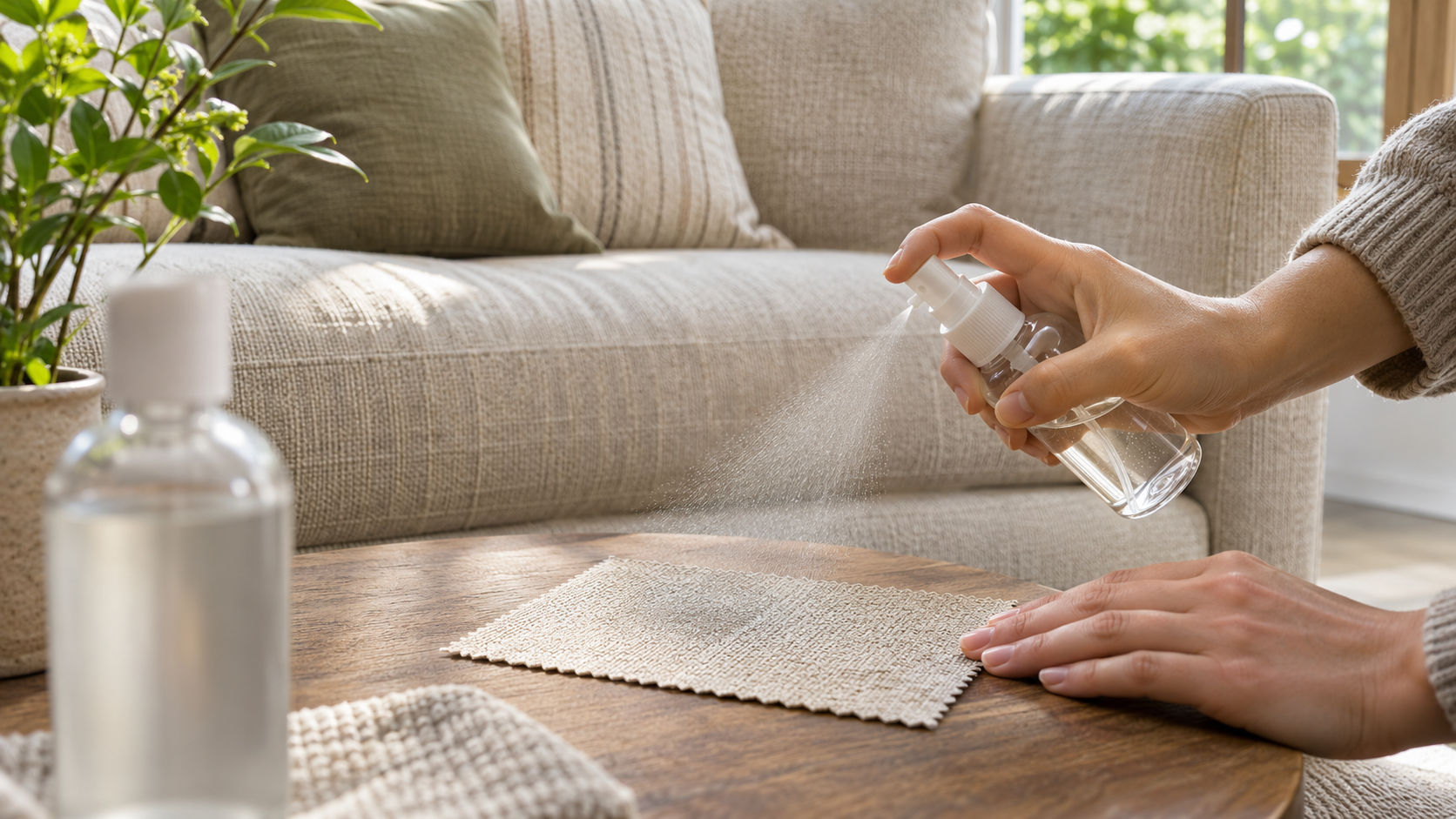
A fabric protector spray is intended to help certain spills bead or remain easier to blot from compatible upholstery. It does not make a sofa stain-proof, waterproof, or immune to wear. Results depend on the fabric, existing finish, application, amount used, and later cleaning. Some treatments may affect color, texture, odor, or breathability. Before buying, identify the sofa’s cleaning code and care instructions, then compare the product label with the fabric maker’s guidance. A spray is an optional maintenance product, not a replacement for prompt spill cleanup or a removable cover. The best choice is one that is approved for the sofa material and that you can apply safely according to its label.
Check the sofa care code first
Look for the sewn-in furniture tag or care card. Upholstery codes often indicate whether the fabric should be cleaned with water-based products, solvent-based products, either method, or vacuuming only. Codes and labels vary, so follow the sofa manufacturer instructions rather than relying on a general chart. The Scotchgard manufacturer specifically says its Fabric Water Shield is not for “X” coded fabric, which cannot be cleaned with water or solvents. It also warns against using the fabric product on smooth leather and suede. See the [official application directions](https://www.scotchgard.com/3M/en_US/scotchgard/how-to-fabric-upholstery-protector/) and use the exact product label. If the care code is missing or unclear, contact the sofa manufacturer before applying anything.
Do not treat every upholstery product as interchangeable
Fabric protectors, carpet protectors, cleaners, leather conditioners, and outdoor water shields are separate product types. A product meant for carpet may not be suitable for upholstery, and an indoor fabric spray may not be intended for outdoor cushions. Read the intended-use list on the exact container. Check whether it names furniture upholstery and whether it excludes particular fibers or finishes. A sofa can combine a fabric cover, backing, piping, foam, and decorative trim; the care tag may limit what can safely be applied. Choose a product based on the specific sofa construction, not merely a broad phrase such as “fabric protection.”
Compare spray type and format
Products may be sold as aerosol cans, pump sprays, concentrates, or larger refills. Aerosols can make broad coverage convenient but require attention to ventilation and overspray. Pump sprays may allow more controlled application, though coverage can take longer. Concentrates require exact dilution and proper equipment. Compare the container size with the sofa’s surface area and the label’s coverage estimate. Do not apply more than directed to make the finish “stronger”; heavy saturation can leave residue or affect the fabric. Check how the product should be stored and disposed of, especially for aerosol containers. The best format is the one that matches the label instructions and your ability to apply it evenly.
A couch-specific spray to compare

An Amazon Creators API result for NOYATECH Couch Protector Spray lists sofa fabric upholstery use and a 32-ounce container. Verify the current directions, fabric exclusions, ingredients, and coverage on the live label; product titles alone do not establish performance or compatibility. Before using any new spray, check the sofa care tag and test a hidden area according to the manufacturer instructions. This listing is a comparison point for a couch-oriented product format, not a tested recommendation. Consider whether the spray’s directions are clear and whether the product is designed for the exact fabric you have.
A water-based product listing

The Creators API returned protectME Fabric Protector and Stain Resistant Spray, which the product title describes as water-based and suitable for upholstery among other uses. Confirm those claims on the current package and make sure the exact formulation is the same as the listing. Water-based does not automatically mean compatible with every sofa. Test the product on a hidden area as directed, allow it to dry fully, and check for changes in color, texture, or feel. Compare application coverage, reapplication directions, and warnings. Do not treat marketing terms like “non-toxic” as a substitute for reading the full use and safety instructions.
A larger bottle option

A SoftClad fabric protector listing surfaced through the API in a 32-ounce format with product-title claims about furniture, upholstery, and indoor use. Check the current label for the exact approved surfaces, application instructions, and any exclusions. Compare the amount needed for your sofa with the product coverage estimate rather than assuming a large bottle is better value. A larger container may be useful for several compatible fabric items, but it also needs appropriate storage and careful application. Verify the selected listing size and formula before ordering because multiple sizes or variations can appear under one product page.
How to spot-test safely
Follow the product label and sofa maker instructions for spot testing. Choose a hidden area of the same fabric, apply the amount directed, and allow it to dry completely. Check for color transfer, darkening, stiffness, texture change, residue, or odor. A test on a different cushion or a less visible fabric panel may not represent the sofa’s main cover. If the product maker’s instructions specify a white cloth or colorfastness test, follow those steps. Do not proceed if the test shows damage or if the sofa care code excludes the product. A successful spot test is useful but does not guarantee identical results across every part of a sofa.
Prepare the room and nearby surfaces
Before application, vacuum and clean the sofa only as directed by its maker. Apply a protector to dry upholstery unless the product label says otherwise. Move or cover nearby flooring, wood, leather, metal, glass, and decorative objects to prevent overspray. Open windows or use other ventilation measures that the label recommends. Keep children and pets away from the area until the product is fully dry and the directions allow re-entry. Avoid spraying near flames, heaters, or other ignition sources when the label warns against it. Read the whole label before opening the container and have a plan for ventilation and drying time.
Apply in light, even coats
Use the amount and technique specified by the exact product. For Scotchgard Fabric Water Shield, the manufacturer directs users to hold the can upright, keep it about six inches from the fabric, use overlapping sweeping passes, and apply two light coats rather than one heavy coating. It also says to allow the fabric to dry between coats and test for colorfastness first. Other protectors can have different application directions, so do not transfer one brand’s instructions to another product. Avoid saturating cushion foam or spraying onto non-fabric surfaces. Let the sofa dry completely before sitting on it or replacing cushions.
Ventilation and product safety
Read the product safety label, including ventilation, protective equipment, first-aid, storage, and disposal instructions. Aerosol products may require particular ventilation and distance from heat or flame. Do not apply near an active flame, stove, candle, or pilot light if the label warns against it. Keep containers away from children and pets, and store them as directed. If the sofa is in a small room, plan where people and pets can stay while the product dries. Follow the label if it specifies outdoor application or other environmental precautions. If you cannot meet the safety directions in your home, choose another product or a professional upholstery service.
Fabric types need different decisions
Cotton, polyester, microfiber, wool, silk, velvet, linen, and blended fabrics may respond differently to sprays. Some products exclude “X” coded upholstery or advise spot testing certain textures. A fabric protector can change the hand or appearance, especially on velvet or microfiber. Decorative coatings, stain-resistant factory finishes, or waterproof backings can also affect compatibility. Avoid assuming that a spray is safe because it is described as suitable for “most fabrics.” Match the exact sofa material and code to the exact product instructions. When the material is delicate, expensive, or antique, ask the sofa manufacturer or a professional cleaner before treatment.
Leather and faux leather are different
A fabric protector is not automatically suitable for leather, suede, bonded leather, or faux leather. Scotchgard’s official instructions say not to use its Fabric Water Shield on smooth leather or suede. Other products may be specifically formulated for leather or faux leather, but confirm the exact surface and test directions. Do not use a fabric spray on a coated surface just because it looks like upholstery. For leather, follow the furniture maker’s approved cleaning and protection guidance. For faux leather, check whether the surface is vinyl, polyurethane, or another material and use a compatible product.
How often should it be reapplied?
Reapplication schedules depend on the product, sofa use, cleaning, and wear. Scotchgard’s product directions specify reapplication for upholstery every six months or after professional or water-extraction cleaning, while other brands may provide different instructions. Treat the exact package label as authoritative. Do not apply additional coats simply because a sofa sees heavy use; follow the stated sequence and use limits. Reapplication can be needed after cleaning, but the sofa should be fully dry and compatible with the process. Keep a note of the application date and product used so you can follow the label over time.
What a protector will not fix
A spray will not repair torn fabric, restore compressed cushions, strengthen seams, or prevent all staining. It may not repel oil, dye, ink, or every spill. It also cannot replace a washable cover or prompt cleaning. If the sofa already has persistent soil, clean it first using the fabric maker method and allow it to dry. If a stain has set, use a cleaner approved for the sofa code or consult a professional. Protectors are a preventive measure with limits, and expectations should match the label and fabric.
Consider whether a removable cover is better
A removable, washable cover may be more practical than spraying the original upholstery, especially in homes with children or pets. Check whether the cover can be laundered, what shrinkage precautions apply, and whether replacement covers are available. Some covers are not intended for machine washing even if they unzip. Compare the cost of a protector with a cover, throw, or professional treatment. A cover can be removed for cleaning, while a spray requires careful application and may need reapplication. Choose the option that fits the sofa’s care instructions and the household routine.
Common buying mistakes
Do not assume a fabric spray works on every sofa. Do not ignore the care code, and do not use carpet, leather, or outdoor products on indoor upholstery unless the label explicitly allows it. Avoid spraying without a spot test or ventilation. Do not soak cushions, skip drying time, or use a second product before the first one has fully dried. Do not judge the product only by claims like “waterproof,” “non-toxic,” or “safe for pets.” Read the exact label and use the product only as directed. These steps reduce the chance of discoloration, residue, or an unwanted change in fabric feel.
Questions to ask before ordering
Does the product label name sofa upholstery? Which fabrics and care codes are excluded? What area does the container cover? How many coats are directed? How long must the sofa dry? Is the product an aerosol or pump spray, and what ventilation is required? Must it be reapplied after cleaning? Does the sofa maker approve third-party protectors? Is there a hidden area for spot testing? Clear answers make it easier to choose a product and avoid applying something incompatible. Save the package label or manufacturer instructions for later reference.
Frequently asked questions
Can I spray any fabric sofa? No. Check the sofa care code and the protector label. Can I use fabric protector on leather? Not unless the exact product is designed for that leather; Scotchgard Fabric Water Shield specifically excludes smooth leather and suede. Does protector make a sofa waterproof? Do not assume so; follow the label and expect that performance varies. How do I apply it? Follow the exact product directions, spot-test, ventilate, and allow complete drying. Should I reapply after cleaning? Check the specific label; schedules differ. Can I spray over a stain? Clean first using the sofa maker method and do not seal in soil.
Final checklist
Read the sofa care tag and the protector label. Confirm that the product names the upholstery type and does not exclude the sofa’s cleaning code. Spot-test a hidden area and let it dry fully. Prepare ventilation and protect nearby surfaces. Apply only as directed, avoid oversaturation, and keep people and pets away until the product is ready. Record the product and date. Reapply only on the schedule listed by the manufacturer. If the sofa’s fabric or treatment is uncertain, ask the furniture maker or a qualified upholstery professional before applying anything.
Read the Scotchgard official upholstery protector directions and manufacturer FAQs. Continue with our sofa cleaner guide, sofa fabric guide, and Home & DIY.
Product information and images may change. Check the active listing and product label for current ingredients, use directions, warnings, fabric compatibility, and seller terms.
Protect the sofa from overspray
Spray mist can land on wood trim, flooring, painted walls, metal legs, leather, and nearby objects. Prepare the area before opening the container and cover materials that should not be treated. Work in small sections and keep the nozzle directed at the upholstery. Follow any distance and sweeping-motion directions on the label. Do not spray onto the floor or into the air around the sofa. If overspray occurs, the manufacturer may specify how to clean it; follow that guidance promptly. Keep the container upright if required and do not puncture or heat an aerosol can. A careful setup helps prevent damage to nearby finishes and reduces the need for cleanup.
Wait for complete drying
Drying time varies with product, fabric, humidity, airflow, and how much product was applied. Use the package directions rather than a generic estimate. Do not sit on the sofa, place throws over it, or return cushions to a tight arrangement until it is fully dry. A damp surface can transfer product to clothing or alter fabric feel. Ventilate the room for the period recommended by the label, and keep children and pets away until the product is ready for normal use. If the sofa still feels tacky or smells strongly after the stated period, follow the product maker advice before using it.
Households with children or pets
A product title may say “safe for pets” or “safe for kids,” but read the full label, ingredient details, and directions before relying on that phrase. Keep animals and children away during application and while the sofa dries. Store the product securely afterward. A fabric protector does not make a sofa sanitary or safe to chew, and it does not prevent every spill or scratch. For a household with frequent messes, compare a washable slipcover, removable cushions, or a wipeable material alongside sprays. Choose the approach that fits the sofa care code and the household routine, and follow the manufacturer directions exactly.
New sofa or already-used upholstery
Before treating a new sofa, read the warranty and ask whether the manufacturer recommends any additional protector. Some upholstery may already have a factory finish, and applying another product could affect appearance or warranty coverage. For an older sofa, remove loose dust and treat existing stains with an approved method before applying a protector. Do not use a protector to seal in dirt or odors. Allow the sofa to dry after cleaning, then test a hidden area. If the fabric has been dyed, repaired, or treated previously, disclose that when asking the maker or cleaner for advice.
Professional application can be a better choice
For delicate, expensive, antique, or unknown upholstery, consult the furniture maker or a professional upholstery cleaner before applying a consumer spray. A professional can identify the fabric, test an area, and recommend a treatment compatible with the construction. Ask what product will be used, whether it is approved for the sofa care code, how the room should be ventilated, and what the service warranty covers. A professional service costs more than a bottle but may reduce uncertainty when the sofa is difficult to replace. If a maker forbids third-party coatings, do not apply one without written approval.
Compare the product label and sofa tag together
Make a two-column check before checkout: sofa material and care code on one side, protector approved materials and exclusions on the other. Confirm that the product names upholstery and does not prohibit the fabric code. If one source is vague, ask the sofa manufacturer. Save a photo of the furniture tag and the protector label. This simple check is more reliable than reading reviews from people with different fabrics. It also helps you remember the correct instructions when the product is used months later or after the cushions have been professionally cleaned.
Maintain protection without overapplying
Repeated heavy application can leave residue, change the hand of the fabric, or increase drying time. Follow the maker schedule and stop when the label says no further treatment is needed. After a spill, blot promptly with an approved method instead of assuming the protector will handle it. After professional cleaning, check whether the product needs to be reapplied and wait for the upholstery to dry fully. Record each application date and any visible change so you can decide whether the product is suitable for future use. The goal is a compatible preventive layer, not a thick coating.