Disclosure: As an Amazon Associate, Reviews Took earns from qualifying purchases. Links to Amazon on this page are affiliate links; they cost you nothing extra.
Readings are estimates.
This guide is built from Amazon product listings and maker specs, not our own testing, so confirm size, contents and current price on each product page. Health products are for general information and are not medical advice.
Check the current price on Amazon before you buy.
Last updated: November 2, 2026.
In this guide
Quick Picks
| Product | Type | Best for |
|---|---|---|
| 2 x Long Probe for Deep Use Soil Moisture Meter Soil Moisture | Soil moisture meter | plant watering |
| 3-in-1 Soil pH Meter – Moisture Light and pH Tester for Garden | Soil moisture meter | plant watering |
| 2 Pack Soil Tester 3-in-1 Plant Moisture Meter Light & PH Tester | Soil moisture meter | plant watering |
| Soil Test Kit 2-in-1 Soil Moisture Meter Soil pH Meter -Dual | Soil moisture meter | plant watering |
| 4-in-1 Soil Moisture Meter Moisture Meter for Plants Soil Ph | Soil moisture meter | plant watering |
| Soil Moisture Meter Plant Hygrometer Moisture Sensor Plant Water | Soil moisture meter | plant watering |
| 4-in-1 Soil Moisture Meter Digital Plant Temperature/Soil | Soil moisture meter | plant watering |
| Moisture Meter for Plants 7-in-1 Digital Soil Tester Kit | Soil moisture meter | plant watering |
Our Picks
1. 2 x Long Probe for Deep Use Soil Moisture Meter Soil Moisture
A 2 x Long Probe for Deep Use Soil Moisture Meter Soil Moisture (soil moisture meter), per the listing. Check price on Amazon.
Good for: plant watering. Watch out: Check probe length.

2. 3-in-1 Soil pH Meter – Moisture Light and pH Tester for Garden
A 3-in-1 Soil pH Meter – Moisture Light and pH Tester for Garden (soil moisture meter), per the listing. Check price on Amazon.
Good for: plant watering. Watch out: Check probe length.

3. 2 Pack Soil Tester 3-in-1 Plant Moisture Meter Light & PH Tester
A 2 Pack Soil Tester 3-in-1 Plant Moisture Meter Light & PH Tester (soil moisture meter), per the listing. Check price on Amazon.
Good for: plant watering. Watch out: Check probe length.

4. Soil Test Kit 2-in-1 Soil Moisture Meter Soil pH Meter -Dual
A Soil Test Kit 2-in-1 Soil Moisture Meter Soil pH Meter -Dual (soil moisture meter), per the listing. Check price on Amazon.
Good for: plant watering. Watch out: Check probe length.

5. 4-in-1 Soil Moisture Meter Moisture Meter for Plants Soil Ph
A 4-in-1 Soil Moisture Meter Moisture Meter for Plants Soil Ph (soil moisture meter), per the listing. Check price on Amazon.
Good for: plant watering. Watch out: Check probe length.

6. Soil Moisture Meter Plant Hygrometer Moisture Sensor Plant Water
A Soil Moisture Meter Plant Hygrometer Moisture Sensor Plant Water (soil moisture meter), per the listing. Check price on Amazon.
Good for: plant watering. Watch out: Check probe length.
7. 4-in-1 Soil Moisture Meter Digital Plant Temperature/Soil
A 4-in-1 Soil Moisture Meter Digital Plant Temperature/Soil (soil moisture meter), per the listing. Check price on Amazon.
Good for: plant watering. Watch out: Check probe length.
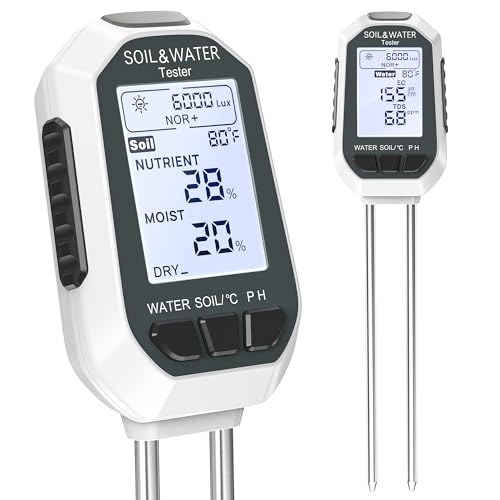
8. Moisture Meter for Plants 7-in-1 Digital Soil Tester Kit
A Moisture Meter for Plants 7-in-1 Digital Soil Tester Kit (soil moisture meter), per the listing. Check price on Amazon.
Good for: plant watering. Watch out: Check probe length.
How to Choose
Rating
Check size, strength or protection ratings.
Build
Durable materials last longer.
Safety
Use protective gear and follow instructions.
How Probe-Style Meters Work
Most inexpensive soil meters are a metal probe on a handle with a dial or small screen on top. The probe measures how easily a tiny electrical signal passes through the soil, and wetter soil conducts better than dry soil. The meter turns that signal into a needle position or a number on a scale, often labeled dry, moist and wet. Many of the cheaper analog types need no batteries, because the probe and the soil form a small circuit that powers the needle.
That method has limits worth knowing. Because the reading depends on conductivity, it is affected by dissolved fertilizer salts, soil type and temperature, not only water. A pot that has just been fed may read wetter than it really is, and a sandy mix may read differently from peat. The meter is best used as a relative guide: compare it with how the same pot reads when you know it is dry and when it was just watered.
- Digital models may use a different sensing method, so read the listing to see how the reading is taken.
- Metal probes can corrode over time, especially in fertilized soil.
- A reading is a snapshot of the spot where the probe sits, not the whole pot.
- Treat the labels dry, moist and wet as plant-specific, not universal.
Learning what your plant’s good reading looks like matters more than any printed chart.
Using the Probe Correctly
Technique changes the result more than the model does. Insert the probe gently to the depth of the root zone, which for a small houseplant is closer to the middle of the pot than the surface. Pushing too shallow measures only the top inch, which dries first and can mislead you into overwatering. Push straight down rather than at an angle, and avoid pressing against the pot wall or a stone, which can bend a thin tip or give an odd reading.
Take readings in more than one spot, because soil in a pot can be uneven, with a dry top and a wet bottom or a channel where water ran through. Wait for the needle or display to settle for several seconds before you read it. Then pull the probe out and wipe it clean with a dry cloth, since soil residue and moisture left on the tip can affect the next reading and speed up wear.
- Test at the same time of day to make comparisons fair.
- Do not force the probe into dry, compacted soil; loosen it slightly or water first.
- Keep the probe away from the stem and main roots to avoid damage.
- Do not leave the meter standing in soil between uses unless the listing says it is designed for that.
For deep containers and raised beds, a longer probe, like the long ones in the listings, reaches the real root depth.
What the pH and Light Readings Can and Cannot Tell You
Several listings sell a three-in-one meter that reads moisture, light and pH. The moisture function is the most dependable of the three for everyday watering decisions. The light function gives a rough sense of whether a spot is bright or dim, which can help you decide where to place a plant, but it is not a precise measure of the light plants actually receive across the day. Read it as a general guide, and compare it with the plant’s care label.
The pH function deserves more caution. Soil pH matters because it affects how easily plants take up nutrients, and different plants prefer different ranges. However, a simple probe reading in a pot is a rough indication and can vary with moisture, probe condition and how you insert it. If pH matters to your crop, such as for blueberries or hydrangeas, treat the meter as a hint and confirm with a dedicated soil test kit or a lab test before you add amendments.
- Check whether the listing says a switch or button selects each mode.
- Take pH readings in damp, not bone-dry, soil according to the instructions.
- Avoid making big soil changes based on one reading.
- Follow the maker’s instructions for cleaning the probe between modes.
What the Multi-Function Kits Add
The product names here run from a simple moisture meter up to a four-in-one and a seven-in-one kit. The extra numbers describe how many measurements or accessories are included, but the exact list varies, so read the listing carefully rather than guessing. Common extras on this type of tool include a temperature reading, a light reading, a pH reading, and in some kits a humidity reading or a separate tester. A digital display makes numbers easier to read than a needle, but it needs a battery, and the extra functions often make the instrument more complex to use.
Ask whether you will really use the extra functions. A houseplant owner who only needs to know when to water is well served by a simple meter, and extra modes can add confusion and more ways to get a misleading result. A gardener who also wants an idea of soil temperature for sowing might value a combined unit. Check whether the kit includes a cable, a case or a spare probe tip, and whether the batteries are included.
- Compare what each function measures with what you actually need.
- Check the display size and backlight if you read it in dim light.
- Look at how the kit is stored, since loose parts are easy to lose.
- Make sure replacement parts or batteries are easy to find.
Care, Accuracy Checks and Replacement Signs
A soil meter lasts longest when it is kept clean and dry. After each use, wipe the probe with a cloth and dry it before storing it. If soil has dried onto the metal, a gentle rub with a soft cloth or fine abrasive pad can restore contact, but avoid scratching off plating that protects the probe. Store the meter somewhere dry, with the probe tip covered if a cap is provided, and remove the battery from a digital unit that will sit unused for months.
You can do a simple sanity check without special equipment. Test a pot you have just watered thoroughly and a pot of dry soil, and see whether the needle or number moves in the expected direction. Then test a glass of tap water only if the maker says this is safe for the probe, since some instructions warn against it. If both readings look the same, or the needle jumps around, suspect the probe or the battery.
- Corroded, bent or coated tips are common signs of wear.
- Readings that stay stuck in one position can mean a damaged probe.
- A digital screen that dims or flickers often points to a weak battery.
- If the meter drifts from your own feel for the soil, compare it with the finger test.
When a meter no longer matches what you can see and feel in the pot, replace it rather than trusting it.
Cross-Checking a Meter Against Other Methods
A low-cost meter gives a number, but the number only helps if you know how it relates to what the plant is experiencing. The simplest way to build trust is to compare it with methods that cost nothing. Push a finger two inches into the pot, lift the pot to feel its weight, and look at the surface and drainage holes. Do this once while the meter sits in the soil, and note how the display compares to what you feel.
A useful routine is to water a pot thoroughly, let it drain, and read the meter. That reading is your wet baseline for that plant and mix. Then read it again each day as the soil dries, and note the number on the day the plant begins to look thirsty. After a couple of cycles you will have a personal range for each pot that tells you more than the printed scale of dry, moist and wet.
- Keep notes in a phone or on a tag so you remember each plant’s numbers.
- Check two or three spots in the same pot, because dry and wet pockets are common.
- Treat any single reading as a hint, never a command.
Meters of this type estimate moisture from a small electrical signal passed through the soil, so they react to anything that changes conductivity, including salts and minerals. That is why a reading is best used for comparison within the same pot over time.
How Potting Mix and Pot Type Change Readings
The same meter can give different results in different mixes. A peat-heavy blend, a bark-rich aroid mix, cactus soil and garden loam all hold water differently and conduct electricity differently. Dry, chunky mixes may leave air gaps that cause the probe to read lower than the soil really is, while dense clay soil can read wetter than it feels near the roots.
Pots matter too. Terracotta breathes and dries from the sides, so the edges dry before the center. Plastic and glazed ceramic hold water longer, and fabric grow bags lose it quickly. A deep pot may be dry at the top and soaked at the bottom. If your meter has a long probe, slide it down to check root depth, since the bottom third often tells the real story.
- Insert the probe the same distance every time for consistency.
- Avoid pushing through large chunks of bark or perlite, which can bend or scratch the metal.
- Do not take a reading from soil that was just fertilized, since dissolved salts raise the number.
Building a Watering Routine From the Numbers
The value of a meter comes from the habits it supports. Many overwatering problems come from watering on a calendar rather than on need. A reading lets you skip a day when the soil is still moist, and prompts you when it is drier than you assumed.
Group plants by need. Succulents and cacti should dry almost completely between drinks. Ferns, calatheas and many tropical foliage plants prefer even moisture. Herbs and vegetables in raised beds often want consistent moisture without puddling. Set a target band for each group, and water only when the reading drops below it.
Seasons change the pace. In winter, indoor light is weaker and plants drink less, so the same pot may take twice as long to dry. A meter takes the guesswork out of that shift. For outdoor containers, check after heavy rain, because pots without drainage can stay wet for days.
Troubleshooting Odd or Stuck Readings
If the needle never moves or the display shows the same number everywhere, start with the basics. Clean the probe with a soft cloth, because mineral film and corrosion block the signal. Confirm the battery if the model uses one, and test the meter in a glass of water and in dry air to see whether it swings between the extremes.
Erratic readings often come from poor contact. Soil that is too dry, too rocky or too compacted leaves gaps around the metal. Moisten the area slightly, loosen the soil or reposition the probe. If the meter always reads high in fertilized soil, flush the pot with plain water and read again once it drains.
Probes eventually wear out, especially cheaper plated metal. If cleaning does not restore a sensible swing between dry and wet, treat the meter as spent, and keep your finger test as the backup.
Using Meters Outdoors and in Raised Beds
Garden soil behaves differently from potting mix. It contains clay, sand and organic matter in varying proportions, and it changes from one corner of a bed to another. Take several readings across the bed and average them in your head, and check at root depth, since a dry surface can hide moist soil below. After heavy rain, wait until the soil drains before judging whether to water.
In hot, windy weather vegetables can lose water faster than expected, especially in containers and raised beds with fast-draining mix. A morning reading gives you time to water before the heat peaks. Water deeply and less often rather than a little each day, because deep watering encourages roots to grow downward.
Going Deeper: A Moisture Meter Is a Decision Tool, Not a Watering Schedule
The real value of a soil moisture meter is not the reading itself; it is the decision the reading prevents. Most houseplants and a good share of garden plants are harmed by kindness, watered on a timetable while their soil is still wet at root depth, until roots sit in airless wetness and quietly fail. A meter interrupts that habit by answering a simple question at the place that matters, down where the roots live rather than at the dry-looking surface. The meters in this guide differ in how they answer: simple probe meters that need no battery and read instantly, multi-function testers that add light and acidity readings, and digital kits that measure several factors at once. Choosing well means knowing which questions you actually ask of your soil.
How probe meters work, and what their numbers mean
A basic probe meter reads the electrical behaviour of the soil around its tip, which changes with moisture, and translates that into a scale from dry to wet. The scale is relative rather than absolute, and that is not a flaw to apologise for: what you need is a consistent language between you and each plant, not a laboratory measurement. Learn a given plant’s happy range by checking when it is thriving and again when it looks thirsty, and the meter becomes a translator for that plant’s needs. Soil type shifts readings too, since dense, rich mixes hold and conduct moisture differently from gritty, free-draining ones, which is another reason to read trends per plant rather than worship a universal number.
Moisture, pH and light: when the extra functions earn their place
The three-in-one and four-in-one testers in this list add acidity and light readings, and those extras are genuinely useful in specific situations rather than decoration. Acidity testing matters when a plant is failing despite correct watering, when you are growing plants with strong preferences like blueberries or many ericaceous shrubs, or when you are amending a bed and want to know whether your work is landing. Light readings help diagnose the houseplant that is watered perfectly and still sulks, because insufficient light is the silent partner in most indoor plant problems. If your questions are only about watering, the simple moisture-only probes here are the honest choice; if you troubleshoot plants regularly, the multi-function testers become a small diagnostic kit.
Using a Meter So the Readings Deserve Your Trust
Technique decides accuracy more than price does. Push the probe gently into the root zone, roughly two-thirds of the way down the pot or bed’s active depth, taking care not to force it through a root ball or against the pot wall, where readings mislead. Wait for the needle or display to settle, note the reading, and test in more than one spot for large pots and beds, since moisture is never perfectly even. For plants in deep containers, a long-probe option like the one heading this list reaches the zone that matters in tall planters where a standard probe reads only the dry upper layer. Wipe the probe clean after each plant, both for accuracy and to avoid carrying soil, salts and anything unhealthy between plants.
Build the habit of checking before watering rather than after. A meter used after watering only confirms what you did; used before, it changes what you do, which is the entire point. Many growers keep a simple rhythm: check the thirstiest-known plants first as an early-warning system for the whole collection, water only those whose root zone reads dry for their type, and re-check the borderline cases in a day or two. Within a few weeks this replaces calendar watering with plant-led watering, and the improvement in a collection’s health is usually visible within a season.
Reading by Plant Type: One Scale, Many Languages
Different plants want the meter to say different things before you water. Succulents and cacti want the soil to dry thoroughly through the pot, and a meter helps you resist watering while the depths are still damp, which is exactly when surface dryness lies to you. Ferns and other moisture-loving plants want the opposite vigilance: a check that catches drying early, before the root zone falls below their comfort. Seedlings and cuttings live in shallow soil where a standard probe overshoots, so a gentle touch and a shorter insertion suit them. In garden beds, use the meter to learn your soil’s character across the seasons: how fast a bed dries after rain in spring versus high summer teaches you more about your watering needs than any generic schedule, and a meter is how that knowledge is gathered.
Care and Troubleshooting for the Meter Itself
Probe meters are simple but not indestructible. The probe tip is the sensing surface, so keep it clean and do not leave the meter stuck in soil permanently, which corrodes the tip and drains the usefulness out of the tool; insert, read, remove, wipe, store dry. If readings become erratic, check the tip for corrosion or a coating of dried salts and clean it gently, and on battery models, suspect the battery before the sensor. A meter that reads identically in dry dust and in a soaked pot has failed and should be replaced rather than trusted out of habit, since a confident wrong reading is worse than no reading at all.
Readings that jump around
Unsteady readings usually mean poor contact: soil too loose around the probe, an air pocket, or the probe resting against a stone or the pot. Reinsert in a slightly different spot, firm the soil gently around the probe, and let it settle before judging.
The surface looks dry but the meter says wet
Believe the meter, cautiously: that mismatch is precisely the overwatering trap the tool exists to expose, especially in deep pots where the top dries in a day while the base stays wet for a week. Check a second spot, then wait.
How the Picks in This Guide Differ in Practice
The long-probe meters serve deep pots, planters and beds where standard probes cannot reach the active root zone. The three-in-one testers are the generalists for gardeners who want moisture with a side of acidity and light, and the multi-packs suit households with plants in several rooms, keeping a meter where it is used. The digital multi-function kits appeal to methodical growers who keep notes and want several measurements from one tool. None replaces the others; each matches a scale of gardening and a style of curiosity, and the best choice is the one whose readings you will actually take every week.
More Questions Worth Asking Before You Decide
Can I leave a moisture meter in the pot all the time?
It is better not to. Constant contact with moist soil corrodes the probe and shortens the meter’s life, and a reading you can see without effort quickly becomes a reading you stop seeing. Insert, read and remove is the habit that keeps both meter and gardener honest.
How deep should I push the probe in a garden bed?
Into the active root zone of the plants you are checking, which for most bedding and vegetables is a hand’s depth or so, rather than just under the surface or far below the roots. Consistency matters more than perfection: same depth, same spots, comparable readings.
Will a meter help with a lawn or large landscape?
It can spot-check problem areas and teach you how your soil holds water, but it is a sampling tool rather than a monitoring system at that scale. Use it to learn, then water by what you have learned.
Why do two meters sometimes disagree in the same pot?
Because soil moisture is genuinely uneven, and because relative scales are calibrated differently between designs. Trust one meter used consistently per plant over two meters compared against each other.
From Readings to Knowledge: Keeping Simple Notes
A meter becomes dramatically more useful when its readings are written down, even informally. A note on the calendar or in a phone, recording which plants were checked, what the root zone said and what you did, turns scattered impressions into a pattern within a month: you learn that the fern in the bathroom dries at half the speed of its twin in the living room, that the big planter by the glass door is always wetter than it looks, that the raised bed needs water a day sooner than the border. That pattern is the real product a meter sells, because once you know it, you water confidently with or without the tool in your hand. Growers who keep notes for a single season usually find their plant losses fall and stay down, not because the meter is magic but because attention, recorded, compounds.
Notes also rescue you when a plant declines. Instead of guessing backwards, you can see what the soil was doing in the weeks before trouble, which separates watering problems from light, pests and feeding with far less speculation. For anyone growing something precious or difficult, a rare orchid, a bonsai, a collection built over years, that record is worth more than the meter itself, and it costs nothing but the habit.
Meters in shared and educational settings
In classrooms, community gardens and households where several people water, a meter is also a communication device: it replaces conflicting impressions of whether a plant needs water with a shared, checkable fact. Gardens watered by rota are classic overwatering victims, since everyone assumes someone else forgot, and a meter by the pots settles the question in seconds. For children learning to garden, the meter makes an invisible process visible and turns watering from a chore into a small experiment, which is often how lifelong gardeners are made.
The Bigger Lesson a Meter Teaches
Stay with a moisture meter for a year and something subtle changes: you stop thinking of watering as a task performed on plants and start thinking of it as a condition maintained in soil. You notice that pots dry from the top and stay wet at the base, that a plant’s thirst depends on its growth, the season and the weather in a way no printed schedule can capture, and that your own eyes, trained by hundreds of checked readings, become steadily better at judging soil without the tool. That education is why experienced growers recommend meters to beginners so warmly, and why the simple probe models in this guide, used faithfully, can teach as much as the fullest-featured kit. Choose the meter that matches the questions you ask, use it before you water, wipe it, note what it tells you, and within a season the health of everything you grow will show what a small, honest measurement can do.
One last situation deserves a mention, because it is where meters quietly save the most plants: holidays and absences. Before you leave, a round of checks tells you which plants genuinely need water, which can be grouped in a cooler, shadier spot to slow their drying, and which should be entrusted to a neighbour with instructions based on readings rather than guesswork. A neighbour told to water everything every other day will drown half a collection in a fortnight; a neighbour shown a meter and told to water only what reads dry becomes a reliable deputy. The same logic applies when you return to plants that look unhappy: check before you rescue, because a plant that wilted in wet soil needs drainage and air, not the flood of water that instinct demands. In absence and in recovery alike, the meter’s gift is the same as ever, a fact where anxiety would otherwise guess, and that is a gift any plant keeper can use.
So treat the meter as a teacher you consult daily at first and weekly once its lessons have settled into instinct. The plants will not know the difference between your early caution and your later confidence; they will only know that the water arrived when the roots wanted it, and that, in the end, is the whole art this small tool exists to teach.
Learn it once, and every plant you own afterwards benefits from the lesson.
That is a remarkable return on a tool that asks for nothing but a moment of your attention before the watering can comes out.
Choose yours, use it faithfully, and watch the guesswork leave your watering for good, replaced by knowledge you can trust completely, in every season, with every plant you grow, indoors and out.
Frequently Asked Questions
Is it right for beginners?
Check the features and manual.
Do I need extras?
Often protective gear or accessories.
How do I store it?
Dry and covered.
Do soil moisture meters need batteries?
Some analog models do not, while digital ones do. Check the listing for whether batteries are required and included.
How deep should I put the probe?
Insert it to the root zone of the plant, which is usually near the middle of a pot. A very shallow reading mostly tells you about the surface soil.
Can I leave the meter in the pot all the time?
Generally it is better not to, since constant contact with damp soil and fertilizer can corrode the probe. Follow the maker's instructions for your model.
Are pH readings from these meters reliable?
They are rough indications. For plants that are sensitive to pH, confirm with a dedicated soil test kit or a lab analysis before changing the soil.
Why does the reading change after I fertilize?
Dissolved salts conduct electricity, which can make soil appear wetter than it is. Wait and compare readings after the soil settles.
Will it work in very rocky or compacted soil?
It can be difficult, because stones can bend the probe and give odd readings. Loosen the soil slightly first and avoid forcing the tip.
Can I use the same meter indoors and outdoors?
Yes, as long as it is dry and clean. Soil types differ, so learn what the readings mean for each location.
How often should I check soil moisture with a meter?
For most houseplants, once or twice a week is enough, with more frequent checks during hot weather or for small pots that dry quickly. Check before watering rather than after, and compare with your notes for that pot. Checking too often with a probe can disturb roots in small containers.
Why does my meter read dry right after I water?
Water may not have soaked through yet, or the probe may be sitting in an air pocket or on a dry clump. Wait a few minutes, press the soil gently around the probe and read again. Very hydrophobic, dried-out mix can also repel water and lead to uneven readings.
How do I clean a soil moisture meter probe?
Wipe the metal with a damp cloth after each use, and remove stubborn film with a little white vinegar on a cloth, then rinse and dry it. Avoid sandpaper or abrasive pads that strip plating. Keep the probe dry in storage to slow corrosion and keep readings consistent.
Can I use a moisture meter in hydroponics or pure perlite?
Usually not reliably. Probe-style meters are designed for soil and similar mixes, and they need enough material around the metal for contact. In water, perlite or clay pebbles the display may read erratically. For those setups a reservoir level check or a purpose-built sensor is more dependable.
Questions to Ask Before You Buy
A little planning up front saves returns later. Work through these questions before you commit to any model.
- What kinds of containers or beds will you check most often, and how deep is the root zone?
- Does the unit need batteries, and does the listing say whether they are included?
- Is the probe made of a material that suits regular contact with damp soil and fertilizer?
- Will you read the display in bright sun, indoors, or in a dim greenhouse?
- Do you want a simple dry, moist and wet scale, or a numeric readout?
- Do the listing photos show the dial or screen clearly enough to judge legibility?
Matching It to Your Plants
Succulents, ferns and vegetables all settle into very different watering rhythms. A tool that reads a thirsty tomato bed well may suit a cactus pot only if you learn what the scale means for that plant. Keep a short note of what each reading looked like just before you watered, then compare it with how the plant responded over a week or two. Over time that habit teaches you more than any printed chart. Soil type matters too, since sandy mixes, peat blends and heavy clay conduct differently, so treat the first few readings as a baseline rather than a verdict.
Who Should Skip It
If you keep only one or two hardy houseplants and already water by lifting the pot or pressing a fingertip into the soil, a gadget may add little. Large rocky beds can also make probe insertion awkward, and stones may bend thin metal tips. Anyone expecting laboratory-grade numbers should look at dedicated lab equipment instead. For what any particular tool is designed to do, check the maker’s listing and instructions before you decide.
Bottom Line
Moisture meters give quick reading checks.
More Gardening Guides
- Best Metal Hose Sprayers
- Best Garden Sprinklers and Hose Timers
- Best Retractable and Cart Hose Reels
- Best Outdoor Bird Baths
- Best Stand-Up Weeders for Lawns
- Best Hand Tool Sets for Gardeners