Disclosure: As an Amazon Associate, Reviews Took earns from qualifying purchases. Links to Amazon on this page are affiliate links; they cost you nothing extra.
Check hose fit and coverage.
This guide is built from Amazon product listings and maker specs, not our own testing, so confirm size, contents and current price on each product page. Health products are for general information and are not medical advice.
Check the current price on Amazon.
Last updated: November 2, 2026.
In this guide
Quick Picks
| Product | Type | Best for |
|---|---|---|
| Melnor XT Oscillating Sprinkler 4500 Sq Ft Flow Width & Range | Sprinkler or timer | watering lawns |
| Insoma Water Timer with Brass Inlet 2 Independent Zones Outdoor | Sprinkler or timer | watering lawns |
| RAINPOINT Sprinkler Timer Outdoor Water Timer for Garden Hose | Sprinkler or timer | watering lawns |
| Water Timer for Outdoor Garden Hose Hose Timer with Rain | Sprinkler or timer | watering lawns |
| Melnor MiniMax Spike Sprinkler 4000 Sq Ft 360° Flow Width Range | Sprinkler or timer | watering lawns |
| Sprinklers for Yard – 360° Rotating Lawn Sprinkler Heavy Duty | Sprinkler or timer | watering lawns |
Our Picks
1. Melnor XT Oscillating Sprinkler 4500 Sq Ft Flow Width & Range
A Melnor XT Oscillating Sprinkler 4500 Sq Ft Flow Width & Range (sprinkler or timer), per the listing. Check price on Amazon.
Good for: watering lawns. Watch out: Check coverage area.

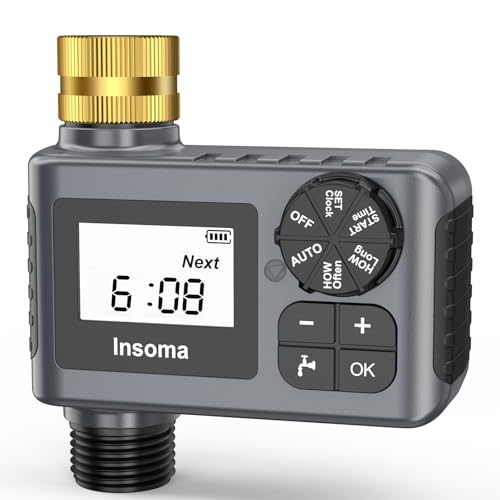
2. Insoma Water Timer with Brass Inlet 2 Independent Zones Outdoor
An Insoma Water Timer with Brass Inlet 2 Independent Zones Outdoor (sprinkler or timer), per the listing. Check price on Amazon.
Good for: watering lawns. Watch out: Check coverage area.

3. RAINPOINT Sprinkler Timer Outdoor Water Timer for Garden Hose
A RAINPOINT Sprinkler Timer Outdoor Water Timer for Garden Hose (sprinkler or timer), per the listing. Check price on Amazon.
Good for: watering lawns. Watch out: Check coverage area.
4. Water Timer for Outdoor Garden Hose Hose Timer with Rain
A Water Timer for Outdoor Garden Hose Hose Timer with Rain (sprinkler or timer), per the listing. Check price on Amazon.
Good for: watering lawns. Watch out: Check coverage area.
5. Melnor MiniMax Spike Sprinkler 4000 Sq Ft 360° Flow Width Range
A Melnor MiniMax Spike Sprinkler 4000 Sq Ft 360° Flow Width Range (sprinkler or timer), per the listing. Check price on Amazon.
Good for: watering lawns. Watch out: Check coverage area.

6. Sprinklers for Yard – 360° Rotating Lawn Sprinkler Heavy Duty
A Sprinklers for Yard – 360° Rotating Lawn Sprinkler Heavy Duty (sprinkler or timer), per the listing. Check price on Amazon.
Good for: watering lawns. Watch out: Check coverage area.
How to Choose
Rating
Check size, strength or protection ratings.
Build
Durable materials last longer.
Safety
Use protective gear and follow instructions.
Oscillating, Spike and Rotating Patterns Compared
The sprinklers in this guide use different spray patterns, and the pattern should follow the shape of your lawn. An oscillating sprinkler moves a bar of water back and forth and covers a rectangle. It is a natural fit for a wide, straight-edged lawn, and many models let you set how wide and how far the spray reaches. The drawback is that the spray is a fine, high arc, so wind can push it off target and some of it can evaporate before it lands.
A spike sprinkler pushes into the ground and usually sprays a circle or a part of one. It stays put, is easy to reposition, and suits small to medium patches. A rotating head throws streams of water in a circle and typically reaches farther with lower arcs, which helps in breezy yards. Its coverage is round, so square lawns end up with dry corners unless you overlap placements.
Listings often quote a maximum area in square feet. Treat that as the best case under the maker’s conditions, not a promise for your yard. Pressure, hose length, wind and nozzle wear all shrink the real coverage. A useful habit is to compare your lawn’s approximate dimensions with the stated range and choose a model with some margin, rather than one that only just reaches. If you have flower beds, vegetables or a path next to the grass, look for adjustable range controls so you are not soaking things that do not need it.
How Much and When to Water a Lawn
A sprinkler or timer only works well if the schedule is sensible. As a general rule, lawns do better with deep, less frequent watering than with a short sprinkle every day. Deeper watering encourages roots to grow downward, while frequent shallow watering keeps roots near the surface and makes grass more vulnerable to dry spells. Exact amounts depend on grass type, soil, climate and season, so check advice from a local extension service or garden center rather than copying a fixed number.
A simple way to learn what your sprinkler delivers is to set a few shallow, straight-sided containers on the lawn, run the sprinkler for a set period, and then measure the water collected. Different parts of the pattern often give very different amounts, which tells you where to move the sprinkler or adjust overlap. This costs nothing and replaces guesswork with real numbers for your own yard.
Early morning is usually the preferred time to water, because the air is cooler and winds are lighter, so more water reaches the soil and the grass has time to dry through the day. Evening watering can leave grass damp overnight, which some lawns do not tolerate well. Midday watering wastes more to evaporation. Also check your local water rules, since some areas limit watering days or hours, and set the timer to comply.
Timer Features That Matter in Practice
Hose timers range from a simple dial that shuts the water off after a set time to programmable units with several schedules. Think about how you will actually use it. If you just want to avoid leaving the tap running while you are busy, a basic countdown is enough. If you want the lawn watered while you are away, you need a unit that can start by itself on chosen days and times, and that stores its schedule through a battery change.
Zones are worth understanding. A two-zone timer, like the type mentioned in this guide, has two outlets that can run on separate schedules, so you could water a lawn on one and a flower bed or planter on the other. That is useful when areas need different amounts of water. Check the listing for how the zones share the supply and whether both can run together at the same time.
Look for a clear display you can read in sunlight, buttons that are workable with wet or dirty fingers, and a manual override. A rain delay setting, where offered, lets you pause the program for a day or more without erasing it. Check what batteries the timer uses and how long the maker says they should last, as a dead battery can mean either a missed watering or a valve stuck in one position, depending on the design. Water-resistant housing matters for units that live outdoors.
Hose, Pressure and Leak Checks Before You Start
Many poor sprinkler results come from the setup, not the product. Begin with the hose. A kinked, twisted or very long hose cuts pressure at the head, so lay it out straight and use the shortest length that reaches. Cracks and worn spots in an old hose spray water where you do not want it and lower the flow. If you chain several hoses, each joint is a place to leak.
Next, check the connections. Washers inside hose couplings harden and flatten over time, and a missing or damaged washer is the most common cause of a dripping joint. Replacing washers is cheap and takes a minute. Hand-tighten fittings, and avoid forcing a plastic fitting with tools, which can crack it. If you use a timer, thread it on straight so the seal seats fully.
Pressure varies between homes and even between taps in the same home. If the spray looks weak, check that the tap is fully open, that the filter screen at the inlet is clear, and that nothing else is drawing water at the same time. If it looks harsh, with water blasting in a mist or tearing the lawn, turn the tap down a little. Read the maker’s stated operating pressure on the listing or manual, and do not run a unit outside its range.
Troubleshooting Uneven Coverage and Knowing When to Replace
If your lawn shows dry stripes or soggy patches, work through the likely causes before buying something new. Clogged nozzle holes are common, especially with hard water; a soft pin or brush can clear them, and soaking in a mild vinegar solution is a typical approach if the manual allows it. Check that the head is level, since a tilted sprinkler throws water unevenly. Make sure the sprinkler is not blocked by a plant or a fence, and that wind is not pushing spray away from the target.
Overlap is the usual fix for dry bands. Place the sprinkler so that each pass reaches about halfway into the previous area, rather than just touching its edge. Move a movable sprinkler in sequence, and note the run time for each spot so you do not forget what you have watered.
- Replace a sprinkler when parts are cracked, the moving mechanism sticks or stalls, or nozzles are worn so that the pattern has changed and cleaning does not restore it.
- Replace a timer when it leaks at the housing, fails to close the valve fully, loses its settings, or shows a blank or faded display even with fresh batteries.
- Retire the hose if it bulges, splits or stays kinked.
Keep the manual and note what the maker says about warranty before you discard anything.
Watering New Seed, Fresh Sod and Established Grass
The same sprinkler can be the right tool for one lawn and the wrong one for another, and the biggest difference is often the age of the grass. Newly sown seed needs the top layer of soil kept evenly moist until the seedlings are up, which usually means short, light, frequent sessions rather than the deep soak recommended for mature turf. Fresh sod has a similar need at first, because its roots have not yet reached the soil below. Once the roots knit in, you can lengthen the sessions and space them out.
For seeded areas, a gentle pattern is more useful than a powerful one. A hard, coarse spray can wash seed into clumps or leave bare channels, so a fine oscillating spray or a low-pressure setting is usually the safer approach. A timer with several short start times per day makes this chore far easier, though you should check that the model you are considering allows multiple daily runs rather than a single start.
Established lawns reverse the approach. Fewer, longer sessions teach roots to chase moisture downward. If you are transitioning a lawn from establishment to maintenance, change the schedule gradually over a few weeks and watch how the grass responds. Follow the seed or sod supplier’s instructions, since grass varieties differ, and check local extension guidance for your region.
Soil Type, Slope and Why Water Runs Off
Soil decides how fast water can soak in, and that sets a ceiling on how hard and how long you can run a sprinkler. Sandy soil drains quickly and holds little, so it tends to need more frequent watering with smaller amounts. Clay soil accepts water slowly but holds it longer, so a high-output sprinkler can easily deliver water faster than the ground can absorb it. The result is puddles, runoff and wasted water, even though the lawn is still dry an inch below.
If you see water pooling or streaming toward the sidewalk before the session ends, try the cycle-and-soak approach. Run the sprinkler for a shorter period, pause long enough for the water to sink in, then run it again. A programmable timer with more than one start time makes this practical. Without one, you can do it by hand with a kitchen timer.
Slopes make the problem worse because gravity carries water downhill before it can soak in. On a slope, a lower-output spike or rotating head, set for a gentle application, usually works better than a strong oscillating spray. Place the sprinkler at the top of the slope, keep sessions short and repeat. Compacted soil is another hidden cause of runoff. If water always beads on the surface, aerating the lawn can help more than any equipment change.
Start-Up, Mid-Season Checks and Shutting Down for Winter
Sprinklers and timers have a yearly rhythm, and following it prevents most early failures. At the start of the season, connect everything and run it for a few minutes before you rely on it. Look for leaks at the tap and at every hose joint, confirm the pattern still reaches where it should, and clear any debris from nozzles and inlet screens. Install fresh batteries in a timer and set the clock, date and schedule from scratch rather than assuming the old program is still correct.
During the season, adjust the schedule as the weather changes. Peak summer heat and dry wind increase the need for water, while cool, cloudy stretches reduce it. A rain delay feature helps, but it does not replace glancing at the lawn and the forecast. Wilting, a bluish tint or footprints that stay visible on the grass are common signs that the lawn wants water.
When freezing weather approaches, shut down properly. Disconnect timers and sprinklers, drain the water out of them, coil hoses so they drain fully and store everything somewhere dry and protected. Trapped water that freezes can crack housings and valves. Many makers advise removing batteries for storage, so check the manual for your timer. Doing this takes about ten minutes and often decides whether a unit lasts one season or several.
Budget Versus Premium: Where the Money Goes
The products in this guide span a fairly narrow price range, so the differences are subtle and mostly about durability and convenience. In sprinklers, a higher price commonly buys sturdier plastics or metal parts, smoother adjustment of width and range, and fittings that resist cross-threading. A cheaper sprinkler can water a lawn perfectly well, but its moving parts and nozzle holes may wear sooner, and its adjustments can feel less precise.
With timers, extra spending tends to go toward a brass inlet instead of plastic, more zones, more flexible programming, a rain delay or sensor option, and a better display. Brass fittings handle repeated hand tightening and temperature swings better than thin plastic threads, which matters if you disconnect the unit often. More zones help if you want separate schedules, but they add cost you do not need for a single sprinkler on a single lawn.
A sensible way to decide is to ask what failure would cost you. If a sprinkler dies, you replace it. If a timer sticks open while you are away, you could waste a lot of water, so it is worth spending a little more on a model with a clear manual shut-off and a design that closes reliably. Read the warranty terms on the listing, and keep your receipt through the first season. Whichever way you go, match features to real needs rather than paying for options you will never program.
Going Deeper: Watering Well Is About Timing and Coverage, Not Gadgets
A lawn or garden rarely suffers because the owner lacked a sprinkler; it suffers because water arrived at the wrong time, in the wrong amount, or in the wrong places. The sprinklers and timers in this guide are tools for fixing those three variables. Coverage decides whether every corner of the lawn gets its share or whether the edges quietly dry out while the middle is soaked. Timing decides whether water soaks in during the cool of early morning or evaporates off hot paving at midday. Amount decides whether roots grow deep and resilient or stay shallow and dependent. Keep those three outcomes in mind and the differences between the picks above become much easier to read.
Matching sprinkler pattern to lawn shape
Oscillating sprinklers, like the Melnor model in this list, lay down a gentle rectangular pattern that suits the classic oblong lawn and the even watering that grass prefers. Rotating and spike sprinklers throw a circular pattern that reaches further and suits larger or irregular spaces, though circles on a rectangular lawn always leave the corners to be considered. Before choosing, sketch your space honestly: where are the beds, the paths, the dry corner under the tree? The right pattern is the one that covers your shape with the least water wasted on paving, and sometimes that means a modest sprinkler moved between two positions outperforms a powerful one asked to do everything from a single spot.
Water pressure: the invisible specification
Every sprinkler’s promised reach assumes healthy water pressure, and real gardens vary enormously. Long hose runs, old fittings and several outlets sharing one supply all reduce what arrives at the sprinkler head. If a sprinkler underperforms, check the simple things first: a kinked hose, a partially closed tap, a filter washer clogged with grit. Timers sit in the same chain, and a timer with a restricted internal path can reduce flow, which is another reason the brass-inlet options in this guide appeal to people whose pressure is already marginal. Knowing your pressure, even roughly, turns sprinkler buying from guesswork into matching.
Timers: Turning Watering Into a System
A water timer’s real gift is not automation for its own sake; it is consistency. Lawns and beds do better with a regular rhythm of deep watering than with heroic soakings whenever someone remembers, and a timer keeps that rhythm through holidays, busy weeks and early mornings when nobody wants to stand in the garden. The single-zone timers in this list suit one lawn or one set of beds with a simple schedule. The two-zone option serves the common pattern of lawn on one schedule and beds or pots on another, which matters because those two genuinely want different treatment: lawns prefer less frequent, deeper drinks, while containers in sun may need smaller, more frequent ones.
Setting a schedule well matters more than the timer’s cleverness. Start from the plants rather than the device: how quickly does your soil dry, how much sun does each area take, and what do local watering rules allow? Program the timer for early morning where possible, set the duration by observing how long your sprinkler takes to deliver a thorough soak without runoff, and then watch the results for a fortnight and adjust. A rain delay feature, offered on timers like these, earns its keep in changeable weather by pausing the routine when the sky has already done the work, saving water and sparing roots from sitting in saturated soil.
Manual watering still has its place
Even with a timer installed, keep the manual option in mind. New seed, a transplanted shrub, or a pot that has dried out completely all need targeted attention outside any schedule. A timer that lets you run a manual cycle without disturbing the program is the one you will use calmly; one that punishes improvisation with a full reprogramming teaches you to stop experimenting, and the garden is poorer for it.
Setting Up and Checking the Whole Run
Install timers with the tap off, thread fittings by hand first to avoid cross-threading, and check for drips at every joint once the water is on, because a slow leak at the tap wastes more over a season than any sprinkler choice. Run each zone and walk the area while it waters: look for dry shadows behind shrubs, misting that signals pressure too high for the sprinkler, and puddling that signals the opposite problem of water arriving faster than soil can accept it. Adjust sprinkler positions and timer durations from what you actually see, not from the pattern you hoped for. Repeat that walk after the first week, because soil, growth and weather all shift the picture slightly.
Seasonal Care and Troubleshooting
Timers and sprinklers live outdoors and ask for seasonal respect. Before frost, remove timers, drain them, and store them indoors with batteries taken out, since freezing water inside a timer body is the classic cause of a spring failure. Sprinklers should be drained, checked for grit in their filters and nozzles, and stored where they will not be crushed. During the season, a sprinkler that rotates unevenly usually has debris in its mechanism or a worn washer; a timer that misses cycles usually has tired batteries long before it has an electronic fault, so batteries are always the first check.
Patchy lawn despite regular watering
Walk the lawn while the sprinkler runs and mark the dry spots, then check whether the pattern truly reaches them, whether thatch or compacted soil is shedding water, and whether a tree’s roots are drinking the area dry. The fix is usually repositioning or soil care rather than longer watering, which mostly feeds the areas that were already wet.
How the Picks in This Guide Differ in Practice
The oscillating Melnor is the lawn traditionalist’s choice, gentle and even across a rectangle of grass. The spike and rotating sprinklers cover bigger, rounder areas and anchor firmly in soil. Among the timers, the brass-inlet two-zone Insoma model is built for households splitting lawn and beds with durability at the tap, the RAINPOINT serves gardeners who want a capable timer with weather-aware pausing, and the remaining timer option covers simpler single-area routines. Choosing is therefore a matter of pairing one pattern with one schedule: draw your garden, name its zones, and the combination selects itself.
More Questions Worth Asking Before You Decide
How often should a lawn actually be watered?
Less often and more deeply than most people default to, adjusted for your soil and weather. Deep, spaced watering encourages roots to grow downward, which makes the lawn more resilient between waterings.
Can one timer run both a sprinkler and drip lines?
A multi-zone timer can serve different areas on different schedules, which suits that pairing well. Check that each zone’s equipment suits the pressure and flow the timer passes, and set durations separately for each.
What should I check first if a timer stops working mid-season?
Batteries, then the filter for grit, then whether the tap and any manual override are set as you expect. Most mid-season failures are one of those three rather than a dead unit.
Is it worth watering before rain is forecast?
Usually not for established planting, and a rain delay exists precisely for that judgement call. New seed and very dry containers are the exceptions where you should not gamble on a forecast.
Watering Different Plantings on One System
A real garden is a negotiation between plants that want different things, and a timer-based system works best when you group by thirst rather than by geography alone. Vegetables in full growth are the thirstiest residents and reward consistent moisture with steady crops, while established shrubs and ornamental grasses prefer to be left to longer intervals that harden them. Pots and hanging baskets live in a category of their own, drying from all sides and needing the most frequent attention in hot spells. If your timer has two zones, assign them by this logic, thirsty and frequent on one, deep and occasional on the other, and you will find the schedule almost writes itself. Where everything must share one zone, water for the thirstiest planting and accept that the tougher plants will simply grow a little more slowly, which is a better compromise than the reverse.
New planting breaks all the rules temporarily. Seedlings, fresh transplants and new turf need moisture kept near the surface while roots establish, which means shorter, more frequent cycles than your established routine provides. Use the timer’s manual mode or a temporary schedule for those first weeks, then fold the new planting into the main rhythm as it settles. Gardeners who make that one adjustment avoid the commonest disappointment in automated watering: a system that serves the established garden beautifully while the newest arrivals quietly struggle at its edges.
Watching the water bill and the weather together
A timer also makes your watering visible, and a month of watching it teaches you your garden’s real habits. You will notice which weeks the schedule is plainly too generous, because the soil is still damp when the next cycle begins, and which heat waves genuinely need a temporary increase. Adjust in small steps and write down what you changed, because next season you will be glad of the record. That habit, more than any feature, is what turns a timer from a gadget into a tool: it gives watering a memory, and a garden with a memory behind it improves year after year.
Common Watering Mistakes a Timer Cannot Fix for You
Automation preserves your decisions, including the mistaken ones, so it is worth naming the errors that show up most often. The first is watering a little every day, which keeps the surface damp, encourages shallow roots and fungal trouble, and leaves the lawn less able to cope with a hot week than if it had been watered deeply and left alone in between. The second is setting a schedule in spring and never revisiting it, so the garden receives spring watering through a summer heat wave and autumn deluge alike. The third is ignoring the edges: sprinklers are usually positioned for the easy middle of the lawn while the strips along fences, walls and paths, which dry fastest because of reflected heat and rain shadow, quietly thin out. The fourth is running a system without ever watching it work, so a blocked nozzle or a sprinkler knocked sideways by a mower waters the fence faithfully for a month. And the fifth is forgetting that containers and new planting live outside the lawn’s logic entirely, as described above.
None of these requires new equipment to fix. They require a short walk while the system runs, a schedule adjusted a few times a year, and the willingness to treat the timer as a servant of your judgement rather than a substitute for it. Gardeners who build that habit find that the equipment in this guide lasts longer too, because problems are caught while they are still a clogged filter or a tired battery instead of a burnt-out pump of a season’s neglect. Set the system up thoughtfully, look at it working now and then, and it will return the favour every single week of the growing season.
There is a quieter benefit worth mentioning as well. A garden on a sensible watering rhythm becomes predictable to look after, which makes it easier for someone else, a neighbour during a holiday, a family member sharing the work, to step in and keep it thriving, because the system holds the routine rather than one person’s memory. That resilience matters over years: gardens outlast busy seasons, holidays and changes of habit, and the combination of a well-chosen sprinkler and a timer set with understanding is what carries a lawn and beds through all of them in good health. Choose the pairing that fits your space, set it up by watching it work, and let consistency do the heavy lifting from there.
Do that, and watering stops being a chore you remember too late and becomes background reliability, the kind every good garden quietly runs on season after season.
Your plants will show the difference within weeks, in deeper colour, steadier growth and far fewer dry casualties at the edges of beds and lawns alike.
That steady, visible improvement is the real return on choosing carefully here.
Season after season, it simply keeps working: reliably, quietly and well, exactly as it should, every week, and that steady, visible improvement in your plants is the real return on choosing carefully here.
Frequently Asked Questions
Is it right for beginners?
Check the features and manual.
Do I need extras?
Often protective gear or accessories.
How do I store it?
Dry and covered.
How long should I run a sprinkler on my lawn?
It depends on your sprinkler's output, soil and grass. Measure what it delivers by putting out shallow containers, then run it long enough to give a deep watering rather than a quick sprinkle. Local garden advice can help with weekly targets.
Can a hose timer water a vegetable garden as well as a lawn?
Many can, if you attach the right hose or drip line to the outlet. Check that the timer's flow range suits the attachment, and consider a two-zone model if the two areas need different schedules.
Why is my sprinkler not reaching its stated coverage?
Stated areas are best-case figures. Low pressure, a long or kinked hose, wind, clogged nozzles and worn parts all reduce reach. Check the tap, the hose and the filter screen first.
What batteries do water timers use?
It varies by model, so check the product listing and manual. Use fresh batteries of the type specified, and replace them at the start of the watering season rather than waiting for a failure.
Is it better to water in the morning or evening?
Early morning is generally preferred because there is less wind and evaporation and the grass dries during the day. Follow any local watering restrictions as well.
Do I need a pressure regulator?
Not always, but if your tap pressure is high or fluctuates, a regulator can protect hoses and timers. Check the maker's pressure range for your product and compare it with your home supply.
How do I stop a sprinkler from watering the sidewalk?
Choose a model with adjustable range or width, position it so the edge of the pattern falls on the lawn, and use a part-circle setting if available. Test and adjust until the spray stays on the grass.
How often should I water new grass seed?
Newly seeded soil usually needs to stay lightly moist, which often means short sessions once or several times a day until seedlings emerge. Reduce frequency and lengthen sessions as the grass matures. Follow the instructions on your seed package, since varieties differ.
Why does water run off my lawn before it soaks in?
Compacted or clay soil absorbs water slowly, and slopes carry it away. Try shorter sessions with a pause between them so the water can sink in, use a lower-output sprinkler, and consider aerating the lawn if the surface stays hard.
Can a water timer run more than one watering a day?
Some can and some cannot. Basic models often allow a single start time, while programmable ones may offer several. Check the listing for the number of start times and days supported if you plan to water seed or use cycle-and-soak.
Do I need to drain a hose timer for winter?
Yes in freezing climates. Water left inside a timer or sprinkler can freeze and crack the housing. Disconnect the unit, let it drain, remove batteries if the manual says to, and store it in a dry place until spring.
Questions to Ask Before You Buy
Lawn watering gear works best when it suits your yard shape and your tap. These questions help narrow the field.
- Is your lawn a wide rectangle, a narrow strip, or a curved bed?
- Do you want to water one area, or several zones on different days?
- Is your outdoor tap in a sheltered spot or fully exposed to weather?
- Will you be adjusting settings by hand, or do you want a timer to handle it while you are away?
- Does the timer need batteries, and how easy are they to swap?
- Do local water rules limit the hours you may water?
Compatibility Checks
Before ordering, confirm the thread size of your tap and hose. Most garden fittings follow a common standard, but adapters exist for older or imported fixtures. Check that a timer’s inlet fits flush and that the outlet leaves room for a hose without kinking. If you plan to run two lines, look at whether the listing describes separate outlets. Pressure from the tap also matters, so read what the maker says about the working range for each product.
Matching It to Your Use
An oscillating head covers a rectangle in sweeping passes. A spike or rotating head suits round or square patches and is easy to move around. Timers fit people who forget to turn the tap off or who travel often. Add a simple rain delay feature if the listing offers one, since it can reduce wasted water after a storm.
Seasonal Thoughts
Disconnect timers and drain them before freezing weather, and keep them in a dry place. Clear small filter screens now and then so debris does not block the flow.
Bottom Line
Timers help avoid over-watering.
More Gardening Guides
- Best Retractable and Cart Hose Reels
- Best Outdoor Bird Baths
- Best Stand-Up Weeders for Lawns
- Best Hand Tool Sets for Gardeners
- Best Plant Moisture and pH Testers
- Best Metal Hose Sprayers