Affiliate disclosure: DailyHomeDecorating.com may earn from qualifying purchases through links in this article. As an Amazon Associate, this site earns from qualifying purchases. Product examples and images below were retrieved through Amazon Creators API; we have not physically tested or measured them in your room. Verify dimensions, materials, selected variations, seller, delivery, and return terms on the live listings.
The best sofas and coffee tables for a formal living area create a coordinated conversation space without sacrificing comfort or circulation. Start with the room’s dimensions and seating needs, then choose a sofa scale and coffee table shape that work together. Formal styling can be tailored and welcoming; it does not require a matching furniture set or fragile materials.
This guide explains sofa and table proportions, table height, finishes, upholstery, conversation layouts, rug and lighting choices, and delivery planning. Amazon Creator API examples are included as starting points, not tested endorsements or a guaranteed matching set.
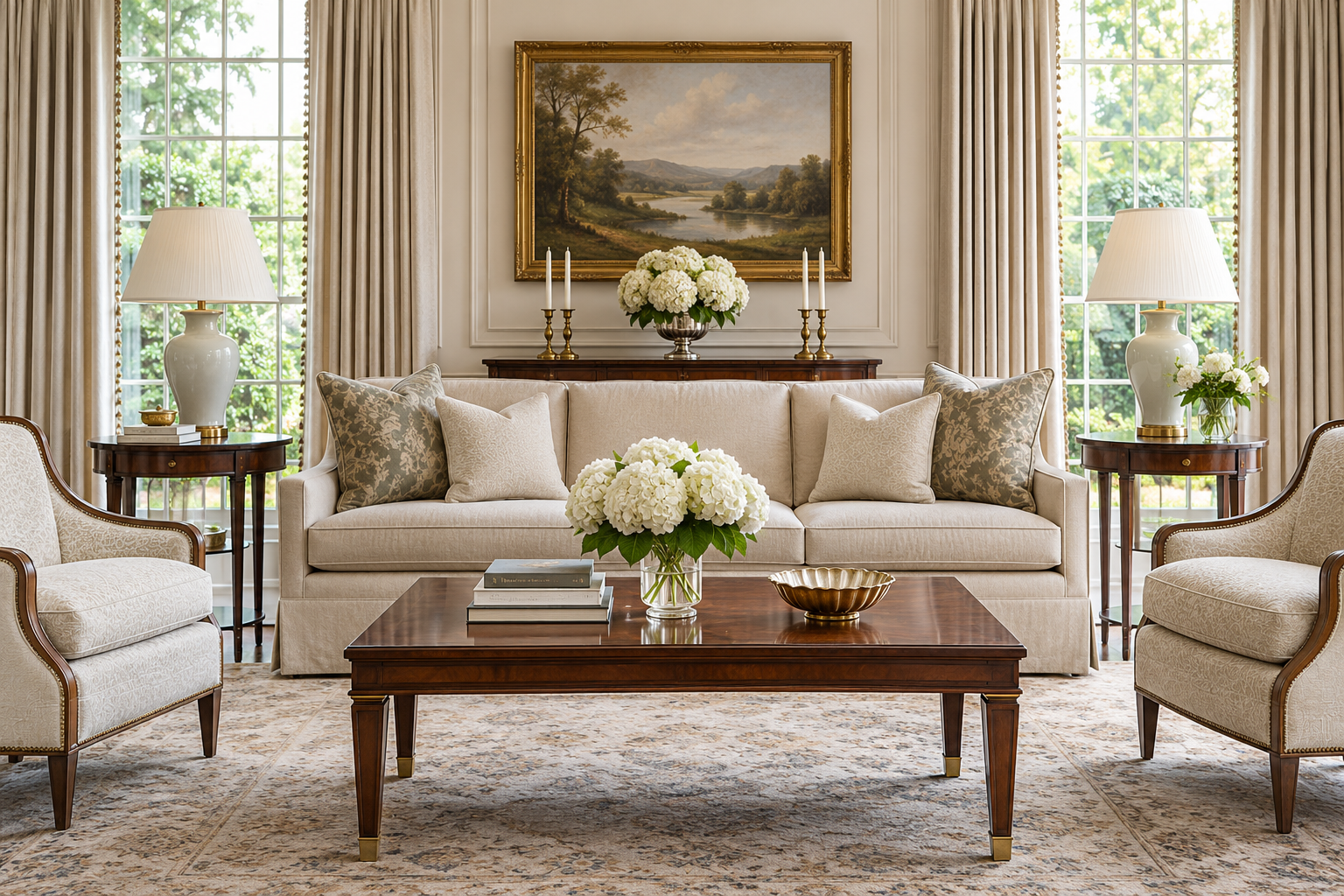
Define the formal living area
A formal living area is often used for conversation, welcoming guests, or quieter time rather than everyday television viewing. The sofa and coffee table should feel coordinated and leave a comfortable route through the room. Start by deciding how many people need seats, what the room’s focal point is, and whether the coffee table needs to hold drinks, books, or decorative items.
Formal does not have to mean fragile or unused. Choose materials and surfaces that fit how often the room is used. A sofa with durable upholstery and a coffee table with a stable top can still look tailored. Let the room’s architecture and existing furniture guide the level of ornament.
Measure the room and seating group
Measure the room’s length, width, doors, windows, fireplace, and walking paths. Record the sofa’s total width and depth and the coffee table’s footprint. Tape both shapes on the floor to test spacing and circulation. Include side tables, lamps, and any chairs that form part of the conversation area.
A coffee table needs enough clearance for people to sit and pass through. A table that is too large can make the room feel crowded, while one that is too small may look disconnected from a long sofa. Compare the table with the sofa’s usable seating width and the space between facing seats.
Choose sofa scale before table style
The sofa anchors the seating group. A broad formal sofa may work with a rectangular table, while a smaller loveseat may pair better with a compact round or oval table. Measure the wall and consider windows, radiators, and door swings. A sofa’s outside dimensions include arms and frame; check usable seat width as well.
If the room is long, a longer sofa and narrow coffee table can preserve the walkway. In a square room, a more compact sofa and rounded table may help soften the arrangement. Choose the sofa’s size and orientation first, then select a table that supports the layout instead of overpowering it.
Pick a coffee table shape
Rectangular tables work naturally in front of many straight sofas and can provide a large surface. Round or oval tables soften a formal arrangement and avoid sharp corners in tight routes. Square tables can balance a deep sectional or two sofas facing each other, but may occupy more central floor. Choose shape based on scale and circulation.
Check the table’s actual dimensions, not just its style label. A glass top can preserve sightlines but still has a substantial footprint; a wooden table can visually anchor the room. Consider whether the table’s legs, shelf, and edges fit the sofa’s silhouette and nearby seating.
Set table height and reach
A coffee table usually feels easiest to use when its top sits near the seat cushion height or slightly lower, though sofa proportions vary. Measure the sofa’s seat height and compare it with the table. Leave enough space to reach the table without leaning far forward or hitting knees.
If guests will place drinks or books on the table, ensure every seat can reach it. A deep sofa or wide arm may make a table feel farther away. Test the arrangement with tape and a temporary box at the intended height before ordering.
Coordinate materials and finishes
Wood, glass, metal, stone, and mixed-material tables create different visual effects. A warm wood table can complement traditional upholstery; glass can lighten a formal group; metal details can echo lamps or hardware. Use one or two repeated finishes to connect the pieces rather than matching every surface exactly.
Check how the finish interacts with floors, trim, and nearby furniture. Dark wood can ground a light sofa, while a lighter table may keep a small room open. Glass requires regular cleaning and careful handling; wood may show scratches or water marks. Choose materials whose care fits the room’s use.
Formal style without overmatching
A coordinated living room does not require a matching furniture set. A sofa and coffee table can share a color family or material while differing in shape. For example, a tailored sofa can sit with a sculptural table, or a traditional rolled-arm couch can pair with a simple wood table. The common thread can be finish, proportion, or detail.
If both sofa and table have ornate carving, tufting, and trim, the room may feel busy. Let one piece carry more detail and keep the other quieter. Consider the rug and lighting as part of the same composition; adding too many focal points can reduce the room’s sense of order.
Choose upholstery for the room
Formal rooms may use velvet, leather, chenille, or woven fabric. Compare fiber content, cleaning code, and care instructions for the exact sofa. A fabric sample helps you assess color and texture in the room’s light. If the room gets strong sun, ask about fading and consider window treatments.
Think about actual use. A room reserved for guests may tolerate a more delicate upholstery than a room used by children or pets every day. Removable covers are not necessarily washable. Check whether the sofa manufacturer sells replacement cushions or fabric and how warranty terms handle wear.
Arrange for conversation
Place the sofa where it faces the main conversation area or focal point. A coffee table should sit centrally but leave routes to each seat. If the room has accent chairs, angle them toward the sofa rather than lining every piece against the wall. A balanced conversation group can feel welcoming without filling the entire room.
For two sofas facing each other, select a table proportionate to the gap and allow each seat access. In a narrow room, orient the sofa and table to preserve a direct walking path. Check that the coffee table does not block a fireplace, window, or doorway.
Choose a stable and useful table
Consider what the table needs to do: hold drinks, books, a tray, or a display object. A lower shelf adds storage but can collect clutter. Drawers hide remotes, while an open base can make the piece feel lighter. Check the table’s stated weight guidance and stability, especially if it has a glass top.
Avoid sharp edges where guests pass close by. A pedestal base may create more legroom but can be easier to bump; four legs can offer stability but obstruct chairs. Check whether the table has adjustable feet and whether its finish needs special care.
Consider rug size and table placement
The rug should connect the sofa and table rather than stop awkwardly between them. Measure the group and decide whether the sofa’s front legs and chair legs will sit on the rug. A rug that is too small can make the seating appear scattered. Keep the coffee table centered over the rug and aligned with the sofa.
A patterned rug can complement a solid sofa, while a quiet rug can balance a more ornate couch. Avoid competing with a glass or carved table by adding too many patterns. Check rug edges and table feet for stability and trip hazards.
Lighting and side tables
A formal seating arrangement needs useful light for conversation and reading. Floor lamps can sit beside the sofa, while table lamps may require end tables. Keep lamp bases outside the main path and ensure cords do not cross walkways. The coffee table should remain accessible without being overloaded with decor.
If the room has a central chandelier, check its scale relative to the sofa and table. A large fixture can define the seating area, but its height should not interfere with sightlines. Use smaller accents to echo the table’s finish or sofa color.
Durability and construction
Ask about sofa frame, suspension, cushion fill, and warranty. For the table, check material, joinery, top thickness, and stability. Style words such as “classic” or “luxury” do not reveal construction. Inspect seams, cushion alignment, table edges, and any glass supports.
If the coffee table has a glass top, verify whether it is tempered and how it is secured. If it has a stone or heavy top, check floor protection and whether two people are needed to move it. Choose materials that can handle the room’s expected use.
Online product examples
The cards below were returned through Amazon Creators API searches for traditional sofas and coffee tables. We have not physically tested these items or measured them in your room. Verify the selected dimensions, material, color, seller, price, delivery, assembly, and returns on the live listing.
Use the examples to compare style and form, not as a coordinated set or ranking. Product names and images may change, and a sofa and table shown in separate cards may not match in scale. Measure your own room and compare each item’s dimensions before buying.

Traditional 3-Seater Couch Sofa for Living Room, 91.3", Brown, Chenille | Vintage Traditional Sofas with Nailhead Trim, Rolled Arms and Wood Legs for Farmhouse, Apartment, Sedona Collection
Compare dimensions, materials, table height, and room clearance.

MASARA Traditional Chenille and Leatherette Sofa with Wood Trim, 93" L x 38" W x 42" H, Rolled Arms (Tan, Dark Brown)
Compare dimensions, materials, table height, and room clearance.

Rectangle Coffee Table for Living Room, Solid Wood Coffee Table with Glass Top, Traditional Distressed Farmhouse Style with Shelf, Solid Hardwood Rustic Center Table for Living Room, Cherry 1168GT
Compare dimensions, materials, table height, and room clearance.

Finekoze Glass Coffee Table for Living Room,100% Solid Wood Coffee Table with Rectangular Tempered Glass Top,Mid Century Modern Coffee Table,Walnut
Compare dimensions, materials, table height, and room clearance.
Compare total cost and delivery
Calculate the full delivered cost, including tax, shipping, assembly, and any service fees. A coffee table may require assembly or special handling if it has a heavy top. Sofa delivery may be quoted separately. Compare the final total for your selected configuration, not a starting price in a product listing.
Check whether the sofa arrives in one frame or multiple pieces and whether the table can pass through the delivery route. Read return terms and pickup fees. Save product details and written answers before ordering.
Common formal-room planning mistakes
Buying a sofa and table separately without measuring the whole group can leave too little clearance. Other mistakes include choosing a table too tall, pairing ornate pieces with no visual balance, and forgetting lamps or chairs in the plan. Use a floor sketch and mark the table height to test the complete arrangement.
Avoid buying every piece as a matching set just because it is displayed together. Check whether the actual sizes suit the room. Consider the route through the seating area and access to doors, windows, and fireplaces. The room should remain easy to use, not only look composed.
Frequently asked questions
What coffee table shape works with a sofa? Match the table to the sofa’s proportions and room circulation. Is glass formal? It can look refined, but requires cleaning and careful handling. Should the table match the sofa? No; repeat a finish or color instead. How much clearance is needed? Leave enough room for knees and a comfortable path around the table.
Which sofa suits a formal room? Choose by room scale, seat comfort, upholstery, and intended use. Should I buy a set? Only if the proportions and materials fit; matching is optional. Do I need a rug? A rug can define the seating area, but select it after measuring the sofa and table.
Final thoughts
The best sofa and coffee table for a formal living area work together in scale, material, and function. Measure the complete group, keep walking paths open, choose a table height that is easy to reach, and coordinate finishes without forcing a matching set. Select upholstery and tabletop materials that suit how often the room is used.
For more layout guidance, see our two-sofa layout guide, L-shaped sofa guide, and affiliate disclosure.
Formal does not mean stiff
A formal living room can still support relaxed conversation. Choose a sofa with seat depth and cushions that suit how guests sit, and pair it with a stable table that is easy to reach. Structured arms and tailored upholstery can create a polished look without making the room uncomfortable.
Test the sofa in a showroom when possible and compare the coffee table’s height with its seat. A low table can feel elegant but may be awkward for older guests or people who prefer not to bend. Consider who uses the room and how often.
Choose a table surface for use
Glass can keep sightlines open and show a rug beneath it, while wood creates a warmer visual anchor. Stone or metal can add weight and contrast. Consider fingerprints, scratches, water marks, and the cleaning products allowed for each finish. A decorative surface is useful only if it can handle the room’s routine.
If guests will set down drinks, use coasters or choose a finish that tolerates everyday contact. A display table with delicate trim may be less practical than a simpler surface. Ask the retailer for care instructions and material details for the exact model.
Scale the table to the sofa
A coffee table should relate to the sofa’s length and depth. A long sofa can make a tiny table look lost, while an oversized table can crowd the seats. Compare the table width with the usable seating area and leave a path to each seat. For two facing sofas, size the table to the space between them.
Consider a pair of nesting tables if seating arrangements change. They can separate for guests and tuck together afterward. A single large table may provide a broad surface but reduce open floor space. Tape the table footprint and test legroom before ordering.
Use storage without clutter
A lower shelf, drawer, or lift-top can store magazines and remotes, but too many items can make a formal room look busy. Decide what should be hidden and what belongs on display. A tray can group a few objects while keeping the rest of the table clear for guests.
Check how the storage opens and whether the coffee table needs clearance from the sofa. A lift-top may be useful for writing or casual meals, but its raised position can change the room’s proportions. Confirm weight guidance and the stability of the mechanism.
Coordinate traditional and contemporary pieces
A traditional sofa with rolled arms can pair with a simpler contemporary table if the wood tone or metal finish connects them. A modern sofa can work with a carved table when the room has traditional architecture. Use one shared element—color, material, shape, or detail—to make a mixed arrangement feel intentional.
If both pieces are visually elaborate, keep the rug and accessories quieter. If both are plain, add texture through upholstery, wood grain, or a sculptural lamp. The room should have a clear focal point rather than several competing statement pieces.
Account for chairs and side tables
The sofa and coffee table are only part of the seating group. Include accent chairs, side tables, lamps, and walking routes in the floor plan. A chair may sit at an angle, but its legs still take up space. Check whether people can reach the coffee table from the chairs without leaning across another seat.
If the formal room needs multiple seats, consider two smaller chairs rather than a large loveseat. A side table beside each chair can reduce pressure on the central coffee table. Match leg height and finishes where useful, but avoid filling every gap with furniture.
Check delivery and assembly
Measure the delivery path for the sofa and coffee table separately. A large sofa may require a tight turn, while a glass or stone tabletop may need special handling. Ask whether legs detach, how much assembly is required, and whether delivery includes room placement. The package dimensions may differ from the assembled footprint.
Add delivery, assembly, stairs, and removal fees to the total budget. Keep packaging until the sofa and table have been inspected. If the table has a glass top, follow the instructions for lifting and securing it. Confirm the return policy for each item before ordering.
Evaluate the room from the entrance
A formal room should feel balanced as soon as someone walks in. Stand at the entrance and check whether the sofa, table, and chairs create a clear focal point. Avoid placing the table where it blocks the center path or makes guests squeeze between the sofa and a doorway.
Look at the group from the main seating position as well. Check that the table does not hide the rug pattern or overlap a fireplace hearth. Small adjustments to sofa angle or table placement can change the whole room without buying more furniture.
Certain content on this site comes from Amazon and may change. Product names, images, features, and availability are supplied through Amazon Creators API or the live listing. Confirm current details before purchase.
Measure the entire seating group, then verify the sofa and coffee table dimensions before checkout. Confirm final delivery costs.