Where to buy
Check the latest price, availability and delivery on Amazon. Orders are placed on Amazon. We may earn a commission from qualifying purchases.
- Best high-capacity cubby tower (prose-only): Prepac Tall Shoe Storage Cabinet with 36 Cubbies, White — described in full below; sold through the maker’s own channels (see the review)
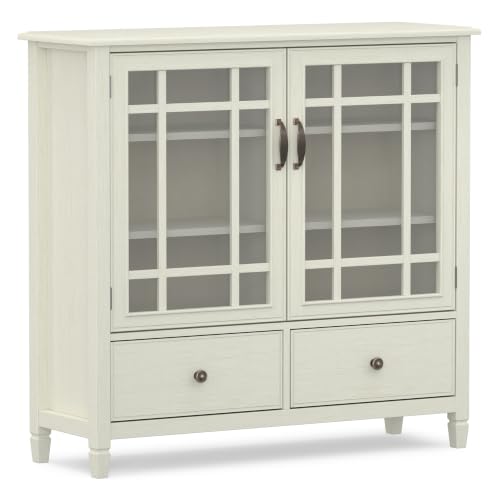
- Best solid-wood flagship: SIMPLIHOME Connaught 46-Inch Tall Solid Wood Storage Cabinet, Antique White — check price on Amazon
- Best tall doored cabinet (prose-only): Tribesigns Shoe Cabinet with Doors, 7-Tier, Wood and Gold — described in full below; sold through the maker’s own channels (see the review)
- Best slim flip-drawer cabinet: Maupvit Shoe Storage Cabinet with 2 Flip Drawers, Rustic Brown — check price on Amazon
- Best louvered-door classic: Yaheetech Shoe Cabinet, 4-Tier with Louvered Doors and Drawer — check price on Amazon
- Best ventilated rattan design: IRONCK Shoe Cabinet with 2 Flip Drawers and Rattan Doors, Oak — check price on Amazon
Read the full guide ↓
Disclosure: As an Amazon Associate, dailyhomedecorating.com earns from qualifying purchases. Links to Amazon on this page are affiliate links; they cost you nothing extra. Listing details such as price and availability change often, so check the current Amazon listing before you buy.
Finding the best shoe cabinet for families under $2000 is really a search for a system, not a cabinet. A family entryway processes a small logistics operation twice a day: school shoes, work shoes, trainers, wellies, the pair a teenager insists live by the door and the boots that only fit one shelf in the house. Multiply a modest six pairs per person by a household of four or five and the entryway rotation is thirty pairs deep before anyone owns anything unusual. Cabinets that delight a couple — a neat two-drawer flip cabinet — collapse under that arithmetic, which is why this guide leads with capacity architecture: a thirty-six-cubby tower, a seven-shelf doored cabinet, and a solid-wood armoire that absorbs the coats-and-bags overflow as well as the shoes.
Family duty also changes what quality means. Hinges and drawer mechanisms cycle thousands of times a year, doors get closed by feet and by children in a hurry, and the cabinet lives in the splash zone of wet boots and melting snow. At this budget, the honest upgrades are solid wood that can be refinished after the scuff years, mechanisms rated for real repetition, and finishes that forgive — gray and rustic tones hide the evidence better than gloss white. The six picks below were chosen and ordered for household throughput first: how many pairs, how fast a pair can be found at 7:40 in the morning, and how the cabinet survives being used by people who did not buy it and do not read care labels.
Two picks here are prose-only, and for families they may be the two most important: the cubby tower and the tall doored cabinet showed no live featured offer on Amazon US at research time, so we describe them fully and point you to the makers’ own channels rather than invent a price. The linked picks cover the rest of the family spectrum — a wide flip-drawer cabinet for the daily rotation, a louvered console with a drawer for the keys-and-mittens layer, and a ventilated rattan design for the household fighting the sports-kit smell. Start with your pair count, and let it choose the architecture.
In this guide
Quick Picks: The Best shoe cabinet for families under $2000 Guide at a Glance
Short on time, or comparing several options at once? Each row below names a buyer type and the cabinet that suits it.
| Buyer type | Pick | Why it stands out | Link |
|---|---|---|---|
| Best high-capacity cubby tower (prose-only) | Prepac Tall Shoe Storage Cabinet with 36 Cubbies, White | 36 cubbies — the largest visible capacity here | Prose-only — see review |
| Best solid-wood flagship | SIMPLIHOME Connaught 46-Inch Tall Solid Wood Storage Cabinet, Antique White | Solid pine, refinishable, from an established furniture brand | Check on Amazon |
| Best tall doored cabinet (prose-only) | Tribesigns Shoe Cabinet with Doors, 7-Tier, Wood and Gold | 7 adjustable shelves behind 2 doors | Prose-only — see review |
| Best slim flip-drawer cabinet | Maupvit Shoe Storage Cabinet with 2 Flip Drawers, Rustic Brown | 9.45 in deep flip drawers for shallow entries | Check on Amazon |
| Best louvered-door classic | Yaheetech Shoe Cabinet, 4-Tier with Louvered Doors and Drawer | Louvered console with a drawer for entryway smalls | Check on Amazon |
| Best ventilated rattan design | IRONCK Shoe Cabinet with 2 Flip Drawers and Rattan Doors, Oak | Rattan fronts that ventilate while they conceal | Check on Amazon |
How These Picks Were Chosen
The budget came first, and it was applied the way a careful buyer applies it: every pick below had to be a real, verifiable product whose construction, dimensions and storage format could be confirmed from the maker’s own listing and at least one independent source, with the verification trail recorded in the notes that accompany this guide. Prices were sighted during research in November 2026 and are recorded there, not printed here, because listing prices move — check price on Amazon on the day you buy. Two otherwise-strong cabinets are presented prose-only because their Amazon US listings showed no featured offer at research time; rather than send you to a dead buy button, we describe them fully and name where they are sold.
We did not live with these cabinets, and this guide does not pretend otherwise. What we compared are the specifications that decide whether a shoe cabinet succeeds in a real entryway: true depth against the wall you have, realistic pair capacity discounted from brand claims, door and drawer mechanism, ventilation, material and finish, footprint in both closed and open states, and the maker’s backing when a hinge fails in year three. Extra money was only respected when it bought something physical on that list — solid wood, more shelves, a better mechanism. A new finish name on identical hardware did not earn a premium, and cabinets that asked flagship money for commodity construction were excluded.
Capacity claims deserve a specific warning, because every brand in this category counts pairs optimistically, in small sizes, perfectly nested. Throughout this guide, brand figures are reported as brand figures and our realistic estimates sit below them; when you shop, count your own household’s door rotation and discount any listing’s claim by roughly a third. Fit was the final filter: a beautiful cabinet that blocks a door swing, crowds a hallway or cannot be anchored is a failed purchase at any price, so the how-to-choose section below starts with measurements, not products.
The 6 Best shoe cabinet for families under $2000 Options, Reviewed
Prepac Tall Shoe Storage Cabinet with 36 Cubbies, White
Who it suits: Best high-capacity cubby tower (prose-only) — sized at 13 x 23.5 x 72.5 in, white laminate.
Some households do not need a prettier cabinet; they need a bigger number. The Prepac tall cabinet answers with thirty-six open cubbies in a tower only 13 inches deep, 23.5 inches wide and 72.5 inches tall — one cubby per pair, each pair visible at a glance, nothing hidden behind a door you have to open with an armful of groceries. Cubbies are the fastest storage system ever devised for shoes: no drawer to tilt, no door to swing, just a grid that turns a family’s entire rotation into a single glanceable wall. The white laminate finish and molded detailing keep the tower from reading as utility shelving, and the format doubles happily as general entryway or closet storage for hats, bags and sports kit in the cubbies shoes do not claim.
We list this pick as prose-only for a practical reason: at research time the Amazon US listing showed no featured offer, so there is no live Amazon price for us to send you to in good faith — check the maker’s own channels and major furniture retailers, where this long-running Prepac model is widely carried at a mid-range position far inside this budget. The honest limitations travel with the format: open cubbies show the shoes, so the entryway looks exactly as tidy as the footwear in it; cubby dimensions fit ordinary shoes well but squeeze tall boots; and a 72.5-inch tower must be anchored to the wall, full stop, in any home with children. If your problem is volume and visibility rather than concealment, this is the architecture to buy.
- Thirty-six cubbies — the largest pair count in this guide, each pair visible at a glance.
- Narrow 23.5-inch width and 13-inch depth turn one wall strip into a full shoe wall.
- Open format is the fastest system for family mornings — no doors, no drawers.
- Long-running model from an established North American storage brand.
Honest limitation: Open cubbies display the shoes rather than hiding them, tall boots do not fit the grid, and a tower this height must be wall-anchored — non-negotiable with children in the house.
For families, this is the morning system: assign each child a column of cubbies and the 7:40 excavation ends.
Choose it if its format matches your wall and your rotation. Skip it if the honest limitation above describes your household exactly.
SIMPLIHOME Connaught 46-Inch Tall Solid Wood Storage Cabinet, Antique White
Who it suits: Best solid-wood flagship — sized at 46 in wide, solid pine (model AXCCON-06-AWH).
Start with the material, because at this budget the material is the purchase. The Connaught is built from solid pine — kiln-dried, hand-finished, and assembled into a proper furniture carcass with paneled doors — in a category where almost everything else, at every price, is laminate over engineered board. That difference is not cosmetic. Solid wood can be sanded and refinished when the entryway years scuff it, its hinges screw into real grain rather than particleboard that loosens with each seasonal re-tightening, and the cabinet carries the weight and the quiet, damped door-close of furniture rather than flat-pack. The 46-inch tall format gives you shelves behind two doors plus the proportions of an armoire, so shoes share space with the rest of the entryway load — bags, hats, dog leads, the overflow that otherwise colonizes the floor — instead of demanding a second piece of furniture beside it.
The Antique White finish is hand-applied over the pine, which means the grain still reads faintly through the paint and the piece sits comfortably in traditional, farmhouse and transitional rooms. Adjustable shelving behind the doors lets one bay take tall boots while another stacks low shoes at tighter spacing, and that adjustability is what separates a cabinet you configure once from a cabinet you fight every time footwear changes with the season. Ownership at this level is also about the company behind the piece: SIMPLIHOME is an established North American furniture brand with a real support desk and replacement-part channel, which matters on a purchase you intend to keep through several house moves. On price, this is a premium pick inside the under-$2000 framing — check price on Amazon and check the current price on Amazon before you buy, because furniture of this class moves with freight and finish.
- Solid pine construction — refinishable, repairable, and a clear class above laminate cabinets.
- 46-inch tall armoire format with adjustable shelves behind paneled doors.
- Hand-applied Antique White finish that suits traditional and transitional entryways.
- Backed by an established furniture brand with real parts and support channels.
Honest limitation: It is a general entryway storage cabinet rather than a shoe-specific design, so there are no flip drawers or angled shoe shelves — deep shelves hold shoes well but waste a little vertical space on low footwear unless you add your own risers, and solid pine is softer than hardwood, so it can dent where a laminate board would shrug.
For families in a long-term home, the flagship’s refinishable pine is the buy-it-for-the-childhood argument in one piece of furniture.
Choose it if its format matches your wall and your rotation. Skip it if the honest limitation above describes your household exactly.
Tribesigns Shoe Cabinet with Doors, 7-Tier, Wood and Gold
Who it suits: Best tall doored cabinet (prose-only) — sized at E0-grade MDF, about 72 lb, 7 adjustable shelves behind 2 doors.
The Tribesigns is the tall, doored middle path between the cubby tower and the solid-wood flagship: seven adjustable shelves behind two full doors, in E0-grade MDF with a wood-and-gold finish, at about 72 pounds of cabinet. Doors change the entryway equation completely — the whole collection vanishes, dust stays off the shoes, and the cabinet presents as a wardrobe-like piece of furniture that guests read as decor. Adjustable shelves across seven tiers let you space one level for boots, tighten the rest for flats and trainers, and re-space everything in minutes when the collection changes; the brand rates capacity up to thirty pairs, and the top surface carries the usual entryway landing load.
We keep this pick prose-only because, at research time, its Amazon US listing showed no featured offer, so there is no live Amazon price to point you to honestly — the model is sold through the brand’s own store and major marketplaces at a mid-range position well inside this budget, and it is worth the short detour if the format fits. The limitations are the honest ones for big MDF furniture: it arrives as a substantial flat-pack build, engineered board will never be refinished the way the solid-pine flagship can, and doors that hide everything also hide the pair you are hunting for until you learn your own shelf map. For buyers who want maximum concealed capacity without the flagship’s price class, this is the format to beat.
- Seven adjustable shelves behind two doors — the largest concealed capacity here.
- Doors keep dust off shoes and visual calm in the entryway.
- E0-grade MDF in a wood-and-gold finish with a wardrobe-like presence.
- Shelf spacing reconfigures in minutes as the collection changes.
Honest limitation: A large flat-pack build, engineered board that cannot be refinished like solid wood, and doors that conceal your own collection from you until its layout becomes habit.
For families who want the collection invisible when guests arrive, the doored seven-shelf format is the calm-entryway pick.
Choose it if its format matches your wall and your rotation. Skip it if the honest limitation above describes your household exactly.
Maupvit Shoe Storage Cabinet with 2 Flip Drawers, Rustic Brown
Who it suits: Best slim flip-drawer cabinet — sized at about 9.45 in deep, MDF body on metal legs.
The Maupvit is the pick that proves a $2000 guide should still respect the flip-drawer idea, because for a shallow entryway nothing else works as well. Two flip drawers tilt out toward you, present the shoes stored inside at an angle you can actually see, and close back into a cabinet only about 9.45 inches deep — a depth that fits behind a door swing, along a hallway wall, or in the strip of foyer that a conventional 14-inch cabinet would block. The rustic brown finish and metal legs give it a warm industrial look that photographs like furniture costing far more, and the top surface works as the landing strip every entryway needs for keys, mail and a plant.
Capacity is the honest trade. The brand rates the cabinet in the mid-twenties to low-thirties of pairs depending on shoe size, and real households should plan on the lower half of any such claim: flip drawers hold low and mid shoes gracefully, but tall boots and bulky high-tops either force a drawer to itself or live elsewhere. The center divider inside each drawer is the detail that makes daily use pleasant, separating pairs so one person’s shoes do not avalanche into the other’s. Construction is MDF on metal legs — perfectly serviceable, and at its value-tier position inside this budget it is not pretending to be the Connaught. On price it sits at the value end of this guide — check price on Amazon — which makes it the natural recommendation when the space problem matters more than the heirloom problem.
- About 9.45 inches deep — the shallowest format here, built for hallways and behind-door walls.
- Two flip drawers with dividers keep pairs separated and visible at a tilt.
- Rustic brown finish on metal legs; top surface doubles as an entry landing strip.
- Value-tier position inside the budget — check price on Amazon.
Honest limitation: Flip drawers are unkind to tall boots and chunky high-tops, brand pair-counts assume small shoes, and MDF construction will not take the decades of abuse that solid wood shrugs off.
For families, this covers the daily rotation by the door while a larger cabinet elsewhere takes the season’s overflow.
Choose it if its format matches your wall and your rotation. Skip it if the honest limitation above describes your household exactly.
Yaheetech Shoe Cabinet, 4-Tier with Louvered Doors and Drawer
Who it suits: Best louvered-door classic — sized at about 30.7 x 14.6 x 33.9 in, painted MDF.
The Yaheetech takes the oldest shoe-cabinet idea — shelves behind louvered doors, with a drawer on top — and executes it cleanly. The louvers are not decoration: like the IRONCK’s rattan, they let the cabinet breathe, so shoes dry between wearings instead of stewing. Four tiers of shelving behind magnetic-closing doors hold a realistic fifteen to eighteen pairs, the shelves adjust to trade a tier of flats for a tier of ankle boots, and the shallow top drawer swallows the entryway smalls — keys, sunglasses, dog bags, spare laces — that otherwise migrate across every surface in the hall. At roughly 30.7 by 14.6 by 33.9 inches in painted MDF, it is a true console footprint: wide enough to anchor an entry wall, low enough to hang a mirror or art above it.
That console height is the design decision to buy consciously. A low, wide cabinet gives you a display surface and keeps a small entry feeling open, but it stores a third of what the tall towers here store, and households counting pairs in the thirties will outgrow it. Painted MDF also asks for ordinary care — wipe wet shoes before they go in, because standing water is the enemy of every painted board. In exchange you get the most conventionally handsome silhouette in the guide at a value-tier position — check price on Amazon — from a high-volume furniture brand whose replacement-part pipeline is well worn. For a couple or a small household that wants the entryway to look finished, this is the balanced pick.
- Louvered doors ventilate the interior while keeping shoes fully hidden.
- Four adjustable tiers plus a top drawer for entryway small items.
- Console proportions suit a mirror or artwork above — an entryway composition, not just storage.
- Magnetic door closures and a value-tier price — check price on Amazon.
Honest limitation: Fifteen to eighteen realistic pairs is the ceiling, painted MDF dislikes standing water from wet shoes, and the low format cannot grow with a collection.
For families, the top drawer is the quiet hero — keys, passes and dog bags finally have an assigned place.
Choose it if its format matches your wall and your rotation. Skip it if the honest limitation above describes your household exactly.
IRONCK Shoe Cabinet with 2 Flip Drawers and Rattan Doors, Oak
Who it suits: Best ventilated rattan design — sized at 9.25 x 23.6 x 39.6 in, about 45 lb.
Shoes are one of the few things you store that genuinely need to breathe, and the IRONCK is built around that fact. Its two flip drawers front onto woven rattan doors, so air moves through the cabinet instead of trapping the day’s moisture against leather and lining — the quiet cause of the entryway smell that scented sprays never quite fix. The oak finish and rattan texture also do visual work no flat laminate door can: the cabinet reads as a piece of boho or Scandinavian furniture, softening an entryway instead of announcing itself as storage. Dimensions are compact at 9.25 by 23.6 by 39.6 inches and about 45 pounds, with an adjustable and removable shelf arrangement inside the drawers and an anti-tipping kit for wall safety.
Inside, the flip-drawer format carries the usual virtues and limits: pairs tilt toward you, dividers keep order, and tall footwear needs a different home. Independent roundups put realistic capacity in the low-to-mid twenties of pairs, which matches the cabinet’s compact footprint — this is a two-to-three-person household cabinet, not a collector’s archive. The rattan itself deserves one honest sentence: woven panels are a natural material with natural variance, and a household with clawing pets or rough toddler traffic should expect the panels to age faster than the frame. On price, the IRONCK sits at the value end of this guide — check price on Amazon — and for renters and first apartments it is frequently the pick that makes the whole entryway feel designed rather than stored-in.
- Woven rattan drawer fronts ventilate shoes — the strongest anti-odor design here.
- Compact 9.25-inch depth fits shallow foyers and hallway walls.
- Adjustable and removable shelf inserts, anti-tipping kit included.
- Oak finish with genuine texture — furniture first, storage second.
Honest limitation: Rattan panels are the most delicate surface in this guide around pets and rough handling, and compact dimensions cap realistic capacity in the low-to-mid twenties of pairs.
For families with sports kit in the rotation, the ventilated rattan fronts are the odor strategy that actually works.
Choose it if its format matches your wall and your rotation. Skip it if the honest limitation above describes your household exactly.
Comparison Table
| Product | Format | Best use | Link |
|---|---|---|---|
| Prepac Tall Shoe Storage Cabinet with 36 Cubbies, White | Tall cubby tower, 36 open cubbies | Best high-capacity cubby tower (prose-only) | Prose-only — see review |
| SIMPLIHOME Connaught 46-Inch Tall Solid Wood Storage Cabinet, Antique White | Tall solid-pine cabinet, doors + adjustable shelves | Best solid-wood flagship | Check on Amazon |
| Tribesigns Shoe Cabinet with Doors, 7-Tier, Wood and Gold | 7 shelves behind 2 doors | Best tall doored cabinet (prose-only) | Prose-only — see review |
| Maupvit Shoe Storage Cabinet with 2 Flip Drawers, Rustic Brown | 2 flip drawers, ~9.45 in deep | Best slim flip-drawer cabinet | Check on Amazon |
| Yaheetech Shoe Cabinet, 4-Tier with Louvered Doors and Drawer | 4-tier shelves, louvered doors + drawer | Best louvered-door classic | Check on Amazon |
| IRONCK Shoe Cabinet with 2 Flip Drawers and Rattan Doors, Oak | 2 flip drawers, rattan fronts | Best ventilated rattan design | Check on Amazon |
How to Choose a Shoe Cabinet Under $2000
- Measure depth before anything else. Depth decides which formats are even possible. Flip drawers work at about nine to nine and a half inches; shelf and cubby cabinets need thirteen to sixteen inches for shoes lying flat. Measure your largest pair heel-to-toe, add an inch, and measure the wall’s clear depth including the door swing that crosses it.
- Count the door rotation, not the collection. The shoes that live at the entryway are the cabinet’s job; the closet can keep the rest. Count a normal week’s pairs per person, add a guest margin, then discount every brand capacity claim by about a third before comparing it with your number.
- Choose the mechanism for your mornings. Flip drawers are fast and shallow but reject tall boots. Doors conceal everything and suit adjustable shelves. Open cubbies are the fastest system of all and the least concealing. Louvered and rattan fronts split the difference, hiding shoes while letting them breathe.
- Decide whether ventilation is a feature or a necessity. In a mudroom or a combined living-entry space, trapped moisture becomes odor within a season. Ventilated fronts — louvers, rattan, linen — dry shoes between wearings. Fully sealed cabinets suit drier households and formal entries where concealment outranks airflow.
- Treat material as a time horizon. Solid wood is the ten-to-thirty-year answer: refinishable, repairable, heavy. Engineered board is the five-to-ten-year answer: lighter, cheaper, stable, and unforgiving of standing water and refinishing alike. Buy the horizon you are actually planning for.
- Plan the top surface. Every entryway cabinet top becomes a landing strip. A level top at console height takes a tray, a lamp and the day’s mail; a tall tower’s top takes nothing and should not pretend to. If the cabinet is your only entry surface, the low formats earn a point.
- Anchor anything tall. Cabinets over about four feet, and towers categorically, must be fixed to the wall. Check that the pick includes or accepts anti-tip hardware, find your studs before delivery day, and treat anchoring as part of the purchase price in time if not in money.
- Check the open footprint. A cabinet’s closed dimensions are half the story. Flip drawers tilt toward your shins, doors swing into the walkway, and both need a standing person in the same space. Rehearse the motion in your hallway before ordering, especially in small spaces.
- Match the finish to the room’s light and metals. Entryways are lit warmly and seen at glancing angles. Oak and rustic brown warm up cool rooms; gray and linen calm bright ones; white shows every scuff a family produces. Repeat the cabinet’s hardware metal once elsewhere in the sightline so the piece looks specified.
- Verify the live listing before judging value. Furniture pricing moves with freight and season, and two picks in this guide could not offer a live Amazon price at research time at all. Compare today’s listings — check price on Amazon for the linked picks — and judge the prose-only picks through the makers’ own stores with the same specification list in hand.
Family Math: Counting Pairs Honestly
Every failed family shoe cabinet failed on arithmetic, not quality. Do the count before you shop: stand at the door and count the pairs that genuinely live there across a normal week — not the closet collection, the door collection. School shoes and trainers double up per child, seasonal boots claim the tall shelf, and guests add a transient pair or two. Most families of four discover a number between twenty-five and forty, which is why this guide’s first three picks are a thirty-six-cubby tower, a seven-shelf doored cabinet and an armoire — architectures sized to the real count, with room for the growth that children guarantee.
Then plan the second layer: the daily-rotation problem is different from the storage problem. The pairs worn every day want the fastest access — open cubbies or the top flip drawer — while the weekly and seasonal pairs can live behind doors on higher shelves. A cabinet that mixes both, or a tower whose lowest cubbies serve the youngest children, ends the morning excavation that makes households late. Assign cubbies or shelves by person, keep one spare slot for guests, and put the anti-tip anchor in the wall the day the cabinet arrives: in a family home, that is not a finishing touch, it is part of the product.
Living With the Cabinet: Setup, Care and Longevity
Assembly is the first honest test of any cabinet in this guide, and it divides along the same line as the materials. The solid-pine flagship arrives as furniture-grade panels with hardware that rewards a slow, square build — lay the carcass flat, check diagonals before the back goes on, and the doors will hang true for decades. The engineered-board picks assemble faster but punish haste: cam locks and dowels in particleboard forgive one careful build, not a build, a move and a rebuild. Whichever you choose, build the cabinet in the room it will live in, because a finished 46-inch cabinet does not always enjoy the journey through a hallway turn, and anchor it to the wall before the first pair of shoes goes in — not the weekend after, not when you get around to it.
Daily care is mostly moisture management. Shoes should be dry, or at least dry-ish, before they are stored; genuinely wet pairs belong on a washable tray beside the cabinet until they stop dripping. Ventilated fronts then do their quiet work overnight. Wipe painted and laminate surfaces when splashes land, dust rattan and linen fronts with a soft brush rather than a wet cloth, and keep direct, all-day sun off any finish you want to keep its color. Once a season, empty one shelf completely and look at it: swelling at a board edge, a hinge screw that has begun to wander, a flip-drawer pivot that squeaks — each is a two-minute fix when caught and a replacement cabinet when ignored for three years.
Longevity at this tier is also about parts and honesty from the maker. Established brands publish assembly documents, sell or ship replacement hinges and keep a support desk that answers; that infrastructure is part of what the flagship premium buys, and it is worth checking for any pick — the maker’s site should show a parts or support path before your money leaves. For marketplace picks, photograph the hardware pack on delivery day and keep the instruction sheet in the cabinet’s top drawer; the household that can name its hinge can replace its hinge. Treated this way, the cabinets in this guide are not consumables. The value picks should serve a household for years of daily use, and the solid-wood pick should be measured in decades and house moves — which is, in the end, the entire argument for this budget.
Finally, give the cabinet a fair first month before judging it. Every storage system has a learning curve measured in mornings: the shelf you assigned to trainers will want to be the shelf for school shoes, the top drawer will migrate toward whoever leaves last, and one pair — there is always one pair — will refuse every format you planned for it and live, defiantly, beside the cabinet instead of in it. Adjust the adjustable shelves once, after that month, with the evidence of real use in front of you. A cabinet configured for the household you actually are, rather than the one the listing photographed, is the difference between storage that photographs well and storage that quietly works for years.
What to Check on Delivery Day
- Measure the box against the route. Tall cabinets arrive in long flat packs; confirm the pack fits your stairwell, elevator and hallway turn before the carrier leaves it in the lobby.
- Inspect the corners first. Engineered board fails at corners and edges in transit; photograph any crush damage before assembly, while a replacement panel is a phone call rather than an argument.
- Count hardware against the sheet. Hinges, pivots, cam locks and the anti-tip kit — a missing tip restraint is the one shortage that should delay use, not just assembly.
- Dry-fit the mechanism. Flip drawers should tilt without grinding and doors should meet evenly; adjust hinges before loading the cabinet with thirty pairs and calling the wobble a defect.
- Anchor, then load. Fix tall cabinets to a stud, load from the bottom shelf up, and put the heaviest pairs lowest — the cabinet’s center of gravity is a safety specification.
Common Buying Mistakes
- Shopping by brand pair-counts, then discovering that thirty claimed pairs meant thirty small pairs, perfectly nested — count your own rotation and discount every claim.
- Measuring the wall but not the door swing, so the new cabinet and the front door contest the same arc of floor twice a day.
- Buying depth by the photograph: a cabinet that looks slim online and arrives at standard shelf depth, blocking the hallway it was bought to clear.
- Forcing tall boots into flip drawers and cubbies sized for trainers, then blaming the cabinet for a physics problem the listing stated plainly.
- Sealing damp shoes into a fully closed cabinet every night and treating the resulting odor as a product defect rather than a ventilation decision.
- Skipping the wall anchor on a tall tower because it felt stable in the shop — stability is tested by children, dogs and earthquakes, not by showrooms.
- Choosing white for a family entryway in the splash zone, then watching the finish record every wet season in scuffs.
- Filling the cabinet top with the clutter the cabinet was bought to hide, until the entryway looks identical with better furniture.
- Ignoring the open footprint — the drawer that tilts into your shins and the door that swings into the walkway are dimensions too.
- Paying flagship money for engineered board with a luxury finish name, when the same budget buys solid wood from a brand with a parts desk.
Final Recommendation
- Best high-capacity cubby tower (prose-only): Prepac Tall Shoe Storage Cabinet with 36 Cubbies, White.
- Best solid-wood flagship: SIMPLIHOME Connaught 46-Inch Tall Solid Wood Storage Cabinet, Antique White.
- Best tall doored cabinet (prose-only): Tribesigns Shoe Cabinet with Doors, 7-Tier, Wood and Gold.
- Best slim flip-drawer cabinet: Maupvit Shoe Storage Cabinet with 2 Flip Drawers, Rustic Brown.
- Best louvered-door classic: Yaheetech Shoe Cabinet, 4-Tier with Louvered Doors and Drawer.
- Best ventilated rattan design: IRONCK Shoe Cabinet with 2 Flip Drawers and Rattan Doors, Oak.
Start where this guide starts: the Prepac Tall Shoe Storage Cabinet with 36 Cubbies, White is the pick matched to this guide’s central problem, and it earns that position on verified construction and dimensions rather than on claims. Work down the list by your constraint — depth, capacity, ventilation, finish — and let the measurement, not the marketing, eliminate candidates. Every linked pick can be checked the same way before you buy — check price on Amazon, confirm the dimensions against your wall, and confirm the mechanism against your mornings. The right cabinet at this level is the one you stop thinking about: shoes disappear, the entryway stays composed, and the purchase does not need to be made again.
Frequently Asked Questions
How many pairs does a family of five actually need by the door?
Count two everyday pairs per person, one seasonal pair per person, and a guest margin — most families of five land between twenty-five and forty pairs at the door. That arithmetic is why this guide leads with a thirty-six-cubby tower and a seven-shelf doored cabinet. If your count comes out under twenty, the wide flip-drawer picks will serve you better and leave floor space for the rest of family life.
Cubbies or doors for a family entryway?
Cubbies win the morning: every pair visible, nothing to open, children can self-serve from the lowest rows. Doors win the evening: the whole collection disappears and the entryway looks calm for guests. Many families split the difference — a cubby tower for the daily rotation and a doored cabinet or console for everything else. Ventilated fronts, louvered or rattan, help either format with the sports-shoe smell.
How do we stop the cabinet becoming a dumping ground?
Assign space by person — a cubby column or a shelf each — and keep one clearly spare slot for guests and growth. Put the smalls somewhere deliberate: the louvered console’s top drawer in this guide exists for keys, passes and dog bags. The system fails when finding a pair takes longer than dropping it on the floor, so keep the daily pairs at the fastest-access position and review the door collection monthly — outgrown shoes are the silent capacity killer.
Is solid wood worth it with young children?
It is the one material that forgives childhood. Solid pine dents rather than chips, and dents can be steamed, sanded and refinished when the scuff years pass; laminate that chips at age three looks tired at age ten with no remedy. The counter-argument is price and weight — engineered cabinets cost less to replace outright. For a long-term family home, we rate refinishability as the flagship’s strongest family argument.
Where should children’s shoes go in a tall cabinet?
Lowest shelves and lowest cubbies, always — a child who cannot reach their shoes will not store them. In the cubby tower, give each child the bottom rows within their reach and let the collection migrate upward as they grow. Keep wellies and wet boots on the lowest, most wipeable shelf near the door, and anchor any tall cabinet to the wall before the first pair goes in.
What about wet boots and melting snow?
No cabinet loves standing water. Keep a washable tray beside the cabinet for genuinely wet footwear and let shoes dry before they go in — ventilated louvered and rattan fronts then handle the residual damp. Painted and laminate surfaces should be wiped when drips land; solid wood tolerates the splash zone best, which is another quiet family argument for the flagship in this guide.


