Where to buy
Check the latest price, availability and delivery on Amazon. Orders are placed on Amazon. We may earn a commission from qualifying purchases.
- Best overall for tight halls: Lahome Moroccan Trellis Washable Runner Rug, 2′ x 6′ — Check Price on Amazon
- Best value with real pile: Rugcomf Floral Washable Runner Rug, 2′ x 6′, Green — Check Price on Amazon
- Best if you use the code: U’Artlines Washable Hallway Runner Rug, 2 x 6 ft, Grey — Check Price on Amazon
- Best for a small, muddy entry: SHACOS Dirt Trapper Runner Rug, 2′ x 6′, Brown — covered in prose with no link, because we could not pin its Amazon listing to the verification standard explained below; search the exact name on Amazon.
- Best utility runner for a laundry nook or back door: Ottomanson Hallway Runner with Scraper Pile, 2′ x 6′, Gray — Check Price on Amazon (buy only if the live price fits the under-$30 budget)
- Best traditional construction, slightly over budget: SAFAVIEH Adirondack Collection Runner, 2’1″ x 6′ — a near-miss covered in prose with no link; search the exact collection name on Amazon.
Disclosure: dailyhomedecorating.com is reader-supported. When you buy through links in this guide, we may earn an affiliate commission at no extra cost to you. Prices and availability change constantly; the price on the Amazon product page at the moment you order is the one that applies.
A small hallway is the least forgiving place in a home to put a runner. In a wide hall, a runner that is slightly too long, too thick or too busy-looking is a minor shrug. In a hall only 32 to 36 inches wide — the standard in older houses, small cottages and most compact floor plans — the runner is practically the whole floor. It decides whether the doors still swing, whether the space reads as a deliberate corridor or a carpeted tunnel, and whether the strip of visible floor on either side makes the passage feel wider or narrower. The good news: the standard 2 x 6 ft runner is almost perfectly sized for this work. In a 36-inch hall it leaves a 6-inch border of floor on each side; in a 32-inch hall, 4 inches — the visual breathing room that keeps a narrow hall from feeling upholstered wall to wall.
The budget question is just as tight as the hallway. At $30 for the 2 x 6 ft size, the honest headline is the same one this price tier gives everywhere: everything verifiable under $30 is a thin, machine-washable synthetic runner with a rubber or TPR backing, sold mostly by Amazon-native brands. Every pick in this guide is polyester or polypropylene. There is no real wool runner anywhere near this money — the cheapest verified wool runner in our research sat well above this budget. Traditionally constructed runners from established rug brands start just above the line, and the near-miss in this guide shows exactly that pattern, before the rug pad its jute backing makes mandatory. In a small home that pad matters twice: it adds thickness under doors that are already tight, and it adds a meaningful extra cost on a small budget.
So this guide is organized around what $30 genuinely buys for narrow spaces. The best overall pick, the Lahome Moroccan Trellis, sits right on the budget line for the 2′ x 6′ size, so check the current price on Amazon before ordering — it can move above the budget line. The Rugcomf floral runner is a steadier in-budget buy and the only one with real pile. The U’Artlines runner can be the lowest-cost route of all, but only with a promo code; at its regular price it is over budget. One pick answers the small-home problem of a front door opening straight into the living space with no mudroom buffer; one is a check-price utility runner for the laundry nook and back door; and one is an openly labeled near-miss showing the true cost of traditional construction. Every pick is assessed at the 2 x 6 ft size (the Safavieh is 2’1″ x 6′, the closest size in its line), because runner prices swing hard by size and length — check the price for the exact size you need on Amazon — and in a small hall the longer sizes are usually wrong anyway.
Quick Picks
| Pick | Runner | Size priced | Price | Why it is here |
|---|---|---|---|---|
| Best overall for tight halls | Lahome Moroccan Trellis Washable Runner | 2′ x 6′ | Check price on Amazon | The thinnest runner here at about 0.16 in — clears every door in an older, small house — with rubber backing |
| Best value with real pile | Rugcomf Floral Washable Runner, Green | 2′ x 6′ | Check price on Amazon | Real 0.35 in pile and textured TPR grip, positioned as a steady in-budget option in this tier; softens a short hall run beside bedrooms |
| Best with a code | U’Artlines Washable Hallway Runner, Grey | 2 x 6 ft | Check price on Amazon | CODE-NEEDED: value depends on a promo code being applied at checkout; flat, door-friendly and pad-free |
| Best for a small, muddy entry | SHACOS Dirt Trapper Runner, Brown (no link — see review) | 2′ x 6′ | Prose only — in the lower part of this tier when the live price confirms it | Six feet of dirt-trapping runway where the front door opens straight into the living space; listing not pinned |
| Best utility runner | Ottomanson Scraper Pile Runner, Gray | 2′ x 6′ | Check price on Amazon — buy only if it fits the under-$30 budget | Scraper ribs for a back door, laundry nook or garage entry; hose it off, never machine wash it |
| Best traditional construction (near-miss) | SAFAVIEH Adirondack Runner (no link — see review) | 2’1″ x 6′ | Prose only — just above the under-$30 budget (near-miss) | NEAR-MISS: a real woven runner, but its jute backing forces a pad purchase that small budgets feel hardest |
How These Picks Were Chosen
We researched the Amazon runner market the same way we research every category for this site: listings checked against independent price trackers, deal coverage, manufacturer information and retailer listings, with specification fields read instead of marketing titles. A runner earned a link only when its listing could be confirmed from two independent sources. Products that failed that standard are covered in prose with no link, and we say why. For every pick, check the current price on Amazon and buy only if the live price fits the under-$30 budget.
On top of that standard, this guide applied the checks that decide whether a runner actually works in a small space. First, the width math: a 2 ft runner suits halls about 30 to 40 inches wide because it leaves a visible floor border on both sides — roughly 3 inches per side in a 30-inch hall, 6 inches per side in a 36-inch hall. Runners sold at 2’6″ or wider crowd a narrow hall to the baseboards and read as carpet offcuts, so every pick here is 2 ft or 2’1″ wide. Second, door clearance, the small-home measurement that generates returns: small and older houses have hand-hung doors, settled floors and low sweeps. The picks run from dead flat to 0.35 in of pile, with the traditional pick at 3/8 in; a standard interior door clears roughly half an inch to three-quarters of an inch, so all six fit a typical door, but the thickest pick plus a rug pad can drag on a tight sweep. Third, backing, judged with money attached: rubber and TPR backings grip on their own and cost nothing extra, while a jute backing has no grip at all and demands a separate pad purchase. Fourth, material honesty: titles shout “wool,” but spec fields tell the truth — “faux wool” is polyester, and every washable runner in this budget tier is synthetic. Fifth, washability stated precisely: some of these go in a home machine, one is hose-only, and one is never machine washable at all.
Budget honesty shaped the list as much as measurements did. We excluded the short kitchen mats and door mats that Amazon pushes into runner search results — a 20 x 32 in mat is not a runner, and in a small home it covers neither the traffic path nor the door swing. We also excluded runners whose only in-budget evidence was a single expired deal post. What survived is six picks: four linked runners (code-dependent or check-price as labeled), one dirt-trapper covered in prose because its listing could not be pinned, and one openly labeled near-miss from a traditional rug brand. If your all-in budget is a hard $30 — runner, pad, everything — the linked washable picks are your whole list, and the near-miss is there to show you why.
The 6 Best Runner Rugs for Small Rooms Under $30
1. Lahome Moroccan Trellis Washable Runner Rug, 2′ x 6′ — Best Overall for Tight Halls
Price: Check price on Amazon for the 2′ x 6′ size. This runner lives right on the budget line, so check the current price on Amazon before ordering, and note that prices vary by color — some colorways of this same runner can sit higher than others.
Who it suits: Anyone whose hallway doors are old, tight or slightly uneven — most small and older homes. This runner asks the least of a narrow space: the thinnest body here, no pad to buy, and a pattern that earns its keep in a high-traffic strip.
What it is, verified: The specification fields describe a machine-made, low-pile runner in faux wool — polyester, not wool; no runner at this price is wool. Total thickness is about 0.16 in, the thinnest in this guide, and in a small home that number is the whole story: it clears door bottoms that drag on ordinary rugs, slides under kitchen cabinet toe-kicks on a galley run, and adds no trip edge in a hall you walk in the dark. The backing is rubber, and the construction is the standard washable-runner recipe: a vintage Moroccan trellis face on a thin, flexible body that folds into a washing machine.
Pros:
- Thinnest profile here (about 0.16 in) — the safest pick in the guide for low door sweeps and settled floors.
- Machine washable, and thin runners like this one also dry fast — a real advantage when laundry space is a closet, not a room.
- Rubber backing gives usable grip on hard floors with no separate pad to buy, store or fit.
- The distressed Moroccan trellis is a medium-scale, all-over pattern: it repeats calmly down a narrow hall instead of presenting one big motif the space has to absorb, and it hides crumbs and tracked-in grit between washes.
- Positioned at the top end of this budget tier when its live price is in budget — check price on Amazon before ordering.
Honest limitation: Two, and both matter. First, the price position: this is only an under-$30 pick when its live price is in budget. If the live page shows it above the budget line when you shop, it has drifted out of budget and the Rugcomf below becomes the better buy. Second, the backing: the listing describes rubber backing but does not document a full non-slip system or grip pattern, so on very smooth tile or polished wood a thin runner like this can still creep at the ends — and in a narrow hall, a creeping runner has nowhere to go except against a baseboard, where it bunches. Rug grippers or a thin pad fix it, but that is an extra cost the Rugcomf’s textured TPR backing may spare you. Also know what “faux wool” means underfoot: soft and flat, not plush. There is almost no cushion in a 0.16 in runner.
Choose it if your doors are tight, your hall is narrow, and the live price fits the under-$30 budget. Skip it if the live price has drifted above the budget (buy the Rugcomf instead), or if you want noticeable softness underfoot, because no 0.16 in runner provides it.

2. Rugcomf Floral Washable Runner Rug, 2′ x 6′, Green — Best Value With Real Pile
Price: Check price on Amazon for the 2′ x 6′ size in Green. It is positioned as a steady in-budget option in this tier — check the current price on Amazon for the exact colorway you want.
Who it suits: Small homes where the hall run passes bedroom doors and bare feet land on it morning and night. Among the washable picks this is the one with actual pile, and it is the value anchor of the guide.
What it is, verified: The maker’s own specification text describes enhanced synthetic durable fibers — again, polyester faux wool, not real wool — with a virtually non-shedding pile of 0.35 in, the thickest in this guide. The backing is textured TPR, a rubber-family material molded with grip texture — a step more deliberate than a smooth rubber coat, and the most convincing built-in grip among the washable picks. The floral design is a vintage-style botanical print. It is machine washable; the maker’s care guidance is a front-loading machine on cold, which matters because a 2 x 6 ft runner with pile is a bulky load for a small top-loader.
Pros:
- Real pile at 0.35 in — the only pick here that feels like a rug rather than a mat under bare feet, and it softens footfall noise in a short hall where every step is near a bedroom.
- Textured TPR backing is the strongest built-in grip system among the washable picks — no pad, no added thickness, no extra line in the budget.
- Steady in-budget positioning in this tier — check price on Amazon for the Green 2′ x 6′ configuration.
- Non-shedding construction suits allergy-sensitive households better than cut-pile budget rugs.
- Machine washable with clear, honest care instructions from the maker.
Honest limitation: The 0.35 in pile is a blessing mid-hall and a risk at a door. Most interior doors clear it, but in a small or older home the tightest door — often the bathroom or a bedroom door hung slightly low — can drag on a piled runner, especially in the first weeks before it relaxes flat. Measure your tightest door before ordering; this is the one pick where that measurement is decisive. The second limitation is washing logistics: a piled 2 x 6 runner is at the practical limit of a standard home machine, and the maker specifies front-load, cold water. If your only machine is a small top-loader with a center agitator — common in compact laundry closets — the Lahome’s thinner body washes more easily. Finally, the in-budget positioning was assessed on the Green colorway; other colors in the same listing are not guaranteed to match it — check the price for your chosen color on Amazon.
Choose it if you want the softest, most rug-like feel in this budget tier, your doors have normal clearance, and you have a front-load machine. Skip it if your hallway doors barely clear the floor or your washing machine is small — the Lahome is the safer fit in both cases.
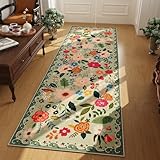
3. U’Artlines Washable Hallway Runner Rug, 2 x 6 ft, Grey — Best With a Code (CODE-NEEDED)
Price: Check price on Amazon, and check whether a promo code applies at checkout. This pick is labeled CODE-NEEDED in the plainest terms: at its regular price it is over budget and does not belong in this guide; with a code applied it can become the lowest-cost genuine runner in this tier. Codes expire, so check the current price on Amazon with any code applied before relying on it.
Who it suits: Patient bargain hunters furnishing a small rental, a first apartment or a compact mudroom corner, willing to apply a code at checkout — or wait for the next one if this code has lapsed. Where the runner budget competes with every other just-moved-in expense, a code-priced runner that genuinely fits is a disproportionate win.
What it is, verified: A printed polyester runner in a grey basketweave design, with a rubber backing, a low profile that clears doors easily, reinforced edges (the detail that decides whether a cheap runner frays in a year or survives three), and full machine washability. The basketweave print is a texture illusion — flat printed polyester, not woven loops — which is why it can sell this cheaply and wash this easily. For narrow spaces the flatness cuts both ways: zero door risk and zero visual bulk, but also zero cushion.
Pros:
- With a working code applied, it is positioned as the lowest-cost pick in this guide.
- Rubber backing means no pad purchase on top of the bargain — no extra pad cost to add.
- Reinforced edges address the most common failure point of budget runners.
- Flat printed surface releases dirt in the wash, vacuums clean in seconds, and adds no height under any door.
- The small-scale basketweave repeat is the calmest pattern here for a narrow hall — texture at reading distance, near-solid from standing height.
Honest limitation: The price is the limitation. Without a working code this runner sits over budget, and codes expire without notice; a code seen during research may already be dead, in which case the honest move is to wait for the next promotion rather than pay the regular price. The flat printed construction also feels like what it is: no pile, no cushion, and in a small home you will feel that on a cold floor in January. Printed grey basketweave is a forgiving, practical look, not a decorative statement.
Choose it if a code works at checkout, or a successor code appears — with a code it is hard to beat for rentals and utility corners. Skip it if you are paying the regular price; at that level the Safavieh near-miss below is better constructed for a broadly similar outlay, though it brings its own pad cost with it.

4. SHACOS Dirt Trapper Runner Rug, 2′ x 6′, Brown — Best for a Small, Muddy Entry (No Link)
Price: This pick is covered in prose only: we could not pin its exact Amazon listing to our two-source verification standard, so there is no link. It is positioned in the lower part of this budget tier. Search the exact product name on Amazon and buy only if the live 2′ x 6′ price fits the under-$30 budget.
Who it suits: Small homes with no mudroom and no entry hall to speak of — the front or back door opens straight into the living space, and the first six feet inside that door are where mud, gravel, snow and garden dirt either stop or spread through the whole home. In a big house a dirt-trapper is a convenience; in a small one it is the only line of defense the floors have.
What it is, verified: A dirt-trapper runner, named that deliberately rather than dressed up as a decorative rug. The construction is a polypropylene scraper pile — the fiber family used in commercial entrance matting — on a non-slip rubber backing, in a 2′ x 6′ format long enough to give incoming feet three or four steps of wiping instead of one. That step count is the small-entry argument: a standard door mat gives one wipe, mid-stride; six feet of scraper pile covers the full path from door swing to first turn. The listing presents it as washable, and the brown colorway is the right choice for its job: it is the color of the dirt it traps.
Pros:
- Purpose-built for dirt: the scraper pile pulls grit and moisture off soles before they reach the rest of a small home’s floors.
- Runner length, not mat length — six feet of wiping surface, which matters most exactly where there is no separate entry zone.
- Rubber backing keeps it planted in the highest-traffic spot in the house, no pad needed and no pad thickness under the entry door.
- Positioned comfortably within this budget tier when the live price confirms it — check the current price on Amazon.
- Polypropylene shrugs off water, mud and road salt that would stain a decorative runner in a week.
Honest limitation: It looks like entrance matting, because it is entrance matting in runner form — and in a small home there is no hallway to hide it in. It will sit in your living space, visible from the sofa, looking utilitarian. If the door opens into a hall or kitchen run, no problem; if it opens into the room you entertain in, the Lahome or Rugcomf protects the floor less aggressively but looks like it belongs there. Dirt-trapper pile also holds fine grit deep in the pile; it needs shaking out and hosing as well as washing, and it will never feel pleasant in bare feet. And because we could not pin the listing, check the size selector carefully — this product family also sells shorter door-mat sizes that are not runners at all.
Choose it if your entry has a genuine mud problem and function outranks looks. Skip it if the entry is also your living room’s first impression and you would rather wipe less dirt with a prettier runner.
Search “SHACOS Dirt Trapper Runner Rug 2′ x 6′” on Amazon — buy only if the live price fits the under-$30 budget.
5. Ottomanson Hallway Runner with Scraper Pile, 2′ x 6′, Gray — Best Utility Runner (Check Price)
Price: Check price on Amazon — we verified this listing (model SRT703-2X6) and its specifications, but no static price is printed here. Buy only if the live price fits the under-$30 budget. Check the live price on Amazon.
Who it suits: The working corners of a small home: the laundry nook, the path from the back door to the utility sink, the garage entry, a patio door. Small homes concentrate utility functions into a few square feet, and those feet need a surface that works rather than decorates.
What it is, verified: Ottomanson is an established rug and mat maker, and this is its utility entry: a polyester scraper rib pile — raised ribs that scrape soles as you walk — on a TPR back, made in Turkey, rated for indoor and outdoor use. The ribbed texture is the point: aggressive against dirt, channels water, and no pretense of being a decorative textile. It is the most mat-like construction in this guide, labeled honestly as a utility runner, and its low profile adds almost no height under a back door or laundry-room door in a tight plan.
Pros:
- Scraper ribs are the most effective dirt-removal surface in this guide.
- Indoor/outdoor rating means it can live on a small patio or in a garage entry without rotting or mildewing.
- TPR back grips hard floors and concrete without a pad.
- Made by a known manufacturer with a real model number and spec sheet — rare at this end of the market.
- Cleans with a shake and a hose; nothing about it is precious.
Honest limitation: It is not machine washable, and that is a deliberate trade, not an oversight: scraper-pile utility runners are cleaned by shaking, beating and hosing. If your buying reason is “I want to throw it in the wash,” this is the wrong pick — choose the Lahome or Rugcomf. The ribbed surface is also hard and slightly abrasive underfoot, wrong for a bedroom path. And because prices change, we cannot promise it sits in budget on the day you shop; the check-price rule is a real condition of this recommendation, not fine print.
Choose it if you need a working surface for a back door, laundry nook or garage entry and the live price fits the under-$30 budget. Skip it if you need machine washing or barefoot comfort.

6. SAFAVIEH Adirondack Collection Runner, 2’1″ x 6′ — Best Traditional Construction (NEAR-MISS, No Link)
Price: This is a prose-only near-miss, positioned just above this guide’s under-$30 budget for the 2’1″ x 6′ size. We include it as a labeled near-miss because it is the most accessibly positioned traditionally constructed runner from a major rug brand that we could verify, and many readers would rather know about it than not. We could not pin its Amazon listing to our verification standard — crawls of the Amazon page for this model returned inconsistent identifiers — so there is no link. Search “SAFAVIEH Adirondack runner 2’1″ x 6′” on Amazon and buy only if the live price fits your budget, or accept its above-budget positioning knowingly.
Who it suits: Anyone who walked through the washable picks above thinking “these are all printed polyester mats” — because they mostly are. This is the one pick in the guide built like a real rug. In a small traditional or cottage-style home, where the hall runner is a visible design element rather than a utility strip, that difference is the whole point.
What it is, verified: The specification data for the Adirondack line describes a power-loomed runner made in Turkey from a blend of about 60% polypropylene, 30% jute and 10% polyester, with a low 3/8 in pile and a jute backing. That construction — woven pile on a jute back — is how area rugs were made for decades, and it feels denser and more substantial than any washable pick here. The distressed traditional patterns are woven in, not printed on. At 2’1″ wide it is also, by an inch, the widest pick here — irrelevant in most halls, but in a 30-inch passage it leaves barely 4 inches of border per side, so measure before assuming it fits the plan.
Pros:
- The only woven, traditionally constructed runner in this guide — pattern in the pile, not printed on a flat sheet.
- Polypropylene pile is genuinely stain-resistant and vacuum-friendly in high-traffic halls.
- A 3/8 in low pile clears most doors while still feeling like carpet underfoot.
- From a major rug brand with consistent sizing and colorways across a full collection.
- It sits barely above budget — this is what the budget wall actually looks like from the other side.
Honest limitation: Three real costs hide behind its above-budget positioning, and a small budget feels every one harder. First, the jute backing has no grip whatsoever: on hard floors this runner will travel, and a rug pad is not optional — budget separately for a 2 x 6 ft pad. That pad is a meaningful surcharge on a small budget, pushing the true all-in cost well over the line. Second, the pad adds thickness, which stacks with the 3/8 in pile against exactly the tight door sweeps small and older homes are full of — a combination that clears fine in a modern house can drag in a cottage. Third, it is not machine washable; care is vacuuming and spot cleaning, and jute backing and moisture are enemies, so it is a poor choice for kitchens, bathrooms and muddy entries. When we say the washable picks dominate this budget in small spaces, this pick is the evidence: traditional construction in this budget exists only as a near-miss, and only before you buy the pad it requires.
Choose it if you want a real woven runner for a dry hallway, already own a rug pad, and accept its above-budget positioning. Skip it if your all-in budget is a hard $30 — with the pad, this pick cannot honor it.
Search “SAFAVIEH Adirondack runner rug 2’1″ x 6′” on Amazon — buy only if the live price, plus a pad if you need one, fits your budget.
A note on prices in this tier: Runner prices in this budget tier are unusually restless, moving between code-driven deals, short-lived sales and everyday levels. That volatility is why this guide does not print static product prices and instead asks you to check the current price on Amazon for every pick, with the under-$30 budget as the hard ceiling. It also means the ranking has a shelf life: if the Lahome’s live price has drifted above budget when you shop, it has not become a worse runner — it has become an above-budget runner that day, and the Rugcomf is the correct in-budget buy to check first.
Comparison Table
| Runner | Size priced | Price | Material (verified) | Pile / thickness | Backing | Machine washable |
|---|---|---|---|---|---|---|
| Lahome Moroccan Trellis | 2′ x 6′ | Check price on Amazon | Polyester faux wool, machine-made | About 0.16 in — thinnest here, kindest to tight doors | Rubber; full grip system not documented, may creep on slick floors | Yes |
| Rugcomf Floral, Green | 2′ x 6′ | Check price on Amazon | Synthetic faux-wool fibers | 0.35 in — thickest washable here; measure low doors | Textured TPR, built-in grip | Yes — front-load, cold |
| U’Artlines Basketweave, Grey | 2 x 6 ft | Check price on Amazon — code-dependent | Printed polyester flatweave | Low profile, flat — clears every door | Rubber, built-in grip | Yes |
| SHACOS Dirt Trapper, Brown (no link) | 2′ x 6′ | Prose only — lower part of this tier | Polypropylene scraper pile | Low scraper pile | Non-slip rubber | Listed as washable; also shake/hose |
| Ottomanson Scraper Pile, Gray | 2′ x 6′ | Check price on Amazon — only if it fits the under-$30 budget | Polyester scraper rib pile | Low ribbed profile | TPR, built-in grip | No — shake and hose |
| SAFAVIEH Adirondack (no link, near-miss) | 2’1″ x 6′ | Prose only — just above the under-$30 budget | 60% polypropylene / 30% jute / 10% polyester, power-loomed | 3/8 in, plus pad thickness if padded | Jute — no grip; pad required (extra cost) | No — vacuum and spot clean |
How to Choose the Right Runner Rug for a Small Room Under $30
Measure the hall in three directions, not one. Length: a 2 x 6 ft runner should stop 4 to 6 inches short of the door casing or wall at each end, so bare floor frames it instead of the runner vanishing under a threshold. Width decides whether the hall feels designed or carpeted: aim for 3 to 6 inches of visible floor on each side — a 2 ft runner in a 30- to 36-inch hall. Height decides returns: check every door that swings over the runner’s path, including the one that hangs a little low. This guide is the narrow-space cut of the full tier; for the same budget weighed without the small-room constraints, start from the Best Runner Rug Under $30 guide and then apply the measurements here.
Match the pile to your tightest door, not your average one. Small and older homes rarely have uniform door clearances — one door was rehung, one floor settled, one sweep sits low. If every door on the path clears three-quarters of an inch, the Rugcomf’s 0.35 in pile is safe and feels most like a real rug. If even one door is tight, that door rules: choose the Lahome at about 0.16 in or the dead-flat U’Artlines, and do not plan to “just lift the door a little” — in a rental you cannot, and in an older house you will not get around to it. Renters should also read the Best Runner Rug For Apartments Under $30 guide, which weights no-pad, no-damage options more heavily.
Treat the pad as a budget decision, not an accessory. In a small home the pad question is doubled: a pad for a 2 x 6 ft size is a meaningful extra cost on this entire budget, and it adds thickness under doors that are already the tightest in the house. Rubber- and TPR-backed washable runners grip on their own and cost nothing extra, which is why four of the six picks here are built that way. A jute-backed traditional runner cannot be used safely on hard floors without a pad, so its headline price is never its all-in cost. Consider the all-in cost before comparing any two runners; if a listing does not state a backing material, assume a pad is needed and factor it in.
Choose pattern scale for the width you have. In a narrow hall, pattern behaves differently than in a wide one. Small, all-over repeats — the Lahome’s trellis, the U’Artlines basketweave texture — read as a calm surface and make a short hall feel longer, because the eye travels the repeat instead of stopping at a single motif. A large-scale medallion or bold border design gets cropped by a 2 ft width: you see fragments of a pattern designed for a bigger rug, and the space reads busier and smaller. The Rugcomf’s botanical print sits between the two — fine at the wider end of small, bolder than ideal at the narrowest end. Small busy patterns have one more virtue here: in a passage where every square foot is high-traffic, they hide dirt a solid color would announce. If your rooms lean contemporary, the Best Runner Rug For Modern Homes Under $30 guide applies the same budget to cleaner, more geometric designs.
Put the runner where small homes actually wear. A compact floor plan concentrates traffic: the same six feet of hall carries every trip between bedroom, bathroom and kitchen, so the runner will need washing more often than the same runner in a big house — one more argument for the washable picks. The path beside the bed is a separate decision, where softness and quiet matter more than dirt defense; the Best Runner Rug For Bedrooms Under $30 guide weighs these same products for bare feet and soft landings. And if the honest conclusion after measuring is that even this budget is more than the space needs, the Best Runner Rug Under $15 guide covers the tier below, where genuine 2 x 6 ft options exist but sell mostly on code-driven deals.
Common Buying Mistakes
Buying wall-to-wall width for a narrow hall. A 2’6″ or 3 ft wide runner in a 32-inch hallway leaves no floor border, reads as a carpet offcut, and bunches against baseboards. The border of visible floor is what makes a runner look intentional. Stay at 2 ft wide unless your hall is a true 40 inches or more.
Measuring length and forgetting the door swing. The runner fits the hall perfectly — and the bathroom door drags on it every day. Measure clearance at every door on the path, choose pile for the tightest one, and remember a rug pad adds height on top of the pile figure.
Buying a door mat that calls itself a runner. The most common failure in this category. Listings title 20 x 32 in and 24 x 36 in mats as “runner rugs” to catch your search. Check the size field, not the title: a runner is at least 5 to 6 feet long. Two picks in this very guide belong to product families that also sell short mat sizes — select the 2 x 6 ft variant deliberately at checkout.
Believing the word “wool.” In this budget tier there is no wool. “Faux wool,” “wool-like” and “wool blend look” all describe polyester — soft, washable and appropriate at this price, but not worth a premium for a title claim the spec fields contradict. The cheapest verified real-wool runner in our research sat well above this budget.
Comparing prices across sizes. A 2 x 6 ft runner and its 2 x 10 ft sibling are the same product at different lengths, and their prices differ accordingly; a headline price may belong to the 2 x 3 ft size entirely. Every pick in this guide is assessed at the 2 x 6 ft size (2’1″ x 6′ for the Safavieh) — check the price for that exact size on Amazon, and make your comparisons at the same size too.
Forgetting the pad in the total. A traditional runner plus a separate pad is a notably larger purchase than its headline price suggests — and in a small budget that extra pad cost takes up a meaningful share of everything you had.
Trusting a code price after the code dies. Code-driven deals like the U’Artlines pick are real while they last and fictional afterward. Apply the code in the cart before committing; if it fails, the regular price applies, and other picks in this guide are better value at that level.
Washing a runner that was never machine washable. Jute-backed and scraper-pile runners can be ruined by one enthusiastic machine cycle — backing cracks, ribs deform, and the runner never lies flat again, which in a narrow hall means it never stops catching the door either. Match the care method to the construction before the first spill.
Final Recommendation
For most small homes, buy the Lahome Moroccan Trellis — check price on Amazon — if your doors are old or tight — its 0.16 in profile is the safest fit here and its trellis repeat is the right scale for a narrow hall — but check the live price first, because it sits right on the budget line. Buy the Rugcomf Floral Runner — check price on Amazon — if your doors clear comfortably and you want a steady in-budget option with real pile underfoot. If a working promo code appears for the U’Artlines, it is the rational small-budget buy with that code applied. Choose the SHACOS when the front door opens straight into your living space and mud is the real problem, the Ottomanson for a laundry nook, back door or garage entry when its live price fits the under-$30 budget, and the Safavieh only with open eyes: the best-built rug here, positioned just above budget before the pad it requires — the cost a small budget can least absorb.
The larger truth this tier teaches is that small spaces need the same budget spent on fit: the right width, clearance at every door, grip without a pad, and a runner that washes in your machine. A runner an inch too wide, a fraction too thick or silently well over budget all-in will annoy you every day in the exact spot you walk most. Measure first, spend second.
Frequently Asked Questions
What size runner is right for a narrow hallway?
For halls 30 to 36 inches wide, a 2 x 6 ft runner is the standard answer: it leaves 3 to 6 inches of visible floor on each side, the border that keeps a narrow passage from looking carpeted wall to wall. Leave 4 to 6 inches of bare floor at each end as well. If your hall is longer than about 8 feet, check the price of the 2 x 8 ft version of the same design on Amazon rather than butting two short runners together — remembering the longer size will usually leave the under-$30 budget behind.
Can you really get a good runner rug for under $30?
Yes, within one category: thin, machine-washable synthetic runners with rubber or TPR backing, at the 2 x 6 ft size. A decent one sits in the lower to middle part of this budget tier at everyday levels, with sale and code pricing dipping lower still — check the current price on Amazon. What this budget cannot buy is a traditionally woven runner, a wool runner, or a long 2 x 10 ft runner from an established brand — those sit above this tier.
How thick can a runner be before doors catch on it?
Most interior doors clear about half an inch to three-quarters of an inch, but small and older homes often have one door that hangs lower. The picks here run from flat to 3/8 in, so all fit a typical door — but a tight sweep plus a piled runner plus a pad can stack up to a drag. Measure the tightest door on the path, and if it is close, choose a flat pick like the Lahome or U’Artlines.
Do I need a rug pad under a washable runner in a small hall?
Usually not, and in a small hall that is a double saving: no separate pad cost, and no added thickness under tight doors. Rubber- and TPR-backed washable runners grip hard floors on their own. You do need a pad under a jute-backed traditional runner like the Safavieh pick — factor that extra pad cost into its true all-in cost — and a thin gripper can help a runner that creeps on polished tile, where a narrow hall gives it nowhere to go but against the baseboard.
Will a 2 x 6 ft runner fit in my washing machine?
The thin flat ones fit almost any machine — the practical choice for compact laundry setups. A piled 2 x 6 ft runner like the Rugcomf is at the practical limit of a standard washer; its maker specifies front-load, cold water. If your machine is a small top-loader, choose a thin runner, wash it alone, and never machine wash a jute-backed or scraper-pile runner at all.
When is the best time to buy a runner in this budget tier?
Whenever the deal cycle dips, which in this category is often. Genuine 2 x 6 ft washable runners in this tier move between promo-code deals, short sales and ordinary everyday levels. If your need is not urgent, watch the designs you like for a week or two and check the current price on Amazon; one of them will likely rotate into a code or a sale. If your need is urgent, check the Rugcomf’s current price on Amazon first as a steady in-budget benchmark, and never let a strikethrough “list price” talk you into thinking a checkout near the top of the budget is a bargain — in this tier, it is simply the ceiling.