Where to buy
Check the latest price, availability and delivery on Amazon. Orders are placed on Amazon. We may earn a commission from qualifying purchases.
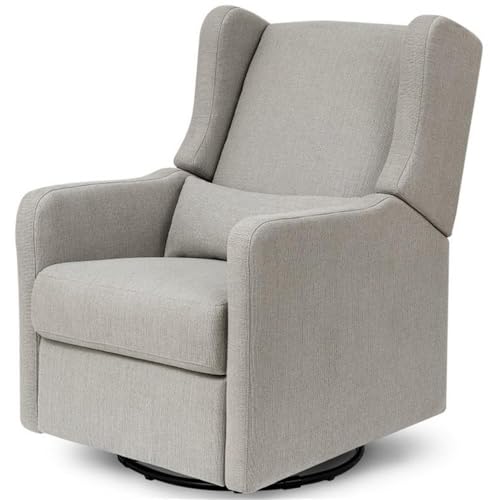
- Best overall for small spaces: Carter’s by DaVinci Arlo Recliner and Swivel Glider, Grey — Check on Amazon
- DaVinci Piper Recliner and Swivel Glider, Heathered Grey — Check on Amazon
- évolur Raleigh Upholstered Manual Glider Recliner, Shell — Check on Amazon
- Storkcraft Premium Hoop Glider and Ottoman, Espresso with Beige — Check on Amazon
- POLYWOOD Presidential Rocking Chair, Black — Check on Amazon
One more option, covered without a link
- DaVinci Olive Swivel Glider with Ottoman, Cream — the narrowest chair in this guide at about 25 inches wide, reviewed in full below, but its Amazon listing showed no current featured offer at verification time, so it carries no purchase link here.
Read the full guide ↓
Disclosure: As an Amazon Associate, dailyhomedecorating.com earns from qualifying purchases. Links to Amazon on this page are affiliate links; they cost you nothing extra. Listing details such as price and availability change often, so check the current Amazon listing before you buy.
The best rocking chair for small spaces under $1000 is not really about small homes. It is about the small spaces inside ordinary ones: the bedroom corner that could hold a reading chair if the chair were four inches narrower, the nursery nook between crib and wall, the home-office edge that doubles as a thinking seat, the landing, the sunroom’s last unclaimed square meter. These spaces fail chairs in specific ways — a recliner whose back has nowhere to travel, an ottoman with nowhere to park, a rocker whose arc strikes the bookcase — and they reward chairs designed with disciplined footprints, base-contained motion and honest published dimensions. At this ceiling, that discipline exists at a premium level, and this guide exists to match it to your particular small space.
We compared six chairs verified properly for tight quarters: maker-stated width, depth, weight and capacity — with one flagged exception — and a dated price sighting inside the under-$1000 frame. Five carry purchase links. The sixth, the narrowest chair in the set at roughly 25 inches wide, is reviewed in full without a link because its Amazon listing carried no current featured offer on verification day; its status is stated openly in its review, because in a small-spaces guide the footprint winner cannot simply be disappeared. The six cover the small-space typology: two compact recliners for corners that must also nap, a shallow-depth three-motion chair for against-the-wall rooms, a light glider-and-ottoman set whose ottoman parks away, a narrow porch rocker for the smallest outdoor spaces, and the 25-inch specialist for the spaces nothing else fits.
One principle runs through every review: in a small space, the chair’s working dimensions matter more than its parked ones. A glider’s base never travels, so its parked footprint is its real one — a profound small-space virtue. A recliner’s real footprint includes its reclined length and rear clearance. A rocker’s includes its arc. Each review below gives you the working number for its chair, so you can tape it on your floor before the box arrives and know, rather than hope, that the chair and the space agree.
In this guide
Quick Picks
In a hurry? This table matches each chair to the small-space job it handles best.
| Buyer type | Pick | Why it stands out | Link |
|---|---|---|---|
| Best overall for small spaces | Carter’s by DaVinci Arlo Recliner and Swivel Glider | A full recliner in a 29-inch-wide frame — the most function per inch here | Check on Amazon |
| Best small-space value | DaVinci Piper Recliner and Swivel Glider | The same three motions and a 300 lb rating, with one-step assembly | Check on Amazon |
| Best shallow depth | évolur Raleigh Manual Glider Recliner | Only about 31 inches deep at rest — the against-the-wall recliner option | Check on Amazon |
| Best light set | Storkcraft Premium Hoop Glider and Ottoman | About 46 lb for chair and ottoman, and the ottoman parks out of the way | Check on Amazon |
| Best tiny porch or sunroom | POLYWOOD Presidential Rocking Chair | 26.25 inches wide, weatherproof, and light enough to reposition daily | Check on Amazon |
| Narrowest of all (offer watch) | DaVinci Olive Swivel Glider with Ottoman | About 25 inches wide with a full-size seat — unlinked while its Amazon offer is unavailable | See review note |
How These Picks Were Chosen
We did not hands-on test these chairs. Verification came first, as across this series: an identifiable maker, a published ASIN confirmed independently, stated dimensions and weight, and a dated price sighting inside the under-$1000 frame — all recorded in the sources file. The small-space filter then judged the survivors on working footprint rather than brochure footprint. Width and depth were read together, because small spaces constrain them independently — a chair can be narrow enough for the nook and too deep for it in the same measurement session. Motion was priced in space: glide and swivel cost nothing beyond the frame, recline costs clearance and length, and a rail rocker’s arc costs a strip of floor behind it forever. Ottoman math was done honestly — an included ottoman is a bonus only if the space has somewhere for it to live at rest.
Safety screening matched the rest of the batch: every model was checked against recall coverage for this category, which includes a widely sold electronic recliner glider recalled in 2025 over an overheating module, and any chair with a recall on the chair itself was excluded. Small spaces sharpen one safety point in particular — a chair wedged into a nook still needs its base accessible for supervision around children and pets, and its motion envelope kept clear — and the advice sections return to that.
A final word on the budget itself, because small spaces distort price logic in a useful way. In a large room, a premium buys size and presence; in a small space, the same premium buys engineering that removes size — narrower frames that keep their seats, mechanisms that fold their travel into a base, ottomans that disappear. That is why this guide’s ceiling is not extravagant for its purpose: the chairs that respect a small space most completely are, almost without exception, the chairs in which the most engineering was spent per inch. The budget options here — the Storkcraft above all — prove the rule from the other side, achieving smallness through lightness and simplicity rather than mechanism. Either route is honorable; what a small space cannot forgive is the middle path of a bulky chair bought cheaply, which spends the room’s scarcest resource, its inches, on nothing.
The resulting shortlist is organized by the shape of the problem rather than by price. If your constraint is width, the answer lives at 29 inches and below. If it is depth, the Raleigh’s shallow rest position leads. If it is the sheer awkwardness of the space — a landing, a bay, a balcony — the light, movable chairs lead. Read the review that matches your constraint first; the comparison table then lets you check the winner against the whole field in one view.
The 6 Best Rocking Chairs for Small Spaces Under $1000
Carter’s by DaVinci Arlo Recliner and Swivel Glider, Grey
Who it suits: Corners that must do double duty — the bedroom reading corner that also naps, the nursery nook that also hosts a grandparent — and any small space whose owner refuses to choose between a recliner and a footprint.
The Arlo earns the small-spaces crown on function per inch. Its frame is about 29 inches wide — the narrowest recliner frame in this guide — yet inside it sit a seat roughly 21.5 inches wide and 21 inches deep, a back rising to 41.5 inches overall for genuine head support, and the full motion set: glide, 360-degree swivel and a manual recline that stretches the chair to about 64 inches. The published capacity is 300 lb. In a small space that arithmetic matters more than anywhere else, because the chair replaces two pieces of furniture — the upright seat and the lounger — inside one measured footprint. The performance linen resists the stains of rooms that also host coffee, crafts or children, and GREENGUARD Gold, FSC and CertiPUR-US certifications suit the close air of small rooms.
The working footprint is the review’s necessary second half. Parked, the Arlo asks for 29 by 38 inches. Reclining, it asks for roughly 10 inches of clearance behind it and its full 64-inch length in front-to-back terms — numbers a small space can absolutely provide, but only by design: angled in a corner, the diagonal donates the clearance from the corner’s dead depth, and the swivel keeps the seated position useful in every direction. At about 105.6 lb it will not be casually nudged between positions, so the placement decision should be made once, with the tape, and kept. It is priced mid-range in this guide; check the current price on Amazon for your finish.
For the small space that can fund its clearance, nothing else here returns as much chair for the inches. For the space that cannot — the nook flush to a wall, the bay with a radiator behind — the guide’s gliders below give up the recline and keep everything else.
- Full recliner in a 29-inch-wide frame — the most function per inch in the guide.
- Seat about 21.5 by 21 inches with a 300 lb rating and the tallest back here.
- Swivel makes one fixed footprint serve every direction in the room.
Honest limitation: Recline needs roughly 10 inches of rear clearance and a 64-inch working length, and at about 105.6 lb placement is a commitment.
Choose it if your small space can fund the clearance — especially on a corner diagonal. Skip it if the chair must sit flush to a wall; choose a pure glider instead.
DaVinci Piper Recliner and Swivel Glider, Heathered Grey
Who it suits: Small spaces with a slightly kinder width budget and a stricter money budget; renters and first corners; and anyone who wants recliner function with the easiest arrival in the guide.
The Piper is the Arlo’s formula at 30.5 inches wide, 34 inches deep and 39.5 inches high — an inch and a half wider, four inches shallower at rest, and priced at the lower end of this guide’s recliner range. The seat cushion is about 22 inches wide and 22 inches deep, the deepest here, with a lumbar pillow included; the maximum is a published 300 lb; the mechanism — glide, swivel, hidden recline with pop-up leg rest — matches the Arlo’s set. GREENGUARD Gold and CertiPUR-US credentials carry over. Assembly is one step with no tools, which in a small space is not a convenience but a category of fit: the chair arrives, stands, and works in minutes, in rooms where a workbench afternoon is not available.
Its small-space profile differs from the Arlo’s in emphasis. The shallower parked depth suits rooms where the chair’s back is to a wall and its front to a walkway; the recline still needs its clearance, so the corner-diagonal advice applies unchanged. The back, at 39.5 inches, is two inches shorter — visible in a tall room, felt by tall heads. The upholstery is standard polyester rather than performance linen, the one specification where the saving shows in daily small-room life, where the chair is always near the action.
At about 97 lb it remains a heavy, place-it-once object. But as the small-space recliner for buyers whose constraint is money first and width second, it is the guide’s rational center: full mechanism, full rating, most of the budget returned for the rug, lamp and table that make a small corner complete.
- Recliner formula at 30.5 inches wide and a shallower 34-inch parked depth.
- Deepest seat here at about 22 inches, with a 300 lb published rating.
- One-step, tool-free assembly — built for rooms without a workshop.
Honest limitation: Standard upholstery instead of performance fabric, a shorter back, and about 97 lb of place-it-once weight.
Choose it if money and depth lead your constraint list. Skip it if width is the binding constraint — the Arlo is narrower — or spills are daily.
évolur Raleigh Upholstered Manual Glider Recliner, Shell
Who it suits: Shallow small spaces — the against-the-wall strip in a bedroom, the office edge, the wide hallway’s end — where depth, not width, is the scarce dimension, and where a chair wider but shallower fits the geometry better.
Most small-space shoppers measure width and forget depth; the Raleigh is the chair for those who measured both. Its frame is about 32 inches wide — the widest here, stated plainly — but only about 31 inches deep at rest, the shallowest parked depth of any recliner in this guide. In a room where the chair’s back is to the wall and its front edge sets the walkway, those saved inches of depth are the difference between a chair that fits the strip and a chair that narrows the room’s circulation. Inside the wide, shallow form: a rocking glide, a 360-degree swivel and a lever-worked manual recline extending to roughly five feet, a high ergonomically curved back with lumbar support, a side pocket for the small clutter small spaces cannot scatter, and GREENGUARD Gold plus FSC certification.
The published capacity is 250 lb and the chair weighs about 84 lb. It is priced in the lower-middle of this budget; check the current price on Amazon, as finishes move independently. For the wide-but-shallow space — a common shape in bedrooms, where the wall strip beside a dresser is generous in width and strict in depth — the Raleigh is not a compromise at all; it is the only chair in the guide drawn to that shape.
Its limitations mirror its geometry. Thirty-two inches of width excludes it from genuinely narrow nooks, whatever its depth achieves. The 250 lb rating gives the least shared-sitting headroom among the upholstered chairs here. And its recline, like all reclines, still travels backward — shallow at rest is not the same as shallow in use, so the tape should check the reclined length against the room before the order, as with every recliner in this guide.
- Shallowest parked depth of any recliner here at about 31 inches.
- Rock, swivel and lever recline, with a clutter-containing side pocket.
- GREENGUARD Gold and FSC certified, in calm shell and sand finishes.
Honest limitation: The widest frame here at 32 inches, and a 250 lb capacity with the least headroom for sharing.
Choose it if your space is wide but shallow. Skip it if your constraint is a narrow nook — that is Arlo and Olive country.
Storkcraft Premium Hoop Glider and Ottoman, Espresso with Beige
Who it suits: Small spaces that need the chair to be movable — the multi-use room where the corner hosts yoga on Tuesday and reading on Wednesday — and buyers who want an ottoman that can be parked out of the footprint entirely.
The Storkcraft’s small-space case is weight and separability. The set — exposed solid-wood hoop glider plus matching ottoman — weighs roughly 46 lb in total, so the chair can be lifted to the room’s other corner when the space changes jobs, a thing no 100 lb recliner will ever do gracefully. The parked footprint is about 29.9 inches wide, 30.3 inches deep and 40 inches high, and the glide runs on enclosed metal ball bearings, so its working footprint equals its parked one: no arc, no clearance, no travel. The ottoman, about 19.7 by 15.4 by 14.4 inches, is the set’s small-space masterstroke — in use it completes the chair; at rest it parks under a side table, in a closet, or as a child’s seat elsewhere, returning its square footage to the room. Storage pockets, GREENGUARD Gold certification and the lowest price in this guide complete a package aimed squarely at flexible rooms. Check the current price on Amazon.
The compromises are sitting format and capacity. The seat is about 17.3 inches wide and 18.7 inches deep — a sit-up, one-adult seat — and the published maximum is 250 lb. In a small space used by one reader at a time, that is a fair trade for a set that weighs less than the recliners’ mechanisms alone. In a space that must host sprawled, shared, napping sitting, it is the wrong tool, and the recliners above exist for it.
One placement habit multiplies this set’s value in tight rooms: treat the ottoman as furniture with two addresses, its working position and its parked position, and choose both when the chair arrives. Small spaces stay livable when every object has a planned rest state, and no chair in this guide rewards that planning more directly.
- Lightest set here at about 46 lb — the chair that moves when the room changes jobs.
- Working footprint equals parked footprint: enclosed-bearing glide, no arc or clearance.
- Ottoman parks away completely; GREENGUARD Gold certified at the lowest price here.
Honest limitation: A narrow 17.3-inch seat and a 250 lb maximum — one adult, sitting up.
Choose it if your small space is multi-use and the chair must move. Skip it if the space’s chair must also be its nap bed.
POLYWOOD Presidential Rocking Chair, Black
Who it suits: The smallest outdoor small spaces — Juliet balconies, tiny terraces, sunroom ends — and indoor nooks that want a rocker which can be carried in and out with the seasons.
At about 26.25 inches wide, the Presidential is the narrowest linked chair in this guide, and the only true rail rocker. Its HDPE lumber construction makes it the small outdoor space’s natural chair: weatherproof on a balcony too small for a cover’s choreography, hose-cleanable in a sunroom, and backed by a 20-year residential warranty with a 325 lb capacity — the highest rating here. At roughly 37 lb it is also the guide’s most portable real chair: the small-space owner can rock on the terrace in the morning, carry it to a bedroom window in the afternoon, and store it against a wall in winter without a second pair of hands.
The small-space arithmetic of a rail rocker must be done honestly. The parked footprint is 26.25 by 33.75 inches; the working footprint adds the arc — a strip of clear floor behind the chair roughly equal to a confident rock, which on a small balcony must be checked against the railing and the door swing before purchase. On a mat that defines the arc, in a corner angled to the view, the Presidential gives a tiny outdoor space a full-size rocking experience that no folding chair approaches. It is priced in the lower-middle of this budget; check the current price on Amazon, as colors are priced separately.
Its limitations are the familiar pair: a firm, unpadded slatted seat that wants a cushion for long sits — and in a small space, the cushion needs a storage answer too — and a design whose weatherproof talents are wasted if the space is a purely indoor nook with an upholstered alternative available. For the balcony, the terrace and the sunroom, though, it is the guide’s inevitable pick.
- Narrowest linked chair at 26.25 inches wide — rocks where gliders cannot fit.
- Weatherproof HDPE, 325 lb capacity, 20-year warranty, about 37 lb.
- True rail-rocker arc for tiny porches and sunrooms.
Honest limitation: The rocking arc must be measured against railings and doors, and the seat wants a cushion for long sits.
Choose it if your small space is outdoors or sunlit. Skip it if the space is an indoor nook needing upholstered comfort.
DaVinci Olive Swivel Glider with Ottoman, Cream
Who it suits: The smallest true nooks — the 25-inch gap, the closet-converted nursery, the bay that rejects everything else — and buyers patient enough to source the narrowest chair in the guide beyond a single marketplace.
The Olive is the limiting case of small-space design, and it is remarkable how little it concedes. The frame is about 25 inches wide, 31.5 inches deep and 39.25 inches high. Inside it, the seat cushion measures about 22 inches wide and 21 inches deep — the equal of chairs seven inches wider — because the narrowness was engineered out of the arms and silhouette rather than the sitter. The glider is rated to 300 lb, the included ottoman to another 300 lb; the base swivels 360 degrees over the glide; a lumbar pillow is included; and the certifications — GREENGUARD Gold, FSC-certified wood, CertiPUR-US foam — match the premium field. It arrives with no assembly required, at about 80 lb. For a nook measured in the twenties of inches, there is simply no fuller specification available at this budget.
It is unlinked for the reason stated wherever it appears in this guide: at verification time, its Amazon listing showed no current featured offer. It is sold through other furniture retailers at prices in the lower-middle of this budget, and a buyer who finds it in stock from a reputable seller — model confirmed, ottoman confirmed included — has found the small-space answer the rest of the guide approximates. We review it in full because omitting the narrowest chair from a small-spaces guide would protect a marketplace technicality at the reader’s expense.
The cautions are availability, finish and feel. Stock must be hunted and verified; cream is the least forgiving color in a tight, busy space, with a grey variant offering the same form more forgivingly; and a 25-inch frame, however clever its seat, reads as tailored to broad sitters. None of that diminishes what the Olive proves: that at this budget, small no longer means stripped.
- Narrowest chair in the guide at about 25 inches wide, with a full 22-inch seat.
- 300 lb ratings for glider and ottoman; ottoman and lumbar pillow included.
- GREENGUARD Gold, FSC and CertiPUR-US certified; no assembly required.
Honest limitation: No current Amazon featured offer at verification — hence no link — and cream is unforgiving in busy small spaces.
Choose it if you find verified stock and width is the whole problem. Skip it if you need to order today on Amazon — the Arlo is the linked narrow answer.
Comparison Table
| Product | Type | Best use | Link |
|---|---|---|---|
| Carter’s by DaVinci Arlo | Glider recliner, 29 in wide | Most function per inch — corners that must also nap | Check on Amazon |
| DaVinci Piper | Glider recliner, 30.5 in wide | The recliner formula for less, shallower at rest | Check on Amazon |
| évolur Raleigh | Glider recliner, 31 in deep | Wide-but-shallow spaces — the against-the-wall strip | Check on Amazon |
| Storkcraft Premium Hoop Glider and Ottoman | Wood glider set, 29.9 in wide | Multi-use rooms — light, movable, ottoman parks away | Check on Amazon |
| POLYWOOD Presidential | Rail rocker, 26.25 in wide | Tiny balconies and sunrooms — narrow and weatherproof | Check on Amazon |
| DaVinci Olive with Ottoman | Swivel glider set, 25 in wide | The narrowest nooks of all — verify retail stock | See review note |
How to Choose the Best Rocking Chair for Small Spaces Under $1000
- Name your constraint before you shop. Width, depth, weight and clearance are different problems with different winners in this guide: Arlo for width, Raleigh for depth, Storkcraft for weight and movability, Olive for the extreme of all three. A chair chosen for the wrong constraint fits badly forever.
- Tape the working footprint. Parked dimensions lie politely. Mark the reclined length (about 64 inches for the Arlo), the rocker’s arc, and the ottoman’s parked position on the floor with tape, and live with the tape for a day before ordering.
- Prefer base-contained motion in nooks. Glides and swivels keep the chair’s footprint identical at rest and in use, which is why four of this guide’s six chairs are gliders. In a small space, predictability of footprint is a feature money should buy.
- Use the corner diagonal. Angling a recliner in a corner funds its rear clearance from the corner’s dead depth and makes its swivel serve the whole room. It is the highest-value layout decision in any small space.
- Give every object a parked state. Ottomans, cushions and throws all need a rest position chosen in advance. The Storkcraft’s ottoman parks away entirely; if your space has no park, choose a recliner’s built-in footrest instead.
- Keep the base reachable and the envelope clear. Small spaces tempt owners to wedge chairs tight. Leave hand-room to clean around the base, keep the motion envelope free of stored items, and supervise children and pets around any moving base.
- Match visual weight to the space. A nook reads smaller with a dark, high-backed chair filling it. Cream and light finishes (Olive, Raleigh in shell), exposed frames (Storkcraft) and slatted forms (POLYWOOD) keep tight spaces feeling open.
- Do not buy down the specification to save inches. At this budget the narrow chairs keep their ratings and certifications — 300 lb and GREENGUARD Gold at 25 inches wide. Small should mean disciplined, not diminished.
Measuring a Small Space: A Five-Minute Method
Small spaces reward a measurement ritual, and five minutes with a tape and a roll of painter’s tape will prevent every common failure in this category. First, measure the space’s three numbers: the clear width between the obstacles that bound it, the depth from wall to the walkway’s edge, and — for recliners — the diagonal of the nearest corner, which is where clearance hides. Second, tape the candidate chair’s parked footprint on the floor at its intended angle, then extend the tape for its working footprint: the recline’s extra length, the rocker’s arc, the ottoman’s in-use position. Third, live with the tape through one ordinary evening. Walk the walkway. Open the drawers and doors the tape neighbors. Sit on the floor inside the outline and check the sightlines — to the window, the screen, the crib. If the taped chair annoys you as tape, the upholstered one will not improve the relationship.
Finally, measure the journey, not just the destination: the door the chair enters by, any turn it must make, and the width of the nook’s own opening if it is an alcove. The chairs in this guide range from about 37 to 106 lb and from 25 to 32 inches wide, and the difference between a triumphant placement and a hallway standoff is usually a single forgotten measurement. Do the five minutes; small spaces forgive almost everything except being guessed at.
Small Spaces by Room: Bedroom, Office and Landing
The bedroom corner is the small space this guide serves most often, and it has its own etiquette. The chair there is a reading and dressing chair, used in the room’s quietest hours, so silent motion matters more than anywhere: enclosed bearings and base-contained glides over any mechanism that travels. Light control matters too — the chair usually takes the window corner, and pale finishes (the Olive’s cream, the Raleigh’s shell) keep that corner luminous while deep colors ground it. Choose the chair whose back height suits a bedside sightline: the room already has a tall object in the wardrobe, and a 39-inch glider back reads as furniture, where a much taller chair can read as a second wardrobe with ambitions.
The home office’s small space is a thinking seat, and its demand is transition: the chair must turn its sitter from desk to window to bookshelf without a furniture shuffle, which is the swivel’s home ground. All four glider-based chairs here swivel, and in an office the Arlo and Piper add a recline that turns a thinking seat into a call-taking, document-reading lounger — provided the office’s corner can fund the clearance, which in practice means the corner away from the door swing. The landing and the hallway end, the last small-space type, ask for the opposite virtues: visual lightness and movability, because these spaces are passages first. The Storkcraft’s exposed frame and the POLYWOOD’s slats keep a landing feeling open, and both can be carried out of the way in a minute when the passage must be a passage — for a delivery, a move, a life event. Match the chair to the room’s actual verb — read, think, pass — and the small space stops being a compromise and becomes the most deliberate corner in the house.
Common Buying Mistakes
- Shopping by width alone. Depth and clearance fail as many small spaces as width does — the Raleigh exists in this guide because one of its readers measured the second dimension.
- Trusting parked dimensions. A recliner at rest is a chair telling half its story. Its reclined length and rear clearance are the other half, and small spaces always collect.
- Wedging the chair in tight. A glider crammed into a nook with no hand-room around its base cannot be cleaned, supervised or serviced — and its motion envelope fills with stored clutter within a month.
- Forgetting the ottoman’s rest state. In use it is comfort; at rest it is an obstacle with good upholstery. Plan its parking place before it arrives, or choose a footrest design.
- Choosing visual bulk for a visual nook. Dark, towering chairs shrink the spaces they sit in. Light finishes, exposed frames and slatted forms keep a tight corner feeling like a place rather than a blockage.
- Assuming small means cheap. The narrowest chairs here carry 300 lb ratings and full certifications. If a small-space chair asks you to surrender specification for inches, it is the wrong chair — this guide’s six prove the trade is unnecessary.
- Skipping the tape test. Five minutes of painter’s tape is the cheapest insurance in furniture buying, and small spaces are where its payout is largest.
Furnishing Around the Chair in a Small Space
A small space is a system, and the chair is only its largest component. The pieces around it should be chosen to the same discipline. A side table no wider than the chair’s arm is wide — enough for a book, a drink and a phone, and not an inch of small-space surface more. A lamp that stands on that table or arcs from behind the chair’s shoulder keeps the floor’s square count untouched; floor lamps with tripod bases are the small space’s quiet enemy, spending footprint the chair already spent. Storage should go vertical or go inside the furniture: a wall shelf above the chair’s back — placed clear of a recliner’s travel — holds the reading queue, and the ottoman sets in this guide demonstrate the principle in furniture form, giving the room a footrest that is also a seat that is also, in the parked position, nothing at all.
Textiles finish the system. A rug sized to the working footprint, as the measuring section describes, is the small space’s zoning law: it declares the corner a place, absorbs the chair’s sound, and protects the floor beneath the base. One throw, chosen in the room’s accent color, gives the chair its seasonal change without a second object to store. And the wall behind the chair deserves one deliberate thing — a picture, a shelf, a sconce — because in a small space the chair’s backdrop is always in view, and an intentional backdrop turns a tight corner into a composed one. Furnished this way, the small space does not read as a room that settled for a smaller chair. It reads as the most considered seat in the house, which — measured, taped and chosen from this guide — is exactly what it is.
Final Recommendation
- Most small spaces: Carter’s by DaVinci Arlo Recliner and Swivel Glider.
- Value recliner: DaVinci Piper Recliner and Swivel Glider.
- Wide but shallow: évolur Raleigh Manual Glider Recliner.
- Light and movable: Storkcraft Premium Hoop Glider and Ottoman.
- Tiny porch or sunroom: POLYWOOD Presidential Rocking Chair.
- Narrowest nooks (verify availability): DaVinci Olive Swivel Glider with Ottoman.
Our top two for small spaces are the Arlo — maximum function in a 29-inch frame, for corners that can fund its recline clearance — and the Piper, the same formula shallower at rest and friendlier in price. The Raleigh owns the wide-but-shallow strip, the Storkcraft the multi-use room, the POLYWOOD the tiny outdoors, and the Olive the nooks nothing else enters, for buyers who find one in stock. If your small space is a whole small home, Best Rocking Chair For Small Apartments Under $1000 applies the same measurements at apartment scale, and the tier’s general guide, Best Rocking Chair Under $1000, judges these chairs without the space constraint.
Frequently Asked Questions
What is the best rocking chair for small spaces overall?
The Carter’s by DaVinci Arlo, for function per inch: glide, swivel and recline in a 29-inch-wide frame with a 21.5-inch seat and a 300 lb rating. It asks for about 10 inches of rear clearance to recline — fund it with a corner diagonal. Where width alone decides, the DaVinci Olive is narrower at about 25 inches, subject to finding retail stock.
What is the narrowest rocking chair in this guide?
The DaVinci Olive at about 25 inches wide, with a 22-inch seat cushion inside the frame and 300 lb ratings for both glider and ottoman. Among linked chairs, the POLYWOOD Presidential is narrowest at 26.25 inches wide outdoors, and the Arlo narrowest indoors at 29 inches.
Glider or rocker for a small space?
Usually a glider. Its motion is contained in its base, so its working footprint equals its parked footprint and it needs no clearance behind it. A rail rocker needs a clear arc of floor, which small spaces can provide on a balcony, a sunroom or a matted corner — but it must be measured, not assumed.
How do I fit a recliner into a small space?
Choose a narrow model, tape its full reclined length on the floor, and place it on a corner diagonal so the corner’s depth funds the roughly 10 inches of rear clearance. The Arlo (29 inches wide, about 64 inches reclined) and the Piper (30.5 inches wide, shallower at rest) are this guide’s worked examples.
Can a rocking chair work in a bedroom corner?
It is one of the best small-space uses there is. Choose a glider for its silent, base-contained motion, place it in the window corner on the diagonal, and pair it with a small lamp and table. The Arlo suits corners that can fund its recline clearance; the Olive and Storkcraft suit corners that cannot. Every upholstered chair in this guide is GREENGUARD Gold certified, which suits the room a household breathes in longest.
Is an ottoman a bad idea in a small space?
Only an unplanned one. If the ottoman has a parked position — tucked beside the chair, under a table, serving as a stool elsewhere — sets like the Storkcraft and the Olive give feet-up comfort with no permanent footprint. If no parking exists, a recliner’s built-in footrest is the better small-space mechanism.
How much space should I leave around a rocking chair?
For a glider, its own footprint plus hand-room to clean around the base. For a recliner, add roughly 10 inches behind and its full reclined length in front-to-back measure. For a rail rocker, add a clear arc behind the parked chair — about a foot of open floor for a confident rock — and keep all three envelopes free of storage. When the space cannot give the full envelope, give the chair a different job rather than a compromised position: a recliner that cannot recline should be bought as the glider it will actually live as, and a rocker whose arc is blocked belongs on the balcony or in the sunroom, where the same chair, honestly placed, gives its full measure instead of a daily reminder of the inches that were not there.


