Where to buy
Check the latest price, availability and delivery on Amazon. Orders are placed on Amazon. We may earn a commission from qualifying purchases.
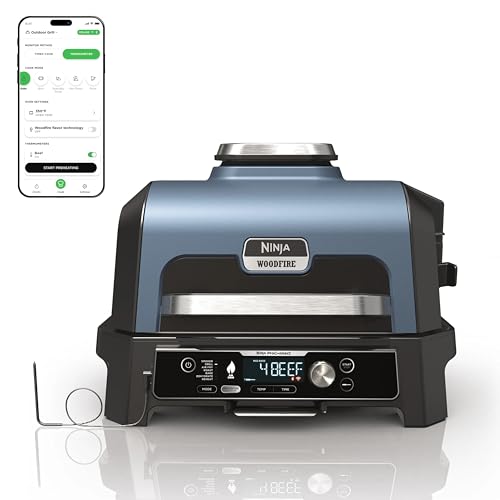
- Best overall for apartments: Ninja Woodfire ProConnect Premium XL Outdoor Grill & Smoker — Check on Amazon
- Weber Lumin Portable Electric Grill — Check on Amazon
- Kenyon G2 Portable Tabletop Electric Grill — Check on Amazon
- Ninja Woodfire Outdoor Grill & Smoker OG701 — Check on Amazon
- Char-Broil Patio Bistro TRU-Infrared Electric Grill — Check on Amazon
- Kamado Joe Joe Jr. — communal grill areas only, never a balcony — Check on Amazon
Disclosure: As an Amazon Associate, dailyhomedecorating.com earns from qualifying purchases. Links to Amazon on this page are affiliate links; they cost you nothing extra. Listing details such as price and availability change often, so check the current Amazon listing before you buy.
The search for the best portable grill for apartments under $1500 has to start with an uncomfortable truth, because no amount of budget changes it: on the balcony of a multi-unit building, open-flame grilling — charcoal, propane, pellets — is prohibited in most of the United States, by most leases and by fire code. The International Fire Code, Section 308.1.4, bars charcoal burners and other open-flame cooking devices on combustible balconies and within 10 feet of combustible construction in multi-unit housing, with narrow exceptions (a sprinklered balcony, or a one- and two-family dwelling), and the overwhelming majority of apartment leases repeat the same ban in plain language. A $1,500 budget does not buy an exemption from that rule, and this guide will not pretend otherwise or steer you toward violating it. What a flagship budget does buy, used legally, is excellent: the best electric grills ever made for small outdoor spaces — machines that sear at genuine steakhouse temperatures, add real wood smoke, and plug into a standard outlet — plus, for buildings that provide a designated communal grilling area, one superb portable charcoal kamado you can carry down to it.
So this roundup is organised the way an apartment dweller’s life actually is. The first five picks are electric, because electric is what the rules allow on most balconies and patios: the Ninja Woodfire ProConnect Premium XL, which adds real wood-pellet smoke to electric grilling; the Weber Lumin, a premium electric grill that sears at 600°F and was designed from a blank page for city balconies; the Kenyon G2, a stainless tabletop grill from the marine world, built flameless and UL-approved for indoor and outdoor use; the original Ninja Woodfire OG701, the compact all-rounder; and the Char-Broil Patio Bistro, the honest budget-within-the-tier option that leaves most of your $1,500 unspent. The sixth pick, the Kamado Joe Joe Jr., carries a condition in its name: it is for the designated communal grill area your building may provide — a courtyard station, a rooftop deck with a grilling zone, a ground-level pad — and for trips away from the building entirely. It is never a balcony grill, and we say so every time it appears, because a recommendation that costs a reader their deposit — or worse, starts a fire on a wooden balcony — is not a recommendation at all, whatever the grill costs.
Read your lease before you read the reviews. That is not boilerplate: the specific clause on grills, the building’s insurance-driven rules, and your local fire code together decide which of these six picks you may use and where. If your lease bans even electric grills on the balcony (some do, usually where balconies are small or wooden), the compliant answer is the communal area, a ground-floor patio where the rules differ, or indoor cooking — not a quieter violation. If electric is permitted, as it is in most modern leases precisely because there is no open flame and no stored fuel, then you are shopping in the strongest electric grill market that has ever existed, and this budget buys its very best. For smaller versions of the same shortlist, see Best Portable Grill For Apartments Under $500 and Best Portable Grill For Apartments Under $700; the flagship base list, including the charcoal and gas models this guide must exclude for balcony use, is at Best Portable Grill Under $1500.
In this guide
Quick Picks: The Best Portable Grill for Apartments Under $1500 at a Glance
| Pick | Type | Balcony status | Best for |
|---|---|---|---|
| Ninja Woodfire ProConnect Premium XL | Electric + wood-pellet smoke | Electric — where lease allows electric | Best overall: real smoke flavour, app control, XL capacity |
| Weber Lumin | Electric | Electric — where lease allows electric | Best pure electric grill: 600°F searing, premium build |
| Kenyon G2 Portable | Electric, flameless | Electric — UL indoor/outdoor | Best for strict buildings: marine-grade, flameless design |
| Ninja Woodfire OG701 | Electric + wood-pellet smoke | Electric — where lease allows electric | Best compact all-rounder: grill, smoke, air fry |
| Char-Broil Patio Bistro | Electric, TRU-Infrared | Electric — where lease allows electric | Best value: proper grill format, small footprint |
| Kamado Joe Joe Jr. | Charcoal kamado | NOT for balconies — communal areas only | Best charcoal option where a designated grill area exists |
How These Picks Were Chosen
The first filter was legal, not culinary. Every pick had to have a lawful apartment use case: electric models that a typical lease permits on a balcony, and one charcoal model included only under an explicit communal-area condition. Any grill whose only apartment story was “nobody will notice” was excluded, and that removed the entire charcoal, propane and pellet field from balcony contention — including excellent machines from our base guide. Readers whose buildings ban balcony grilling entirely should treat the electric picks as communal-area and patio picks too; the machines do not change, only the permitted location does.
The second filter was verification. Each pick is a current manufacturer model with specifications taken from the manufacturer or the Amazon listing itself, and each Amazon link was cross-checked against Amazon’s own catalogue data through the Amazon Creators API: the product titles returned for the five linked electric picks match the models reviewed here, and those matches are recorded in this article’s source notes. The third filter was the U.S. Consumer Product Safety Commission recall database. No pick in this guide is under an active recall. That screen matters in this category: a popular 3-in-1 gas grill was recalled in 2026 because a glass window could shatter during use, and wire-bristle grill brushes have been recalled in the millions in the same period — which is why the cleaning advice in this guide specifies bristle-free tools only. Finally, we weighted the things apartment life actually punishes: smoke output that drifts to a neighbour’s window, grease management in a space you cannot hose down, storage in a closet rather than a garage, and noise — an auger fan or a screaming smoke plume matters more at six feet from a stranger’s bedroom window than it ever does in a backyard.
The Six Picks in Detail
1. Ninja Woodfire ProConnect Premium XL — Best Overall Apartment Grill
Who it suits: the apartment cook who wants the closest thing to backyard barbecue flavour that a wall outlet can produce. If your lease allows electric grills and your complaint about electric grilling has always been “it tastes like a kitchen,” this is the machine built to answer you.
The Woodfire family’s trick is that it is not purely electric in flavour terms: a small burn chamber smoulders real wood pellets while the electric element does the cooking, so food gets genuine wood smoke — not liquid smoke, not a scented approximation — from a device with no open flame to store or manage. The ProConnect Premium XL is the flagship of that line: 180 square inches of cooking space, seven cooking functions spanning grilling, smoking, air frying, roasting, baking, broiling and dehydrating, and app-connected dual thermometers that report meat temperature and ambient temperature to your phone, so a brisket-style cook on a small balcony becomes a monitored, mostly hands-off process. For an apartment, the practical virtues stack up: the smoke is real but modest in volume compared with a charcoal fire, the unit is self-contained on a tabletop, and when the cook ends there is no ash bed cooling for a day and no fuel stored on the balcony — two of the exact hazards balcony bans exist to prevent.
Pros:
- Real wood-pellet smoke with electric heat — the only balcony-legal route to genuine smoke flavour.
- 180 sq in cooking area and seven functions; the largest, most versatile electric here.
- App-connected dual thermometers take the guesswork out of low-and-slow cooks.
- No fuel storage, no ash bed, no open flame — the compliance profile apartment rules are written around.
Honest limitation: it uses pellets for smoke, and pellet smoke on a balcony still drifts — position it thoughtfully, warn the downwind neighbour, and keep cooks courteous in timing. It is also the largest electric here; measure your balcony table or stand space before ordering.
Choose it if flavour is the priority and your lease permits electric grills. Skip it if your building bans balcony cooking devices of any kind — your compliant route is the communal area, where the Joe Jr. below becomes the relevant pick.
2. Weber Lumin — Best Pure Electric Grill
Who it suits: the griller who wants an electric grill that behaves like a Weber — because it is one. The Lumin suits apartment cooks who grill classic fare (steaks, chops, burgers, vegetables) several times a week and want heat, build quality and a real brand behind the warranty, without smoke features or app ecosystems.
Weber designed the Lumin specifically for small-space and city grilling, and the headline specification explains the appeal: it reaches temperatures above 600°F, which is proper searing territory that most electric grills never approach. Around that heat, Weber built a system — the grill sears, and with its expansion accessories it also steams, smokes gently, and keeps food warm, all on a 1,560-watt element that runs from a standard outlet. The porcelain-enamelled cast-iron cooking grate leaves the marks and crust electric grills are not supposed to produce, the whole unit is compact enough for a balcony corner, and a matching stand exists for those who want it off the table. In apartment terms: it lights instantly, it is cool and safe to cover sooner than any combustion grill, it stores no fuel, and it produces the least smoke of any pick here when used as a grill — a real consideration when your outdoor space is six feet from someone else’s.
Pros:
- Searing heat above 600°F — the benchmark for electric grills.
- Weber build, parts network and warranty support.
- Compact footprint designed for balconies and small patios; optional stand and cover.
- Lowest day-to-day fuss here: no fuel, no ash, quick cool-down.
Honest limitation: no intrinsic smoke flavour — you are trading the Woodfire’s smoke chamber for simplicity and sear. The grate is sized for two to four people; entertaining a crowd means batch cooking.
Choose it if you grill often, value sear and simplicity, and want the safest possible neighbour profile. Skip it if smoke flavour is non-negotiable — that is the Ninja’s entire reason to exist.
3. Kenyon G2 Portable Electric Grill — Best for Strict Buildings
Who it suits: residents of buildings with the strictest rules — the leases that say “flameless electric only,” the condos whose insurers have opinions, the boat owners and RVers in the same regulatory boat. Kenyon builds grills for the marine industry, where an open flame on a fibreglass deck is unthinkable, and the G2 brings that design language to a tabletop.
The G2 is a 1,440-watt, single-burner portable in a stainless steel body with a cast-aluminum grate, UL-approved for indoor and outdoor use — that indoor rating is the tell. Kenyon’s flameless design keeps the element separated from drippings, which is precisely the engineering that makes it acceptable in environments that ban conventional grills outright. The lid is removable, the grate is dishwasher-safe, and the whole unit reads as a premium countertop appliance rather than a piece of patio equipment, which matters when your “patio equipment” lives in a kitchen cupboard. It will not smoke a brisket and it does not pretend to; it grills — cleanly, hot, and with the least regulatory friction of anything in this guide.
Pros:
- Flameless, UL-approved indoor/outdoor design — the easiest compliance conversation in the category.
- Marine-grade stainless construction; built for corrosive, space-poor environments.
- Dishwasher-safe grate and removable lid make apartment cleanup genuinely easy.
- Tabletop format stores like an appliance, not like patio furniture.
Honest limitation: premium pricing for a single-function, modest-size grill; you are paying for the certification, materials and flameless engineering, not for capacity or versatility. Power is adequate rather than ferocious — this is controlled grilling, not a searing contest winner.
Choose it if your building’s rules are the binding constraint and you want the grill least likely to ever be questioned. Skip it if rules are relaxed and you would rather have the Lumin’s heat or the Ninja’s smoke for similar money.
4. Ninja Woodfire Outdoor Grill & Smoker OG701 — Best Compact All-Rounder
Who it suits: smaller households and smaller balconies that want the Woodfire concept — electric cooking with real wood smoke — in its original, more compact form. Couples who grill for two, air-fry wings outdoors to keep the kitchen cool, and smoke a small brisket or a couple of racks on the weekend will find the OG701 covers their whole menu.
The OG701 is the model that started the line: a 7-in-1 outdoor grill and smoker that grills, smokes with real wood pellets, air fries, broils, roasts, bakes and dehydrates from a standard outlet. Its cooking surface is sized honestly for its audience — steaks for the household, a whole chicken, a respectable batch of wings in the crisper basket — and its tabletop footprint fits balconies where the XL would crowd the railing. Everything the apartment context demands is present: no stored fuel beyond a small bag of pellets, no ash bed, a contained smoke profile for an outdoor cooker, and cleanup that happens at the sink rather than with a hose you do not have. Against its bigger sibling it gives up capacity and the app-connected thermometer package; what it keeps is the flavour trick that makes the family worth owning.
Pros:
- Real wood smoke plus seven cooking functions in the compact Woodfire format.
- Air-fry function moves a whole category of cooking outdoors — a genuine apartment benefit in summer.
- Smaller footprint suits narrow balconies and small storage closets.
- Same no-fuel-storage, no-ash compliance profile as the XL.
Honest limitation: capacity is the trade — cooking for six means batches, and large cuts need planning. The smoke, while modest, is real; on a still evening it will reach the neighbours, so courtesy and positioning still apply.
Choose it if you cook for one to four and want maximum menu range per square foot. Skip it if you regularly cook for a crowd on the balcony — the ProConnect XL’s extra area is worth it.
5. Char-Broil Patio Bistro TRU-Infrared Electric Grill — Best Value in the Tier
Who it suits: the apartment griller who wants a conventional grill shape — lid, grate, stand-or-tabletop presence — at a price that leaves most of a $1,500 budget in the bank. Not every reader of a flagship guide needs a flagship; some need the sensible grill and a clear-eyed admission that it exists.
The Patio Bistro is Char-Broil’s long-running electric answer for patios and balconies: a TRU-Infrared electric system designed to heat evenly and reduce flare-ups, a porcelain-coated cooking grate, a lid-mounted temperature gauge, and a compact footprint that sits on a small patio without dominating it. Infrared-style electric heat gives it juicier results than the bare-element electrics of a generation ago, and the format — a real grill silhouette — suits people who find countertop appliances unsatisfying. It is, deliberately, the least ambitious machine here: no smoke chamber, no app, no 600-degree heroics. Its virtue is that it is a proper, current, recall-free electric grill from a major manufacturer that respects both your lease and your budget.
Pros:
- TRU-Infrared electric heat for even cooking and fewer flare-ups.
- Conventional grill format with lid gauge, in a balcony-friendly footprint.
- Leaves most of the tier budget unspent — the honest value play.
- Major-brand support and parts.
Honest limitation: build and features are a clear class below the Weber and the Ninjas; expect competent, not flagship. Searing is respectable rather than exceptional, and there is no smoke function at all.
Choose it if you want compliant balcony grilling without flagship spending. Skip it if you will use the grill weekly for years — the Lumin’s build will reward you more over that horizon.
6. Kamado Joe Joe Jr. — For Communal Grill Areas Only (Never a Balcony)
Who it suits: apartment dwellers whose building provides a designated grilling area — and only them. If your complex has a courtyard grill station, a rooftop deck with a marked cooking zone, or a ground-level pad where management permits residents’ own grills, the Joe Jr. is the finest portable charcoal cooker you can carry down to it. If your building has no such space, this pick is not for you, full stop: it must never be used on a balcony, where charcoal is barred by fire code in multi-unit buildings and by nearly every lease.
With that condition stated plainly, the grill itself is superb: a thick-walled ceramic kamado with a 13.5-inch, 150-square-inch stainless grate, an included heat deflector for indirect cooking and smoking, a cast-iron stand, and a lifetime warranty on the ceramics. At roughly 76 pounds it is a planned two-person carry or a short trip on a hand truck — which is exactly why it suits a communal area a lift-ride away rather than a campsite. In the communal setting its virtues compound: ceramic efficiency means a small charcoal load and a modest smoke plume for a charcoal grill, the deflector lets you run everything from burgers to a smoked chicken, and when the cook ends, the vents close, the fire dies in the sealed ceramic, and the ash — once completely cold, a full day later — goes into a metal container, never a dumpster while warm. Many buildings that ban balcony grilling actively welcome this pattern in their designated area; some require you to register the grill or use only the building’s own units, so confirm with management first — a two-minute conversation that protects your deposit.
Pros:
- Full kamado range — sear, roast, bake, smoke — in a portable ceramic body.
- Efficient charcoal use and a contained fire in a sealed ceramic shell.
- Heat deflector and stand included; lifetime ceramic warranty.
- The premium option for buildings with a sanctioned grill area, and for trips away.
Honest limitation: absolutely not a balcony grill — charcoal on a multi-unit balcony breaches IFC 308.1.4 and most leases, and no feature of this grill changes that. It is also heavy, and its ash must cool completely before disposal, which means planning, not impulse.
Choose it if your building offers a designated grill area and you want charcoal flavour within the rules. Skip it — entirely — if the balcony is your only outdoor space; buy one of the electrics above instead.
Comparison Table
| Product | Power | Smoke flavour | Where it may be used | Link |
|---|---|---|---|---|
| Ninja Woodfire ProConnect Premium XL | Electric + pellets for smoke | Yes — real wood pellets | Balcony if lease allows electric; communal areas | Check on Amazon |
| Weber Lumin | Electric, 1,560W | No (accessory steam/smoke options) | Balcony if lease allows electric; communal areas | Check on Amazon |
| Kenyon G2 Portable | Electric, 1,440W, flameless | No | Indoor/outdoor rated; strictest buildings | Check on Amazon |
| Ninja Woodfire OG701 | Electric + pellets for smoke | Yes — real wood pellets | Balcony if lease allows electric; communal areas | Check on Amazon |
| Char-Broil Patio Bistro | Electric, TRU-Infrared | No | Balcony if lease allows electric; communal areas | Check on Amazon |
| Kamado Joe Joe Jr. | Charcoal | Yes — charcoal | Designated communal grill areas ONLY — never a balcony | Check on Amazon |
How to Choose the Best Portable Grill for Apartments Under $1500
Step one is paperwork, and it outranks every product decision: find the grill clause in your lease, check your building’s house rules, and know your local fire code’s position. The International Fire Code’s Section 308.1.4 is the reference most rules trace back to — open-flame cooking devices are barred on combustible balconies and within 10 feet of combustible construction in multi-unit housing, with exceptions for sprinklered balconies and one- and two-family homes. Many leases go further and ban balcony grills of every type; many others ban flame but welcome electric. If your documents are ambiguous, ask management in writing and keep the reply. A grill you had to hide was never a bargain, whatever it cost.
Step two is matching the machine to your permitted space. Electric allowed on the balcony: decide between smoke (the two Ninjas), sear and simplicity (the Lumin), maximum compliance (the Kenyon), or value (the Patio Bistro). Only a communal area: the calculus flips — portability to that area becomes the deciding spec, which is the Joe Jr.’s entire case, and the electrics remain excellent there too if you would rather not manage charcoal logistics in a shared space. Step three is neighbour math: your grill operates feet from other people’s windows, so smoke volume, cook timing and grease control are product features, not etiquette garnish. Step four is storage: measure the closet, the balcony corner, the space under the bed. Every pick here was chosen partly because it stores like an appliance or a suitcase, not like patio furniture. Finally, spend the tier like a system: at this ceiling, the grill plus a fitted cover, a bristle-free cleaning tool, a drip-tray supply and — for the communal-area kamado — a lidded metal ash can, is the purchase. Our Best Grill Accessories For Apartments Under $1500 guide covers that kit, and Best Portable Grill For Small Patios Under $1500 covers the same problem for patio homes without lease restrictions.
One more consideration belongs in step two, because it decides real purchases: the outlet. Balcony outlets are not guaranteed — older buildings may have none, and running a cord through a sliding door is a trip hazard and a weather seal problem. Before choosing a pick, stand on your balcony and find the power. If the nearest outlet is inside, an electric grill means cooking with the door ajar and a heavy-gauge cord rated for the load, which some households will accept and some will not. Knowing this before the grill arrives is the difference between a smooth first cook and a return label, and it costs you ninety seconds with a flashlight.
Fire Safety and Building Rules — The Section That Matters Most
Electric grills remove the open flame; they do not remove fire safety. Keep any grill — electric included — on a stable, heat-resistant surface, away from railings, stored items and anything combustible, and never leave it unattended while hot. Grease is the fuel in most grill fires, electric or otherwise: empty drip trays on schedule, and never let a tray overflow near a hot element. Carbon monoxide rules are absolute for combustion fuels: charcoal and pellet devices must never be used indoors, in a garage, or on an enclosed balcony or porch — the Joe Jr.’s communal area must be genuinely open-air. Charcoal ash needs a full day to cool before it goes, cold, into a metal container with a tight metal lid kept outside and away from the building; warm ash in a plastic bin or a dumpster is a fire that simply has not happened yet. Extension cords are a quiet apartment hazard: if you must use one, it should be a short, heavy-gauge outdoor-rated cord, never a lightweight indoor lead, and the grill should be the only load on it. And clean grates with bristle-free tools only — wire-bristle brushes have been recalled in the millions in 2026 because loose bristles contaminate food; a nylon brush on a cool grate or a wooden scraper does the job safely.
Common Mistakes Apartment Grillers Make
Assuming a bigger budget overrides the lease. It does not. A flagship charcoal grill on a banned balcony risks your deposit, your lease and your neighbours’ safety; the fine print is the first spec sheet to read.
Buying a gas grill because “the balcony is concrete.” IFC 308.1.4 and most leases restrict open flame regardless of how non-combustible your particular balcony feels, and propane storage rules add a second layer. Check first; the electrics in this guide exist precisely because the answer is usually no.
Ignoring smoke drift. Even electric smoke from a Woodfire will find the neighbour above you on a still night. Position the grill at the open edge, cook at civilised hours, and consider the Lumin or Kenyon if your building’s balconies stack tightly.
Storing fuel on the balcony “just for the communal grill.” Charcoal belongs in a sealed bin in a permitted storage area, not beside a banned balcony door. Keep the fuel with the grill’s legal home, not with your hopes.
Skipping the written permission. If management says yes to a communal-area grill or an electric model, get it in an email. Memories differ at deposit time; inboxes do not.
Talking to Management: A Practical Script That Gets to Yes
Most apartment grill disputes are lost before they start, because the resident asks the wrong question. “Can I have a grill on my balcony?” invites the blanket no that the lease already contains. The question that works names the exact device and its safety profile: “My lease bans open-flame grills. I am looking at an electric grill — no flame, no fuel storage, UL-listed, the Weber Lumin / Kenyon G2 class of appliance. Is that permitted on the balcony, and is there anything you need from me in writing?” You have done the manager’s job for them: identified the rule, identified the exception the rule exists to allow, and offered documentation. For a communal-area charcoal grill, the equivalent ask is: “Does the building allow residents to use their own portable grill in the courtyard grill area, and are there conditions — registration, hours, ash disposal — I should follow?” Ask by email, keep the answer, and follow any conditions to the letter; the resident who follows the stated conditions is the resident whose permission never gets revisited. If the answer is no to everything, accept it gracefully and grill at the communal spaces of friends, parks with designated facilities, or a rented pavilion — the social life of grilling survives a balcony ban far better than a lease survives a violation.
The Apartment Grilling Kit: Small, Safe and Storable
Apartment grilling gear has one job beyond cooking: it must disappear into apartment storage. The kit that works is short. A fitted cover for whichever pick you choose, because balcony grills live outdoors in miniature weather and a cover is the difference between a five-year grill and a two-year grill. A bristle-free cleaning tool — a nylon brush for a cool grate, a wooden scraper, or a balled foil pad held in tongs; wire-bristle brushes have been recalled by the millions in 2026 and have no place in any kitchen, let alone a small one. A set of drip-tray liners or a spare tray, because grease management in a space without a hose is a scheduling discipline, not a scrubbing event. An instant-read thermometer, the single highest-value tool in grilling at any address. For Woodfire owners, pellets stored in a sealed indoor bin — a small bag, kept dry, never a bulk sack on the balcony. For the communal-area kamado, a lidded metal ash can and a pair of heat gloves that live with the grill’s storage spot. Everything on this list fits in one closet bin with room to spare, which is the real specification: if your grilling kit needs its own furniture, it is the wrong kit for an apartment.
Electric Grill Ownership: Power, Weather and Courtesy
Owning a premium electric grill in an apartment has its own practical curriculum. Power first: these are 1,400–1,800-watt appliances, close to a full circuit’s comfortable load, so the grill should be the only major appliance on its circuit while it runs — the balcony outlet shared with a space heater is a tripped breaker and a ruined cook. Plug directly into the outlet where you can; if a cord is unavoidable, use the shortest heavy-gauge outdoor-rated cord that reaches, and never a lightweight indoor extension lead. Weather second: electric grills are outdoor appliances, not waterproof ones. Cook in light rain only if the manufacturer allows it and the outlet is GFCI-protected — and if your balcony outlet is not GFCI-protected, that is a conversation with management worth having before grilling season, not after. Store the grill covered and dry; a balcony corner under a fitted cover is fine, a closet is better. Courtesy third, and it is a genuine ownership skill at this density: learn your building’s airflow. Smoke rises and drifts with the stack of balconies above you; a fan placed to push air outward, cooks timed outside neighbours’ open-window hours, and a quick word to the household directly above before a long smoky cook will preserve both your permission and your relationships. The apartment grillers who keep grilling for years are, without exception, the ones the neighbours describe as considerate — the machine matters less than the manners.
Head-to-Head: Matching the Grill to the Apartment You Actually Have
The studio with a Juliet balcony and a strict lease has exactly one answer in this guide: the Kenyon G2, flameless and indoor-rated, used wherever management designates — or, if even that is refused, no balcony grill at all, and the budget redirected to the communal-area fund. The one-bedroom with a concrete balcony and an electric-friendly lease is the Lumin’s home turf: searing heat, minimal smoke, a footprint that leaves room for a chair and a plant. The foodie apartment — the cook who posts brisket photos and owns three thermometers — is Woodfire country, and the only real decision is size: OG701 for two people and a narrow balcony, ProConnect XL for the household that cooks for friends on the same balcony where the rules allow it. The budget-conscious renter who grills twice a month should not let a flagship guide talk them out of the Patio Bistro; it is the pick that respects both the lease and the rent. And the townhouse-style unit with a courtyard grill station is the one address in this guide where charcoal enters lawfully — the Joe Jr., carried down, cooked on in the open air, its ash cooled and sealed like the building’s rules and common sense both demand. Notice that every scenario starts from the lease and the floor plan, and only then reaches a product. That ordering is not caution theatre; it is how apartment purchases stop coming back as returns, complaints and deductions.
Final Recommendation
For most apartment dwellers, the best portable grill for apartments under $1500 is the Ninja Woodfire ProConnect Premium XL: it is the only pick that delivers genuine wood-smoke flavour within the rules most leases actually set, with flagship capacity and monitoring as a bonus. It also respects the shape of apartment life in the details — no fuel stacked by the door, no ash cooling on the balcony floor, no appliance your landlord needs to have an opinion about beyond the electric-grill question you have already asked and answered in writing. Choose the Weber Lumin if you grill more than you smoke and want the finest pure electric, the Kenyon G2 if your building’s rules are the strictest in the land, the OG701 for compact all-round value, and the Patio Bistro to stay far under budget. And if — only if — your building provides a designated grilling area, the Kamado Joe Joe Jr. brings real charcoal cooking into apartment life lawfully. The through-line of this guide is simple: the best apartment grill is the one you are allowed to use, every week, without a second thought. Buy that one.
FAQ
Can I use a charcoal or gas grill on my apartment balcony if I am careful?
No. In multi-unit buildings, open-flame cooking devices are barred on combustible balconies and within 10 feet of combustible construction under International Fire Code Section 308.1.4, and most leases ban them outright regardless of care. Carefulness is not an exception in the code. Use electric on the balcony where your lease allows it, or a designated communal area for charcoal.
Are electric grills actually allowed where gas and charcoal are banned?
Usually, yes — most leases and building rules that ban flame grills permit electric models because there is no open flame and no stored fuel. But “usually” is not “always”: some buildings ban all balcony cooking devices. Read your lease and house rules, and confirm with management in writing before you buy.
Can an electric grill really sear a steak?
The premium ones can. The Weber Lumin is rated above 600°F, which produces a genuine crust on a cast-iron grate, and the Ninja Woodfire models grill hot while adding pellet smoke. Entry-level electrics of the past earned their weak reputation; this tier is a different class of machine.
How do I handle ash and grease in an apartment?
Electric picks produce no ash — one of their core apartment advantages — and their grease goes into removable drip trays you empty at the sink. For a communal-area charcoal grill, let ash cool completely for at least a day, then seal it in a metal container with a tight metal lid stored outdoors away from the building; never put warm ash in a bin or dumpster.
What if my building bans all balcony grills?
Then the balcony is out, and the honest options are the building’s communal grill area if one exists, a ground-level space management designates, or the strict-building picks in this guide used where permitted — the Kenyon G2 is even rated for indoor use. What is not an option is grilling anyway; the deposit and safety stakes are too high.
Is it worth spending flagship money on an electric grill?
If you will use it weekly for years, yes: the heat, build quality and warranties at this tier are in a different class from bargain electrics, and the cost per cook drops below the cheap option quickly. If your grilling is occasional, the Patio Bistro in this guide is the honest spend — flagship budgets are for flagship habits.
My balcony is tiny. Which pick takes the least space?
The Kenyon G2 is a tabletop unit that stores like a countertop appliance, and the Ninja OG701 is the smallest full-featured option with smoke. The Lumin is close behind and can stand in a corner under its cover. Measure your storage spot, not just the balcony — in an apartment, where the grill sleeps matters as much as where it cooks.
Will an electric grill trip my breaker?
It can if the circuit is shared with other heavy loads. Premium electrics draw roughly 1,400–1,800 watts, so run the grill as the only major appliance on its circuit, plug it directly into a GFCI outlet where possible, and avoid lightweight extension cords. If your balcony outlet trips repeatedly with nothing else running, have an electrician or your building’s maintenance check it rather than working around it.


