Where to buy
Check the latest price, availability and delivery on Amazon. Orders are placed on Amazon. We may earn a commission from qualifying purchases.
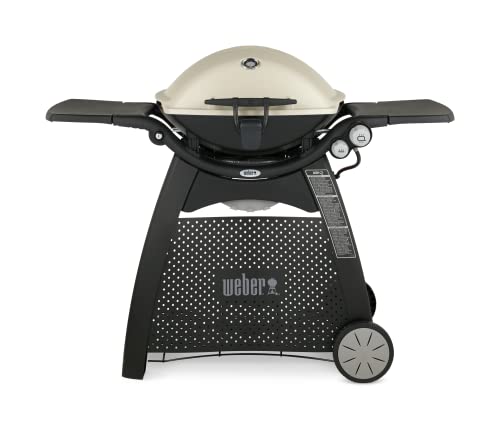
- Best apartment-realistic premium pick: Weber Q3200 Liquid Propane Grill — Check on Amazon
- Best fold-away pick: Weber Traveler Portable Gas Grill — Check on Amazon
- Best small cart grill (ground-floor patios only): Weber Spirit II E-310 Gas Grill — Check on Amazon
- Best folding-shelf midsize (dealer/retail pick, no Amazon link): Napoleon Rogue 525 — see the review below
- The upgrade that rarely fits apartment life (no link in this guide): Weber Genesis E-325s — reviewed honestly below
Read the full guide ↓
Disclosure: As an Amazon Associate, dailyhomedecorating.com earns from qualifying purchases. Links to Amazon on this page are affiliate links; they cost you nothing extra. Listing details such as price and availability change often, so check the current Amazon listing before you buy.
Searching for the best gas grill for apartments under $1500 usually starts with a budget question, but it should start with a permission question. Here is the honest version most grill guides skip: at this price tier, the typical product is a four-to-six-burner cart grill roughly five feet wide, fed by a 20-pound propane tank, and that product is not welcome — and often not legal — on most apartment balconies. Leases commonly ban grills on balconies outright. HOA and condo rules frequently do the same. Many local fire codes prohibit open-flame cooking devices on combustible balconies of multi-family buildings and require a setback — commonly ten feet — from the structure, which a typical balcony cannot provide. A $1500 budget does not change any of that. What it changes is the quality of the smaller, more flexible grills that can work where grilling is allowed: a ground-floor patio, a townhouse terrace, a rented house with a yard, or a building whose rules permit a compact grill used at a safe distance from the structure.
So this guide is organized differently from our other gas grill guides. The first three picks are the grills that genuinely fit apartment-shaped lives when the rules allow them: a premium two-burner on a stand that cooks like a full-size grill, a serious portable that folds flat into a closet, and the smallest true cart grill from a major maker, reserved for ground-floor patios and townhouses. The fourth pick folds its shelves to shrink its footprint. The last two picks are the big Genesis grills apartment shoppers keep putting in their carts — reviewed honestly, without links, as a reality check: they are excellent grills and, for most balcony situations, the wrong purchase. If your lease bans balcony grilling, the correct outcome of this guide is to buy the fold-away pick for use at parks, tailgates and permitted common areas, or to skip the purchase until you have a space where a grill is allowed. We would rather tell you that than sell you a five-foot grill your landlord can make you remove.
Before any pick, do the three checks in the how-to-choose section: read your lease’s grill clause, check your building or HOA rules, and look up your local fire code’s distance requirement. Those ten minutes decide which third of this guide applies to you. Everything after the picks assumes you have done them.
In this guide
Quick Picks: best gas grill for apartments under $1500
| Pick | Best for | Burners | Primary cooking area | Link |
|---|---|---|---|---|
| Weber Q3200 | Best where a compact grill is allowed | 2 | 393 sq in | Check on Amazon |
| Weber Traveler | Folds away; balcony bans, picnics, tailgates | 1 | 320 sq in | Check on Amazon |
| Weber Spirit II E-310 | Smallest true cart grill — ground patios only | 3 | 424 sq in | Check on Amazon |
| Napoleon Rogue 525 | Folding shelves shrink the footprint | 4 | About 525 sq in | Prose-only — no verified Amazon listing captured |
| Weber Genesis E-325s | Terrace houses only — not a balcony grill | 3 + sear zone | 513 sq in | Prose-only in this guide — see the reality check |
| Weber Genesis E-415 | Included to close the question: skip for apartments | 4 | 646 sq in | Prose-only in this guide — skip pick |
The short version: if your building allows a grill on a ground-floor patio or terrace, the Q3200 is the premium answer that does not dominate the space. If your building bans balcony grilling — the common case — the Traveler is the pick, because it stores in a closet and grills wherever grilling is permitted. If you are in a townhouse or a rented house with a small yard, the Spirit II E-310 is the smallest grill that behaves like a permanent appliance. The Genesis models are what to buy after the apartment, not during it.
How we chose these apartment gas grills
The filters for this guide start with the constraints of apartment life rather than with performance charts. Footprint came first: a pick had to fit, store or fold in a way a balcony, terrace or small patio can absorb, or it was moved to the reality-check section no matter how well it cooks. Fuel came second: apartment-friendly grilling often means a 1-pound canister or a small tank rather than a 20-pound cylinder, because many buildings that allow any grill at all restrict tank size or tank storage on balconies — so canister compatibility counted heavily. Weight and storability came third, because a grill you cannot move is a grill your landlord photographs during an inspection.
Performance still mattered. A compact grill that cannot sear is a patio ornament, so every linked pick here uses cast-iron cooking grates and a burner system from a manufacturer with a real parts network. Price verification followed the same rule as the rest of this series: a pick carries an Amazon link only when we verified the exact ASIN and a price sighting for that model under the $1500 ceiling. The Napoleon Rogue 525 could not be verified to that standard on Amazon, so it is prose-only. The two Genesis models are prose-only in this guide by editorial choice: their ASINs are verified in our base guide, but linking them here would encourage exactly the purchase this article warns against.
We also weighted how each grill behaves at the boundaries of apartment life: how loud the ignition and lid are at close quarters, whether the grease system can drip onto a downstairs neighbor’s space (a front-access tray that you empty beats a rear cup that you forget), and how the grill looks stored, because in a small home the stored state is the state visitors see. A grill that folds into a closet or sits tidily under a fitted cover earns its place daily, not just on cooking days, and that everyday fit is a feature this guide scored as heavily as burner output.
We also checked recall and safety-notice records for every model named. None of the picks in this guide has an open recall on the grill itself. And because this article discusses fire codes and lease rules, a note on scope: rules vary by city, building and insurer, and they change. Nothing here is legal advice; the specifics of your lease and your local code are the authority, and where they conflict with anything in this guide, they win.
The 6 best gas grills for apartments under $1500, reviewed
1. Weber Q3200 — best apartment-realistic premium pick
Who it suits: apartment and condo dwellers whose rules allow a grill on a ground-floor patio, terrace or generously sized balcony used at the required distance from the building — and who want real grilling, not a toy. Also ideal for small households that grill often and value a grill that is ready in minutes.
The Q3200 is the largest of Weber’s Q series: two stainless burners totaling 21,700 BTU under 393 square inches of porcelain-enameled cast-iron cooking grates, split so you can lift half out for a griddle insert. It sits on a stationary cart with the tank screened behind a panel, has folding side tables, a built-in lid thermometer and electronic ignition. The Q design’s trick is its cast-aluminum body and lid, which hold heat efficiently for the grill’s size, so the Q3200 roasts a whole chicken or sears steaks with a conviction that surprises people who equate size with power. For two to four people it is not a compromise grill at all; it is simply a grill sized to the household.
Pros: genuine full-grill cooking in a footprint a terrace can absorb; cast-iron grates that sear properly; a tidy cart that keeps the tank out of sight; the Q series’ long production run means covers, griddles and parts are everywhere; it runs on a standard 20-pound tank at home, so running costs stay low.
Honest limitation: it is still a gas grill with an open flame and a 20-pound tank, which means it is still banned wherever balcony grills are banned — the Q3200 solves the size problem, not the permission problem. Its 393 square inches also cap your ambitions: a dinner party for eight means cooking in batches. And the current Amazon listing for this model has shown intermittent availability, so check stock and the exact configuration before planning around it.
Choose it if your rules allow a compact grill and you cook for two to four. Skip it if your lease bans balcony grilling entirely — the Traveler below is your pick — or if you regularly cook for six-plus, which points you to the Spirit II and a ground-floor space. Check on Amazon
2. Weber Traveler — best fold-away pick for real apartment constraints
Who it suits: renters whose buildings ban balcony grills, full stop — plus anyone whose grill storage is a closet, a car trunk or a storage unit. If your grilling happens at parks, beaches, campsites and permitted courtyard areas, this is the premium way to do it.
The Traveler is a cart grill engineered around storage: one stainless burner at 13,000 BTU, 320 square inches of porcelain-enameled cast-iron grate, and a scissor cart that folds flat in one motion so the whole grill stands compactly against a wall or slides into a trunk. At about 49 pounds it is a one-person carry for short distances, and the cart doubles as its stand, so there is no separate table to store. It runs on 1-pound disposable canisters out of the box — the fuel format most likely to be acceptable where small grills are allowed at all — and accepts a standard 20-pound tank with Weber’s adapter hose when you are somewhere a tank is welcome. The low, wide lid profile handles burgers, chicken pieces and vegetables happily, and the single-burner layout is simple enough that there is almost nothing to maintain.
Pros: the only pick here that fully respects a balcony ban, because it does not need to live on the balcony; folds flat for closet storage; canister fuel avoids tank-storage rules; cast-iron grate sears far above portable-grill expectations; the cart is genuinely sturdy rather than camping-fragile.
Honest limitation: one burner means one heat zone — indirect cooking is a matter of piling food to the cooler edges, and large items like a whole spatchcocked chicken are a squeeze under the low lid. It is also heavy for a portable; 49 pounds is trunk-friendly, not carry-it-six-blocks friendly. And per-cook fuel cost on 1-pound canisters is much higher than tank propane, so heavy users should budget for the adapter hose and a tank for permitted locations.
Choose it if your building says no to balcony grills or your storage is a closet. Skip it if you have a permitted ground patio and cook for five or more — the Q3200 or Spirit II will serve you better. Check on Amazon
3. Weber Spirit II E-310 — smallest true cart grill (ground-floor patios only)
Who it suits: townhouse and duplex dwellers, renters of small houses, and ground-floor apartment patios where the lease and local code allow a freestanding grill used at a proper distance from the building. This is the pick for people who want a permanent grill, not a portable — and who actually have the legal space for one.
The Spirit II E-310 is Weber’s entry three-burner cart grill: 32,000 BTU across three stainless burners, 424 square inches of primary cooking area (529 total with the warming rack), porcelain-enameled cast-iron grates, and the GS4 system — reliable ignition, flavorizer bars and a grease tray that pulls out from the front. At about 52 inches wide it is the narrowest full cart grill in this series of guides, and its open-cart design keeps the whole package lighter and easier to move than the enclosed Genesis models. It cooks like a grill a class larger: three burners give you a true indirect zone, the grates hold a sear, and Weber backs the major components with a long warranty and the deepest parts shelf in the business.
Pros: real three-burner zoning in the smallest mainstream cart footprint; excellent parts and accessory support; front-access grease management; a price that historically sits far below this guide’s ceiling, leaving budget for a cover and a second tank; open cart makes tank swaps painless.
Honest limitation: let the framing be unambiguous — this is not a balcony grill for a typical apartment. It is a 52-inch cart on a 20-pound tank, and it belongs on the ground, at the distance from the structure your fire code specifies. The open cart also shows the tank and collects leaves and dust, and the side shelves do not fold, so the 52 inches is the footprint you must store, not a number you can shrink.
Choose it if you have a ground-floor patio, townhouse terrace or small yard where grills are allowed. Skip it if your outdoor space is an upper-floor balcony — that is what the Q3200 and Traveler are for. Check on Amazon
4. Napoleon Rogue 525 — folding shelves shrink a midsize grill (prose-only)
Who it suits: townhouse and ground-patio cooks who want four burners but need the grill to tuck against a wall between cooks.
The Rogue 525 is Napoleon’s midsize four-burner: 48,000 BTU, about 525 square inches of main cooking area (711 total), porcelain-coated cast-iron WAVE cooking grids and Napoleon’s JETFIRE instant ignition. Its apartment-relevant feature is the folding side shelves — with both shelves down, the stored width shrinks dramatically compared with fixed-shelf rivals, which is the difference between a grill that lives on a townhouse patio and one that lives in the way. Build quality is a step into premium territory, with a fifteen-year warranty on major components in recent model years.
Pros: four-burner capacity with a storage footprint smaller than its cooking class; folding shelves on both sides; even-heating dual-level sear plates; strong warranty.
Honest limitation: we could not verify a standard Amazon ASIN and price sighting for this model to the standard this series requires, so it carries no link — expect to buy it through a dealer or general retailer, and confirm the exact model’s price against the ceiling there. It is also, like the Spirit II, a ground-level grill: folding shelves do not make a four-burner on a 20-pound tank into a balcony appliance.
Choose it if shelf-folding solves your storage problem and you are happy buying through a retailer. Skip it if you want Amazon delivery and the widest parts availability — take the Spirit II.
5. Weber Genesis E-325s — the terrace-house upgrade, not a balcony grill (prose-only)
Who it suits: buyers in townhouses, duplexes and rented houses with a proper terrace or yard — and apartment dwellers who are honest that they are shopping for the next home, not this one.
Everything said about the E-325s in our base guide holds: three PureBlu burners at 39,000 BTU plus a dedicated sear zone, 513 square inches of primary cooking area, an expandable top grate that takes total space to 787 square inches, porcelain-enameled cast-iron grates and Genesis build quality with a long warranty. It is a superb grill. It is also roughly five feet wide, weighs well over a hundred pounds assembled, and runs a full-size tank. On a typical apartment balcony it would consume the space, violate the clearance the manual requires from walls and railings, and breach the grill clause in most leases and the balcony provisions in many fire codes — three separate problems that no amount of build quality fixes.
Pros: if your space is legal and large enough, this is the best-cooking grill in the article; sear zone performance; expandable second-level cooking; decade-scale parts support.
Honest limitation: for the apartment use case in this guide’s title, the limitation is the product itself. We deliberately list it without a purchase link here — its verified listing is in our base guide for buyers whose homes fit it — because the most helpful thing this review can do is stop a balcony purchase that ends with a landlord’s notice.
Choose it if you have a townhouse terrace or yard where a full-size grill is allowed and fits with clearance. Skip it if your space is a standard apartment balcony, whatever the budget.
6. Weber Genesis E-415 — included to close the question (prose-only, skip for apartments)
Who it suits: almost no apartment dwellers — and that is precisely why it is here. The E-415 is the grill that dominates “best under $1500” lists, so apartment shoppers meet it first and need a straight answer.
The straight answer: the E-415 is an excellent four-burner grill — 48,000 BTU, 646 square inches of primary cooking area, the evenest heat in its class — that is wider than many balconies are deep once you add the clearance its manual requires, heavy enough that moving it for an inspection is a two-person job, and fed by exactly the 20-pound tank that balcony rules most often prohibit. Buying it for an apartment almost always ends one of three ways: returned, resold at a loss, or removed after a complaint. None of those outcomes cooks dinner.
Pros: as a grill, nearly everything — it is our top pick in the base guide for houses. Honest limitation: as an apartment grill, its size, weight and fuel format are disqualifying in the typical case.
Choose it if you are actually shopping for a house, a large ground-floor terrace with written permission, or a permitted shared courtyard where a full-size grill is explicitly allowed. Skip it if you live in a standard apartment — buy the Q3200 or the Traveler and spend the large remainder of this budget on the rest of your outdoor setup.
Comparison table
| Grill | Burners | Primary area | Fuel format | Apartment fit | Watch out for |
|---|---|---|---|---|---|
| Weber Q3200 | 2 | 393 sq in | 20 lb tank | Good where compact grills are allowed | Still banned where all balcony grills are banned |
| Weber Traveler | 1 | 320 sq in | 1 lb canister (tank with adapter) | Best — stores indoors, grills where permitted | Single heat zone, low lid |
| Weber Spirit II E-310 | 3 | 424 sq in | 20 lb tank | Ground-floor patios and townhouses only | Fixed shelves, 52 in footprint |
| Napoleon Rogue 525 | 4 | About 525 sq in | 20 lb tank | Townhouse patios; shelves fold for storage | No verified Amazon listing; dealer purchase |
| Weber Genesis E-325s | 3 + sear | 513 sq in | 20 lb tank | Terraces and yards only | Too large for typical balconies |
| Weber Genesis E-415 | 4 | 646 sq in | 20 lb tank | Skip for apartments | Size, weight and clearance requirements |
Notice what the table is really comparing: not cooking power, but permission and footprint. The Q3200 and Traveler win this guide because they respect the two constraints apartment cooks actually live under. Readers whose buildings allow more should cross-shop our Best Gas Grill For Apartments Under $700 guide, where smaller budgets buy similar footprints, and anyone whose lease allows a ground patio setup can step up through the Best Gas Grill Under $1500 base guide.
How to choose a gas grill for an apartment
Step one: read your lease before you read another review. Look for the words grill, barbecue, open flame, balcony and propane. Many leases ban grills on balconies while allowing them on ground-floor patios; some ban propane storage in the unit or on the balcony, which decides the tank question by itself. If the lease is silent, ask the landlord or management company in writing — an email answer protects you in a way a hallway conversation does not.
Step two: check building and HOA rules, then the fire code. Condo and HOA documents often have their own grill rules layered over the lease. Beyond the building, many jurisdictions adopt fire-code language that prohibits open-flame cooking devices on combustible balconies in multi-family buildings unless the balcony is sprinklered, and requires a setback — ten feet from the structure is the common figure — for use near the building. Your local fire marshal’s website usually states the rule in plain language. If the code requires ten feet and your balcony is five feet deep, the answer is not a smaller grill; it is a different location.
Step three: match the fuel to the rules. Where any grill is allowed, a 1-pound canister grill like the Traveler clears hurdles a tank grill cannot: no tank storage, no tank on the balcony, nothing to object to between cooks because the grill itself is in a closet. Where a ground patio allows a tank, the Q3200 and Spirit II become available. Never store a propane tank indoors or in an enclosed balcony cabinet, whatever the building allows — tanks belong outdoors, upright and ventilated.
Step four: measure the space with the grill in use, not parked. A grill needs its footprint plus room for you to stand, the lid’s swing, and the manual’s clearance from walls, railings and anything combustible. On a small terrace, the Rogue’s folding shelves and the Q3200’s folding tables are the features that decide whether the space still works as a place to sit. If the grill leaves no room for a chair, it is too big, whatever the tape measure said about the grill alone.
Step five: spend the leftover budget on making the setup legal and pleasant. A $1500 ceiling with a $500 grill leaves room for the things that make apartment grilling sustainable: a fitted cover, a small outdoor storage box for tools where storage is allowed, a good thermometer, and the seating and shade from our Best Adirondack Chair For Small Patios Under $1500 guide. It also leaves room for the alternative many renters land on happily: a great portable grill plus a fund for the deposit on a place with a yard.
Common mistakes apartment grill shoppers make
Buying the grill first and reading the lease second. The most expensive version of this mistake is a five-foot Genesis delivered to a building that bans it, followed by return freight or a distress sale. The order of operations in the how-to-choose section exists because this mistake is so common.
Assuming a small grill is automatically a legal grill. Most balcony bans are written against open-flame cooking devices or propane generally, not against grills over a certain size. A tabletop grill can violate the same clause as a six-burner. Read the rule’s actual words.
Storing the tank indoors “just for winter.” Propane tanks must be stored outdoors in a ventilated space, upright, away from ignition sources and living-space windows and vents as codes specify. A closet, a storage room inside the unit, or a sealed balcony box are all wrong answers, in every season.
Grilling under an overhang or against vinyl siding to dodge the rain. Clearance rules exist because heat rises and siding melts at temperatures a grill lid reaches easily. If the only dry spot violates clearance, the cookout moves or the menu changes to the oven — a melted-siding repair bill dwarfs any grill budget.
Ignoring the neighbors as a practical matter. Even where a grill is technically allowed, smoke drifting into the unit above is the fastest route to a rule change or a complaint-driven ban. Cook with the lid down, avoid long high-smoke sessions on still evenings, and keep the grease tray clean — a dirty tray is a smoke machine. Being the building’s considerate griller is a strategy, not just politeness. Renters planning a compliant outdoor corner can find storage ideas in our Best Deck Box For Small Patios Under $1500 guide and should check the Best Fire Pit For Apartments Under $1500 guide before assuming a fire pit is an easier yes — it usually faces stricter rules than a grill.
Final recommendation
If your building allows a compact grill where you live, buy the Weber Q3200: it is the most complete grill that respects apartment scale. If your building bans balcony grills — the situation most apartment readers are actually in — buy the Weber Traveler and grill where grilling is welcome; it stores in a closet and cooks far beyond portable expectations. Townhouse and ground-patio readers with written permission should take the Spirit II E-310 and enjoy a permanent grill. What no apartment reader should do is spend this budget on a full-size Genesis for a standard balcony: the two prose-only reality checks above explain, in detail, how that story ends.
The rules, decoded: lease, building, fire code and insurer
Four different authorities can say no to your grill, and it helps to know which one is speaking. The lease is a contract: violate its grill clause and you risk fees, a cure-or-quit notice, or losing the deposit over heat-damaged siding. Building and HOA rules operate alongside the lease and are usually the most specific — they may name fuel types, tank sizes, permitted locations such as ground-floor patios, and designated grilling areas. The local fire code is law rather than contract: in many jurisdictions it prohibits charcoal and open-flame cooking devices on combustible balconies of multi-family buildings unless the building is sprinklered, and it commonly requires cooking devices to be kept a set distance — ten feet is the figure used in widely adopted code language — from combustible construction. Finally, the building’s insurer can impose conditions that management enforces as if they were law, because for the building, they effectively are.
Two practical consequences follow. First, “nobody has complained” is not permission: a fire-code violation exists whether or not a neighbor minds, and an incident — even a small grease fire you put out yourself — can turn an unenforced rule into a lease problem and an insurance problem at once. Second, permission is location-specific within the same building. The ground-floor patio, the roof deck and the courtyard may each have a different answer. When you ask management, ask about your exact space, and keep the answer in writing with your lease paperwork. If the written answer is no for the balcony but yes for a ground space or a designated area, that answer is the map this guide’s picks were drawn from.
Living with a compact grill: what the cooking is actually like
Renters stepping down from a full-size grill — or stepping up from a cheap tabletop — reasonably ask what they give up. With the Q3200, surprisingly little for households of two to four. The two-burner layout gives a genuine hot side and warm side, the cast-iron grates mark food properly, and the tall-for-a-compact lid roasts a chicken or a tray of vegetables without scorching. What you plan around is batch size: a mixed grill for six becomes two waves, and a full packer brisket is simply not on the menu. The Traveler asks for more adaptation — one burner, one zone, a low lid — and rewards it with a grill that can live in a closet and appear at a park picnic cooking for the same group. Its grate is large enough for a family meal; its zone discipline is a technique, piling finished food at the edges while new food takes the center.
The ownership experience differs too, and mostly in your favor. Compact grills have fewer burners to clean, smaller grates that fit in a sink, and grease systems you can service at a kitchen counter rather than on your knees. The Q3200’s split grates lift out in halves; the Traveler’s single grate and drip pan are a five-minute job. Covers are cheaper, storage is simpler, and when moving day comes — the defining event of apartment life — both grills move in one trip by one person. A full-size Genesis, by contrast, is a logistics project at every move, which is a cost apartment dwellers pay repeatedly and house dwellers pay once.
Storage, covers and the inspection-day test
Every apartment grill should pass what we call the inspection-day test: when management walks the property, does your setup look like a resident who read the rules? A grill stored per the building’s terms — the Traveler folded in a closet, the Q3200 covered on a permitted patio, tanks stored only where storage is allowed — passes trivially. A five-foot cart wedged onto a banned balcony under a tarp fails on sight. Covers matter here beyond weather protection: a fitted cover signals care, keeps grease and rust streaks off the balcony, and prevents the slow drip of a neglected grease tray from staining the deck or the unit below, which is the kind of damage that turns a friendly landlord strict.
Storage details worth planning: keep the 1-pound canisters for a portable grill in a ventilated spot away from heat, never in a sealed plastic bin in the sun; keep tools and brushes in a small deck box or indoor caddy rather than hanging off the grill where they weather and wander; and if your permitted space is shared or visible, a grill that folds or covers neatly buys goodwill you will spend later. Apartment grilling is a long game of being visibly reasonable — the equipment in this guide was chosen to make that easy.
Where the $1500 actually goes in an apartment setup
Because the honest picks in this guide sit well below the ceiling, it is worth mapping the rest of the budget — partly so the money does not drift into a bigger grill by default. A realistic apartment allocation looks like this: the grill itself takes the first share; a fitted cover and a spare set of grates or a griddle insert take the next; a quality instant-read thermometer and a coil brush — the bristle-free kind, which matters around food — follow. After that comes the space itself: a small weatherproof deck box where storage is permitted, an outdoor rug rated for use under and around cooking equipment only where the building allows it and never as a substitute for clearance, and the chair-and-table set that turns a permitted patio into a room. Many readers will still have budget left, and the correct destination for it is a savings line for the next home’s grill — the Genesis this guide talked you out of will still be there, better than ever, when the yard is yours.
There is also a legitimate middle path this budget opens: buy the Traveler now for portable and permitted-area grilling, and treat the remainder as a standing fund. Apartment situations change — a move to a townhouse, a building that adds a grilling deck, a landlord who grants written permission for a ground patio. The fund means the day the rules change in your favor, the Spirit II or Q3200 arrives without a new budget decision. That patience is worth more than any single product in this guide, and it is the real answer to the search that brought you here: the best gas grill for an apartment is the one your lease, your building and your fire code all agree you may light.
FAQ
Can I put a gas grill on my apartment balcony?
Only if your lease, your building or HOA rules and your local fire code all allow it — and in many multi-family buildings at least one of the three prohibits open-flame grills on balconies. Check all three before buying anything; where any one says no, the answer is no.
What size propane tank is allowed on a balcony?
Where balcony grills are permitted at all, small canisters are far more commonly acceptable than a 20-pound tank, and some codes and leases restrict tank size or ban balcony tank storage outright. Your lease and local code give the exact answer for your building; never store a tank indoors regardless.
Is an electric grill a workaround?
Often, yes — many buildings that ban gas and charcoal allow electric grills because there is no open flame or stored fuel. This guide covers gas grills as its title promises, but if your rules ban gas, an electric model is the compliant route to balcony cooking rather than a smaller gas grill.
Why does a $1500 apartment guide recommend grills well under $1500?
Because at apartment scale, the constraint is space and permission, not budget. The grills that fit those constraints are compact models that cost less; the premium money at this tier buys size you cannot use. Spending the full ceiling here would be worse buying, not better.
My lease allows a grill on my ground-floor patio. What should I buy?
The Spirit II E-310 if you want a permanent three-burner cart, or the Q3200 if the patio is tight. Keep the grill at the distance from the building your fire code specifies, store the tank connected outdoors under the grill as the manual directs, and keep your landlord’s written permission on file.
Can I use a full-size grill in a shared courtyard?
Only with explicit permission from the building, and usually in a designated area. If your building has a permitted grilling station, a personal full-size grill is still rarely allowed to live there — the fold-away Traveler, carried down for each cook, is the practical answer.
What if my landlord verbally said a grill is fine?
Get it in writing — an email reply is enough — and keep it with your lease. Verbal permission evaporates when management changes, when a neighbor complains, or when an inspector asks questions, and the grill’s removal will not wait for the dispute to be resolved. Written permission that names the grill type and the location is the version that protects you, and asking for it politely is normal; landlords answer this question routinely.
Are tabletop gas grills safer or more legal than cart grills on a balcony?
Not in the eyes of most rules. Balcony prohibitions are usually written against open-flame cooking devices, charcoal, or propane as a category, and a tabletop grill is all three. Tabletop models do reduce size and fuel quantity, which some specific building policies take into account — but that is a question about your building’s exact wording, not a general loophole. Where small grills are allowed, the Traveler’s canister format and closet storage remain the most defensible setup in this guide.
How do I grill for a group as an apartment dweller?
Cook in waves and hold finished food in a low oven indoors, choose menus that batch well — sausages, chicken thighs, kebabs and vegetables all tolerate holding better than individual steaks — and use the grill’s warming strategies: the Q3200’s upper area and the Traveler’s edges both keep food hot without overcooking it. For genuinely large gatherings, the permitted common area or a park pavilion with your portable grill is the setup that scales, and it comes with the side benefit of room for everyone to actually sit down.
What about a natural gas grill in an apartment?
Almost never the answer: natural gas grills require a plumbed gas line, which apartments rarely provide on a balcony and landlords rarely permit tenants to add. The natural gas versions of these grills exist for houses with patio gas stubs. Apartment readers should plan on propane — in the canister format where rules are tight, or a tank where a ground patio allows it — and should treat any offer to tap a building gas line for a balcony grill as a hard no without written landlord and code approval.
Does renters insurance care about a grill?
It can: policies may exclude or complicate claims arising from a grill used in violation of a lease or a fire code, which is one more reason the permission checks in this guide come before the product picks. If you grill where you are allowed to grill, keep the documentation of that permission with your policy paperwork; it is the cheapest protection in this entire article.


