Where to buy
Check the latest price, availability and delivery on Amazon. Orders are placed on Amazon. We may earn a commission from qualifying purchases.
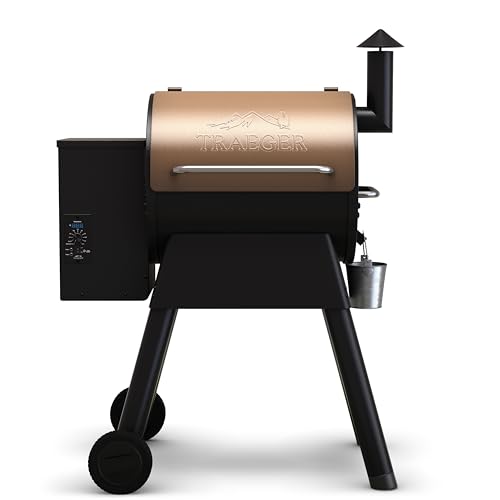
- Best compact full-size grill: Traeger Pro 22 Wood Pellet Grill & Smoker — Check on Amazon
- recteq Pellet Grill RT-380BD Bullseye Deluxe — Check on Amazon
- Z GRILLS ZPG-450A2 Wood Pellet Grill & Smoker — Check on Amazon
- Weber Smoque 22-Inch Pellet Smoker — Check on Amazon
- Z GRILLS 200A Table Top Wood Pellet Grill — Check on Amazon
See 1 more option in the guide
- Green Mountain Grills Trek Prime 2.0 — covered in prose below; sold mainly through GMG dealers, so check the review before shopping.
Read the full guide ↓
Disclosure: As an Amazon Associate, dailyhomedecorating.com earns from qualifying purchases. Links to Amazon on this page are affiliate links; they cost you nothing extra. Listing details such as price and availability change often, so check the current Amazon listing before you buy.
Finding the best pellet grill for small patios under $1500 starts with a tape measure, not a product list, because on a small patio the grill’s footprint is only the beginning of its space claim. A pellet grill also needs working room in front of it, safe clearance from walls, siding, railings and anything else combustible on every side the manufacturer specifies, and open sky above it — and on a patio that is eight feet wide, those invisible requirements can consume more space than the furniture. The honest way to shop this category is therefore to measure your patio, subtract the clearance and working zone, and see what cooking area the remaining rectangle can honestly hold. The good news is that pellet grills scale down better than any other live-fire cooker: the six options in this guide start at a tabletop that stores in a closet and top out at a compact full-size grill with nearly 600 sq in of cooking space, and every one of them sits far enough under the $1500 ceiling that the leftover budget can fund the mat, cover and storage that make small-space grilling pleasant instead of precarious.
Small-patio cooking also changes which features matter. Weight and wheel design stop being trivia — a grill you must shuffle two feet to clean behind, or roll through a narrow gate to store for winter, needs to move like furniture, not like a safe. Vertical thinking pays: a grill with its hopper beside the chamber is narrower than one with the hopper behind it, a kettle’s round footprint tucks into corners a barrel cannot use, and a tabletop on a sturdy stand you already own adds zero floor claim of its own. Smoke behaves differently in a small, enclosed-feeling patio too — it pools, drifts into the one open window and announces itself to the nearest neighbor — so smaller cooks, cleaner-burning pellets and reasonable hours matter more here than raw smoke output. And because a small patio usually doubles as the home’s only outdoor room, the grill competes with chairs, a table and human beings; the winners below are the ones that cook like real pellet grills while behaving like considerate furniture. Readers whose small space is an apartment patio with a lease attached should read Best Pellet Grill For Apartments Under $1500 first — the rules there come before the measurements here.
Our shortlist deliberately spans formats rather than crowning one shape. The Traeger Pro 22 is the compact full-size answer for patios that can take a real grill; the recteq Bullseye Deluxe is the corner-tucking kettle that also sears; the Z Grills 450A2 is the value barrel with a folding shelf designed for exactly this brief; the Weber Smoque is the small-footprint smoker for people whose patio cooking is low-and-slow; the Z Grills 200A is the tabletop escape hatch for genuinely tiny spaces; and the Green Mountain Grills Trek Prime 2.0, covered in prose because it is dealer-sold, is the premium folding portable. Each review gives the footprint logic alongside the cooking specs, because on a small patio the second set of numbers decides whether the first set ever gets used.
In this guide
Quick Picks: the best pellet grill for small patios under $1500 at a glance
| Patio situation | Pick | Why it stands out | Link |
|---|---|---|---|
| Best compact full-size | Traeger Pro 22 | 572 sq in and an 18 lb hopper in Traeger’s narrowest classic barrel format | Check on Amazon |
| Best corner fit + searing | recteq Bullseye Deluxe | 380 sq in kettle with WiFi and high-heat searing; round footprint tucks into corners | Check on Amazon |
| Best value compact | Z Grills 450A2 | 459 sq in, PID control, a foldable shelf and a cover in the box | Check on Amazon |
| Best small smoker | Weber Smoque 22 | 594 sq in over two levels in a footprint about 39 inches wide, with SmokeBoost | Check on Amazon |
| Best for tiny patios | Z Grills 200A Tabletop | 202 sq in of PID pellet cooking that lives on a table and stores on a shelf | Check on Amazon |
| Best premium portable | GMG Trek Prime 2.0 | WiFi, 12V power and a folding 36-inch-wide format — prose only, dealer-sold | See review |
How the picks were chosen
Footprint honesty came first. We compared each model’s actual width and depth — not its cooking area — against the reality of a small patio, and favored designs that put their bulk where it costs least: side hoppers instead of deep rear ones, folding shelves instead of fixed ones, round kettles for corners, tabletops for patios that are really wide balconies with delusions. Second was the clearance equation: every pick must be usable at its manufacturer’s stated clearances within a genuinely small space, which ruled out several mid-size grills whose manuals demand more air than a small patio has. Third was cooking substance — a small grill that cannot hold a temperature or fit a brisket is patio jewelry, so every pick has a digital controller, most are PID, and each fits at least a rack of ribs or a whole chicken with room to work. Fourth was storability: wheels that actually roll, weights one or two people can manage, and covers available for every model, because small patios expose grills to weather from every side.
Verification followed the site standard: manufacturer dimensions and specifications cross-checked against current Amazon listings confirmed through this site’s Amazon Creators API where possible; the Green Mountain Grills model, for which no Amazon listing could be verified to standard, is covered in prose without a purchase link. All six models were screened against US CPSC recall records at the time of writing, with no recalls found; the sources file kept with this article documents the checks. Prices are never printed — the $1500 ceiling is a budget, and the interesting question in this category is how much of it you get to keep. Readers comparing the wider compact market will find the tier context in Best Pellet Grill Under $700 useful, and those whose “small patio” is really a travel setup should look at Best Portable Grill Under $500.
A word about what did not make the list, because small-patio shoppers will meet these models in every search. The mid-size barrels in the 700–900 sq in class are fine grills and poor small-patio choices: their depth with a rear hopper, their fixed side shelves and their clearance demands consume the whole brief before cooking starts. The mini pellet grills at the very bottom of the market fail the other way — novelty controllers, toy capacities and build quality that makes the second season unlikely. And the full-size flagships that anchor our other guides are simply residents for a different kind of home. The six options here are the ones whose designers, deliberately or not, respected the rectangle a small patio actually offers.
The six best small-patio pellet grills, reviewed
Traeger Pro 22 — best compact full-size grill
Who it suits: The small-patio owner who wants a real, freestanding pellet grill — not a portable, not a toy — and has a patio corner that can give it a permanent, properly cleared home.
The Pro 22 is the grill that defined the category, in its most compact classic form: 572 sq in of cooking space across two racks, an 18 lb hopper, a meat probe and a 450°F maximum, on Traeger’s sawhorse-style leg frame. That frame is the small-patio feature nobody advertises: the legs splay to a footprint noticeably narrower than cabinet-style grills, the barrel sits high enough to work at comfortably, and the whole unit rolls on its wheels without drama when you need to clean behind it. The cooking is the proven Traeger formula — steady, simple, versatile across smoking, roasting and weeknight grilling — and the ownership is the easiest here: every cover, grate, igniter and liner for this grill is available everywhere, forever. In a small space, a grill with no surprises and every part in stock is worth more than a spec-sheet upset.
Pros:
- Narrow sawhorse footprint for a full 572 sq in freestanding grill
- 18 lb hopper covers long cooks without a refill
- The deepest parts and accessory availability in the category
- Simple, proven controller — nothing to learn, nothing to fight
Honest limitation: The Pro series predates WiFIRE at this level — there is no app control and no pellet sensor — and 450°F is a modest ceiling that grills well without truly searing. It is also a permanent resident: compact for a full-size grill is still full-size on a tiny patio.
Choose it if your patio fits one real grill and you want it to be the dependable kind. Skip it if you need app control, searing heat, or a grill that can be put away — look down the list. Check on Amazon
recteq Bullseye Deluxe — best corner fit and searing
Who it suits: The patio cook whose space is a corner and whose menu is grill-first — burgers, steaks, chicken — with smoking as the weekend hobby rather than the main event.
The Bullseye Deluxe takes recteq’s 380 sq in pellet kettle and adds the connected control the format was missing: WiFi monitoring and adjustment on a grill that smokes at low temperatures and sears at the high-heat end recteq is known for, in the 750°F class in its riot-style mode. The shape is the small-patio story. A round kettle a bit under two feet across claims a circle, not a rectangle; it tucks into the corner where two railings meet, turns to face the cook, and leaves the rest of the patio in peace in a way no barrel can. Stainless construction where it counts and recteq’s US support complete a package that behaves like patio furniture and cooks like two appliances. For a household of two to four, 380 sq in of well-heated grate is the honest right size — a chicken, a rack of ribs, or a full load of burgers, without heating a cavern.
Pros:
- Round footprint tucks into corners barrels cannot use
- True high-heat searing — unique among small-patio pellet grills
- WiFi control in the Deluxe version
- recteq build quality and support
Honest limitation: Kettle physics apply: one grate level, so big multi-rack smokes are not its game, and it is a stay-in-place appliance once assembled — plan its corner as a permanent, properly cleared station.
Choose it if your patio is a corner and your cooking is grill-first. Skip it if your signature cook is two racks of ribs and a brisket at once — the Pro 22 or Smoque will hold that load. Check on Amazon
Z Grills 450A2 — best value compact barrel
Who it suits: The first-time pellet buyer with a small patio and a sensible budget — someone who wants the full pellet experience in a grill sized for the space they actually have.
The 450A2 is Z Grills’ compact done properly: 459 sq in of cooking area, the company’s PID V3.0 controller for steady temperatures, a meat probe, a rain cover in the box, and — the detail that earns it this slot — a foldable front shelf. On a small patio, a shelf that folds flat against the barrel when the grill is parked, and flips up when the trays come out, is the difference between a grill that fits and a grill that fits except for the part that hits the railing. The cooking is the standard, satisfying pellet repertoire at household scale: ribs, chicken, pork shoulder, weeknight grilling, all held at temperature by a controller that punches above the price. It leaves most of the $1500 budget untouched, which on a small patio is best spent on the mat, the storage and the seating that make the space work.
Pros:
- Foldable shelf: full work surface while cooking, slim profile parked
- PID V3.0 temperature control at a value price
- Cover and meat probe included
- 459 sq in is the honest right size for small households
Honest limitation: No WiFi at this price, fit and finish are a step below the premium brands, and the support network is thinner if something fails down the road.
Choose it if you want maximum small-patio pellet grill per dollar. Skip it if app control or flagship materials matter to you — the Pro 22 and Bullseye Deluxe are the steps up. Check on Amazon
Weber Smoque 22 — best small-footprint smoker
Who it suits: The low-and-slow devotee with a small patio: ribs every weekend, a shoulder a month, and no interest in searing — the cooking this grill was born for, in the least floor space a serious smoker can occupy.
The Smoque’s dimensions tell the story: about 39 inches wide and 22.5 inches deep, roughly 102 lb, yet offering 594 sq in of total cooking space over two levels. Weber achieved that ratio by going vertical and by mounting the hopper at the side, where it takes a standard 20 lb bag and keeps the silhouette narrow. Inside, it is a focused smoking instrument — SmokeBoost mode for maximum smoke absorption in the early hours, the SmoqueVent system circulating smoke around the food, a Rapid React PID that recovers temperature quickly after the lid opens, and an enclosed grease and ash system that keeps a small patio cleaner than an open bucket design would. Weber Connect handles the monitoring. On a small patio, where the grill is always in view and in the way of nothing else to hide behind, that tidiness is a daily pleasure.
Pros:
- 594 sq in in a footprint under 39 inches wide — best area-per-foot here
- SmokeBoost and smoke-circulation design for real low-and-slow flavor
- Side hopper loads a full standard bag; enclosed grease and ash handling
- Fast temperature recovery after lid openings
Honest limitation: A 500°F ceiling and no sear feature — this is a smoker that can roast, not a grill that smokes. At roughly 102 lb it is movable, not portable, so pick its spot with care.
Choose it if your patio cooking is barbecue first. Skip it if weeknight searing matters — the Bullseye Deluxe owns that brief. Check on Amazon
Z Grills 200A Tabletop — best for genuinely tiny patios
Who it suits: The cook whose patio fits a table and two chairs and nothing else — or whose grill must live indoors and visit the patio only on cooking days.
The 200A reduces pellet cooking to its essence: 202 sq in of cooking area, a PID 3.0 controller with automatic pellet feed, in a tabletop body designed to work on a sturdy patio table, a stand, or the ground at a campsite, and to store on a shelf or in a closet afterward. That last part is the entire value proposition on a tiny patio: the grill’s parked footprint is zero patio square feet. Between cooks it is an object in a cupboard; on cooking days it delivers real, temperature-controlled wood-fired food for two to three people — a rack of ribs, a spatchcocked chicken, a tray of wings — with the set-and-forget manners of its bigger relatives. Its pellet appetite is as small as its body, which suits the small-bag, indoor-storage fuel routine that small homes require anyway.
Pros:
- Zero parked footprint — stores indoors, cooks anywhere with a table and an outlet
- PID 3.0 control in the smallest format here
- Auto-feed keeps small cooks hands-off
- Leaves nearly the whole budget for the rest of the patio
Honest limitation: Capacity is couples-scale, one main at a time, and it needs a stable, heat-safe surface to sit on — a wobbly plastic table is not it. Fit and finish are entry-tier, as the price promises.
Choose it if your patio cannot spare permanent floor space. Skip it if you cook for four or more regularly — the 450A2 is the step up that still respects a small patio. Check on Amazon
Green Mountain Grills Trek Prime 2.0 — best premium portable (prose only)
Who it suits: The small-patio cook who wants portable without compromise — full WiFi control, flexible power, a peaked lid — and is happy buying from a dealer.
Per GMG’s own Prime 2.0 catalog, the Trek offers 274 sq in of grilling area, a 10 lb hopper, a 150°F to 550°F range in 5-degree increments and WiFi smart control, in a folding package about 36 inches wide, 18 inches deep and roughly 62 lb, with an optional cart that brings it to working height. The 12V direct-power system is the quiet superpower for small homes: it runs from the wall adapter day to day, but equally from a vehicle or battery setup, so the same grill serves the patio, the campsite and the borrowed backyard without missing a beat. The peaked lid fits taller food than any flat tabletop rival. We could not verify a current Amazon listing for the Trek to this site’s standard — GMG sells through dealers — so it is covered here without a purchase link; a local dealer will assemble it and support it, which suits a premium purchase.
Pros:
- WiFi control and the widest temperature range among the portables here
- Folding format with a footprint about 36 by 18 inches
- 12V power flexibility: wall, vehicle or battery
- Peaked lid fits whole chickens and taller roasts
Honest limitation: Dealer distribution means no one-click ordering, and at roughly 62 lb “portable” means planned moves, not casual ones. The optional cart that makes it a standing grill is an extra purchase.
Choose it if you want the premium portable and have a GMG dealer within reach. Skip it if you want the simplicity of an Amazon delivery — the 200A or the Pro 22 cover the two ends of that brief.
Comparison table
| Grill | Format | Cooking area | Space claim | Standout feature | Watch out for |
|---|---|---|---|---|---|
| Traeger Pro 22 | Compact freestanding | 572 sq in | Narrow sawhorse legs | Proven, parts everywhere | No WiFi; 450°F ceiling |
| recteq Bullseye Deluxe | Kettle on legs | 380 sq in | Round corner footprint | WiFi + 750°F-class searing | One grate level only |
| Z Grills 450A2 | Compact barrel | 459 sq in | Folding front shelf | PID value, cover included | No WiFi; plainer finish |
| Weber Smoque 22 | Compact smoker | 594 sq in | About 39 in wide | SmokeBoost, enclosed ash/grease | Smoker only; no sear |
| Z Grills 200A | Tabletop | 202 sq in | Zero parked footprint | PID 3.0 portability | Couples-scale capacity |
| GMG Trek Prime 2.0 | Folding portable | 274 sq in | About 36 × 18 in folded | WiFi + 12V power options | Dealer-sold; cart extra |
How to choose for a small patio — measure first, then cook safely
Do the patio math honestly. Measure your patio’s usable rectangle, then subtract in this order: the manufacturer’s clearance on every side of the grill (check the manual of the model you are eyeing — clearances are model-specific and non-negotiable), a working strip in front of the grill deep enough to stand with a tray and open the lid fully, and the space your furniture and people genuinely need. What remains is your grill footprint budget. If the remainder is a rectangle around four feet by two and a half, the compact freestanding picks fit. If it is a corner, think kettle. If it is nothing at all, think tabletop — a grill that stores indoors has a patio footprint of zero, which is why the 200A and the Trek exist in this guide.
Respect what “small” does to heat and smoke. On a small patio the grill is close to everything: the door, the windows, the seating, the neighbors’ windows. Site it as far from the house wall and any overhang as your space allows, never under a ceiling, balcony or pergola roof, and expect smoke to linger in still air — cook with the breeze, choose reasonable hours, and favor the cleaner end of pellet cooking (dry pellets, steady temperatures) over maximum-smoke theatrics. The surface under the grill must be level, stable and heat-resistant: a rated grill mat over decking or pavers, never a rug, never bare wood directly under a firepot, and for tabletops, a genuinely sturdy metal or masonry-topped stand — not a plastic folding table that softens near heat.
Fire safety, small-space edition. Small patios compress every standard pellet-grill rule. Clearances shrink in your imagination before they shrink in fact — measure them with the same tape you measured the patio. Keep the zone around the grill empty by design: no pellet bags stored against it, no cushions stacked beside it, no drying rack of pool towels over it. Grease and ash discipline matters more, not less, in a small grill near a wall: vacuum the firepot once cold every few cooks, empty the grease path on schedule, and put removed ash in a lidded metal container stored away from the house — pellet ash can hold embers for a day or more, and on a small patio every storage spot is near something. Run the shutdown cycle to completion before covering or moving the grill, keep a grease-rated extinguisher just inside the patio door, and never leave the grill running while you are away from home; a small patio cook is short enough that staying present is easy. If your patio is a balcony in a multi-unit building, stop — the lease and fire-code rules in the apartments guide override everything here, and most balconies are a no.
Weight, wheels and the deck question. Small patios are often raised decks or balconies-adjacent slabs, so check two unglamorous numbers before the cooking specs: the grill’s weight and how it moves. The freestanding picks here run from roughly 100 lb upward; that is fine on a ground-level slab and a genuine consideration on an aging wooden deck, where the grill’s weight concentrates on four small feet alongside the weight of the cook, the guests and the furniture. Spread the load with the grill mat you are already using for heat, position the grill over or near a support beam if the deck’s structure is known, and prefer models whose wheels let one person reposition the grill without dragging it. If the deck’s condition is doubtful, the tabletop formats are not a compromise — they are the engineering answer, putting the fire on a structure you choose and the weight where you want it.
Spend the leftover budget on the space, not the badge. Every pick here leaves serious money under the $1500 ceiling, and small patios reward spending it on infrastructure: the heat-resistant mat, a fitted cover (small patios expose a grill to weather and view from all sides), a compact deck box for pellets and tools where storage is permitted — see Best Deck Box Under $300 — and comfortable seating that keeps guests out of the grill’s working zone. If the patio doubles as your evening room, a small heat source for shoulder seasons, chosen with the same clearance discipline as in Best Patio Heater Under $300 and Best Fire Pit For Small Patios Under $1500, turns grill nights into patio nights.
Three small-patio layouts that actually work
The corner station. For a square patio, the classic answer: the grill — kettle if the corner is tight, compact barrel if it is not — sits diagonally in the corner farthest from the door, at full clearance from both walls or railings, with a small rolling cart or folding table as its landing surface and the seating arranged in the opposite corner. The cook works facing into the patio, guests circulate without crossing the hot zone, and the smoke rises from the point of the patio farthest from the windows. This layout is why the Bullseye Deluxe and the Pro 22 lead this guide: both were shaped by exactly this geometry.
The edge run. For a long, narrow patio — the townhouse special — the grill parks at the far short end, like a kitchen galley: grill at the end wall, a narrow console or deck box along one side for pellets and tools, seating at the near end by the door. The cook’s triangle is a straight line, guests stay at the social end, and the smoke source sits at the maximum possible distance from the house. A compact barrel with a side hopper (the Smoque’s layout) or a folding-shelf model (the 450A2) fits this run best, because depth, not width, is the scarce dimension.
The disappearing grill. For the patio that is also the living room, gym and garden: no permanent grill at all. A tabletop — the 200A, or the Trek on its cart — comes out of indoor storage, cooks on a sturdy stand or table at a cleared, safe spot, completes its shutdown, cools, and goes back inside. The patio returns to its other lives between cooks. This layout demands the most discipline (the full setup and pack-down every time, ash handled cold and indoors into its metal container) and rewards it with the only truly zero-footprint grilling there is. It is also the layout that survives a move, a new lease or a smaller next home without a garage sale.
Whichever layout you choose, draw it once on paper with the clearances marked before the grill arrives. Small patios punish optimism; a sketch with real numbers is the cheapest mistake-avoider in this entire guide, and it takes four minutes.
Renting with a small patio: the extra layer
Homeowners answer to physics and the manufacturer’s manual; renters answer to a lease as well, and small rental patios sit at the intersection of every rule in this series. If your patio belongs to a multi-unit building, the fire-code position covered in the apartments guide — no open-flame cooking devices on combustible balconies or within 10 feet of combustible construction, subject to local rules and exceptions — may apply to your patio as well as to balconies, and your lease may be stricter still. Ground-floor patios on non-combustible surfaces in properties that permit grills are the workable case, and the compact, storable formats in this guide were chosen with that case in mind. Get the permission in writing, keep the setup exactly as permitted, and favor the formats you can bring inside: a renter’s best grill is one that can vanish before an inspection and move house in a car. Owners in HOA communities face a lighter version of the same homework — check the covenants once, in writing, and then cook in peace for years.
Pellet storage and fuel discipline in a small home
Small homes have no garage corner to waste, so pellet storage deserves a system rather than a pile. The rules are simple and absolute: pellets live indoors, off the floor, in a sealed container, in the smallest bags you can reasonably buy. A lidded plastic bin in a closet, a sealed bucket under a counter, or a compact deck box on the patio where storage is permitted — any of these works, and all of them beat the default, which is an open bag slowly drinking the humidity of your home until its contents swell, crumble and jam the auger of a grill you then blame for the failure. Buy little and often: a small grill sips pellets, a 10 or 20 lb bag is weeks of cooking, and fresh stock from a store that turns it over burns cleaner than a bargain pallet-load stored since spring.
Fuel discipline shows in the cooking, too. Small grills have small firepots, which makes them less forgiving of dust and fines — pour from the bag gently, leave the dusty tail of the bag behind, and vacuum the hopper out if a batch looks crumbly. Keep one all-purpose blend as your house pellet and treat flavor woods as seasoning for specific cooks; a small household that buys five woods owns four stale bags. And when the cook is done, remember the hopper is still holding fuel: in humid climates, a grill that will sit for weeks is happier with a run-down hopper and its pellets returned to the sealed bin — a two-minute habit with the clean-out-equipped picks here, and cheap insurance against the swollen-pellet jam that is the small grill’s most common no-start.
Common mistakes
Measuring the grill, not the installation. The box dimensions are the smallest part of the claim. Lid swing, clearance, your own standing room and a landing surface for trays all take patio too — plan for the installation, or the grill will plan your patio for you.
Wedging the grill against the wall to “save space.” It saves inches and risks siding, paint and worse. Clearance is the manufacturer’s number, not a suggestion, and on a small patio it is the first measurement to take, not the last.
Buying a full-size grill for a small patio because it was on sale. A bargain that eats the whole patio is not a bargain; you will cook less, not more. The compact picks here exist because size discipline is a feature.
Putting a tabletop grill on a flimsy table. A pellet grill is a vibrating, 400°F appliance full of fire. Its stand must be level, rigid and heat-tolerant — masonry, metal or a proper grill cart — with the cord routed where nobody trips it into the firepot.
Forgetting the neighbors in three dimensions. On a small patio, smoke goes up and sideways into windows. Warn the nearest neighbors before long cooks, keep hours friendly, and remember that goodwill is a renewable resource only if you do not burn it weekly.
Letting the grill eat the whole patio budget — of space. The most common small-patio regret is not the grill; it is discovering that the grill plus its clearance leaves no room for the chair you cook from, the table you land trays on, or a second human. That is why this guide insists on the paper sketch: five minutes with the real numbers — patio, clearance, working strip, furniture — tells you which format belongs in your space more reliably than any review, including this one. If the sketch says tabletop, believe it, and enjoy the strange freedom of a grill that disappears: the cook who can put the whole station away owns a patio that is a garden on weekdays and a barbecue joint on Saturdays, which is arguably the best outcome a small space can offer.
Final recommendation
If your small patio can host one permanent grill, make it the Traeger Pro 22: real capacity, a narrow footprint and the easiest ownership in the category. If your space is a corner and your cooking is grill-first, the recteq Bullseye Deluxe is the cleverest fit here. Value shoppers should take the Z Grills 450A2 and its folding shelf; smoking devotees, the Weber Smoque; and patios that cannot spare a single permanent square foot should take the Z Grills 200A off the shelf — literally — or step up to the dealer-sold GMG Trek. Measure honestly, respect the clearances, and a small patio will cook far above its size.
It is worth ending on the encouragement the numbers support: a small patio is not a failed backyard. It concentrates the cook, the guests and the food into one sociable space, it heats up and cools down fast, and it forgives — indeed rewards — exactly the compact, well-controlled grills this guide recommends. Some of the best barbecue evenings happen on twelve square metres with a 400 sq in grill and nowhere else to be. Buy the format your patio honestly fits, keep the safety routine as non-negotiable as the measurements, and the size of the space will stop being the story of your cooking remarkably quickly. Small patio, full barbecue — that is the whole point.
FAQ
What is the smallest pellet grill worth buying?
The tabletop class — around 200 sq in with a real PID controller, like the Z Grills 200A — is the smallest format that still cooks like a pellet grill rather than a novelty. Below that, or without temperature control, results stop justifying the pellets.
How much clearance does a pellet grill need on a patio?
Whatever the manufacturer specifies for your model — treat it as a hard minimum from walls, railings, siding and anything combustible, with open sky above. On a small patio, measure the clearance before you measure the grill; if the numbers do not fit, change format (kettle or tabletop), not the clearance.
Can I put a pellet grill on a wooden deck?
With the right setup: a rated heat-resistant mat under the grill, full manufacturer clearance, a clean grease path, and the grill never left running unattended. Wood is combustible, so the discipline is stricter than on concrete — and if the deck is a balcony in a multi-unit building, lease and fire-code rules may prohibit it entirely.
Will a small pellet grill smoke out my neighbors?
It will make noticeable wood smoke, heaviest at startup and low temperatures. Dry pellets, steady cooking temperatures, sensible hours and a friendly warning before long cooks keep the peace in most small-space situations. Startup is the smokiest five minutes of any cook, so lighting the grill before guests settle — and not repeatedly opening the lid, which provokes the controller into feeding more pellets — keeps the visible smoke to a fraction of what a badly run cook produces. If a neighbor does mention it, adjusting your usual cooking spot by even a few feet, or shifting long smokes to breezier days, usually settles the matter without anyone surrendering anything important.
Is a kettle-style pellet grill better for small patios?
For corners, often yes — the round footprint wastes less space and the Bullseye format adds real searing. For multi-rack smoking, a compact barrel or the vertical Smoque uses its rectangle better. Match the shape to your space and your menu. One practical test: stand in your patio’s cooking spot with a tray in your hands and turn around. If you can do it without the tray passing over the grill, a chair or a railing, the layout works for any format; if you cannot, choose the format — usually the kettle or the tabletop — that moves the fire out of your turning circle.
Where do I store pellets in a small home?
Indoors, in a sealed bin, in small bags bought as needed. Pellets stored on the patio absorb moisture, swell and jam augers — and in many buildings, fuel stored on a patio or balcony is restricted anyway.
Can I cook on a small patio in winter?
Yes — small grills heat their compact chambers quickly, which is a genuine cold-weather advantage, though wind exposure on an open patio will still cost pellets and preheat time. Position the grill out of the prevailing wind (at full clearance, always), keep the lid closed while it comes up to temperature, and expect compact models to shrug off cold that would slow a cavernous grill. The shutdown-and-cover routine matters doubly in winter: a cover put on a still-warm grill traps condensation against the metal and in the hopper.


