Where to buy
Check the latest price, availability and delivery on Amazon. Orders are placed on Amazon. We may earn a commission from qualifying purchases.
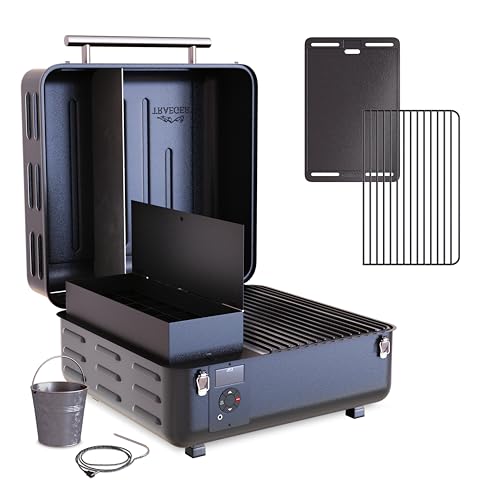
- Best where a pellet grill is genuinely allowed: Traeger Ranger Portable Wood Pellet Grill & Smoker — Check on Amazon
- Z GRILLS 200A Portable Pellet Grill & Smoker — Check on Amazon
- recteq Pellet Grill RT-B380 Bullseye — Check on Amazon
- Pit Boss 440 Mahogany Series Wood Pellet Grill — Check on Amazon
- Ninja Woodfire ProConnect Premium XL Outdoor Grill & Smoker (electric alternative — not a pellet grill) — Check on Amazon
See 1 more option in the guide
- Green Mountain Grills Trek Prime 2.0 — covered in prose below; sold mainly through GMG dealers, so check the review before shopping.
Read the full guide ↓
Disclosure: As an Amazon Associate, dailyhomedecorating.com earns from qualifying purchases. Links to Amazon on this page are affiliate links; they cost you nothing extra. Listing details such as price and availability change often, so check the current Amazon listing before you buy.
Searching for the best pellet grill for apartments under $1500 deserves an honest answer before it deserves a product list, so here it is: for most apartment balconies, the correct number of pellet grills is zero. A pellet grill is a combustion appliance. It burns wood, it has a live fire in a steel pot, it produces smoke and hot ash, and it does not stop being those things because it is small, expensive or app-controlled. Most leases prohibit grills on balconies outright, and the fire code used across much of the United States — International Fire Code section 308.1.4 — prohibits open-flame cooking devices on combustible balconies and within 10 feet of combustible construction in multi-unit buildings, with narrow exceptions such as sprinkler-protected balconies and one- and two-family dwellings. A pellet grill runs on electricity, but its fire is real, and fire marshals and landlords generally treat it as what it is: a wood-burning cooker. Buying one for a typical apartment balcony risks your deposit, your lease and, in the worst case, a fire in a building full of other people’s homes. No brisket is worth that.
So who is this guide actually for? Three groups of apartment dwellers can shop it legitimately. First, renters with a ground-floor unit and a private, ground-level patio — ideally concrete or another non-combustible surface — whose lease permits a grill there and who can meet safe clearances from the building. Second, condo and townhouse owners whose HOA rules allow grills on their own patio or terrace, again with the space to do it safely. Third, apartment hunters and house-sharers planning ahead: people with a shared yard, a duplex, or a move to a rental house coming up, who want a compact grill now that will still make sense later. For everyone else — the balcony majority — this guide still helps: it explains exactly what to check in your lease and local code, and it ends with the one pick on the list that is not a pellet grill at all, an electric grill that uses pellets only for smoke flavor, which many (not all) leases and codes treat differently. Read the rules section before the reviews; it is the most important part of the page.
Because the $1500 ceiling is generous for compact grills, money is not the constraint in this category — permission and footprint are. The picks below are therefore the smallest, most controllable pellet cookers we would consider for an apartment-adjacent life: two tabletop portables that can be carried inside and stored in a closet, one compact kettle-style grill, one small full-size grill for ground patios with room, and one premium portable covered in prose because it is sold mainly through dealers. Every one of them still burns wood and still needs the full safety routine — clearance from anything combustible, a heat-resistant surface, cold-ash discipline and never running unattended — and the apartment-specific version of that routine is spelled out in the how-to-choose section. If your situation turns out to allow only the electric route, skip straight to the Ninja review and the FAQ; readers working with a small private patio rather than an apartment should also see Best Pellet Grill For Small Patios Under $1500, which assumes a householder’s freedom and optimizes purely for footprint.
First, the rules: the best pellet grill for apartments under $1500 is the one you are allowed to use
Read your lease before you read reviews. Most apartment leases and condo rules address grills directly, often with a blanket ban on charcoal and gas grills on balconies and patios, and many extend the ban to “any open-flame or solid-fuel cooking device” — language that captures a pellet grill precisely. Some properties ban storage of grills and fuel on balconies as well as use. If your documents are ambiguous, ask management in writing and keep the answer; a verbal yes from a leasing agent is worth little when a different manager does a balcony inspection. If the answer is no, it is no — this guide will not help you argue around it, and cooking anyway can void your renter’s insurance position after an incident as well as your lease.
Understand the fire code layer. IFC 308.1.4, adopted in some form by most US jurisdictions, states that charcoal burners and other open-flame cooking devices shall not be operated on combustible balconies or within 10 feet (about 3 metres) of combustible construction. The stated exceptions are one- and two-family dwellings, balconies and decks protected by an automatic sprinkler system, and very small LP-gas devices — none of which rescue a pellet grill on a typical apartment balcony. Some cities and fire departments go further and restrict storage on balconies too, and some explicitly address electric grills differently from fuel-burning ones, which is why the electric alternative later in this guide exists. Local amendments vary, so treat the code as the floor of the conversation, not the final word: your lease, your HOA and your local fire marshal can all be stricter, and the strictest rule wins.
Smoke is a neighbor problem even where fire is legal. A pellet grill at smoking temperature produces a light but constant stream of wood smoke for hours. On a ground patio that drifts across a fence; from a balcony it drifts into the windows above you. Even in a fully permitted setup, expect smoke to be the thing neighbors notice, and plan cooks accordingly — daytime, reasonable hours, and a heads-up to the people downwind buys a lot of goodwill. This is also why “small” matters beyond storage: a compact grill running a two-hour rib cook is a different neighbor proposition from a full-size smoker running a fourteen-hour brisket.
Storage and fuel are part of compliance. Pellets are wood; a 20 lb bag stored on a balcony is fuel stored on a balcony, which some leases and fire codes restrict, and which in any case ruins the pellets — balcony humidity swells them into auger-jamming dust within weeks. Apartment-friendly pellet cooking means small bags, stored indoors in a sealed bin, and a grill that can come inside or under cover when it is not cooking. Every pick below was chosen with that reality in mind: nothing in this guide needs to live outside permanently.
In this guide
Quick Picks
Assuming you have a permitted, ground-level spot — or you are buying the electric alternative — these are the six options that make sense of an apartment brief, matched to the situation each handles best.
| Buyer type | Pick | Why it stands out | Link |
|---|---|---|---|
| Best tabletop pellet grill | Traeger Ranger | 176 sq in, 8 lb hopper and a cast-iron griddle in a latching, carry-in case format | Check on Amazon |
| Best budget portable | Z Grills 200A | 202 sq in of PID-controlled pellet cooking in the smallest, lightest format here | Check on Amazon |
| Best for ground patios with room | recteq RT-B380 Bullseye | 380 sq in kettle that smokes low and sears at up to 750°F-class heat | Check on Amazon |
| Best small full-size grill | Pit Boss 440 Mahogany | 518 sq in and a flame broiler in a compact frame for permitted ground-floor patios | Check on Amazon |
| Best balcony-legal direction (electric) | Ninja Woodfire ProConnect Premium XL | Electric grill and smoker — pellets provide smoke flavor only; no open wood fire | Check on Amazon |
| Best premium portable | Green Mountain Grills Trek Prime 2.0 | WiFi pellet control and 12V power options in a folding portable — prose only, dealer-sold | See review |
How the picks were chosen
The criteria for this guide differ from a normal pellet grill roundup, and deliberately so. Permission came first: we excluded every full-size patio grill from the main list, because recommending a 60-inch, 180 lb smoker to apartment readers would be irresponsible even with caveats — the six options here are the compact end of the category, the ones a person can carry, store indoors and run on a modest ground-level footprint. Second was controllability: small grills with crude controllers swing wildly, so every pick uses a digital controller, and most use PID logic. Third was shutdown and storage practicality — latching lids, manageable weight, and designs that cool down and come inside, because an apartment grill that must live outdoors is a grill that violates half the leases we are trying to respect. Fourth was honest capacity: these are cookers for one to four people, and we say so rather than inflating them into party machines.
Specifications were verified the same way as our main Best Pellet Grill Under $500 research: manufacturer figures cross-checked against current Amazon listings confirmed through this site’s Amazon Creators API where possible, with any pick we could not verify to that standard either dropped or — in the case of the dealer-sold Green Mountain Grills Trek Prime 2.0 — covered in prose without a purchase link. Every model was also screened against US CPSC recall records; none of the picks here is subject to a recall we could find, and the sources file kept with this article records the checks. Prices are never printed in this guide because they change constantly; the $1500 in the title is the budget ceiling from the search, and every pick sits far enough under it that the real decision is never money — it is permission, space and smoke.
One more honesty note: we have written this guide so that a reader who discovers, halfway through, that their lease bans everything with a flame still leaves with a plan. That plan is the electric route plus the portable-grill options in Best Portable Grill Under $300 for genuinely permitted outdoor spaces such as a shared yard or a friend’s house. Apartment cooking has constraints; good equipment respects them instead of pretending they are not there. It is also worth saying plainly that the constraint is not a life sentence: leases end, homes change, and the compact, storable formats recommended here are precisely the ones that move with you — the tabletop that is legal almost anywhere outdoors will still be useful on the patio of a future house, which is more than can be said for a full-size grill bought in defiance of a lease and confiscated by a property manager. Buy for the home you have, in the format that home allows, and the grill will follow you to the next one.
The six options, reviewed
Traeger Ranger — best tabletop pellet grill for a permitted patio
Who it suits: The ground-floor renter or condo owner with a small private patio where a grill is explicitly allowed, who wants real pellet flavor in a unit that stores in a closet and travels to a tailgate or campsite when the lease allows a change of scenery.
The Ranger is Traeger’s tabletop pellet grill, and its current manufacturer specification is 176 sq in of cooking space, an 8 lb hopper, a maximum temperature of 450°F and a total weight of about 60 lb, with a cast-iron griddle included in the box and Traeger’s simple Digital Arc controller on the front. The format is the story: a latching lid, a compact case roughly the size of a large suitcase, and a grease system designed for a grill that gets moved. It cooks like a small Traeger should — steady low temperatures for ribs and chicken, enough heat for burgers, and the griddle adds a flat-top mode that suits apartment cooking (smash burgers, breakfast, vegetables) better than open grates do. The 8 lb hopper is well judged for the size; it covers long cooks for a small grate without encouraging you to store a mountain of pellets.
Pros:
- True tabletop format: latches shut, carries with two hands, stores indoors
- Cast-iron griddle included — the most apartment-useful cooking surface of any pick
- Simple, proven controller; no app dependency
- Small hopper suits small-batch pellet storage indoors
Honest limitation: Sixty pounds is portable, not light — you will carry it with two hands and some commitment, and there is no WiFi. Capacity is couples-scale: a rack of ribs or a small chicken at a time, not a party. And to repeat the point that matters: tabletop size does not make it balcony-legal where grills are banned.
Choose it if you have a permitted ground-level spot and want the most complete small pellet package. Skip it if your lease bans fuel-burning grills entirely — go to the Ninja below — or if you regularly cook for more than four people. Check on Amazon
Z Grills 200A — best budget portable
Who it suits: The first-time pellet cook in a small home — duplex, townhouse, rental with a yard corner — who wants to learn whether pellet cooking suits them before spending serious money, in the smallest footprint available.
The 200A is the entry point of Z Grills’ line: 202 sq in of cooking area, PID 3.0 controller with an automatic feed system, in a tabletop body built to move between a patio table, a campsite and a storage shelf. What earns it a place here over cheaper no-name portables is the controller: PID logic at this size and price is still not universal, and it is the difference between a grill that holds a smoking temperature and one that wanders 50 degrees while you are inside making a drink. It does the standard pellet repertoire — smoke, roast, bake, grill — at household-for-two scale, and its modest appetite matches apartment pellet storage: small bags, bought often, kept indoors and dry.
Pros:
- Smallest, most storable format in this guide
- PID 3.0 control at an entry price — steady temperatures, not a novelty cooker
- Auto-feed system keeps long small cooks hands-off
- Leaves almost the entire budget for everything else in your setup
Honest limitation: The cooking area is genuinely small — plan on one main at a time — and the fit and finish are entry-tier, with thinner steel than the Traeger or GMG portables. Z Grills’ support network is also thinner than the big brands’, a fair trade at this price but one to make knowingly.
Choose it if you want the lowest-risk way into pellet cooking in a small space. Skip it if you already know you love the format and will cook weekly — the Ranger or the Trek will serve you longer. Check on Amazon
recteq RT-B380 Bullseye — best for ground patios with a little room
Who it suits: The apartment or townhouse dweller lucky enough to have a real ground-level patio where a grill is permitted — and who grills more than they smoke. The Bullseye is the entertainer of this list: a kettle that does weeknight high-heat cooking properly and still smokes on the weekend.
recteq’s Bullseye takes the classic 22-inch kettle silhouette and puts a pellet fire under it: 380 sq in of cooking space, a pellet hopper on the side, and a temperature range that runs from low smoking temperatures up to a riot-mode sear in the 750°F class — heat no other pellet pick in this guide approaches. That range is why it belongs in an apartment guide at all: in a small home, one appliance has to do everything, and the Bullseye is the only compact pellet cooker that genuinely replaces both a smoker and a kettle grill. Build quality follows recteq’s usual pattern of stainless where it counts, and the footprint is a kettle’s footprint — a circle a bit under two feet across — which tucks into a patio corner in a way no barrel smoker can.
Pros:
- True searing heat — steaks and burgers come off it like a kettle grill, not a smoker
- Compact round footprint for a grill with 380 sq in of cooking space
- Smokes low as well; the most versatile single cooker here
- recteq build quality and US-based support
Honest limitation: A kettle is a grill first: for long, low cooks it works well, but it lacks the two-rack capacity and the set-and-forget hopper reserves of a barrel smoker, and the base model has no WiFi (the Deluxe version adds it). It is also a stay-outside-or-garage appliance — too bulky to closet-store like the tabletops.
Choose it if your permitted patio hosts real grilling more than smoking. Skip it if your cooks are mostly long smokes, or if storage space rules out a kettle-sized object. Check on Amazon
Pit Boss 440 Mahogany — best small full-size grill for ground-floor patios
Who it suits: The renter whose “apartment” is really a ground-floor unit with a proper patio slab — or a duplex with a small yard — where a compact freestanding grill is allowed and a tabletop feels too small for family cooking.
The 440 Mahogany is Pit Boss’s compact full-size format: 518 sq in of cooking space, a temperature range of 180°F to 500°F, a 5 lb hopper and the brand’s signature flame broiler, a sliding plate that exposes the firepot for direct-flame searing. That broiler is the reason to pick it over other small barrels — it gives a small grill a genuine sear mode without a second appliance. The mahogany finish is cosmetic, but the layout is practical for tight spaces: a standard barrel on a leg frame that occupies roughly the footprint of a large suitcase stood on end, with the small hopper keeping pellet storage needs modest. For a household of three or four cooking on a permitted patio, this is the point where “compact” stops meaning “compromise” for most weeknight meals.
Pros:
- Flame broiler gives real direct-flame searing — rare in compact pellet grills
- 518 sq in is family-dinner capacity in a small frame
- Simple dial-and-display control; easy to learn
- Small 5 lb hopper matches indoor, small-bag pellet storage
Honest limitation: That 5 lb hopper is also the constraint: long overnight cooks will need a refill, and there is no WiFi to warn you it is empty. This is a freestanding grill — it lives where it cooks, so it only belongs in this guide where a lease or HOA clearly permits a grill to live on the patio.
Choose it if you have a permitted patio and a family to feed. Skip it if you need overnight capacity or must store the grill indoors — the tabletops above are your format. Check on Amazon
Ninja Woodfire ProConnect Premium XL — the electric alternative (not a pellet grill)
Who it suits: The balcony cook whose lease bans fuel-burning grills but permits electric ones — a common distinction in leases and in local fire guidance, because an electric grill has no open flame and no stored fuel. This is the pick for readers the rest of the guide cannot serve, and it is labeled plainly: it is an electric grill and smoker, not a pellet grill.
The Woodfire design plugs into a standard outlet and heats electrically; wood pellets sit in a small smoke box and smolder from the electric element purely to flavor the food. You get 180 sq in of cooking space in the XL format, seven cooking functions spanning grilling, smoking, roasting and baking, and app-connected thermometer monitoring on the ProConnect version. The smoke flavor is real but lighter than a pellet grill’s — the pellets are seasoning, not fuel — and in exchange you get an appliance that preheats fast, needs no fuel storage beyond a small bag of pellets kept indoors, produces far less smoke than a burning grill, and can live on a balcony where codes and leases allow electric cooking. Cleanup is the easiest here by a distance: no ash pot, no grease keg, mostly dishwasher-friendly parts.
Pros:
- No open flame and no fuel storage — the only format many leases allow on a balcony
- Fast preheat, compact footprint, minimal smoke output
- App-connected thermometer monitoring included
- Easiest cleanup in this guide by a wide margin
Honest limitation: It is not a pellet grill, and purists will taste the difference on a brisket — smoke is a flavoring here, not the fire. Capacity is small, it needs an outlet within cord reach, and “electric” is not a universal pass: some leases ban all balcony grills, so the written-permission step in the rules section still applies before you buy.
Choose it if your rules allow electric only — it is the difference between grilling at home and not grilling at home. Skip it if you have a permitted ground patio and want true pellet performance; the Ranger gives you the real thing in a similar footprint. Check on Amazon
Green Mountain Grills Trek Prime 2.0 — best premium portable (prose only)
Who it suits: The apartment or small-home cook who wants the most capable portable pellet grill made — full WiFi control, flexible power — and is happy buying through a dealer rather than a marketplace link.
The Trek Prime 2.0 is Green Mountain Grills’ portable flagship: per GMG’s own Prime 2.0 catalog, 274 sq in of grilling area, a 10 lb hopper, a 150°F to 550°F range in 5-degree increments, WiFi smart control, and a 12V direct-power design that runs from a wall adapter, a vehicle or a battery setup — a genuinely useful trait for a grill that may live at a campsite, a shared yard or a borrowed patio as easily as at home. It folds into a package about 36 inches wide and roughly 62 lb, and an optional cart converts it to standing height. We could not verify a current Amazon listing for the Trek to the standard this site requires — GMG sells primarily through its dealer network — so it appears here without a purchase link rather than with a doubtful one. If the format is right for you, a local GMG dealer is the place to buy, and you will get assembly and support in the bargain.
Pros:
- WiFi control and the widest temperature range of the portables here
- 12V flexibility: wall, vehicle or battery power
- Folding, storable format with an optional rolling cart
- Peaked lid fits taller food than most tabletops
Honest limitation: Dealer distribution means no one-click purchase and prices that vary by store, and at roughly 62 lb it is no lighter than the Ranger. The same balcony rules apply to it as to every wood-burning pick in this guide.
Choose it if you want premium portable performance and have a dealer nearby. Skip it if you want the simplicity of an Amazon order — the Ranger covers most of the same brief.
Comparison table
The options side by side. Note the format column first — in an apartment, format decides what is even possible before features matter.
| Option | Format | Cooking area | Fuel | Standout feature | Watch out for |
|---|---|---|---|---|---|
| Traeger Ranger | Tabletop, latching | 176 sq in | Wood pellets | Cast-iron griddle included | 60 lb is a two-hand carry; no WiFi |
| Z Grills 200A | Tabletop | 202 sq in | Wood pellets | PID 3.0 at an entry price | Entry-tier fit and finish |
| recteq RT-B380 Bullseye | Kettle on legs | 380 sq in | Wood pellets | Sears in the 750°F class | Not closet-storable; grill-first design |
| Pit Boss 440 Mahogany | Compact freestanding | 518 sq in | Wood pellets | Flame broiler sear plate | 5 lb hopper; lives outdoors |
| Ninja Woodfire ProConnect XL | Countertop electric | 180 sq in | Electric; pellets for smoke only | Only balcony-friendly format here | Lighter smoke; still check your lease |
| GMG Trek Prime 2.0 | Folding portable | 274 sq in | Wood pellets; 12V power | WiFi + vehicle/battery power | Dealer-sold; no verified Amazon listing |
How to choose — and how to stay legal and safe
Step one is paperwork, not products. Find the grill clause in your lease or HOA rules; if it is unclear, get a written answer from management describing the exact appliance type — “pellet grill” by name, not “a small grill.” Check your local fire code or fire department guidance for balcony and patio rules, since municipal amendments differ. If both layers permit a fuel-burning grill on your specific space — typically a ground-floor, non-combustible patio — proceed to step two. If either layer says no to flame, your choice is the electric pick in this guide or grilling somewhere else entirely, and no product feature changes that.
Step two is measuring the real footprint. The grill’s own dimensions are only the start: add the manufacturer’s required clearances from walls, siding, railings and overhangs — treat 10 feet from combustible construction as the planning figure the fire code uses for open-flame devices in multi-unit settings, and never plan to cook under a balcony above you, where heat and smoke rise into a neighbor’s space. The surface matters as much as the distance: concrete or stone is right; a wooden deck or balcony floor is combustible construction, which is precisely what the code language targets, and a grill mat does not convert a banned location into a permitted one. If the only spot you have fails any of these tests, that is the answer — use the electric option or a shared, permitted space.
Step three is matching format to storage. Apartment grills earn their keep by disappearing. Tabletop models (Ranger, 200A) go in a closet or under a bed; the Trek folds; kettle and freestanding models (Bullseye, Pit Boss 440) need a permanent permitted home. Pellets live indoors in a sealed bin — small bags, bought as needed — both because balcony storage may be restricted and because damp pellets ruin cooks. A compact storage box for the patio, where storage is allowed at all, is covered in Best Deck Box Under $300; where it is not allowed, everything comes inside, which is another argument for the tabletops.
Fire safety, apartment edition. Everything true of pellet grills generally is doubly true around other people’s homes. Run the grill only outdoors, only on a level non-combustible surface, only at full clearance, and never leave it running while you are away from home — app monitoring is not supervision, and a small grill’s cook is short enough that staying present is realistic. Keep the grease path and firepot clean; in a small grill, grease capacity is small too, so check it more often, not less. Let the shutdown cycle finish completely before moving or covering the grill, and treat ash as live until proven otherwise: empty it only when fully cold, into a lidded metal container, and never into a plastic bin, a cardboard box or a dumpster — pellet ash can hold embers for a day or more. Keep a grease-rated fire extinguisher inside your door, know where your building’s alarm pull is, and if anything ever flares beyond the grill, close the lid if it is safe, get people out and call the fire department rather than heroics. Finally, be a good neighbor: warn the units downwind before long smoky cooks, keep hours reasonable, and remember that one complaint to management can end a permission that was generously given.
Five questions to ask before you buy
1. “Does my lease’s grill clause cover pellet grills by name, or by category?” Ask management to point at the exact clause. If it bans “charcoal and gas grills,” ask whether a wood-pellet grill — which burns solid wood fuel with an electric igniter — is treated as covered. Get the interpretation in writing, by email, and save it with your lease. If the answer is a category ban on open-flame or solid-fuel devices, the conversation is over and the electric pick in this guide is your route.
2. “Is the rule about use, storage, or both?” Some properties allow a grill to be stored on a patio but not operated there, or vice versa. The answer decides your format: a tabletop that lives in a closet and cooks on a permitted ground-level area can satisfy a storage ban that a freestanding grill cannot, while a use ban on your only outdoor space ends the discussion for fuel-burning grills entirely.
3. “What does our local fire code say about balconies and patios in this building?” Management usually knows, and your fire department’s website often has a one-page grill guidance sheet. You are looking for the local version of the 10-foot rule, whether sprinkler-protected balconies change it, and whether electric grills are expressly treated differently. If the building has sprinklers on the balconies, ask whether that exception is recognized locally — it is in the model code, but local amendments rule.
4. “Where, exactly, would I be allowed to cook?” Sometimes the answer surprises people: a ground-floor patio is fine, a shared courtyard has a designated grill area, or the property allows grills a set distance from the building on the lawn. A designated shared area plus a portable tabletop grill — carried out, cooked on, cooled, carried back — is a completely workable apartment pellet setup, and it is why portability features so heavily in this guide’s picks.
5. “Does my renter’s insurance care?” A quick check with your insurer is worth it before any grill purchase in a multi-unit building. Policies generally cover accidents, but an incident involving a device your lease prohibited is a much uglier claim. Knowing your position in advance is part of buying responsibly — and one more reason the written permission in question 1 matters.
None of these questions takes more than an email or a short call, and together they convert a risky guess into a documented yes or a clear no. Readers who get a clear no have not wasted their time: they have saved the price of a grill, a possible deposit, and a difficult conversation with a fire marshal — and they still have the electric route and the shared-space route open. Readers who get a documented yes can buy from the picks above with confidence, and will also find the small-space thinking in our portable coverage useful when the grill starts traveling to parks and campsites, where the rules are simpler and the audience is hungrier.
Common mistakes
Assuming “electric ignition” means “electric grill.” A pellet grill ignites electrically and then burns wood. Landlords and fire codes classify it by its fire, not its igniter. This single misunderstanding is responsible for most confiscated balcony grills.
Buying first and reading the lease second. The order matters. A grill you cannot use is not a bargain at any price, and return shipping on a 60 lb appliance is a painful way to learn a lease clause.
Storing pellets on the balcony. Fuel storage is restricted in many buildings, and humidity ruins pellets regardless. Indoors, sealed, small bags — it is part of the system, not an afterthought.
Cooking under the balcony above. Even where a ground patio is permitted, the space under an overhang or another unit’s balcony traps heat and smoke against combustible structure. Open sky above the grill is part of a legal setup, not a nicety.
Treating a tabletop as a toy. The Ranger and its peers hold real fire at real temperatures. The full routine — clearance, clean grease path, cold ash in metal, no unattended running — applies at 200 sq in exactly as it does at 1,200. Readers weighing a fire feature for the same small space should apply the same rules-first thinking found in Best Fire Pit For Apartments Under $1500.
Final recommendation
If your lease and local code genuinely allow a pellet grill on a ground-level, non-combustible patio, buy the Traeger Ranger: it is the most complete compact pellet cooker here, it stores indoors, and it will travel with you to your next home, apartment or not. On a tighter budget, the Z Grills 200A teaches the same lessons for less. If your patio is bigger and your cooking is grill-first, the recteq Bullseye is the one-appliance answer. And if your rules say electric only — as most balcony rules do — the Ninja Woodfire ProConnect Premium XL is not a consolation prize; it is a genuinely good small grill that happens to be the only legal way many apartment dwellers can cook with wood smoke at home. Whatever you choose, choose it after the paperwork, and cook it with clearance.
FAQ
Can I use a pellet grill on my apartment balcony?
In most cases, no. Most leases ban grills on balconies, and fire codes based on IFC 308.1.4 prohibit open-flame cooking devices on combustible balconies and within 10 feet of combustible construction in multi-unit buildings. A pellet grill burns wood, so it falls under those rules even though it plugs in. Ground-floor patios, sprinkler-protected balconies and one- and two-family dwellings are the main exceptions — and your lease can still say no.
Are electric grills allowed where pellet grills are not?
Often, yes — many leases and local fire guidance treat electric grills differently because there is no open flame or stored fuel. But “often” is not “always”: some properties ban all balcony grills. Get the answer for your building in writing before buying anything.
Why does this guide’s $1500 budget go mostly unspent?
Because compact grills cost less than full-size ones, and the apartment brief is constrained by permission and space, not features. The headroom is better spent on the compliant setup — indoor pellet storage, a cover, a metal ash container, an extinguisher — or simply saved.
How much smoke does a small pellet grill make?
A continuous light stream of wood smoke while cooking, heaviest at startup and at low smoking temperatures. It is less than a charcoal grill but very noticeable to neighbors above and downwind, which is why cook timing and a friendly warning matter in shared buildings.
Can I run a tabletop pellet grill indoors or in a garage instead?
Never. Pellet grills produce carbon monoxide and smoke and are outdoor appliances, full stop. Running one in any enclosed or semi-enclosed space is dangerous and voids every safety assumption in this guide.
What should I do with ash in an apartment?
Let it cool completely — a full day is a safe habit — then transfer it to a lidded metal container kept away from anything combustible, and dispose of it with household waste only once it is certainly cold. Never use plastic bins, paper bags or the building dumpster for warm ash.
I live in a townhouse or condo, not a tower block. Do the same rules apply?
Mostly, yes — with an HOA layer added. Townhouses and condos are usually multi-unit buildings for fire-code purposes, so the combustible-balcony and 10-foot rules still apply to your patio or deck, and your HOA’s covenants can ban grills even where the code would allow one. The good news is that townhouse patios are more often ground-level and non-combustible, which is exactly the setting where the compact picks in this guide can be used legally once the HOA confirms it in writing.
My building has a shared courtyard. Can I use a portable pellet grill there?
If management confirms in writing that grills are permitted in that space, a tabletop model is the right format: carry it out, cook on a non-combustible surface at a safe distance from the building, let it complete its shutdown and cool fully, then carry it and its sealed ash container back inside. Never leave it stored in the shared space unless the property expressly allows that too.


