Where to buy
Check the latest price, availability and delivery on Amazon. Orders are placed on Amazon. We may earn a commission from qualifying purchases. Picks marked as accessories are labelled honestly — they are not complete umbrellas, and this guide never pretends otherwise.
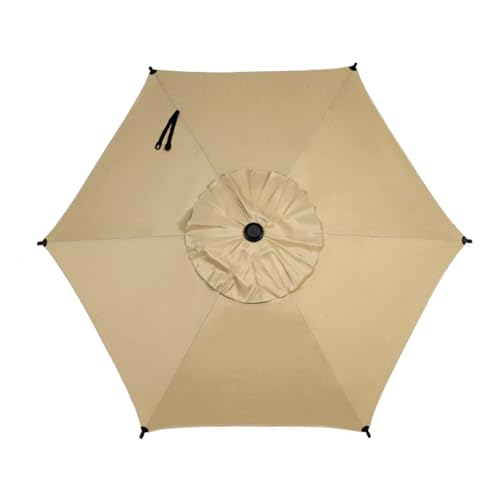
- Abba Patio 7.5 ft Lyon Replacement Canopy (canopy only) — Check on Amazon
- Balcony Rail Umbrella Clamp Mount — Accessory — rail clamp mount, NOT an umbrella and NOT a base; search Amazon by the full product name to check price on Amazon
- Zippered Patio Umbrella Cover for 7–11 ft Market Umbrellas — Accessory — protective cover, NOT an umbrella; search Amazon by the full product name to check price on Amazon
- Repel Windproof Travel Umbrella — Handheld mini umbrella — NOT a patio umbrella; search Amazon by the full product name to check price on Amazon
- Cordless LED Patio Umbrella Pole Light (clamp-on) — Accessory — umbrella light, NOT an umbrella; search Amazon by the full product name to check price on Amazon
- Rhino BaseMate Umbrella Base Weight Bag (18 inch) — Accessory — base weight bag, NOT an umbrella and NOT a base; search Amazon by the full product name to check price on Amazon
Read the full guide ↓
Disclosure: As an Amazon Associate, dailyhomedecorating.com earns from qualifying purchases. Links to Amazon on this page are affiliate links; they cost you nothing extra. Listing details such as price and availability change often, so check the current Amazon listing before you buy.
The search for the best patio umbrella for small patios under $20 runs into the same wall as every search at this tier, and this guide will not dress it up: no complete patio umbrella from a verifiable maker exists at this price — not even a small one. The little umbrellas that do appear at rock-bottom prices are decorative parasols with plastic poles and unstated dimensions, and a small patio, where you sit close to the hardware, is the worst place for one to fail. What the budget buys honestly is the kit that makes a small patio’s umbrella work: matched fabric for the frame that already fits your layout, a rail clamp that deletes the base from your floor plan, a cover that doubles as the storage system, a handheld umbrella honestly sized to a one-chair patio, evening light that consumes no space at all, and ballast that adds weight without adding footprint. Each pick is labelled for exactly what it is.
Small patios reward a different logic from big yards. The binding constraint is not money or even shade — it is geometry. Every object competes for the same few square feet: the base against the chair, the pole against the door swing, the stored umbrella against the only corner. So this ranking prizes footprint as a first-class feature. Two of the six picks exist purely to give space back — the clamp that moves the pole to the railing, and the handheld that stores in a drawer. Two protect the investment you have in the only storage you have. And all six were screened against the CPSC recall record, because small patios put people close to mechanisms; no recalled line, and no solar model, appears in this guide.
If you own no umbrella at all, this guide still serves you — as a map of what not to buy, and as a first instalment on the setup that will work: the cover and the weight bag in this list are precisely what a small complete umbrella needs from its first day, and the related guides at the end cover the tiers where small and half umbrellas genuinely exist, including the wall-hugging half umbrellas that are the small patio’s best complete answer. Read the reality check first; it will save you the price of a toy.
The $20 Reality Check for Small Patios
It is tempting to think a smaller umbrella should cost proportionally less, until you price the parts. A real 6 to 7.5 ft umbrella still needs a two-section metal pole, six ribs, a lift mechanism, a tilt joint and metres of outdoor fabric — the same anatomy as its 9 ft sibling, in slightly smaller quantities — plus a base, sold separately, heavy enough to hold it. Manufacturing does not scale down to this tier; what scales down is honesty, in listings whose ‘patio umbrella’ is a table parasol or a photo prop with a plastic pole. We checked the tier for a verifiable exception and found none, so this guide ranks the genuine small-patio purchases instead of the least-bad imitation.
Small patios also concentrate the safety stakes. You sit within arm’s reach of the pole, the crank and the tilt joint — the category’s documented pinch and breakage points — and a tipping umbrella on a small patio has nowhere to fall that is not occupied. The recall record for the category, from tipping offset umbrellas to arms breaking at joints to a mass recall of solar LED models for battery fires, is a record of exactly the components that ultra-cheap products weaken. The defences are the theme of this guide: sound existing hardware, honest ballast, gentle mechanisms, and a closing-and-covering habit. At this budget you cannot buy a better umbrella — but on a small patio, a safer, better-kept one is most of the battle.
In this guide
Quick Picks
Six small-patio purchases at this tier, each labelled truthfully: fitted fabric, a space-returning rail clamp, storage-as-cover, drawer-sized personal shade, zero-footprint light and footprint-free ballast. No complete umbrellas — and nothing that pretends to be one.
| Pick | What it actually is | Best for | Amazon |
|---|---|---|---|
| Abba Patio 7.5 ft Lyon Replacement Canopy (canopy only) | Accessory — replacement canopy, NOT a complete umbrella | Fresh fabric for a Lyon that already fits your space | Check on Amazon |
| Balcony Rail Umbrella Clamp Mount | Accessory — rail clamp mount, NOT an umbrella and NOT a base | Moving the pole to the railing and freeing the floor | Prose-only — check price on Amazon |
| Zippered Patio Umbrella Cover for 7–11 ft Market Umbrellas | Accessory — protective cover, NOT an umbrella | Protecting a stored umbrella in minimal space | Prose-only — check price on Amazon |
| Repel Windproof Travel Umbrella | Handheld mini umbrella — NOT a patio umbrella | Shade that stores in a drawer | Prose-only — check price on Amazon |
| Cordless LED Patio Umbrella Pole Light (clamp-on) | Accessory — umbrella light, NOT an umbrella | Evening light without cords across a small floor | Prose-only — check price on Amazon |
| Rhino BaseMate Umbrella Base Weight Bag (18 inch) | Accessory — base weight bag, NOT an umbrella and NOT a base | Stabilising a compact base in a tight footprint | Prose-only — check price on Amazon |
How These Picks Were Chosen
Selection for this guide applied the standing rule — nothing counts as a patio umbrella unless it verifiably is one, with metal pole, ribbed frame, working lift and stated dimensions — and then added a small-patio screen that other guides do not need: what does it cost in space, in use and in storage? Candidates were umbrella accessories and substitutes with verifiable makers and specifications: a model-matched replacement canopy, a rail clamp with stated jaw and pole ranges, a zippered cover with a stated size range, an established compact handheld, a clamp-on pole light, and a fill-in-place weight bag with stated capacity.
Every candidate was checked against the CPSC recall record by brand and product type, with the category’s known hazards in view — tip-over, tilt and crank failure, cantilever arm breakage, and solar battery overheating, the last of which drove a recall of hundreds of thousands of umbrellas and excludes solar products from this guide altogether. Space claims were audited as strictly as safety ones: a pick that ‘saves space’ had to actually remove something from the floor or store flat. Amazon-linked picks carry ASINs confirmed through the site’s Creators API cross-check; prose-only picks are identified by full product name so you can verify them directly, and their status is recorded in this article’s source notes.
The 6 Best Patio Umbrella Buys for Small Patios Under $20 — Honestly Labelled
1. Abba Patio 7.5 ft Lyon Replacement Canopy (canopy only)
What it is: Accessory — replacement canopy, NOT a complete umbrella.
Replacement canopy made for the Abba Patio 7.5 ft Lyon market umbrella, 6-rib layout, UV-protection waterproof polyester in the Lyon colour range. Canopy only: the Lyon pole, crank and tilt hardware are not included, and fit is intended for that specific frame rather than for umbrellas in general.
On a small patio, a working layout is precious: the umbrella that fits — pole in the corner, canopy over the bistro set, door still swinging clear — should not be replaced on a whim. If that umbrella is a Lyon and only its fabric has faded or torn, a matched replacement canopy preserves the entire geometry and refreshes the look in one swap. Small spaces punish experimentation; a fitted part for a proven frame is the opposite of experimentation. Confirm the model, count the six ribs, and the riskiest part of the purchase is already behind you.
Who it suits: you own a Lyon that fits your patio perfectly but looks a season past its best.
- Exact-fit fabric for Lyon owners instead of a gamble on universal sizing
- Fresh UV-protective, water-shedding polyester restores shade quality in one swap
- Cheaper and less wasteful than replacing a healthy aluminium frame
Honest limitation: Brand-specific fit is the catch: on a non-Lyon frame the pockets and vent alignment may not line up. Confirm your umbrella is actually a Lyon before buying.
Choose it if the size is right and only the fabric is wrong — matched fabric preserves a working layout. Skip it if your frame is not a Lyon or its mechanics are as worn as its fabric.
2. Balcony Rail Umbrella Clamp Mount
What it is: Accessory — rail clamp mount, NOT an umbrella and NOT a base.
A heavy clamp that grips a balcony or deck railing and holds a small umbrella pole, replacing a floor base entirely. Jaw range and pole diameter vary by model, so both must be measured. It holds an umbrella you supply; by itself it shades nothing and includes no canopy.
Small patios are won in square inches, and the umbrella base is the biggest single thief: a round base claims the exact patch of floor where a chair leg, a planter or your own feet need to be. A rail clamp moves the pole to the perimeter and deletes the base from the floor plan entirely. On a truly small patio this is not an optimisation; it is the difference between an umbrella that can open and one that cannot. The conditions are strict — a railing that is genuinely structural, measurements that match the clamp’s ranges, and building rules that permit it — but where they are met, no other purchase in this guide returns as much usable space.
Who it suits: your patio’s floor plan works only if the umbrella pole stands at the railing, not in a base.
- Reclaims the floor space a base would eat on a small balcony — often the whole ballast problem disappears
- No heavy base to haul up stairs or store in winter
- Works with the small umbrella you may already own
Honest limitation: Only as strong as the railing it grips, and many leases and building rules restrict anything clamped to or hanging over a rail. Check your rules before spending anything.
Choose it if floor space is your scarcest resource and your railing and rules allow a clamp. Skip it if your railing is weak, your rules forbid attachments, or your umbrella’s pole misses the clamp range.
Prose-only pick: search Amazon by the full product name above to check price on Amazon.
3. Zippered Patio Umbrella Cover for 7–11 ft Market Umbrellas
What it is: Accessory — protective cover, NOT an umbrella.
A waterproof Oxford-fabric storage cover sized for market umbrellas roughly 7 to 11 ft, with a zipper, a drawstring hem and, on many versions, a reach rod so you can pull it over a tall closed canopy without a step stool. It produces no shade at all; it protects the umbrella you already own from UV, rain and bird mess while it is closed.
Where does a small patio’s umbrella spend the winter? Usually on the small patio — there is no shed, no garage, no spare room. That makes the cover not an accessory but the storage system itself. A zippered cover with a drawstring hem turns the closed umbrella into its own weatherproof cabinet, standing in the corner it already occupies. Choose one with a reach rod if your canopy is tall, because a cover that requires a step stool on a crowded little patio is a cover that stays in the drawer.
Who it suits: your umbrella stores in a corner of the patio itself, outdoors, all year.
- The single cheapest way to double the life of a budget canopy, which is where cheap umbrellas die first
- Zipper plus drawstring keeps it on in wind better than slip-on sleeves
- Fits a wide span of market sizes, so it survives an umbrella upgrade
Honest limitation: Useless if you do not already own an umbrella, and it must be put on a dry canopy — sealing in moisture invites mildew.
Choose it if your umbrella lives outdoors and a flat-storing cover is the only storage you have room for. Skip it if you own no umbrella yet; protection follows shade, never precedes it usefully.
Prose-only pick: search Amazon by the full product name above to check price on Amazon.
4. Repel Windproof Travel Umbrella
What it is: Handheld mini umbrella — NOT a patio umbrella.
A compact folding rain umbrella: 11.5 inches folded, under a pound, nine resin-reinforced fibreglass ribs, a double-vented canopy with a water-repellent coating, and one-button automatic open and close. It shades one person, handheld, for as long as someone is willing to hold it. It mounts to nothing and shades no table.
Scale honesty cuts both ways: a small patio sometimes needs only small shade. If your outdoor life is one chair, one book and one coffee, the shade requirement is one person wide — and a quality handheld compact meets it with zero footprint, zero base, zero storage and zero landlord involvement. It folds into a drawer in a home where drawers are territory. The discipline is in the labelling: the moment the plan involves a table, a second person or hands-free shade, this stops being the answer and the step-up tiers at the end of this guide begin.
Who it suits: your outdoor space is one chair and a side table, and the shade needed is equally small.
- Real, immediate personal shade and rain cover while you save for a proper patio umbrella
- Fibreglass ribs flex in gusts instead of snapping like cheap steel compacts
- Folds small enough for a balcony storage box, a tote or a car door pocket
Honest limitation: It is a rain umbrella, full stop. Coverage is one person, it ties up a hand, and it is not a substitute for mounted patio shade over furniture.
Choose it if your shade need is genuinely personal-scale and storage space is zero. Skip it if you need shade over a table for two or more; a handheld cannot do it.
Prose-only pick: search Amazon by the full product name above to check price on Amazon.
5. Cordless LED Patio Umbrella Pole Light (clamp-on)
What it is: Accessory — umbrella light, NOT an umbrella.
A round cordless LED light that clamps around a standard umbrella pole and shines down onto the table, typically with several brightness settings and battery or USB-rechargeable power. It adds evening light to an umbrella you already own. It casts no shade, blocks no sun and does nothing at noon.
A small patio in the evening has a lighting problem with no floor to solve it: no room for a lamp stand, no outlet in reach, no table space to spare for candles. The pole light’s elegance is that it consumes nothing — no floor, no table, no outlet — borrowing the umbrella pole that is already there and turning the day’s shade structure into the evening’s lamp. On the smallest patios, where every object must do two jobs, that doubling is the whole argument.
Who it suits: your small patio doubles as your evening room and has no spare outlet or floor for lamps.
- Turns an existing umbrella into evening infrastructure for dinners and card games
- Clamp fits most standard pole diameters and moves between umbrellas in seconds
- No wiring, no outlet hunt, no electrician — renter-safe by design
Honest limitation: Purely a night accessory. If your problem is afternoon sun, a light solves none of it, and batteries or charging become one more chore.
Choose it if darkness, not sun, is what ends your patio time. Skip it if your problem is midday glare and heat on a small west-facing patio.
Prose-only pick: search Amazon by the full product name above to check price on Amazon.
6. Rhino BaseMate Umbrella Base Weight Bag (18 inch)
What it is: Accessory — base weight bag, NOT an umbrella and NOT a base.
An 18-inch weight bag in heavy 900D fabric with a side opening that slides around an existing umbrella base or pole, filled by you with sand (sand is not included). It adds ballast to a base that is almost heavy enough. It is not itself a base: with nothing underneath it, there is nothing for it to weight down.
Compact bases are the small patio’s compromise: sized to fit the floor, undersized for the wind. A weight bag is how you cheat the trade-off — ballast that drapes over and around the existing base, adding real weight inside almost the same footprint, and sliding off to store flat when the season ends. It respects the geometry that made you choose a small base while correcting the physics that made it nervous. What it cannot do is make an exposed, large-canopy setup safe; small patios usually pair with small canopies, which is exactly the case where a bag’s added weight is enough.
Who it suits: your compact base fits the space but not the wind, and a full-size base will not fit at all.
- Fixes the most common budget-umbrella failure — a too-light base — without buying a new base
- Side opening means you fill it in place instead of lifting a full bag
- Ships and stores flat, unlike cast-iron or resin bases
Honest limitation: You supply the sand and the existing base. On its own it holds no umbrella upright, and a filled bag still will not make an undersized base safe in strong wind.
Choose it if you need more ballast in the same footprint — a bag adds weight without adding floor. Skip it if your base is fundamentally wrong for the canopy; a bag supplements, it does not transform.
Prose-only pick: search Amazon by the full product name above to check price on Amazon.
Comparison Table
| Pick | Type | Provides shade? | Needs an existing umbrella? |
|---|---|---|---|
| Abba Patio 7.5 ft Lyon Replacement Canopy (canopy only) | Accessory — replacement canopy, NOT a complete umbrella | No — fabric for an existing Lyon frame | Yes — an Abba Lyon frame |
| Balcony Rail Umbrella Clamp Mount | Accessory — rail clamp mount, NOT an umbrella and NOT a base | No — mount only | Yes — an umbrella to mount |
| Zippered Patio Umbrella Cover for 7–11 ft Market Umbrellas | Accessory — protective cover, NOT an umbrella | No | Yes |
| Repel Windproof Travel Umbrella | Handheld mini umbrella — NOT a patio umbrella | One person, handheld | No |
| Cordless LED Patio Umbrella Pole Light (clamp-on) | Accessory — umbrella light, NOT an umbrella | No | Yes |
| Rhino BaseMate Umbrella Base Weight Bag (18 inch) | Accessory — base weight bag, NOT an umbrella and NOT a base | No | Yes — umbrella plus base |
The columns expose this tier plainly: only the handheld shades anything alone, and only one person. Everything else restores, mounts, protects, lights or stabilises. On a small patio that is not a weakness in the list — the scarcest resource is space, and four of these six picks either consume none or actively give some back.
Sequence by constraint. If the layout only works without a floor base, the clamp is the key that unlocks everything else. If the umbrella fits and works, cover it and weight it before you beautify it. If your shade need is truly one chair wide, the handheld may be the whole answer — and the money you did not spend on a toy parasol is the first saving toward a real half umbrella.
How to Choose a Patio Umbrella Strategy for a Small Patio When the Budget Is $20
Draw your patio before you shop it — on paper, with measurements. Mark the door swing, the table and chairs at their real sizes, the railing line and the one storage corner. Then ask where a pole can stand: through the table, in a corner base, or on the railing itself. That drawing, not any product page, decides whether your purchase is a clamp, a weight bag for a compact base, or simply fabric for the frame that already fits. Small patios fail purchases that ignore geometry; a tape measure and ten honest minutes are the highest-value tools in this entire guide.
Fit-check the specifics that small spaces make unforgiving. For a replacement canopy: exact model, rib count, rib length — a canopy a size off will foul a railing or a wall at this scale. For a clamp: railing thickness, railing strength, pole diameter, and the building’s rules, in that order. For a cover: closed length and canopy size against the stated range, plus whether a reach rod is included. For ballast: your base’s stated canopy rating, and whether a draped bag clears your door swing and chair legs. On a small patio, ‘roughly fits’ and ‘does not fit’ are the same thing wearing different clothes.
Plan the exit to a complete umbrella with your eyes open, because for many small patios the endgame is a half umbrella: a semicircle canopy that stands flat against the wall, shading the full width of the space while taking half the depth and a fraction of the base room. Those live at the tiers the related guides cover — bought together with their ballast as one decision. Everything in this guide transfers to that future setup: the cover protects it, the bag weights it, the light extends it, and the clamp and handheld remain useful long after. Money at this tier, spent on transferable gear, is a deposit on the right umbrella — not a detour from it.
Small Patio Geometry: Bases, Railings, Walls and Wind in Tight Spaces
The base problem deserves first principles. An umbrella base does two things: it holds the pole vertical, and its weight and width resist the overturning force of wind on the canopy. Both scale with canopy size, which is why honest bases are heavy and wide — and why they are the first casualty of small-patio floor plans. The three escapes from the dilemma are the ones this guide uses: put the pole through the table, which adds the table’s mass and a second support point; move the pole to the railing, which outsources the structure to the building; or shrink the canopy itself, ideally to a half umbrella whose sail area and leverage are inherently smaller. A weight bag is the fourth, partial escape: more resistance inside nearly the same footprint.
Railings deserve a careful paragraph, because they are structure, temptation and regulation at once. A railing that can hold a clamped umbrella is one that is rigid under a firm two-handed shake, with posts anchored to the structure — not a decorative balustrade that flexes. The clamp’s jaw must match the rail’s profile; a clamp bridging a rounded rail at two points is a clamp planning to rotate. Height matters too: a pole clamped at rail height gains leverage, so small canopies suit rail mounting best. And over everything sits the rulebook — leases and building rules frequently restrict rail attachments precisely because objects overhang. Read yours first. A clamp inside the rules on a strong rail is a brilliant small-space tool; outside them it is a deposit deduction with a parasol attached.
Walls are the small patio’s underused asset. A canopy placed against a wall — above all a half umbrella’s flat side — gains a wind shadow on one side, loses no depth to a rear overhang, and shades the seating that small patios naturally arrange along walls. Wall-adjacent placement also shortens the umbrella’s fall arc onto your own space rather than a neighbour’s. When you step up to a complete umbrella, this geometry is why the half umbrella outperforms a small round one on most tight patios: same width of shade, half the depth, smaller ballast, and a pole that stands where the furniture already was.
Wind in tight spaces is sneakier than wind in open ones. Gaps between buildings, the corner of a house, a fence line — all funnel and accelerate gusts, and a small patio between structures can be calmer than a yard most days and wilder on the one day that matters. The habits that protect you cost nothing: close and tie the umbrella when it is unattended, every time; lower your personal wind threshold if your space funnels; re-check clamp tightness and base seating after the first storm of the season and monthly thereafter. Small patios put you close to the hardware — which means you will notice the rattle, the lean and the loosening early, if you are listening. That closeness, used well, is a safety feature.
Common Buying Mistakes
Buying a toy parasol because it was ‘small enough’. Small dimensions on a decorative listing mean a plastic pole and fabric with no outdoor specification. On a patio where you sit beside it, failure is personal.
Letting the base choose the furniture layout. If the base dictates where chairs can go, the base is the problem — solve it with a clamp, a through-table setup or a half umbrella later, not by surrendering the floor plan.
Clamping first and reading the lease later. Rail rules are the most common small-patio restriction. The order is rules, railing strength, measurements, then purchase.
Storing the umbrella uncovered ‘because the patio is sheltered’. Sheltered from rain is not sheltered from UV, and the crown fades and weakens either way. The cover is the storage; use it dry, every time.
Oversizing the canopy for the space. A canopy that overhangs the railing or fouls the door will be left closed, and a closed umbrella shades no one. Fit beats coverage on small patios.
Forcing the tilt to chase the sun. Small patios tempt constant adjustment. Grit-stiff joints need rinsing and patience; a snapped tilt joint ends the umbrella, not just the afternoon.
Final Recommendation
The small-patio verdict: this budget buys no umbrella, and on a small patio that honesty protects you twice — once from a toy that would fail at arm’s length, and once toward the purchases that genuinely transform tight spaces. Fitted fabric preserves the layout that works. The clamp returns your floor. The cover becomes your storage. The handheld matches a one-chair life. The light doubles your hours at zero footprint, and the weight bag fixes the physics inside the same few inches. That is a coherent small-patio kit, and every piece of it survives the eventual upgrade.
And the upgrade, when it comes, has a name on small patios: the half umbrella, flat to the wall, bought with its ballast at the tiers the related guides map. Arrive at that purchase with this guide’s cover, bag, light and habits already in hand, and you will own not just an umbrella but a system that fits — which, in a small space, is the only kind that lasts.
Best Patio Umbrella for Small Patios Under $20: The One-Afternoon Space Audit
Before any purchase in this guide earns its place, give your small patio one honest afternoon of measurement, because in a tight space information is worth more than merchandise. Start with the floor: measure the patio’s full rectangle, then subtract what is not negotiable — the door’s swing arc, the storage corner, the walkway you use with your hands full. What remains is the true floor plan, and it is always smaller than the patio feels. Mark it with painter’s tape if you can; seeing the real boundaries changes which of this guide’s picks even qualify, and it takes ten minutes.
Next, audit the pole’s possible homes. Stand where a base would go and check what it displaces: a chair leg, the side table, your own feet at the table. Run the umbrella through the table if yours has a hole, and note how much steadier and smaller the whole arrangement becomes. Then look at the railing with an inspector’s hands — grip it and push; a rail that moves under your weight has already answered the clamp question, and the answer is no. If it is rock solid, measure its thickness and profile, and only then read your building’s rules, because the clamp is a three-key lock: strength, fit and permission, and it opens only when all three turn.
Audit the sun next, on the same afternoon if the weather cooperates. Note where the shade of any existing umbrella actually falls at the hours you use the patio — not where the canopy is, but where the cool patch lands, because on small patios the patch and the seating disagree more often than anyone expects. A tilt adjustment, a few inches of repositioning, or seating moved to meet the shade can be worth a full canopy size, and all three are free. If your space sits in a building’s wind shadow most days but funnels gusts on others, note that too; it decides whether your ballast plan is a compact base alone or a base plus the draped weight bag.
Then audit storage, the small patio’s silent budget. Where does the closed umbrella stand in January? Where would a cover, a net, a light and a handheld live? The picks in this guide were chosen partly for their answers: the cover stores on the umbrella, the bag stores flat, the light stores in a kitchen drawer, the handheld stores anywhere. Anything you are tempted to buy beyond this list should be asked the same question before it is asked its price — on a small patio, an object without a home is clutter auditioning, whatever it costs.
Finish the audit by writing the step-up specification you now actually know: the canopy shape your floor plan demands — almost certainly a half umbrella if seating lines the wall — the ballast your exposure demands, and the storage the whole system must fit. Keep that note with your lease paperwork. When the day comes to buy the complete umbrella at the tiers linked below, you will shop from measurements instead of hope, and the accessories bought at this tier will already match the system they were always meant to join. That is the small patio’s version of value: nothing bought twice, nothing bought wrong, and every square inch accounted for.
The Small Patio Umbrella Care Checklist
Weekly: close and tie the umbrella when the patio empties — on a small patio this also returns your full floor and your door swing, so the habit pays you back in space daily. Check that the closed, covered umbrella still clears the door and the walkway exactly as your audit arranged it; small patios drift as planters and chairs migrate, and the umbrella’s corner should be defended like the territory it is.
Monthly: if you use a rail clamp, put a wrench on it — clamp torque relaxes with vibration and weather, and a monthly snug is the entire maintenance contract of a rail-mounted setup. Work the crank and tilt gently, rinse the hub, and confirm the weight bag, if you use one, has not shifted its drape into the door’s path or a chair’s legs.
Each season: wash and fully dry the canopy before covering, inspect rib-tip pockets, and re-run the space audit in miniature: has anything new claimed floor the umbrella needs? Small patios accumulate objects the way pockets accumulate coins, and the umbrella system — pole position, storage corner, shade patch — deserves a five-minute defence each season against the creep.
Before any storm: close and tie early; in a funnelled space between buildings, gusts arrive faster than forecasts suggest. Bring the light and handheld indoors, double-check the clamp or base, and if your patio is genuinely exposed, accept the small-patio advantage — everything here is light enough to bring inside entirely, which is the safest storage a storm can be given.
When you step up: bring this checklist with the new umbrella. The half umbrella that this guide points you toward will live in the same measured corner, under the same cover discipline, with the same monthly clamp or base check if its setup uses one. Habits are the most transferable accessory you own, and on a small patio they are worth more than any single product in this guide.
Frequently Asked Questions
What is the best complete umbrella for a small patio, honestly?
At real tiers, a half umbrella: a semicircle canopy that stands flat against a wall, giving full-width shade at half the depth, with a smaller base. At this guide’s budget no complete umbrella exists — the related guides below cover the small-patio tiers where half and small market umbrellas are actually sold.
Is a rail clamp a good idea on a small patio?
Where the railing is structural, the measurements match and your building’s rules allow it, it is the single best space-saver available: the pole leaves the floor entirely. Where any of those three conditions fails, use a compact weighted base instead and keep the umbrella inside the railing line.
How small can a real patio umbrella be?
Complete market umbrellas start around 6 to 7.5 ft, and half umbrellas run about 9 ft wide with half the depth. Anything dramatically smaller sold as a patio umbrella is a table parasol or a decorative item — check for a stated diameter, a metal pole and a real lift before believing any listing.
My patio only fits one chair. Do I need an umbrella at all?
Maybe not a mounted one. If your outdoor life is one chair and a book, a quality handheld compact provides honest personal shade with zero footprint and drawer storage. The moment a table, a second chair or hands-free shade enters the plan, you are in half-umbrella territory at the next tiers up.
How do I store an umbrella when there is no storage?
Closed, tied, dry and covered, standing in the corner it already occupies — the cover is the storage system. Choose a zippered cover in your umbrella’s size range, with a reach rod if the canopy is tall, and make putting it on part of closing up for the night.
Will a weight bag fit my small base?
Weight bags drape over and around an existing base and add ballast within roughly the same footprint, which is why they suit small patios. Check that the draped bag clears your door swing and chair legs, and remember it supplements a roughly right base — it cannot redeem a token base under a large canopy.
Related Guides
When you are ready for the complete small-patio answer — especially half umbrellas — these are the tiers and companions to look at next:


