Where to buy
Check the latest price, availability and delivery on Amazon. Orders are placed on Amazon. We may earn a commission from qualifying purchases.
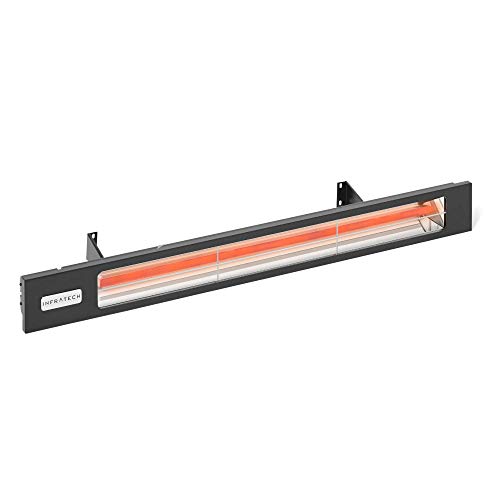
- Best overall for small patios: Infratech SL-1612 Slimline 1600W, 120V — Check on Amazon
- Best low-glow compact panel: Bromic Platinum Smart-Heat Electric 2300W (BH0320003) — Check on Amazon
- Best compact workhorse: Bromic Tungsten Smart-Heat Electric 2000W (BH0420030) — Check on Amazon
- Best flush-mount for tiny covered patios: Infratech WD-4024 SS Dual Element 4000W — Check on Amazon
- Best for long, narrow patios: Infratech SL-4024 SS Slimline 4000W — Check on Amazon
- Best step-up for the larger small patio: Bromic Platinum Smart-Heat Electric 3400W (BH0320005) — Check on Amazon
Read the full guide ↓
Disclosure: As an Amazon Associate, dailyhomedecorating.com earns from qualifying purchases. Links to Amazon on this page are affiliate links; they cost you nothing extra. Listing details such as price and availability change often, so check the current Amazon listing before you buy.
The best patio heater for small patios under $1500 is almost never the biggest heater the budget can buy, and understanding why is the whole content of this guide in one sentence. On a small patio, you sit close to the heat — three, four, maybe six feet from the element — and radiant warmth intensifies dramatically as distance shrinks. A modest, well-aimed heater at conversational distance feels luxurious; a flagship 6,000-watt panel over a bistro set feels like a grilling accident. Small patios also punish the wrong format physically: there is no floor to spare for a freestanding tower’s footprint, no circulation route that does not pass within its clearances, and no ceiling height to waste. What a small patio wants is a compact, wall- or ceiling-mounted radiant heater, sized to its actual zone, installed so tidily that the patio gains a season without losing a single square foot.
That framing turns the $1500 budget from a product price into a project allowance, and an honest guide should say so. For most small patios, the right heater plus a careful professional installation will land well inside the budget — and the remainder is not a failure to spend but an opportunity to fund the things that make a small heated patio actually work: chairs worth sitting in for two hours, a rug that takes the chill off the slab, storage that keeps the little floor clear. The picks below are therefore deliberately right-sized rather than maximal. Every one is a real commercial-grade product from the same manufacturers as our flagship guides, verified model-by-model through the Amazon Creators API and screened against CPSC recall records; every coverage figure is the manufacturer’s own, quoted for the mounting heights small patios actually have. Readers with an even tighter space-or-money problem will find the same logic at a friendlier tier in Best Patio Heater For Small Patios Under $500, and those whose “small patio” is really a balcony attached to a flat should read our apartment guide’s rules on permissions and fire code alongside this one.
Our short answer. Start with the Infratech SL-1612: a 29.5-inch, 1,600-watt heater that runs on ordinary 120-volt power, mounts at the modest heights small covered patios offer, and covers the two-to-four-chair zone that is most small patios’ entire social world. If the patio is finished and design matters, the Bromic Platinum 2300W hides similar coverage behind a tinted glass screen. If you have 240-volt capacity and want one-and-done durability, the Tungsten 2000W is the compact workhorse. Renovating a covered patio’s ceiling: the WD-4024 recesses out of sight. Long and narrow: the SL-4024 runs along the space instead of across it. And if your small patio is at the generous end of small, the Platinum 3400W is the step-up that still respects the geometry.
In this guide
Quick Picks: The Best Patio Heater for Small Patios Under $1500, by Patio Shape
| Patio shape / need | Pick | Why it stands out | Link |
|---|---|---|---|
| Most small patios, 120V only | Infratech SL-1612 | 1,600W on standard power, 29.5-inch body, ~6 × 6 ft zone | Check on Amazon |
| Finished look, low glow | Bromic Platinum 2300W (BH0320003) | About 65 sq ft behind a tinted glass-ceramic screen | Check on Amazon |
| Compact durability, 240V | Bromic Tungsten 2000W (BH0420030) | Single element rated for about 65 sq ft, mesh front | Check on Amazon |
| Ceiling renovation | Infratech WD-4024 SS | 39-inch dual element that can mount flush | Check on Amazon |
| Long and narrow | Infratech SL-4024 SS | 4,000W along a slim 63.5-inch body | Check on Amazon |
| Larger small patio | Bromic Platinum 3400W (BH0320005) | Up to ~108 sq ft, low glow, dimmable | Check on Amazon |
How the picks were chosen
Smallness itself was the first filter. A pick had to fit the physical reality of a small patio: a body that mounts on a wall or modest ceiling without dominating it, a coverage rating in the 40-to-110-square-foot band that matches real small zones, and mounting heights that start where small structures live — several picks here work at six to eight feet, where flagship heaters demanding nine or ten feet simply cannot go. Freestanding formats were excluded on geometry alone: a tower’s footprint and clearance circle consume the exact floor a small patio cannot spare, and a top-heavy appliance in a tight traffic path is a tip-over study waiting for data. Tabletop fuel heaters were excluded on safety grounds that apply at any size, and every remaining candidate was screened against CPSC recall records, with recalled products excluded entirely.
The second filter was proportionality of infrastructure. A small patio served by a heater that needs a panel upgrade has failed its brief, so the list leads with the one premium heater that runs on a standard 120-volt supply and treats the 240-volt picks as the owner’s step-up rather than the default. The third filter was this site’s standard verification: each model matched exactly through the Amazon Creators API with the returned title recorded in the source notes, specifications taken from manufacturer manuals and coverage tables, and no prices printed anywhere, because they change. Where a compact model could not be API-matched with confidence, it was omitted — in a small category, certainty beats abundance.
The picks in detail
1. Infratech SL-1612 Slimline — best overall for small patios
Who it suits: Owners of small covered patios, porches and courtyard corners with a standard outdoor outlet and a seating zone of two to four chairs.
The SL-1612 is what happens when a commercial manufacturer designs down without dumbing down: a 29.5-inch single-element quartz heater, 1,600 watts, running on 120 volts — no new circuit, no panel conversation, no electrician required for the supply. Infratech’s coverage table is the honest core of the recommendation: mounted between six and eight feet, it covers about six by six feet in average conditions, eight by eight in a protected spot, four by four in real cold. On a small patio, that zone is not a compromise; it is the patio. Two lounge chairs, a side table, a morning coffee ritual extended into November — the SL-1612’s whole world, heated properly. The anodized slimline body nearly vanishes against a beam or wall, the T-slot brackets angle it at the chairs, and at conversational distance its radiant output feels far richer than the wattage on the box suggests.
Pros:
- Runs on ordinary 120V power — the only pick here with no circuit project attached
- Mounting heights of 6–8 ft suit the low ceilings small patios actually have
- Published small-zone coverage, honestly stated by condition
- Slim, quiet, commercial build; brackets allow angled aiming
Honest limitation: Its zone is small and shrinks in cold wind; a six-chair dining arrangement will outgrow it, and exposed, roofless patios will get less from it than covered ones. Infratech specifies permanent, code-compliant installation — this is a fixture, not a plug-in toy — and its clearances (18 inches to the sides, 36 inches in front, 6 inches behind) still apply in full, however small the patio.
Choose it if your patio is a two-to-four-chair world with an outlet nearby. Skip it if you regularly seat six or more — step up to the 240V picks and size the zone honestly. Check on Amazon
2. Bromic Platinum Smart-Heat Electric 2300W (BH0320003) — best low-glow compact panel
Who it suits: Small patios that are designed spaces — a courtyard dining nook, a finished porch — where the heater must be felt rather than seen.
The smallest Platinum pairs Bromic’s tinted glass-ceramic screen with a rated heat area of about 65 square feet, in a 33-inch panel that suits the proportions of a small wall or ceiling the way the flagship panels suit a restaurant terrace. The screen is the point: radiant heat passes, visible glow is muted, and a small patio at dinner does not acquire an orange ceiling. It mounts on wall or ceiling, offers recess options for finished surfaces, and dims through Bromic’s Affinity controls — dimming matters disproportionately in small spaces, because at close range the difference between full output and two-thirds output is the difference between warmth and weather.
Pros:
- Minimal visible glow — the discreet choice for intimate spaces
- Compact 33-inch panel proportioned for small structures
- Full dimming for close-range comfort control
- Recess options for finished ceilings
Honest limitation: It needs a 240-volt circuit and professional installation despite its modest output, and Bromic’s minimum floor clearances — 72 inches wall-mounted, 96 inches ceiling-mounted — must be checked against your structure before falling in love. Per watt, you are paying for design; a purely functional small patio gets the same warmth from the Tungsten for a simpler installation story.
Choose it if the patio is a room and looks lead. Skip it if the budget needs to cover furniture as well as heat. Check on Amazon
3. Bromic Tungsten Smart-Heat Electric 2000W (BH0420030) — best compact workhorse
Who it suits: Small patios in breezy spots — coastal corners, hilltop terraces, the end of a wind-funelling side yard — where a heater has to perform in moving air.
The baby Tungsten keeps the family trait that matters most outdoors: a mesh-front stainless body that holds its radiant output together when air moves across it. Its single element is rated by Bromic for areas up to about 65 square feet, which maps precisely onto a small patio’s dining set or sofa pair, and it shares the range’s mounting versatility — wall, ceiling, pole, recess — and its control ladder, from a simple switch to dimmers and multi-zone remotes if the property’s system grows. In a small but exposed patio, this is the pick whose rated coverage you are most likely to actually receive.
Pros:
- Wind-tough mesh front — real-world coverage close to rated coverage
- Right-sized output for a 65 sq ft zone
- Full Bromic mounting and control ecosystem
- Commercial build in a 44-inch body
Honest limitation: A 240-volt hardwired appliance with the same installation overhead as its bigger brothers, which stings proportionally more on a small project; and its industrial look, while handsome, is not the invisible option — that is the Platinum’s brief. Low structures must respect the same 72/96-inch floor clearances.
Choose it if your small patio is an exposed one. Skip it if the space is sheltered and finished — Platinum or SL-1612 will suit it better. Check on Amazon
4. Infratech WD-4024 SS — best flush-mount for tiny covered patios
Who it suits: Owners renovating a small covered patio or porch ceiling who want the heater to disappear into the structure completely.
On a tiny patio, a heater hanging below the ceiling is not just an aesthetic issue — it is headroom, sightlines and the feeling of space itself. The WD-4024 answers by recessing: a 39-inch, dual-element, 4,000-watt heater from the Infratech family designed for flush-mount frames, so the finished ceiling reads as a ceiling and the warmth simply arrives. Dual elements give half/full staging from a duplex switch — genuinely useful at close range, where full output is often too much and half is exactly right — and the zone, roughly eight by ten feet on Infratech’s class data, covers a small patio’s whole seating plan from one invisible source.
Pros:
- Flush mounting preserves headroom and sightlines
- Dual-element staging suits close-range comfort
- Compact body, generous zone for its size
- Nothing visible to knock, bump or style around
Honest limitation: Flush mounting is construction: ceiling cavity, framing, electrician, and the manufacturer’s clearances engineered in advance. It cannot be retrofitted casually into a finished ceiling you intend to keep, and as a renovation-only option it is the least spontaneous purchase in this guide.
Choose it if the patio ceiling is being built or rebuilt. Skip it if the structure is finished and staying that way. Check on Amazon
5. Infratech SL-4024 SS Slimline — best for long, narrow patios
Who it suits: The side-yard patio, the terrace strip along the house, the narrow covered walkway with chairs — spaces whose geometry defeats centred heaters.
Narrow patios fail with wide heaters in a specific way: half the throw lands on the wall behind the chairs or spills past the railing. The SL-4024’s 63.5-inch slim body runs parallel to a seating row instead, spreading 4,000 watts at 240 volts along the space’s long axis from a wall or ceiling line. Infratech rates it around ten by ten feet in average conditions from an eight-to-eleven-foot mount; reinterpreted for a strip patio, that is a six-to-eight-seat run kept evenly warm, which no single centred unit of any price can do. T-slot brackets meet the structure where it exists, and the control options scale from a switch to Infratech’s panels.
Pros:
- Length matches narrow geometry instead of fighting it
- Even warmth along a seating row
- Slim profile hugs eaves and wall lines
- Published coverage and flexible bracket placement
Honest limitation: Single-element output means staging lives in the control, not the heater; it needs 240 volts and professional installation; and on a square small patio its length is wasted — the compact picks fit that shape better. Clearances of 18 inches to the sides and 36 inches in front must be verified against the strip’s furniture.
Choose it if your patio is a corridor with ambitions. Skip it if the space is square and small. Check on Amazon
6. Bromic Platinum Smart-Heat Electric 3400W (BH0320005) — best step-up for the larger small patio
Who it suits: Patios at the generous end of small — a six-seat covered dining area, a deep porch — where the compact picks would be stretched thin and the design brief still matters.
Every category has a boundary case, and this is small patios’: the space that seats six under a proper ceiling, where 65 square feet of coverage leaves the end chairs negotiating. The Platinum 3400W extends the same low-glow, glass-front formula to a rated 108 square feet in a 50.2-inch panel — enough for the whole table, with dimming to pull it back at close range when the evening is mild. It is included as a ceiling, not a target: if your measured zone fits the smaller picks, buy the smaller pick and spend the difference on the patio itself.
Pros:
- Coverage for the full six-seat zone in one discreet panel
- Low glow and full dimming for close-range control
- Recess options for finished ceilings
- The same design language as the 2300W, scaled
Honest limitation: On a genuinely small patio this is oversizing with a designer label: too much output at close range, a 240-volt installation, and budget consumed that the patio’s furniture would have used better. Measure the zone before admiring the panel.
Choose it if the zone truly measures near its coverage. Skip it if it does not — that discipline is this guide in one decision. Check on Amazon
Comparison table
| Pick | Power | Output | Rated coverage | Body |
|---|---|---|---|---|
| Infratech SL-1612 | 120V | 1,600W | ~6 × 6 ft average | 29.5 in slimline |
| Bromic Platinum 2300W | 240V | 2,300W | ~65 sq ft | 33 in glass-front panel |
| Bromic Tungsten 2000W | 240V | 2,000W | ~65 sq ft | 44 in mesh-front |
| Infratech WD-4024 SS | 240V | 4,000W dual | ~8 × 10 ft zone | 39 in, flush-capable |
| Infratech SL-4024 SS | 240V | 4,000W | ~10 × 10 ft average | 63.5 in slimline |
| Bromic Platinum 3400W | 240V | 3,400W | ~108 sq ft | 50.2 in glass-front panel |
Why small patios punish big heaters (and reward right-sized ones)
Radiant intensity rises steeply as you approach the source, which is physics every small-patio owner can feel: the same heater that is gentle at ten feet is fierce at four. Manufacturers’ coverage charts quietly assume their stated mounting heights and reasonable distances; a small patio compresses both. The practical consequences run through this whole guide. Oversizing cannot be fixed by a dimmer alone, because even a dimmed flagship throws a pattern shaped for a bigger room. Mounting height is a comfort dial in itself — within the manufacturer’s range, the higher end softens intensity and widens the pool of warmth, the lower end concentrates it — and small structures often dictate the low end, which is another argument for modest wattage. And the zone is the unit of planning: a small patio is one zone by definition, so the entire art is matching one heater’s honest, cold-condition coverage to that zone’s measured dimensions, then aiming it at the chairs rather than the centre of the floor.
The rewards for getting this right are disproportionate. A right-sized heater at close range delivers the deep, even comfort people associate with far larger systems, at a fraction of the running cost, from an appliance that disappears into a beam line. Small patios also concentrate every other pleasure — the rug underfoot, the shade from a compact umbrella such as those in Best Patio Umbrella Under $500, the stored cushions from Best Deck Box For Small Patios Under $150 — into the same few square feet the heater warms. In a large yard, heat is infrastructure. In a small patio, heat is the difference between a storage strip and the best room in the house.
How to choose: measure first, then buy once
1. Measure the zone, not the patio. The heated area is where chairs actually are. Pace it, note the dimensions, and compare them with manufacturers’ coverage tables for your mounting height — using the cold column if the patio is exposed.
2. Measure the structure. Ceiling or soffit height, wall space, the distance to anything combustible, and where a bracket can physically land. On small patios the structure eliminates more models than preference does.
3. Audit the power. An existing outdoor outlet in good condition points to the SL-1612 and an easy project. Anything more is an electrician conversation — worth having, but have it before ordering, with the heater’s exact requirements in hand.
4. Choose the format by shape. Square and tiny: compact panel or SL-1612. Finished and low: Platinum or flush WD. Long and narrow: SL-4024. Exposed: Tungsten’s mesh front.
5. Spend the remainder on the patio. Once the right heater and its installation are funded, stop. The leftover budget belongs to seating, a rug from the likes of Best Outdoor Rug Under $500, and storage — the things that decide whether the warm zone is also a pleasant one.
Safety: the section to read twice
Fire and clearances — the small-patio edition. Clearances do not shrink with the patio. Every pick publishes minimum distances to combustible materials on all sides, and on a small patio those distances are the design problem: the umbrella, the cushion stack, the stored throws, the planter against the wall all live within a few feet of any heater position. Verify the full clearance envelope with the actual furniture in place, keep the zone in front of the heater permanently clear, and treat “it fits if we move the cushions” as “it does not fit”.
Carbon monoxide. This guide’s picks are all electric, producing no combustion gases — one of the reasons electric owns the small-patio category. The rule still needs stating for the alternatives you will be offered elsewhere: never use a gas, propane or flame heater on a small patio that is enclosed or enclosable, and never indoors. Small volume plus combustion is the fastest route to a CO incident in this entire product category.
Tip-over. There are no freestanding heaters in this guide, deliberately: on a small patio every traffic path passes a standing appliance, and a knocked tower has nowhere to fall except onto furniture, people or planting. Wall- and ceiling-mounting removes the risk class entirely and returns the floor to the humans.
Heat at close range. Respect minimum mounting heights as comfort limits as well as safety ones. A heater mounted too low over close seating will scorch the experience long before it scorches anything else — and if children use the patio, remember that their heads are closer to a low heater’s throw and their judgement about hot surfaces is still under construction.
Installation and recalls. Hardwired picks belong to licensed electricians; even the 120V pick specifies permanent, code-compliant installation. Check any model against the CPSC recall database before buying, and never use a heater that appears in a recall notice.
Common mistakes on small patios
Oversizing. The signature error of this category, usually committed with a flagship heater and the best intentions. The result is a patio that is either off or unbearable, with nothing in between.
Buying a freestanding tower for the floor space you do not have. Its clearance circle becomes the patio’s traffic plan. Mount the heat; keep the floor.
Ignoring the cold column. A protected-conditions coverage figure on an exposed small patio is a promise the weather will not keep. Small zones have no slack to absorb the disappointment.
Mounting by eye. Six inches of height or a few degrees of angle change everything at close range. Use the manufacturer’s chart, a tape measure and a level — in that order.
Spending the whole budget on the heater. A small patio with a premium heater and nowhere comfortable to sit has optimised the wrong variable. The system is heater plus installation plus the room it warms.
Heating the storage instead of the seating. Small patios multitask, and it is easy to aim a heater at a zone that is chairs in summer and bicycles by October. Fix the zone’s identity before fixing the heater: the seating stays, the storage moves, and the clearances are audited in the patio’s winter arrangement, not its summer one.
Judging the heater on the first mild evening. A right-sized heater feels almost unnecessary in October — that is what right-sized means. Its examination comes in January, at the bottom of the coverage chart’s cold column, in the chair furthest from the element. Choose for that evening and the mild ones will take care of themselves, at a lower setting, for less money, all season long.
Four small patios, four plans
The courtyard nook, 8 by 10 feet, covered. Two armchairs, a small table, a ceiling at eight feet. This is the SL-1612’s home ground: mounted at the top of its range on the wall above the chairs’ heads, angled down at the seating, on the existing outdoor circuit. The whole project is an afternoon, the zone is the entire patio, and the remaining budget transforms the nook — better chairs, a rug, a plant wall — while the heater simply makes it available in February.
The dining strip, 6 by 14 feet, along the house. A four-seat table lengthwise, doors opening onto it, no width to spare. The SL-4024 runs along the wall line above the table’s long side, warming the row evenly; the centred-heater alternative would have roasted the two middle seats and abandoned the ends. Clearances are checked against the door swing and the umbrella’s stored position, and the strip’s other end keeps the deck box — storage outside the heated zone, cushions inside it.
The finished porch, 10 by 12 feet, ceiling at eight and a half feet. A designed room that happens to be outdoors: sofa, two chairs, a rug, art on the wall. The Platinum 2300W recesses into the ceiling’s edge, glow muted, dimmer by the door; on mild nights it idles so low the room simply feels kind, and on cold ones it holds the whole seating plan. This is the patio where the heater budget is visibly the smallest part of the room’s value — and where oversizing would have been the loudest mistake, because a flagship’s throw at these distances would have driven everyone to the far cushions.
The open terrace corner, 9 by 9 feet, no cover. A paved corner of a larger garden, two loungers and a fire bowl, exposed to the west wind. The Tungsten 2000W mounts on the house wall at the top of its permitted height, angled across the loungers, its mesh front holding the throw together in the breeze. Coverage is planned from the pessimistic end of the chart and the loungers sit accordingly — closer than summer furniture placement, because winter geometry is tighter. The fire bowl handles ceremony; the Tungsten handles warmth; neither pretends to do the other’s job.
Running costs, and what to do with the rest of the budget
Small zones are cheap to run, which is part of their charm. A 1,600-watt heater at full output consumes 1.6 kilowatt-hours per hour; the compact 240V picks use proportionally more, and every pick in this guide spends most of its life below full output because close-range radiant reaches comfort quickly. The honest summary is that a small patio’s heating bill is a rounding error next to its furniture bill — which is exactly where the rest of this budget should go, and it is worth being deliberate about the order. Seating first: the warmest zone in the world cannot fix a chair nobody wants to sit in for an hour. The floor second: a rug over a cold slab changes the felt temperature of the whole space, because feet report to the brain early and often. Storage third: cushions and throws that live dry and close are cushions and throws that actually get used. Lighting last and lightly: a small patio needs glow, not floodlights, and warm low light is the cheapest atmosphere in the catalogue.
There is also a discipline to not spending. A small patio has finite wall, finite ceiling and finite floor; every object added is an object inside the heater’s clearances or the humans’ circulation. The households that love their small patios most tend to run them like good boat cabins — everything chosen, everything stowed, nothing aboard that does not earn its place. A right-sized heater fits that philosophy perfectly: one fixture, permanently placed, that converts the cabin for three seasons and asks for nothing but a switch.
Installation on a small patio: the half-day project
One of the small category’s quiet advantages is the scale of the work itself. A compact heater on an existing circuit is among the shortest jobs an electrician will quote all year: confirm the circuit and its protection, mount the brackets into structure — not into siding or render alone — hang and aim the heater, connect, test, and walk the owner through the control. The decisions that matter are all made before the van arrives: the exact position from the coverage chart, the mounting height measured rather than estimated, the switch placed where a person carrying two mugs can reach it. Owners supplying those decisions in writing get accurate quotes and clean work; owners improvising them on the day get neither.
The 240V picks extend the project by exactly the circuit run, which on a small patio attached to the house is usually short — the panel is rarely far from a patio that is itself an extension of the living space. This is the small patio’s structural discount, and it is why the step-up picks in this guide are more practical here than their specifications suggest: the heater may be a flagship’s sibling, but the installation is a fraction of the flagship’s typical project. The flush-mount WD-4024 remains the exception — its construction scope is set by the ceiling, not by the patio’s size — and it should be scheduled with renovation work rather than against it.
A winter week on a small heated patio
It is worth describing what the purchase actually buys in lived terms, because small patios justify themselves in rituals rather than in square feet. Monday morning, twenty minutes before the house wakes: coffee on the patio, blanket over knees, heater on for exactly the length of one cup — a ritual that did not exist before the installation, now load-bearing in somebody’s week. Wednesday, a neighbour over the fence for an hour that would previously have happened in a kitchen; the zone holds two chairs and a conversation without either party performing hardiness. Friday, dinner for four at the little table, the heater staged down as the food and the company warm the space, nobody checking the temperature because nobody needs to. Sunday, an hour of reading in the last of the light, the book possible because the chair is warm.
None of these moments requires a flagship heater, a second zone or a control system with its own remote. They require one honest heater, aimed at the chairs, on a switch by the door. That is the small patio’s whole thesis, and it is why this guide keeps returning to measurement and restraint: the difference between a patio that hosts a winter week like that one and a patio that stores bicycles until May is rarely money. It is the fit between a modest appliance and a measured space — the least glamorous sentence in home improvement, and the one this category runs on.
Neighbours, shared walls and other small-patio diplomacy
Small patios rarely enjoy the privacy of distance. Your heater’s throw ends near a fence that has another household’s patio behind it; your wall may be shared; your ceiling may be someone else’s floor. Electric radiant is the diplomat’s technology here — silent, fumeless, and (in the low-glow models) nearly lightless — but diplomacy still has details. Aim the heater into your zone, not across the boundary. Check that clearances to the fence and to anything stored against it hold in both households’ arrangements, not just yours. If the patio is attached to a condo or townhouse, the association’s exterior rules join the conversation, as our apartment guide details. And if a neighbour’s seating sits within your heater’s spill, an invitation travels further than an argument: small patios are shared ecosystems, and the warm ones tend to be the ones whose owners treat them that way.
Final recommendation
For most small patios, the answer is the Infratech SL-1612: right-sized, 120-volt simple, honest about its zone, and good enough that its owners tend to describe the patio — not the heater — as the upgrade. Step to the Platinum 2300W when the space is designed and low glow matters, to the Tungsten 2000W when the wind is the problem, to the WD-4024 when a ceiling renovation lets the heater vanish, to the SL-4024 when the patio runs long, and to the Platinum 3400W only when the tape measure insists. The discipline underneath all of it is the same: measure the zone, respect the clearances, buy the heater the measurements choose, and let the rest of the budget make the little room worth heating. A small patio done this way is not a compromise version of a big one — it is the most efficient warm room a house can have. There is a final, unfashionable recommendation buried in everything above, and it deserves to be said plainly at the end: for a great many small patios, the correct total spend is nowhere near this keyword’s ceiling, and the correct response to a $1500 budget is gratitude for the headroom rather than obedience to it. Buy the heater the tape measure chooses, install it beautifully, furnish the zone with what is left, and let the small room outperform big ones all winter. Restraint, in this one category of home improvement, is not the absence of ambition. It is the ambition, correctly aimed and carefully measured — rather like the small, well-chosen, carefully aimed heaters this guide recommends for small patios everywhere, every single season. For the wider category view, Best Outdoor Heater For Small Patios Under $1500 covers the neighbouring territory.
FAQ
How much heater does a small patio really need? Less than the marketing implies. A zone of two to four chairs — roughly 35 to 65 square feet — is served by the 1,600-to-2,300-watt class at proper mounting heights. Use the manufacturer’s coverage table for your height and exposure, and resist the upgrade reflex. If two models both cover your measured zone, choose the smaller: it will run at a healthier fraction of its output, dim more gracefully at close range, and leave budget for the room around it. The only exception is the genuinely exposed patio, where the wind tax is real and the next size up is not vanity but compensation — the coverage chart’s cold column will tell you if that is your situation.
Can I just use a freestanding heater and move it when needed? You can, but on a small patio you will move it constantly, store it in the way, and route every guest around its clearances. A mounted heater costs one installation and returns the whole floor, forever. That trade is why this guide is mounted-only.
Is a 120V heater strong enough to bother with? At small-patio distances, yes — radiant intensity at three to six feet from a 1,600-watt element is genuinely warming, and the SL-1612’s published zone reflects that. It will not heat a terrace; it was never asked to. The comparison that matters is not against a flagship’s output but against the alternative most small patios actually have, which is no heater at all and a room that closes in October. Against that baseline, a right-sized 120V fixture is not a compromise — it is the difference between a season and three seasons, bought with an outlet that was already there.
What if my small patio has no cover at all? Mounted electric still works — on the house wall, aimed at the seating — with coverage discounted for exposure and the Tungsten’s wind-tough design favoured. What an uncovered patio cannot offer is the ceiling-mounted and flush options; the wall becomes the structure.
Do I need an electrician for the SL-1612? The supply is a standard outlet, but the manufacturer specifies permanent installation in line with local codes, and mounting into the structure is part of the job. Many owners have an electrician handle the whole short visit for the paperwork and the peace of mind. It is also the moment to have the outdoor outlet itself inspected — weatherproofing, GFCI protection and general condition — since a heater is only ever as sound as the supply it hangs from, and on older patios that outlet may have stories to tell the inspector.
Can a small patio heater also warm an adjoining step or path? Only incidentally. Radiant heat travels in straight lines from the element; whatever sits inside the aimed pattern gets warmth and whatever sits outside it gets the view. If the morning-coffee chair and the dining set are in different corners, they are different zones — on a small patio the usual answer is to arrange the furniture into one zone rather than to buy a second heater.
Should the heater go on the wall or the ceiling? Whichever position meets the manufacturer’s mounting range and clearances while aiming at the seating. Wall mounting at the top of the range suits most small covered patios and keeps the ceiling visually clean; ceiling mounting spreads the pattern wider and suits the flush and recessed designs. Decide with the coverage chart open, not by which looks easier on the day.
Why is there no propane option in this guide? Geometry and air. A small patio cannot spare a freestanding appliance’s footprint and clearances, and small or enclosable volumes are exactly where combustion gases become dangerous fastest. Electric radiant does everything a small patio needs with none of those costs.


