Where to buy
Check the latest price, availability and delivery on Amazon. Orders are placed on Amazon. We may earn a commission from qualifying purchases.
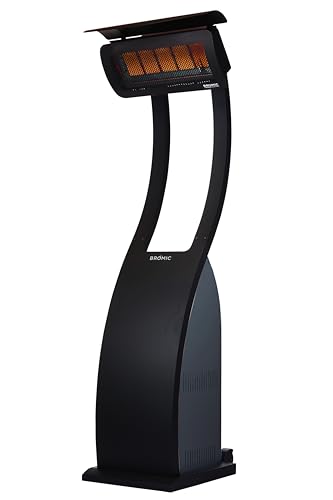
- Best movable party heat: Bromic Tungsten Smart-Heat Portable Propane (BH0510001) — Check on Amazon
- Best dining-zone heater: Bromic Platinum Smart-Heat Electric 4500W (BH3622000) — Check on Amazon
- Best main-zone system heater: Bromic Tungsten Smart-Heat Electric 6000W (BH0420033) — Check on Amazon
- Best restaurant-style gas zone: Sunpak S34 B TSH Two-Stage Gas Heater — Check on Amazon
- Best gathering-point flame: Hiland HLDS01-CGTHG Quartz Glass Tube Pyramid Heater — Check on Amazon
- Best second-zone workhorse: Infratech CD-6024 SS Dual Element 6000W — Check on Amazon
Read the full guide ↓
Disclosure: As an Amazon Associate, dailyhomedecorating.com earns from qualifying purchases. Links to Amazon on this page are affiliate links; they cost you nothing extra. Listing details such as price and availability change often, so check the current Amazon listing before you buy.
Entertaining is the hardest test a patio heater ever faces, and the best patio heater for outdoor entertaining under $1500 is the one that survives a party, not a product photograph. Guests arrive in ones and twos and cluster where the drinks are. Dinner seats twelve people in a row and holds them there for two hours. Somebody’s grandfather feels the cold at half the temperature everybody else does, somebody’s teenager is somehow hot, the cook is moving between kitchen and grill with both hands full, and the whole event drifts — from the dining table to the fire, from the fire to the quiet corner — as the night deepens. A heater that warms a static arrangement of furniture is easy to buy. A heating plan that keeps a moving crowd comfortable, zone by zone, course by course, without the host thinking about it, is what this budget is actually for.
That is why this guide is organised the way restaurants organise their terraces — and it is no accident that most of the equipment here is the same equipment restaurants use. Dining zones get fixed, dimmable radiant heat from above, because seated guests cannot move toward warmth and should never have to. Gathering points get a visible flame, because people organise themselves around fire without being asked. Flexible space gets one genuinely movable heater, because no floor plan survives contact with a real guest list. And everything runs on controls a host can operate with a glass in one hand: staged switches, dimmers and remotes, not apps that need updating at the worst moment. Every pick was verified model-by-model through the Amazon Creators API, checked against CPSC recall records, and assessed on manufacturer data; prices are deliberately not printed, so use the check-price links. Hosts planning the room itself will find the furniture half of the equation in Best Patio Dining Set Under $1500, and those with a smaller equipment budget can apply the same zoning logic via Best Patio Heater For Outdoor Entertaining Under $700.
Our short answer. Anchor the dining zone with the Bromic Platinum 4500W if the space is finished and design-led — its low-glow screen and dimming were practically invented for long dinners — or the Tungsten Electric 6000W where output and multi-zone control lead. Give the second zone — the bar, the sofa grouping, the dessert-and-coffee corner — an Infratech CD-6024, whose half/full staging is the simplest control a busy host will ever use. Keep the Bromic Tungsten Portable as the evening’s flexible asset, wheeled to wherever the crowd actually gathers. Add the Hiland pyramid where a visible flame turns a corner of the patio into a destination. And if the house has gas at the patio, the Sunpak S34 remains the professional’s dining heater, full stop.
In this guide
Quick Picks: The Best Patio Heater for Outdoor Entertaining Under $1500, by Party Job
| Party job | Pick | Why it stands out | Link |
|---|---|---|---|
| Heat that follows the crowd | Bromic Tungsten Portable (BH0510001) | 38,500 BTU aimed forward, wheeled, anti-tilt shut-off | Check on Amazon |
| Long dinners, low glow | Bromic Platinum 4500W (BH3622000) | Up to ~143 sq ft behind a tinted glass-ceramic screen, full dimming | Check on Amazon |
| Main zone, growing system | Bromic Tungsten Electric 6000W | Dual elements plus the deepest control ecosystem in the category | Check on Amazon |
| Restaurant-style dining on gas | Sunpak S34 B TSH | Two-stage 25,000/34,000 BTU from a hardwired switch | Check on Amazon |
| The gathering point | Hiland HLDS01-CGTHG Pyramid | Visible flame column, 40,000 BTU, warms its immediate circle | Check on Amazon |
| Second zone, simple control | Infratech CD-6024 SS | 6,000W dual element, half/full from a duplex switch | Check on Amazon |
How the picks were chosen
Entertaining imposed its own criteria on top of this site’s usual verification. First, control under load: a pick had to offer staged or dimmable output, because a party’s heat needs change by the hour and a heater with one setting will be wrong for most of the evening. Second, guest-proofing: equipment had to be fixed out of reach, or freestanding with genuine stability and safety hardware, because parties involve movement, children, dogs and the occasional guest who has enjoyed the evening thoroughly. Third, silence and subtlety where it matters: dining zones favour electric radiant, which makes no noise, produces no combustion smell and — in the Platinum’s case — barely glows, because the heater at a dinner party should be felt and not become the entertainment. Fourth, zoning economics: at this budget we looked for combinations — one premium zone plus one simpler zone, or one fixed zone plus one movable anchor — rather than a single flagship consuming everything.
The verification underneath is unchanged. Every linked model was matched exactly through the Amazon Creators API, with the API-returned title recorded in this article’s source notes; specifications come from manufacturer documentation; each brand family was screened against CPSC recall records, and recalled products are excluded from this site entirely, not reviewed with a warning. Where a popular entertaining model could not be matched with confidence, it does not appear. Prices move, so none are printed; the budget discussion in this guide is about allocation — how much of the system each job deserves — which stays true whatever the listings do this week.
The picks in detail
1. Bromic Tungsten Smart-Heat Portable (BH0510001) — heat that follows the crowd
Who it suits: Hosts whose parties refuse to stay where the furniture plan put them, and homes where one zone is fixed but the evening always grows a second, unplanned one.
Every experienced host knows the moment: the party migrates. Dinner ends, and suddenly eight people are standing by the garden wall with drinks, in the coldest corner of the property, having the best conversation of the night. The Tungsten Portable is the answer to that moment. Its ceramic head projects 38,500 BTU forward in a directed throw — rated by Bromic for areas up to about 215 square feet in favourable conditions — its head tilts to meet a standing group or a seated circle, and its wheeled, weighted body moves with a host’s decision rather than a contractor’s schedule. Output adjusts high to low on a simple dial. The safety specification suits crowds: an anti-tilt shut-off if it is knocked, flame-failure protection, and a heavy, stable stance that shrugs off the casual bumps of a busy patio.
Pros:
- Directional heat that can be repositioned mid-event, before it is lit and cool
- Published coverage and wind-tolerance figures; reliable in air movement up to about 8 mph
- Anti-tilt and flame-failure hardware for crowd environments
- No installation — the flexible asset in any system
Honest limitation: It must be positioned before the party, on level paving with full clearances, and never moved while lit or hot — “follows the crowd” means between acts, not during. It occupies real floor space in circulation areas, drinks propane at the highest rate per evening of any pick here, and needs covered storage between events.
Choose it if your gatherings migrate. Skip it if your entertaining is strictly seated at one table — fix the heat over the table instead. Check on Amazon
2. Bromic Platinum Smart-Heat Electric 4500W (BH3622000) — the dining-zone heater
Who it suits: Hosts whose centrepiece is the long outdoor dinner, in a finished space where a glowing industrial heater would fight the setting and the lighting design.
Dinner guests are a captive audience: they sit where the place settings are, for hours, in evening clothes chosen for looks rather than insulation. The Platinum 4500W serves them the way good lighting serves them — invisibly. Behind its tinted glass-ceramic screen it covers a rated area of up to about 143 square feet with minimal visible glow, so faces are lit by candles and string lights rather than by an orange element, and its Affinity dimming lets the host tune warmth course by course: up as the night cools and the main course lands, down when the room is full and body heat is doing half the work. Recess options set it into a finished ceiling entirely. It is the most civilised heater in this guide, and dinners are where civilisation pays.
Pros:
- Low-glow glass-ceramic face — warmth without the tanning-salon look
- Full dimming for course-by-course adjustment
- Large rated coverage for a full dining zone from one panel
- Recess and low-clearance mounting for finished ceilings
Honest limitation: It is a 240-volt, professionally installed appliance with Bromic’s floor clearances to respect — 72 inches wall-mounted, 96 inches ceiling-mounted — and its premium is paid for design as much as output. Over a rustic, open-air table it is more heater than the setting needs; the Tungsten or CD-6024 will serve the same diners with less ceremony.
Choose it if dinner is the main event and the room is designed. Skip it if the entertaining is casual and the budget needs a second zone more than it needs beauty. Check on Amazon
3. Bromic Tungsten Smart-Heat Electric 6000W (BH0420033) — the main-zone system heater
Who it suits: Hosts building a permanent entertaining system — multiple zones over time, one control language throughout — starting with the principal covered space.
If the Platinum is the dining room’s chandelier, the Tungsten 6000W is the house’s heating plant: a 56-inch, dual-element, 6,000-watt heater rated for up to about 160 square feet in protected conditions, with the category’s most developed controls. Elements switch independently for staging; dimmer controllers fine-tune; the master remote architecture can run several zones across a large patio, which means the host adjusts the whole evening’s climate from one handset at the table. Its mesh front holds performance in moving air — useful when the entertaining space is a pavilion open on three sides — and its mounting options cover walls, ceilings, poles and recesses.
Pros:
- Serious output with built-in half-power staging
- Multi-zone remote control — run the whole party’s heat from the table
- Wind-tough mesh front for open-sided structures
- The natural anchor for a system that grows
Honest limitation: The heater, its 25-amp 240-volt circuit and its controls can together consume most of this budget for a single zone, which is the right spend for a flagship space and the wrong one for a host who needs two zones now. Renters and low ceilings (its clearances are firm) should look elsewhere in this guide.
Choose it if one great zone now, more zones later, is the plan. Skip it if two zones today matter more than one perfect zone. Check on Amazon
4. Sunpak S34 B TSH — restaurant-style dining on gas
Who it suits: Homes with gas already at the patio and a covered dining structure — the exact conditions under which this heater built its reputation across the restaurant industry.
There is a reason so many restaurant terraces feel effortlessly warm: rows of slim overhead gas heaters, staged from a switch the staff can reach. The S34 is that heater, sized for a home dining zone: two stages — 25,000 BTU for the early evening, 34,000 when the night turns — from a hardwired, lighted wall switch, in a 48-inch body that mounts along the structure’s edge and angles down at the table (up to a 30-degree mounting angle). No remotes to lose, no app to pair, nothing for a guest to adjust: the host sets the stage, and the heater holds it for hours with the even, silent throw that makes diners forget the weather entirely.
Pros:
- Two genuine stages matched to an evening’s arc
- Dead-simple hardwired control — staff-proof and guest-proof
- No meaningful electrical load; ideal where the panel is busy
- Commercial pedigree measured in decades
Honest limitation: Professional-only installation with permits, a correctly sized gas line and the manufacturer’s clearance chart observed exactly, including the generous clearance below the unit. It burns gas, so it is for open-air structures only — never an enclosed porch or room — and carbon-monoxide discipline is part of ownership. If your dining space is enclosed, the Platinum is your pick.
Choose it if gas is present and dinner is served under a structure. Skip it if the space is enclosed or gas would need a new line run solely for this. Check on Amazon
5. Hiland HLDS01-CGTHG Pyramid — the gathering point
Who it suits: Hosts who understand that a party needs a hearth — a visible flame that tells guests where to drift — and who will let it do that job while the radiant system does the heating.
The pyramid’s flame column, rising through a quartz glass tube on a 40,000 BTU burner, is pure social engineering: put it at the edge of the terrace and a circle forms around it as reliably as furniture arranged by a designer. The chairs in that circle get real warmth on their facing sides, drinks get a destination between dinner and dessert, and the host gets the oldest entertaining technology there is — a fire to stand around. Variable output control lets you run it as backdrop or as beacon, and the wheeled base repositions it on paving between events. Paired with a genuine flame feature from Best Propane Fire Pit Under $1500, a patio can offer two kinds of firelight; on its own, the pyramid is the simpler single purchase.
Pros:
- A visible flame that organises a party around itself
- 40,000 BTU with variable control; real warmth for the inner circle
- Wheeled for repositioning on paved surfaces
- Commercial-grade build within its class
Honest limitation: As a heater it is the least efficient design here — much of its output rises with the flame — so it warms its circle, not your dining table across the patio. The glass tube is breakable and replaceable, the unit needs level paving and full clearances, and it is a live-flame propane appliance: open air only, attended only, and positioned where circulation will not brush past it.
Choose it if the party needs a hearth. Skip it if every dollar must buy measurable warmth — the radiant picks do that job better. Check on Amazon
6. Infratech CD-6024 SS — the second-zone workhorse
Who it suits: Hosts adding a dependable second zone — the sofa corner, the bar rail, the coffee-and-dessert spot — with the simplest control in the guide.
Second zones fail at parties when they are complicated. The CD-6024’s genius is a duplex switch: one element or both, half or full, a decision a host can make at a glance while carrying plates. The heater itself is the known quantity of this category — 61.25 inches of stainless, 6,000 watts across two quartz elements, and a published coverage table (about 11 by 11 feet at an 8-to-12-foot mount in average conditions, 10 by 10 in the cold) that lets you place the zone exactly. No glow management, no remote to find, no flame to supervise: the corner stays warm, and nobody thinks about it, which is the highest praise a second zone can earn.
Pros:
- Half/full staging from one obvious switch
- Published coverage data for exact zone planning
- Silent, flameless, nothing for guests to touch
- Stainless build with no moving parts
Honest limitation: It needs its own 240-volt circuit and an electrician, its clearances (18 inches on all sides, 36 inches in front) must fit the corner’s architecture, and the CD-Series cannot flush-mount. Its industrial honesty is a look some finished spaces will vote against — that is what the Platinum is for.
Choose it if zone two needs to be foolproof. Skip it if the second zone is occasional — give that job to the Portable. Check on Amazon
Comparison table
| Pick | Fuel | Output | Rated coverage | Entertaining strength |
|---|---|---|---|---|
| Bromic Tungsten Portable | Propane | 38,500 BTU | Up to ~215 sq ft (favourable) | Follows the crowd |
| Bromic Platinum 4500W | Electric 240V | 4,500W | Up to ~143 sq ft | Low-glow dining comfort |
| Bromic Tungsten Electric 6000W | Electric 240V | 6,000W dual | Up to ~160 sq ft (protected) | Multi-zone remote control |
| Sunpak S34 B TSH | Natural gas | 25,000 / 34,000 BTU | Zone per maker layout | Restaurant-style staged dining heat |
| Hiland Pyramid | Propane | 40,000 BTU | Immediate circle | The visible-flame gathering point |
| Infratech CD-6024 SS | Electric 240V | 6,000W dual | ~11 × 11 ft at 8–12 ft | Foolproof second zone |
The anatomy of a warm party: zoning an event
Think of the evening in acts, and give each act its heat. Arrival happens standing, near drinks, often at the patio’s edge: this is the Portable’s scene, aimed across the standing group, or the pyramid’s flame doing the welcoming. Dinner is the fixed act: seated guests, two hours, no freedom to move — this act belongs to the fixed dining zone, dimmable or staged, started before guests sit down so the furniture itself is warm. The drift follows: coffee, dessert, the sofa corner, the fire. The second zone earns its existence here, switched on as the table empties so the warmth seems to follow the guests by itself. The late hours shrink the party to its hardiest members around one heat source; turn everything else off and let the last zone — flame or radiant — hold the night. Hosts who plan heat in acts stop hearing the two sentences that haunt outdoor parties: “shall we go in?” at nine, and “I didn’t realise how cold it had got” at the door.
One zone deserves a special note because hosts forget it: the working zone. Somebody spends the evening at the grill, the bar rail or the serving table, moving more than the guests and dressed for the kitchen rather than the night. A system that warms every seat and leaves the cook in the cold has failed its most important guest. The Slimline format in our wider guides exists for exactly these strips of working space; within this guide, the CD-6024’s zone or the Portable’s throw can be assigned to the station where the host actually stands. When you rehearse the evening, rehearse it from the grill as well as from the table — the party’s warmth is only as good as its coldest essential person.
Two supporting details decide whether the plan works. The first is pre-heating: radiant systems warm people instantly but furniture slowly, so dining zones should run for a while before guests sit — warm chair frames and a warm table edge change the first ten minutes of dinner completely. The second is the host’s control position: switches and remotes live where the host lives — by the kitchen door or at the table — because a control that requires a trip across a cold patio will simply not be used, and an unused dimmer is just an expensive switch. Set the lighting to match the warmth and the illusion is complete; the layered look in Best Outdoor String Lights Under $150 is the usual finishing touch.
How to choose: allocating this budget across an entertaining space
Fund the dining zone first. It is the longest, most static, most judged part of any event. A premium dimmable or two-stage heater over the table is the last place to economise.
Then buy flexibility. One movable anchor covers every act the fixed zones miss. Hosts who entertain in varied formats get more evenings out of a Portable than out of a second fixed zone.
Add the second fixed zone only when the pattern is proven. If every party ends at the sofa corner, fix heat there. If parties end in different places, keep the money in the movable asset.
Let the house choose the fuels. Panel capacity, an existing gas line and the structure over the table will narrow this list faster than taste will. Get the electrician’s and gas fitter’s quotes against a written zoning plan before ordering anything.
Guest-proof the layout. Circulation paths, chair pull-out space, children, dogs, drinks in hands: walk the plan as a guest at midnight, not as a designer at noon, and move anything hot, tall or flaming out of the routes people actually take.
Rehearse the evening once, alone. Before the first real party, run the system through a private evening: light everything, sit in every seat, stand where guests will stand, adjust every control from the host’s position. You will find the cold chair, the switch in the wrong place, the zone that needs ten more minutes of pre-heat — and you will find them when fixing them is a note on a list rather than an apology at a table. Professional terraces commission their systems this way; a home host can borrow the habit for the price of one quiet evening, and it is the cheapest performance upgrade in this entire guide.
Safety: the section to read twice
Fire and clearances. Parties rearrange furniture, which means clearances must be re-checked after the party layout is set, not before: cushions migrate, extra chairs appear, decorations go up. Every pick’s published clearances — to ceilings, walls, fabric, foliage and guests’ heads — are hard limits. Keep flame appliances away from decorations, paper goods and anything that can blow into them, and never leave any gas or propane heater running unattended, at a party above all.
Carbon monoxide. Gas and propane picks are open-air appliances. A marquee with closed sides, a garage pressed into service, a porch with its screens and curtains drawn — each converts an outdoor heater into an indoor poisoning risk. If the space can be closed, combustion heat cannot be used in it; the electric picks exist for exactly those structures. Know the symptoms of CO exposure and treat a roomful of headaches as the emergency it is.
Tip-over and crowds. Freestanding heaters at events belong on level paving, outside circulation routes, with anti-tilt protection functional — the Bromic Portable carries it — and with a clear territory that tipsy navigation cannot clip. Position and light them before guests arrive; never carry or wheel a lit or hot heater through a crowd; and keep cylinders upright, connected as directed, and away from ignition sources.
Children and pets. Fixed overhead heat is the family-proof default: nothing hot within reach, nothing to pull over. Where flame or freestanding units are used, an adult’s attention is part of the appliance — assign it, the way you would assign someone to watch a pool.
Installation and recalls. Hardwired and gas equipment goes in by licensed trades, with permits where required. Check any model against the CPSC recall database before purchase, and never press a recalled heater into service for “one last party”.
Common mistakes hosts make
One heater, centre of the patio, whole party. It warms a ring, blocks circulation and leaves both the table and the corners cold. Zones beat centrepieces.
Turning the heat on when guests complain. By then the furniture is cold and the evening has a chill in its story. Pre-heat the dining zone; stage down later.
Controls nobody can find. An app on the host’s phone, a remote in a drawer, a switch behind the bar fridge. If the host cannot adjust heat mid-conversation, the system is decorative.
Flame in the walkway. The pyramid belongs at the edge of the gathering, never on the route between kitchen and table that the host walks forty times a night with hot dishes.
Forgetting the quiet guests. The oldest guest and the youngest set the comfort requirement. Seat them in the heart of the dining zone, not at its windy end — placement is hospitality.
Buying for the party you wish you hosted. A system sized for the annual twenty-person event will be wrong for the forty ordinary evenings around it. Build for the typical gathering, and let the rare big night borrow the movable anchor and a layer of blankets like every good party before it.
Enclosing the space to “keep the heat in” around gas heaters. The most dangerous improvisation in this category. Screens plus combustion equals a CO incident looking for an evening. Electric only, once a space can close.
The sensory layer: noise, glow and smell at the table
Warmth is only one of the things a heater adds to a party; the others decide whether guests describe the evening as cosy or as catered-by-machinery. Noise is the first. Electric radiant is silent in the absolute sense — no fan, no ignition clicks, no burner roar — which is why dining zones default to it in this guide: conversation at a dinner table runs at a level where even a modest appliance hum becomes a texture everyone notices by the second hour. Gas radiant is nearly as quiet in operation, its sounds confined to ignition and the faint life of a burner behind a grille. Freestanding propane sits a step behind, and any heater with a fan belongs in a workshop, not at a dinner.
Glow is the second. An exposed element at full output is a light source, and it will compete with everything the host has done with candles and string lights. Sometimes that competition is welcome — a glowing heater over a casual gathering reads as hearth-like and honest. At a designed dinner it is a small vandalism, which is precisely the problem the Platinum’s tinted glass-ceramic screen exists to solve: the heat arrives, the orange does not. The third sense is smell. Properly adjusted gas appliances produce little odour in open air, but ignition moments and wind-blown exhaust are real, and they belong downwind of the food and the diners — one more planning detail that separates a system from an appliance: the heater’s position is chosen with the evening’s prevailing breeze in mind, not merely the furniture’s convenience. Attend to all three senses and the heating disappears into the evening, which is the entire ambition: guests should remember being warm, never remember the heater.
Three ways to allocate the budget
The dining-house allocation. One premium fixed zone over the table — Platinum 4500W for a finished room, Sunpak S34 where gas serves the structure — installed properly with its control, and nothing else this year. This is the right shape for households whose entertaining is ninety percent dinners: the money concentrates where guests sit longest, the installation is done once and done well, and the system’s second act can wait for a future budget. The discipline it requires is resisting the urge to spread the same money across three mediocre zones that would each disappoint in a different way.
The two-zone allocation. A strong fixed zone — the CD-6024 is the value engine here, or the Tungsten 6000W where controls matter — plus the Bromic Portable as the flexible asset, with installation scoped to the single circuit the fixed zone needs. This is the allocation we would choose for the widest range of real households: one permanent zone that is always ready, one movable source that follows occasions, and a control story a host can run without thinking. It also degrades gracefully — if the Portable is away being borrowed by family on the night of a small dinner, the fixed zone simply hosts a smaller, warmer party.
The gathering allocation. The Hiland pyramid as the patio’s hearth, plus a Slimline-class or compact fixed heater over the seating nearest the house, plus the unglamorous remainder spent on the things that make gatherings work — seating that belongs inside the warm zones, lighting that flatters them, storage that keeps cushions dry between events. This shape suits households whose parties are standing, drifting, fireside affairs rather than seated dinners, and it is honest about its trade: measurable warmth is traded, knowingly, for atmosphere and flexibility. What it must never trade away is the safety discipline — flame at the edge, clearances after the furniture is set, an adult assigned to the fire.
Party day: a host’s timeline with a heating system
Morning. Walk the zones. Check that clearances are still clearances — parties have a way of inheriting last weekend’s stored chairs and the week’s deliveries. For propane equipment, lift the cylinder: a light tank discovered at noon is a errand; discovered at eight in the evening, it is a story you will tell with feeling. Confirm the freestanding anchor’s position on its paving, out of the routes the day will create.
An hour before guests. Set the party layout first — table, chairs, the drift corner — then re-check every clearance against the layout as built, not as planned. Switch the dining zone on at a staging that suits the hour; radiant heat is instant on skin but the furniture’s warmth is the difference between a patio that feels ready and one that feels defended. Position and light the flame or freestanding pieces now, while the patio is empty and the host is calm.
Arrival and the first hour. Guests cluster; watch where. If the crowd invents a gathering point you did not plan, that is information for next time — and, between acts and only when equipment is cool and unlit, a reason to reposition the movable anchor for the later acts. Keep dining heat steady; this is not the hour for adjustments, it is the hour for drinks.
Dinner. The dining zone does its finest work. Stage down a notch once twelve warm bodies and hot food join the equation; stage up as the courses thin and the night deepens. The host’s seat should be within reach of the control — plan the place cards accordingly, and put the guest who feels the cold in the zone’s heart, not its edge.
The drift. As the table empties, bring the second zone up before the first guests reach it, so warmth seems to precede them. This small piece of stagecraft — heat that is already there when people arrive somewhere — is most of what “effortless” entertaining is made of.
Late. Consolidate. Zones off, one source holding the last circle, flame supervised or radiant dimmed low. When the evening ends, heaters off and verified off, cylinders closed at the valve, controls returned to their resting state, and the patio left in a clean, safe condition tomorrow’s host — also you, possibly with a headache — will be quietly grateful for.
Final recommendation
Build the evening in layers. Fix the dining zone with the Platinum 4500W where design leads, the Tungsten 6000W where a growing system leads, or the Sunpak S34 where gas and a structure make it the professional’s obvious answer. Hold the Bromic Portable as the asset that rescues every unplanned migration. Add the CD-6024 when the second corner has proven it deserves permanence, and let the Hiland pyramid do the ancient work of giving a party a hearth. That allocation — premium where guests sit still, flexibility where they wander, flame where they gather — is how a $1500 budget turns into the thing guests actually remember: an evening that never once felt cold. It is worth being clear about what has been bought, because it is not really appliances. It is the second hour of dinner, the conversation that moves to the fire instead of the door, the November birthday held outside because it could be. Hosts do not entertain to demonstrate equipment; they entertain to keep people together a little longer, in the place they love, in the season they would otherwise lose. A heating system planned in zones, controlled without fuss and run with the safety discipline this guide insists on is simply how that wish becomes a repeatable fact of the house — party after party, year after year, long after the specific models in this guide have been succeeded by their newer, shinier, marginally more efficient descendants on the wider consumer market of today and tomorrow. For the broader hardware picture beyond the entertaining brief, Best Outdoor Heater For Outdoor Entertaining Under $1500 is the companion read.
FAQ
How many heaters does a party of twelve need? Usually two zones: the dining table (one premium fixed heater) and wherever people gather before and after (a second fixed zone or the movable Portable). Headcount matters less than geography — twelve people in two places need two zones; twenty at one long table may need only a longer dining zone. The failure mode to avoid is the reverse calculation, in which a host divides guests by a heater’s headline coverage figure and concludes that one unit covers a crowd spread across three areas. Coverage describes a contiguous zone in front of one appliance; a party is a map, and the map decides.
Electric or gas for a dining zone? Electric dims more finely and adds no combustion smell near food, which is why the Platinum leads for designed spaces. Gas stages coarsely but powerfully and suits homes with gas in place. Both are silent enough; choose on infrastructure and enclosure, not ideology.
When should I turn the heaters on? Before guests sit. Run the dining zone while you set the table so furniture and surfaces are warm, then stage down as body heat and cooking join in. Freestanding units are positioned and lit before arrival, never moved mid-party.
Can guests adjust the heat themselves? They should not need to — and with gas or flame appliances, they should not be able to. Give the host obvious controls in the host’s position, and let hospitality do the rest. If a guest is cold, the fix is a zone adjustment or a seat swap, not a tutorial. There is a social reason underneath the practical one: a party where guests are hunting for heater controls is a party whose host has been visibly out-planned by the weather, and the entire point of a system at this level is that nobody — guest or host — has to think about temperature at all.
Is a flame tower safe around children at a party? It demands the same supervision model as a pool or a fire pit: a defined position out of circulation, an attentive adult, and no assumption that a barrier of chairs is a safety device. Households that cannot staff that attention should let the electric system carry the evening and skip live flame. The same logic applies to dogs with more enthusiasm than spatial awareness, and to any guest whose balance has been generously assisted by the evening’s hospitality: the flame’s territory is planned for the least steady person who will walk past it, not the most.
Can I run two zones on one circuit? That is an electrician’s calculation, not a host’s hope: two 6,000-watt heaters are a serious combined load, and most entertaining systems give each fixed zone its own properly sized circuit, with the control architecture — not the wiring — providing the single point of command. Raise it at the quoting stage; it is a cheap conversation before installation and an expensive one after.
What is the single best upgrade for a patio that already has one heater? Usually control, not output. A dimmer or staged switch on an existing dining-zone heater changes more evenings than a second heater would, because most discomfort at parties is a mismatch of degree, not of kind. After control, the next upgrade is a second zone where the party actually drifts.
What if rain moves the party under cover mid-evening? Electric zones under the cover keep working within their ratings. Propane and gas units must not be dragged into enclosed or semi-enclosed spaces to follow the crowd — if the cover closes in, combustion heat is done for the night, and the party continues on the electric zones.


