Where to buy
Check the latest price, availability and delivery on Amazon. Orders are placed on Amazon. We may earn a commission from qualifying purchases.
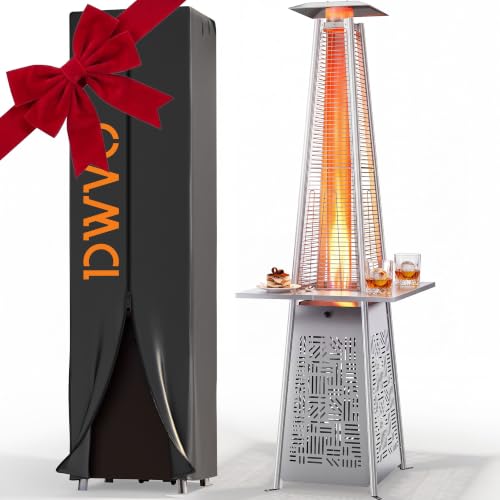
- Best party hub: DWVO 48,000 BTU Pyramid Patio Heater with Wraparound Table — Check on Amazon
- Best for a permanent entertaining terrace: Bromic Tungsten Smart-Heat 4000W Electric Patio Heater — Check on Amazon
- Best dinner-party warmth: Golden Flame XL-Series Outdoor Propane Patio Heater, 46,000 BTU — Check on Amazon
- Best visual centerpiece: AZ Patio Pyramid Glass Tube Propane Patio Heater, Stainless Steel — Check on Amazon
- Best for large guest counts: Pamapic 89-Inch Pyramid Patio Heater, Hammered Bronze — Check on Amazon
- Best second station for events: Hykolity 48,000 BTU Pyramid Patio Heater, Bronze — Check on Amazon
Read the full guide ↓
Disclosure: As an Amazon Associate, dailyhomedecorating.com earns from qualifying purchases. Links to Amazon on this page are affiliate links; they cost you nothing extra. Listing details such as price and availability change often, so check the current Amazon listing before you buy.
Shopping for the best patio heater for outdoor entertaining under $700 is really shopping for a party that does not end at sunset. Every host knows the moment: dinner is done, the light is going, the temperature drops the first five degrees — and the guests begin the slow drift indoors, not because the evening is over but because the patio has stopped being comfortable. A heater bought for entertaining is judged on whether that moment never arrives. That changes the criteria in ways a solo homeowner never considers. Output matters, but so does where guests naturally stand. Reliability matters more than at any other time, because a heater that refuses to light does so in front of an audience. Safety matters most of all, because your guests did not read the manual, some of them have had a glass of wine, a few are wearing flowing sleeves, and at least one child is treating your patio as a racetrack. This guide reviews the six verified premium heaters from our main Best Patio Heater Under $700 roundup through the host’s lens: event flow, guest-proofing, warm-up timing, station placement, and the morning-after realities of covers, tanks and storage.
The entertaining tier also reframes the money. At $700, a host is not buying a single appliance so much as a capability: the ability to run one excellent heat station for an intimate dinner, or two coordinated stations for a twenty-person party, or a permanent electric installation over the terrace where every event happens. Restaurants — the professionals of outdoor entertaining — converged long ago on the answers this guide reaches: mushroom heaters in rows over seated dining, because reflectors push heat down onto guests; infrared panels over fixed terraces, because they are instant and silent; and flame towers where people stand and circulate, because visible fire is social gravity. Your patio is not a restaurant, but your guests’ comfort obeys the same physics, and the picks below are organized by the job each one does at an event rather than by specification order.
Start with the honest constraints, because entertaining amplifies all of them. A freestanding propane heater warms a circle of roughly fifteen feet in calm air; a party of sixteen spread across a patio and lawn is therefore a two-station event, and pretending otherwise leaves half your guests performing the indoor drift. Wind is the host’s enemy in a way it never is for a quiet couple — a breezy evening that merely cools a private patio will dismantle an event, because guests in party clothes have no tolerance margin. And the safety obligations scale with headcount: clearances must survive a crowded patio’s furniture creep, the tank must outlast the event or be swapped before it, and one sober adult must own the heater from lighting to shutdown. The reviews that follow assume you will run your events this way; the how-to-choose section turns it into a checklist; and the safety section is written for the crowded case, not the empty patio.
Our short answer for hosts: standing parties belong around the DWVO, whose wraparound table turns a 48,000 BTU pyramid into the event’s bar, hearth and landmark in one object. Seated dinners belong under the Golden Flame XL’s reflector or a Bromic panel — downward heat for people who will not move for two hours. Large, spread-out events want the Pamapic’s full output at the main station and the Hykolity as the second station by the drinks or the fire-side chairs. And the AZ Patio pyramid remains the certified centerpiece for hosts who want the flame column’s theater with a parts ecosystem behind it. Buy for the event you actually host most — the guide will talk you out of the rest.
In this guide
Quick Picks for Entertaining
| Pick | Type | Output | Event job |
|---|---|---|---|
| DWVO Pyramid with Table | Propane pyramid + table ring | 48,000 BTU | Standing parties — the gathering point itself |
| Bromic Tungsten 4000W | Electric infrared, mounted | 4,000 W, ~130 sq ft rated | Fixed terrace events — instant, silent, no fuel logistics |
| Golden Flame XL-Series | Propane mushroom | 46,000 BTU | Seated dinners — heat pushed down onto guests |
| AZ Patio Pyramid | Propane pyramid, stainless | 40,000 BTU | Certified flame centerpiece |
| Pamapic 89-Inch Pyramid | Propane pyramid, bronze | 48,000 BTU | Main station for large guest counts |
| Hykolity Pyramid | Propane pyramid, bronze | 48,000 BTU | Second station — drinks, dessert, fire-side chairs |
Two planning numbers to hold while you read: a full 20 lb tank gives a 48,000 BTU station roughly nine hours at full output — one long event, with margin — and every station needs its full clearance circle kept empty of chairs, gifts, coolers and coats for the entire event, not just at lighting time.
How We Chose These Heaters for Entertaining
The pool is the verified premium set from our main roundup: specifications from manufacturer manuals and certification listings, every linked model cross-checked against Amazon’s catalog data for this site, and every brand screened against current CPSC recall notices — recalled products are excluded entirely and never named as picks, a rule that matters doubly when the users are guests. Entertaining then applied five filters of its own.
Guest-proof safety. Anti-tilt or tip-over shut-off on every gas pick, flame-failure protection where the maker documents it, and designs whose hot surfaces sit where a crowd’s natural movement will not press against them. We also weighed how a pick behaves at the event’s edges: children, pets, guests in long coats, and the late-evening hour when attention thins.
Event reliability. Ignition that works the first time, in front of people, with cold hands. Tanks that swap quickly through a side door. Controls a designated sober host can run without a manual. A heater that needs coaxing is a private annoyance and a public failure.
Social geometry. Each pick had to organize people well: a table that gathers a standing crowd into the warm circle, a reflector that covers a dining table evenly, a flame column that marks the event’s center, a panel that warms a terrace without consuming its floor. Entertaining is choreography; the heater is a stage piece.
Warm-up and wind behavior. Events start on time. The Bromic’s near-instant infrared and the mushrooms’ fast downward warmth scored against towers that take minutes to establish their column; and every pick was judged on how its heat survives the breezy evening that hosts cannot reschedule.
Photogenic warmth. It is not a frivolous filter: events are photographed, and a heater that reads as a fixture — a bronze tower’s flame, a panel’s clean line — becomes part of the setting guests remember, while a heater that reads as a utility becomes the thing cropped out. Hosts who care about the look of their events are not being shallow; they are describing how gatherings are actually remembered, and we let it break ties.
Morning-after practicality. Covers included or available, wheels for the trip back to storage, finishes that forgive a season of events. The best party heater is the one that is clean, covered and ready when the next invitation goes out.
The Best Patio Heater for Outdoor Entertaining Under $700, Reviewed for Hosts
1. DWVO 48,000 BTU Pyramid with Wraparound Table — the party hub
Who it suits: Hosts whose events stand up: birthdays, game nights, holiday drinks, neighborhood gatherings where guests circulate and the worst outcome is a crowd that fragments into cold corners.
DWVO’s 89-inch pyramid runs a rated 48,000 BTU through a quartz flame tube with adjustable flame control, and rings the tower with a table at standing height. That table is the most host-aware design decision in this guide. Standing guests choose where to be, and they choose warmth with a surface: the table gives them both at the same coordinates, so the crowd self-organizes inside the heater’s effective circle instead of drifting to its edge. Maker-specified triple safety protection, wheels and a PVC cover are included, and the silver finish photographs like an event fixture rather than a utility. Set it at the patio’s social center — not against a wall, where half its circle is wasted — with its full clearances marked by furniture placement before guests arrive.
Pros:
- The table turns heat into a destination: guests gather where the warmth actually is.
- 48,000 BTU with adjustable flame for the evening’s early and late phases.
- Triple safety protection specified; wheels and cover included for event-to-event storage.
- Doubles as the drinks station, reducing trips and furniture across the patio.
Honest limitation: A table around a hot appliance collects the evening’s hazards — paper napkins, scarves, a guest’s leaning elbow, a child’s reach. This pick demands an attentive host: nothing stored on the table near the tube, clearance enforced kindly but constantly, and shutdown the moment supervision ends. The included PVC cover is light-duty; frequent hosts in harsh climates should upgrade it.
Choose this if your events are standing and social. Skip it if your gatherings are seated dinners, or if no adult will own the heater for the evening. DWVO 48,000 BTU Pyramid Patio Heater — Check on Amazon
2. Bromic Tungsten Smart-Heat 4000W — the terrace that is always ready
Who it suits: Hosts whose events happen in one fixed place — a covered terrace, a pergola dining area, an outdoor kitchen — and who want heat to be a switch the host flips while holding a tray, not a ceremony at the tank.
The Bromic is a 44-inch stainless infrared panel, hardwired to a 220–240V circuit at 16.6 amps, with dual separately controlled elements, a rated heat area of about 130 square feet, IPX4 weather rating and ETL/cETL certification. For entertaining, its virtues are operational: instant heat with no warm-up, no flame for wind to lean on, no tank to gauge or swap mid-event, no combustion noise under conversation, and no floor footprint in a crowded space. Guests experience it as the terrace simply being warm. Bromic specifies a minimum 3-foot side clearance from combustibles and defined floor clearances for wall and ceiling mounts — a pergola installation an electrician verifies once, and the host never thinks about again.
Pros:
- Instant, silent, wind-proof heat — the lowest-effort event heating in this guide.
- No fuel logistics: no tanks, no mid-party swaps, no flame supervision.
- Dual elements let the host tune the terrace as the evening cools.
- Overhead mounting keeps crowded floor space completely clear.
Honest limitation: It warms its terrace and nothing else — the lawn games and the fire-side chairs are outside its beam, so a spread-out event still needs a portable station. Installation is a real project with an electrician’s invoice, and the heater is a permanent fixture of the house, which is either the point or the problem depending on your plans.
Choose this if your entertaining has a permanent home base. Skip it if your events migrate around the yard or you may move within a few years. Bromic Tungsten Smart-Heat 4000W — Check on Amazon
3. Golden Flame XL-Series 46,000 BTU — dinner-party warmth
Who it suits: Hosts of seated dinners, where eight guests will occupy the same chairs for two hours and judge the evening by whether their shoulders stayed warm through dessert.
Golden Flame’s XL-Series is a classic mushroom rated at 46,000 BTU, with anti-tilt safety shut-off, variable control and wheels, in a matte finish. The format is the restaurant industry’s answer to seated outdoor dining for a reason: the wide reflector turns rising heat downward and outward at head height, covering a dining table’s worth of seated guests more evenly than any tower. There is no glass tube to guard from serving platters and no flame theater to compete with the table’s own candles — the ambiance is warmth itself, which at a dinner is the correct ambiance. Place it at the table’s open side with full clearances, so the circle’s useful half covers the diners.
Pros:
- 46,000 BTU delivered downward — the most even seated warmth of the propane picks.
- Simple, sturdy format; no fragile tube around food service.
- Anti-tilt shut-off fitted; wheels for pre-party positioning.
- Variable control lets the host back the heat off as the evening and the wine warm up.
Honest limitation: It serves its circle and only its circle — guests who leave the table for the lawn leave the heat. The reflector is also a wind sail, so exposed patios need ballast and lee placement, and the host must resist the universal temptation to slide it closer to the table than clearances allow.
Choose this if dinner parties are your event. Skip it if your parties stand, circulate and graze. Golden Flame XL-Series Patio Heater — Check on Amazon
4. AZ Patio Pyramid Glass Tube — the certified centerpiece
Who it suits: Hosts who entertain visually — the flame column as the event’s hearth and photograph backdrop — and who keep equipment long enough to value a parts catalog.
From the Hiland family, this CSA-certified stainless pyramid runs a rated 40,000 BTU through a single-piece quartz tube, standing about 91 inches. At an event, its job is gravity: guests orient to it, gather near it, and read the party’s center from across the yard. Maker-family guidance asks roughly 24 inches of clearance above and 36 inches to the sides, easily honored in open sky and worth honoring exactly when chairs migrate. The category’s deepest stock of replacement tubes and burner parts stands behind it — the heater a host can still be running, and repairing, at the tenth annual party.
Pros:
- CSA-certified design with published clearances and unmatched parts availability.
- The flame column is the event’s landmark and gathering cue.
- Stainless finish survives seasons of outdoor event storage.
- 40,000 BTU honestly matched to the tower format.
Honest limitation: Ambiance heat is gentler than reflector heat — guests at the circle’s edge get the view more than the warmth, so seating plans should keep the inner circle for the cold-sensitive. Assembly and the glass tube also demand a careful owner between events; a tower stored carelessly is a tower that misses the next party.
Choose this if your events have a center and you want it lit. Skip it if your guests are spread across multiple zones — one centerpiece cannot be two stations. AZ Patio Pyramid Glass Tube Heater — Check on Amazon
5. Pamapic 89-Inch Pyramid — the main station for big guest counts
Who it suits: Hosts of larger gatherings — the graduation party, the holiday open house — where the main station must hold a wide circle and the guest count runs well past a dinner table.
Pamapic’s tower is rated at 48,000 BTU, stands 89 inches on a 23-by-23-inch footprint at about 61.7 pounds, and its manual documents tip-over shut-off beyond 45 degrees plus flameout protection. Wheels and a fitted cover are included, which for an event heater means the station can be rolled out, lit, and — the next morning — rolled away and covered in minutes. The hammered bronze finish hides the fingerprints and dust of frequent use. Around a big gathering, plan the furniture inside its inner circle and let the flame’s light serve the outer ring; guests rotate through warmth naturally when the station is placed at the event’s crossroads rather than its corner.
Pros:
- 48,000 BTU top-class output for the widest single-station circle here.
- Documented tip-over and flameout protection — the guest-proofing baseline.
- Wheels and cover included: out for the party, away by noon.
- Bronze finish forgives heavy event use.
Honest limitation: Even 48,000 BTU is one station. Past roughly a dozen standing guests or a second seating area, this heater needs a partner — see the next pick — and no honest guide will let a host pretend otherwise. It is also a tall glass object at events with flying objects; site it out of the games corridor.
Choose this if your main station serves the biggest crowds. Skip it if your events are intimate — its scale will dwarf a four-person patio and its budget is better spent on the dinner-focused picks. Pamapic 89-Inch Pyramid Patio Heater — Check on Amazon
6. Hykolity 48,000 BTU Pyramid — the second station
Who it suits: Hosts completing an event layout: the main station exists, and the drinks table, the dessert chairs or the fire-side bench across the patio needs its own heat so guests use the whole space you prepared.
The Hykolity (WHC-0206) matches the class at 48,000 BTU and about 90 inches, with a manual stating conformity to CSA/ANSI Z83.26-2020/CSA 2.37-2020, anti-tilt shut-off past 45 degrees, variable output, detachable wheels and a waterproof cover included. Expect roughly eight to ten hours per full tank at high output — comfortably more than one event. As a second station its virtues are logistical: matched output keeps both zones feeling intentional, the side access door speeds the pre-party tank check, and the included cover protects the unit that lives farthest from the house. Two stations also give the host redundancy money cannot improvise at 7 p.m.: if one unit sulks, the event contracts gracefully to the other.
Pros:
- Full 48,000 BTU second station with standards-conforming documentation.
- Cover and wheels included — event-ready storage in one box.
- Variable output for the late-evening low phase.
- Redundancy: two stations mean no single point of party failure.
Honest limitation: Two stations double the host’s duties: two tanks to verify, two clearance circles to defend, two shutdowns at the end of a long night. A two-heater event needs the checklist in the next section, not improvisation — and a host who will not run the checklist should buy one station and a smaller guest list.
Choose this if your events genuinely span two zones. Skip it if one station covers your space — put the savings into the seating and lighting your guests will also remember. Hykolity 48,000 BTU Pyramid Patio Heater — Check on Amazon
Comparison Table
| Heater | Fuel | Output | Best event | Host’s note |
|---|---|---|---|---|
| DWVO Pyramid + Table | Propane | 48,000 BTU | Standing parties | Gathers the crowd into the heat |
| Bromic Tungsten 4000W | Electric 240V | 4,000 W, ~130 sq ft | Fixed terrace events | Zero fuel logistics, instant on |
| Golden Flame XL | Propane | 46,000 BTU | Seated dinners | Heat pushed down onto guests |
| AZ Patio Pyramid | Propane | 40,000 BTU | Centerpiece gatherings | Certified; parts for years of parties |
| Pamapic Pyramid | Propane | 48,000 BTU | Large guest counts | Widest single-station circle |
| Hykolity Pyramid | Propane | 48,000 BTU | Second station | Cover included; event redundancy |
How to Choose: Plan the Event, Then the Heater
Count guests, then stations. Up to six seated guests: one station, correctly placed. Eight to fourteen, or any event with two seating areas: two stations. More than that, or a yard with a lawn program: two stations plus a plan for the far zone to be a pass-through rather than a destination — or accept that the far zone is where the teenagers in hoodies will be perfectly happy anyway. The Best Patio Heater Under $500 guide covers second-station options at the tier below; pairing one premium station with one mid-tier station is the classic host’s allocation of this budget.
Match format to format. Seated dinner → mushroom or mounted panel. Standing reception → table pyramid or flame tower at the center. Mixed event → one of each, dinner under the reflector and drinks around the tower. The format error — a tower straining to warm a dinner table, a mushroom ignored at a standing party’s edge — is the commonest way hosts waste this tier.
Run the pre-party timeline. The day before: tanks checked and a filled spare on hand, covers off, pads swept, clearances measured with furniture in event position. One hour before: heaters lit and stabilized — towers lit early so their columns are established and any sulking igniter is discovered while there is still time. During: one named host owns each heater. After the last guest: shutdown at the tank, cooling undisturbed, covers on in the morning. Write it once; reuse it forever.
Dress the rest of the event to the same standard. Heat is one of three comfort systems at an outdoor event; the others are seating and light. The companion guides to the Best Patio Furniture Set For Outdoor Entertaining Under $700, the Best Outdoor String Lights For Outdoor Entertaining Under $700 and the Best Outdoor Rug For Outdoor Entertaining Under $700 are written at this tier for hosts building the whole picture — and a gazebo at the same tier adds the wind-breaking, rain-insuring structure that makes heaters of every kind work better beneath and beside it.
Consider the rental comparison honestly. Party-rental heaters exist and suit the once-a-year mega-event. Owning wins when you host monthly or more, when your events are spontaneous, and when the same heater serves your family’s ordinary evenings between parties — which, for every pick in this guide, it does.
The Host’s Weather Playbook
Entertaining is the one use case where the weather forecast is a planning document, so read it like one. Three days out, note the evening low and, more importantly, the wind: a calm 45-degree evening is a one-station event at moderate settings, while a breezy 50-degree evening can demand both stations at full output and still reward the host who moved the event’s center into the lee of the house. The day before, let the forecast finalize the layout — stations positioned for the expected wind direction, seating tightened into the circles the wind will actually allow, and the far zone quietly decommissioned if gusts will own it. There is no shame in a smaller, warmer party footprint; guests remember being comfortable, not the square footage you defended.
Rain is the bright line. Freestanding propane heaters do not run in rain — not under an umbrella held by a helpful guest, not “just for the toast.” If rain is likely, the event plan is the covered terrace with its mounted electric heat, or the party moves its center indoors with the patio as a fair-weather annex. Hosts who internalize that line stop fighting the forecast and start using it: light the stations for the dry hours, enjoy them fully, and shut down without negotiation when the weather turns. The heaters will be covered in the morning, the guests will remember a host who had a plan, and nobody will remember the rain as anything but a story.
Cold snaps below the design range deserve the same realism. Every heater in this guide extends a season; none of them repeals January in Minnesota. When the forecast drops into territory where even two stations only take the edge off, the premium move is honesty plus layers: move the event earlier, shorten the outdoor act, provide the throws basket, and let the heaters do their real job — making a crisp evening pleasant — rather than demanding they simulate July.
The Host’s Kit: What Sits Behind a Good Event Heater
The heater is the headline; the kit is the show. Experienced hosts keep a small, permanent event box for each station, and its contents explain most of the difference between a heater that performs and one that embarrasses. A filled spare tank, stored legally outdoors, with its cap and a chalk mark showing its fill date. A long-handled lighter or spare igniter batteries where the model uses them, because the piezo that fails does so at 7 p.m. A headlamp — the unglamorous hero of every tank check and late shutdown. A printed copy of the station checklist from this guide’s how-to-choose section, laminated if the box lives outdoors. The cover, folded where it belongs rather than stuffed where it fits. And the maker’s manual, in a zip bag, in the same box, because the troubleshooting page you need is never the one you can find online in the dark.
Two habits complete the kit. First, the midweek test: in event season, light each station for two minutes every couple of weeks even without a party, so ignition problems announce themselves on a Tuesday rather than a Saturday. Second, the guest-communication habit: a single sentence at the evening’s start — “the heaters are hot, kids stay with an adult near them, and I’m your person for anything heater-related” — delivered with the same warmth as the pool rules. Hosts report that sentence, more than any hardware, is what keeps an event’s safety record clean, because it converts a dozen strangers into people who know where the boundaries are. Premium equipment plus these small systems is what the $700 tier is actually for: not a hotter flame, but an evening that runs itself.
Safety at Events: Fire, Carbon Monoxide, Clearances and Tip-Over
The host owns the heater. At a private evening, supervision is a habit; at an event, it must be an assignment. One sober adult per heater, named before guests arrive, responsible for lighting, for the clearance circle, and for shutdown. Guests — however competent — do not adjust, move or relight the host’s gas appliances.
Outdoor-only, without event exceptions. Propane heaters produce carbon monoxide and belong in open air. The garage “just for the buffet,” the event tent, the screened porch for the grandparents — each is the enclosed-space scenario the manuals prohibit, and an event’s goodwill does not amend the physics. If weather drives the party under cover, the propane heaters shut down and the mounted electric panel, installed to its clearances, is the only heat that follows.
Clearances under crowd pressure. Set each station with the manual’s full clearances — roughly three feet at the sides as a working minimum and the specified space above — and then defend them: chairs creep, coolers migrate, coats land on the nearest surface, gifts accumulate. Place furniture to make the clearance circle self-enforcing, keep a walkway behind seated guests rather than between guests and the heater, and never let the DWVO’s table become a shelf for napkins and sparklers near the tube.
Tip-over and traffic. Every gas pick here includes anti-tilt or tip-over shut-off, and events test it: ballast the bases, anchor where the maker provides, keep towers out of the games corridor and the dance floor’s edge, and brief the children at the party’s start with the same seriousness as the pool rules. A heater that gets bumped hard gets checked by the host before it stays lit.
Fuel discipline for hosts. Tanks verified before the event, spare filled and stored upright outdoors away from the running units, hoses inspected each season with a soapy-water leak test, and no tank swaps in the dark mid-party if a pre-event check could have prevented them. Keep a fire extinguisher rated for gas fires within the host’s reach, and know where each tank valve is with your eyes closed.
Recalls are a host’s homework. Check every heater you own against cpsc.gov before the season’s first event — and never borrow, rent informally or accept a hand-me-down heater whose recall status you have not checked. This guide’s picks were screened against current CPSC notices, with recalled products excluded entirely; your existing fleet deserves the same ten minutes.
What Guests Actually Notice: Comfort, Reported Honestly
After-action honesty is a host’s best research tool, so here is what guests consistently report about heated events, gathered from the pattern every experienced host recognizes. They notice the first ten minutes most: arriving to a patio that is already warm — stations lit an hour ahead, per the timeline — registers as luxury, while arriving to a host wrestling an igniter registers as a warning. They notice their feet and their backs: radiant heat warms what it touches, and the guest whose chair back faces the station is warmer than the guest facing it, a seating detail a thoughtful host quietly manages by rotating the cold-sensitive into the good chairs. They notice the late evening disproportionately: the party’s final hour, thinned to the closest circle around one still-running station, is the part guests describe to other people. And they never notice the heater’s specifications at all — no guest has ever praised a BTU rating — which is why this guide ranks social geometry and reliability above the numbers race, and why the most expensive mistake at this tier is buying output your layout cannot deliver to a single chair.
One more reported pattern deserves the host’s attention: guests consistently overestimate how warm a patio “should” be and underestimate how much of their comfort is wind, clothing and expectation. The hosts who score best are not the ones with the most heat; they are the ones who set the evening up honestly — a note with the invitation to bring a layer, throws on the chairs, stations placed where people actually gather — and then deliver a patio that beats the expectation they set. Buy the heater for the physics; host for the psychology; the $700 tier, spent this way, covers both.
Common Entertaining Mistakes
One station for a two-zone party. Guests vote with their feet, and the unheated zone empties. Count zones before you count BTU.
Lighting for the first time in front of guests. Every heater’s first lighting of the season belongs to a quiet afternoon, not to 7 p.m. with sixteen people watching.
The heater as coat rack, shelf and side table. Crowds deposit things on every horizontal surface near warmth. Give coats and bags a designated home far from the stations, and police the DWVO’s table kindly.
Chasing cold guests with a lit heater. Never move a heater while lit. Shut down, cool, roll, relight — or better, place stations for the event’s known geography in the first place.
Forgetting the last hour. Events cool as they thin, and the remaining guests cluster closest. Turn stations down rather than off, keep one station alive for the farewell circle, and shut down only when supervision truly ends.
Storing the party away wet and dirty. Covers go on cold, clean and dry — or the next event starts with a heater that smells of mildew and a tube filmed with last season’s dust.
Final Recommendation
Hosts should buy the event they actually give. If that is the standing party, the DWVO pyramid with its wraparound table is the single most entertaining-aware purchase in this guide. If it is the seated dinner, choose the Golden Flame XL for a portable station or the Bromic if the terrace is permanent. If your parties are large, pair the Pamapic’s main station with the Hykolity across the patio and run both from the checklist. And if your gatherings center on open flame itself, the companion roundup of the Best Fire Pit For Outdoor Entertaining Under $700 covers the fire-pit version of the same evening. Whichever stations you choose, the host’s disciplines — clearances defended, tanks verified, one owner per heater — are what turn a premium purchase into a decade of evenings that never drift indoors early.
FAQ
How many patio heaters do I need for a party of 20?
Plan on two stations for twenty guests in a typical patio-and-lawn layout: one where guests sit or gather longest, one at the secondary zone such as drinks or dessert seating. A single 48,000 BTU station honestly serves a circle of about eight to twelve standing guests in calm weather; beyond that, guests at the edge will drift indoors regardless of the heater’s rating.
When should I light the heaters before an event?
About an hour before guests arrive. Towers need a few minutes for their flame column and surrounding air to stabilize, the area immediately around each station warms noticeably in the first fifteen to twenty minutes, and the early lighting surfaces any ignition or fuel problem while you still have time to solve it calmly.
Can guests adjust the heater themselves?
They should not. Designate one sober host per heater for lighting, adjustment and shutdown. Guests in party clothes, with drinks in hand, unfamiliar with the appliance, are exactly the users the manuals are written to protect — and a single owner keeps clearances and fuel discipline consistent all evening.
Is it safe to run a patio heater under a party tent or canopy?
For propane heaters, no — a tent or canopy creates the semi-enclosed space and overhead-clearance problems the manuals prohibit, and tent fabrics are combustible. If the event moves under cover, shut the propane stations down. A permanently mounted electric panel, installed to its published clearances under a permanent structure, is a different case and the only one we endorse.
How do I keep children safe around a pyramid heater at a party?
Place the tower out of play corridors, brief children at the start as you would with pool rules, keep an adult’s sightline on the station, and use furniture placement to maintain a natural buffer inside the clearance circle. The glass tube and surrounding guards get hot enough to burn and stay hot after shutdown — the “still hot” warning at the evening’s end matters as much as the lighting rules at its start.
How far apart should two heater stations be at an event?
Far enough that their clearance circles never overlap furniture or each other, and close enough that a guest walking between zones crosses a short cool gap rather than a cold frontier — in practice, stations are usually placed at the two seating areas themselves, however far apart those are, rather than at a calculated distance. If the zones are more than about twenty-five feet apart, treat them as independent events sharing a host: each gets its own placement, clearances and supervision, and guests will naturally migrate to the warmer one as the evening thins, which is the layout working as intended.
What is the best heater for a wedding or formal event in the yard?
The one nobody has to think about. Formal events argue for the mounted Bromic over a fixed terrace — no flame to guard near formalwear, no tank logistics in a rented timeline — or for flame towers placed as deliberate decor at the reception’s center, run by a designated attendant rather than the wedding party. Long dresses and open flames are a combination that deserves the conservative choice, and formal events are where the rental comparison in this guide most often wins: commercial units delivered, placed and collected by a crew can be the premium answer for a single very large day.
Should I rent heaters for a big event instead of buying?
For a once-a-year event far larger than your usual hosting, renting commercial units can be sensible. Owning wins when you host monthly or more, when gatherings are spontaneous, and when the heater also serves your family’s ordinary evenings — which is the pattern for most households shopping at this tier.


