Where to buy
Shopping for the best outdoor security camera for apartments under $150? Check the latest price, availability and delivery on Amazon. Orders are placed on Amazon. Prices and stock change often at this tier, so confirm the current listing — and, for the Blink pick, whether a hub is included — before you buy. We may earn a commission from qualifying purchases.
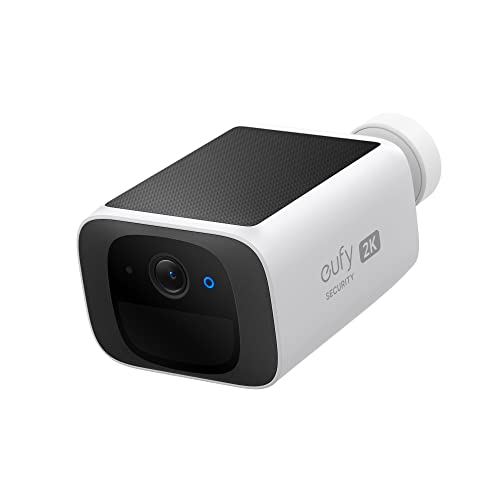
- Best overall: eufy SoloCam S220 — Solar power with no monthly fee
- Best value: TP-Link Tapo C120 — Free smart detection without a subscription
- Best alternative: Wyze Cam v4 — Sharpest wired picture on a tight budget
- Best for coverage: Ring Outdoor Cam (Stick Up Cam) Battery — Alexa homes that want flexible placement
- Best for flexibility: Blink Outdoor 4 — Longest battery claim and simplest app
- Best specialist: Wyze Cam Floodlight v2 — Driveways that need light as well as video
Check price: eufy SoloCam S220 · Check price: TP-Link Tapo C120 · Check price: Wyze Cam v4 · Check price: Ring Outdoor Cam (Stick Up Cam) Battery · Check price: Blink Outdoor 4 · Check price: Wyze Cam Floodlight v2
Read the full guide ↓
Disclosure: As an Amazon Associate, dailyhomedecorating.com earns from qualifying purchases. Links to Amazon on this page are affiliate links; they cost you nothing extra. Listing details such as price and availability change often, so check the current Amazon listing before you buy.
Shopping for the best outdoor security camera for apartments under $150, and the search starts with a constraint homeowners never face: you probably cannot drill, you definitely cannot hardwire, and the space you are protecting is a balcony, a patio, a front step or a short stretch of walkway rather than a sprawling yard. That constraint is clarifying. It kills the hardwired floodlight as a serious option for most renters, promotes small battery and solar cameras that mount with minimal hardware, and makes subscription honesty even more important, because a renter’s camera budget competes with deposits, moving costs and everything else that renting already taxes.
Apartment outdoor coverage also has a neighbor problem that houses mostly avoid. Your balcony camera overlooks other balconies. Your door camera films a shared corridor or a communal walkway where other residents have every right to pass without becoming your footage collection. The right apartment setup is deliberately narrow: aimed at your door, your balcony railing line, your patio furniture — the small territory that is actually yours — using privacy zones and modest mounting positions that respect the shared nature of the building. Every pick and placement note in this guide is filtered through that lens, alongside the usual checks on storage, power and what each brand charges you to see your own recordings.
The short answer for renters: the eufy SoloCam S220 leads because solar power removes both the outlet hunt and the charging ritual, its footage stays on the camera with no monthly fee, and its compact body mounts discreetly. The wired Tapo and Wyze picks are excellent where your balcony or patio has a reachable outlet and a landlord-tolerant cable path. Ring’s battery camera is the flexible redeployer, with the loud caveat that its history lives behind a paid plan. Blink suits a quiet door with light traffic — provided you solve its hub requirement. We flag the floodlight honestly as a step-up that most leases simply forbid.
In this guide
Quick picks
Six cameras, six different answers to the same budget. The table is the map; the reviews that follow are the territory, including the subscription and storage conditions that decide real ownership cost.
| Camera | Best for | Key spec |
|---|---|---|
| eufy SoloCam S220 | Solar power with no monthly fee | 2K, solar plus battery, built-in local storage |
| TP-Link Tapo C120 | Free smart detection without a subscription | 2K QHD, wired, free person/pet/vehicle detection |
| Wyze Cam v4 | Sharpest wired picture on a tight budget | 2.5K QHD, wired, color night vision |
| Ring Outdoor Cam (Stick Up Cam) Battery | Alexa homes that want flexible placement | 1080p HD, removable battery, indoor/outdoor |
| Blink Outdoor 4 | Longest battery claim and simplest app | 1080p HD, battery powered, needs a Sync Module |
| Wyze Cam Floodlight v2 | Driveways that need light as well as video | 2K, hardwired floodlight, very wide view |
How we chose
We filtered the under-$150 outdoor field for apartment life first and camera specs second. Mounting came first: could the camera go up with minimal or reversible hardware, sit on a railing or shelf, or hang from the kind of small mount a landlord tolerates — and come down cleanly at move-out? Power came next, weighted toward designs that forgive the renter’s reality of scarce, badly placed outdoor outlets: solar and long-life battery scored high, wired scored well only where a door or window cable path is realistic, and hardwired scored as a documented exception rather than a recommendation.
Privacy and proportionality formed the third filter. Apartment cameras record in shared space, so we favored models with activity zones, privacy masking and detection that can be tuned to ignore the neighbor’s balcony and the passing corridor. Fourth came the same ownership audit we apply everywhere: what the paid plan locks, where clips are stored, and whether local storage exists at all. That audit is why Ring’s excellent flexibility is paired with an explicit warning, and why the fee-free eufy and Tapo lead this particular list.
Picture quality still mattered — a door camera that cannot resolve a face at arm’s-length-plus is a bell, not a camera — so every pick resolves at least 1080p, with the wired 2K options recommended wherever identification matters most, such as a ground-floor patio door. All headline figures are maker specifications, battery and solar figures are maker claims tied to conditions, and prices are deliberately left to the live listing, because they move too often for print.
Detailed reviews
eufy SoloCam S220
Who it suits: The renter’s default: a sunny balcony or patio rail, no spare outlet, and a firm refusal to add a subscription to a life that already has a lease.
The eufy SoloCam S220 solves the two annoyances that kill most budget outdoor cameras: charging and subscriptions. A solar panel is built into the top of the camera, and eufy states that a few hours of direct sunlight a day can keep the battery topped up under typical use — treat that as a maker claim that depends entirely on your climate, season and mounting angle, because a north-facing wall in a grey winter will harvest a fraction of what a sunny southern exposure collects. Recordings are stored on memory built into the camera, and eufy sells this model explicitly as a no-monthly-fee camera: you can review your events without a plan. The 2K picture is clean, the body is compact enough to disappear under an eave, and pairing it later with a eufy HomeBase adds expanded local storage and smarter processing if you grow into a bigger system. The limitations are real. Built-in storage cannot be expanded with a card, so heavy-motion locations will cycle through old clips sooner. Solar dependence means a badly shaded mount quietly becomes a camera you have to take down and charge by cable. And like most battery cameras, it records events rather than continuous video, so a slow-moving subject can occasionally be clipped at the edges of an event.
Power and weather: Solar panel built in plus rechargeable battery. Weather-resistant outdoor housing (maker rated for outdoor use). Battery and solar figures quoted by makers assume typical use under stated conditions; treat them as claims to plan around, not guarantees.
Storage and subscription, plainly: Built-in local storage on the camera itself, with no monthly fee for basic use; can also pair with a eufy HomeBase for expanded local storage (sold separately). eufy markets this camera as no-monthly-fee: recorded events are stored locally on the device. Optional cloud plans exist, but reviewing your clips does not depend on one.
Choose / skip: Choose it for fee-free, outlet-free balcony coverage. Skip it if your balcony is deeply shaded all day or faces a busy shared walkway that will churn its built-in storage.
In daily ownership: Living with the S220 means watching a sun budget instead of a battery gauge: a glance at the app after a grey week tells you whether the mount’s exposure is honest, and a shaded winter may ask for one cable top-up.
TP-Link Tapo C120
Who it suits: A patio or balcony with a reachable outlet and a landlord who tolerates a neat cable run — especially ground-floor units where door identification matters.
The TP-Link Tapo C120 is the value pick that embarrasses cameras costing far more, for one reason: the smart detection is free. Person, pet and vehicle detection run on the camera and are included without a subscription, so the alert that reaches your phone can already say what moved instead of forcing you to open every clip of a swaying shrub. The 2K QHD picture is crisp, the dual spotlights support genuine color night vision rather than a token glow, and an invisible infrared mode exists for spots where visible light would annoy neighbors or wildlife. Storage is equally honest: record locally to a microSD card and pay nothing ongoing, or add the optional Tapo Care cloud plan only if you want off-site backup. The C120 is wired and plug-in, with a generously long power cable in the box, and its magnetic base makes aiming unusually painless for a camera at this price. Its honest limits are range and ecosystem: it is a Wi-Fi camera that wants a decent 2.4 GHz signal, and while it works with Alexa and Google Assistant for voice viewing, it does not join every smart-home platform, so check compatibility if your home runs on something else.
Power and weather: Wired (plug-in adapter with a long cable in the box). IP66 weather resistance (maker rating). Battery and solar figures quoted by makers assume typical use under stated conditions; treat them as claims to plan around, not guarantees.
Storage and subscription, plainly: Local microSD recording or optional Tapo Care cloud; person, pet and vehicle detection are included free on the camera. Core detection is free, which is rare at this price. Tapo Care, a paid plan, adds cloud clip storage and richer notifications, but the camera stays fully useful on local storage alone.
Choose / skip: Choose it for free detection and fee-free local clips at a wired patio spot. Skip it if there is no realistic cable path or your lease forbids even a small mount.
In daily ownership: Ownership rhythm here is close to zero: the camera is wired, detection is free, and the card quietly cycles — your only recurring task is confirming, now and then, that the clips you expect are the clips being kept.
Wyze Cam v4
Who it suits: Renters who can run a cable and want the sharpest possible record of a door, a bike corner or a parking spot visible from the unit.
The Wyze Cam v4 is a small wired cube that punches well above its price on picture quality. Its 2.5K QHD sensor is the sharpest in this roundup, and that extra resolution is not a spec-sheet vanity: it is the difference between a face that is a smudge and a face you can actually describe, and between a license plate that is grey blur and one with readable characters at driveway distance. Color night vision is the other headline. With even modest ambient light — a porch bulb, a street light, moonlight on a pale driveway — the v4 keeps recording in color long after cheaper cameras have switched to grainy black-and-white infrared, and color is what makes clothing, vehicle color and package details usable the next morning. A built-in spotlight and siren can be triggered on motion, which gives you a deterrent that pure recording cameras lack. The trade-offs are physical, not digital. This is a wired camera: it needs continuous USB power from an indoor or covered outdoor outlet, so placement is dictated by cable reach and by where you can safely run and protect that cable. It has no battery to fall back on during an outage. It is also a 2.4 GHz Wi-Fi device, so a weak signal at the far corner of a house will hurt it more than any setting can fix.
Power and weather: Wired (USB power adapter). IP65 weather resistance (maker rating). Battery and solar figures quoted by makers assume typical use under stated conditions; treat them as claims to plan around, not guarantees.
Storage and subscription, plainly: Local microSD recording (card sold separately, supports large cards) or optional Wyze Cam Plus cloud. Free tier covers live view, motion alerts and local recording. Wyze Cam Plus, a paid plan, unlocks cloud event history and the smartest person, pet, package and vehicle detection labels.
Choose / skip: Choose it for maximum door detail on a wired budget. Skip it if cable routing is impossible or you want smart detection labels with no plan and no compromise.
In daily ownership: In daily ownership the v4 is the set-and-forget member of this group: no batteries to schedule, a card to check occasionally, and a plan decision you can postpone indefinitely because the free tier already records.
Ring Outdoor Cam (Stick Up Cam) Battery
Who it suits: Renters in Alexa homes who move often: it sits on a shelf, mounts lightly, redeploys in minutes at the next place — if the plan fits your budget.
The Ring Outdoor Cam — the battery model long sold as the Stick Up Cam — is the flexible-placement option for homes already living in the Alexa and Ring ecosystem. Its Quick Release battery pack slides out for charging without unmounting the camera, it can sit on a flat surface or mount to a wall, and it works indoors or out, which makes it the easiest pick here to redeploy as your needs change. Video is 1080p HD with color night vision, live view is quick, and motion alerts integrate with the Ring doorbells and Alexa announcements many homes already use. Now the disclosure that matters most in this entire guide: this camera has no local storage at all. Recorded video lives only in the cloud, and reviewing, saving or sharing it requires a paid Ring Home plan. Without the plan you get live view and instant alerts, but the event you were alerted about is gone once it passes. That does not make it a bad camera — the ecosystem, the app polish and the mounting flexibility are genuinely good — but it does mean the true cost of ownership includes a subscription for as long as you want a history, and no honest guide should let you discover that after mounting it.
Power and weather: Removable Quick Release battery pack (rechargeable). Weather-resistant outdoor housing (maker rated for outdoor use). Battery and solar figures quoted by makers assume typical use under stated conditions; treat them as claims to plan around, not guarantees.
Storage and subscription, plainly: No local storage. Recorded video is stored in the cloud and requires a Ring Home plan to save and review it. Be clear-eyed here: without a paid Ring Home plan you get live view and real-time alerts, but you cannot save, review or share recorded events later. The plan is effectively part of the cost of owning this camera if history matters to you.
Choose / skip: Choose it for moving-day flexibility and ecosystem polish. Skip it if a subscription is a deal-breaker, because without the plan there is no history to review.
In daily ownership: Owning this camera means owning its plan as a utility: keep it active and the camera is a polished, flexible sentinel; let it lapse and you own live view only, a distinction to revisit honestly at every renewal.
Blink Outdoor 4
Who it suits: A quiet apartment door with light foot traffic, where alerts matter more than archives — once you have a Sync Module to run it.
The Blink Outdoor 4 is built around one promise: put it up and forget it. Blink rates the battery life at up to two years on the included AA lithium batteries under default settings — a maker claim that assumes modest motion traffic, short clips and a strong connection to its hub, and which heavy-traffic placements will shorten considerably. The 1080p picture is a step behind the 2K cameras here on fine detail, but the 143-degree diagonal view is wide, infrared night vision is dependable, and the Blink app is among the simplest to live with. The architecture is the catch you must understand before buying. The Outdoor 4 talks to a Blink Sync Module, not directly to your router, and this particular listing is an add-on camera: the Sync Module is required and is not in the box, so first-time Blink buyers need a system bundle or a module separately. Money is the second catch. Saving and reviewing clips in the cloud, and person detection, sit behind the paid Blink Subscription Plan; the subscription-free path is local backup through a Sync Module 2 with a USB drive, which is workable but less convenient than cloud review. Buy this camera for battery life and simplicity, with your eyes open about the hub and the plan.
Power and weather: Two AA lithium batteries (included). Weather-resistant outdoor housing (maker rated for outdoor use). Battery and solar figures quoted by makers assume typical use under stated conditions; treat them as claims to plan around, not guarantees.
Storage and subscription, plainly: Cloud storage with a Blink Subscription Plan, or local backup through a Sync Module 2 and a USB drive (Sync Module and drive sold separately where not bundled). A Blink Subscription Plan, a paid plan, is what unlocks cloud clip storage, clip review from anywhere and person detection. Without it you still get live view and motion alerts, and local backup is possible with the right Sync Module. Note: this listing is an add-on camera, so a Sync Module is required and is not included.
Choose / skip: Choose it for a low-traffic door and rare battery changes, hub permitting. Skip it for busy corridors, where traffic will eat both the battery claim and your patience.
In daily ownership: Daily life with Blink is an exercise in calm: rare battery attention, an app that stays out of the way, and a standing awareness that the plan and the hub are quiet members of the household infrastructure.
Wyze Cam Floodlight v2
Who it suits: Almost no renters: included honestly as the step-up for the rare lease that permits fixture swaps, or for renters about to buy. Everyone else should admire and skip.
The Wyze Cam Floodlight v2 is two products sharing one junction box: a 2K camera with a very wide 160-degree view, and a bright LED floodlight array that fires on motion. For driveways, side gates and back yards, the light is not a gimmick — it improves the footage itself, because a lit subject records in color with faster shutter behavior than a subject at the edge of infrared range, and it changes behavior, because most casual trespass and package probing stops when a yard lights up and a siren is available. The camera records locally to a microSD card with no fee, or to the cloud with the optional Wyze Cam Plus plan, and two-way talk plus that loud maker-rated siren give you active responses, not just evidence. The honest costs are installation and commitment. Hardwired means it replaces an existing floodlight fixture or needs new electrical work — this is not a renter camera and not a ten-minute job, and local electrical rules may require a qualified installer. It is also a fixed installation: if you move, it stays. Judge the headline brightness and siren figures as manufacturer ratings, and plan on the 2.4 GHz Wi-Fi reach to your mounting point before you open the box.
Power and weather: Hardwired to an existing floodlight junction box. Weather-resistant outdoor housing (maker rated for outdoor use). Battery and solar figures quoted by makers assume typical use under stated conditions; treat them as claims to plan around, not guarantees.
Storage and subscription, plainly: Local microSD recording (card sold separately) or optional Wyze Cam Plus cloud. Local recording works without paying anything. Wyze Cam Plus, a paid plan, adds cloud event history and smarter detection labels. The floodlight itself is a maker-rated bright LED array, so judge brightness claims as manufacturer figures.
Choose / skip: Choose it only with written landlord permission and an existing fixture. Skip it in every standard rental situation — this is a homeowner install.
In daily ownership: The floodlight asks the most on day one and the least thereafter: once wired, it is light and camera in a single fixture, with a card to check seasonally and a junction box you will hopefully never open again.
Comparison table
| Camera | Resolution | Power | Storage |
|---|---|---|---|
| eufy SoloCam S220 | 2K | Solar panel built in plus rechargeable battery | Built-in local storage on the camera itself, with no monthly fee for basic use; can also pair with a eufy HomeBase for expanded local storage (sold separately) |
| TP-Link Tapo C120 | 2K QHD | Wired (plug-in adapter with a long cable in the box) | Local microSD recording or optional Tapo Care cloud; person, pet and vehicle detection are included free on the camera |
| Wyze Cam v4 | 2.5K QHD | Wired (USB power adapter) | Local microSD recording (card sold separately, supports large cards) or optional Wyze Cam Plus cloud |
| Ring Outdoor Cam (Stick Up Cam) Battery | 1080p HD | Removable Quick Release battery pack (rechargeable) | No local storage. Recorded video is stored in the cloud and requires a Ring Home plan to save and review it |
| Blink Outdoor 4 | 1080p HD | Two AA lithium batteries (included) | Cloud storage with a Blink Subscription Plan, or local backup through a Sync Module 2 and a USB drive (Sync Module and drive sold separately where not bundled) |
| Wyze Cam Floodlight v2 | 2K HD | Hardwired to an existing floodlight junction box | Local microSD recording (card sold separately) or optional Wyze Cam Plus cloud |
Compare the leaders directly: eufy SoloCam S220 · TP-Link Tapo C120 · Wyze Cam v4.
How to choose the best outdoor security camera for apartments under $150
Begin with your lease, not a catalogue. Re-read the clauses on fixtures, drilling and exterior alterations, and if the wording is grey, get a one-line written okay from your landlord for a small screw mount — or commit to the no-drill paths this guide favors: shelf and railing placement, adhesive or clamp mounts where the maker supports them, and cameras compact enough to sit unobtrusively. A camera you must remove in a hurry, mid-dispute, protects nothing.
Map your actual territory. For most apartments the honest list is short: the entry door and its package spot, the balcony or patio and what sits on it, perhaps a ground-floor window or an assigned parking space visible from the unit. Aim one camera at one territory, angled to stop at your boundary. Use the app’s activity zones and privacy masks from day one — not as an afterthought — so the shared corridor, the pool path and the neighbor’s balcony are excluded by design, and tell your immediate neighbors the camera exists and what it covers. That conversation prevents most building friction before it starts.
Solve power like a renter. A balcony with reliable sun is solar country, and the eufy exists precisely for it — but check the sun honestly across the day, because a balcony in permanent building shadow is a battery placement, not a solar one. A patio outlet or an indoor outlet near a door makes the wired Tapo or Wyze v4 the sharper, never-charge choice, with the cable run kept flat, covered and trip-free. Battery models earn their keep where neither sun nor outlet reaches, at the price of event-only recording and eventual charging trips.
Budget the whole tenancy, not the purchase. Fee-free local storage keeps an apartment camera’s cost fixed at the hardware, which suits renting’s cash-flow reality. A plan-based camera adds a monthly line that runs for as long as you want history — manageable, but count it across a lease before choosing. And plan the exit on day one: the best apartment camera is one that comes down in ten minutes, leaves the wall as it found it, and goes straight up again in the next place.
Common mistakes
Drilling first and reading the lease later. Exterior holes are the fastest route to a deposit deduction and a removal order. Confirm what your lease and building allow, prefer reversible mounting, and keep any landlord permission in writing.
Filming the whole building. A camera aimed down a shared corridor or across neighboring balconies creates complaints, and in some buildings and jurisdictions, real legal exposure. Aim at your own door and territory, mask the rest, and keep audio recording settings conservative.
Assuming the balcony is sunny. Buildings shade each other. A panel that sees an hour of direct sun in November will not keep a camera charged, whatever the summer promised. Verify exposure across the day before choosing solar.
Paying for history you did not budget. Ring’s recorded history requires its paid plan; Blink’s cloud review does too. Renters who skip this line in the reviews discover it at the first package dispute. Read the storage notes before you mount anything.
Leaving the camera behind in the move. Cameras mounted with permanent hardware or hardwired — the floodlight in this guide — effectively stay with the unit. Renters should favor cameras that unmount in minutes and travel.
Covering a parking lot with a door camera. A compact apartment camera identifies at door and patio distances. Expecting plate-level detail across a communal lot leads to disappointment; position for the distances the camera is built for.
Talking to your landlord: a two-minute script that works
Most apartment camera friction is a communication failure, not a rule. The conversation that succeeds is short, specific and written: name the camera, name the exact spot, name the mounting method in its least alarming accurate words — a small bracket with two screws, a clamp on the railing, a unit resting on the balcony shelf — and name what it watches, which is your door and your patio, with the shared areas masked in the app. Offer the exit in the same breath: it comes down in minutes and any holes are filled at move-out. Landlords refuse abstractions and approve specifics, because specifics let them picture the wall after you leave. If the answer is no to screws, it is rarely no to cameras — drop a rung on the mounting ladder, to clamp, adhesive or placement, and the eufy and Ring picks in this guide lose almost nothing in the translation. Keep whatever you agree in the same email thread as your lease paperwork, and the camera becomes a documented amenity instead of a deposit negotiation.
The move-out test every renter should apply before buying
Before ordering, run the camera through an imaginary last day of your lease. Can it be down, packed and in a box within fifteen minutes, using tools already in a kitchen drawer? Does it leave the wall exactly as it found it, or does it leave a repair you must schedule, patch and paint? Does it work at the next place sight unseen — any balcony, any door, any outlet geography — or was it fitted so precisely to this unit that it retires with the lease? The battery, solar and plug-in cameras in this guide pass all three questions, which is precisely why they lead an apartment ranking, and the hardwired floodlight fails all three, which is why it sits at the bottom flagged as a homeowner’s step-up. Renting rewards the portable and punishes the permanent in every category of household goods; cameras, it turns out, are household goods, and the move-out test is the fastest way to shop like it.
The renter’s mounting ladder, from zero holes to one screw
Think of mounting as a ladder of commitment, and start on the lowest rung that holds. Rung one is placement: a camera on a balcony shelf, a railing-adjacent table or a plant stand needs no permission, no tools and no repair, and the Ring and eufy bodies are compact enough to live this way where the angle allows. Rung two is reversible grip: clamp and strap mounts on railings, adhesive mounts the maker supports — stable in most weather, removable without a trace. Rung three is the small screw mount most cameras ship with: two or three modest holes, the rung that needs a landlord’s written nod in most leases and repays it with the steadiest angles and the best theft resistance. Rung four is hardwiring, which for renters is not a rung at all — it is the floodlight’s territory, and it belongs to owners. Most apartment readers should live on rungs one and two, step to three with permission for a front door, and never feel that a lower rung means a lesser camera: the fee-free eufy at rung one outperforms a badly permitted camera at rung four that gets removed in a dispute.
Shared-space etiquette that also improves your footage
Apartment cameras operate in a social contract as much as a technical one, and honoring it makes your own footage better. A camera angled tightly at your door records the person at your door in full frame; the same camera angled wide down the corridor records a dozen neighbors at postage-stamp size and one annoyed building manager at full size. Privacy zones are not merely politeness — they are how you stop the camera wasting its storage, battery and your attention on the communal world it cannot help you with. Audio deserves the same discipline: many residents do not realize their door camera records corridor conversation, and the settings to limit that live one menu deeper than setup takes you. Finally, tell the neighbors whose doors share your view. In practice, the conversation takes thirty seconds, prevents the complaint that ends apartment camera projects, and occasionally gains you an ally who mentions the day your package walked away — with a description your camera, aimed politely and precisely, was built to confirm.
Why small coverage is a feature, not a compromise
It is easy to read an apartment guide as a list of things you cannot do, so here is the inversion: the apartment’s constraints produce better camera craft than most houses ever achieve. Your distances are short, so identification — the thing cameras are worst at — becomes easy. Your territory is defined, so zones and masks can be drawn exactly, and alert quality climbs because the camera watches a small, meaningful map instead of an acre of weather. Your power and sun are knowable in one afternoon of observation. The cameras in this guide that lead the apartment ranking lead precisely because they convert those constraints into strengths: solar that fits a balcony’s real sun, local storage that keeps a renter’s footage out of a landlord’s network, bodies small enough to vanish into a railing line. Buy for the apartment you have, and you will own a setup most homeowners would envy.
Setup notes that save a second ladder trip
Balcony railings are prime camera real estate: they offer height, a clear line over the patio and a mount point that often needs no screws at all with a clamp or strap mount. Just confirm the camera’s weight and the mount’s grip rating, and add a safety tether so a knocked camera falls inward, not three floors down.
Package theft is the apartment camera’s most common real job, and it is a daytime job. Prioritize a clear, close view of the drop zone and fast, accurate alerts — free person detection, as on the Tapo, is worth more here than exotic night features.
Shared Wi-Fi changes the math. On building or landlord-provided networks you may not control the router, so favor cameras that behave well on standard 2.4 GHz networks and store locally, so a network you do not own never holds the only copy of your footage.
Keep the charging story realistic. A battery camera above a door you can reach with a step stool is a five-minute chore twice a year; the same camera at the far end of a balcony you cannot safely reach becomes a dead camera. Mount for the maintenance you will actually do.
Final recommendation
For most renters the eufy SoloCam S220 is the answer: solar power, on-camera storage, no monthly fee and a discreet body that mounts and leaves without drama. Where an outlet and a tolerant cable path exist, the Tapo C120 is the sharper, equally fee-free alternative, with the Wyze Cam v4 as the maximum-detail wired option for doors that need it.
Choose Ring’s camera if your life is Alexa-shaped and the plan is an acceptable rent-adjacent cost; choose Blink for a quiet door once the hub question is settled. Leave the floodlight to your future house. The winning apartment setup is narrow, neighborly and cheap to own — and every pick above can be exactly that, if you match it to your balcony’s sun, your lease’s rules and your honest budget.
FAQ
Can I install an outdoor camera in a rented apartment?
Usually yes, with reversible methods: shelf, railing or small mounts the lease tolerates, and no hardwiring. Rules vary by lease and building, so check yours and get permission in writing for anything that screws into exterior walls. Every pick here except the hardwired floodlight can be mounted lightly.
Do apartment cameras need a subscription?
No. The eufy stores clips on the camera with no monthly fee, and the Tapo and Wyze models record locally to a card. Ring requires a paid plan to review any recorded video, and Blink charges for cloud review and person detection, with a hub-based local alternative.
Is it okay to record a shared hallway or walkway?
Aim at your own door and territory, use privacy zones to exclude shared space where possible, and check your lease and local rules. Cameras in shared areas are the most common source of neighbor and landlord complaints, so a narrow, disclosed setup is both safer and more useful.
What if my balcony gets almost no sun?
Then solar is the wrong power source, whatever the marketing says — maker solar claims assume real direct sunlight. Choose a battery model for that spot, or a wired model if an outlet is reachable, and reserve solar for a sunnier angle if one exists.
Which camera is best for watching delivered packages?
The one aimed at your door from a few feet away. The wired Tapo and Wyze v4 resolve the most detail at that range, and their local recording keeps the evidence without a plan. Angle matters more than resolution: cover the drop spot, not the whole corridor.
Can I take my camera when I move?
Yes — that is a core reason this guide favors compact battery, solar and plug-in models for renters. They unmount quickly and reinstall at the next place. Hardwired fixtures are the exception, which is why the floodlight is flagged as a homeowner step-up.
Renting has a way of making every purchase feel temporary, but a well-chosen apartment camera is one of the few that compounds: it protects this lease’s packages, learns this balcony’s light, then unmounts in minutes and starts again at the next address with everything you now know about zones, sun and subscriptions already in your head. That portability is the quiet argument for buying a good camera as a renter rather than the cheapest one — the hardware travels, and so does the craft. Keep the install reversible, the aim neighborly, the storage fee-free where you can, and the landlord conversation written and friendly. Do those four things and the apartment constraint stops being the thing that limits your security and becomes the thing that made your setup tidier, cheaper and more deliberate than most homeowners ever manage. Your deposit stays intact, your door stays watched, and the camera leaves with you — which, for a renter, is the whole definition of a good buy.


