Where to buy
Check the latest price, availability and delivery on Amazon. Orders are placed on Amazon. We may earn a commission from qualifying purchases. One honesty note before the list: three of the six picks below are links, and all three are clearly labelled accessories — fuel and repair parts, not heaters. The heaters in this guide sit in higher price tiers, so they are covered in words only. And for apartment readers there is a second honesty note, bigger than price: whether you may use a heater on a balcony at all is decided by your lease and your local fire code before it is decided by your budget, and this guide puts those rules first.
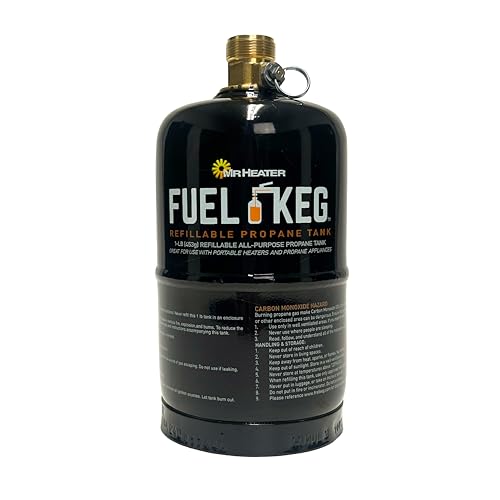
- Best honest spend under $20 (accessory — not a heater): Mr. Heater Fuel Keg 1 lb Refillable Propane Tank — Check on Amazon
- Best repair part (accessory — not a heater): Thermocouple and Tilt Switch Repair Kit for Patio Heaters — Check on Amazon
- Best fuel-cost cutter (accessory — not a heater): Gogoonike Propane Refill Adapter for 1 lb Tanks — Check on Amazon
The heaters themselves — covered in this guide, priced above this tier: Dr. Infrared Heater DR-238 (electric), Mr. Heater Little Buddy MH4B and Cuisinart COH-500 tabletop heater (both propane). Each is reviewed in full below, including — for the propane models — exactly where apartment rules do and do not allow them.
Read the full guide ↓
Disclosure: As an Amazon Associate, dailyhomedecorating.com earns from qualifying purchases. Links to Amazon on this page are affiliate links; they cost you nothing extra. Listing details such as price and availability change often, so check the current Amazon listing before you buy.
The best outdoor heater for apartments under $20 does not exist — and for apartment dwellers, that blunt sentence is only the first of two problems. The second is that the heaters that do exist, at any price, are very often not allowed where you would want to use them. Apartment outdoor space means a balcony or a small patio attached to a multi-family building, and those spaces sit inside a web of rules that house owners never meet: the fire code your city adopted, your lease, your landlord’s insurance conditions and, in condos, the HOA’s rules. Under the model fire codes used across most of the United States, open-flame devices are prohibited on combustible balconies and within ten feet of combustible construction in multi-family buildings, with narrow exceptions. Many leases go further and ban fuel-burning devices on balconies outright — use, and sometimes even storage. A heater bought in ignorance of those rules is not a bargain; it is a lease violation with a flame attached, and it can cost a deposit, a tenancy or far worse if something goes wrong above, below or beside a neighbour’s home.
So this guide is written in the only honest order for an apartment reader: rules first, products second, and price third. On price, the finding matches the rest of this series: when we researched this guide, no complete, safe outdoor heater from a verifiable maker existed at this budget — the cheapest genuine portable heater we could verify sells in a tier several times higher. What $20 does buy is the same honest trio as elsewhere in the series: a certified refillable fuel cylinder, a repair kit that revives the most common patio-heater fault, and a refill adapter for bulk fuel economics — each labelled an accessory, because none of them is a heater. Alongside them, reviewed without links, are the three heater routes an apartment household can realistically consider when the budget grows: an electric infrared bar heater — the only heater type with no flame, and therefore the only type many leases permit at all — and the two small propane formats, reviewed with their rules attached, because there are apartment situations (a ground-floor patio, a sprinklered building, a permissive lease in a small building) where the codes leave a narrow door open, and there are far more where they do not.
Nothing in this guide encourages bending a rule. Where a pick only makes sense outside a balcony — on a ground-level patio ten feet from the building, at a house, at a campsite — it says so in plain words. Where a rule varies by city, it says that too, and tells you who actually decides: your lease document and your local fire marshal, in that order of convenience and that order of authority. Below you will find the rules in full, a quick picks table, detailed notes on all six picks, a comparison table, a buying checklist written for renters, the mistakes apartment shoppers make, and answers to the questions that come up again and again.
In this guide
Quick Picks
Short on time? Each row names a situation and the product that suits it. The “Apartment reality” column is the one to read first — at this address type, permission matters more than product.
| Situation | Pick | What it is | Apartment reality | Link |
|---|---|---|---|---|
| Best honest spend under $20 | Mr. Heater Fuel Keg 1 lb Refillable Propane Tank | Accessory — fuel cylinder, not a heater | Only useful if you may store and use a 1 lb cylinder at all — many leases restrict even this | Check on Amazon |
| Best way to revive a dead heater | Thermocouple and Tilt Switch Repair Kit | Accessory — replacement part, not a heater | For a heater you are permitted to use — typically a ground-floor patio, not a balcony | Check on Amazon |
| Best fuel-cost cutter | Gogoonike Propane Refill Adapter for 1 lb Tanks | Accessory — refill fitting, not a heater | Assumes a 20 lb tank you may keep — often prohibited in multi-family buildings entirely | Check on Amazon |
| Best heater route where flames are banned | Dr. Infrared Heater DR-238 | Heater — electric, higher tier, no link | No flame and no fuel storage — the route most leases leave open, if mounting is allowed | Prose only — see review |
| Smallest real propane heater | Mr. Heater Little Buddy MH4B | Heater — propane, higher tier, no link | Generally not permitted on multi-family balconies; ground-level, code-compliant spots only | Prose only — see review |
| Tabletop propane for dining | Cuisinart COH-500 Tabletop Patio Heater | Heater — propane, higher tier, no link | Same flame rules as any propane heater, plus 3 ft side clearances few balconies can offer | Prose only — see review |
How These Picks Were Chosen
We applied the same four filters as the rest of this series, plus a fifth that only apartment shopping needs. The standard four: existence — is it a complete heater, not a part in a heater’s photograph? Safety equipment — tip-over shutoff, thermocouple on gas models, an oxygen depletion sensor where the maker rates a model for enclosed spaces. Verifiability — model number and specifications confirmable from the maker’s documentation or a major listing. And recall status — we checked the category against U.S. Consumer Product Safety Commission notices, and anything under an active recall for fire, gas leak or carbon monoxide was excluded outright, not ranked down.
The fifth filter is permissibility: could an apartment household plausibly be allowed to use this product, somewhere in its living situation, without breaking the model fire codes or a typical lease? That filter is why an electric heater appears in this edition as the lead heater despite the budget, why the propane models carry rule warnings in their reviews rather than in a footnote, and why the accessories are framed around storage as much as use — in a multi-family building, the cylinder in your cupboard can be as much a violation as the flame on your balcony. No complete heater passed all five filters at this price; the accessories passed the first four and are presented with the fifth filter’s caveats written into their reviews rather than smoothed over.
The heaters reviewed without links were chosen to map the real decision an apartment household faces. The electric bar heater represents the flameless route — the only route open under most balcony bans. The smallest propane portable represents the narrow exceptions — ground-floor patios, tiny-cylinder provisions, sprinklered buildings — and the tabletop represents the format apartment shoppers most often imagine, reviewed honestly against the space and rules a balcony actually offers. Their specifications are taken from manufacturer manuals and product pages, and their coverage figures are the makers’ enclosed-space numbers, which open air will always reduce.
The Rules Come First: Balconies, Leases and Fire Code
This is the section most heater guides skip and the only section an apartment reader cannot afford to. The details vary by city and building, but the structure of the rules is remarkably consistent across the United States, because most local codes adopt one of two model documents: the International Fire Code (IFC) or NFPA 1, the National Fire Protection Association’s fire code.
The ten-foot rule. The IFC prohibits charcoal burners and other open-flame devices on combustible balconies and within ten feet of combustible construction, and NFPA 1 states the same principle for multi-family buildings: flame devices do not belong on balconies, decks or under overhangs, or within ten feet of the building. A propane heater is an open-flame device. On a typical apartment balcony — combustible railing, the building wall behind you, a neighbour’s balcony above — there is no position that satisfies a ten-foot separation, because the balcony itself is within ten feet of the building by definition. That is the rule working as intended: balcony fires spread vertically, unit to unit, faster than almost any other residential fire.
The exceptions are narrow. The model codes carve out three: one- and two-family dwellings, which most apartment buildings are not; buildings and balconies protected throughout by automatic sprinklers; and LP-gas devices using a container with a water capacity under two and a half pounds — roughly a single 1 lb cylinder. Read that third exception carefully before relying on it. It was written for small cooking devices, its application to heaters varies by jurisdiction and by the local amendments almost every city adds, and it never overrides your lease. Which brings up the layer that decides most real cases.
Your lease and your HOA can be stricter than the code — and usually are. Fire code sets a floor, not a ceiling. Landlords and associations routinely prohibit all fuel-burning devices on balconies, prohibit propane storage anywhere in the unit, or prohibit heaters by name, and those private rules are enforceable through fines, deposit deductions and eviction proceedings regardless of what the code’s exceptions might allow. Storage deserves its own sentence: model codes limit the fuel that may be kept inside multi-family buildings to very small quantities, and a 20 lb grill tank stored in a unit or on a balcony is a violation in most multi-family settings even if it never feeds a flame. The accessories in this guide — a 1 lb refillable cylinder, a refill adapter that presumes a 20 lb tank — must be read through that lens: useful in a ground-floor unit with a permissive lease, unusable in a tower block that bans cylinders, and your lease is the document that tells you which home you live in.
What is usually allowed. Electric heaters produce no flame and store no fuel, so they fall outside the open-flame prohibitions — which is why the electric route leads this guide’s heater reviews. “Outside the prohibition” is not the same as “unconditionally welcome”: leases can and do restrict heaters generally, mounting anything to a balcony structure usually needs the landlord’s written permission, and an electric heater still needs its clearances from cushions, curtains and railings, a proper outdoor-rated outlet, and no extension-cord improvisation. The decision procedure that keeps you safe and housed is short: read the lease’s appliance and balcony clauses, ask the landlord or association in writing if anything is unclear, and only then shop. If the answer is no flame and no drilling, your honest options are an electric heater used freestanding where the maker allows, warmth strategies that are not heaters at all, or the ground-floor and communal spaces your building does permit — and the companion guide for compact spaces, Best Outdoor Heater For Small Patios Under $20, works through the small-footprint side of that problem.
Safety First: Fire, Carbon Monoxide and Clearance
Rules aside, the physics is the same in every home. Anything that burns propane produces carbon monoxide, an odourless gas no human sense detects. Propane heaters are for open-air use only — never in living spaces, never in a garage, never on a screened or enclosed balcony where air cannot move freely. The portable propane models in this guide carry an oxygen depletion sensor and are rated by their maker for certain ventilated enclosed uses such as workshops; a balcony with three walls and a ceiling is not a ventilated workshop, and the sensor is a safety net, not permission. If a semi-enclosed space will ever host a flame heater where the rules allow one, a battery carbon monoxide alarm belongs in that space.
Clearance is the second discipline. Heaters ignite nearby objects by radiant heat alone, without touching them. The portable propane models below specify 30 inches above, 24 inches in front and 6 inches at the sides; the tabletop specifies 3 feet at the sides and 2 feet above; the electric bar specifies 3 feet from combustibles on all sides. Hold those numbers up against a real balcony — a metre or so deep, furnished, with a railing and a neighbour’s balcony overhead — and you will see why this guide keeps concluding that balconies and flame heaters do not mix: the geometry fails before the rules are even consulted. Add the apartment-specific hazards: wind funnelling between towers that pushes curtains and throws toward a heater, stored items that colonise every balcony corner, and neighbours above and below whose space your heat, exhaust and any accident will enter uninvited.
Stability and supervision complete the picture. Heaters belong on flat, hard, level surfaces, secured exactly as the manual describes, and a burning heater is never left unattended. Children and pets need more than the printed clearance — they move unpredictably, and radiant surfaces stay burn-hot after shutoff. Let any heater cool fully before moving or covering it. Finally, recalls: this category has seen heaters recalled in recent years for gas components that can release fuel and create fire risk, and older tabletop propane models were recalled over carbon monoxide. Check any model — new, discounted or inherited — against the U.S. Consumer Product Safety Commission’s recall listings before use, and take a recalled unit out of service immediately. Every pick in this guide was checked against the current recall picture before inclusion.
The Picks in Detail
1. Mr. Heater Fuel Keg 1 lb Refillable Propane Tank — Best Honest Spend Under $20 (Accessory — Not a Heater)
What it is. A 1 lb — 16 oz — propane cylinder (model F200048) from the maker of the best-known portable heaters in this category, built and DOT certified to be refilled rather than thrown away. It threads into the same socket as disposable green 1 lb bottles, arrives empty, and fills only with the maker’s matching refill kit, sold separately. In a house, it is simply the cheapest running-cost cut in small-scale propane heating. In an apartment, it is also a storage question — see the limitation below before the pros tempt you.
Who it suits. Apartment households whose lease permits small propane cylinders and who have a permitted place to use a 1 lb heater — most realistically a ground-floor patio, a permitted communal area, or a second setting such as a campsite or a relative’s house where the heater actually lives. For those readers, the Fuel Keg replaces a stream of disposable bottles with one certified, refillable cylinder that fits every 1 lb appliance they own.
Pros. A verifiable product from the category’s most established maker, with a published model number and a genuine certification — the safe, legal answer to refilling, in a category full of dangerous improvisation. It fits the installed base of 1 lb heaters, lanterns and stoves without adapters. Its small size is the least-bad storage footprint propane offers, and in jurisdictions whose codes make the small-cylinder exception, it is the cylinder size that exception contemplates.
Honest limitation. It is not a heater and produces no warmth. It arrives empty and needs the maker’s refill kit — a further purchase — before its first fill. Most importantly for this edition: many leases prohibit storing any propane in the unit or on the balcony, and model fire codes restrict indoor fuel storage in multi-family buildings to very small quantities. If your lease bans cylinders, this pick is not for your home, full stop — no price makes a prohibited cylinder a good purchase. Check the lease first; the landlord’s written answer outranks this guide.
Choose it if your lease permits small cylinders and you have a lawful place to use one. Skip it if your building bans propane storage — most high-rise and many garden-apartment leases do — or if you own no 1 lb appliance. Check price on Amazon, and confirm the listing is the refillable cylinder itself, not the refill kit or a bundle.
2. Thermocouple and Tilt Switch Repair Kit — Best Way to Revive a Dead Heater (Accessory — Not a Heater)
What it is. A replacement thermocouple and tilt — dump — switch set of the pattern used by round stand-up and pyramid propane patio heaters. The thermocouple is the probe that sits in the pilot flame and holds the gas valve open; the tilt switch cuts the gas if the heater tips. Manufacturers’ troubleshooting guides point to these two parts first when a heater lights and dies, or will not stay lit. This kit replaces both.
Who it suits. The apartment-adjacent reader this actually fits is specific: a ground-floor tenant or condo owner whose building permits a patio heater on a ground-level patio — where the ten-foot separation can genuinely be achieved — and whose existing heater has developed the classic won’t-stay-lit fault. For that reader, a sub-budget repair beats a service call many times the price, and beats replacing a heater that has years of life in its burner and reflector.
Pros. It fixes the category’s most common failure for the lowest price in this guide, and it restores safety devices rather than bypassing them — a repaired heater keeps its flame-failure and tip-over protection. The parts pattern fits the common stand-up and pyramid designs, and the job is hand-tool work documented in makers’ manuals.
Honest limitation. It is a part, not a heater, and it does nothing for a reader whose problem is permission rather than machinery — if your heater may not be used where you live, repairing it changes nothing. Compatibility is broad, not universal; check your model’s parts diagram. Gas connections demand respect: any smell of gas after reassembly means stop, close the valve and call a professional. And a heater under active recall should be retired through the recall remedy, never repaired back into service.
Choose it if you have a permitted heater with a light-and-die fault. Skip it if you have no heater, no permission, or a fault in the burner, valve or reflector. Check price on Amazon and match the kit to your heater’s diagram first.
3. Gogoonike Propane Refill Adapter for 1 lb Tanks — Best Fuel-Cost Cutter (Accessory — Not a Heater)
What it is. A solid brass adapter joining a 1 lb cylinder thread to the QCC1/Type 1 fitting of a standard 20 lb propane tank, with an on/off control — the standard design sold across this category for filling a refillable 1 lb cylinder from bulk propane. Paired with a certified refillable cylinder such as the Fuel Keg above, it makes small-heater fuel cost what bulk propane costs.
Who it suits. In an apartment context, honestly, a narrow reader: the ground-floor household with a permissive lease that already lawfully keeps a 20 lb tank — for a grill used ten feet from the building, where the code allows — and runs a small heater often. For most apartment readers this pick is a description of a system they cannot house, and the guide says so rather than selling it anyway.
Pros. Brass, standard fittings, the lowest price in this guide. As part of the refillable-cylinder system it removes the recurring cost and waste of disposables, and it removes the temptation toward the genuinely dangerous practice it must never be used for — refilling disposable bottles.
Honest limitation — read this one twice. Two limits, either sufficient alone. First, safety and law: this adapter is only for cylinders designed and certified to be refilled; disposable 1 lb bottles must never be refilled, and transporting a refilled disposable is prohibited. Fill outdoors, away from ignition, never overfill, and use a propane dealer if any step is unclear. Second, housing: a 20 lb tank is prohibited inside most multi-family buildings and on most balconies, so the apartment reader who could use this adapter lawfully is rare. If that is not you, skip it without regret — the higher-tier apartment guides, including Best Outdoor Heater For Apartments Under $50, focus on the electric options that apartment life actually permits.
Choose it if you lawfully keep a bulk tank and a refillable cylinder. Skip it if either half of that sentence fails. Check price on Amazon.
4. Dr. Infrared Heater DR-238 — The Heater Route Where Flames Are Banned (Heater — Higher Tier, No Link)
What it is. A carbon infrared bar heater for wall or ceiling mounting: 1,500 watts on a standard 120-volt plug, with three heat levels (900, 1,200 and 1,500 watts), a remote control with a timer, and an IP55 weather rating per the maker’s documentation, in an anodised aluminium housing about 35 inches long. Infrared is the right technology for outdoor electric heat: instead of warming air that blows away, it radiates warmth onto people and surfaces, like low sun. The manual requires at least 3 feet of clearance from combustibles at the front, sides and top, and the maker’s mounting guidance puts the unit high — a minimum mounting height of about 94.5 inches — because a radiant bar is designed to wash a seating area from above.
Who it suits. The apartment reader whose lease bans flames but permits an electric heater — the single most common apartment outcome. If your landlord will also allow mounting, this is the format that solves the balcony’s geometry problem: the heater lives above head height, consumes no floor, stores no fuel and produces no exhaust, so the ten-foot flame rule and the cylinder-storage rules simply do not apply to it. It is the heater this edition would have a renter save toward first, and the tier guides for apartment readers — Best Outdoor Heater For Apartments Under $75 among them — take up mounted and freestanding electric models in earnest.
Pros. No flame, no fuel, no carbon monoxide — the three apartment prohibitions dissolve at once. Instant, silent, directional heat with three settings and a remote, so it can be adjusted from a chair. The IP55 rating suits exposed balconies and damp air. Running cost is whatever your electricity tariff says, with no cylinders to store, refill or run out of mid-evening.
Honest limitation. It lives in a premium tier relative to this budget — several times over — hence no link here. Mounting is the apartment catch: it wants height most balconies cannot give (about 94.5 inches minimum puts it near the ceiling of the balcony above) and it wants fixings most leases forbid without written permission; a landlord’s no-drilling rule can end this pick before price does. It draws 12.5 amps at full power, so it needs a proper circuit and an outdoor-rated outlet — never a bargain extension cord. And 3 feet of clearance still applies: on a tiny balcony, even a flameless heater must be placed with discipline around cushions and curtains.
Choose it if your lease permits electric heat and your landlord permits mounting (or a freestanding infrared model suits instead). Skip it if mounting is forbidden and no freestanding alternative fits your clearances — in that case your warmth budget is better spent on the non-heater strategies in the how-to-choose section below.
5. Mr. Heater Little Buddy MH4B — The Smallest Real Propane Heater, With Its Rules Attached (Heater — Higher Tier, No Link)
What it is. A radiant propane heater rated at 3,800 BTU per hour on a single 1 lb cylinder, with one-button piezo ignition, an oxygen depletion sensor, a tip-over shutoff, and published clearances of 30 inches above, 24 inches in front and 6 inches at the sides. The maker rates it for spaces up to 95 square feet — an enclosed-space figure — and lists about 5.6 hours per cylinder. It is the smallest, simplest genuine heater in this series, and the one apartment shoppers most often ask about, precisely because its 1 lb cylinder sounds like it might slip through the rules.
Who it suits. Almost never a balcony user — read the limitation before the pros. Its legitimate apartment-adjacent uses are a ground-floor patio where ten feet of separation from the building genuinely exists and the lease permits flame devices, or a non-apartment setting entirely: a campsite, a workshop, a house. In those settings it is a fine personal heater for one or two people sitting close.
Pros. In permitted settings: a real safety package (oxygen sensor, tip-over shutoff) from an established maker with published manuals and parts, the longest run time per cylinder in this guide, no assembly, and clearances smaller than any other flame heater here — though still two feet in front, always.
Honest limitation. For the reader this edition is named for, the limitation is the headline: a propane heater is an open-flame device, and open-flame devices are prohibited on combustible balconies and within ten feet of combustible construction in multi-family buildings under the model fire codes, with only narrow exceptions — sprinklers throughout, or small-cylinder provisions whose application to heaters varies locally and which your lease can override entirely. Most apartment leases ban balcony flame devices outright. This guide does not recommend this heater for balcony use, and no reading of a code exception in a buying guide outranks your lease or your fire marshal. It also sits in a higher price tier, is not sold in Massachusetts or Canada per the maker, and its 3,800 BTU is personal heat for one or two people, not a patio solution.
Choose it if you have a ground-level, code-compliant, lease-permitted place to use it. Skip it if the plan was a balcony — change the plan to the electric route above, not the rule.
6. Cuisinart COH-500 Tabletop Patio Heater — Tabletop Dining Heat, Ground Floors Only (Heater — Higher Tier, No Link)
What it is. A tabletop propane heater from a major kitchen brand: 11,000 BTU of radiant heat, about 25 inches tall and roughly 8.5 pounds, standing on the table with a 1 lb cylinder in its base, a thermocouple and anti-tilt shutoff, a burner screen guard, and manufacturer clearances of 3 feet at the sides and 2 feet above. The maker rates its warmth at about 30 square feet — honest shorthand for “the people at this table”.
Who it suits. In apartment life: the ground-floor household with a real patio, a spacious table, a permissive lease and ten feet of separation where the code requires it — in other words, the apartment setting that behaves like a small house patio. There, heat at table height is the most comfortable format there is for dining. On a balcony, it suits no one, for the reasons below.
Pros. The strongest output in this guide delivered exactly where diners sit; a real brand, a real manual, published clearances and a parts list; adjustable output; light enough to store indoors in a cupboard, which also keeps it out of balcony-storage trouble when it is not in use; and a 20 lb hose option for long evenings where a tank may lawfully live.
Honest limitation. It is a premium-tier product, unlinked here on principle. On a balcony it fails twice over: it is an open flame under the same prohibitions as every propane heater in this guide, and its 3-foot side clearances exceed what a furnished balcony can offer even before the rules are consulted — the table it needs is a patio table, not a balcony bistro set. A 1 lb cylinder lasts roughly two hours at full output. Outdoor use only, never under a low cover or umbrella.
Choose it if you have a ground-floor patio, permission, and a table with genuine space around its centre. Skip it if your outdoor space is a balcony — the electric route and the compact-space strategies in Best Fire Pit For Apartments Under $20 territory are the honest comparisons for flame-free apartment warmth.
Comparison Table
The six picks side by side, with the column that matters most at an apartment address: what the rules say.
| Pick | Type | Key verified figures | Apartment rule position | Link |
|---|---|---|---|---|
| Mr. Heater Fuel Keg | Accessory — refillable fuel cylinder | 1 lb / 16 oz; DOT certified; fills via maker’s refill kit | Storage often restricted by lease/code — check first | Check on Amazon |
| Thermocouple & Tilt Switch Kit | Accessory — repair part | Fits common round stand-up and pyramid propane heaters | Repairs a heater you must already be permitted to use | Check on Amazon |
| Gogoonike Refill Adapter | Accessory — refill fitting | Brass; QCC1/Type 1 to 1 lb thread; on/off valve | Presumes a 20 lb tank — usually prohibited in multi-family buildings | Check on Amazon |
| Dr. Infrared Heater DR-238 | Heater — electric, higher tier | 1,500 W; levels 900/1,200/1,500 W; IP55 per maker; 3 ft clearances; ~94.5 in min mounting height | No flame, no fuel — usually the permitted route; mounting needs landlord consent | Prose only |
| Mr. Heater Little Buddy MH4B | Heater — propane, higher tier | 3,800 BTU; up to 95 sq ft (maker, enclosed); ~5.6 hrs per cylinder; ODS + tip-over shutoff | Open flame — generally prohibited on multi-family balconies | Prose only |
| Cuisinart COH-500 | Heater — propane, higher tier | 11,000 BTU; ~30 sq ft (maker); clearances 3 ft sides / 2 ft top | Open flame plus wide clearances — ground-floor patios only, where permitted | Prose only |
How to Choose the Best Outdoor Heater for Apartments Under $20
Apartment choosing starts with documents, not products. Work through these five steps in order; each can end the search honestly, and ending it honestly is a success, not a failure.
1. Read your lease before you read another review. Find the balcony, patio and appliance clauses. Look for the words heater, propane, open flame, grill and storage — landlords regulate heaters through whichever of those doors is closest. If the lease bans flame devices or fuel storage, your heater decision is already made: electric if heaters are allowed at all, nothing if they are not. If the lease is silent, ask — in writing, so the answer is a record — because silence in a lease does not repeal the fire code.
2. Know your building’s code position. In a multi-family building, assume the model-code baseline applies unless you learn otherwise: no open-flame devices on combustible balconies or within ten feet of combustible construction, narrow exceptions for sprinklered buildings and very small cylinders, and tight limits on fuel stored indoors. Your fire marshal’s office answers this question for your exact address; a ten-minute call outranks any guide, including this one.
3. Measure the geometry honestly. Balcony depth, ceiling height to the balcony above, distance to railing, wall and stored items. Compare with the clearances in this guide: 3 feet around an electric bar, 3 feet at a tabletop’s sides, two feet in front of the smallest portable. If the numbers do not fit with margin — remembering wind, curtains and moving chairs — the product does not fit, whatever its price.
4. Decide what the $20 is for. With permission sorted and a heater already owned, $20 has real work: a repair kit for a heater that will not stay lit, a refillable cylinder where storage is allowed. With no heater owned, $20 is a savings deposit toward the tier where apartment-legal heat actually lives — the electric models in Best Outdoor Heater Under $50 and above. With no permission for any heater, $20 belongs to the non-heater warmth kit — the throws, cushions and windbreaks of the world — and spending it on a prohibited appliance is the worst outcome in this guide.
5. Plan the whole cost, including storage. A propane system’s true apartment cost includes where its fuel lawfully lives; an electric heater’s includes an outdoor-rated outlet and possibly an electrician. The cheapest heater is the one you are allowed to keep. When you compare routes, compare them as systems in your actual home, not as products on a page.
Common Buying Mistakes
Shopping before reading the lease. The most expensive apartment heater is the one confiscated, fined or never used. Documents first, products second — every time.
Assuming a 1 lb cylinder makes a heater legal. The small-cylinder exception in the model codes is narrow, was written around cooking devices, varies by city, and never overrides a lease ban. “It is only a little tank” is not a legal argument and not a safety one either.
Storing the big tank “just in the cupboard”. A 20 lb cylinder indoors or on a balcony in a multi-family building is a code and lease violation in most places, and the most dangerous object in this entire guide if it ever leaks into an enclosed space. If your building bans it, there is no clever storage spot that fixes that.
Refilling disposable bottles. Single-use cylinders are not built for refilling; a refilled disposable is a leak risk you then carry through a stairwell. The certified refillable cylinder exists precisely to make this mistake unnecessary.
Running an indoor electric heater outdoors. A bargain indoor fan heater on a balcony extension cord is an electrical hazard that also heats nothing — open air defeats it instantly. Outdoor heat needs outdoor-rated equipment, which is why the real electric options live in higher tiers.
Trusting a listing over a manual. At this budget especially, listings show photographs of heaters and ship parts, or claim outputs no maker will sign. If a product has no model number, no manual and no clearance figures, it has no place in a multi-family building — or anywhere else.
Final Recommendation
For an apartment household, the best outdoor heater under $20 is the one your lease allows — and at this budget, that is an accessory or a savings target, not a heater. If you already own a permitted heater that will not stay lit, the repair kit is the one purchase here that produces warmth this week: check the thermocouple and tilt switch kit on Amazon. If your lease permits small cylinders and you run a 1 lb heater in a permitted place, the Fuel Keg refillable cylinder — and, where a bulk tank may lawfully live, the refill adapter — will cut your running costs for years. If you own no heater, save toward the electric route: a mounted infrared bar is the heater apartment rules most often leave open, and the tier guides in this series cover it properly. And if your building permits no heater at all, believe it, spend the $20 on blankets and windbreaks, and enjoy the balcony you get to keep. Warmth is replaceable; a tenancy — and a neighbour’s safety — is not.
Frequently Asked Questions
Can I use a propane heater on my apartment balcony? In most multi-family buildings, no. Model fire codes prohibit open-flame devices on combustible balconies and within ten feet of combustible construction, and most leases ban balcony flame devices outright. Narrow exceptions exist — sprinklered buildings, and small-cylinder provisions that vary by city — but a lease ban overrides them all. Check your lease and, if needed, your fire marshal before buying anything with a flame.
Are electric heaters allowed on balconies? Usually, because they have no flame and store no fuel — but “usually” still runs through your lease, which may restrict heaters generally, and mounting one normally needs the landlord’s written permission. Clearances, an outdoor-rated outlet and no improvised extension cords apply. Ask first; the answer is commonly yes, which is more than flame ever gets.
Can I store a propane tank on my balcony or in my unit? A 20 lb tank: almost never in a multi-family building — codes and leases typically prohibit it. Small 1 lb cylinders: sometimes, in limited quantities, but many leases ban fuel storage entirely. Your lease is the deciding document; when it is silent, ask the landlord rather than assuming.
Is there really no apartment heater under $20? No complete, safe heater from a verifiable maker exists at this price for any setting — apartment or house. The cheapest genuine heaters sell in tiers several times higher. At this budget the honest purchases are the accessories in this guide, or a savings start toward a real one.
What about a tabletop heater — it is small, so is it exempt? No. Size does not change what it is: an open-flame propane device, subject to the same balcony prohibitions, and its 3-foot side clearances are wider than a balcony table can usually honour. Tabletop heaters are ground-floor patio equipment, where permitted.
How do I check whether a heater has been recalled? Search the exact model on the U.S. Consumer Product Safety Commission’s recall site before buying and before using a stored or second-hand unit. This category has seen recalls for gas leaks, fire risk and carbon monoxide. A recalled heater comes out of service immediately and is handled through the recall remedy.
My building has sprinklers. Does that change things? It can — sprinkler protection is one of the model-code exceptions to the open-flame balcony prohibition. But it does not amend your lease, and local code adoption varies. Treat sprinklers as a reason to ask the fire marshal and landlord a specific question, not as a yes.


