Where to buy
Check the latest price, availability and delivery on Amazon. Orders are placed on Amazon. We may earn a commission from qualifying purchases.
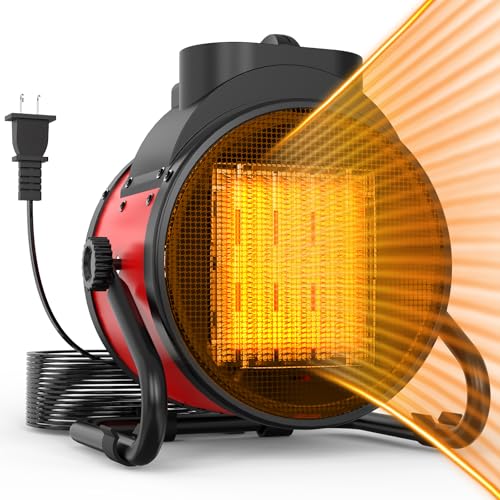
- Best for most apartment balconies, where rules allow any heater at all: 1500W Portable Electric Heater (Model YXC-150R) — Check on Amazon
- Mr. Heater Little Buddy MH4B — prose-only pick: the safest small propane heater here, but propane on a balcony is banned by many leases and fire codes; step-up price besides
- Texsport Portable Outdoor Propane Heater (Item 14215) — prose-only pick: no verified in-budget listing, and the same balcony fuel rules apply
- Cuisinart COH-500 Tabletop Patio Heater — prose-only pick: premium tabletop flame, above budget, and a flame on a small balcony table is the wrong tool for most buildings
- Dura Heat TT-15CSA Tank Top Heater — prose-only pick: price unverified, and a 20 lb tank system does not belong on an apartment balcony
- Mr. Heater MH15T Single Tank Top Heater — prose-only pick: sightings just above budget; included to explain why tank-top heat is a house tool, not an apartment one
Read the full guide ↓
Disclosure: As an Amazon Associate, dailyhomedecorating.com earns from qualifying purchases. Links to Amazon on this page are affiliate links; they cost you nothing extra. Listing details such as price and availability change often, so check the current Amazon listing before you buy.
The search for the best outdoor heater for apartments under $50 has to start with a question no product listing will ask you: are you actually allowed to run a heater on your balcony? For apartment dwellers, the rules come before the shopping. Many leases and HOA rulebooks ban fuel-burning appliances on balconies outright — no propane, no open flame, sometimes no stored fuel cylinders at all — and many local fire codes restrict or prohibit propane heaters and propane storage on the balconies of multi-family buildings, especially covered balconies and balconies above the ground floor. Electric heaters escape most fuel bans, but they are not automatically allowed either: some buildings restrict outdoor appliance use, many balconies have no exterior outlet, and a heater is a heavy electrical load that deserves respect near building wiring. This guide is written inside those rules, not around them. It will not encourage you to break your lease, your HOA rules, or your fire code, and where a popular heater is a bad or banned idea for a typical apartment, it says so plainly and explains why it is still listed.
Within those limits, here is the honest shape of this budget for a renter. One pick below — a compact plug-in electric heater — had a verified Amazon price inside the budget during research, produces no flame and no carbon monoxide, stores no fuel, and is the only pick we link and the only pick most apartment households should seriously consider. The propane picks are covered as prose-only entries for the minority of readers whose buildings genuinely allow them — a ground-floor patio with written permission is a different situation from a fifth-floor covered balcony — and for readers comparing across our guides for a house they may move to later. Two of them, the tank-top heaters, are included mainly to close the question: they are excellent tools at a house and the wrong tools at an apartment, and this guide explains exactly why. Check your lease first, then read on.
In this guide
Best Outdoor Heater for Apartments Under $50: Quick Picks
Each row names a renter situation and the heater that fits it — or states plainly that the fit is “only with explicit permission.” Only the electric pick carries a purchase link, because only it had a verified in-budget Amazon price at research time.
| Renter situation | Pick | Why it stands out | Link |
|---|---|---|---|
| Best for most apartments | 1500W Portable Electric Heater (Model YXC-150R) | No flame, no fuel, no carbon monoxide; plug-in warmth for 1–2 balcony chairs — check price on Amazon | Check on Amazon |
| Only if propane is explicitly allowed | Mr. Heater Little Buddy MH4B | Oxygen depletion sensor plus tip-over shut-off; prose-only step-up, and banned by many leases regardless | Prose-only — see review |
| Smallest propane, same permission caveat | Texsport Portable Outdoor Propane Heater (Item 14215) | Featherweight 1 lb cylinder burner with auto shut-off valve; prose-only, no verified listing | Prose-only — see review |
| Tabletop flame — rarely right in apartments | Cuisinart COH-500 Tabletop Patio Heater | Tilt switch and burner guard, but premium-priced and a flame where most buildings forbid one; prose-only | Prose-only — see review |
| Not for balconies: tank-top on a grill tank | Dura Heat TT-15CSA Tank Top Heater | 15,000 BTU for open ground at a house; prose-only, price unverified, wrong tool here | Prose-only — see review |
| Not for balconies: the big-brand tank-top | Mr. Heater MH15T Single Tank Top Heater | 10,000–15,000 BTU house-and-yard tool; prose-only, sightings just above budget | Prose-only — see review |
First, the Rules: Leases, HOAs, Fire Codes, and Balconies
Fuel-burning heaters are the restricted ones. Across the United States, it is common — not rare — for apartment leases to prohibit grills and fuel-burning heaters on balconies, for HOAs and condo associations to ban propane storage on balconies and in units, and for municipal fire codes to restrict open-flame and propane appliances on multi-family balconies, particularly covered ones and those on upper floors. The details vary by city and building, which is precisely why this guide cannot give you a universal yes. What it can give you is the correct order of operations: read your lease’s balcony and appliance clauses, check your HOA or building rules if you own, and if anything is ambiguous, ask your landlord or property manager in writing before you buy. A heater you are not allowed to use is not a bargain at any price, and a lease violation can cost you far more than this entire budget — up to your deposit or your tenancy.
Electric heaters need a smaller, different check. An electric heater stores no fuel and makes no exhaust, so it passes most fuel bans. But confirm three things. First, that your rules do not restrict outdoor appliances generally. Second, that you actually have an exterior outlet — running a cord through a sliding door or window, pinched and exposed to weather, is not an acceptable substitute. Third, that the outlet circuit can carry a full 1500-watt load alongside whatever else shares it; a heater at full draw is one of the heaviest loads in a home, and it should plug directly into the outlet, never into a light-duty extension cord or a power strip. If any of those three checks fails, the honest answer for your balcony may be no heater at all — warmer clothing, an outdoor rug underfoot, and the building’s shared spaces — and this guide would rather tell you that than sell you a problem.
Carbon monoxide does not care about your intentions. Every propane pick in this guide produces carbon monoxide and is built for open air. A balcony is outdoors, but a covered, railed, wind-shadowed balcony is much closer to an enclosed space than a yard is: exhaust can pool under a balcony ceiling and drift through an open door into your unit and your neighbors’. That is one more reason flame heaters and apartment balconies mix badly even where nobody has banned them. Never run a propane heater on a balcony while you sleep, never bring one inside to “take the chill off” a room, and never use one in a garage, tent, or camper. The safety commission’s record in this category includes a death from a tabletop propane heater used inside a camper; the rule exists because the mistake is fatal.
Clearance and tip-over discipline shrink on a balcony. The working rule in this guide — at least three feet of clear space around a heater, more where the manual demands it, nothing combustible overhead — is easy in a yard and genuinely hard on a six-foot balcony with a railing, a chair, a planter, and a neighbor’s balcony beside and above you. If your balcony cannot give a heater its clearance, the heater does not fit your home, whatever its price. Prefer published shut-offs: tip-over or tilt switches on anything that stands or sits near furniture, an oxygen depletion sensor on small propane units where they are allowed, overheat protection on electric units. And remember the people above and below you: your heater’s heat, noise, and exhaust are their environment too.
How These Picks Were Chosen
The apartment lens reorders every priority. The first filter was rule-compatibility: could a typical renter plausibly be allowed to use this heater? That put the flameless, fuel-free electric pick first and pushed every propane pick behind an explicit-permission warning. The second filter was the same hard budget rule used across this site: a purchase link requires a verified Amazon price inside the budget at research time. Only the electric pick passed it, so only the electric pick is linked; everything else is prose-only with its price position stated honestly — the Little Buddy and the MH15T sit above this budget, the Cuisinart far above it, and the Dura Heat’s price could not be verified at all because its listing carried no featured offer.
The third filter was documentation and safety. Every pick needed verifiable specifications and at least one named, published safety device, and we checked the U.S. Consumer Product Safety Commission recall record for the category before finalizing the list: gas patio heaters have been recalled for fire and burn hazards, a tabletop propane heater was recalled over carbon monoxide, and electric space heaters have been recalled for overheating. Any model under a current recall was excluded entirely and appears nowhere in these recommendations. The fourth filter was balcony realism: footprint, storage (renters store heaters in closets, not sheds), cord or fuel logistics, and whether the heater’s heat pattern suits one or two chairs in a small rectangle of outdoor space. On those measures the two tank-top heaters fail the apartment test completely — they are here so that readers who find them cheap elsewhere understand what they actually are before one ends up on a balcony.
Detailed Reviews: Every Pick, With the Apartment Caveats Attached
1500W Portable Electric Heater (Model YXC-150R) — Best for Most Apartments
Who it suits. A renter whose lease bans flame or fuel on the balcony (the common case), who has an exterior outlet, and who wants to stretch balcony season for morning coffee or an evening for two. Also the renter whose building allows heaters generally but who simply does not want propane cylinders in a small home.
This is a compact plug-in heater sold on Amazon under a descriptive listing, model YXC-150R: 1500 watts at full draw, three heat modes, a fast-heating element, and published overheat protection. On a balcony, its virtues are exactly the ones that matter. It makes no flame and no carbon monoxide, so the fuel-ban clauses in most leases simply do not apply to it. It stores no fuel, so there is nothing in your closet for a rulebook to object to. It turns on and off instantly, which suits the short sessions balcony life actually consists of, and its warmth is personal and directional — two chairs, the heater between or beside them, everyone within a few feet. At 1500 watts it is also a serious electrical citizen: plug it directly into the balcony outlet, confirm nothing else heavy shares that circuit, and keep the cord flat and out of the walkway.
Pros. The only pick in this guide with a verified in-budget Amazon price at research time — check price on Amazon before you order, since prices move. Compatible with the fuel bans most apartment households live under. No cylinders to buy, store, or explain to a landlord. Overheat protection is published. Small enough to store in a closet and carry out in one hand.
Honest limitation. The listing publishes no weather-resistance grade we could verify, so it lives indoors between uses and comes in before rain — on a balcony, treat it as a fair-weather appliance you deploy, not install. Its heat reaches a few feet, not a whole balcony plus guests. It is an unbranded marketplace listing rather than a legacy brand, so lean on the published protections and Amazon’s return window. And none of this overrides your own building: if your lease restricts outdoor appliances generally, or you have no exterior outlet, this heater is not your answer either.
Choose it if your rules allow an electric appliance outdoors and you have the outlet. Skip it if your balcony has no power — do not solve that with a cord through a doorway — or if your building bans outdoor appliances outright.
Mr. Heater Little Buddy MH4B — Only If Propane Is Explicitly Allowed
Who it suits. The narrow slice of apartment readers — think ground-floor units with open patios, or buildings whose written rules expressly permit small propane appliances outdoors — who want the best-engineered small propane heater and can document that permission. For everyone else, this review is information for a future house, not a shopping list for a balcony.
The Little Buddy (MH4B, stock F215100) is a 3,800 BTU radiant propane heater on an 8-inch round stand, under six pounds, running about five and a half hours on a one-pound cylinder by the maker’s figures, with one-button piezo ignition. Its safety package leads its class: an oxygen depletion sensor and an accidental tip-over shut-off, with CSA certification. If a propane heater is ever defensible in a small outdoor space, it is one built like this.
Pros. The strongest published safety story in small propane heat. Tiny footprint and genuinely portable. No outlet needed, which tempts balcony owners — resist the temptation unless your permission is explicit. Predictable runtime per cylinder.
Honest limitation. Two disqualifiers stack up for most renters. First, price: verified sightings put it clearly above this budget, so it is prose-only here. Second, and more important, permission: a one-pound cylinder is still stored propane fuel and an open flame, and many leases, HOAs, and fire codes ban exactly that on balconies — the heater’s indoor-use certification from its maker does not override your lease, and its oxygen sensor does not make a covered balcony a safe place to burn fuel while exhaust drifts toward open doors. Never run it while sleeping, never bring it indoors to warm a room.
Choose it if you have written permission for propane on an open ground-level patio and your budget stretches. Skip it if you live on a covered or upper-floor balcony, if your rules are silent or ambiguous (silence is not permission), or if the budget is firm.
Prose-only pick: price above this budget, and balcony use is restricted in many buildings. Readers whose budgets do stretch should compare it in Best Outdoor Heater For Apartments Under $75, where it competes on level terms.
Texsport Portable Outdoor Propane Heater (Item 14215) — Smallest Propane, Same Rules
Who it suits. The same explicitly-permitted minority as the Little Buddy, on a tighter budget and with simpler tastes: campers-turned-renters who already own one-pound cylinders and like minimal hardware.
Texsport’s long-running portable heater (item 14215) is a stainless burner on a wide base plate with an individual regulator, adjustable output up to roughly 2,900 BTU, a safety grid, and an automatic shut-off valve that closes the fuel supply if the flame goes out. It weighs very little, runs on the same 16.4-ounce or 14.1-ounce disposable cylinders as common camp stoves, and its manual is blunt that enclosed-space use can be fatal.
Pros. The lightest, simplest propane option in this guide. The flame-failure shut-off valve addresses the worst failure mode of a simple burner. Historically sighted at the bottom of this budget band by review sites, which is why apartment shoppers keep asking about it.
Honest limitation. We could not verify a live Amazon ASIN or current in-budget price for this model during research, so it is prose-only with no link and no stock promise. It has no tip-over switch of the Little Buddy’s kind, so its stability is your placement discipline alone. And the apartment rules apply to it in full: it is an open flame burning stored fuel, banned on many balconies, unwelcome on covered ones, and forbidden while anyone sleeps. Its sub-3,000 BTU output is lap warmth for close sitters, nothing more.
Choose it if propane is explicitly allowed in your outdoor space, you find it stocked in budget, and you accept match-era simplicity. Skip it if your building’s rules are anything short of a clear yes, or you want engineered tip-over protection.
Prose-only pick: no verified in-budget Amazon listing at research time, so no purchase link is given.
Cuisinart COH-500 Tabletop Patio Heater — A Flame on the Table, Rarely Right Here
Who it suits. Almost no apartment reader, honestly — and this review exists to say why, because the COH-500 is the tabletop heater renters most often ask about after seeing it in general patio guides.
On a house patio, the COH-500 makes sense: 11,000 BTU of propane heat over a dining table, a reflector top, adjustable output, a burner screen guard, and a safety tilt switch, with a maker-stated useful range of about 30 square feet and roughly a couple of hours per one-pound cylinder at full output. It is a well-regarded tabletop unit with a one-year warranty. The apartment problem is context, not quality. A small balcony table sits within arm’s reach of railings, cushions, the building wall, and the sliding door — the clearance a tabletop flame needs is exactly what a balcony table cannot give it — and the open flame itself is what most leases and fire codes are written to keep off balconies in the first place.
Pros. Heat at torso height for seated diners, a published tilt switch and burner guard, adjustable output, a real brand with a real manual.
Honest limitation. Its normal price is far above this budget — it is a premium step-up several tiers removed — and its listing showed no featured offer on research day, so it is prose-only twice over. Even at a house it demands a stable non-flammable table and disciplined clearance; on a typical apartment balcony it fails the rules test, the clearance test, and the budget test simultaneously.
Choose it if you are reading ahead for a house patio and your budget grows to meet it. Skip it if you are furnishing an apartment balcony now — the electric pick above is your heater, and your table stays a table.
Prose-only pick: premium step-up well above this budget, so no purchase link is given.
Dura Heat TT-15CSA Tank Top Heater — Why Tank-Top Heat Is Not Apartment Heat
Who it suits. Nobody in this article’s audience, and that is the point of including it: tank-top heaters surface constantly in budget searches, they are genuinely cheap-feeling because the tank is sold separately, and an apartment reader deserves a clear explanation before one ends up clamped to a cylinder on a balcony.
The TT-15CSA is a single radiant head that mounts on a 20 lb propane tank and delivers up to 15,000 BTU across three settings. At a house — on open ground, away from furniture, with room to spare — it is a strong, economical tool, and its Amazon ASIN is verified. On a balcony it fails everything: a 20 lb propane cylinder is bulk fuel storage that many leases and codes prohibit on balconies outright; the exposed burner needs wide clearance a balcony cannot give; the system’s stability is a tall tank’s stability; and its output would overwhelm a small enclosed-feeling space while its exhaust pools under the balcony above. Its price, on research day, could not even be verified — the listing carried no featured offer.
Pros (at a house). The most heat per dollar in this guide, long runtime per tank, an established brand with a published manual and warranty.
Honest limitation (in an apartment). Wrong fuel format, wrong clearance needs, wrong storage profile, unverified price. Four strikes.
Choose it if you are shopping for a house, garage apron, or work yard — see the base guide, Best Outdoor Heater Under $50, where it is reviewed in its proper context. Skip it if your outdoor space has a railing, a landlord, or a neighbor above you.
Prose-only pick: price unverified at research time and format unsuitable for apartments, so no purchase link is given.
Mr. Heater MH15T Single Tank Top Heater — The Same Verdict, From the Bigger Brand
Who it suits. Again, a house reader passing through: the MH15T (stock F242100) is Mr. Heater’s single-burner tank-top head, adjustable from 10,000 to 15,000 BTU, with a Hi-Med-Lo valve, an automatic safety shut-off valve, and a maker-published expectation of roughly 28 hours at high output from a 20 lb tank. Its documentation is the best in its class. None of that changes the apartment math: bulk tank, exposed burner, wide clearance, open-air-only. Retail sightings also place it just above this budget even before the suitability question.
Pros (at a house). Adjustable output, named safety shut-off valve, excellent manuals and parts support, long runtime.
Honest limitation (in an apartment). Everything the Dura Heat section just established applies identically, because the format is identical. A famous brand does not make a tank-top heater a balcony appliance.
Choose it if a future house, not your current balcony, is the destination. Skip it if you rent — full stop.
Prose-only pick: sightings just above this budget and format unsuitable for apartments, so no purchase link is given.
Life With a Balcony Heater: The Practicalities Nobody Lists
Your outlet is a shared resource. Balcony outlets typically share a circuit with an indoor room. A heater at full 1500-watt draw leaves little headroom on that circuit for anything else, so learn what shares yours before the first cold evening: if the balcony outlet and the living room’s entertainment stack are one circuit, running both at full tilt invites a tripped breaker mid-evening. The electric pick’s lower modes exist for exactly this negotiation — on a mild night, the middle setting warms two close chairs while drawing meaningfully less, and the difference between “warm enough” and “breaker math” is often one mode down.
Weather exposure is a storage schedule, not a feature. Because the linked electric pick carries no verified weather-resistance grade, its balcony life is a routine: out when you go out, in when you come in, stored dry in a closet between sessions. Renters are actually well suited to this discipline — apartment households already run on deploy-and-store systems for everything from folding chairs to balcony gardens — but price it into the decision. A heater you must carry through the sliding door twice an evening will be used on the evenings you feel like carrying it. For most renters that is most evenings; for some, it is a reason to admit the balcony season ends earlier and spend the budget on a better chair and a warmer throw instead. Both answers are respectable. The disreputable answer is leaving an unrated electric appliance out in the rain because carrying it felt like a chore.
The written-permission conversation, done well. If you decide to ask your landlord or manager about any heater — electric included — ask specifically, in writing, and describe the exact appliance type: a plug-in electric heater with overheat protection reads very differently to a property manager than the word “heater” alone, and a small propane unit with an oxygen sensor reads differently from a tank-top burner. Managers say yes to specifics and no to categories. Keep the reply with your lease. If the answer is no, it is information, not a negotiating opener: the same manager enforces the same rules on your neighbors, which is also what keeps their heaters out of your ceiling’s air.
Insurance and liability, in one honest paragraph. This guide is not legal advice, and your lease is the document that governs your home. But renters should know the shape of the risk: damage caused by an appliance your lease prohibited is the kind of loss that renters insurance may dispute and landlords may charge against a deposit, quite apart from any fine or lease consequence. That asymmetry — a small saving on heat against a large, uninsurable-feeling exposure — is the practical core of this guide’s rules-first stance. A permitted electric heater carries none of that tail risk, which is worth real money even though it never appears on a price tag.
If the answer for your balcony is no heater at all. Some balconies — fully enclosed, outlet-free, under a strict building — simply do not admit a heater at this budget or any other, and this guide’s last service is to say what does work there: an outdoor rug that takes the concrete’s chill out of your feet, chairs with cushions you bring in nightly, a windbreak panel on the railing side the weather comes from, and warm drinks in insulated mugs. None of it needs permission, all of it stores in the same closet, and it extends a balcony season further than renters expect. Spend this budget there without regret, and let the heater wait for a home whose rules invite one.
Electric vs. Propane on a Balcony: The Full Renter Comparison
Because the permission question dominates this keyword, it is worth setting the two fuel families side by side on every axis a renter actually lives with — not just heat. On heat itself, the comparison is closer than the BTU figures suggest: the electric pick’s 1500 watts and the Little Buddy’s 3,800 BTU are the same class of personal warmth, both honestly sized for two close sitters, and the propane pick’s advantage is not power but independence from the wall. On rules exposure, the families are not close at all: electric triggers, at most, a general appliance clause, while propane triggers fuel, flame, and storage clauses simultaneously, each independently capable of making the heater a violation. On running logistics, electric asks for an outlet and a circuit with headroom; propane asks for cylinder purchases, cylinder storage that complies with the same rules you just checked, and a leak check at every connection. On air quality for the neighbors above and below you, electric is a non-event, while propane exhaust on a still evening drifts exactly where balcony architecture sends it — up, into the unit above, whose windows may be open. On storage, electric is a closet shelf; propane is a shelf plus a compliant fuel address. On failure modes, electric’s worst realistic day is a tripped breaker or a dead element discovered in October; propane’s worst day is the reason this guide has a safety section. None of this makes propane a bad fuel — at a house, this site’s other guides recommend it warmly — but on a rented balcony, every axis that is neutral at a house tilts against it, and the one axis that favors it, outlet independence, matters only in the minority of buildings that permit it. That is the whole apartment argument in one paragraph, and it is why the electric pick is not merely the linked pick but the recommended one.
One more renter-specific scenario deserves direct treatment: the balcony you share a wall with. Townhome and condo patios sometimes sit at ground level with a fence rather than a railing, feeling like a yard and reading, legally, like a house. If that is your home, your governing documents may genuinely permit what an upper balcony cannot — and the correct response is still the same order of operations, because “feels like a yard” is not a clause. Check the documents, ask in writing, and only then enjoy the wider shortlist the other guides in this series offer, starting with the base guide to this tier.
Comparison Table
All six picks side by side, with the apartment verdict stated in the open. Outputs are the makers’ published figures.
| Pick | Fuel / power | Published output | Key safety features | Apartment verdict | Link |
|---|---|---|---|---|---|
| 1500W Portable Electric Heater (YXC-150R) | Electric, plug-in | 1500W, 3 modes | Overheat protection; no flame, no CO | Best fit — check your building allows outdoor appliances | Check on Amazon |
| Mr. Heater Little Buddy MH4B | Propane, 1 lb cylinder | 3,800 BTU, single setting | Oxygen depletion sensor; tip-over shut-off | Only with explicit written permission, open patio | Prose-only |
| Texsport Portable Outdoor Propane Heater (14215) | Propane, 1 lb cylinder | Up to ~2,900 BTU, adjustable | Automatic shut-off valve; burner grid | Only with explicit written permission | Prose-only |
| Cuisinart COH-500 Tabletop | Propane, 1 lb cylinder | 11,000 BTU, adjustable | Tilt switch; burner screen guard | Rarely right — flame plus table plus balcony clearances | Prose-only |
| Dura Heat TT-15CSA Tank Top | Propane, 20 lb tank | 15,000 BTU, 3 settings | Safety shut-off valve; tank stability | Not for balconies — house tool | Prose-only |
| Mr. Heater MH15T Tank Top | Propane, 20 lb tank | 10,000–15,000 BTU, adjustable | Automatic safety shut-off valve | Not for balconies — house tool | Prose-only |
How to Choose an Apartment Outdoor Heater at This Budget
Step one is paperwork, not products. Read your lease for the words balcony, grill, propane, flame, and appliance. Check HOA or condo rules if you own. Ask in writing if anything is unclear, and keep the answer. This takes an afternoon and decides your real shortlist: for most renters it leaves exactly one category standing — electric — which is why the linked pick in this guide is electric.
Step two is the outlet audit. Do you have an exterior outlet, on a circuit that can carry a full heater load, positioned so the cord lies flat and dry? If yes, a compact 1500W electric heater is a complete answer for two chairs. If no, do not improvise with cords through doorways; your options are a permitted propane pick (rare), shared building spaces, or dressing for the weather.
Step three is clearance honesty. Measure your balcony’s usable rectangle and place the heater — mentally — with three feet of clear space around it and nothing combustible above it. If the only spot that works is beside the cushions or under the neighbor’s balcony with laundry overhead, the space has voted no.
Step four is the neighbor test. Your heat, exhaust, and noise become your neighbors’ air. Electric heat passes this test silently and odorlessly. Flame heat often fails it even where it is technically allowed, which is a social fact worth weighing alongside the legal one.
Step five is furnishing the space you actually have. A balcony that works for two chairs and a small heater is a good balcony. Readers setting one up from scratch pair this guide with Best Adirondack Chair For Apartments Under $75 for seating that survives weather, Best Deck Box For Apartments Under $50 for the storage every small-space heater needs between uses, and — only for readers whose buildings allow open fire features, which most do not — Best Fire Pit For Apartments Under $50, read with the same rules-first discipline as this guide.
Common Mistakes Apartment Shoppers Make
Assuming “outdoor” on the box means “allowed” on the balcony. Outdoor is a weather description, not a legal one. Your lease and fire code decide, and they frequently say no to fuel-burning appliances.
Treating silence as permission. If your lease does not mention heaters, that is ambiguity, not approval. Ask, in writing, before you buy — especially before you store propane in your home.
Running a cord through a sliding door. A pinched, weather-exposed cord feeding a 1500-watt load is a fire risk wearing a convenience costume. No exterior outlet means no plug-in heater.
Bringing the propane heater inside “just for a few minutes.” Carbon monoxide poisoning from exactly this decision is documented in this product category’s safety record. There is no safe few minutes in a closed room.
Buying the tank-top deal. A cheap heater head that needs a 20 lb tank is not cheap, not small, and not balcony-legal in most buildings. It is a house tool that search results keep showing to apartment shoppers.
Forgetting storage. A renter’s heater lives in a closet ten months a year. The compact electric pick earns its place partly by disappearing; a tank system never does.
Final Recommendation
Do the paperwork first. If your building allows an electric appliance on the balcony and you have an exterior outlet — the most common path to a yes — buy the verified pick: the 1500W Portable Electric Heater (YXC-150R), check price on Amazon, and enjoy two warm chairs with no flame, no fuel, and nothing for your landlord to object to. If propane is explicitly permitted on an open ground-level patio, the Little Buddy is the only propane pick here engineered well enough to consider, at its step-up price, in the next tier’s guide. And if your rules say no heater at all, believe them: that answer costs nothing, risks nothing, and leaves the budget for the balcony furniture you are allowed to enjoy.
Frequently Asked Questions
Are propane heaters allowed on apartment balconies? Very often, no. Many leases and HOA rules ban fuel-burning appliances and propane storage on balconies, and many local fire codes restrict them on multi-family balconies, especially covered and upper-floor ones. Rules vary by building and city, so check your own lease and ask your landlord or manager in writing. This guide does not encourage violating any rule.
Are electric heaters allowed where propane is banned? Usually, because fuel bans target flame and stored fuel, and an electric heater has neither. But buildings can restrict outdoor appliances generally, and you still need an exterior outlet and a circuit that can carry the load. Confirm both before buying.
Can I run a balcony heater from an indoor outlet with an extension cord? Do not. A cord pinched through a door or window, exposed to weather, feeding a full 1500-watt heater is a genuine fire risk. If your balcony has no exterior outlet, a plug-in heater is not a safe option for your home.
Is carbon monoxide a risk on an open balcony? It is a smaller risk than indoors and a larger one than in an open yard. Covered balconies trap exhaust under the ceiling above and beside open doors, and CO is odorless. Flame heaters on balconies should run only in open air, only while everyone is awake, and never where exhaust can drift into living space — one more reason most apartment readers should choose electric.
What if my lease says nothing about heaters? Treat silence as a question, not an answer. Ask your landlord or property manager in writing and keep the reply with your lease. The few days that takes are cheaper than a lease violation.
Can I use a patio heater on a ground-floor apartment patio? Ground-floor patios are the most plausible exception in apartment living: open air, no balcony above trapping exhaust, and sometimes a yard-like setting. The checks do not disappear — your lease and local rules still govern, and fuel storage rules still apply — but a permitted small propane pick like the Little Buddy is far more defensible there than on any upper balcony. Get the permission in writing either way.
Do I need to tell my landlord about an electric balcony heater? If your lease restricts outdoor appliances, yes — ask first. If it is silent, a brief written question costs nothing and creates the record that protects you. If it plainly permits ordinary plug-in appliances outdoors and you have a proper exterior outlet, most renters simply proceed; when in doubt, the written question is always the cheaper path.
What about heating a screened-in apartment porch? Treat a screened or enclosed porch as indoor-adjacent for fuel purposes: no propane heater belongs in it, because exhaust lingers in semi-enclosed air. An electric heater, plugged directly into a proper outlet and kept clear of fabrics, is the only format this guide would consider there — subject, as always, to your building’s own rules.


