Where to buy
Check the latest price, availability and delivery on Amazon. Orders are placed on Amazon. We may earn a commission from qualifying purchases. One pick below is sold through authorized dealers rather than Amazon, and we say so plainly where it appears. Before buying anything in this guide, check your lease — in apartment buildings, the rules decide before the budget does.
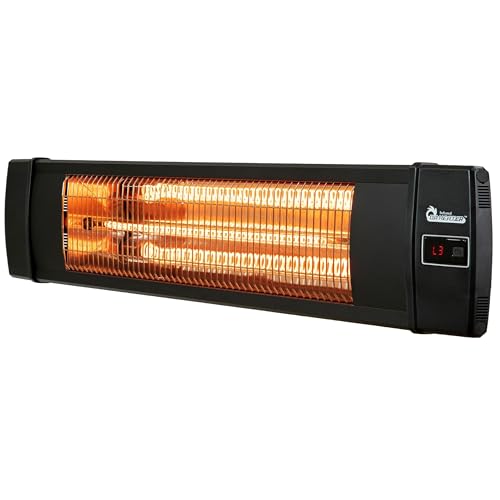
- Best apartment pick overall: Dr. Infrared Heater DR-238 Carbon Infrared Heater, 1500W 120V — Check on Amazon
- Dr. Infrared Heater DR-239 Carbon Infrared Heater, 3000W 240V (owners / hardwired installs only) — Check on Amazon
- Cuisinart Portable Tabletop Patio Heater, 11,000 BTU (COH-500) — ground-floor patios only, where rules allow — Check on Amazon
- EAST OAK 48,000 BTU Patio Heater with Round Table Design (UR48BN1) — private ground-level patios only, where rules allow — Check on Amazon
- EAST OAK 50,000 BTU Patio Heater with Sand Box Base (UR50BN2) — private ground-level patios only, where rules allow — Check on Amazon
- Bromic Tungsten Smart-Heat Electric 6000W — sold through authorized Bromic dealers, not as a stable Amazon listing; relevant to condo owners and landlords, not renters.
Read the full guide ↓
Disclosure: As an Amazon Associate, dailyhomedecorating.com earns from qualifying purchases. Links to Amazon on this page are affiliate links; they cost you nothing extra. Listing details such as price and availability change often, so check the current Amazon listing before you buy.
Searching for the best outdoor heater for apartments under $1500 comes with a catch that no product page will tell you: in most apartment buildings, the binding constraint is not your budget, your balcony size or the weather — it is your lease. Many leases, HOA rulebooks and local fire codes prohibit fuel-burning heaters on balconies outright, and a great many prohibit storing propane cylinders in or near the building at all. A $1500 budget does not override a single word of that. No heater in this guide — at any price — makes a banned heater legal, and we will not pretend otherwise. So this guide is organized around the rulebook first and the hardware second: what is actually permitted on a typical apartment balcony, what is permitted on a ground-floor private patio, and what is only ever an option for people who own their unit and control its wiring.
Here is the honest shape of the answer. For the overwhelming majority of apartment balconies, the correct heater is electric and infrared: no flame, no fuel stored, no combustion exhaust drifting into the unit above — the three things building rules actually object to. Our top pick is a plug-in infrared bar that mounts to a wall or ceiling rail and runs on an ordinary outlet. Condo owners with a terrace and an electrician can step up to hardwired infrared with double the output. The propane picks in this guide are included for one situation only — the ground-floor apartment with a genuinely private, open-air patio, in a building whose rules permit gas heaters — and each one is labeled with that condition rather than waved through. If your situation is the common one, a balcony and a lease, read the electric reviews twice and the propane reviews as a warning about what not to buy.
One more piece of honesty about the budget itself: no apartment needs $1500 of heater, and most need a small fraction of it. The plug-in pick that leads this guide costs a modest share of the tier, and the sensible apartment move is to buy it, keep the change, and put the rest toward the things that actually extend balcony season — a wind screen where rules allow, warm throws, a rug rated for outdoor use. Readers whose buildings do allow more, or whose “apartment” is a townhouse with a yard, will find the wider system view in our main guide to the Best Outdoor Heater Under $700 and the apartment-specific mid-tier roundup at Best Outdoor Heater For Apartments Under $500.
In this guide
Quick Picks
Read the “permitted where” column first. It matters more than the output column in an apartment.
| Buyer type | Pick | Permitted where | Link |
|---|---|---|---|
| Best for most balconies | Dr. Infrared Heater DR-238, 1500W 120V | Any balcony or covered patio with an outlet — electric, no flame, no fuel | Check on Amazon |
| Best for condo owners | Dr. Infrared Heater DR-239, 3000W 240V | Owned units with a 240V circuit; hardwired — never a renter install | Check on Amazon |
| Best tabletop, ground patios | Cuisinart Tabletop Patio Heater (COH-500) | Ground-floor private patios only, and only where lease and fire code allow propane | Check on Amazon |
| Best tower, ground patios | EAST OAK 48,000 BTU Round Table (UR48BN1) | Private ground-level patios with open sky, where gas heaters are permitted | Check on Amazon |
| Strongest tower, ground patios | EAST OAK 50,000 BTU (UR50BN2) | Townhouse-style rentals and owned patios; never a balcony heater | Check on Amazon |
| Premium owner system | Bromic Tungsten Smart-Heat Electric 6000W | Owned terraces and landlord-installed amenity decks — dealer-sold, hardwired | Dealer only — see review |
How These Picks Were Chosen
We applied a rules filter before any product filter. First question for every candidate: can an apartment dweller actually use this without violating a typical lease, HOA rulebook or fire code? Electric infrared passed unconditionally, because it involves no flame, no stored fuel and no exhaust — the three specific hazards balcony rules target. Hardwired electric passed for owners only, because renters cannot lawfully modify a building’s wiring in most jurisdictions and most leases. Propane passed only conditionally, for ground-floor private patios in permissive buildings, and we kept those picks in the guide — clearly fenced — because a large minority of “apartments” are exactly that: ground-floor units and townhouses whose patios are functionally small yards.
Within those fences, we compared the usual things: verified specifications from manufacturer documents and listings, heat type and realistic coverage, mounting and footprint (decisive on a balcony measured in single-digit feet), safety hardware, and price verified against the tier — every linked pick sits far below $1500, and we note sightings in this guide’s sources file rather than printing prices that go stale. We screened the category against U.S. Consumer Product Safety Commission recalls: gas patio heaters have been recalled for component failures that release gas and create fire and burn hazards, and an apartment building is the last place for an appliance you cannot verify. No recalled product appears here.
We did not hands-on test these heaters, and we did not soften the central finding to make the guide more shopper-friendly: for a standard balcony, the recommendation list is short because the permitted list is short. That is the truthful answer to this keyword, and it is worth more than a padded one.
Best Outdoor Heater for Apartments Under $1500: The 6 Picks
Dr. Infrared Heater DR-238 Carbon Infrared Heater, 1500W 120V — Best for Most Balconies
Who it suits: The typical apartment dweller — a balcony, an outdoor outlet or an indoor one near the door, a lease that bans flame and fuel, and two chairs’ worth of evening to warm.
Start with why this heater is legal where propane is not. The DR-238 burns nothing. There is no flame for a fire code to object to, no propane cylinder for a lease to ban from storage, and no carbon monoxide to drift through a neighbor’s open window — the exhaust problem that makes combustion on stacked balconies a genuine hazard to people who never bought a heater. It is a carbon infrared bar: power it, and its element glows and throws radiant heat in a straight line at the people in front of it. Mounted on the balcony wall or under the ceiling of the unit above, angled down at your two chairs, it warms you rather than the neighborhood’s air — exactly right for a space too small to heat volumetrically anyway.
The specification fits apartment life precisely. Three settings — 900, 1,200 and 1,500 watts — let you match output to the evening and to your circuit, because 1,500 watts is 12.5 amps, most of a standard 15-amp circuit; on the lower settings you can share the circuit with the balcony’s other modest loads without tripping anything. It plugs into an ordinary 120-volt outlet, so there is no installation a landlord could object to beyond the mounting itself — and even that deserves a sentence of caution: screwing brackets into a building’s exterior wall or ceiling may itself need permission in some leases, so check, or use a freestanding stand arrangement where the maker supports one. A remote control and a shutoff timer of up to nine hours handle the human factors, the weather-rated aluminum housing tolerates balcony exposure, and when the lease ends the whole heater unscrews and leaves with you — the defining virtue of any apartment purchase.
Its warmth is personal, not panoramic: roughly 5,100 BTU worth of radiant heat that makes two seated people genuinely comfortable in its beam while the balcony’s far corner stays cold. On a six-by-ten balcony, that is not a limitation — the beam is the balcony. This is the pick we would hand to almost every renter who asks, at a small fraction of this guide’s budget.
- Electric infrared: no flame, no fuel storage, no carbon monoxide — the balcony-legal combination.
- Three settings (900/1,200/1,500W) on a standard outlet; lower settings ease circuit load.
- Wall or ceiling mounting keeps every inch of floor space; remote and timer included.
- Moves out with you — nothing permanent, nothing left behind for the landlord.
Honest limitation: It warms the people in its beam at close range, not a space; guests outside the beam get little. Mounting brackets may need landlord permission in strict leases, and the maker’s minimum mounting height must fit your balcony’s ceiling — measure before you order.
Choose it if you have a balcony and a normal lease — this is the default answer. Skip it if you own your unit and want double the output permanently installed; that is the next pick.
Dr. Infrared Heater DR-239 Carbon Infrared Heater, 3000W 240V — Best for Condo Owners
Who it suits: Condo and co-op owners with a real terrace — people who own the wiring behind their walls and can lawfully hire an electrician to extend it outdoors.
Ownership changes the menu. The DR-239 is the DR-238’s bigger sibling: 3,000 watts on a 220–240 volt supply, 10,260 BTU of carbon infrared heat, in a slim 41-inch weatherproof housing rated IP55, with wall and ceiling brackets and a remote offering two heat levels. Double the plug-in ceiling means a terrace that seats four to six gets covered from one mounted unit, with the same balcony-critical properties as its sibling — no flame, no fuel, no exhaust — and the same straight-line radiant behavior that shrugs off the breezes that make high-floor terraces feel colder than the street below.
The conditions are equally clear. The unit ships with a cord ending in a NEMA 6-15 plug; if your terrace already has a matching 240-volt receptacle, installation can be simple. If not — the common case — a licensed electrician runs a dedicated circuit, and in a condo that work typically also needs building approval: many associations regulate exterior fixtures, penetrations and anything visible from the facade. None of this is a reason to avoid the pick; it is a reason to sequence it correctly — association approval first, electrician’s quote second, purchase third. Inside a $1500 budget, heater plus a straightforward circuit run is a realistic total for a single unit, which is exactly what this tier is for.
Renters should read this review as a description of what to ask a landlord about, not what to buy: a tenant cannot install a 240-volt circuit, and a heater that requires one is not a renter’s product no matter how balcony-safe its heat is. Owners, though, get the best apartment-terrace heater in this guide.
- 3,000W / 10,260 BTU — double plug-in output for terraces that seat a group.
- IP55 weatherproof housing; wall or ceiling mount; remote with two levels.
- Still zero flame, zero fuel storage, zero exhaust — association-friendly heat.
- Permanent installation that adds genuine amenity value to an owned unit.
Honest limitation: Owners only — it needs a 240V supply, likely an electrician, and probably association approval for exterior mounting in a condo building. If any of those three is unavailable, this pick is unavailable.
Choose it if you own your unit and your terrace is your living room eight months a year. Skip it if you rent, full stop — the DR-238 above is your heater.
Cuisinart Portable Tabletop Patio Heater, 11,000 BTU (COH-500) — Ground-Floor Patios Only
Who it suits: Ground-floor apartment and townhouse residents with a private, open-air patio and a building that permits propane appliances — a real and common situation, and the only one this pick addresses.
Read the fence before the features: this is a flame-burning propane heater. On a balcony — any balcony, at any height, under any budget — the default answer is no: most leases and HOA rules ban it, many fire codes restrict fuel-burning appliances and fuel storage on multi-family balconies, and its exhaust rises directly toward your upstairs neighbor. Nothing about its modest size or price changes that analysis, and “my balcony is concrete” is not the loophole people hope it is. Where it belongs is the ground-floor patio: a slab of genuinely private outdoor space, open to the sky, in a building whose written rules allow gas patio appliances. There, it is a genuinely good little heater.
On that patio table, the COH-500 delivers 11,000 BTU of radiant warmth at seated height across roughly 30 square feet — the whole dining group, at the level of hands and faces. It runs on a one-pound propane cylinder screwed directly into the unit, so there is no 20-pound tank to store (itself a lease issue in many buildings, even at ground level — store cylinders per your rules, outdoors, never inside the unit) and no hose to trip over. The fitted safety tilt switch cuts the gas if the unit is knocked, the burner sits behind a screen guard, and the whole thing lifts away one-handed when the table is needed for something else.
If your building’s rules are ambiguous, resolve the ambiguity before purchase, in writing, with the property manager — a verbal shrug is not permission, and a heater you must hide to use is a heater you should not own. Readers in the genuinely-permitted ground-patio situation who want to compare smaller budgets will find the same fenced logic in our roundup of the Best Outdoor Heater For Apartments Under $700.
- 11,000 BTU at table height — the warmest seat at a ground-patio dining table.
- One-pound cylinder operation: no large tank to store or hide.
- Safety tilt switch and burner screen guard fitted.
- Truly portable — leaves with you at the end of the lease.
Honest limitation: It is a combustion appliance: banned on most balconies by lease, HOA or fire code, productive of carbon monoxide, and usable only outdoors in open air. One-pound cylinders are also the priciest way to buy propane and need spares on hand.
Choose it if you have a private ground-floor patio and written rules that permit propane. Skip it if you have a balcony — in that case it is not a gray area, it is a no.
EAST OAK 48,000 BTU Patio Heater with Round Table Design (UR48BN1) — Ground Patios, Dining Layouts
Who it suits: Apartment households whose “apartment” includes a real ground-level patio — garden units, townhouse rentals, duplexes — where the patio functions as a small yard and building rules permit a full-size gas heater.
Some apartment patios are balconies in name only: a fenced ground-floor terrace with open sky, a dining set and room to stand a full-size heater with proper clearances. For those spaces, the analysis flips — the question stops being “is a tower allowed” and becomes “which tower.” This EAST OAK is our answer for dining-led layouts. Its 48,000 BTU burner heats a wide circle from a central position, and the round table built around its pole turns the heater into the patio’s furniture anchor: drinks and plates land on it all evening. The double-layer stainless burner resists the warping that ages cheap towers, the base weights down for stability, wheels let you roll it to the patio’s edge for storage, and tip-over plus flame-failure protections are fitted.
The conditions remain conditions. Open sky above — a tower under a balcony deck or low cover violates its clearances and traps exhaust beneath the structure, which in an apartment building means beneath your neighbor’s floor. Side clearance from fences, walls and furniture per the manual. A 20-pound tank to store, outdoors and per your building’s rules. And the same written-permission discipline as the tabletop pick: garden-unit patios are where apartment propane is most often fine, and “most often” is still a thing you verify rather than assume.
Within those fences, this is the heater that makes a ground-floor apartment feel like a house on a Friday night — and at a fraction of this guide’s headline budget, with the remainder better spent on the patio itself.
- 48,000 BTU tower output with a built-in round table surface.
- Double-layer stainless burner; weighted base; wheels for storage moves.
- Tip-over shutoff and flame-failure protection fitted.
- Standard 20 lb tank — one fuel routine for the whole patio.
Honest limitation: It needs open sky, real clearances and tank storage — three things many apartment patios cannot offer — and it is categorically not a balcony product. Assembly and its height also make it the least move-friendly pick here.
Choose it if your ground patio is effectively a small yard and gas is permitted. Skip it if your outdoor space is elevated, covered or small — electric wins all three cases.
EAST OAK 50,000 BTU Patio Heater with Sand Box Base (UR50BN2) — The Big-Patio Option
Who it suits: The minority of apartment households with genuinely large private outdoor space — end-unit townhouses, maisonettes, rented houses divided into units — where a full patio-heating plan, not a balcony compromise, is the actual project.
We include the strongest residential tower in our testing pool for completeness, because some readers arrive at this keyword from homes that are apartments on paper and houses in practice. The UR50BN2’s 50,000 BTU output tops the residential tower class, its sand-fillable base gives it the most honest stability story of any freestanding pick here, and its triple protection system — tip-over shutoff, flame-failure protection and anti-tilt safeguards — is the fullest safety set in the guide. As the anchor of a ground-patio system, paired with the DR-238 aimed at a covered corner, it covers a large private terrace the way our main system guide describes.
But let the framing be unmistakable: for the standard apartment balcony this product is not a stretch goal or a “check with your landlord” maybe — it is a seven-foot combustion appliance that stores a 20-pound propane tank in its base, and it fails every test this guide applies to elevated, shared-structure outdoor space. We list it so that the households it does fit can find it with its conditions attached, not so that balcony shoppers can talk themselves into it. If you are reading this on a balcony, your heater is the first pick in this guide, it costs a fraction of this one, and it will keep you just as warm in the seat you actually use.
- 50,000 BTU — the strongest residential tower output in this guide.
- Sand-fillable base and triple protection: tip-over, flame-failure, anti-tilt.
- Double-layer stainless burner and built-in table surface.
- The right anchor for large, private, ground-level apartment patios.
Honest limitation: Everything about it — flame, fuel storage, height, clearance demands — is incompatible with balconies and most apartment rules. It is included for ground-level exceptions, and it should be read that way.
Choose it if your apartment’s patio is a yard in all but name and gas heaters are permitted. Skip it if you hesitated at any word in that sentence.
Bromic Tungsten Smart-Heat Electric 6000W — The Owner and Landlord System (Prose Only)
Who it suits: Condo owners with large terraces undertaking a renovation, and landlords or associations heating a shared amenity deck — the two apartment contexts where a dealer-sold, hardwired system makes sense.
Bromic’s Tungsten Smart-Heat Electric is the commercial infrared line specified for restaurant terraces, and its 6000W model — two elements, 240 volts at 25 amps, a manufacturer-rated heat area around 160 square feet, wall, ceiling or recessed mounting, and a controller ecosystem with zoning and dimming — is what a permanent apartment-terrace installation looks like when it is done to a professional standard. It produces no flame and no exhaust, which keeps it on the right side of the rules that ban combustion; what it needs instead is everything renters cannot provide: a dedicated circuit, an electrician, and, in a condo, association approval for a permanent exterior fixture.
It is sold through authorized dealers rather than a stable Amazon listing, which is why there is no purchase link here — and for this product that channel is a feature, because a dealer verifies voltage, mounting height (this series wants 96 inches for ceiling mounting) and controller pairing before money moves. The installed total — heater, controller, circuit, labor — can consume this guide’s entire $1500 budget for a single unit, and for a shared amenity deck or a flagship terrace that arithmetic can be right. For an individual renter it is simply not your purchase, and for most owners the DR-239 delivers the same category of heat at a fraction of the installed cost. Households weighing flame-based ambience for a ground patio instead should look at the Best Fire Pit For Apartments Under $1500 — subject to exactly the same lease and fire-code discipline described throughout this guide.
- 6,000W dual-element infrared; about 160 sq ft rated heat area.
- Zoned, dimmable control — a system, not an appliance.
- No flame or exhaust; the constraints are electrical and administrative, not fire-code.
- Dealer-sold with installation verification and warranty support.
Honest limitation: Permanently installed, electrician-required, association-approval-likely, and priced — installed — at or beyond this entire budget for one unit. Renters cannot use it; most owners do not need it.
Choose it if you are renovating an owned terrace or specifying an amenity deck. Skip it if you rent, or if the DR-239’s output already covers your space.
No Amazon link for this pick — it is sold through authorized Bromic dealers; ask a local heating specialist for the Tungsten Smart-Heat Electric 6000W.
Comparison Table
| Product | Type | Output | Apartment verdict | Link |
|---|---|---|---|---|
| Dr. Infrared DR-238 | Electric infrared, plug-in, mounted | 900–1,500W | Balcony default — no flame, fuel or exhaust | Check on Amazon |
| Dr. Infrared DR-239 | Electric infrared, 240V, mounted | 3,000W / 10,260 BTU | Owners with terraces; electrician required | Check on Amazon |
| Cuisinart COH-500 | Propane tabletop, 1 lb cylinder | 11,000 BTU | Ground patios only, where propane is permitted | Check on Amazon |
| EAST OAK 48,000 BTU (UR48BN1) | Propane tower with table | 48,000 BTU | Ground patios with open sky; never balconies | Check on Amazon |
| EAST OAK 50,000 BTU (UR50BN2) | Propane tower, sand base | 50,000 BTU | Large private ground patios only | Check on Amazon |
| Bromic Tungsten Electric 6000W | Electric infrared, hardwired, dealer | 6,000W / 240V | Owned terraces and amenity decks | Dealer only |
How to Choose an Outdoor Heater for an Apartment: Rules First, Then Hardware
Read your lease before you read reviews. Search the document for the words heater, propane, flame, balcony and fuel. Many leases ban open-flame appliances on balconies in a single sentence; HOA rulebooks often add propane storage limits for the whole building, including ground floors. Local fire codes in many cities separately restrict fuel-burning appliances and fuel storage on balconies of multi-family buildings above the ground floor. Any one of the three — lease, HOA, fire code — can prohibit a heater on its own, and all three outrank this guide, your budget and the product’s marketing. If the documents are silent or ambiguous, get the answer from your property manager in writing. A heater you have to hide from the building is a heater that can cost you your deposit or your lease.
Understand what the rules are actually afraid of. Three hazards drive balcony regulation, and knowing them lets you shop intelligently instead of hopefully. Flame near railings, stored items and the building’s facade is the fire concern. Stored propane is the fuel concern — a cylinder in a closet or beside a water heater is a problem even if the heater is fine. And combustion exhaust is the neighbor concern: a gas heater’s carbon monoxide and fumes rise and drift, and on stacked balconies they drift into someone else’s home. Electric infrared triggers none of the three, which is why it is the default recommendation here and why building managers who ban “heaters” generally mean combustion ones. When you ask permission, asking about “an electric infrared heater, no flame, no fuel” is a different and much easier conversation.
Size the heat to two chairs, not to a patio fantasy. Apartment outdoor space is small and its use is concentrated: a pair of chairs, a small table, one or two people, most evenings. A mounted 1,500-watt infrared bar aimed at that cluster delivers more felt warmth than a far stronger heater heating the whole balcony’s air — air your neighbors’ walls and the open railing immediately steal. Spend on aim, not output: mounting position, angle and a remote you will actually use matter more than wattage beyond the plug-in ceiling. If your space genuinely seats six, you are probably on a ground patio or terrace, and the owner-tier picks in this guide become relevant.
Check the circuit, not just the outlet. A balcony outlet is often on a shared 15-amp circuit with indoor receptacles. A 1,500-watt heater draws 12.5 amps — nearly the whole circuit — so if the same circuit runs a television, a fridge or festoon lighting, expect trips until you drop the heater to a lower setting. The DR-238’s three settings exist for exactly this negotiation. Never solve a tripping breaker with an extension cord trick: if a cord is unavoidable, it must be a short, outdoor-rated cord of adequate gauge, fully uncoiled, and the heater’s own manual governs — many makers prohibit extension cords entirely, and their word wins.
Keep every safety rule that applies in a house — they apply harder in a building. Combustion heaters, where permitted at ground level, still need their full clearances from walls, fences and furniture, still produce carbon monoxide that must never be allowed to accumulate near doors, windows or enclosed corners, and still need tip-over protection that works — a crowded small patio knocks things over more, not less, than a big yard. Before buying any gas appliance, check its model against the CPSC recall database; gas patio heaters have been recalled for defects that release gas and create fire and burn hazards, and in a multi-family building the people exposed to a bad appliance include everyone above you. Mounted electrics need their maker’s clearances too — infrared bars of the Infratech class specify 36 inches in front of the face and 18 inches at the sides — and on a small balcony those numbers can rule a mounting position in or out, so measure first.
Respect the altitude. Balconies get colder as buildings get taller, and the reason is wind. Upper floors sit in faster, less obstructed air than any garden, and wind attacks heating in two ways at once: it strips warmed air away from your skin, and it bends the output of any heater that relies on heating air in the first place. This is the practical argument for infrared in apartment settings — radiant energy travels in a straight line from element to occupant and loses far less of itself to a breeze than a convection plume does. It is also an argument for placement: mount the bar on the building wall, so the structure itself blocks the prevailing wind and the beam crosses your seats from the sheltered side, rather than on an exposed railing mount where the heater fights the weather from the worst position. A wind screen, where your rules and your railing allow one, can be worth more felt warmth than stepping up a heater class — though screens, like heaters, are a check-the-lease item in most buildings, and a screen that turns a balcony into an enclosure also changes the combustion analysis entirely: enclosed space, no gas heat, no exceptions.
Buy for the move-out. The apartment-specific virtue nobody lists on a spec sheet: everything you buy will be carried down stairs or into an elevator within a few years. Plug-in, mountable, unscrew-and-go heaters respect that reality; permanently installed systems are owner purchases; and heavy propane towers are a commitment a renter should make only for a ground patio they expect to keep. The best apartment heater is the one that is still legal, useful and yours at the next address. Compact-space shoppers will find the same philosophy applied to tight floor plans in our guide to the Best Outdoor Heater For Small Patios Under $1500.
Common Mistakes
Buying propane for a balcony because the listing says “balcony-friendly.” Marketing language has no standing with your lease, your HOA or your fire marshal. Tabletop size does not exempt a combustion appliance from fuel-burning rules, and a one-pound cylinder is still stored fuel. If the documents ban flame or propane on balconies, the correct purchase is electric, whatever the product title promises.
Assuming a bigger budget buys an exception. It does not. The $1500 tier buys better hardware and professional installation; it does not buy a variance from the fire code. Every premium pick in this guide is premium within the rules — hardwired electric for owners — not around them.
Storing the cylinder indoors “just for winter.” Propane cylinders belong outdoors, upright, away from heat and ignition sources, in whatever arrangement your building permits — never in the unit, a storage cage not rated for it, or beside the heater while it runs beyond the maker’s instructions. Storage violations are the most common way apartment heater ownership actually goes wrong.
Running a gas heater in a screened or enclosed balcony. Screens and balcony enclosures turn open air into a room, and combustion in a room is a carbon monoxide scenario. If the space can be closed, combustion does not run in it while it is closed — and the safer apartment answer is to keep combustion out of such spaces entirely and let electric do the work.
Mounting first, asking later. Drilling into exterior walls, railings or the ceiling of the unit above can itself breach a lease, even for a permitted electric heater. A two-minute message to the property manager before the drill comes out protects your deposit; several picks in this guide can also sit on stands or existing structures where makers allow it.
Heating the balcony you wish you had. Apartment shoppers routinely buy for a mental image — a long terrace, six friends, a dining table — while owning nine feet of concrete and two chairs. Oversized heaters on small balconies are not just wasted money; a tower-class appliance in a space sized for a bar heater crowds the exits, crowds the railing clearance and crowds the very seats it was meant to warm. Measure the space, count the chairs that actually exist, and buy for that photograph instead. If the real number is two chairs, the plug-in bar is not the budget option — it is the correct one, and the unspent budget is a feature of the plan rather than a failure to use it.
Ignoring the neighbors.
Heat rises, exhaust drifts, and a glowing tower on a ground patio shines into the unit above. Apartment heating is a shared-structure activity: keep exhaust away from windows above you, aim infrared at your own seats, and remember that the fastest way to get a building-wide ban is to be the reason for it.
Final Recommendation
For the typical apartment, this guide’s answer is deliberately short: buy the DR-238, mount it over your two chairs with whatever permission your lease requires, run it on the setting your circuit likes, and keep the large majority of the $1500 for everything else balcony season needs. Condo owners with terraces should get the association’s blessing and an electrician’s quote, then install the DR-239 — or, in a renovation, the Bromic system — and enjoy the one genuinely premium outcome this budget offers apartment life. Ground-floor households with private patios and permissive written rules may add the Cuisinart for the table or an EAST OAK tower for the yard, with clearances and storage handled by the book. What nobody should do is spend this budget trying to out-argue a lease. The rules are the review; the hardware is the easy part. And if you take one habit from this guide into every future apartment purchase, let it be the sequence: documents first, permission in writing second, measurements third, product last. That order feels slow for exactly one purchase — the first one — and then it becomes the reason your balcony is warm, your deposit is intact and your relationship with the building survives to the next lease renewal. Apartment outdoor living rewards the households that treat constraints as design inputs rather than insults, and a small, legal, well-aimed heater used every evening beats a powerful banned one used in secret twice.
FAQ
Are propane heaters allowed on apartment balconies?
Usually not. Many leases and HOA rulebooks prohibit fuel-burning appliances on balconies, and many local fire codes restrict them — and propane storage — on multi-family balconies above ground level. The exact answer lives in your lease, your HOA rules and your city’s fire code, and you should confirm it in writing before buying. Where all three are silent and permissive, a small tabletop unit is the most defensible propane choice; where any one prohibits, electric is the answer.
What is the best heater type for a balcony?
Electric infrared, mounted and aimed at your seats. It has no flame for fire codes to object to, stores no fuel for leases to ban, and produces no carbon monoxide to drift into neighboring units. A 1,500-watt plug-in bar like the DR-238 covers a typical two-chair balcony completely.
Does a $1500 budget change what is allowed?
No. Budget buys hardware quality and professional installation, never regulatory exceptions. The premium end of this guide — hardwired infrared installed by an electrician, with association approval where required — is premium compliance, not a way around the rules.
Can renters install a hardwired heater like the DR-239 or a Bromic?
Effectively no. Hardwired heaters require modifying the building’s electrical system, which renters are not authorized to do under typical leases and electrical codes. Those picks are for owners — or for landlords installing them as an amenity. Renters should stay with plug-in equipment that leaves with them.
Is a tabletop propane heater safe on a small balcony if I am careful?
Care does not cure the two structural problems: it is still a fuel-burning appliance that most balcony rules prohibit, and its carbon monoxide rises toward the unit above regardless of how carefully it is used. On a permitted ground-floor patio, with its tilt switch working and clearances respected, it is a reasonable product. On a balcony, choose electric.
What about a fire pit on an apartment balcony?
The same discipline applies, only more so — open flame is the most commonly banned category of all. Our guide to the Best Fire Pit For Apartments Under $1500 works through which fire-pit types, if any, survive a typical lease; read it alongside your own documents before spending anything.


