Where to buy
Check the latest price, availability and delivery on Amazon. Orders are placed on Amazon. We may earn a commission from qualifying purchases.
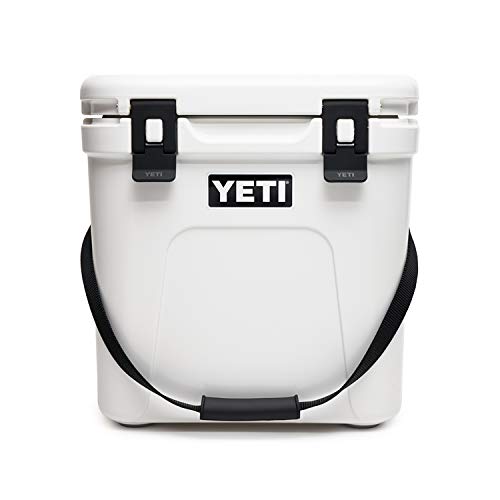
- Best for most small patios: YETI Roadie 24 Hard Cooler — Check on Amazon
- Best patio anchor and side table: RTIC 45 QT Ultra-Tough Cooler — Check on Amazon
- Best value full-size, if the patio can take it: Lifetime 55 Quart High Performance Cooler (90820) — Check on Amazon
- Best wheeled option for tight spaces: RTIC 52 Quart Ultra-Light Wheeled Cooler — Check on Amazon
Two further picks, the YETI Tundra 35 and the Pelican 50QT Elite, are reviewed in prose below: both are priced at or across this guide’s ceiling, so neither is linked as an under-$300 buy. Read the full guide ↓
Disclosure: As an Amazon Associate, dailyhomedecorating.com earns from qualifying purchases. Links to Amazon on this page are affiliate links; they cost you nothing extra. Listing details such as price and availability change often, so check the current Amazon listing before you buy.
Finding the best outdoor cooler for small patios under $300 begins with a tape measure, not a brand name — and with one honest sentence most cooler guides avoid: on a small patio, the $300 ceiling should buy you the best small cooler, not a big one. A small patio — a townhouse slab, a condo terrace, the paved corner behind a city rowhouse — might offer sixty or eighty square feet in total, and every object on it competes with chairs, a table, a grill and the people. A cooler out there is never just a cooler. It is a side table when its lid is flat, a seat when guests outnumber chairs, a step when the string lights need hanging, and a permanent resident whose footprint is paid for in space every day of the year, including the 350 days it is not keeping anything cold.
So this guide ranks by patio mathematics first: exterior footprint per quart of real capacity, lid usefulness as furniture, height that works as a side table beside a chair, and storage that tucks against a wall or into a deck box’s neighborhood without swallowing the space. The YETI Roadie 24 leads because its tall, narrow body was practically drafted for this brief — premium rotomolded build, wine bottles upright, a footprint smaller than a chair’s. The RTIC 45 QT Ultra-Tough is the anchor pick for patios that host seriously: furniture-grade lid, decade-grade shell. The Lifetime 55 is here with its conditions stated plainly — it is the value champion if, and only if, your patio can give it a permanent corner. The RTIC 52 Ultra-Light Wheeled solves the small-patio paradox of needing party capacity without permanent footprint: it rolls out for the event and rolls away after. And two benchmark tanks, the YETI Tundra 35 and Pelican 50QT Elite, are reviewed in prose — excellent coolers whose prices sit at or across this ceiling. If your patio and your budget are both small, Best Outdoor Cooler For Small Patios Under $150 is the honest sibling of this guide; this one is for buyers spending up on build at patio scale.
In this guide
Quick Picks
Short on time, or comparing several options at once? Each row below names a small-patio situation and the cooler that suits it, with a link to the listing.
| Small-patio situation | Pick | Why it stands out | Link |
|---|---|---|---|
| Best for most small patios | YETI Roadie 24 Hard Cooler | Tall, narrow rotomolded cooler — a chair-sized footprint, bottles upright | Check on Amazon |
| Best anchor / side table | RTIC 45 QT Ultra-Tough Cooler | Furniture-grade lid, rotomolded shell, the patio’s permanent cold station — check price on Amazon | Check on Amazon |
| Best value, if space allows | Lifetime 55 Quart High Performance Cooler | 55 quarts at the lowest tier here — buy it only for a patio with a corner to spare | Check on Amazon |
| Best roll-out party capacity | RTIC 52 Quart Ultra-Light Wheeled Cooler | Party size that arrives on wheels and leaves the same way | Check on Amazon |
| Benchmark (prose only) | YETI Tundra 35 | The classic mid-size YETI — priced right at this ceiling, so no link | See review below |
| Tank (prose only) | Pelican 50QT Elite | Lifetime warranty and the best latches here — priced across the ceiling, so no link | See review below |
How These Picks Were Chosen
Small-patio fitness was the first filter, applied with a tape measure. We compared exterior footprints — not nominal quarts — and favored shapes that stand flat against a wall, slide beside a chair, or park under a table’s overhang. We weighted lid utility heavily, because on a small patio the lid is a working surface: flat enough for a glass and a plate, strong enough to sit on, at a height that reads as a side table rather than a obstacle. And we weighted honest capacity — maker can ratings at a stated ice ratio — over model numbers, because thick premium walls make exteriors grow faster than interiors, a tax small patios pay double.
The budget rule matched our other guides: a pick is linked only if its Amazon listing has recent sightings at or under $300, cross-checked against a price-history tracker, the maker’s store or a second retailer during research in November 2026. Two famous names fail that test here in instructively different ways — the Tundra 35 hugs the ceiling from inside, the Pelican 50QT Elite straddles it — so both are reviewed in prose, unlinked, with their pricing situations stated in their reviews. No fixed price is printed for any cooler; check price on Amazon before judging value. Safety screening was identical: CPSC cooler recall records were checked, the major 2025 recall of a 90-quart rolling line from another brand was noted and that line excluded entirely (it is neither used nor named in this guide), and no pick here had a CPSC recall we could find as of writing. We did not buy or test these coolers ourselves; reviews synthesize manufacturer specifications, retailer listings and independent coverage, and maker claims are labeled as maker claims.
One more filter deserves stating, because it is the soul of this guide: every pick had to justify its residency. A small patio cannot warehouse a maybe. If a cooler could not articulate its daily job — side table, seat, station, or a roll-away party role — it did not make the list, whatever its ice retention. Readers furnishing the rest of a compact outdoor room will find the same philosophy in Best Adirondack Chair For Small Patios Under $300 and Best Outdoor Rug For Small Patios Under $300, and the storage that makes small patios survivable in Best Deck Box For Small Patios Under $300.
Best Outdoor Cooler for Small Patios Under $300: The 6 Picks in Detail
YETI Roadie 24 Hard Cooler
Who it suits: Most small patios, most of the time — households of two to four whose cooler must earn its square footage as a side table and drinks station, not just occupy it.
The Roadie 24’s dimensions tell its story before its insulation does: roughly 16.5 by 14.5 by 17.5 inches, a footprint smaller than the chair it will stand beside, in a tall format that uses the one dimension small patios have spare — height. That height is functional: wine bottles and 2-liters stand upright inside, so the cooler works as a proper drinks station at a patio dinner, and its lid sits at side-table height with a surface that takes two glasses and a small plate without drama. The build is uncompromised YETI: rotomolded shell, pressure-injected PermaFrost insulation, a freezer-style ColdLock gasket, the NeverFail hinge, a QuickLatch that opens one-handed while you carry the salad out, and a five-year warranty. YETI rates it around 18 cans at a 2:1 ice ratio — drinks for four across a long evening, cold into a second day.
On a small patio, its daily-life details compound. At about thirteen pounds empty it moves with one hand — out for dinner, back against the wall after — so it never becomes the immovable object the patio must be arranged around. The original version linked here has no drain plug; on a patio that means no plug weeping onto pavers, and emptying is one tip over the garden edge or into a utility sink. (Many current listings are the 2.0 version, which adds a drain plug and a shoulder strap.) It stores in a closet or under a counter between uses, which is the deepest small-patio virtue of all: the best footprint is the one that disappears. Check price on Amazon — its list price sits inside this budget with room, and seasonal colors discount regularly.
- Footprint about 16.5 × 14.5 in — smaller than the chair it serves.
- Tall body: wine and 2-liters upright; lid at side-table height.
- Rotomolded build, ColdLock gasket, one-handed QuickLatch, five-year warranty.
- About 13 lb empty and closet-storable — check price on Amazon.
Honest limitation: Around 18 cans with ice is a dinner party, not a barbecue crowd; and per quart it is the priciest cold storage in this guide.
Choose it if your patio hosts the way you live — small, often, and well. Skip it if your patio regularly feeds eight or more, in which case buy it second, after a roll-away party cooler below.
RTIC 45 QT Ultra-Tough Cooler
Who it suits: Small patios that host seriously — the townhouse terrace that seats six and feeds eight — where the cooler is a permanent anchor piece and must work as furniture every day it sits there.
The case for a 45-quart rotomolded cooler on a small patio sounds like a contradiction until you price the alternative: a cheap cooler that is only a cooler. The Ultra-Tough is a one-piece rotomolded shell with up to three inches of insulation, a freezer-style gasket and heavy T-latches, rated by RTIC for 48 cans plus ice — but its patio value is its lid. Flat, broad and seat-strength, the lid is a bench for two when chairs run out, a side table for the grill cook, a step for hanging the string lights in spring. Parked against the patio wall, the cooler becomes the room’s anchor: drinks station during parties, furniture between them, and a decade-long object rather than a seasonal purchase. Check price on Amazon, where it sits mid-tier in this budget.
The conditions are real and should be measured, not vibes. Its footprint is a genuine commitment — roughly the size of a small ottoman — and at about 29 pounds empty and 60-plus loaded, with no wheels, its parking spot is chosen once and kept. On a patio under, say, seventy square feet, that commitment only makes sense if the lid-as-furniture math works: if the cooler replaces a side table and a spare seat, it is nearly free in space; if it merely adds to a full furniture set, it is the thing everyone will squeeze past. The rapid-flow drain aims meltwater into a patio drain or garden edge without tipping, and the non-slip feet keep it planted on pavers. Buy it as architecture, and it is the best anchor in this guide. Buy it as an appliance, and it will feel like one — large.
- Rotomolded shell with up to 3 inches of insulation; freezer-style gasket.
- Lid is bench, side table and step — the furniture math that justifies it.
- 45 quarts (maker-rated 48 cans plus ice); rapid-flow drain; non-slip feet.
- Mid-tier price in this budget — check price on Amazon.
Honest limitation: A permanent, ottoman-sized footprint and serious loaded weight; on the smallest patios it can crowd out the furniture it is meant to serve.
Choose it if the cooler can replace a table and a seat in your patio plan. Skip it if every square foot is already spoken for — the Roadie above was designed for your patio.
Lifetime 55 Quart High Performance Cooler (90820)
Who it suits: The small-patio minority with one true luxury: a spare corner — a wide spot beside the grill, a deep edge along the fence — plus a host’s appetite that outgrew compact coolers.
Let the conditions come first, because this pick is conditional and this guide will not soften it: the Lifetime is a 55-quart cooler, the biggest linked box here, and on a genuinely small patio it only works as a permanent resident of a corner you have measured and surrendered. What that surrender buys is the finest value in premium cooling: up to seven days of ice retention as a maker claim, a certified bear-resistant build (the Interagency Grizzly Bear Committee certification, with lock points), rope handles with foam grips, a stainless hinge rod, a built-in bottle opener and grippy feet — at a price whose long history sits far below this guide’s ceiling. Check price on Amazon and expect the value end of the tier; independent coverage has repeatedly found its real-world ice life competitive with rotomolded coolers at twice the price.
If the corner exists, the Lifetime uses it well. Its tall, rectangular shape stands flatter against a wall or fence than squat rotomolded designs, takes platters and upright bottles, and its flat lid joins the patio furniture rotation as a serving surface. It becomes the house cooler: stocked on party weekends, the overflow fridge at holidays, the box that makes the small patio host look like a big-house host. If the corner does not exist, no discount justifies it — a cooler you must step around daily is a tax, not a bargain, and the honest move is the Roadie and a roll-away party plan. This review trusts you with the tape measure; the pick trusts you with everything else.
- 55 quarts; up to 7-day ice retention as a maker claim; bear-certified build.
- Tall rectangular shape parks flat against a wall or fence line.
- Rope handles, stainless hinge, built-in bottle opener, grippy feet.
- Price history far below the ceiling — check price on Amazon.
Honest limitation: The largest resident footprint in this guide and a heavy loaded lift with no wheels; bought without a measured corner, it becomes the patio’s biggest obstacle.
Choose it if you have measured a corner and your hosting has outgrown compact coolers. Skip it if you are hoping it will somehow fit — on a small patio, hope is not a dimension.
RTIC 52 Quart Ultra-Light Wheeled Cooler
Who it suits: Small-patio hosts whose everyday life is compact but whose parties are not — the cooler lives in the garage, storage room or indoors, and rolls onto the patio only when the guest list does.
This pick resolves the small-patio paradox: party capacity is a sometimes need, but footprint is an always cost. The Ultra-Light Wheeled keeps the two separate. Its injection-molded shell — more than 30 percent lighter than rotomolded coolers of the same size by RTIC’s rating — carries a maker-rated 78 cans in 52 quarts, with multi-day ice performance in independent testing, a freezer-style gasket, a seat-strength lid, and a rapid drain. On party day it rolls from storage to the patio’s edge, serves as the drinks station and overflow table, and at night’s end it rolls back to its real home, returning every square foot it borrowed. A resident cooler could not do that; a carried cooler would not, because a loaded 52-quart carry is how hosts learn to dread their own parties.
The conditions are about the route, not the patio. The path from storage to patio must be wheelable — no long staircases, no gravel sea — and the storage spot must exist: a garage corner, a storage room, a wide hallway wall. Given those, this is the most rational big-cooler purchase a small-patio household can make, and its price near the top of this budget — check price on Amazon — buys the only big capacity here that does not tax the patio on ordinary days. Its shell trade is the standing Ultra-Light one: injection-molded toughness and ice a step below rotomolded armor, in exchange for the lightness that makes the whole roll-out system work.
- 52 quarts (maker-rated 78 cans) that visit the patio instead of living on it.
- Shell about 30% lighter than rotomolded rivals; wheels and telescoping handle.
- Seat-strength lid works as the party’s overflow surface.
- Rapid drain; rolls home at night — check price on Amazon.
Honest limitation: It still needs a storage home and a wheelable route, and its price sits near the ceiling for a cooler the patio only sees on party days.
Choose it if your parties are big and your patio is not. Skip it if storage-to-patio involves stairs, or your gatherings never exceed six — the Roadie covers that life permanently.
YETI Tundra 35 (Prose Only — Priced at the Ceiling)
Who it suits: Small-patio buyers who want the classic Tundra build at its most patio-plausible size — and who find it on sale or judge the badge worth the borderline.
The Tundra 35 is the original rotomolded formula shrunk toward patio scale: up to three inches of PermaFrost insulation, a certified bear-resistant build when padlocked, T-Rex latches, a Vortex drain, a dry-goods basket in the box, about 20 pounds empty, and a five-year warranty. Its lid is furniture-grade in the YETI manner, and on a small patio it reads as a design object — the cooler as a considered purchase rather than a compromise. For a household of two to four that hosts dinners more than crowds, it is a legitimate anchor: bigger than the Roadie, tougher in feel, unmistakably the benchmark.
The prose-only reasoning is narrow and specific. Its list price sits inside this budget, but current Amazon sightings cluster right at the ceiling and third-party pricing drifts above it, so whether it is an under-$300 cooler depends on the day you shop. This guide links only clear in-budget sightings. There is also a patio-specific honesty: the Tundra’s thick walls give it a footprint closer to the RTIC 45’s than to the Roadie’s, with an interior closer to the Roadie’s class — on a small patio, that ratio is the worst of both, unless the build and the badge are themselves the point. Caught on sale under the line, it is a fine, durable anchor. At the ceiling, the RTIC Ultra-Tough gives you more room for less, and the Roadie gives you the YETI virtues at half the footprint.
- Classic Tundra build at its most patio-plausible size.
- PermaFrost insulation, bear-resistant when locked, five-year warranty.
- Furniture-grade lid and finish — a design object as much as a cooler.
- Prose only: sightings cluster at or above this guide’s ceiling.
Honest limitation: A big-cooler footprint with a small-cooler interior is a hard trade on a small patio, and the price lives on the border this guide will not blur.
Choose it if a sale puts it under the line and the benchmark is what you want. Skip it if footprint efficiency matters — two picks above beat it on exactly that.
Pelican 50QT Elite (Prose Only — Priced Across the Ceiling)
Who it suits: Buyers furnishing a small patio for the long term — one indestructible object, bought once — who find it discounted or accept stretching past this budget.
Pelican’s Elite line applies the company’s protective-case religion to coolers: a rotomolded shell, a freezer-grade gasket, molded handles, non-slip feet, a sloped drain, a lockable lid with certified bear resistance — and press-and-pull latches that are, simply, the best closures in this guide: mechanical, positive, glove-friendly, and backed by a lifetime warranty that out-promises every other maker here. The 50QT is the line’s family size. On a small patio, its argument is permanence: one object that serves as station, seat and step for decades, aging into the furniture rather than out of it.
It stands in prose because its price stands across the line: list pricing has sat at the ceiling while maker-direct and typical retailer pricing runs above it, with occasional retailer sightings below. That is a straddle, and this guide links only clear in-budget sightings — the same rule that keeps the Tundra 45 in prose in its own guide. There is also a small-patio caveat beyond price: the Elite’s latches and handles project, and its footprint is honest 50-quart territory, so it asks a small patio for a real corner, like the Lifetime, while costing far more. Found under $300 at a retailer you trust, it is a superb buy-once anchor and this is its review. At its usual pricing, the RTIC Ultra-Tough delivers the anchor role inside budget. Hosts who decide to shop above the ceiling deliberately will find the landscape in Best Outdoor Cooler For Small Patios Under $500.
- Rotomolded shell with press-and-pull latches — the best closures here.
- Lifetime warranty; freezer-grade gasket; lockable, bear-resistant lid.
- Built to become permanent patio furniture, not seasonal equipment.
- Prose only: pricing straddles the ceiling — list at it, typical above it.
Honest limitation: Price aside, projecting latches and a full 50-quart footprint ask a small patio for a genuine corner, and it is heavy for its class.
Choose it if you catch it under the ceiling or lifetime warranty is your top criterion. Skip it if the budget line is firm — the anchor role is covered, linked, above.
Comparison Table
| Product | Capacity | Wheels | Small-patio verdict | Link |
|---|---|---|---|---|
| YETI Roadie 24 | 24 qt class | No | The resident pick — smallest footprint | Check on Amazon |
| RTIC 45 Ultra-Tough | 45 qt | No | The anchor — if the lid earns its space | Check on Amazon |
| Lifetime 55 High Performance | 55 qt | No | The value pick — only with a measured corner | Check on Amazon |
| RTIC 52 Ultra-Light Wheeled | 52 qt | Yes | The visitor — party capacity, no residency | Check on Amazon |
| YETI Tundra 35 | 35 qt class | No | Benchmark — priced at the ceiling | Prose only |
| Pelican 50QT Elite | 50 qt | No | The lifetime tank — priced across it | Prose only |
How to Choose a Cooler for a Small Patio
Measure the patio, then measure the cooler — exteriors, not quarts. Lay out your patio’s real plan: chairs, table, grill, door swing, walking line. Mark the cooler’s candidate spot with tape at the listing’s exterior dimensions and live with the tape for a day. Nominal quarts lie by omission — two “45-quart” coolers can differ by inches in every direction — and on a small patio inches are the currency. If the tape makes the room feel wrong, the cooler is wrong, whatever its reviews say.
Do the furniture math. A resident cooler must pay rent. A flat, strong lid at side-table height (roughly chair-arm height) beside the main seat pays it daily: drinks, a book, the speaker. A lid that seats a guest pays it at parties. A cooler that does neither must be small enough to disappear into storage — which is the Roadie’s whole argument. If a pick cannot name its rent, it does not get the lease.
Prefer tall over wide. Small patios are short on floor and long on vertical. Tall-format coolers — the Roadie is the type specimen — put bottles upright, keep footprints chair-sized, and read as furniture rather than sprawl. Wide, squat expedition boxes spend floor like they own it.
Separate residency from capacity. The deepest small-patio insight: your everyday cooler and your party cooler do not have to be the same object. A compact resident for weekly life plus a wheeled visitor for party days costs patio space only when guests are actually there. Buying one mid-size box to cover both usually means a cooler too big for Tuesday and too small for the barbecue.
Mind the meltwater and the sun. Small patios drain to specific places — a scupper, a garden edge, a shared drain — and a cooler whose drain you can aim, or whose size you can tip, respects that; a cooler that weeps meltwater across pavers all evening does not. Sun, similarly, is a placement problem before it is an insulation problem: the patio’s shade corner is worth more ice than a tier of price, and it is free.
Check the cooler against your chairs, not just your walls. A resident cooler’s lid height decides whether it truly joins the furniture. Beside a low lounge chair, a tall cooler reads as a tower; beside a dining-height seat, a low cooler disappears uselessly below the arm. Measure your main chair’s arm height and look for a lid within a few inches of it — that is the band where the cooler becomes the side table you actually use, with drinks at elbow height instead of ankle height. The tall-format resident pick in this guide was chosen partly on this dimension, and it is the measurement most buyers skip and most owners notice daily.
Spend the ceiling on the resident. If money is allocated by hours of use, the compact cooler you touch weekly deserves the premium build and the warranty, while party capacity can be the budget wheeled visitor. That allocation — quality at your scale, capacity on wheels — is the strategy this entire guide is built to recommend.
Common Mistakes When Buying a Cooler for a Small Patio
Shopping by quarts instead of inches. The model number names a line, not a floor plan. Two coolers with the same nominal capacity can differ by a chair’s width in footprint. Exteriors first, always.
Buying the expedition tank for a terrace. Ten-day ice and bear certification are answers to questions a patio never asks, paid for in the currency a patio cannot spare: space and weight. Match the cooler to the life it will live within your fence line.
Letting the cooler become the patio’s biggest furniture by accident. A resident 55-quart box that was never assigned a furniture job is just an obstacle with a lid. Assign the job — table, seat, station — at purchase, or buy the size that stores away.
Parking it in the patio’s only shade. The cooler’s comfort and yours compete for the same corner. Give the shade to the people; a pre-chilled cooler with cold contents survives a sunny spot for an evening far better than your guests do.
Testing the fit with the cooler empty and the patio empty. A cooler that fits a bare patio in the showroom sense may fail the lived patio completely: chairs pulled out, grill open, two people passing with plates. Run the tape test at party density, not at showroom density — chairs out, cushions on, a friend standing where guests stand. Small patios are honest only when they are full, and the five minutes of rehearsal is the difference between a station and an obstacle.
Ignoring the door swing and the walking line. A cooler placed by enthusiasm ends up in the path between kitchen and table, where it will be kicked, tripped over and cursed weekly. Place it at the edge of the flow, against the wall, where stations belong.
Storing it sealed and damp in the corner all winter. On a small patio the stored cooler is visible all year, and a mildewed one announces itself every time the lid lifts in spring. Wash it, dry it fully, store it with the lid cracked — and if it winters outdoors, under a cover, drained, where freeze-thaw cannot find standing water in it.
A Small Patio Layout That Actually Fits a Cooler
Start with the tape test, honestly performed. Before any cooler arrives, mark its candidate footprint on your patio with painter’s tape at the listing’s true exterior dimensions — not the box it ships in, not the nominal size, the cooler. Then live with the tape through one full use of the patio: a morning coffee, an evening with chairs out, the grill in action. The tape will tell you what no review can — whether the walking line survives, whether the door swing clears, whether the second chair still fits. Every pick in this guide has passed somebody’s tape test; the only one that matters is yours. If the tape fails, believe it, and buy the smaller pick without a flicker of regret.
Zone the patio in three bands. Small patios organize best as bands rather than a furniture scatter. The wall band — the strip against the house or fence — is where stationary objects live: the resident cooler, a narrow deck box, the grill when it is cold. The living band in the middle holds only what people use: chairs and the small table, arranged so the cooler’s lid, parked at the wall band’s edge, still reaches the main seat as a side table. The flow band — door to table, table to gate — stays empty by law. A cooler placed by zoning never gets tripped over, because it was never in a path; a cooler placed by enthusiasm migrates through all three bands and offends in each.
Work the vertical. A small patio’s floor is finite and its height is free. Tall coolers exploit this — the Roadie’s upright format is the type specimen — and the rest of the layout should too: a wall-mounted shelf for the cups and the speaker above the cooler’s station, hooks for the tongs and the towel, string lights overhead rather than a lamp on the floor. Every object that leaves the floor returns square inches to the people, and on a sixty-square-foot patio, the difference between a cramped slab and a room is usually about ten square inches of floor, reclaimed one object at a time.
Let one object do two jobs — and count both. The arithmetic of small spaces rewards double duty ruthlessly. The resident cooler’s lid is a side table (count the table you did not buy, in money and in inches). At a party it is a seat (count the chair). The deck box is storage and a bench. The grill’s side shelf is the serving counter. When you plan the patio as a set of jobs rather than a set of objects, a premium cooler stops looking like a big purchase and starts looking like two pieces of furniture that also keep drinks cold — which is, not coincidentally, exactly how the anchor picks in this guide earned their places.
Keep a party configuration and a Tuesday configuration. The patio has two lives and they need different layouts. Tuesday: resident cooler at the wall, two chairs, the small table, everything breathing. Party: the wheeled visitor rolled in at the patio’s edge, chairs rearranged or supplemented by the coolers’ own lids, the resident cooler promoted to food vault. The transition should take five minutes and no heavy lifting — which is why this guide pairs a compact resident with a wheeled visitor rather than asking one mid-size box to be mediocre at both configurations. Photograph both layouts once they work; future you, resetting after a party, will be grateful.
Rehearse the meltwater. The final layout test is a bucket of water. Your patio drains somewhere — a scupper, a slope, a garden edge — and the cooler’s station must let its drain reach that somewhere without crossing the seating. Aim the spigot at setup, or choose the station where tipping the small resident cooler is a one-motion job over the garden edge. Meltwater handled by design is invisible; meltwater handled by improvisation crosses the pavers all evening, finds the rug, and ends under a guest’s chair. Small patios forgive almost everything except water in the wrong place.
Final Recommendation
For most small patios, the YETI Roadie 24 is simply the answer: premium rotomolded build at a chair-sized footprint, bottles upright, a lid that works as your side table, and a body that stores in a closet when the season ends — check price on Amazon and enjoy leaving most of the ceiling unspent. If your patio hosts beyond its size, make the RTIC 52 Ultra-Light Wheeled your second purchase and let party capacity visit instead of residing. Hosts with a measured spare corner can take the Lifetime 55’s remarkable value as a permanent station, and those who want one anchor object with furniture presence should take the RTIC Ultra-Tough — after the tape test. The Tundra 35 and Pelican Elite are excellent coolers priced on the wrong side of this guide’s honesty line; catch them on sale or admire them in prose. On a small patio, the best cooler is the one whose footprint you stop noticing — buy that one.
Frequently Asked Questions
What is the best cooler size for a small patio?
For resident use, the 24-quart class is the sweet spot for most small patios: drinks for two to four, a footprint smaller than a chair, and storage that disappears into a closet. Larger capacities make sense only as measured permanent stations or as wheeled visitors for party days. Let exterior dimensions, not quarts, make the final call.
Can a cooler double as patio furniture?
Yes — the rotomolded and better molded picks here have flat, seat-strength lids that work as side tables, benches and steps, and on a small patio that double duty is often what justifies a bigger footprint. Check that the lid is flat (cup-holder lids trade table utility for party utility) and at a height that suits your chairs.
Is a $300 cooler too much for a small patio?
The ceiling buys build, not bulk — and that is the right way to spend it at this scale. The lead pick here costs well under the ceiling and carries a five-year warranty; the expensive mistake is not the premium small cooler but the mid-size tank that crowds the patio for a decade. Spend on the resident you touch weekly.
Where should a cooler sit on a small patio?
Against a wall or fence at the edge of the traffic flow, near the seating it serves, out of the door swing and the kitchen-to-table walking line. Shade helps the cooler but matters more for guests; pre-chilling covers a sunny placement for an evening. Keep meltwater drainage aimed at a scupper or garden edge, never across the pavers.
Why are the YETI Tundra 35 and Pelican 50QT Elite not linked?
Both sit on this guide’s price border: the Tundra 35’s sightings cluster at or just above $300, and the Pelican’s pricing straddles the line with typical pricing above it. This guide links only picks with clear in-budget sightings and reviews borderline cases in prose. On sale, both are genuinely good coolers — their reviews above give the full picture, including their footprint costs.
How do I store a cooler on a small patio between seasons?
Washed, fully dried, lid cracked for airflow. Indoors is best — a closet top shelf or storage room. If it must winter on the patio, drain it completely, cover it, and keep it out of standing water; freeze-thaw in a wet drain is what kills stored coolers. A dry cooler stored cracked open wakes up in spring without the mildew smell.
Wheeled or fixed cooler for a small patio?
They answer different questions. A fixed compact cooler is the resident: always there, always ready, small enough to forgive. A wheeled cooler is the visitor: party capacity that stores elsewhere. Most small patios that entertain seriously end up with one of each — and that pairing, not any single box, is the real recommendation of this guide.
What if my patio is really just a balcony?
Then this guide’s logic applies at double strength, with two additions. First, weight: a balcony has a load limit and a railing-side neighbor below, so the resident cooler should be the compact pick, loaded moderately, and never dragged across the boards — lift it or roll nothing. Second, water discipline: meltwater goes to your sink, never over the rail, and the cooler sits on a tray or mat that catches the incidental drip. Balcony hosts who respect those two rules can run the full system in miniature — compact resident, bottles upright, frozen-bottle ice program — and lose nothing but the crowd size.


