Where to buy
Check the latest price, availability and delivery on Amazon. Orders are placed on Amazon. We may earn a commission from qualifying purchases.
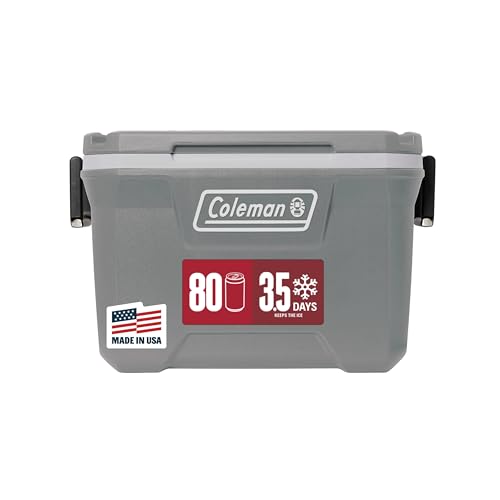
- Best for most small patios: Coleman 316 Series 52-Quart Cooler — Check on Amazon
- Best patio resident that doubles as a table: Igloo BMX 52-Quart Cooler — Check on Amazon
- Best if it must roll away after use: Coleman 316 Series 65-Quart Wheeled Cooler — Check on Amazon
- Only for larger patios with a fixed corner: Coleman 316 Series 70-Quart Cooler — Check on Amazon
- Only if the patio is party headquarters and storage is elsewhere: Coleman 316 Series 100-Quart Wheeled Cooler — Check on Amazon
- Step-up pick (prose-only, sits above this budget at most retailers): RTIC 52 QT Ultra-Light Cooler — see the review below.
Disclosure: As an Amazon Associate, dailyhomedecorating.com earns from qualifying purchases. Links to Amazon on this page are affiliate links; they cost you nothing extra. Listing details such as price and availability change often, so check the current Amazon listing before you buy.
Shopping for the best outdoor cooler for small patios under $150 starts with a tape measure, not a capacity chart. On a small patio — a townhouse slab, a condo balcony with delusions of grandeur, the paved corner behind a terraced house — every object is in negotiation with every other object. Two chairs, a small table, a grill, a plant or three, and the humans who are supposed to enjoy all of it are already sharing a space the size of a parking spot. A cooler that joins that company cannot merely be good at keeping drinks cold; it has to justify its footprint every day of the year, ideally by working as furniture when it is not working as a cooler, and it has to leave room for knees, chair legs and the cat’s chosen sunbathing route. The big party chests that headline general cooler guides are, on a small patio, not purchases but occupations.
So this guide inverts the usual ranking. Footprint comes first, then the ability to double as a table or seat, then storage when the patio season ends, and only then capacity — with the honest observation that small patios host small gatherings, and small gatherings need far less cooler than marketing suggests. Our headline pick is the Coleman 316 Series 52-Quart: a real, insulated, multi-day hard cooler in the smallest mainstream footprint, light enough to carry through the house and slim enough to store in a closet. The Igloo BMX 52 is the pick for patios where the cooler will live outside permanently and earn its place as the side table — thicker walls, a latching lid, a raised base for patio puddles, and a build that treats weather as a working condition. The wheeled Coleman 65 appears as the one bigger option that can still work, because wheels let it visit the patio for a gathering and roll away to the garage afterwards. The 70- and 100-quart models are reviewed honestly as conditional picks: excellent coolers that only belong on a small patio if specific facts about your space say so. The RTIC closes the list as a prose-only step-up — premium build in the same 52-quart class, at a price that, at the retailers we checked, sits above this budget.
Before the reviews, one measurement exercise that will save you a return: mark your candidate cooler’s footprint on the patio with painter’s tape, at the dimensions given in each review, and then live around the tape for a day. Sit in the chairs. Open the grill. Walk the route from the kitchen door with a tray in your hands. Small patios forgive many things, but they do not forgive an object that steals the walkway, and ten minutes with tape tells you more than any specification sheet — including this one. If your outdoor space is a full backyard rather than a patio, our guide to Best Outdoor Cooler For Backyards Under $150 ranks these same coolers by the opposite priorities, and the general roundup at Best Outdoor Cooler Under $150 shows the whole tier without the footprint filter.
In this guide
Quick picks: the best outdoor cooler for small patios under $150 at a glance
| Pick | Capacity | Wheels | Small-patio strength | Link |
|---|---|---|---|---|
| Coleman 316 Series 52-Quart | 52 qt | No | Smallest footprint; stores indoors | Check on Amazon |
| Igloo BMX 52 | 52 qt | No | Lives outside; doubles as side table | Check on Amazon |
| Coleman 316 Series 65-Quart Wheeled | 65 qt | Yes | Visits for gatherings, rolls away after | Check on Amazon |
| Coleman 316 Series 70-Quart | 70 qt | No | Fixed corner on larger patios only | Check on Amazon |
| Coleman 316 Series 100-Quart Wheeled | 100 qt | Yes | Party HQ patios with off-patio storage | Check on Amazon |
| RTIC 52 QT Ultra-Light | 52 qt | No | Prose-only: premium step-up above this budget | See review |
How we chose these coolers for small patios
We re-scored the verified under-$150 field with a tape measure in hand. Exterior footprint came first — not just length and width, but the shape of the claim on space: whether the cooler tucks against a wall, slides under a bench, or turns a corner of the patio into its permanent embassy. Second, double duty: on a small patio, a flat rigid lid is a side table, an extra seat and a plant stand, and coolers whose lids can honestly do that work scored as if they were two products, because functionally they are. Third, the journey: a small-patio cooler is usually carried through the home to reach its post, so loaded weight and handle comfort mattered more here than in any of our other cooler guides — a cooler that is agony to carry through a hallway will simply stop being used.
Fourth, patio-specific durability: standing water after rain, sprinkler overspray, full afternoon sun on paving, and the slow bake of a heat-radiating slab. Raised bases, latching lids and heavier builds scored accordingly. Fifth, drainage that respects the neighbours and the paving — controlled drains over tipping, always, because a small patio’s meltwater flood has nowhere to go that is not someone’s shoes or someone’s flowerbed. Sixth, the standing rules of our cooler coverage applied unchanged: every linked pick verified at or below this budget at a major retailer, no fixed product prices printed because seasonal pricing moves too fast to print honestly, and a CPSC recall screen that excluded recalled models outright. If an older rolling cooler already lives on your patio, a two-minute check of its model on the CPSC site is worth doing — some older rolling models have been subject to handle recalls.
We also read the tape measure against real furniture, because patio dimensions only mean something in company. A standard patio chair needs roughly a two-foot square and room to push back; a small bistro set claims a circle most small patios can just afford; a compact grill wants its own square plus a safety margin. Against that company, the difference between a 26-inch resident cooler and a 37-inch one is not eleven inches — it is the second chair, or the walkway, or the grill’s breathing room. That is why this guide treats the 52-quart class as the default and everything above it as an argument the buyer must win with measurements, not a preference they may simply have.
We also applied a realism filter that general guides skip: we asked of every pick, “where does this go in November?” A small patio has no spare corner for a six-month storage problem, so coolers that store indoors, stack, or happily winter outside scored over coolers that demand a garage the buyer may not have. The best small-patio cooler is the one whose whole year — season and off-season, party and Tuesday — fits the space you actually have.
The best small-patio coolers under $150, reviewed in detail
1. Coleman 316 Series 52-Quart Cooler — best for most small patios
Who it suits. The typical small-patio household: two to four people, a grill, a couple of chairs, gatherings that top out at eight, and indoor storage — a closet, a utility cupboard, the space beside the washing machine — as the cooler’s winter home.
The 52-quart 316 wins this guide the way it wins most footprint arguments: by being a complete cooler at the smallest size. Coleman rates it to hold up to 80 cans — a full evening’s drinks for a patio gathering, a weekend of drinks for two — and rates this size for up to three days of ice retention, which covers the patio rhythm of Friday fill, Saturday party, Sunday leftovers without strain. It is light enough that one person carries it loaded from kitchen to patio without route-planning, and its recessed-lid profile keeps the silhouette tidy against a wall or under a bench. Between parties it works the small jobs that make a cooler earn indoor storage: the overflow drinks box at holidays, the cold carrier for a big shop on a hot day, the picnic chest that actually gets taken to the park because taking it is no effort.
On the patio itself, the flat lid does the expected double duty as a side surface for glasses and plates, and the simple, smooth interior cleans in minutes — hose it on the patio, crack the drain, wipe, and it is ready to come back through the house without dripping its biography across the floor. For most small patios, this is not the compromise pick; it is the correct one, and the larger reviews below exist to serve the exceptions.
It also scales down the hosting problem gracefully. A small patio’s real limit is people, not drinks, and a 52-quart chest matched to a six-person evening never leaves the host performing ice anxiety in public. Load it in the kitchen, carry it out in one trip, station it between the chairs as the table it secretly is, and the evening runs on the patio’s own terms — intimate, unhurried, and properly cold. Bigger coolers promise abundance; on a small patio, proportion is the more luxurious quality, and this is the most proportionate serious cooler in the tier.
Pros. Smallest footprint of any full-feature hard cooler in the tier; light enough for the through-the-house carry; honest multi-day ice for the patio rhythm; doubles as a side surface; stores in ordinary indoor spaces; the budget-friendly end of the proven 316 Series.
Honest limitation. A gathering past eight to ten will outgrow it by mid-evening — pair it with the hosts’ fridge and a drinks top-up routine, or accept the wheeled 65 as a visiting guest for big nights. No wheels, though at this weight they are rarely missed.
Choose it if your patio is genuinely small and your gatherings match. Skip it if you host double figures regularly — read the 65 review. Check on Amazon for the current price.
2. Igloo BMX 52-Quart Cooler — best resident cooler and side table
Who it suits. Patios where the cooler will live outside permanently, in the corner by the chairs, working as the side table all season and as a cooler whenever the evening calls for it. If your storage plan is “it stays out,” this is the build that plan requires.
The BMX brings heavy-duty construction to the same 52-quart class as our top pick: thick blow-molded walls with extra insulation, rubberized T-latches that pull the lid down onto its seal — keeping weather and patio grit out as reliably as they keep cold in — and a raised Cool Riser base that lifts the body clear of rain puddles and sprinkler soakings on the slab. At roughly 26 inches long and about 16 pounds empty, it occupies the end of a bench or the corner beside a chair without overwhelming either, and its flat, rigid lid is the best side-table surface in this guide: books, glasses and a plate all sit on it without flex or wobble, and it will take a seated guest when the chairs run out. Igloo rates it for up to five days of ice retention, with independent field reports at a strong three to four days in heat — for patio duty, that means a Friday fill still serves cold drinks at Sunday lunch, through a weekend of casual openings. The threaded drain is hose-compatible with a tethered cap, so the weekly empty is a controlled stream into the flowerbed rather than a tip-and-flood across the paving.
Small patios also expose a cooler to an unusually social life. It will be sat on by guests who did not ask, used as the extra surface at every barbecue, leaned on during every long conversation, and photographed in the background of every gathering. The BMX’s unfussy, squared-off design wears that life gracefully — it looks like equipment rather than packaging, and a season of scuffs reads as patina on its textured body where a glossy mainstream chest would simply look tired. For a resident object in your most-seen outdoor room, that ageing curve is a genuine feature, and it is one reason this pick outranks colder-on-paper alternatives for the live-outside brief.
Pros. Built to live outdoors all season; latching lid seals against weather; raised base handles patio puddles; the best table-and-seat double duty in the tier; strong ice retention for long weekends; controlled threaded drainage.
Honest limitation. The heaviest 52-quart here, and wheel-free — it is a resident, not a traveller, and carrying it loaded through the house is a two-trip job. If your cooler must commute to the patio per party, the Coleman 52 above is the kinder carry.
Choose it if the cooler will live on the patio as furniture. Skip it if it must be carried out and back for every use. Check on Amazon for the current price and colour options.
3. Coleman 316 Series 65-Quart Wheeled Cooler — best visitor for gathering nights
Who it suits. Small patios attached to homes with somewhere else — a garage, a shed, a hallway nook — for the cooler to live between gatherings. The 65’s patio strategy is different from the residents above: it visits, it serves, it leaves.
Sixty-five quarts covers a gathering of a dozen with drinks and ice to spare, and the wheels and tow handle are what make that capacity compatible with a small patio: load it where it lives, roll it through the house or around the side path, station it at the patio’s edge for the evening, and roll it away when the party ends, restoring the patio to its everyday size by midnight. Coleman rates it to keep ice up to five days in best-case conditions; a party evening plus a lazy Sunday of leftovers is well within its real ability. The fully insulated lid and body and the leak-resistant channel drain match the resident picks feature for feature — the only thing you give up versus the big static chests is the right to leave it out in all weather without thought, and the only thing you give up versus the 52s is a few inches of footprint on the nights it visits.
There is a hosting pattern this enables that small-patio owners should hear about, because it resolves the size dilemma elegantly: the cooler as the party’s edge. Stationed at the patio’s boundary — by the gate, at the top of the steps, where the paving meets the lawn — the 65 serves guests who spill beyond the patio’s formal seating, turning the surrounding grass or driveway into the party’s casual wing while the patio itself keeps its intimate core. The small space stays small and calm; the gathering gets its capacity; and when the night ends, the boundary rolls home. It is the one pattern in which a big cooler makes a small patio feel larger, and it only works because the wheels make the visit effortless.
Pros. Gathering capacity that does not permanently occupy the patio; wheels make the visit-and-leave strategy effortless; strong multi-day ice retention; channel drain for controlled emptying; doubles as the household’s camping and beach cooler.
Honest limitation. It needs that off-patio home to roll back to — if the patio is its only possible residence, its footprint is a permanent tax. On the night itself, it is still a big object on a small patio; station it at the edge, not the centre.
Choose it if you host a dozen sometimes and have storage elsewhere. Skip it if the cooler must live on the patio — take the BMX. Check on Amazon for the current price and availability.
4. Coleman 316 Series 70-Quart Cooler — only for larger “small” patios
Who it suits. The upper end of small: a wide townhouse patio, a deck with a dead corner under the stairs, a courtyard where one fixed drinks station makes sense all season. Measure first — this pick’s review is a set of conditions, not a general recommendation.
The numbers: 70 quarts in a clean rectangle roughly 31 inches long, 15.75 wide and 17.5 tall, with the 316 Series’ insulated lid and body and no wheels to complicate the shape. In a fixed corner it is a genuinely good station — fridge-like interior packing, enough capacity for a serious gathering, light for its size when the twice-a-year carry comes. The conditions are equally clear: the corner must be truly dead space, because 31 inches of cooler in a live walkway will be cursed nightly; the patio must still seat its humans comfortably with the cooler in residence; and you must have a winter plan, because it will not slide into a standard closet. Meet all three and it serves beautifully. Miss any one and the 52s above are your coolers.
Pros. The most capacity that can honestly be argued onto a small patio; clean rectangular shape parks flush in a corner; fridge-like packing for food and drinks; simple and durable with nothing to break.
Honest limitation. It is a conditional pick wearing a recommendation’s clothes. Most genuinely small patios fail at least one of its conditions — measure with tape on the ground before believing otherwise.
Choose it if your patio has a true dead corner and gatherings to justify it. Skip it if you are hoping it will somehow feel smaller in person. Check on Amazon for the current price.
5. Coleman 316 Series 100-Quart Wheeled Cooler — only if storage is elsewhere
Who it suits. A narrow case, stated plainly so the wrong buyers can rule it out fast: the small patio that becomes party headquarters — the courtyard behind the family home that hosts every birthday — where the cooler itself lives in a garage or shed and only visits the patio on the big days.
For that case, the virtues are real: 100 quarts of one-fill party capacity, rated by Coleman for up to five days of ice, at roughly 21 pounds empty and about 37.5 inches long, on wheels that make the garage-to-patio journey a one-person tow. On the day, it stations at the patio’s edge and feeds a crowd that would defeat everything else in this guide. On every other day, it is somewhere else — and that somewhere else is the entire condition. If the 100 would have to live on the patio, it would consume the space the party is supposed to happen in, and this guide’s answer is simply no: buy the 65, keep the patio, and let two fridge runs handle the overflow.
Pros. Unmatched party capacity in the tier; wheels make the visit strategy work; excellent cost per quart; doubles as emergency overflow storage at home.
Honest limitation. As a patio resident, it is disqualifyingly large for this guide’s entire premise. It is included so that party-headquarters households can identify their exception — and everyone else can stop wondering.
Choose it if the patio hosts crowds and the garage stores the cooler. Skip it if it would live where it serves. Check on Amazon for the current price and delivery options.
6. RTIC 52 QT Ultra-Light Cooler — the step-up pick (prose-only)
Who it suits. Small-patio owners with premium taste and no extra inches: the RTIC brings heavy-duty construction, a properly sealing lid and top-class tested ice retention in the same 52-quart footprint class as our top two picks, and it is unusually light for its category — a virtue on the through-the-house carry.
It is prose-only because, at the retailers we checked, it sat above this guide’s budget ceiling, and it is sold mainly through RTIC’s own store rather than at a verifiable in-tier Amazon price. Described plainly, it is a mid-range premium cooler — priced above the linked picks, below the flagship brands — and for a patio resident it buys the two things outdoor life consumes: seal integrity over years of evenings, and a build that treats weather as a working condition. If the budget stretches and the tape measure does not, it is the one upgrade that asks for no more space.
Pros. Premium build and sealing in a patio-friendly size; excellent tested ice retention; light for a heavy-duty cooler; a decade-class resident.
Honest limitation. Above this guide’s budget — hence no link. Inside the tier, the BMX is the resident-table pick for less.
Choose it if money is flexible and space is not. Skip it if the ceiling is firm.
Designing a small patio around its cooler
On a generous patio, the cooler goes wherever it lands. On a small one, it deserves the same design attention as the seating — because it is, functionally, a piece of the seating plan. Start with the triangle every small outdoor space lives by: door, seats, grill. The cooler belongs at the triangle’s edge, reachable from the seats in two steps, reachable from the door without crossing the grill’s heat, and against a wall or rail so its lid opens toward the gathering rather than toward a fence. Station it there once, well, and you will stop noticing its footprint; station it badly and you will notice it every evening of the season.
Then use its surfaces. The lid is a table, so treat it like one: a small tray that lives on it during the season corrals glasses and keeps rings off the plastic, and a cushion kept indoors turns it into the patio’s spare seat in ten seconds. The cooler’s side is a mounting point — a bottle opener on a short cord, a hook for the towel — and its top edge is where the evening’s small tools gather. None of this costs meaningful money; all of it converts a stored object into a working station, which is the difference between a patio that feels furnished and one that feels parked in.
Finally, think vertically, because small patios are won in the third dimension. The cooler is the one object in the space that is exactly shelf-height: planters can flank it, a narrow outdoor shelf can bridge above it against the wall, and in the off-season a cover turns it into the base of a tidy storage stack — chairs folded on top, cushions in a bag beside it. A cooler chosen with this stacking life in mind, square-sided and flat-lidded like both 52-quart picks here, quietly organises the whole patio around itself. That is the real prize in this guide: not a cold box that fits, but a cold box that makes the small space work better than it did before it arrived.
Side-by-side comparison for small patios
| Cooler | Capacity | Wheels | Footprint character | Patio role |
|---|---|---|---|---|
| Coleman 316 52-Qt | 52 qt | No | Smallest; stores indoors | Everyday default |
| Igloo BMX 52 | 52 qt | No | ~26 in long; resident corner | Table-cooler resident |
| Coleman 316 65-Qt Wheeled | 65 qt | Yes | Visits, then leaves | Gathering nights |
| Coleman 316 70-Qt | 70 qt | No | ~31 x 15.75 in; fixed corner | Larger patios only |
| Coleman 316 100-Qt Wheeled | 100 qt | Yes | ~37.5 in long; stores off-patio | Party HQ exception |
| RTIC 52 QT Ultra-Light (prose-only) | 52 qt | No | Same class as the 52s | Premium step-up |
How to choose a cooler for a small patio under $150
Do the tape test before anything else. Mark the footprint of your leading candidate on the patio in painter’s tape, using the dimensions in the reviews above, and live around it for a day — chairs out, grill open, tray carried from the kitchen. If the tape annoys you, the cooler will too, and no ice-retention figure compensates for a daily annoyance in your only outdoor room. If the tape disappears into the layout, you have found your size class, and everything else in this guide is refinement.
Think about the route through the house. A patio cooler that stores indoors travels through your home twice per use — out loaded with anticipation, back loaded with meltwater and good intentions. Measure that route too: the hallway turn, the door that must be held, the step down to the patio. A cooler whose loaded weight one person manages on that route will be used weekly; a cooler that needs a spotter and a plan will be used monthly, then seasonally, then not at all. This is why the lightest full-feature chest tops this guide, and why the heaviest pick here is explicitly framed as a resident that makes the trip once and stays.
Demand double duty. On a small patio, single-purpose objects are a luxury. A cooler with a flat, rigid lid is a side table for the two chairs, a footrest, a plant stand in the off-season and an extra seat when a third friend arrives. Judge candidates as furniture first and cold boxes second — the BMX and the Coleman 52 both pass this test, which is precisely why they top this guide while bigger, colder chests rank below them.
Use ice that suits a small space. Bagged ice is a storage problem before it is a cooling solution: it needs freezer room a small home may not have, and the half-used bag dies in the sink. Frozen water bottles are the small-patio native format — they freeze in rotation in any freezer, double as drinks as they thaw, keep food out of meltwater, and refreeze for the next evening at zero cost. Two or three large frozen containers give a 52-quart chest its long-weekend base, and a small bag of cubes, bought on the day for serving, is the only ice purchase the system ever needs. Small spaces reward systems that regenerate over systems that must be restocked, and a cooler run on bottles is the regenerating kind.
Match capacity to your real guest list. Small patios seat four to six comfortably and eight at a squeeze. An evening’s drinks for six, pre-chilled and iced properly, fits a 52-quart chest with room for food — the math only breaks when hosts buy for the party of twenty they host once a year and store for the other 364 days. For that one party, borrow the big chest, or let the wheeled 65 visit from the garage; do not let it annexe the patio permanently.
Plan drainage like a neighbour. Small patios share fences, and meltwater goes somewhere: a controlled drain into your own flowerbed or a bucket is courteous and clean, while tipping a cooler across shared paving is neither. Every pick in this guide drains in a controlled stream — use that feature, and if your patio slopes toward the neighbours, station the cooler at the high corner and drain into a container. The same courtesy applies to noise: a latching lid closed gently at midnight is a small kindness on a terrace of open windows.
Let the patio’s season set the spec. A patio used from the first warm weekend to the last is a different brief from one used on high-summer evenings only. Season-long patios reward the resident builds and the latching lids that keep spring pollen and autumn leaves out of the seal; high-summer patios can happily run the simpler Coleman and store it indoors the rest of the year. Be honest about which patio you own — the calendar, like the tape measure, is a specification, and buying for the season you actually have is how small spaces end up feeling generous instead of crowded.
Solve November before you buy July. Ask where the cooler winters. Indoors in a closet points to the Coleman 52. On the patio under a cover points to the BMX. In a garage it will never have points away from the big chests entirely. Readers furnishing the whole small space will find the same footprint discipline in Best Patio Umbrella Under $150 — shade sized for small patios — and in the apartment-focused thinking of Best Outdoor Cooler For Apartments Under $150, which treats balconies with the same respect.
Common small-patio cooler mistakes
Buying the party size and storing it on the patio. The most common error in this category: a 100-quart chest purchased for two big days a year, occupying a third of the patio for the other 363. Buy the everyday size; borrow the party size.
Forgetting the walkway. A cooler placed in the route between kitchen door and seating becomes a shin hazard and a tray-carrying obstacle course. Station it at the edge of the gathering, against a wall or rail, where guests can serve themselves without crossing the cook.
Measuring the patio but not the doorway. A cooler that fits the patio but not the route to it — the narrow side gate, the hallway turn, the step the loaded carry must survive — has not actually fit your home. Walk the whole journey with the tape, not just the destination.
Letting the cooler bake in the patio’s one sunny corner. Small patios often have exactly one patch of afternoon sun, and coolers gravitate to it because it is also the empty corner. Shade doubles ice life; move the plants, not the cooler, if you must choose — or choose the BMX, whose build tolerates the sun best.
Tipping meltwater across the paving. Beyond the neighbour problem, a flooded patio is a slipping hazard and a mosquito nursery. Drain in a controlled stream, into your own bed or a bucket, every time.
Storing it sealed and damp under a bench. The off-season smell will colonise the patio’s first spring evening. Wash, dry fully with the lid open, and store ajar — under a cover if it winters outside.
Ignoring the old patio roller’s recall status. Many small patios inherit a hand-me-down rolling cooler. Some older rolling models have been subject to handle safety recalls — check yours on the CPSC database before it takes a full load across a crowded patio.
Final recommendation
Most small patios should buy the Coleman 316 Series 52-Quart: it is the complete cooler that fits the space, the storage and the guest list. If the cooler will live outside as furniture, the Igloo BMX 52 is the resident to choose — table, seat and cold box in one tough footprint. Gathering households with off-patio storage can let the wheeled 65 visit on the big nights, and the 70 and 100 remain honest exceptions for the few patios whose facts argue for them. Do the tape test, demand double duty, and your small patio will feel bigger with a cooler on it than it did without one.
Frequently asked questions
What is the best cooler size for a small patio?
Fifty-two quarts is the sweet spot for most small patios: a full evening’s drinks and food for four to eight guests, in a footprint that stores indoors or doubles as a side table. Larger sizes make sense only as visitors from off-patio storage or in genuinely dead corners.
Can a cooler really work as a patio table?
Yes — a flat, rigid lid holds glasses, books and plates happily, and the heavier builds like the BMX will also take a seated guest. It is the main reason a 52-quart chest earns its place on a small patio year-round instead of only on party days.
How do I keep a small patio cooler cold in full sun?
Give it whatever shade exists, choose the lightest finish the model offers, keep the lid closed and the contents pre-chilled, and use frozen bottles on top of the load. A cooler in shade routinely doubles the ice life of the same cooler in sun.
Where should I store the cooler in winter?
Cleaned, dried and with the lid ajar: in a closet or utility space for the Coleman 52, under a cover on the patio for the BMX, or in a garage or shed for anything larger. Never store it sealed and damp, wherever it lives.
Are wheels useful on a small patio?
Only in the visit-and-leave pattern: a wheeled cooler that lives elsewhere and rolls in for gatherings. As a permanent resident, wheels add bulk without benefit — the resident picks in this guide are deliberately wheel-free.
How do I drain a cooler on a small patio without flooding it?
Use the drain, not a tip: release the meltwater in a controlled stream into a flowerbed, a drain point or a bucket. Threaded and channel drains — fitted to every pick here — exist for exactly this job.
Is a soft cooler better for a very small patio?
For storage alone, yes — a soft cooler folds into a drawer. But it holds ice for hours rather than days, cannot serve as a table or seat, and will not survive resident outdoor life. Most small patios are better served by a compact hard cooler that works as furniture; keep the soft cooler for picnics and travel, where its lightness is the point.
What colour cooler suits a small sunny patio?
The lightest finish the model offers. Light colours reflect heat, help ice life measurably in direct sun, and visually shrink the object — a pale cooler in the corner reads as furniture, while a dark one reads as an obstacle. In shade, choose purely by taste.
How much patio space does a cooler actually take once people are using it?
More than its footprint: add the lid’s opening arc, room for a guest to stand in front of it, and the serving space beside it for a tray or a crate of empties. As a working rule, a resident cooler commands about twice its measured footprint in lived space — one more reason the tape test in this guide should be walked around, not just looked at.
Can I put a cooler on a wooden deck or balcony boards?
Yes, with a mat or tray beneath it: meltwater drips and drain splashes stain boards over a season, and a raised-base model like the BMX keeps the body out of standing water after rain. Check any load limits on older balconies before a big filled chest takes up residence.
What if my patio is really just a balcony?
Then the apartment rules apply in full: the 52-quart class, a resident build if it lives outside, indoor draining, and a hard look at your building’s balcony rules and load limits. Our apartment guide linked in this article works through that brief in detail, and its top two picks are this guide’s top two as well — small spaces agree with each other, because both are governed by the same honest arithmetic of inches, weight and double duty.


