Where to buy
Check the latest price, availability and delivery on Amazon. Orders are placed on Amazon. We may earn a commission from qualifying purchases.
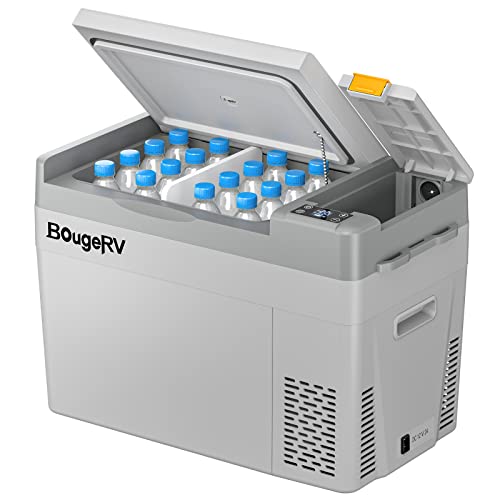
- Best overall for apartments: BougeRV CRPRO 30QT 12V Portable Refrigerator — Check on Amazon
- Best tiny electric for the smallest homes: Alpicool C15 Portable Car Freezer, 16 Quart — Check on Amazon
- Best wheeled cooler for elevators and stairs: YETI Roadie 48 Wheeled Cooler with Retractable Periscope Handle — Check on Amazon
- Best for hosting in a small space: Ninja FrostVault 45QT Cooler with Wheels and Dry Zone Drawer — Check on Amazon
- Best ice chest if you have storage and travel: YETI Tundra 65 Hard Cooler (Charcoal) — Check on Amazon
One dream pick, honestly over budget: the EcoFlow GLACIER fridge-freezer with a built-in ice maker is reviewed below as a prose-only pick — it currently sells well above this guide’s ceiling, so it carries no purchase link.
Read the full guide ↓
Disclosure: As an Amazon Associate, dailyhomedecorating.com earns from qualifying purchases. Links to Amazon on this page are affiliate links; they cost you nothing extra. Listing details such as price and availability change often, so check the current Amazon listing before you buy.
Here is the honest starting point for anyone shopping for the best outdoor cooler for apartments under $700: your budget is not the problem. Space is. Seven hundred dollars will buy almost any cooler worth owning, including expedition-grade rotomolded flagships — and most of those flagships are exactly wrong for apartment life. A giant ice chest that lives in a hallway closet, gets dragged down two flights of stairs, and takes up a third of a small balcony is a burden wearing a premium badge. The apartment version of “outdoor” is specific: a balcony or small patio, a shared rooftop or courtyard, a park you reach by elevator and sidewalk, and a car that may live in a garage three floors below your front door. The best cooler for that life is the one that fits where it lives, moves easily through the building, and earns its footprint every week — not the biggest box the budget allows.
That is why this guide is led by electric coolers. A compact compressor fridge changes apartment maths completely: it needs no ice, so there is no melting, no draining, and no freezer space sacrificed to ice packs in a small apartment freezer. It plugs into a balcony outlet or sits in a kitchen corner as a drinks fridge between weekends, holds an exact temperature, and every inch of its interior is usable space rather than a third of the volume going to ice. For the many apartment dwellers whose “outdoor cooler” work is ninety percent balcony-and-park duty, a good 12V fridge in the 15-to-30-quart range plus the accessories that make it sing will beat a $700 rotomolded monument every single week. We have still included the two best ice chests for apartment people — one wheeled, one flagship — because some of you camp, fish and road-trip from your apartment, and for trips away from the building the calculus flips back to ice.
Our short answer: start with the BougeRV CRPRO 30QT, the electric that covers balcony, park and car without ever asking for a bag of ice. If your home is truly tiny, the Alpicool C15 is the smallest serious fridge we could verify. If you host, the Ninja FrostVault 45QT’s dry storage drawer is the cleverest use of a small footprint in this guide. And read the budget section before you spend: for most apartments, the right move is a mid-priced pick plus a shelf, a cover, a power solution and money left in your pocket. This guide will show you exactly where the $700 ceiling does and does not make sense.
In this guide
Quick Picks
In a hurry? This table matches each cooler to the apartment situation it handles best.
| Apartment situation | Pick | Why it stands out | Link |
|---|---|---|---|
| Best overall for apartments | BougeRV CRPRO 30QT | Compressor fridge: no ice, exact temperature, balcony- and car-ready | Check on Amazon |
| Tiniest footprint | Alpicool C15 | 16-quart fridge-freezer around 20 lb that fits a closet corner or car footwell | Check on Amazon |
| Elevators, stairs, long hallways | YETI Roadie 48 | Rotomolded cooler on real wheels with a luggage-style retractable handle | Check on Amazon |
| Hosting friends in a small space | Ninja FrostVault 45QT | Wheeled, with a fridge-temperature dry drawer so food never swims | Check on Amazon |
| Trips away from the building | YETI Tundra 65 | The flagship ice chest — worth it only if you have the storage for it | Check on Amazon |
| Dream splurge (over budget) | EcoFlow GLACIER | Fridge-freezer that also makes its own ice cubes — currently priced above $700 | Prose-only pick |
How we chose the best outdoor cooler for apartments under $700
Apartment judging criteria are different, so we weighted them differently. First came footprint and storage: where does this cooler live for the 340 days a year it is not at a picnic? A pick had to fit a balcony corner, a closet, or under a kitchen counter’s worth of space, or — like the Tundra 65 — be so good at leaving the apartment that it justified a storage unit or a garage corner. Second came the building journey: elevators, stairwells, hallway corners and parking garages punish weight and reward wheels and good handles, so we favored designs one person can move loaded, alone. Third came the ice question, which in an apartment is also a freezer-space and a mess question: electrics scored heavily because they delete ice entirely. Fourth, the same verification rules as our main roundup applied in full — real models, manufacturer-confirmed specifications, an Amazon price we have actually seen at or under $700, and a CPSC recall check that excluded one major rolling-cooler family from consideration entirely.
We also applied an honesty test specific to this lens: would we recommend this to a friend in a one-bedroom with a small balcony, spending their own money? That test is why this guide refuses to fill its list with ever-larger rotomolded boxes just because the budget allows them, and why one famous ice-maker fridge appears without a link: it is a wonderful product that currently costs more than the ceiling in the title, and apartment readers deserve a guide that says so plainly.
The six best apartment outdoor coolers under $700, reviewed
1. BougeRV CRPRO 30QT — best overall for apartments
Who it suits: The typical apartment cooler buyer: balcony dinners, rooftop sessions, park picnics reached by car, and a home that would love a second drinks fridge. If your outdoor life radiates from the building rather than replacing it, start here.
The CRPRO is a genuine compressor refrigerator-freezer in a 30-quart (28-liter) box. Set it anywhere from −8°F to 50°F on the digital control and it holds that temperature from a balcony outlet, a kitchen socket, or your car’s 12V supply — it ships ready for both mains and vehicle power. Thirty quarts sounds modest next to the big chests in our main roundup, but apartment math favors it: none of the volume is lost to ice, so it swallows a weekend of groceries for two, or a party’s worth of drinks, in a footprint that parks neatly in a balcony corner or beside a sofa. It runs quietly — in the region of a hushed conversation — so it will not drone through a small home’s open-plan evening, its ECO mode sips power, and its three-stage battery protection means a car battery survives the night if you run it at a trailhead. Between outings it simply becomes the household’s overflow fridge, which is the deepest apartment advantage of all: this cooler earns its rent fifty weeks a year, not five.
- Pros: No ice to buy, store or drain; exact fridge-or-freezer temperatures; compact footprint with fully usable capacity; quiet enough for indoor-adjacent life; doubles as a spare home fridge.
- Honest limitation: It needs power, so balcony placement means an outlet plan and a tidy cable route, and 30 quarts will not cater a twelve-person rooftop party on its own.
Choose it if your cooler lives in or near the apartment and works weekly. Skip it if your main use is multi-day off-grid camping — that is what the Tundra below is for.
2. Alpicool C15 — the smallest serious electric
Who it suits: Studios and genuinely small one-bedrooms, solo dwellers and couples, and anyone whose storage is a single closet. Also a stealthily great second cooler: the picnic-and-car unit that lives in a hallway cupboard.
The C15 squeezes a real compressor — not a thermoelectric plate — into a 16-quart (15-liter) box weighing roughly twenty pounds. It cools from −4°F to 68°F, so it can be a drinks fridge on the balcony, a freezer for a camping weekend, or a temperature-safe carrier for groceries and medication on a hot drive home. It runs on 12/24V vehicle power or household AC, which makes its apartment routine simple: plugged in by the balcony door during the week, dropped into the car for the weekend. At this size you give up party capacity — think drinks and food for two to four, not a crowd — and the interior fits standard cans and small containers better than tall bottles. But as an answer to “I have no room for a cooler,” it is close to perfect: this is the pick that fits the apartment first and the outing second, which is the correct order for small homes.
- Pros: Smallest footprint of any real compressor fridge we verified; light enough to carry one-handed; fridge-to-freezer range; very modest price leaves most of the budget unspent.
- Honest limitation: Sixteen quarts is genuinely small — a couple’s cooler, not a group’s — and tall bottles are a squeeze.
Choose it if space, not capacity, is your binding constraint. Skip it if you regularly host more than four people — step up to the BougeRV or the Ninja.
3. YETI Roadie 48 — best wheeled ice chest for buildings
Who it suits: Apartment dwellers whose cooler must travel through the built environment: down the elevator, across the parking garage, along the sidewalk to the park, up a friend’s front steps. Also tall-bottle people — this is the rare cooler that stands wine and two-liter bottles upright.
The Roadie 48 is a rotomolded YETI — the same thick insulation, freezer-style gasket and bombproof shell as the Tundra line — rethought as luggage. A retractable Periscope handle telescopes out so the cooler rolls behind you at a natural walking angle, the solid NeverFlat wheels shrug off elevator thresholds, cracked pavement and gravel, and at roughly twenty-eight pounds empty it is manageable on stairs in a way a loaded 65-quart chest simply is not. The tall, narrow-ish body is the apartment-friendly shape: it stands wine bottles upright, tucks against a balcony wall or closet side, and its footprint is closer to a carry-on suitcase’s than to a storage tub’s. It includes a dry goods basket to keep food above the meltwater. You pay flagship money for 48 quarts, and the handle and wheel hardware is why — but in a building, mobility is capacity: a cooler you can actually move is bigger than a cooler you leave behind.
- Pros: Rolls like luggage through buildings and over rough ground; rotomolded durability and ice retention; upright bottle storage; apartment-shaped footprint.
- Honest limitation: Premium price per quart, and like all ice chests it needs freezer space for ice or ice packs — a real cost in a small apartment freezer.
Choose it if your cooler commutes — elevator, garage, park — and you want ice-chest independence with building-friendly manners. Skip it if it will live permanently on the balcony plugged into nothing; an electric does that job better.
4. Ninja FrostVault 45QT — best for hosting in a small space
Who it suits: The apartment host: six friends, one balcony, a rooftop booking, a courtyard barbecue. Your problem is not ice retention over five days — it is serving food and drink gracefully from a small footprint for five hours.
The FrostVault 45QT is a wheeled 45-quart cooler built around Ninja’s Dry Zone drawer, a separate compartment that borrows cold from the ice above and holds food at fridge-like temperatures while keeping it dry. In apartment entertaining that drawer is gold: the cheese, dips, salads and desserts live below in their own cold, dry space while drinks chill in the ice above, and guests stop excavating the cooler and letting the cold out every ninety seconds. The 45-quart size is the sweet spot for small-space hosting — enough for a real gathering, small enough to wheel into a closet afterwards — and the wheels and handle make the elevator run to a shared rooftop painless. Ice retention is multi-day rather than expedition-grade, which for apartment duty is the right trade: you are buying serving design and footprint, not a week in the backcountry.
- Pros: Dry Zone drawer solves small-space food service; right-sized 45 quarts for apartment gatherings; wheeled for rooftops and courtyards; stores far more easily than a 65-quart box.
- Honest limitation: Not rotomolded, so it is not the pick for rough multi-day trips away, and the drawer needs a wipe-down routine to stay fresh.
Choose it if hosting is your cooler’s main job and your storage is a closet, not a garage. Skip it if you rarely entertain and mostly need personal drinks capacity — the electrics above are cheaper to run and smaller to store.
5. YETI Tundra 65 — the flagship, with an apartment warning
Who it suits: Apartment dwellers whose cooler life is mostly away from the apartment: campers, anglers, hunters and road-trippers who happen to live in a flat. If your cooler spends its weekends at trailheads and its weekdays in a storage cage, garage corner or a generous closet, the flagship case is real.
Nothing about the Tundra 65 changes in this guide — it remains the benchmark rotomolded cooler, with up to three inches of insulation, a freezer-style gasket, T-latches, a bear-resistant shell and the deepest accessory ecosystem in the business, and our main Best Outdoor Cooler Under $700 roundup reviews it in full. What changes is the ownership math around it. In an apartment you must answer three questions honestly: where does a cooler of this size live (it will not fit under a bed or in a standard wardrobe), how does it get downstairs loaded (at well over sixty pounds full, it is a two-person elevator trip, and a miserable stair carry), and how often will it actually leave the building? If the answers are “the storage cage,” “carefully, with help” and “most weekends in season,” buy it with confidence — it is a decade-long purchase. If the honest answers are “in the way,” “with dread” and “twice a year,” the Roadie 48 above gives you most of the YETI experience in a building-shaped package.
- Pros: The best all-round ice chest made, full stop; decade-scale durability; unmatched accessories and support.
- Honest limitation: Size and loaded weight are genuinely hostile to apartment storage and stairs — this is a lifestyle commitment, not just a purchase.
Choose it if your outdoor life is trips away and you have a real storage answer. Skip it if it would live on the balcony — that is electric territory, and your neighbors will thank you for the extra railing space.
6. EcoFlow GLACIER — the dream pick (prose-only, over this budget)
Who it suits: The apartment entertainer who wants it all: a 38-liter dual-zone fridge-freezer that also manufactures its own ice. We include it because it is the most apartment-clever cooler concept on the market — and we do not link it, because at the time of writing it sells well above the $700 ceiling of this guide. A guide that hides that fact would not be worth reading.
The GLACIER’s party trick is real: a 120W compressor drives both the dual-zone cabinet and an integrated ice maker that produces a tray of solid cubes in roughly twelve minutes, which abolishes the apartment host’s oldest problem — the freezer too small to make party ice. Zones can run as fridge-and-freezer independently, there is app control, and an optional plug-in battery (sold separately, as are the wheels and pull handle) can run it away from a socket for a rooftop session. In a small home, one appliance that is simultaneously the drinks fridge, the freezer overflow and the ice supply is a genuinely compelling idea. It is also, with its essential accessories, a four-figure idea at current pricing. Our advice: if it drops within reach during a promotion, it is the one splurge in this guide we would not talk an apartment host out of. Until then, the BougeRV plus a countertop’s worth of change delivers ninety percent of the daily benefit.
- Pros: Built-in ice maker solves the small-freezer party problem; dual-zone fridge/freezer; optional battery for unplugged spaces; app control.
- Honest limitation: Currently priced above this guide’s entire ceiling, with the battery and wheel kit — the parts an apartment dweller most wants — sold separately on top.
Choose it if you find it on a serious promotion and hosting is your priority. Skip it if $700 is a hard ceiling — which, if you are reading this guide, it probably is.
Prose-only pick: no purchase link, because we could not verify a price at or under $700 for this model.
Comparison table
| Cooler | Type | Capacity | Wheels | Apartment standout | Best for |
|---|---|---|---|---|---|
| BougeRV CRPRO 30QT | Compressor fridge-freezer | 30 qt, all usable | No | No ice; doubles as a home drinks fridge | Most apartment buyers |
| Alpicool C15 | Compressor fridge-freezer | 16 qt | No | Smallest real fridge; ~20 lb | Studios and solo dwellers |
| YETI Roadie 48 | Rotomolded, wheeled | 48 qt | Yes, solid | Luggage-style handle; stands bottles upright | Elevator-and-park life |
| Ninja FrostVault 45QT | Insulated wheeled chest | 45 qt | Yes | Dry Zone food drawer | Hosting in small spaces |
| YETI Tundra 65 | Rotomolded ice chest | 65 qt class | No | Flagship performance — if you can store it | Trips away from the building |
| EcoFlow GLACIER | Fridge-freezer + ice maker | 38 L | Optional kit | Makes its own ice cubes | Splurge — currently over $700 |
How an apartment should actually spend this budget
Because the ceiling is $700 and the best apartment picks cost far less than that, the useful question is allocation. Our suggested split for a typical one- or two-bedroom home: put the core money into one right-sized cooler — for most readers the BougeRV CRPRO, for hosts the FrostVault 45QT, for park-goers the Roadie 48. Then spend a modest slice on the things that make apartment cooler life work: a low shelf or plant-stand-style riser that gets an electric fridge off the balcony floor and gives its vents air; a breathable cover if it lives outside; a set of quality reusable ice packs sized to your small freezer if you chose an ice chest; and, for electric owners who use shared rooftops or courtyards without outlets, a compact portable power station, which turns any plug-free space into cooler territory for an evening. Keep the rest. A smaller total spent well beats a flagship bought to satisfy a budget line — and if your real ceiling is lower, our Best Outdoor Cooler For Apartments Under $300 and Best Outdoor Cooler For Apartments Under $500 guides apply the same apartment logic at those numbers.
Measure the storage spot before anything else. Apartment cooler buying should start with a tape measure, not a product page: the closet corner, the balcony’s dead zone beside the door, the gap under the kitchen counter. Note the door swing and the elevator’s depth while you are at it. Every pick in this guide was chosen to fit one of those real spaces; the Tundra 65’s warning section exists because it fits almost none of them.
Plan the building journey. Walk the route from storage spot to street with the cooler in mind. Elevator: easy, wheels optional. Stairs: weight is everything, and a loaded mid-size cooler carried by its handles is a different proposition from the same cooler rolled to the stairwell and carried one flight. Long hallways and garages: wheels pay for themselves weekly. If your route includes a friend’s walk-up or a park hill, bias one size smaller than your first instinct.
Respect the lease and the neighbors. Balcony rules in many buildings restrict what can be stored outside and prohibit draining water over the rail — another quiet point for electrics, which produce no meltwater to drain. Compressor hum that is nothing in a house can carry through a quiet building at night; the picks here are chosen partly for low noise, but placement on a mat, away from the party wall, is good citizenship. And if your cooler lives in a shared space, a cable lock through a tie-down slot is a cheap flagship accessory.
Living with an electric cooler in an apartment
Because two of our top three apartment picks are appliances rather than boxes, they deserve a plain-language account of what ownership actually feels like in a small home — the things no product page mentions. The first is sound. A compressor fridge is not silent; it cycles, and in a studio at 2 a.m. you will know when it does. In practice the fridges chosen here run at roughly the level of a quiet conversation or below, and three placement habits tame most of what remains: stand the unit on a rubber mat rather than bare tile or wood, which stops the floor becoming a sounding board; leave a few inches behind and beside it so the vents breathe and the compressor works less hard and less often; and keep it out of the bedroom’s direct line if you are a light sleeper. Most owners report that after the first week the sound drops below notice — but if your home is a single room, that first week is worth planning for.
The second is power logistics. On a balcony, the question is whether the outlet is real: many balconies have one, often weather-covered, and a short, outdoor-rated cable run along the wall keeps things tidy and trip-free. Indoors, the fridge simply joins the kitchen’s appliance ecology, and the discipline is the same as for a microwave — do not bury the vents against a wall or under a pile of bags. In the car, the battery-protection setting is the feature to actually configure rather than admire: set it to the middle level for a healthy starter battery and the fridge will cut itself off before it can strand you. The third habit is thermal: an electric fridge works least when it starts cold and stays full. Pre-cool it on mains power before a trip, load it with already-chilled drinks, and fill gaps with a couple of frozen water bottles, which stabilize the temperature through door openings and through any unplugged carry between apartment and car.
Finally, the second life. The reason electrics dominate this apartment guide is that they refuse to be single-purpose. The BougeRV is holiday overflow when the main fridge is full of a turkey and good intentions; it is the drinks fridge for a games night; it is the temperature-safe box that brings ice cream home intact on a hot drive and takes leftovers to a friend’s place without a sloshing cooler of ice. An ice chest in a closet does none of those things. When you divide the purchase price by the weeks actually used — the only honest cost metric in a small home — the electrics win this category by a distance, and that, more than any specification, is why they lead the list.
The apartment gathering, planned around one cooler
It may help to see the picks working. Picture the standard apartment event: eight friends, a balcony or a booked rooftop slot, food that matters, and a host who also wants to enjoy the evening. The failure mode of the single big ice chest is familiar — drinks buried under food, food drowned in meltwater by hour two, the lid opened forty times an hour, and the host making an ice run at the worst possible moment. The setups in this guide exist to break that pattern. With the FrostVault 45QT, the drawer takes the food — prepped, dry, fridge-cold — while the ice above takes the drinks, and guests self-serve from the right layer without excavation. With the BougeRV as the hub, drinks sit at an exact, all-evening temperature, a tray of ice from the apartment freezer plays a supporting role for cocktails only, and nothing swims. With the Roadie 48, the cooler comes up in the elevator loaded, stands its bottles upright like a cellar, and positions at the end of the balcony where its tall shape eats the least railing.
Notice what is not in any of those pictures: a 65-quart chest dominating a small balcony, or a host performing ice logistics instead of hosting. That is the apartment lens in one image. It is also why this guide’s budget advice is what it is — the difference between a good apartment gathering and a great one is almost never a more expensive cooler; it is a cooler whose shape matches the space, plus the shelf, the cover, the ice packs and the power plan around it. Spend accordingly, and let the leftover budget improve the part of the evening people actually remember.
If you choose an ice chest anyway: making apartment ice work
Some apartment readers will read the electric case, nod, and buy the Roadie or the FrostVault anyway — because their cooler leaves the building, because their balcony has no outlet, or because they simply like ice. That is a respectable choice, and it comes with a small operating system worth adopting. The center of it is the freezer. A typical apartment freezer can hold four to six reusable ice packs or a few frozen two-liter bottles without evicting the groceries, and that — not bagged ice bought on the way — should be your default coolant: it is free, it is always ready, frozen bottles double as cold drinking water as they melt, and flat packs stack against a cooler’s walls where they do the most good. Bagged ice becomes the exception, bought for the big gathering, rather than the weekly tax.
Storage is the second habit. An ice chest stored in a closet must go in bone dry: drain it, towel it, leave it open overnight in the apartment’s airflow, then store it with the lid cracked on a strip of cardboard so the gasket is not compressed flat for months. A cooler stored sealed and damp will announce itself the next time the closet opens, and in a small home there is nowhere for that smell to be far away. The third habit is transport discipline: load the cooler where it will be opened — kitchen, not hallway — carry it by its handles or roll it rather than dragging it, and if stairs are involved, invite the second pair of hands before the cooler is full rather than after. None of this is complicated; all of it is the difference between an ice chest that suits apartment life and one that slowly trains you not to use it.
One more apartment-specific note for ice-chest owners: meltwater. A balcony cooler eventually needs draining, and many buildings prohibit draining over the rail. The wheeled picks solve this elegantly — roll the cooler to the kitchen or bathroom and drain it into the sink or tub — which is one more reason wheels matter more in an apartment than at a house with a yard and a hose. Small logistics, decided in advance, are what make a premium cooler feel premium in a small home.
Common apartment cooler mistakes
Buying the biggest cooler the budget allows. The signature apartment error. Capacity you cannot store is not capacity; it is furniture you resent. Buy for your typical gathering, and borrow or rent for the one annual blowout.
Forgetting the freezer. An ice chest in an apartment is also a claim on your freezer — for ice packs, frozen bottles, or bagged ice stored between runs. Small freezers fill fast. Count that cost, or choose an electric and delete the problem.
Ignoring the last fifty feet. Shoppers plan for the park and forget the parking garage, the lobby, the three hallway corners. Coolers are abandoned at home because the journey is annoying, and an unused flagship is the most expensive cooler of all. Wheels and handles are apartment features, not camping features.
Storing a damp cooler in a closet. Ice chests put away wet grow mildew in exactly the enclosed, airless spaces apartments store them in. Dry the interior, store with the lid cracked, and wipe the gasket — two minutes that save the cooler and the closet.
Skipping the recall check on a secondhand bargain. Apartment dwellers buy used gear constantly, and premium coolers hold value — but a major rolling-cooler line was recalled in 2025 for a handle hazard, with over a million units affected. Check any used model against the CPSC database before it comes home; every pick in this guide passed that check.
Why this guide spends less than the ceiling, on purpose
A reader could fairly ask whether an under-$700 guide that keeps recommending products at a fraction of the budget is doing its job. We think it is doing the most important part of it. A budget ceiling is a permission, not an instruction, and the apartment lens makes the gap between the two unusually wide: the constraints that bind in a small home — a storage corner’s dimensions, a stairwell’s turn, a freezer’s spare shelf, a balcony’s railing line — are all measured in inches and pounds, not dollars. Once a cooler clears the quality bar (real compressor or real rotomolded build, verified specifications, no recall shadow, a brand that will exist in five years), additional money buys capacity and toughness that an apartment mostly cannot use. The two places extra money genuinely does help here are wheels good enough for buildings, which is why the Roadie 48 earns its premium, and a second function — the FrostVault’s dry drawer, the BougeRV’s second life as a home fridge — which is why those two lead their categories.
So treat the unspent portion of the $700 as part of the recommendation. It is the shelf and the cover, the ice packs and the power station, the lock for the shared courtyard — or simply money that stays in your account because a guide told you the truth about your own home. If your situation is the exception — the apartment dweller whose cooler truly lives at trailheads and boat ramps — the flagship is here, reviewed and linked, and the Best Outdoor Cooler For Apartments Under $1500 guide shows what the next tier up looks like when the ceiling stops binding at all.
Final recommendation
For most apartments, the answer is the BougeRV CRPRO 30QT: it deletes ice, fits real storage, works every week as a drinks fridge, and leaves most of a $700 budget unspent for better uses. That last point deserves emphasis, because it is the thread that runs through this entire guide: in a small home, the winning cooler is rarely the most capable one in the catalogue — it is the one whose size, weight, noise and appetite for ice are all proportioned to the life around it, and which therefore gets used constantly instead of occasionally. Judge every pick here by that standard and the right choice for your floor plan usually names itself. Studios should look hard at the Alpicool C15; hosts at the FrostVault 45QT; park-and-picnic people at the Roadie 48. The Tundra 65 remains a superb cooler — for apartment dwellers whose adventures happen away from home and who have somewhere honest to keep it. And if your outdoor space is a balcony by another name, our companion guide to the Best Outdoor Cooler For Small Patios Under $700 reaches many of the same conclusions from the footprint side, while the main Best Outdoor Cooler Under $700 roundup covers the full flagship field without the apartment filter.
FAQ
Is $700 too much to spend on an apartment cooler? Usually, yes — and this guide is built on that honesty. Apartment constraints (storage, stairs, small gatherings) cap the useful size of a cooler well below what $700 buys, and the best apartment picks here cost a fraction of the ceiling. Spend on the right size and the accessories around it, and keep the change.
Electric or ice chest for a balcony? Electric, if there is an outlet within a sensible cable run: no ice, no meltwater to drain over the rail, exact temperatures, and it works as a drinks fridge between weekends. Choose an ice chest if the balcony has no power or the cooler regularly leaves the building for days at a time.
What size cooler does an apartment actually need? For drinks and food for two to six people, 30 to 48 quarts is the working range — with the electrics punching above their number because none of their volume is ice. A 65-quart chest only makes sense for regular large gatherings or trips away.
How do I get a cooler to a shared rooftop or courtyard? Wheels and a retractable handle turn it into luggage: the Roadie 48 and FrostVault 45QT are built for exactly this run. For plug-free shared spaces, an electric plus a small portable power station covers an evening comfortably.
Can I store a cooler on the balcony year-round? Check your lease first — many buildings restrict balcony storage. Physically, the rotomolded picks tolerate it under a cover; electrics prefer cover from direct rain and need vent clearance. Ice chests should be stored dry with the lid cracked wherever they live.
Are apartment balconies okay for compressor noise? The fridges in this guide run at roughly quiet-conversation level or below. On a mat, a few inches from the wall, they are unobtrusive in practice; if your building is exceptionally quiet at night, ECO mode and a timer for the small hours are easy courtesies.
My building has no balcony outlet. Is an electric cooler still worth it? Yes, with a small adjustment: run it indoors as your drinks and overflow fridge — where it will honestly do most of its work — and treat balcony sessions as short unplugged runs, pre-chilled and loaded with a frozen bottle or two, which holds temperature comfortably through an evening. Add a compact power station later if the balcony becomes a nightly habit, and the same fridge covers that too. What we would not do is buy a large ice chest as the workaround: the outlet problem is smaller than the storage problem it would create.
One cooler or two smaller ones for an apartment? For most small homes, one well-chosen cooler in the 30-to-48-quart class plus, eventually, a tiny second unit beats one giant chest. A common pairing our readers land on is a compressor fridge at home (the BougeRV or the Alpicool as the small one) with a wheeled ice chest for trips and big gatherings. Buy the first one for your dominant use, live with it for a season, and let real life — not a catalogue — tell you whether a second shape is missing.
What about a cooler for the car I keep in the building’s garage? That is the electrics’ second home: both the BougeRV and the Alpicool run from a vehicle’s 12V supply, hold temperature through a day trip, and return to the apartment’s outlet at night without ever asking for ice. If your weekends are drive-led, buy the fridge that fits your car’s cargo space as carefully as your closet — the same tape-measure discipline applies — and the apartment and the road will share one cooler happily for years.


