Where to buy
Check the latest price, availability and delivery on Amazon. Orders are placed on Amazon. We may earn a commission from qualifying purchases.
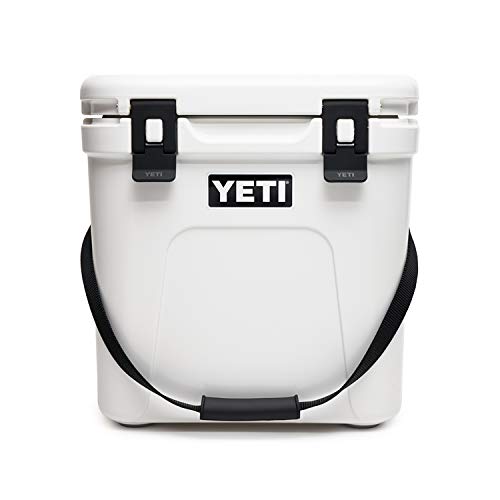
- Best for apartments: YETI Roadie 24 Hard Cooler, White — Check on Amazon
- Best premium small cooler: Pelican 30QT Elite Cooler — Check on Amazon
- Best wheeled for elevator buildings: YETI Roadie 48 Wheeled Cooler — Check on Amazon
- Best if you have the storage: YETI Tundra 45 Hard Cooler — Check on Amazon
- Best for shared rooftops and car trips: RTIC 52 QT Ultra-Light Wheeled Cooler — Check on Amazon
- Best value for balcony and trunk: Lifetime 55 Quart High Performance Cooler — Check on Amazon
Read the full guide ↓
Disclosure: As an Amazon Associate, dailyhomedecorating.com earns from qualifying purchases. Links to Amazon on this page are affiliate links; they cost you nothing extra. Listing details such as price and availability change often, so check the current Amazon listing before you buy.
If you are shopping for the best outdoor cooler for apartments under $500, start with an honest piece of arithmetic: this budget is more than an apartment needs, and that is good news, not a problem. Apartment outdoor life happens on balconies, small patios, shared rooftops and picnic lawns, in loads sized for two to six people — and the coolers built for those loads are the small, premium end of the hard-cooler market, not the expedition end. A $500 ceiling means you never have to compromise inside that class: you can buy the best small rotomolded cooler made, add the accessories that make it pleasant, and still keep a large share of the budget for the rest of your outdoor setup. What you should not do is spend the ceiling on size. A 65-quart cooler in a studio apartment is not a luxury; it is a furniture problem with a lid.
So this guide is organized around apartment realities. Storage comes first: where does the cooler live in February — a closet, a balcony corner, the trunk of a car, a storage cage in the basement? Carrying comes second: every cooler in an apartment building travels, through hallways, elevators, stairwells and parking structures, usually in the hands of one person who is also carrying bags. Footprint comes third: on a small balcony, a cooler’s shape matters as much as its volume, and the tall, narrow designs in this guide exist precisely for that problem. Ice retention, the headline spec of the category, comes last — not because it does not matter, but because apartment trips are measured in hours and single overnights, and every pick here holds cold far longer than that when it is packed sensibly.
Our top pick is the YETI Roadie 24, a tall, light, one-person cooler that stands wine bottles upright and disappears into a closet. The Pelican 30QT Elite is the premium alternative for buyers who want a lifetime guarantee in the same small class. If your building life involves elevators and shared spaces, the wheeled Roadie 48 turns a party-size load into a luggage roll. And for apartment dwellers with a car and a camping habit, the Tundra 45, the RTIC 52 wheeled and the Lifetime 55 each earn their storage space in different ways. Below: the quick picks, how we chose them, full reviews, a comparison table, an apartment-specific buying checklist, the mistakes renters make in this category, and a straight answer to the question of what to do with the rest of the $500.
In this guide
Quick Picks
Short on time, or comparing several options at once? Each row below names a buyer type and the product that suits it, with a link to the listing where one is available.
| Buyer type | Pick | Why it stands out | Link |
|---|---|---|---|
| Best for apartments | YETI Roadie 24 Hard Cooler, White | Tall, narrow and light — stands bottles upright, carries one-handed, stores in a closet | Check on Amazon |
| Best premium small cooler | Pelican 30QT Elite Cooler | Lifetime guarantee, press-and-pull latches and serious insulation in a one-person size | Check on Amazon |
| Best wheeled for elevator buildings | YETI Roadie 48 Wheeled Cooler | Rolls like luggage from kitchen to rooftop; square footprint stores upright in a corner | Check on Amazon |
| Best if you have the storage | YETI Tundra 45 Hard Cooler | The all-purpose premium cooler for renters who also camp, tailgate and road-trip | Check on Amazon |
| Best for shared rooftops and car trips | RTIC 52 QT Ultra-Light Wheeled Cooler | Party capacity that one person can roll through a lobby and lift into a trunk | Check on Amazon |
| Best value for balcony and trunk | Lifetime 55 Quart High Performance Cooler | Big, bear-resistant and light for its size, at the value end of this guide | Check on Amazon |
How These Picks Were Chosen
We filtered for apartment life before we filtered for specs. Every pick had to pass three tests a suburban buyer never faces: it must store in a plausible apartment space (closet, balcony corner, trunk or storage unit), it must be movable by one person through a building when loaded or roll well enough that loading does not matter, and its capacity had to match apartment-scale loads — with two deliberate exceptions, the RTIC and the Lifetime, included for renters whose social life or car life genuinely runs larger.
Every pick is a real Amazon listing verified at or under the $500 ceiling during research, cross-checked against the maker’s specifications and independent retailers or price records, and confirmed against Amazon’s own catalog data before linking. All picks were screened against U.S. Consumer Product Safety Commission recall notices for coolers before shortlisting, and any recalled product was excluded entirely. Prices move, so the article prints no static product price: check the current price on Amazon for each linked pick.
One more filter deserves naming, because it shaped this list more than any spec: we excluded size for its own sake. Several famous expedition coolers fit the budget easily, and none of them is here, because a cooler that cannot be stored gracefully in a home with no garage fails the apartment test no matter how long it holds ice. What remains is the intersection of premium build and apartment geometry — six coolers that a renter can store, move and use without negotiating with their own floor plan every time.
And a note on the two numbers that follow every pick below: empty weight and exterior dimensions are quoted from the makers’ current published specifications, because in an apartment those two figures — not the capacity badge — predict whether a cooler is still in daily use a year from now. Read them as the headline specs they deserve to be.
The 6 Best Outdoor Coolers for Apartments Under $500, Reviewed
1. YETI Roadie 24 Hard Cooler — Best for Apartments
Who it suits: Apartment dwellers whose cooler serves a balcony, a picnic blanket and the occasional beach day — loads for two to four people, carried by one person, stored in a closet.
The YETI Roadie 24 is what happens when a flagship cooler maker designs for small spaces on purpose. It is tall rather than wide — about 16.5 × 14 × 17.5 inches outside — a shape that slips beside a closet door, stands in the corner of a balcony without eating the floor, and, most importantly, gives the interior the height to stand wine bottles and two-litre bottles upright instead of drowning them sideways in meltwater. At about 12.8 pounds empty it is the lightest hard cooler in this guide by a wide margin, and the difference is not a spec-sheet abstraction: it is the difference between carrying your cooler or planning around it. Loaded with ice and drinks for four, it is still a one-person carry down a hallway and across a park.
Capacity is honest small: YETI rates it at 18 cans packed with ice at the recommended 2:1 ratio, or 24 pounds of ice on its own. Translate that into apartment events and it is a full evening — drinks for four, plus the perishable parts of a small barbecue riding on top. The construction is the same rotomolded family build as the bigger YETIs, with thick insulation, a sealing gasket and a quick-latch system designed for one-handed opening, which matters more than it sounds when your other hand holds a plate. There is no drain plug on this size — you tip it at the sink or over the balcony planter — which in an apartment is arguably a feature: no plug to lose down a shared drain, and a size you can rinse in a bathtub in February.
Pros: Lightest and most storable pick in the guide; upright bottle storage; genuine one-person, one-hand carry; premium build and five-year warranty in a size that earns its storage space daily.
Honest limitation: It is a four-person cooler, not a party cooler — hosting eight means a second trip, a second cooler, or a bigger pick from this list. It is not bear-certified, and there is no drain plug.
Choose it if your outdoor life is balconies, picnics and small gatherings. Skip it if you regularly host the whole group chat — read on. Check on Amazon — check price on Amazon before you buy.
2. Pelican 30QT Elite Cooler — Best Premium Small Cooler
Who it suits: The buy-it-for-life renter: someone with a small footprint to fill who wants the heaviest-duty small cooler made, backed by a lifetime guarantee.
The Pelican 30QT Elite is the small cooler for people who read warranty documents. Pelican guarantees this cooler for life — not five years, not ten — and builds it like the protective cases the company is famous for: thick polyurethane insulation (just over two inches of it), press-and-pull latches that clamp the lid onto a freezer-grade gasket and open easily with cold hands, stainless steel hardware, a molded-in lock hasp, integrated cup holders and a built-in bottle opener. It is made in the USA. The exterior measures about 25.3 × 19 × 18.5 inches, the interior takes 23 cans or a weekend of food for two, and at about 21.7 pounds empty it is dense in the hand in a way that reads as durability rather than bloat.
For apartment use, the 30QT’s virtues are specific. The size is the sweet spot for a couple who camp: bigger than the Roadie 24 for a two-night trip, still a one-person carry from a third-floor walk-up if you are sensible about how much ice you load. The non-skid, non-marking feet matter on rented balconies and hardwood-adjacent patios. And the lifetime guarantee changes the storage maths — a cooler you will own for decades justifies a permanent home in the closet in a way a disposable one never does.
Pros: Lifetime guarantee; the most serious hardware in the small class; excellent insulation for multi-day trips; non-marking feet that suit rented spaces.
Honest limitation: Heavy for its size — you feel every one of those 21.7 pounds on a staircase — and the utilitarian styling is function-first. It also costs flagship money for a compact box; the value case rests entirely on the lifetime guarantee.
Choose it if you want one small cooler, permanently. Skip it if stairs are your daily reality and every pound counts — the Roadie 24 is nine pounds lighter. Check on Amazon — check price on Amazon before you buy.
3. YETI Roadie 48 Wheeled Cooler — Best Wheeled for Elevator Buildings
Who it suits: Renters in larger buildings — elevator rides, long hallways, parking structures, shared rooftop decks — who host more people than a small cooler feeds.
Every apartment building has a distance problem, and the YETI Roadie 48 is the cooler that solves it. Its retractable periscope handle and solid, puncture-resistant wheels turn a party-size load into a luggage roll: kitchen to elevator, elevator to rooftop, rooftop to car, without a single loaded lift. That matters more in a building than anywhere else, because the alternative — a two-person carry of a sloshing 60-pound box through a lobby — is how coolers end up staying in the closet while drinks are served warm.
The shape serves apartment storage too. At roughly 20 × 20 × 21 inches it is tall and square rather than long, so it stands in a closet corner or a storage-cage footprint that a long cooler cannot use, and the tall interior stands wine bottles upright — 76 cans with no ice, or 54 pounds of ice alone, is the maker’s rating. A dry goods basket is included for the food half of the load. In independent testing this model has posted insulation results at the top of its class, which suits rooftop duty in full sun. At about 28 pounds empty it is not light, but the entire design premise is that you will almost never lift it loaded — roll it to the car, lift it empty-ish into the trunk, load it at the destination.
Pros: Wheels and handle built for building life; upright bottles; compact square storage footprint; top-class tested insulation; dry basket included.
Honest limitation: Not bear-certified, and the tall body is less handy as an extra seat than a low cooler. In a small studio, even its modest footprint is a real allocation of floor.
Choose it if your gatherings are big and your building is bigger. Skip it if you live in a walk-up — wheels do not climb stairs, and the Roadie 24 exists for you. Check on Amazon — check price on Amazon, as seasonal colors are often discounted.
4. YETI Tundra 45 Hard Cooler — Best If You Have the Storage
Who it suits: Renters with a storage unit, a generous closet or a car that lives in a garage — apartment dwellers whose cooler also does camping, tailgating and family-weekend duty.
The YETI Tundra 45 is the category’s benchmark all-rounder, and in an apartment context the question it asks is purely about storage: its footprint — about 25.6 × 15.9 × 15.5 inches — is the size of a large suitcase stood on end, and if you have a home for that, you get the most versatile premium cooler made. Rotomolded one-piece construction, thick pressure-injected insulation, a freezer-style lid gasket, heavy-duty rubber latches, non-slip feet and bear-resistant certification with locks fitted. YETI rates it at 54 cans with no ice or 37 pounds of ice alone; packed at the recommended ratio it carries a weekend for a small group, and the included dry goods basket keeps food out of the meltwater.
For apartment life specifically, two traits stand out. The lid is a genuine seat and step — on a small balcony, a cooler that seats a guest is earning its footprint twice. And the accessory ecosystem is the deepest in the category, so the cooler adapts as your life does: dividers, cushions, tie-downs, spare latches, all available years later. The honest costs are weight and honesty about capacity: at 24.6 pounds empty, a loaded Tundra 45 is a two-handle carry through a building, best managed with a folding hand truck or a wheeled pick instead; and independent measurement puts its true volume below the “45” in the name, so pack by the interior dimensions, not the badge.
Pros: Benchmark build and versatility; doubles as balcony seating; unmatched accessories; five-year warranty.
Honest limitation: Needs a real storage home and a two-person or trolley plan when loaded; no wheels; true capacity is smaller than the name suggests.
Choose it if storage is solved and your cooler life extends beyond the balcony. Skip it if it would live in your living room. Check on Amazon — check price on Amazon before ordering.
5. RTIC 52 QT Ultra-Light Wheeled Cooler — Best for Shared Rooftops and Car Trips
Who it suits: Social renters — the friend whose building has the bookable rooftop, the picnic lawn, the pool deck — who need party capacity that one person can move through a building alone.
The RTIC 52 QT Ultra-Light Wheeled Cooler is the largest cooler in this guide that an apartment dweller can still handle solo, and the reason is RTIC’s Ultra-Light construction: an injected-molded design the maker builds to be more than 30 percent lighter than rotomolded coolers of the same capacity. The non-wheeled version of this cooler weighs about 21 pounds empty; the wheeled version adds rolling gear to that light shell, so a full 52 true quarts — the maker rates it for up to 78 cans — rolls from kitchen to elevator to rooftop behind one person, and lifts into a trunk without a second pair of hands or a prayer.
That combination is precisely the apartment party problem. Shared spaces mean your cooler travels to the event every time, and the event is drinks-heavy: cans, bottles, ice, and the food that fits around them. The RTIC’s honest, true-to-size volume swallows that load in one trip, its foam insulation (up to three inches) keeps a long afternoon cold, and its price sits in the middle band of this guide rather than the top — sensible for a cooler whose other job is being lent, borrowed and occasionally left in a communal space. The trade-offs are the known ones for the lighter build: no bear-resistant certification, a warranty and finish a step below the flagships, and a shell that asks for slightly kinder treatment than a rotomolded tank.
Pros: True-to-size party capacity; uniquely manageable for one person in a building; wheels included; mid-band price for the size.
Honest limitation: Not rotomolded and not bear-certified; in a small apartment it still needs a storage plan — measure the closet before it arrives.
Choose it if you are the group’s host and your venue is a shared space. Skip it if your gatherings are four people on your own balcony. Check on Amazon — check price on Amazon before you buy.
6. Lifetime 55 Quart High Performance Cooler — Best Value for Balcony and Trunk
Who it suits: Renters with a car, whose cooler splits its life between a balcony corner and a trunk — family visits, beach days, sports tournaments — and who would rather spend the savings elsewhere in the home.
The Lifetime 55 Quart High Performance Cooler makes an argument no other pick here can: it is a big, bear-resistant cooler — certified shell, heavy-duty latches, stainless steel hinge rod, built-in bottle opener — that weighs only about 24 pounds empty despite its 55 quarts, and sits at the value end of this guide. For an apartment dweller, that combination maps onto the two places the cooler will live: light enough to haul from a balcony to a car park without drama, big enough to be the family’s cooler when it gets there. In published testing, Lifetime’s high-performance line has impressed reviewers with ice retention rivalling premium brands at around half the price, which is exactly the profile a renter should want: maximum function, minimum money sunk into an object that shares space with everything else they own.
The compromises are refinement, not cold. The fit and finish are workmanlike next to YETI and Pelican, the accessory ecosystem is thin, and there are no wheels — a loaded 55-quart box is a two-handle carry, so the balcony-to-car route should be short, trolley-assisted, or split into two trips with the ice loaded at the car. On the balcony itself it earns its keep: the lid seats a guest, the footprint is tidy for its capacity, and the drain is a simple hose-compatible plug you can run into a balcony drain or a bucket.
Pros: Bear-resistant and big, yet light for its size; the value pick of the guide; bottle opener and stainless hinge; lid doubles as seating.
Honest limitation: No wheels; finish and accessories trail the flagships; at 55 quarts it is the most storage-hungry pick here relative to apartment scale.
Choose it if your cooler life is half balcony, half car. Skip it if it must climb stairs loaded, every time. Check on Amazon — check price on Amazon, as this model is discounted often.
Comparison Table
| Cooler | Capacity (maker rating) | Empty weight | Wheels | Storage character | Best for |
|---|---|---|---|---|---|
| YETI Roadie 24 | 18 cans at 2:1 ratio | ~12.8 lb | No | Closet corner, tall and narrow | Best for apartments |
| Pelican 30QT Elite | 23 cans | ~21.7 lb | No | Closet shelf, permanent home | Premium small, lifetime guarantee |
| YETI Roadie 48 | 76 cans (no ice) | ~28 lb | Yes | Stands in a corner | Elevator buildings |
| YETI Tundra 45 | 54 cans (no ice) | 24.6 lb | No | Storage unit or big closet | All-round, if storage allows |
| RTIC 52 QT Ultra-Light Wheeled | 52 qt true to size | Light class (non-wheeled 21 lb) | Yes | Trunk or storage cage | Shared rooftops, parties |
| Lifetime 55 Quart | 55 qt | ~24 lb | No | Balcony corner or trunk | Value, balcony + car |
Capacity figures are the makers’ published figures under their stated conditions; cans-only figures assume no ice. For apartment buying, the two columns that decide satisfaction are empty weight and storage character — read those first.
How to Choose the Best Outdoor Cooler for Apartments Under $500
Measure the storage spot before anything else. In an apartment, a cooler is stored 350 days a year and used for 15. Measure the closet corner, the balcony nook, the trunk — then shop inside those dimensions. A cooler that stores beautifully and is slightly small will be loved; a cooler that lives in the middle of the living room will be resented at any capacity.
Walk the route, loaded, in your head. Kitchen to balcony is easy. Kitchen to elevator, down four floors, across a car park, is a different sport. If the route is long, wheels or a sub-15-pound empty weight stop being preferences and become the decision. Walk-up residents: weight first, always.
Size to your real guest list. Two to four people is an 18-to-30-quart life. Six to ten, regularly, is wheeled 48-to-52 territory. Be honest about which household you are — most apartment coolers are bought a size too big, and the extra size is paid for in storage every single day. If you are furnishing the balcony around the cooler, our guide to the Best Outdoor Rug For Apartments Under $500 helps size the space, and the Best Hammock For Apartments Under $500 covers the other classic small-balcony purchase.
Spend the surplus deliberately. With $500 against a small-cooler need, the smart allocation is a premium small cooler, its basket or divider, quality reusable ice packs, and money kept back. Readers who want to see what the lower tier offers before committing should compare our guide to the Best Outdoor Cooler For Apartments Under $300 — for very small spaces it may be all you need, and the Best Outdoor Cooler Under $300 guide covers the wider market at that level.
Mind the building. Balcony weight limits, rules about storing items on balconies, and meltwater drainage are real renter constraints. A cooler that drains into a bucket, has non-marking feet, and can move indoors for inspection day is a cooler that never causes a landlord conversation. For cold evenings after the ice has done its work, the Best Outdoor Heater For Apartments Under $500 is the companion purchase most balcony hosts end up making.
Common Buying Mistakes
Buying the expedition cooler for a balcony. The classic apartment error: a 65-quart rotomolded tank that holds a weekend for eight and stores like a bathtub. It will be used twice and cursed weekly. Match the cooler to the space first and the fantasy second.
Forgetting the stairs. Wheels do not climb, and a loaded mid-size cooler on a third-floor walk-up is a genuine injury risk. If your route has stairs, empty weight is the spec that matters most in this entire guide.
Draining onto the balcony below. Meltwater has to go somewhere. Coolers without a drain plug get tipped over railings by the thoughtless; coolers with plugs get aimed into gutters by the careless. Use a bucket or the balcony drain, every time — your downstairs neighbor is also a person.
Spending the whole $500 because it was allocated. A budget is a ceiling. The best apartment answer in this guide leaves much of the $500 unspent, and that remainder buys the rug, the lighting and the seating that make a balcony a room.
Storing it sealed and wet. In a small apartment a musty cooler perfumes the whole closet. Dry it fully, store the lid ajar, and it will greet you in spring smelling of nothing at all.
The Rest of the $500: Building the Balcony Around the Cooler
Because the right apartment cooler rarely costs the whole budget, it is worth planning the remainder as deliberately as the cooler itself. Start with the pieces that make the cooler work better. A dry goods basket or divider, where your model does not include one, keeps food out of meltwater — the single largest quality-of-life upgrade in cooler ownership. Reusable ice packs sized to your box beat bagged ice for balcony evenings: no mid-party ice run, no meltwater management, and they live in the freezer between uses instead of taking closet space. A small folding side table beside the cooler gives guests somewhere to put a glass that is not the cooler lid — which keeps the lid closed, which keeps the ice, which is the whole game.
Then look at the space. A balcony becomes a room through exactly three additions: somewhere to sit, something soft underfoot, and light after dark. Apartment hosts consistently tell us the cooler was the purchase that started the project rather than the one that finished it — the cold drinks create the occasion, and the occasion exposes the bare concrete. That is the honest frame for this entire keyword: under $500 is not really a cooler budget for an apartment, it is a small-outdoor-room budget with a cooler at its center, and the households that treat it that way end up with a space they use four nights a week instead of a premium box they use four times a year.
One more allocation worth considering is the second, smaller tool: a soft-sided day cooler or an insulated tote for the two-person picnic, the farmers market run, the beach bag. The hard cooler in this guide is the balcony and party anchor; the little soft one is the daily driver. Together they still leave change from the ceiling, and between them they cover essentially every cold-carrying task an apartment generates.
Three Apartment Cooler Scenarios, Solved
The studio with a Juliet balcony. There is no floor to spare, so the cooler must be furniture or it must not exist. The Roadie 24 earns this home: tall and narrow enough to stand beside the door, light enough to carry to the park when the balcony plan changes, and just big enough for two people’s evening. Stored in the closet, it takes the footprint of a pair of boots. This is the scenario where restraint pays most — every quart above need is a quart stored in your only room.
The two-bed with a bookable rooftop. Here the cooler is a party tool that travels vertically. The Roadie 48 or the RTIC 52 wheeled is the answer, chosen by how the building flows: smooth floors and a freight elevator favor either; a long outdoor walk favors the RTIC’s lighter shell when the trunk lift matters too. Load at the rooftop if ice is available there, roll down empty at the end of the night, and the whole event is one person’s job. Hosts in this scenario should also buy the divider — drinks traffic and food traffic in one box is how salads end up tasting of bottle caps.
The garden-level flat with a patio and a car. This renter is a homeowner in waiting, and the cooler can be too. The Tundra 45 or the Lifetime 55 lives on the patio as seating and storage-adjacent furniture, rides in the car on weekends, and asks only for a short, flat route between the two. Weight still matters — it will be lifted into the trunk weekly — which is why the Lifetime’s lightness for its size is such a strong card here, and why the Tundra’s seat-worthy lid matters on a small patio where every object should do two jobs.
Ice, Freezers and Other Apartment Logistics
Apartment cooler ownership has a hidden constraint nobody mentions in expedition reviews: your freezer is small. The ice strategy that works in a house — freeze big blocks for a week, stockpile packs — collides with a freezer already negotiating with frozen peas. Plan around it. Reusable ice packs that freeze flat stack between food and take almost no room; two large flat packs plus a bag of cubes bought on the day will chill any cooler in this guide for an evening. If your freezer has an ice maker, harvest into a bag over two days before a party rather than discovering its limits at noon on Saturday.
Pre-chilling matters more, not less, in an apartment, because you cannot afford to waste ice melting against warm walls when your total ice supply is modest. Bring the cooler indoors the night before — yes, indoors, where the air conditioning does the pre-chill for free — and load it with cold drinks from the fridge rather than warm ones from the cupboard. A cooler loaded cold in a cool room, carried to a shaded balcony, will hold an evening easily even at the small end of this guide. The expedition numbers stop mattering; the habits carry the day.
Water management is the other logistics item. Balconies drain somewhere, usually onto the balcony below, so give meltwater a planned route: drain into a watering can and feed the plants, or tip small coolers at the kitchen sink. Indoors, a cooler stored in a closet should go away bone dry — a day open in the apartment after each use, lid propped, is the whole routine. Do that, and a premium cooler in an apartment stays what it should be: invisible infrastructure for good evenings, noticed only when the drinks come out cold.
What Premium Actually Buys at Apartment Scale
It is fair to ask why any apartment cooler should cost flagship money when the trips are short and the loads are small. The honest answer has three parts, and only one of them is ice. Yes, thick insulation and a real gasket hold cold for days instead of hours — useful for the camping weekend and the power cut, mostly surplus for the balcony evening. But the second part is the one apartment owners feel weekly: hardware. Premium latches that clamp with cold, wet hands; hinges that stay tight after a thousand openings; a lid that stays flat and seals after years of being sat on. In a small home, a cooler is handled constantly and stored visibly, and cheap hardware announces itself every single day.
The third part is time. A premium cooler is a ten-to-twenty-year object in a life stage where most objects are temporary. Renters cycle sofas, rugs and kitchen gear with every move, but a good cooler moves with you — apartment to apartment to first house — unchanged in function. Priced across that horizon, the flagship small cooler is one of the cheapest objects you own per year of service, and the lifetime-guarantee pick in this guide makes the arithmetic explicit. That is the real justification for spending premium money at apartment scale: not colder drinks tonight, but never buying this object again.
There is a counter-argument, and it deserves its paragraph. If your apartment outdoor life is genuinely occasional — a picnic monthly, a balcony used in high summer only — the premium case collapses, and the sensible buy is a competent mid-tier cooler and the rest of the budget spent on being outside more: the chair, the light, the plant. Our lower-tier guides exist for exactly that reader, and the comparison costs nothing but a click. Buy the cooler your calendar justifies, not the one your budget allows.
Final Recommendation
Most apartment dwellers should buy the YETI Roadie 24 and spend the rest of the budget on the balcony itself: it is the rare premium product sized exactly for the life it will actually live. If you want that same small footprint with a lifetime guarantee and do not mind the weight, the Pelican 30QT Elite is the connoisseur’s choice. Hosts in elevator buildings should roll with the Roadie 48; renters with storage and a car should shortlist the Tundra 45, the RTIC 52 wheeled and the Lifetime 55 by route and budget. In every case, the winning apartment cooler is the one that disappears when it is not being used — buy for the storage spot, and the cold will take care of itself.
Frequently Asked Questions
What size cooler is right for an apartment balcony?
For most balconies, an 18-to-30-quart cooler is the sweet spot: drinks and food for two to four people, a footprint that leaves room for chairs and feet, and a weight one person manages easily. Step up to a wheeled 48-to-52 only if you regularly host larger groups in shared spaces.
Is a $500 budget overkill for an apartment cooler?
As a spending target, yes — as a ceiling, it is useful. It puts every premium small cooler within reach, with money left for accessories and the rest of the balcony. The mistake is feeling obliged to spend it all on the cooler itself.
How do I store a cooler in a small apartment?
Clean and fully dry, lid ajar, in the tallest narrow space you have — closet corners suit the tall designs in this guide. Ice packs and baskets store inside the cooler itself. Avoid sealed storage in damp basement cages, which breeds odor.
Wheeled or carried, for a walk-up building?
Carried, and light. Wheels help on flat routes through lobbies and car parks, but on stairs they add weight without adding help. Walk-up residents should prioritize the lowest empty weight that fits the load.
Can I keep a cooler on my balcony all year?
Check your lease and building rules first — some restrict balcony storage. Where it is allowed, the hard coolers in this guide tolerate weather well; keep the cooler shaded, drained and dry inside, and bring it in during deep freezes if the building requires a clear balcony.
What should I buy with the money left over?
The accessories that make a small cooler complete — a dry goods basket or divider, reusable ice packs sized to the box — and then the balcony itself: seating, a rug, lighting. A premium cooler beside a finished little outdoor room beats a flagship cooler on a bare balcony every weekend of the year.
Will a hard cooler annoy my neighbors?
Only if you let it. The noise and nuisance issues are all management, not equipment: drain meltwater into a bucket rather than over the railing, avoid dragging a loaded cooler across a balcony floor late at night (wheeled models roll quietly on their solid tires, but a carried cooler set down gently is quieter still), and store the cooler so it is not the view from your neighbor’s window. Premium coolers are actually the considerate choice — tight lids mean no rattling, and a cooler that lives indoors in a closet raises no balcony-storage issues at all.
My balcony gets full afternoon sun. Will any cooler cope?
Yes, with help. Every pick here is insulated well beyond an evening’s needs, but direct sun on a dark lid is the hardest test in home use. Park the cooler in the building’s shadow line, throw a light-colored towel over the lid, and pre-chill before loading — those three habits matter more than the difference between any two coolers in this guide. If the balcony is truly a sun trap, the white and light-colored finishes in these ranges are the practical choice, not just the aesthetic one.


