Where to buy
Check the latest price, availability and delivery on Amazon. Orders are placed on Amazon. We may earn a commission from qualifying purchases.
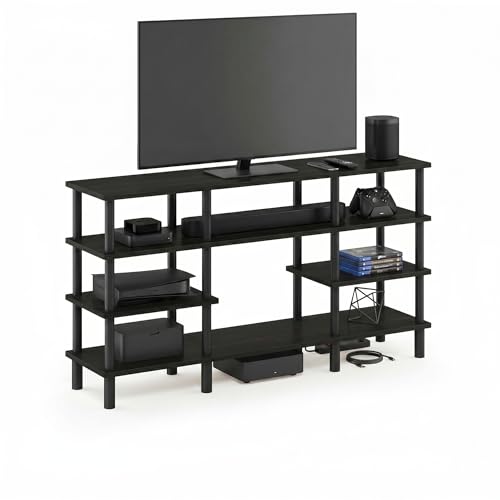
- Best overall: Furinno Turn-N-Tube 4-Tier Wide Shelf TV Stand, Espresso/Black — Check on Amazon
- Walker Edison Traditional Wood TV Stand, 52 Inch, Brown — Check on Amazon
- EnHomee Dresser TV Stand with 11 Drawers, 60 Inch, Rustic Brown — Check on Amazon
- VASAGLE TV Stand with Power Outlets and LED Lights, ULTV118K01, Rustic Brown and Ink Black — Check on Amazon
- Yaheetech TV Stand for TVs up to 65 Inch, Black, 31 Inch Tall — Check on Amazon
- Bestier 70 Inch TV Stand with LED Lights, Black — Check on Amazon
Read the full guide below.
Disclosure: As an Amazon Associate, dailyhomedecorating.com earns from qualifying purchases. Links to Amazon on this page are affiliate links; they cost you nothing extra. Listing details such as price and availability change often, so check the current Amazon listing before you buy.
Finding the best media console for small spaces under $300 is less about chasing the biggest cabinet your budget allows and more about matching one honest piece of furniture to your screen, your gear and the way your room actually gets used every day. This guide compares six verified consoles that sit under the $300 framing of the keyword, and it judges each one on the things that decide whether you still like it a year from now: whether the TV sits at the right height, whether the cables disappear, whether consoles and receivers can breathe, and whether the storage swallows the everyday clutter that collects around a TV. Every pick below was checked against its Amazon listing and maker details, prices are left for you to confirm live because they move often, and each review ends with a plain choose-or-skip verdict so you can shortlist in minutes.
Small spaces reward precision. A media console in a tight room is not just TV furniture; it is often the largest storage piece in the home, and every inch of its footprint has to justify itself. The right pick adds closed storage, a calm surface and a place for every cable, while the wrong one eats the walking path and still leaves clutter on the floor.
Depth is the dimension that matters most and gets measured least. A console a few inches shallower can be the difference between a comfortable walkway and a daily hip-check. In genuinely tight rooms, look for the slimmaker profiles in this guide and keep the TV wall-mounted above the console if the screen’s feet would push the setup further into the room.
Closed storage beats open storage when space is tight, because visual clutter shrinks a room faster than furniture does. Doors and drawers turn consoles, games and chargers into one calm block of color. Reserve a single open bay for the device that needs remote signals and airflow, and let everything else disappear.
In this guide
Quick Picks: Best Media Console for Small Spaces Under $300
| Pick | Best for | TV fit | Storage style | Check price |
|---|---|---|---|---|
| Furinno Turn-N-Tube 4-Tier Wide Shelf TV Stand, Espresso/Black | Best overall | smaller TVs in compact rooms | four open tiers that hold a TV, a console, games and decor with everything visible and reachable | Check on Amazon |
| Walker Edison Traditional Wood TV Stand, 52 Inch, Brown | Most storage per footprint | TVs up to 58 inches | two side cabinets plus an open center stack for a soundbar, console or streaming box | Check on Amazon |
| EnHomee Dresser TV Stand with 11 Drawers, 60 Inch, Rustic Brown | Best for big screens | TVs in the 60-inch class | eleven drawers plus open shelves and hooks, the most closed storage in this guide | Check on Amazon |
| VASAGLE TV Stand with Power Outlets and LED Lights, ULTV118K01, Rustic Brown and Ink Black | Best with built-in power | TVs up to 65 inches | open shelves plus built-in power outlets and LED lighting for consoles and ambient glow | Check on Amazon |
| Yaheetech TV Stand for TVs up to 65 Inch, Black, 31 Inch Tall | Best tall console | TVs up to 65 inches | double-door cabinets plus open compartments for a center speaker, console and decor | Check on Amazon |
| Bestier 70 Inch TV Stand with LED Lights, Black | Best compact value | TVs up to 80 inches | cabinet and shelf storage arranged for consoles, a soundbar and gaming gear | Check on Amazon |
How we chose these best media console for small spaces under $300 picks
We started from the consoles shoppers in this budget actually buy, then verified each model against its Amazon listing and maker specifications: overall dimensions, the TV sizes the maker rates it for, storage configuration and any built-in power or lighting. Models with unclear specifications, no verifiable listing or a mismatch between the headline TV size and the real top dimensions were cut. What survived is a deliberately mixed shortlist — closed cabinets, open shelving, a dresser-style unit and a tool-free budget build — because the right answer under $300 depends on your room, not on a single winner.
Use the vertical inch, not just the floor inch. A slightly taller console with drawers stacked inside it stores more per square foot of floor than a low wide one, and in a small room floor area is the scarce resource. Just keep the screen height in check: the TV still needs its center near seated eye level, so taller consoles pair best with wall-mounted screens.
Keep the palette light and the legs visible. Consoles raised on legs let you see floor underneath, which makes the room read larger, and lighter finishes reflect what light a small room has. Dark, floor-hugging pieces can work as a deliberate media nook, but as a default for tight spaces, airy wins.
Two filters ran over every candidate. First, honesty about size: a console earns its TV rating only when its top is genuinely wide and deep enough for that screen and its feet. Second, honesty about budget: every pick is positioned by its maker and its usual market tier inside this keyword’s under $300 framing, and because furniture pricing shifts with sales and seasons, this guide never prints a fixed price — you confirm the live figure on Amazon in one click from any check link on the page.
Detailed reviews
Furinno Turn-N-Tube 4-Tier Wide Shelf TV Stand, Espresso/Black
Who it suits: This console suits households whose screen is in the smaller TVs in compact rooms range and who want a simple open 4-tier shelving in espresso and black. At wide low-profile shelving format, it anchors a media wall without overwhelming it, and its layout — four open tiers that hold a TV, a console, games and decor with everything visible and reachable — matches the way most living rooms actually accumulate gear: a streaming box first, then a console or soundbar, then the chargers, games and remotes that need somewhere to go.
The build is tool-free Turn-N-Tube assembly with composite boards and round tubes. In daily use that translates to a top that sits steady under the screen, doors or shelves that keep their alignment, and a back panel arranged so cables can leave the cabinet instead of pooling inside it. Set it up with the TV centered, the most-used device in the most open bay, and a single power strip tucked behind or inside the unit, and the whole wall settles into the kind of order that makes a room feel finished rather than merely furnished.
Storage is where this model makes its case. Four open tiers that hold a tv, a console, games and decor with everything visible and reachable means the everyday mess has a designated home, and designated homes are what separate a tidy media wall from a weekly tidying project. Leave one bay or shelf for the device that needs remote line-of-sight and airflow, give the closed sections the clutter, and the console will keep earning its floor space long after the new-furniture feeling fades.
Pros: verified maker specifications and TV rating; storage layout that matches real living-room gear; cable-friendly back design; a finish and profile that work beyond a single decor trend; assembly that a careful first-timer can complete with basic tools.
Honest limitation: like every flat-pack console in this budget, panel finish will not match solid wood under close inspection, the largest sizes are a two-person build, and the very deepest AV receivers should be measured against the interior depth before you commit — no console in this class fits every receiver ever made.
Choose this if your TV, room and storage needs line up with the fit described above and you want a verified, mainstream model rather than a gamble. Skip it if your screen is larger than the maker rating, your receiver is unusually deep, or your room needs a fundamentally different format such as a corner unit or a wall-mounted floating shelf. Check on Amazon to confirm the current price, availability and delivery options on Amazon.
Small spaces reward precision. A media console in a tight room is not just TV furniture; it is often the largest storage piece in the home, and every inch of its footprint has to justify itself. The right pick adds closed storage, a calm surface and a place for every cable, while the wrong one eats the walking path and still leaves clutter on the floor.
Walker Edison Traditional Wood TV Stand, 52 Inch, Brown
Who it suits: This console suits households whose screen is in the TVs up to 58 inches range and who want a traditional wood with cabinet doors and open center shelving. At 52 inches wide, it anchors a media wall without overwhelming it, and its layout — two side cabinets plus an open center stack for a soundbar, console or streaming box — matches the way most living rooms actually accumulate gear: a streaming box first, then a console or soundbar, then the chargers, games and remotes that need somewhere to go.
The build is engineered wood in a warm brown finish with cord cutouts at the back. In daily use that translates to a top that sits steady under the screen, doors or shelves that keep their alignment, and a back panel arranged so cables can leave the cabinet instead of pooling inside it. Set it up with the TV centered, the most-used device in the most open bay, and a single power strip tucked behind or inside the unit, and the whole wall settles into the kind of order that makes a room feel finished rather than merely furnished.
Storage is where this model makes its case. Two side cabinets plus an open center stack for a soundbar, console or streaming box means the everyday mess has a designated home, and designated homes are what separate a tidy media wall from a weekly tidying project. Leave one bay or shelf for the device that needs remote line-of-sight and airflow, give the closed sections the clutter, and the console will keep earning its floor space long after the new-furniture feeling fades.
Pros: verified maker specifications and TV rating; storage layout that matches real living-room gear; cable-friendly back design; a finish and profile that work beyond a single decor trend; assembly that a careful first-timer can complete with basic tools.
Honest limitation: like every flat-pack console in this budget, panel finish will not match solid wood under close inspection, the largest sizes are a two-person build, and the very deepest AV receivers should be measured against the interior depth before you commit — no console in this class fits every receiver ever made.
Choose this if your TV, room and storage needs line up with the fit described above and you want a verified, mainstream model rather than a gamble. Skip it if your screen is larger than the maker rating, your receiver is unusually deep, or your room needs a fundamentally different format such as a corner unit or a wall-mounted floating shelf. Check on Amazon to confirm the current price, availability and delivery options on Amazon.
Depth is the dimension that matters most and gets measured least. A console a few inches shallower can be the difference between a comfortable walkway and a daily hip-check. In genuinely tight rooms, look for the slimmaker profiles in this guide and keep the TV wall-mounted above the console if the screen’s feet would push the setup further into the room.
EnHomee Dresser TV Stand with 11 Drawers, 60 Inch, Rustic Brown
Who it suits: This console suits households whose screen is in the TVs in the 60-inch class range and who want a dresser-style console with fabric drawers, shelves and hooks. At 60 inches wide, it anchors a media wall without overwhelming it, and its layout — eleven drawers plus open shelves and hooks, the most closed storage in this guide — matches the way most living rooms actually accumulate gear: a streaming box first, then a console or soundbar, then the chargers, games and remotes that need somewhere to go.
The build is metal frame with fabric drawers, LED lights and power outlets built in. In daily use that translates to a top that sits steady under the screen, doors or shelves that keep their alignment, and a back panel arranged so cables can leave the cabinet instead of pooling inside it. Set it up with the TV centered, the most-used device in the most open bay, and a single power strip tucked behind or inside the unit, and the whole wall settles into the kind of order that makes a room feel finished rather than merely furnished.
Storage is where this model makes its case. Eleven drawers plus open shelves and hooks, the most closed storage in this guide means the everyday mess has a designated home, and designated homes are what separate a tidy media wall from a weekly tidying project. Leave one bay or shelf for the device that needs remote line-of-sight and airflow, give the closed sections the clutter, and the console will keep earning its floor space long after the new-furniture feeling fades.
Pros: verified maker specifications and TV rating; storage layout that matches real living-room gear; cable-friendly back design; a finish and profile that work beyond a single decor trend; assembly that a careful first-timer can complete with basic tools.
Honest limitation: like every flat-pack console in this budget, panel finish will not match solid wood under close inspection, the largest sizes are a two-person build, and the very deepest AV receivers should be measured against the interior depth before you commit — no console in this class fits every receiver ever made.
Choose this if your TV, room and storage needs line up with the fit described above and you want a verified, mainstream model rather than a gamble. Skip it if your screen is larger than the maker rating, your receiver is unusually deep, or your room needs a fundamentally different format such as a corner unit or a wall-mounted floating shelf. Check on Amazon to confirm the current price, availability and delivery options on Amazon.
Closed storage beats open storage when space is tight, because visual clutter shrinks a room faster than furniture does. Doors and drawers turn consoles, games and chargers into one calm block of color. Reserve a single open bay for the device that needs remote signals and airflow, and let everything else disappear.
VASAGLE TV Stand with Power Outlets and LED Lights, ULTV118K01, Rustic Brown and Ink Black
Who it suits: This console suits households whose screen is in the TVs up to 65 inches range and who want a industrial rustic brown and ink black with open storage shelves. At wide open-shelf format, it anchors a media wall without overwhelming it, and its layout — open shelves plus built-in power outlets and LED lighting for consoles and ambient glow — matches the way most living rooms actually accumulate gear: a streaming box first, then a console or soundbar, then the chargers, games and remotes that need somewhere to go.
The build is steel frame with rustic panels, integrated outlet strip and LED light kit. In daily use that translates to a top that sits steady under the screen, doors or shelves that keep their alignment, and a back panel arranged so cables can leave the cabinet instead of pooling inside it. Set it up with the TV centered, the most-used device in the most open bay, and a single power strip tucked behind or inside the unit, and the whole wall settles into the kind of order that makes a room feel finished rather than merely furnished.
Storage is where this model makes its case. Open shelves plus built-in power outlets and led lighting for consoles and ambient glow means the everyday mess has a designated home, and designated homes are what separate a tidy media wall from a weekly tidying project. Leave one bay or shelf for the device that needs remote line-of-sight and airflow, give the closed sections the clutter, and the console will keep earning its floor space long after the new-furniture feeling fades.
Pros: verified maker specifications and TV rating; storage layout that matches real living-room gear; cable-friendly back design; a finish and profile that work beyond a single decor trend; assembly that a careful first-timer can complete with basic tools.
Honest limitation: like every flat-pack console in this budget, panel finish will not match solid wood under close inspection, the largest sizes are a two-person build, and the very deepest AV receivers should be measured against the interior depth before you commit — no console in this class fits every receiver ever made.
Choose this if your TV, room and storage needs line up with the fit described above and you want a verified, mainstream model rather than a gamble. Skip it if your screen is larger than the maker rating, your receiver is unusually deep, or your room needs a fundamentally different format such as a corner unit or a wall-mounted floating shelf. Check on Amazon to confirm the current price, availability and delivery options on Amazon.
Use the vertical inch, not just the floor inch. A slightly taller console with drawers stacked inside it stores more per square foot of floor than a low wide one, and in a small room floor area is the scarce resource. Just keep the screen height in check: the TV still needs its center near seated eye level, so taller consoles pair best with wall-mounted screens.
Yaheetech TV Stand for TVs up to 65 Inch, Black, 31 Inch Tall
Who it suits: This console suits households whose screen is in the TVs up to 65 inches range and who want a tall modern black console with double doors and open compartments. At 58 x 16 x 31 inches overall, it anchors a media wall without overwhelming it, and its layout — double-door cabinets plus open compartments for a center speaker, console and decor — matches the way most living rooms actually accumulate gear: a streaming box first, then a console or soundbar, then the chargers, games and remotes that need somewhere to go.
The build is tall 31-inch profile that raises the screen closer to seated eye level from a sofa. In daily use that translates to a top that sits steady under the screen, doors or shelves that keep their alignment, and a back panel arranged so cables can leave the cabinet instead of pooling inside it. Set it up with the TV centered, the most-used device in the most open bay, and a single power strip tucked behind or inside the unit, and the whole wall settles into the kind of order that makes a room feel finished rather than merely furnished.
Storage is where this model makes its case. Double-door cabinets plus open compartments for a center speaker, console and decor means the everyday mess has a designated home, and designated homes are what separate a tidy media wall from a weekly tidying project. Leave one bay or shelf for the device that needs remote line-of-sight and airflow, give the closed sections the clutter, and the console will keep earning its floor space long after the new-furniture feeling fades.
Pros: verified maker specifications and TV rating; storage layout that matches real living-room gear; cable-friendly back design; a finish and profile that work beyond a single decor trend; assembly that a careful first-timer can complete with basic tools.
Honest limitation: like every flat-pack console in this budget, panel finish will not match solid wood under close inspection, the largest sizes are a two-person build, and the very deepest AV receivers should be measured against the interior depth before you commit — no console in this class fits every receiver ever made.
Choose this if your TV, room and storage needs line up with the fit described above and you want a verified, mainstream model rather than a gamble. Skip it if your screen is larger than the maker rating, your receiver is unusually deep, or your room needs a fundamentally different format such as a corner unit or a wall-mounted floating shelf. Check on Amazon to confirm the current price, availability and delivery options on Amazon.
Keep the palette light and the legs visible. Consoles raised on legs let you see floor underneath, which makes the room read larger, and lighter finishes reflect what light a small room has. Dark, floor-hugging pieces can work as a deliberate media nook, but as a default for tight spaces, airy wins.
Bestier 70 Inch TV Stand with LED Lights, Black
Who it suits: This console suits households whose screen is in the TVs up to 80 inches range and who want a modern black entertainment center with LED lighting and storage. At 70 inches wide, it anchors a media wall without overwhelming it, and its layout — cabinet and shelf storage arranged for consoles, a soundbar and gaming gear — matches the way most living rooms actually accumulate gear: a streaming box first, then a console or soundbar, then the chargers, games and remotes that need somewhere to go.
The build is long low profile with integrated LED lighting for evening viewing. In daily use that translates to a top that sits steady under the screen, doors or shelves that keep their alignment, and a back panel arranged so cables can leave the cabinet instead of pooling inside it. Set it up with the TV centered, the most-used device in the most open bay, and a single power strip tucked behind or inside the unit, and the whole wall settles into the kind of order that makes a room feel finished rather than merely furnished.
Storage is where this model makes its case. Cabinet and shelf storage arranged for consoles, a soundbar and gaming gear means the everyday mess has a designated home, and designated homes are what separate a tidy media wall from a weekly tidying project. Leave one bay or shelf for the device that needs remote line-of-sight and airflow, give the closed sections the clutter, and the console will keep earning its floor space long after the new-furniture feeling fades.
Pros: verified maker specifications and TV rating; storage layout that matches real living-room gear; cable-friendly back design; a finish and profile that work beyond a single decor trend; assembly that a careful first-timer can complete with basic tools.
Honest limitation: like every flat-pack console in this budget, panel finish will not match solid wood under close inspection, the largest sizes are a two-person build, and the very deepest AV receivers should be measured against the interior depth before you commit — no console in this class fits every receiver ever made.
Choose this if your TV, room and storage needs line up with the fit described above and you want a verified, mainstream model rather than a gamble. Skip it if your screen is larger than the maker rating, your receiver is unusually deep, or your room needs a fundamentally different format such as a corner unit or a wall-mounted floating shelf. Check on Amazon to confirm the current price, availability and delivery options on Amazon.
Small spaces reward precision. A media console in a tight room is not just TV furniture; it is often the largest storage piece in the home, and every inch of its footprint has to justify itself. The right pick adds closed storage, a calm surface and a place for every cable, while the wrong one eats the walking path and still leaves clutter on the floor.
Comparison table
| Console | Size | TV fit | Storage | Link |
|---|---|---|---|---|
| Furinno Turn-N-Tube 4-Tier Wide Shelf TV Stand, Espresso/Black | wide low-profile shelving format | smaller TVs in compact rooms | four open tiers that hold a TV, a console, games and decor with everything visible and reachable | Check on Amazon |
| Walker Edison Traditional Wood TV Stand, 52 Inch, Brown | 52 inches wide | TVs up to 58 inches | two side cabinets plus an open center stack for a soundbar, console or streaming box | Check on Amazon |
| EnHomee Dresser TV Stand with 11 Drawers, 60 Inch, Rustic Brown | 60 inches wide | TVs in the 60-inch class | eleven drawers plus open shelves and hooks, the most closed storage in this guide | Check on Amazon |
| VASAGLE TV Stand with Power Outlets and LED Lights, ULTV118K01, Rustic Brown and Ink Black | wide open-shelf format | TVs up to 65 inches | open shelves plus built-in power outlets and LED lighting for consoles and ambient glow | Check on Amazon |
| Yaheetech TV Stand for TVs up to 65 Inch, Black, 31 Inch Tall | 58 x 16 x 31 inches overall | TVs up to 65 inches | double-door cabinets plus open compartments for a center speaker, console and decor | Check on Amazon |
| Bestier 70 Inch TV Stand with LED Lights, Black | 70 inches wide | TVs up to 80 inches | cabinet and shelf storage arranged for consoles, a soundbar and gaming gear | Check on Amazon |
How to choose the media console for small spaces under $300
Start with the screen. Measure its width, not just its diagonal, and choose a console at least a few inches wider. Check the feet: many modern TVs stand on two wide-set feet that need a top nearly as wide as the screen itself, while a center pedestal relaxes that requirement. Then set height by your seating — the middle of the screen belongs near eye level from the sofa, so work backwards from sofa height to console height before falling for any particular style.
Next, inventory your gear honestly. Count the devices, measure the deepest one, and decide what must stay visible for remotes and airflow and what should disappear behind doors. That single exercise picks your storage style for you: mostly hidden clutter means cabinets or drawers, a receiver and consoles that run hot means at least one open bay, and a soundbar means a top surface or a wide center shelf with unobstructed frontage.
Then check the unglamorous details. Rear cutouts or an open back for cables. A route for one power strip so only one cord reaches the wall. Adjustable shelves if your gear heights vary. Floor protection under the feet. And for any tall or heavily loaded unit, a wall anchor — a five-minute job that should be treated as part of assembly, not an optional extra.
Related guides in this series can help you plan the rest of the wall: see Best Media Console For Small Apartments Under $300, Best Media Console Under $300 and Best Bookcase Under $300 for pieces that pair with a media console in the same room.
Common mistakes to avoid
The most common mistake is buying by diagonal alone and discovering the TV’s feet hang past the console’s edges. The second is sealing a hot games console or receiver inside a closed cabinet with no airflow and then blaming the device for fan noise and shutdowns. The third is ignoring cable exits until the unit is loaded, at which point every cord drapes visibly down the front. Buyers also underestimate assembly: large consoles need a clear floor area, a second pair of hands for the flip-and-lift moments, and patience with cam locks that should be snug, never forced. Finally, skipping the wall anchor on a tall console in a busy household is a risk that costs five minutes to remove.
Two more guides worth reading before you finalize the room are Best End Table Under $300 and Best Storage Ottoman Under $300, which cover the seating and side pieces most often bought alongside a console.
Final recommendation
If you want one safe answer from this guide, start with the first pick, the Furinno Turn-N-Tube 4-Tier Wide Shelf TV Stand, Espresso/Black: it covers the widest range of TVs and rooms in this budget and its storage layout suits the way most households actually live with a TV. Choose the dresser-style or drawer-heavy options if closed storage is your pain point, the open and powered options if your gear runs hot or multiplies yearly, and the compact budget build if the room — not the TV — is the constraint. Whichever you pick, confirm dimensions against your screen and your deepest device, then Check on Amazon for the live price before you buy.
Setting up your console on day one
Unbox in the room where the console will live, not in a hallway, and lay the panels out in build order before touching a screw. Flat-pack furniture rewards the patient: confirm every panel and hardware bag against the parts list first, because discovering a missing cam lock at step nine is the difference between a one-hour build and a weekend of emails. Work on a rug or the flattened box to protect both the floor and the panel edges, keep a soft mallet and a manual screwdriver within reach, and resist power drivers on cam fittings, which strip particleboard threads when they are rushed.
Once the frame stands, load it in the right order. The TV goes on last, after the console is in its final position and anchored if it needs anchoring, because a loaded console is far harder to nudge into place. Devices go in next, heaviest and hottest first: receiver or console in the most open bay, streaming boxes and players in the next tier, and only then the decorative layer of books, baskets and plants. Route cables as you place each device rather than afterwards, dropping power down one side and signal cables down the other where the layout allows, and leave a hand-width of slack behind every device so future swaps do not require emptying the cabinet.
Finish with the viewing check. Sit in every seat that matters and look at the screen: the center should sit near eye level, no window should reflect in the panel from the main seat, and the soundbar, if you use one, should sit at the front edge of the top with nothing blocking its drivers. Live with the setup for a week before drilling, mounting or hiding anything permanently, because the first week reveals the remote angles, glare hours and cable annoyances that no amount of planning predicts perfectly.
Materials, finishes and care
Most consoles in this budget are built from engineered wood panels with a wood-look or matte finish, often paired with steel frames, glass doors or fabric drawer fronts. That construction is a sensible match for the job: it keeps a wide console light enough to ship and assemble at home, holds a modern TV comfortably when the maker ratings are respected, and wipes clean with a damp cloth. What it asks in return is respect for its limits — coasters under cold drinks, felt pads under heavy decor, no standing water on seams, and loads kept inside the maker stated capacities for tops and shelves.
Care is mostly prevention. Dust with a soft cloth so grit does not grind into the finish, lift rather than drag the console when the room gets rearranged, and re-tighten accessible fittings once after the first month as the joints settle. Keep the unit out of direct all-day sun where you can, because finishes fade unevenly, and give powered gear the airflow the reviews above keep returning to: heat that escapes is lifespan earned. Looked after this way, a budget console is not a placeholder purchase; it is a five-to-ten-year piece of the room.
Media console, TV stand or entertainment center?
The names overlap so much that shoppers often filter wrongly and miss good options. A TV stand in the narrow sense can be as simple as a bench or pedestal that only holds the screen. A media console adds storage as a first-class job: cabinets, drawers or shelves sized for the devices and clutter around the TV. An entertainment center is the largest format, sometimes wrapping the screen with towers or hutches. For most living rooms in this budget, the media console format compared in this guide is the sweet spot — wide enough for modern screens, storage-rich enough to calm the room, and freestanding enough to move house with you.
What this budget actually buys
It helps to know what the under $300 framing of this keyword does and does not buy, because furniture tiers are less obvious than electronics tiers. At this level you are paying for width, storage and finish more than for exotic materials. The money goes into longer tops that suit modern screens, into doors and drawers with hardware that survives daily use, into cable routing that was designed rather than improvised, and increasingly into built-in power and lighting that would otherwise mean a separate strip and a separate glow light bought later. What the budget does not buy is solid hardwood joinery or heirloom construction, and pretending otherwise would be dishonest: these are engineered-wood consoles built for real rooms and real budgets, judged here on how well they do that job.
The smart way to spend inside the tier is to pay for the features your room will use weekly and skip the ones it will not. A household drowning in games, chargers and remotes should put its money into drawers and doors. A household with a receiver and two consoles should put it into open bays, depth and airflow. A household that moves often should value lighter builds and standard sizes over the last inch of width. Every pick in this guide represents one of those spending logics executed well, which is why the reviews spend as much time on who should skip each model as on who should choose it: the best console under this budget is the one whose strengths line up with your clutter, your gear and your floor plan, not the one with the longest feature list.
FAQ
How wide should a media console be for my TV?
Choose a console a few inches wider than the screen itself, and check the TV’s foot span if it stands on two feet. A slightly wider console looks calmer and leaves room for a soundbar or decor.
Can a games console go inside a closed cabinet?
Only with airflow. Use a cabinet with rear cutouts, leave the door ajar during long sessions, or place the console in an open bay. Heat is the enemy of quiet, reliable gaming gear.
Do I need to anchor a media console to the wall?
Anchor any tall unit, and any unit in a home with climbing children, using the supplied strap or a universal anti-tip kit. It takes minutes and removes a serious tip-over risk.
Why does this guide not print exact prices?
Furniture prices on Amazon change with sales and seasons, so a printed figure would mislead quickly. Every pick sits inside this keyword’s under $300 framing by maker positioning and market tier; use any check link to see the live price.
What is the difference between a media console and a TV stand?
The terms overlap. Media console usually implies a wider, storage-focused cabinet, while TV stand can also mean a simple bench or pedestal. In this guide every pick is a storage console that supports the TV on top.