Where to buy
Check the latest price, availability and delivery on Amazon. Orders are placed on Amazon. We may earn a commission from qualifying purchases.
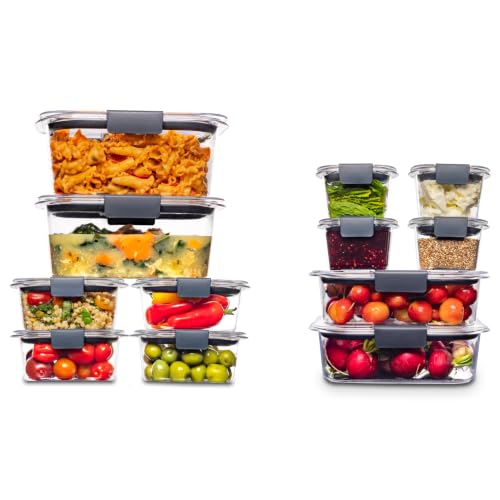
- Best premium full system: Rubbermaid Brilliance Food Storage Containers, 24-Piece Set — Check on Amazon
- Rubbermaid TakeAlongs 2-Compartment Meal Prep Kit, 30 Pieces — Check on Amazon
- Bayco 9 Sets Glass Meal Prep Containers with Lids — Check on Amazon
- Sistema KLIP IT Food Storage Containers, 18-Piece Set — Check on Amazon
- Rubbermaid Easy Find Lids Food Storage Containers, 42-Piece Set — Check on Amazon
- Rubbermaid Brilliance Meal Prep Containers, 10-Piece Set — Check on Amazon
Read the full guide ↓
Disclosure: As an Amazon Associate, dailyhomedecorating.com earns from qualifying purchases. Links to Amazon on this page are affiliate links; they cost you nothing extra. Listing details such as price and availability change often, so check the current Amazon listing before you buy.
Finding the best meal prep containers for small kitchens under $50 is harder than the wall of near-identical boxes suggests, because ‘meal prep container’ covers three genuinely different tools — divided portion trays, latching travel systems and reheating glass — sold side by side as if they were interchangeable. This guide separates them. Every pick below was chosen for small kitchens, at a budget framed by the under $50 tier, with the trade-offs stated plainly. If you are comparing across budgets, our wider roundup in Best Meal Prep Containers Under $25 shows how the same systems scale.
In a small kitchen, every container is a tenant competing for the same few shelves, and the rent is paid in footprint. The wrong set — assorted shapes, orphan lids, boxes that cannot stack — quietly consumes the cupboard you needed for pans. The right set behaves like furniture: one footprint, vertical stacking, lids stored attached or nested, and every piece earning its space by doing more than one job.
This guide judges every pick on space economics first: nested height when empty, stacked height when full, whether lids add a second storage problem, and whether the set can replace other equipment — baking dishes, serving bowls, lunch carriers — rather than merely adding to the inventory. In a small kitchen the best container is the one that deletes another object.
Under $50 is where systems thinking takes over: a premium Brilliance set plus support layers, or a full graduated household set, fits inside one budget. This is the tier for standardising a kitchen on one lid language — or for a couple’s complete fleet with spares — and the picks below are chosen as combinations that work together, not as six rival boxes.
A note on who should keep reading and who should not. If your food never leaves the house and your current tubs close properly, the honest advice is to buy the one missing layer — usually mini pots or one latching box — rather than a whole new system. If, on the other hand, your week involves commutes, school bags, a freezer rotation or a pantry that sheds packets, the system thinking in this guide will pay for itself in the first month. The picks are ordered so that the strongest answer for small kitchens at this tier comes first, and every later pick exists because it does a job the earlier ones do not.
In this guide
Quick Picks
In a hurry? This table matches each pick to the job it does best for small kitchens. Full reasoning, limitations and choose-or-skip advice follow in the detailed reviews.
| Buyer type | Pick | Why it stands out | Link |
|---|---|---|---|
| Best premium full system | Rubbermaid Brilliance Food Storage Containers, 24-Piece Set | The full premium system: twelve latching Tritan containers | Check on Amazon |
| Best matched prep kit | Rubbermaid TakeAlongs 2-Compartment Meal Prep Kit, 30 Pieces | Divided mains plus sauce pots in one matched, clicking kit | Check on Amazon |
| Best glass system | Bayco 9 Sets Glass Meal Prep Containers with Lids | Borosilicate glass with locking lids, in nine graduated sizes | Check on Amazon |
| Best clip-seal modular set | Sistema KLIP IT Food Storage Containers, 18-Piece Set | Clip-closed modular set with a flexible seal | Check on Amazon |
| Best high-count household set | Rubbermaid Easy Find Lids Food Storage Containers, 42-Piece Set | Maximum count with snap-together lids for big households | Check on Amazon |
| Best leak-resistant set | Rubbermaid Brilliance Meal Prep Containers, 10-Piece Set | Latching, vented, leak-resistant — the commuter-grade seal | Check on Amazon |
How picks were chosen for the best meal prep containers for small kitchens under $50
We judged every candidate against the six criteria that decide whether a container system survives real use in small kitchens. Brand fame earned nothing; systems were ranked on how their compartments, lids, materials and counts behave across a full week, and on whether the range can be topped up in the same sizes later. Glass specialists were compared in depth in Best Glass Meal Prep Containers Under $50, and the seal-focused alternatives in Best Airtight Food Storage Containers Under $50.
- Nested and stacked footprint. Empty containers must nest into a fraction of their working height, and full ones must stack stably. Measure both states; a set that only behaves in one is half-designed.
- Lid storage that solves itself. Lids are the small kitchen’s true space thief. Systems whose lids snap to bases, nest flat or share one size delete the lid drawer entirely.
- One footprint across sizes. Shared footprints let different sizes stack into single columns. A set of unique shapes per size cannot tile a small shelf, however good each piece is.
- Dual-duty capability. A container that bakes, stores, reheats and serves replaces up to three other objects. Glass and vented Tritan score highest on deletion value.
- Right-sized counts. Small kitchens should buy rotation, not abundance: enough boxes for the week plus spares, in a system that can top up one size at a time.
- Fridge geometry as well as cupboard geometry. The fridge shelf is the second small space. Rectangular grids beat round tubs there too — a week of prep should form one block, not a scatter.
Specifications were taken from the makers’ own listings and checked for the details that change how a container behaves: whether a stated capacity is per container or per set, whether a lid is a gasket seal or a plain snap, and whether ‘microwave safe’ applies to the base only or to the vented lid as well. Where a listing was ambiguous, this guide describes the conservative version of the claim — a container that is probably leak-resistant is described as exactly that, never upgraded in print to a promise the maker did not make.
One more filter deserves stating: we favoured systems over singles wherever the budget allowed. A container is a multi-year purchase, and a matched system — shared lids, shared footprints, add-on pieces that still exist next year — outlasts and out-organises a drawer of unrelated bargains. The exception is deliberate and labelled: at the lowest tiers, one excellent small pack is a smarter buy than a poor imitation of a big set, and this guide says so where it applies.
Space strategies: nesting trays, snap-together systems and glass dual-duty
Nesting trays — the divided and open plastic formats — store at a fraction of their working size and suit kitchens where prep volume is high but cupboard depth is not. Ten trays can stand in the space of two ordinary tubs.
Snap-together systems — Easy Find Lids above all — attack the other half of the problem: the lids. When every lid lives attached to its base, a twenty-container system occupies orderly pairs instead of a cupboard of bases plus a drawer of lids.
Glass dual-duty sets delete whole categories: the vessel that bakes dinner stores the leftovers, reheats lunch and serves at the table. In the smallest kitchens, a compact glass set plus one tray system can be the entire container inventory.
Detailed reviews
1. Rubbermaid Brilliance Food Storage Containers, 24-Piece Set — Best premium full system
Who it suits: Households standardising on one premium system for prep, leftovers and pantry duty, and willing to pay for seals that travel.
The 24-piece Brilliance set is the full-system version of the meal-prep set above: twelve Tritan containers in assorted sizes, every one with the four-latch, silicone-sealed, vented lid that defines the line. Standardising on Brilliance means every container in the fridge seals the same way, stacks on the same footprint logic, and reheats with its lid vented rather than balanced ajar.
For meal prep specifically, the assorted sizes cover the real workflow — big tubs for batch components, mid sizes for portioned mains, smalls for sauces — without dropping to a second, leak-prone system for the saucy jobs. The honest costs are money and lid care: this is premium plastic pricing, and the seals reward a quick rinse of the gasket channel rather than neglect. Judged over years of daily use, though, the per-week cost is small.
As a whole-fridge system, the 24-piece set changes the feel of a prep session: every size seals the same way, stacks on the same logic and reheats with its lid vented, so there is nothing to remember per box. The gaskets deserve thirty seconds of care — a rinse and a dry before stacking — and in return the seals stay trustworthy with soup, which no snap-lid set in this guide can claim. It is the set least likely to be replaced within five years, and that longevity is the real argument for its tier.
Twelve containers sounds like a lot, but one stacking system replaces several partial sets, and the net cupboard footprint usually shrinks after the swap.
Pros
- Twelve Brilliance containers cover prep and storage in one consistent system
- Same leak-resistant latching seal and vented lids across every size
- Tritan clarity and stain resistance keep the set looking new for years
Honest limitation: This is the premium end of plastic: the set costs what several budget tray packs cost, and the lids, while durable, should not go in the oven or under a grill.
Choose it if the fit above matches your week; skip it if the limitation is the thing you will hit daily. Current price and availability: Check on Amazon.
At a glance — material: Tritan plastic, BPA-free; lids: Four-latch locking lids with silicone seal and steam vents; capacity: Twelve containers with lids in assorted sizes.
2. Rubbermaid TakeAlongs 2-Compartment Meal Prep Kit, 30 Pieces — Best matched prep kit
Who it suits: Preppers who want divided mains plus small satellite pots for dressings, nuts and snacks in one matched kit.
Rubbermaid built the TakeAlongs line for affordable, replaceable everyday storage, and this 30-piece kit is its meal-prep configuration: ten divided 3.7-cup containers for mains, supported by 1.2-cup and 2-cup smalls for sides, sauces and snacks. The divider in the main container is moulded in, so an entrée and a side stay apart with nothing extra to wash or lose.
The QuikClik Seal lids close with an audible click — a genuinely useful confirmation when you are sealing fifteen boxes at the end of a prep session — and their ridged tops stack without skating. Bases are microwave-safe for reheating (lids off), and the set is BPA-free, freezer-safe and top-rack dishwasher-safe. Expect honest, mid-duty plastic: it will stain on a steady diet of tomato sauces and will not feel like Tritan, but at kit pricing that trade is deliberate.
The kit’s rhythm in a real kitchen is a Sunday fill and a weekday draw-down: divided mains lined up in the fridge, smalls clustered in the door, and the click of each lid confirming the seal as you go. The small pots get used more than expected — for the dressing, the nuts, the leftover half-portion of a child’s dinner — and the divided mains hold their shape through repeated dishwasher cycles. Tomato-based weeks will tint the bases gradually; most owners treat that as the visible price of a kit that costs little and works daily.
Everything in the kit shares footprints and stacks, so fifteen containers live in the vertical space of about four, and the click lids nest flat.
Pros
- Divided 3.7-cup mains plus small pots cover a meal and its extras in one system
- QuikClik lids click audibly when sealed, so you know a box is shut
- Ridged lids stack securely in a crowded fridge
Honest limitation: TakeAlongs plastic is lighter-gauge than premium lines and can pick up tomato staining over time; it is a workhorse kit, not a decade-long heirloom.
Choose it if the fit above matches your week; skip it if the limitation is the thing you will hit daily. Current price and availability: Check on Amazon.
At a glance — material: BPA-free plastic; lids: QuikClik Seal lids; capacity: Fifteen containers: ten 3.7-cup divided, three 1.2-cup and two 2-cup, with lids.
3. Bayco 9 Sets Glass Meal Prep Containers with Lids — Best glass system
Who it suits: Preppers who reheat in the container and want oven-capable glass with locking lids, in a graduated nine-size system.
Bayco’s nine-set is the glass anchor of this general guide — included deliberately, because a ‘meal prep containers’ roundup that pretends glass does not exist would mislead anyone who reheats at work. The borosilicate bases tolerate freezer-to-oven cooking (lids off), never stain, never smell of last week, and the snap-locking lids with silicone seals close the transport gap that plain Pyrex-style lids leave open.
The graduated sizes suit real prep better than nine identical boxes for many cooks: big tubs for batch components, mid sizes for mains, smalls for sides. The costs are weight and care — a full glass week is heavy in a bag, and glass chips if it meets a tiled floor at speed. Many households land on the hybrid this pick enables: glass at home and office, plastic trays for the days that involve cycling, kids or chaos.
Glass changes the emotional register of prep: meals look like food rather than rations, reheating in the same vessel tastes like a second cooking, and a five-day rotation leaves no smell or stain behind to remind you of Monday. The graduated sizes get used unevenly — the mid sizes daily, the largest for batch days, the smallest for sides — which is the signature of a well-chosen set. The weight is real on carry days, and most owners settle into glass for home and office days and let plastic travel, a hybrid this guide endorses rather than apologises for.
Nine graduated glass containers that nest by size can replace both a baking-dish collection and a storage set — dual duty is precious in a small kitchen.
Pros
- Borosilicate glass goes from freezer to oven (without lids) and never stains or holds odours
- Snap-locking lids with silicone seals handle transport far better than plain glass-set lids
- Nine graduated sizes cover mains, sides and batch components
Honest limitation: Glass is heavy and breakable: a nine-container glass week in a work bag is a real carry, and lids must stay out of the oven and be vented or removed in the microwave.
Choose it if the fit above matches your week; skip it if the limitation is the thing you will hit daily. Current price and availability: Check on Amazon.
At a glance — material: Borosilicate glass; lids: Snap-locking lids with silicone seal; capacity: Nine glass containers in graduated sizes with lids.
4. Sistema KLIP IT Food Storage Containers, 18-Piece Set — Best clip-seal modular set
Who it suits: Shoppers who like a clipped, positively-closed lid and a modular system that is easy to extend piece by piece.
Sistema’s KLIP IT system closes with distinctive easy-locking clips on the lid, compressing a flexible seal — a middle path between a plain snap lid and a full four-latch gasket. The 18-piece set assembles nine containers in the modular sizes the New Zealand brand is known for, all stacking on shared footprints and all instantly recognisable by their blue clips.
In prep service the clips earn their keep: the close feels definite, the seal handles fridge and freezer storage and upright transport well, and the containers are dishwasher-, microwave- and freezer-safe per the maker (bases for microwaving). Sistema’s range is broad and long-lived, which matters for a system purchase — the extra size you need next year will very likely still exist, in the same clip style, on the same shelf.
The KLIP IT clips become a household habit quickly: two clicks and the box is definitely shut, a certainty children and distracted adults both benefit from. The modular sizes tile the fridge in straight columns, and the flexible seals keep chopped produce and prepped components noticeably fresher across a four-day rotation than loose-lidded tubs manage. Clips collect crumbs if neglected, so a rinse at wash time is part of the deal — a small toll for a system that extends gracefully, one matching piece at a time, for years.
Shared footprints mean the nine containers stack into two tidy columns; the system grows vertically instead of spreading across shelves.
Pros
- Locking clips give a firm, positive close with a flexible seal
- Modular sizes stack and combine neatly in fridge and cupboard
- Widely available range, so adding a size later is easy
Honest limitation: Clip lids take a moment longer to close than snap lids and the clips are one more moving part to keep clean; very thin liquids still deserve a latching gasket box for travel.
Choose it if the fit above matches your week; skip it if the limitation is the thing you will hit daily. Current price and availability: Check on Amazon.
At a glance — material: BPA-free plastic; lids: KLIP IT easy-locking clips with flexible seal; capacity: Nine containers with lids in assorted sizes, clear with blue clips.
5. Rubbermaid Easy Find Lids Food Storage Containers, 42-Piece Set — Best high-count household set
Who it suits: Big households and batch cooks who want the Easy Find lid logic at maximum count and minimum cost per container.
The 42-piece Easy Find Lids set scales Rubbermaid’s snap-together lid system to full household size: twenty-one graduated containers whose lids snap onto their bases and onto each other. At this count, a set stops being ‘the good containers’ and becomes the kitchen’s default storage layer — prep components, leftovers, packed lunches and freezer batches all draw from the same pool without rationing.
The plastic is standard BPA-free material rather than Tritan, which is the honest trade for the count and price: perfectly serviceable, freezer- and dishwasher-safe, but more prone to gradual staining than the premium lines. The lid system is what keeps a set this size sane — stored snapped to their bases, twenty-one containers occupy orderly stacks instead of the traditional avalanche, and finding a matched pair takes seconds at 7 a.m.
Running twenty-one containers sounds like a storage problem until the lids snap onto the bases and the whole fleet stands in paired stacks; the set manages itself in a way loose-lid fleets never do. In a busy week the count is the comfort — there are always clean boxes for the next job while others are in bags, the dishwasher or the freezer. The plastic marks gradually with heavy use, as standard plastic does, but individual sizes are cheap to refresh, and the system’s real asset — never hunting a lid — does not wear out.
Counter-intuitively, one big snapped-together system can suit a small kitchen: it replaces every partial set you own, and pairs store as units, not piles.
Pros
- Twenty-one containers is the highest count in this guide’s premium-system picks
- Lids snap to bases and each other, keeping a large set manageable
- Graduated sizes span snack pots to large batch tubs
Honest limitation: Standard plastic rather than Tritan, so long-term staining resistance is weaker than Premier or Brilliance; heavy curry rotations will mark the bases over time.
Choose it if the fit above matches your week; skip it if the limitation is the thing you will hit daily. Current price and availability: Check on Amazon.
At a glance — material: BPA-free plastic; lids: Easy Find Lids that snap to bases and each other; capacity: Twenty-one containers with lids in graduated sizes, red lids.
6. Rubbermaid Brilliance Meal Prep Containers, 10-Piece Set — Best leak-resistant set
Who it suits: Commuters and anyone carrying saucy meals in a bag, where a genuinely leak-resistant seal matters more than tray count.
The Brilliance Meal Prep set takes Rubbermaid’s premium container architecture — Tritan bases, four-latch lids, silicone seals, steam vents — and shapes it for packed meals. The seal is the headline: latched shut, these containers carry dressed salads, curries and even soups in a work bag with a confidence snap-lid trays cannot match, and the lids’ vents mean reheating does not require decanting or splatter-guards.
Tritan is the other half of the appeal. It stays glass-clear, shrugs off tomato and turmeric staining that fogs cheaper plastic, and does not hold odours between a fish curry on Monday and a fruit salad on Friday. The trade-off is count and price per box: this is a five-container set, sized for one person’s week or a couple’s lunches, and building a family-scale Brilliance system means buying in multiples — which the higher tiers in this guide assume.
Daily service is where the Brilliance premium shows: lids latch with the same positive action in month six as in week one, the Tritan stays clear enough to read contents through, and the vented microwave routine — latches closed, vent open, no splatter — becomes second nature. The set rewards being kept together as a unit rather than scattered through a general drawer. Five boxes is a tight fleet, so owners tend to run it as the A-team for travel meals while cheaper trays carry fridge-only duty, a division of labour this guide recommends openly.
Five premium boxes that each do several jobs beat twenty cheap ones in a small kitchen; they stack flat, share the Brilliance footprint and earn their shelf space daily.
Pros
- Latching lids with silicone seal are leak-resistant enough for soups and dressings in transit
- Tritan bases stay clear and resist stains and odours far better than basic plastic
- Built-in steam vents let you microwave with the latches closed and lid on
Honest limitation: Five containers is a working week for one person only; households or two-person prep need multiples, which raises the real cost of the system.
Choose it if the fit above matches your week; skip it if the limitation is the thing you will hit daily. Current price and availability: Check on Amazon.
At a glance — material: Tritan plastic, BPA-free; lids: Four-latch locking lids with silicone seal and steam vents; capacity: Five containers with lids in the Brilliance meal-prep configuration.
Comparison table
The six picks side by side. Prices are not printed — they change too often to be useful in print — so use the links to check the current Amazon listing for linked picks.
Read the table by columns, not rows. The material column predicts staining, weight and oven use; the lid column predicts what happens to soup in a bag; the capacity column predicts how the set divides a week. A pick that wins one column and loses the other two is a specialist, and the reviews above name the specialty plainly — match the column you care about most to the pick that wins it, and let the other columns be merely adequate.
| Pick | Material | Lids | Capacity | Link |
|---|---|---|---|---|
| Rubbermaid Brilliance Food Storage Containers, 24-Piece Set | Tritan plastic, BPA-free | Four-latch locking lids with silicone seal and steam vents | Twelve containers with lids in assorted sizes | Check on Amazon |
| Rubbermaid TakeAlongs 2-Compartment Meal Prep Kit, 30 Pieces | BPA-free plastic | QuikClik Seal lids | Fifteen containers: ten 3.7-cup divided, three 1.2-cup and two 2-cup, with lids | Check on Amazon |
| Bayco 9 Sets Glass Meal Prep Containers with Lids | Borosilicate glass | Snap-locking lids with silicone seal | Nine glass containers in graduated sizes with lids | Check on Amazon |
| Sistema KLIP IT Food Storage Containers, 18-Piece Set | BPA-free plastic | KLIP IT easy-locking clips with flexible seal | Nine containers with lids in assorted sizes, clear with blue clips | Check on Amazon |
| Rubbermaid Easy Find Lids Food Storage Containers, 42-Piece Set | BPA-free plastic | Easy Find Lids that snap to bases and each other | Twenty-one containers with lids in graduated sizes, red lids | Check on Amazon |
| Rubbermaid Brilliance Meal Prep Containers, 10-Piece Set | Tritan plastic, BPA-free | Four-latch locking lids with silicone seal and steam vents | Five containers with lids in the Brilliance meal-prep configuration | Check on Amazon |
How to choose: making the best meal prep containers for small kitchens under $50 decision
Measure before you buy: shelf height, depth and the fridge’s usable rectangle. Container sets are sold by count, but they live by centimetres — a stack that misses your shelf height by a centimetre is a stack that lives on the counter forever.
Choose one primary system and let it be the whole cupboard. A single footprint family — trays for prep, its own lids stored attached or nested — plus one small glass set for baking-and-storing covers a small kitchen completely. Resist the second system; its lids will colonise the drawer you just freed.
Store vertically and by state: one column for nested empties, the fridge grid for filled boxes, nothing stored ‘temporarily’ on counters. In small kitchens the system only works if every object has exactly one home, and container discipline is what keeps the whole kitchen’s discipline intact.
Budget discipline matters at this tier in particular. The under $50 framing is a ceiling for a set or a strategy, not a target to hit with extras you do not need. Spend first on the containers that will hold your most frequent and most perishable meals; add the nice-to-have sizes when the core system proves itself. For a neighbouring lens on the same budget, see Best Meal Prep Containers For Families Under $50.
Common mistakes to avoid
Buying the biggest set because it is ‘better value’. Forty-two pieces in a kitchen with one cupboard is not value; it is relocation of the shop’s shelf problem into your home. Buy the count your week uses.
Ignoring lids when measuring. Bases nest; lids sprawl. A set’s true footprint includes its lids stored your way — attached, nested or drawer-bound — and that number, not the box count, decides fit.
Round tubs in a rectangular world. Round containers waste the corners of every shelf and fridge grid they touch. In a small kitchen that waste is a double-digit percentage of your total storage.
Keeping the old assorted tubs ‘just in case’. The old drawer of strangers undermines the new system daily — it is where lids go to be lost. Retire it in the same week the system arrives.
Storing containers with lids sealed on. Sealed empty containers trap moisture and odours and waste the nesting height you bought. Store nested, lids attached to bases or stacked flat beside.
One container per ingredient, forever. In small kitchens, decant only the staples you use weekly. The exotic ingredient used twice a year can stay in its bag, clipped, rather than claiming a permanent box.
Sizes and capacities, decoded
Container sizes are quoted in ounces, cups and litres interchangeably, which makes comparison harder than it should be. The working conversions for this guide: 4 oz is half a cup — a sauce or dressing portion. 24 oz is three cups — the classic single-meal tray. 32 oz is four cups — a generous main or a large salad. Family and batch sizes run from there: an 8-cup tub takes a family portion of soup or a whole batch of grains, and anything beyond that is catering, not meal prep.
Judge capacity by filled weight as well as volume. A 32 oz tray of stew is a serious object in a bag; the same tray of salad is nothing. For small kitchens, the practical fleet is a stack of meal-size boxes in the 24–32 oz band, a support set of 2-cup and 4-cup tubs for components and leftovers, and minis at 4 oz for everything liquid and small. Sets that duplicate one size many times suit templated prep; graduated sets suit mixed cooking. Neither is wrong — but they are not interchangeable, and choosing the wrong shape of abundance is the quietest way to waste a tier’s budget.
One more measurement matters and is rarely printed: stacked height. Six filled trays of one system should form a single stable column inside a standard fridge shelf. If a set’s lids dome or its bases taper so sharply that stacks lean, the fridge grid fails before the seals do. Every system in this guide stacks flat by design — verify it with your own shelf height in the first week, while returns are still easy, rather than discovering a centimetre of interference in month three.
A worked week in a small kitchen
A small-kitchen week runs like this. Sunday’s prep fills one fridge block: a single column of stacked trays and tubs, minis in the door, nothing on the counter that is not tonight’s dinner. The empties live nested in their one cupboard column, lids attached or stacked flat, and the glass set — if you run one — is in the oven or on the shelf it shares with the baking dishes it replaced.
The week’s test is Wednesday: if the counter is still clear and every container in play is findable in under ten seconds, the system fits the kitchen. If boxes have migrated to the worktop, the fleet is too big or the storage state is wrong — nested empties, lidded full ones, one home per object. Small kitchens do not need more storage hacks; they need a fleet sized to the space, which is exactly how the picks in this guide were filtered.
Care, cleaning and long-term use
Retire pieces honestly. A warped base, a cracked latch or a lid that no longer clicks has finished its service; keeping it in rotation teaches the whole household that seals cannot be trusted, and one leaking box in a bag costs more than its replacement. Systems in this guide can be topped up piece by piece — use that.
Wash lids with attention to the seal: food film in a gasket channel or under a clip is where odours and mould start, and it is the first place a busy wash misses. A soft brush along the seal line once a week keeps latching and clip lids closing as designed, and letting lids dry fully before stacking stops the musty smell that transfers to the next meal.
Final recommendation
Start with the Rubbermaid Brilliance Food Storage Containers, 24-Piece Set if you want the strongest single answer at this tier — it is the pick we would hand to a friend asking for the best meal prep containers for small kitchens under $50 without further questions. Start with the Rubbermaid TakeAlongs 2-Compartment Meal Prep Kit, 30 Pieces if you want the strongest single answer at this tier — it is the pick we would hand to a friend asking for the best meal prep containers for small kitchens under $50 without further questions as the alternative if your week leans the other way. Between them they cover the great majority of real kitchens shopping in this tier; the remaining picks earn their places for the specific jobs named in their reviews.
Whichever you choose, buy the system, not the bargain: matched footprints, lids you can replace and sizes you can top up will still be organising your fridge years after an assorted bargain set has become a drawer of orphans. Readers building out further can step up through Best Meal Prep Containers Under $75 when the first system proves itself.
Setting up your system in a small kitchen
Begin with the cull: remove every container that lacks a lid, warps, or duplicates a size your new system covers. Measure the freed shelf, then store the new system nested in one column with lids attached or stacked flat — and photograph the arrangement so the household can restore it.
Live with the system for a week before any top-up. Note which size runs out and which never moves; in a small kitchen the second list matters more, because every unused container is rent unpaid. Return or retire what the week did not use.
Lids, seals and vents: a quick glossary
Snap lid. A lid that presses on and holds by friction and a rolled rim. Fast, cheap and entirely adequate inside a fridge; not a travel seal. GladWare’s Lock Tight and the tray lids in this guide work this way. Click or clip lid. A lid with a positive locking action — Rubbermaid’s QuikClik click, Sistema’s KLIP IT clips — that compresses a flexible seal and tells you, audibly or by feel, that it is shut. Better freshness, better upright transport.
Latching gasket lid. The top tier: latches on two or four sides clamp the lid down onto a silicone gasket, producing the leak-resistant, airtight close that Brilliance is built around. This is the only design in the guide trusted with soup in a bag. Steam vent. A small closable vent in a latching lid that opens for microwaving, so the meal reheats with the lid on and the splatter contained. Easy Find Lid. Rubbermaid’s snap-to-base system: lids attach to container bottoms and to each other, trading a gasket seal for permanent pairing — the right trade when lid loss, not leakage, is your kitchen’s failure mode.
Frequently asked questions
What is the most space-efficient meal prep container style?
Identical nesting trays with one shared lid size, or a snap-together lid system where lids store on bases. Both collapse a week’s fleet into one or two tidy stacks instead of a full cupboard.
How many containers does a small kitchen need?
Enough for your weekly prep plus spares — typically seven to twelve for one person, twelve to eighteen for two — in one system. More than that usually means storing containers instead of food.
Are glass containers worth it in a small kitchen?
A compact glass set often is, because each piece replaces a baking dish and a serving bowl as well as a storage box. The deletion value outweighs the weight when cupboard space is the scarcest resource.
Are meal prep containers microwave, freezer and dishwasher safe?
The picks in this guide are rated by their makers for all three, with two standing rules: lids come off or are vented in the microwave, and no plastic or glass lid goes in an oven. Glass bases are the only parts here that are oven-capable.
What is the difference between snap lids and latching lids?
A snap lid presses on and holds by friction — fine for fridge storage. A latching lid clamps a silicone gasket down with clips or latches, which is what makes a container leak-resistant enough for saucy food in a bag. The price difference between the two is mostly this seal.
Do divided containers keep food from mixing?
Divided trays keep solid foods apart well, but the compartments share one lid space, so very liquid sauces can migrate over a divider in transit. For soups and thin dressings, use a sealed round container or a mini pot instead.
How do I stop plastic containers staining?
Rinse tomato- and oil-based foods promptly, avoid microwaving oily sauces in light plastic for long cycles, and step up to Tritan or glass for curry-heavy rotations — both resist staining far better than basic plastic.
Can I put hot food straight into meal prep containers?
Let food cool to roughly room temperature first. Sealing hot food traps steam, which waters down the meal, pressures the lid and shortens seal life. Cooling first is the single easiest quality habit in meal prep.
Related guides
Keep building your system with our guides to Best Glass Meal Prep Containers Under $50, Best Freezer Storage Containers Under $25 and Best Pantry Storage Containers Under $25, chosen to sit alongside this one without repeating it.


