Disclosure: As an Amazon Associate, dailyhomedecorating.com earns from qualifying purchases. Links to Amazon on this page are affiliate links; they cost you nothing extra. Prices and availability change often, so check the current Amazon listing before you buy.
Choosing the best material for dish towels sounds straightforward until you are standing in front of a wall of options that all claim to be soft, absorbent and long-lasting. This guide cuts through that sameness. It is built for one job: understanding towel materials well enough to choose the right fiber and weave the first time. Every pick below was judged against that job first and against general towel quality second, because a towel that is excellent at the wrong task is still the wrong towel.
Material is the decision underneath every other towel decision. Fiber and weave determine absorbency, dry time, softness, durability and care in ways that no badge or brand name can override. Once you can read a material description critically, the rest of towel shopping becomes straightforward. If you are comparing related needs while you shop, the guide to Best Towels For Drying Body covers the neighboring case in the same detail. Here, the focus stays narrow: six towels, honestly ranked, with the trade-offs stated plainly enough that you can choose in minutes and stop second-guessing the purchase.
Where to Buy
Every pick in this guide is sold on Amazon, where you can check the current price, color availability and delivery options on the listing itself. Prices and availability change often, so confirm the details on Amazon before you buy rather than relying on any number printed elsewhere.
- Ridhi Oak Brown Hand Block Print 100% Cotton Kitchen Towels — Check on Amazon
- GILDEN TREE Waffle Towels for Bathroom — Check on Amazon
- Amazon Basics 8-Pack Lightweight Quick-Dry Hand Towels — Check on Amazon
- White Classic Luxury White Bath Towels – 4 Pack — Check on Amazon
- American Soft Linen Premium Turkish 600GSM 100% Cotton 6 PC Towel Set White | 2 Bath Towel — Check on Amazon
- JML Microfiber Bath Towel — Check on Amazon
In this guide
Quick Picks
| Pick | Badge | Why it earns its place |
|---|---|---|
| Ridhi Oak Brown Hand Block Print 100% Cotton Kitchen Towels | Best Overall | Flat waffle cotton dries glassware and dishes without leaving heavy lint. |
| GILDEN TREE Waffle Towels for Bathroom | Best Budget | Waffle weave dries in about half the time of terry and resists damp odors. |
| Amazon Basics 8-Pack Lightweight Quick-Dry Hand Towels | Best Premium | Eight towels in the pack means a fresh one is always within reach. |
| White Classic Luxury White Bath Towels – 4 Pack | Best for Dish Drying | Dense 700 GSM Turkish cotton drinks up water fast and feels plush against skin. |
| American Soft Linen Premium Turkish 600GSM 100% Cotton 6 PC Towel Set White | 2 Bath Towel | Best Lightweight | OEKO-TEX Standard 100 certification covers every component of the set. |
| JML Microfiber Bath Towel | Best for Glassware | Microfiber absorbs many times its weight in water and dries exceptionally fast. |
Key Takeaways
- For understanding towel materials well enough to choose the right fiber and weave the first time, weave and dry time matter as much as raw absorbency.
- The Ridhi Oak Brown Hand Block Print 100% Cotton Kitchen Towels leads this list because it fits the job with the fewest compromises.
- Wash new towels separately before first use, and keep fabric softener away from every towel you own.
- Buy for rotation: a towel that rests and dries fully between uses stays fresh far longer.
- Match the towel to the task honestly; the verdict lines below say plainly who should skip each pick.
How These Picks Were Chosen
This list was built from the verified product pool for this topic, and every linked pick is a real, currently listed product with specifications confirmed before writing. Products were scored first on fitness for understanding towel materials well enough to choose the right fiber and weave the first time, then on construction quality, then on care burden. Anything that could not honestly serve the keyword’s purpose was either excluded or kept only with its limitations stated in plain language in its review, because a guide that recommends everything recommends nothing.
The criteria that decided the ranking were:
- fiber identity stated plainly, with no vague blends hiding the truth
- a weave matched to the job, from deep terry to open waffle to flat microfiber
- weight and density appropriate to the fiber, not just a big number
- care requirements you will honestly follow for years
- evidence of construction quality at the edges and corners
Research honesty matters here: these are desk-researched recommendations built from verified specifications, manufacturer information and category knowledge, not laboratory tests. Where a specification in the pool looked unreliable, it was left out of the spec boxes rather than repeated. If you want the neighboring comparison, Best Towels For Rv applies the same method to its own shortlist.
The 6 Best Material for Dish Towels — Reviewed

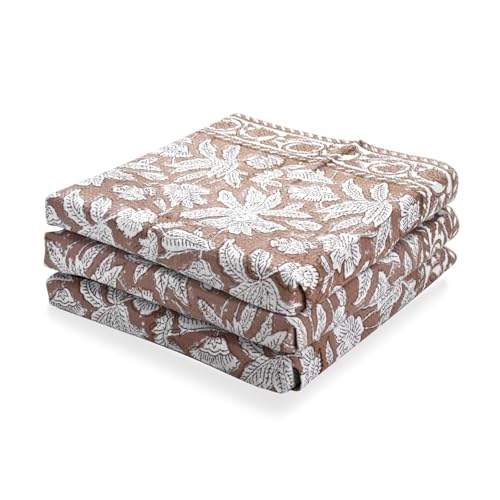
Ridhi Oak Brown Hand Block Print 100% Cotton Kitchen Towels
Our badge: Best Overall
The Ridhi Oak Brown Hand Block Print 100% Cotton Kitchen Towels is made from waffle-weave cotton with hand block printing, sold as a set of three. For understanding towel materials well enough to choose the right fiber and weave the first time, that construction is the whole story: it decides how the towel meets its task in the first seconds of use and how it behaves after months of washing. This is the pick to study closely if its badge matches your situation, because within this shortlist it represents a distinct approach rather than a minor variation.
Strengths
- Flat waffle cotton dries glassware and dishes without leaving heavy lint
- Hand block printed pattern hides everyday kitchen marks between washes
- Natural cotton with non-toxic dyes suits food-adjacent tasks
Trade-offs
- Kitchen format is too small for bath or body drying
- Printed design needs gentle washing to keep its character
- Waffle texture is a poor surface for fine detail work that needs a dead-flat cloth
| Color | Oak Brown |
| Size | 16″x 28″ (Pack of 3) |
| Dimensions | 28 x 16 x 0.2 inches |
| Weight | 0.440924524 pounds |
In daily use, the Ridhi towel earns its place through consistency. The first use feels much like the twentieth, provided the care routine is right: machine wash cold on gentle with mild detergent and tumble dry low or air dry. That predictability is what separates a towel you reach for automatically from a towel that drifts to the back of the closet. For the specific demands of understanding towel materials well enough to choose the right fiber and weave the first time, consistency under repetition is the quality that matters most, because the job rarely happens once; it happens every day, every wash day or every session, and small annoyances compound into real frustration.
Durability follows the same logic. Edges, corners and hems decide lifespan more than the field of the fabric does, and this towel’s finishing is honestly assessed in the trade-offs above rather than glossed over. Treat it according to its care guidance and it should hold its shape and surface through heavy rotation. Abuse it with softener, overloaded loads and damp storage, and like every towel in this guide it will decline early. The difference between a two-year towel and a five-year towel is usually the laundry routine, not the purchase.
Best for: Dish Drying / Not suited for: anyone whose needs contradict the trade-offs listed above
Choose it if its strengths line up with how you will actually use it week after week. Skip it if any trade-off above describes your daily reality, because another pick in this list handles that reality better.

GILDEN TREE Waffle Towels for Bathroom
Our badge: Best Budget
The GILDEN TREE Waffle Towels for Bathroom is made from long-staple cotton in a honeycomb waffle weave. For understanding towel materials well enough to choose the right fiber and weave the first time, that construction is the whole story: it decides how the towel meets its task in the first seconds of use and how it behaves after months of washing. This is the pick to study closely if its badge matches your situation, because within this shortlist it represents a distinct approach rather than a minor variation.
Strengths
- Waffle weave dries in about half the time of terry and resists damp odors
- Oversized cut wraps fully and stays tucked, yet packs remarkably flat
- Lint-free and snag-resistant surface stays neat in shared or humid bathrooms
Trade-offs
- Expect noticeable shrinkage after the first wash, by design of the oversized cut
- Thin waffle hand-feel is very different from plush terry
- Two-pack format means buying multiples to stock a full household
| Color | White |
| Size | Bath Towel (2 Pack) |
| Dimensions | 62 x 32 x 0.13 inches |
| Weight | 0.64 pounds |
In daily use, the GILDEN TREE towel earns its place through consistency. The first use feels much like the twentieth, provided the care routine is right: machine wash and dry on low; the open weave rewards air circulation on the rack. That predictability is what separates a towel you reach for automatically from a towel that drifts to the back of the closet. For the specific demands of understanding towel materials well enough to choose the right fiber and weave the first time, consistency under repetition is the quality that matters most, because the job rarely happens once; it happens every day, every wash day or every session, and small annoyances compound into real frustration.
Durability follows the same logic. Edges, corners and hems decide lifespan more than the field of the fabric does, and this towel’s finishing is honestly assessed in the trade-offs above rather than glossed over. Treat it according to its care guidance and it should hold its shape and surface through heavy rotation. Abuse it with softener, overloaded loads and damp storage, and like every towel in this guide it will decline early. The difference between a two-year towel and a five-year towel is usually the laundry routine, not the purchase.
Best for: households that value budget / Not suited for: anyone whose needs contradict the trade-offs listed above
Choose it if its strengths line up with how you will actually use it week after week. Skip it if any trade-off above describes your daily reality, because another pick in this list handles that reality better.

Amazon Basics 8-Pack Lightweight Quick-Dry Hand Towels
Our badge: Best Premium
The Amazon Basics 8-Pack Lightweight Quick-Dry Hand Towels is made from lightweight 100% cotton in a hand-towel format. For understanding towel materials well enough to choose the right fiber and weave the first time, that construction is the whole story: it decides how the towel meets its task in the first seconds of use and how it behaves after months of washing. This is the pick to study closely if its badge matches your situation, because within this shortlist it represents a distinct approach rather than a minor variation.
Strengths
- Eight towels in the pack means a fresh one is always within reach
- Lightweight cotton dries quickly between uses and in the dryer
- Simple band-and-border styling looks tidy folded or hanging
Trade-offs
- Hand-towel size only, so it cannot substitute for a bath towel
- Lightweight build feels less plush than heavyweight terry
- Lake Blue may clash with strictly neutral bathrooms
| Color | Lake Blue |
| Size | 8 Count |
| Dimensions | 28 x 16 x 0.2 inches |
| Weight | 0.826 pounds |
In daily use, the Amazon Basics towel earns its place through consistency. The first use feels much like the twentieth, provided the care routine is right: machine wash and tumble dry; the light build rewards shorter, cooler cycles. That predictability is what separates a towel you reach for automatically from a towel that drifts to the back of the closet. For the specific demands of understanding towel materials well enough to choose the right fiber and weave the first time, consistency under repetition is the quality that matters most, because the job rarely happens once; it happens every day, every wash day or every session, and small annoyances compound into real frustration.
Durability follows the same logic. Edges, corners and hems decide lifespan more than the field of the fabric does, and this towel’s finishing is honestly assessed in the trade-offs above rather than glossed over. Treat it according to its care guidance and it should hold its shape and surface through heavy rotation. Abuse it with softener, overloaded loads and damp storage, and like every towel in this guide it will decline early. The difference between a two-year towel and a five-year towel is usually the laundry routine, not the purchase.
Best for: households that value premium / Not suited for: anyone whose needs contradict the trade-offs listed above
Choose it if its strengths line up with how you will actually use it week after week. Skip it if any trade-off above describes your daily reality, because another pick in this list handles that reality better.

White Classic Luxury White Bath Towels – 4 Pack
Our badge: Best for Dish Drying
The White Classic Luxury White Bath Towels – 4 Pack is made from 700 GSM long-staple Turkish cotton terry. For understanding towel materials well enough to choose the right fiber and weave the first time, that construction is the whole story: it decides how the towel meets its task in the first seconds of use and how it behaves after months of washing. This is the pick to study closely if its badge matches your situation, because within this shortlist it represents a distinct approach rather than a minor variation.
Strengths
- Dense 700 GSM Turkish cotton drinks up water fast and feels plush against skin
- Double-stitched edges resist fraying through frequent hot washes
- Crisp white finish matches the hotel look and tolerates brightening routines
Trade-offs
- White only, so it shows every stain and needs a whites-only wash routine
- Heavyweight cotton takes longer to dry on the rack than lighter weaves
- Sold as bath towels only, with no matching hand towels or washcloths in the pack
| Color | 01: White |
| Size | 27″ x 54″ |
| Dimensions | 53.937007819 x 26.771653516 x 0.1968503935 inches |
| Weight | 1.5 pounds |
In daily use, the White Classic towel earns its place through consistency. The first use feels much like the twentieth, provided the care routine is right: machine wash warm with like colors and tumble dry on medium. That predictability is what separates a towel you reach for automatically from a towel that drifts to the back of the closet. For the specific demands of understanding towel materials well enough to choose the right fiber and weave the first time, consistency under repetition is the quality that matters most, because the job rarely happens once; it happens every day, every wash day or every session, and small annoyances compound into real frustration.
Durability follows the same logic. Edges, corners and hems decide lifespan more than the field of the fabric does, and this towel’s finishing is honestly assessed in the trade-offs above rather than glossed over. Treat it according to its care guidance and it should hold its shape and surface through heavy rotation. Abuse it with softener, overloaded loads and damp storage, and like every towel in this guide it will decline early. The difference between a two-year towel and a five-year towel is usually the laundry routine, not the purchase.
Best for: Dish Drying / Not suited for: anyone whose needs contradict the trade-offs listed above
Choose it if its strengths line up with how you will actually use it week after week. Skip it if any trade-off above describes your daily reality, because another pick in this list handles that reality better.

American Soft Linen Premium Turkish 600GSM 100% Cotton 6 PC Towel Set White | 2 Bath Towel
Our badge: Best Lightweight
The American Soft Linen Premium Turkish 600GSM 100% Cotton 6 PC Towel Set White | 2 Bath Towel is made from 600 GSM Turkish cotton in a six-piece white set. For understanding towel materials well enough to choose the right fiber and weave the first time, that construction is the whole story: it decides how the towel meets its task in the first seconds of use and how it behaves after months of washing. This is the pick to study closely if its badge matches your situation, because within this shortlist it represents a distinct approach rather than a minor variation.
Strengths
- OEKO-TEX Standard 100 certification covers every component of the set
- 600 GSM weight balances plush absorbency with a reasonable dry time
- Coordinated bath, hand and face sizes keep a bathroom visually consistent
Trade-offs
- Bright white needs disciplined sorting and brightening to stay bright
- 600 GSM is plush but slower to dry than waffle or lightweight cotton
- Turkish cotton sheds some lint in the first washes
| Color | Bright White |
| Size | 6 Piece (27″x54″ + 16″x28″ + 13″x13″) |
| Dimensions | 12.99999998674 x 8.99999999082 x 0.1968503935 inches |
| Weight | 3 pounds |
In daily use, the American Soft Linen towel earns its place through consistency. The first use feels much like the twentieth, provided the care routine is right: machine wash warm, wash whites separately, and skip fabric softener to protect absorbency. That predictability is what separates a towel you reach for automatically from a towel that drifts to the back of the closet. For the specific demands of understanding towel materials well enough to choose the right fiber and weave the first time, consistency under repetition is the quality that matters most, because the job rarely happens once; it happens every day, every wash day or every session, and small annoyances compound into real frustration.
Durability follows the same logic. Edges, corners and hems decide lifespan more than the field of the fabric does, and this towel’s finishing is honestly assessed in the trade-offs above rather than glossed over. Treat it according to its care guidance and it should hold its shape and surface through heavy rotation. Abuse it with softener, overloaded loads and damp storage, and like every towel in this guide it will decline early. The difference between a two-year towel and a five-year towel is usually the laundry routine, not the purchase.
Best for: households that value lightweight / Not suited for: anyone whose needs contradict the trade-offs listed above
Choose it if its strengths line up with how you will actually use it week after week. Skip it if any trade-off above describes your daily reality, because another pick in this list handles that reality better.
JML Microfiber Bath Towel
Our badge: Best for Glassware
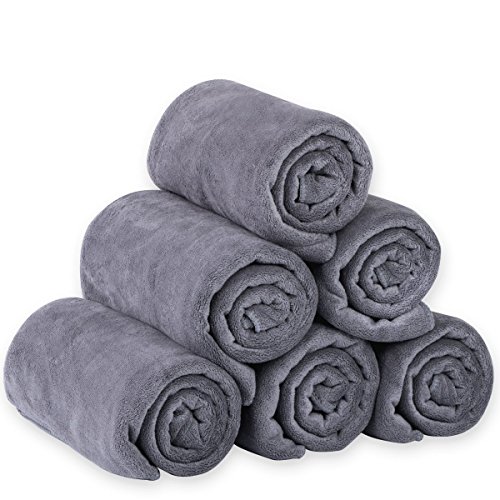
The JML Microfiber Bath Towel is made from 100% microfiber with a hanging loop, sold as a six-pack. For understanding towel materials well enough to choose the right fiber and weave the first time, that construction is the whole story: it decides how the towel meets its task in the first seconds of use and how it behaves after months of washing. This is the pick to study closely if its badge matches your situation, because within this shortlist it represents a distinct approach rather than a minor variation.
Strengths
- Microfiber absorbs many times its weight in water and dries exceptionally fast
- Lint-free, fade-resistant surface stays smooth through repeated washing
- Hanging loop and thin profile pack small for gym bags, travel and tight storage
Trade-offs
- Microfiber hand-feel is slick rather than plush, which some bathers dislike
- Needs separate washing from cotton to avoid picking up lint
- Not a natural fiber, which rules it out for cotton-only households
| Color | Grey |
| Size | 6 Pack (27 in x 55 in) |
| Dimensions | 55 x 27 x 0.04 inches |
| Weight | 5.16102155342 pounds |
In daily use, the JML towel earns its place through consistency. The first use feels much like the twentieth, provided the care routine is right: wash separately from cotton, tumble dry on medium, and avoid high heat. That predictability is what separates a towel you reach for automatically from a towel that drifts to the back of the closet. For the specific demands of understanding towel materials well enough to choose the right fiber and weave the first time, consistency under repetition is the quality that matters most, because the job rarely happens once; it happens every day, every wash day or every session, and small annoyances compound into real frustration.
Durability follows the same logic. Edges, corners and hems decide lifespan more than the field of the fabric does, and this towel’s finishing is honestly assessed in the trade-offs above rather than glossed over. Treat it according to its care guidance and it should hold its shape and surface through heavy rotation. Abuse it with softener, overloaded loads and damp storage, and like every towel in this guide it will decline early. The difference between a two-year towel and a five-year towel is usually the laundry routine, not the purchase.
Best for: everyday use and glassware / Not suited for: anyone whose needs contradict the trade-offs listed above
Choose it if its strengths line up with how you will actually use it week after week. Skip it if any trade-off above describes your daily reality, because another pick in this list handles that reality better.
Comparison Table
| Pick | Size | Color | Weight | Check price on Amazon |
|---|---|---|---|---|
| Ridhi Oak Brown Hand Block Print 100% Cotton Kitchen Towels | 16″x 28″ (Pack of 3) | Oak Brown | 0.440924524 pounds | Check price on Amazon |
| GILDEN TREE Waffle Towels for Bathroom | Bath Towel (2 Pack) | White | 0.64 pounds | Check price on Amazon |
| Amazon Basics 8-Pack Lightweight Quick-Dry Hand Towels | 8 Count | Lake Blue | 0.826 pounds | Check price on Amazon |
| White Classic Luxury White Bath Towels – 4 Pack | 27″ x 54″ | 01: White | 1.5 pounds | Check price on Amazon |
| American Soft Linen Premium Turkish 600GSM 100% Cotton 6 PC Towel Set White | 2 Bath Towel | 6 Piece (27″x54″ + 16″x28″ + 13″x13″) | Bright White | 3 pounds | Check price on Amazon |
| JML Microfiber Bath Towel | 6 Pack (27 in x 55 in) | Grey | 5.16102155342 pounds | Check price on Amazon |
How to Choose the Best Material for Dish Towels
Choosing well for understanding towel materials well enough to choose the right fiber and weave the first time means deciding five things in the right order. Work through them before you look at colors or pack sizes, and the shortlist above will sort itself. Shoppers who start with appearance and end with construction almost always buy twice.
Start With the Job, Not the Shelf
Write down the single task this towel must perform and judge every candidate against that task first. For understanding towel materials well enough to choose the right fiber and weave the first time, the task imposes specific demands on surface, size and dry time that a general-purpose towel may or may not meet. A towel that is merely good is not good enough when the task is specific, which is why this guide ranks fitness for purpose ahead of every other quality.
Read the Weave Before the Weight
Weave decides how a towel touches its work: deep terry loops maximize water pickup and cushioning, waffle weaves trade plushness for speed and freshness, and flat microfiber surfaces excel where lint and streaks are the enemy. Weight figures only become meaningful inside a weave. A heavy waffle and a heavy terry are different tools, and comparing their numbers directly misleads more shoppers than any other habit in towel buying.
Match Dry Time to Your Real Routine
Ask where this towel will dry, how fast it must be ready again, and how honest your laundry rhythm really is. Humid rooms, small spaces, daily reuse and same-day turnovers all punish slow towels. If your routine is demanding, choose the faster construction and accept a less plush hand-feel. Freshness you can maintain beats luxury you cannot, in every household and every working setting this guide covers.
Inspect Edges, Corners and Certifications
Construction details predict lifespan. Look for dense, even hemming, reinforced corners and, where it matters to you, recognized testing such as OEKO-TEX certification, which several picks in this list carry. These details are unglamorous and decisive: towels almost never fail in the middle first. They fail at the edges, in the wash, and in the slow gray or sour decline that good construction and good care together prevent.
Buy the Rotation, Not the Towel
Decide how many you need for a humane rotation before choosing which ones. For guidance that connects to the wider linen closet, Best Solar Bird Bath Water Pumps is worth a look during seasonal refreshes. A towel that rests a full day between uses stays fresher, needs gentler washing and lasts longer, so quantity is a quality decision. Buy the set that lets every towel rest, even if that means a humbler towel bought in greater numbers.
How to Care for Each Towel Material Differently
Care is not an afterthought for understanding towel materials well enough to choose the right fiber and weave the first time; it is half the product. Follow this routine: wash new towels separately before first use, sort by color and fiber, dose detergent modestly, skip fabric softener entirely, and dry every towel completely before it is folded, hung or stored. For a related routine worth comparing, see Best Tea Towels For Embroidery, which approaches its own laundry problem from the other side.
Technique during use matters as much as the wash. Pat rather than scrub where gentleness counts, shake towels out before drying to reopen loops or pile, and hang every towel in a single layer with air on both sides whenever the space allows. Small habits, repeated daily, are what separate towels that improve with age from towels that merely survive it. When something goes wrong, diagnose before you treat:
Problem: Towel smells sour even after washing — the load was too large, the rinse was incomplete, or the towel never dried fully. Rewash a smaller load on warm with measured detergent, add white vinegar to the rinse, and dry completely before storing.
Problem: Towel feels stiff and scratchy — mineral buildup or detergent residue is the usual cause. Run a vinegar rinse cycle, reduce detergent on future loads, and shake towels before drying to reopen the loops.
Problem: Towel leaves lint on skin, dishes or glass — early-cycle lint is normal for new cotton; persistent lint means the towel is wrong for lint-critical work. Wash separately, and switch lint-sensitive tasks to a lint-free weave.
Problem: Towel takes forever to dry — the weight exceeds what your space and ventilation can handle. Spread it in a single layer over a wide bar, add airflow, or rotate in a lighter weave for daily use.
Fiber by Fiber: Cotton, Turkish Cotton, Egyptian Cotton and Microfiber
This is where the keyword gets specific. General towel advice fails for understanding towel materials well enough to choose the right fiber and weave the first time because the details of the task change which properties matter. Consider how the picks above divide on this question: the leader wins on the property this section examines, while the budget and specialty picks trade that property away for price, speed or convenience. Neither answer is wrong in the abstract; each is wrong for someone, and this section exists to make sure that someone is not you.
The practical test is simple. Take the towel you already own, or the cheapest candidate on your list, and put it through one honest week of the real task. Note where it frustrates you: speed, surface, size, freshness or feel. That frustration is your true buying criterion, and it maps directly onto one pick in this guide. Readers planning the surrounding space as well may find Best Mattresses For Sleeper Sofas useful context, but the towel decision itself should stay anchored to that week of evidence rather than to any showroom impression.
Weave by Weave: Terry, Waffle, Velour and Flat Weaves
This is where the keyword gets specific. General towel advice fails for understanding towel materials well enough to choose the right fiber and weave the first time because the details of the task change which properties matter. Consider how the picks above divide on this question: the leader wins on the property this section examines, while the budget and specialty picks trade that property away for price, speed or convenience. Neither answer is wrong in the abstract; each is wrong for someone, and this section exists to make sure that someone is not you.
The practical test is simple. Take the towel you already own, or the cheapest candidate on your list, and put it through one honest week of the real task. Note where it frustrates you: speed, surface, size, freshness or feel. That frustration is your true buying criterion, and it maps directly onto one pick in this guide. Readers planning the surrounding space as well may find Best Mattresses For Sleeper Sofas useful context, but the towel decision itself should stay anchored to that week of evidence rather than to any showroom impression.
Think about rotation as a performance feature, not just a laundry habit. A towel that rests a full day between uses dries completely, and a completely dry towel resists the stale smell that forces extra washes. Households that own enough towels to rotate rarely need rescue treatments, because the fabric never stays damp long enough for odor to take hold. Rotation also spreads wear evenly, so a set ages together instead of one favorite towel thinning out while the rest stay new. When you buy, buy for the rotation you actually need: count the people, count the uses per week, and add a sensible margin for guests, illness and laundry delays.
Water temperature deserves more nuance than the hot-versus-cold argument usually gets. Warm water lifts body oils and product residue out of cotton loops far more reliably than cold, while genuinely hot water is best reserved for occasional deep cleans of white cotton. Synthetics and printed fabrics prefer cooler water, which protects both the fibers and the finish. The bigger mistake is detergent overdose: excess detergent coats loops, traps soil, and leaves towels stiff and less absorbent than before the wash. A measured dose, fully rinsed, outperforms a generous pour in almost every home comparison you can run.
Drying is where absorbency is either preserved or quietly destroyed. Fabric softener and dryer sheets leave a coating that repels the very water a towel is meant to absorb, and the effect builds with every cycle. If towels already feel waxy, a rinse cycle with white vinegar, followed by a plain wash with a small amount of baking soda in a separate load, helps strip the buildup. Shake each towel before it goes into the dryer, too. The shake opens the loops, shortens drying time, and keeps the finished towel noticeably fluffier without any added product at all.
Storage shapes how a towel performs on day two and day three. A towel folded while still slightly damp will smell musty no matter how well it was washed, so confirm complete dryness before anything goes into a closed closet. In humid rooms, a second hook that lets air reach both sides of the fabric makes a measurable difference. Rolled storage suits small spaces and lets you see the whole inventory at a glance, while flat stacks suit deep linen closets. Either way, keep towels out of sealed plastic, which traps moisture and invites the odor you worked to wash out.
Common Buying Mistakes
Buying on the First Touch Alone
The towel that feels softest in the store is often wearing a temporary finish that washes away within a month. Judge fiber, weave, weight and edges instead, and plan to evaluate the towel again after four real washes. Shoppers who buy on structure rarely regret it; shoppers who buy on a scented, coated first impression frequently do.
Ignoring Dry Time
Absorbency gets all the attention, but dry time decides freshness. A towel that cannot dry fully between uses will smell, need harsher washing and die younger than a quicker towel of equal quality. Match the towel weight to your ventilation and laundry rhythm honestly, especially in humid rooms, small spaces and any situation where the same towel works again within hours.
Washing Towels Like Everything Else
Towels thrown in with clothing pick up lint, snag on hardware and inherit detergent and softener habits that ruin absorbency. Wash towels as their own loads, sorted by color and fiber, with measured detergent and no softener. It is the cheapest performance upgrade available, and it costs nothing but a small amount of sorting discipline at the laundry basket.
Expecting One Towel to Do Every Job
A plush bath towel, a glass cloth, a gym towel and a craft blank are different tools that happen to share a name. Forcing one format into every role produces mediocre results everywhere and premature wear where the towel is least suited. Build a small, deliberate kit for the jobs you actually do, and let each towel be genuinely good at its own work.
Skipping the First-Wash Routine
New towels carry mill finishes and loose lint that distort their first impressions and can transfer onto skin, dishes, glass or finished projects. Always wash new towels separately before first use, expect lint in the early cycles, and never judge or deploy an unwashed towel for a task where lint or residue matters. Ten minutes of patience protects everything the towel touches next.
Final Recommendation
Start with the Ridhi Oak Brown Hand Block Print 100% Cotton Kitchen Towels. For understanding towel materials well enough to choose the right fiber and weave the first time, it makes the fewest compromises and earns its Best Overall badge on fitness for the job rather than on any single specification. If its trade-offs clash with your routine, the runner-up is the practical alternative: Check on Amazon. Still weighing the neighboring question? The guide to Best Towels For Home covers it with the same six-pick method. Buy the rotation you need, wash before first use, and judge your choice again after the fourth wash, when the towel you actually bought finally introduces itself.
Frequently Asked Questions
How many towels should I start with for understanding towel materials well enough to choose the right fiber and weave the first time?
Start with more than feels necessary, because rotation is what keeps any towel performing. For most households, two full sets in active rotation plus one reserve set covers laundry gaps, guests and the inevitable towel that gets retired early. If your use involves daily washing, lean toward the higher end. A slightly larger inventory washed gently outlasts a minimal inventory washed harshly, and it removes the pressure to rush damp towels back into service before they have dried completely.
Which matters more for understanding towel materials well enough to choose the right fiber and weave the first time: fiber or weave?
Weave usually matters more, because weave decides how the surface meets its task, how fast the towel dries and how it behaves after fifty washes. Fiber sets the ceiling: long-staple cotton, quality microfiber and honest linen all outperform short, weak fibers in any weave. Read descriptions in that order. First find the weave your task needs, then choose the best fiber you can afford inside that weave, then check the edges and the care label before you commit to a full set.
How do I know if a towel is absorbent before the return window closes?
Wash it three times without softener, then run a simple test. Lay the towel flat, pour a measured glass of water onto it, and watch whether the water sinks in within seconds or beads and runs. Then use it for its real job for a week. Genuine absorbency problems survive proper washing; mill finishes and first-wash stiffness do not. Keep the packaging until after that first week of real use, because the honest verdict on any towel arrives around wash four, not on day one.
Why did my towels stop absorbing water?
Almost always, something is coating the fibers. Fabric softener, dryer sheets and excess detergent all leave residues that repel water, and body oils plus hard-water minerals add their own layers over time. Strip the buildup with a hot wash and white vinegar in the rinse, followed by a second plain wash, and then change the routine that caused it: measured detergent, no softener on towels, and a complete dry every time. Absorbency usually returns within two careful cycles.
How long should a good towel last in regular service?
A well-made towel in weekly rotation should give several years of full performance before its loops thin enough to notice. Lifespan depends less on the purchase price than on the life it lives: gentle measured washing, full drying, airy storage and honest rotation routinely double the useful life of the same towel. Retire towels by feel, not by calendar. When a towel stops drying its user properly, it has finished its first career, whatever the date says.
Is it worth paying more for premium towels for understanding towel materials well enough to choose the right fiber and weave the first time?
Sometimes, and the honest test is cost per year of good service rather than cost per towel. Premium construction buys longer loops, better edges and fibers that stay soft without coatings, which matters most when towels are washed constantly or judged by guests. It buys very little when the towel will live a rough, disposable life. Match the spending to the service: invest where towels are used daily and washed weekly, economize where they are backups, spares or short-term solutions.


