Where to buy
Check the latest price, availability and delivery on Amazon. Orders are placed on Amazon. We may earn a commission from qualifying purchases.
- Best overall for bedrooms: Govee COB LED Strip Light Pro, 9.8 ft, RGBICW with Matter — Check on Amazon
- Govee LED Strip Light M1, 16.4 ft, RGBICW with Matter — Check on Amazon
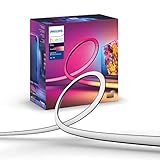
- Philips Hue Play Gradient Lightstrip, 65 inch, Smart TV Light Strip with Flowing Multicolor Sync — Check on Amazon
- Govee TV Backlight 3 Lite, 11.8 ft for 55–65 inch TVs, RGBICW Camera Sync with Voice and App Control — Check on Amazon
See 2 more Amazon options
- PAUTIX Addressable CCT Smart IC COB LED Strip Lights, 32.8 ft, 2700K–6500K, Alexa Voice Control — Check on Amazon
- Govee RGBIC LED Strip Lights, 100 ft (2 x 50 ft), Wi-Fi App Control — Check on Amazon
Read the full guide ↓
Disclosure: As an Amazon Associate, dailyhomedecorating.com earns from qualifying purchases. Links to Amazon on this page are affiliate links; they cost you nothing extra. Listing details such as price and availability change often, so check the current Amazon listing before you buy.
A bedroom is the hardest room in the house to spend strip-light money in, and this guide starts with the two facts that prove it. The first is about the market: there is no $500 LED strip light, in a bedroom or anywhere else. We checked the flagship lines of Philips Hue, Govee, Nanoleaf and the professional COB brands, and the priciest strip kits any major maker sells — Hue’s Play Gradient lightstrip and its Gradient Lightstrip Ambiance at the top of the category, with Govee’s COB Strip Light 2 Pro and Hue’s 33 ft Solo lightstrip just behind them — still land far short of $500. Even at the height of the launch-shortage market of 2021, when resellers marked the Play Gradient up well beyond its maker’s own price, the figure stayed short of $500 — a reseller’s markup rather than a manufacturer’s price. Put the two facts together and the honest shape of this budget appears: a single bedroom can absorb roughly $150 to $290 of strip lighting before it is finished. The rest of a $500 budget belongs to the rooms beyond the bedroom door, or to the ecosystem hardware that makes a bedroom wake up and wind down on schedule. This guide is built around that split — bedroom first, leftovers accounted for honestly.
So the six picks below are ranked for a bedroom, not for a showroom. The headboard feature and the cove come first, because those are the runs a bedroom actually contains. The television picks follow, because a bedroom TV is the one place this budget can genuinely balloon — Hue’s sync stack is the only configuration in the category whose true cost passes $500, and it is laid out in full below. Three rules run through every review. Ecosystem costs are counted as part of the purchase: a Hue Bridge is a real extra purchase on top of any Hue strip, and no Hue strip in this guide is treated as though that toll did not exist. And cutting a smart strip is permanent — a section trimmed at the cut marks cannot be reconnected and lit again — so every length below is stated with the footage its kit actually buys, and the plans in the “What $500 Buys” section are built from complete kits so they still hold together when a sale ends.
Quick Picks
Short on time, or comparing several options at once? Each row below names the bedroom job and the strip that does it, with a link to the listing.
| Bedroom job | Pick | Why it stands out | Link |
|---|---|---|---|
| Best overall for bedrooms | Govee COB LED Strip Light Pro, 9.8 ft | 1,260 LEDs per meter under a silicone sleeve — no visible diodes at pillow distance — with a real warm-white channel; check price on Amazon | Check on Amazon |
| Best premium feature run | Govee LED Strip Light M1, 16.4 ft | 60 LEDs per meter, RGBICW whites and Matter — enough for a cove or a long headboard wall; check price on Amazon | Check on Amazon |
| Best for a Hue bedroom | Philips Hue Play Gradient Lightstrip, 65 inch | The bedroom-TV gradient strip of the premium ecosystem, and the door to Hue’s wake-up routines — with the Bridge and sync costs counted honestly below | Check on Amazon |
| Best bedroom TV, no stack | Govee TV Backlight 3 Lite, 11.8 ft (55–65 inch TVs) | Camera-based screen sync that also covers the TV’s own apps — complete in one box, with no bridge, no sync box and nothing else to buy | Check on Amazon |
| Best white light | PAUTIX Addressable CCT Smart IC COB Strip, 32.8 ft | Dotless tunable white, 2700K–6500K at 560 LEDs per meter — the cove and dressing-area light of the plan; check price on Amazon | Check on Amazon |
| Best use of the leftover budget | Govee RGBIC LED Strip Lights, 100 ft (2 x 50 ft) | The footage a bedroom cannot absorb, at the lowest cost per foot in this guide — for the rest of the home’s perimeters; check price on Amazon | Check on Amazon |
How These Picks Were Chosen
Every pick had to pass two filters. That is why three genuinely relevant products appear in this guide as prose rather than picks — Hue’s Gradient Lightstrip Ambiance (80 inch, at the top of the category’s price range at first-party retail), Hue’s 33 ft Solo lightstrip (also in the flagship tier) and Govee’s COB Strip Light 2 Pro (a flagship-tier kit on Govee’s own store, 1,344 LEDs per meter). All three matter to the plans below; none could be pinned to a current US Amazon listing firmly enough to link, so they are discussed in terms of their makers’ published positioning, and left unlinked. The Play Gradient is the category’s flagship strip, and its maker has brought its price down from its launch positioning — but marketplace sellers have asked far more than Hue’s own store price for it, so the seller is part of the purchase; check the current price on Amazon and buy from a seller you recognize. The COB Pro sits in the upper-middle of the category’s range, and it is the density, not any sale, that earns it its place.
The second filter is the bedroom itself, applied as four tests. The pillow test: bedroom light is viewed lying down, at arm’s length, often for an hour — so emitter density outranks almost everything, because spaced diodes that look fine across a living room read as a dotted string from a pillow. The last-hour test: the light a bedroom lives under at night must go genuinely warm and genuinely dim, which means white has to come from a dedicated white emitter or a tunable-white strip, not from red, green and blue mixed into a cold approximation — RGB “white” at midnight reads as daylight, and a bedroom notices. The from-the-bed test: control is scored by what works without getting up or opening a bright phone screen — a voice command, a bedside remote, or best of all a schedule set once, like a wake-up routine that ramps the light before the alarm. And the above-the-bed test: anything mounted over a sleeping person is held in place mechanically — clips, channel, brackets, screws into the headboard — never by adhesive alone, whatever the packaging promises. Output and color-rendering figures, where they exist at all, are treated as their makers’ claims and attributed as such.
The 6 Best LED Strip Lights for Bedrooms Under $500
Govee COB LED Strip Light Pro, 9.8 ft
Who it suits: Anyone whose strip will live on or above the headboard — the one run in the house that is stared at, at close range, every single night — and who wants it to read as a line of light rather than a row of bulbs.
This is the bedroom pick because it is built for the pillow test. Control is the full modern set with no hub to buy — Matter natively, plus Alexa, Google Assistant and HomeKit — with Govee’s app holding the segmented scenes. The length is sized for the job: 9.8 ft covers a king headboard’s width with short returns to spare, or a queen headboard and both bedside drops. It sits in the upper-middle of the category’s price range — check the current price on Amazon — and for the run that defines the room, that buys the best density in this guide.
What it cannot do is cover ground. Nine point eight feet is a feature, not a room — outlining a bedroom ceiling at this density would take several kits and a serious slice of the budget, which is why the plan below gives the perimeter work to other strips. Its paperwork is also thinner than its light: Govee publishes no total lumen figure and no CRI figure we could verify for this model, so the quality argument is made from density — 1,260 emitters per meter is a countable fact — rather than from a brightness headline. Within its brief — the best-looking short run in the guide, placed exactly where a bedroom looks — nothing else here is close.
- The densest light in the guide: 1,260 LEDs per meter of COB in a silicone sleeve — no dots from the pillow, in view or in reflections.
- RGBICW chips pair segmented color with a dedicated warm-white channel, so night-time white is real white.
- Matter, Alexa, Google and HomeKit with no hub; 9.8 ft in the box — check the current price on Amazon.
Honest limitation: Only 9.8 ft in the box, so it is a headboard feature and nothing more; and with no verifiable lumen or CRI figure published, its case rests on density rather than measured output.
Choose it if one short run above or behind the bed will be looked at every night. Skip it if your run is a whole ceiling perimeter — that footage belongs to the PAUTIX or the 100 ft kit below.

Govee LED Strip Light M1, 16.4 ft
Who it suits: Bedroom planners with a longer feature to build — a ceiling cove, a full headboard wall, a run behind a dresser or under the bed frame — who want premium density, honest whites and smart-home credentials that outlast any single app.
The M1 is the bedroom’s second feature strip, and the one to buy when 9.8 ft is not enough. Sixteen point four feet is a real bedroom run: a cove on one wall, a headboard wall edge to edge, or a bed-frame perimeter with footage to spare. The strip runs on 24V with the mains adapter in the box, trims at its marked points, and can be extended with Govee’s kits toward 32.8 ft per its manual. It sits at a similar upper-middle price point to the COB Pro while covering nearly twice the footage — check the current price on Amazon — and the plan below treats it as a core purchase either way.
The caveat that matters most is a bedroom caveat. Over Matter, this strip presents as a single color along its whole length — brightness and white temperature adjust, but the gradients stay behind. Cutting is the second cost: the manual is explicit that detached pieces cannot be reconnected, so the offcut from a cove is scrap, permanently. And like its COB sibling, it publishes no CRI figure we could verify. None of that moves it out of the plan — beside the COB Pro it is one of the two feature strips a $500 bedroom budget is built from, trading a little surface smoothness for nearly double the footage.
- Dense and bright for its class: 60 LEDs per meter of RGBICW chips, with a real warm-white channel for the hours a bedroom actually uses.
- Matter over Wi-Fi for Apple Home, Alexa, Google Home and SmartThings, with the full scene library in the Govee app.
- 16.4 ft in the box — check the current price on Amazon; 24V adapter included; cuttable at the marks, extendable toward 32.8 ft.
Honest limitation: Over Matter it is a single-color strip — the sunset gradients and segmented scenes exist only in Govee’s app; cut pieces cannot be reconnected; and 16.4 ft is one feature, not a room perimeter.
Choose it if your feature run is longer than a headboard and your household will actually use the Govee app’s scenes. Skip it if you run a Matter-only home and refuse vendor apps — or if the run is short and stared at, where the COB Pro’s density wins.

Philips Hue Play Gradient Lightstrip, 65 inch
Who it suits: Hue households whose bedroom has a television — buyers who want the finest gradient light in the category on the bedroom TV wall, and who understand that what they are really buying is the ecosystem, including the wake-up routines that are Hue’s genuine bedroom advantage.
Start with what this strip is in a bedroom, because it is two purchases wearing one name. As a Hue light it is superb — Hue’s color consistency is the industry’s reference point, and with a Bridge it joins scenes, grouping and schedules with every other Hue light in the room. The Bridge is also where the bedroom argument lives. If the bedroom is where a Hue system starts, this strip plus a Bridge is a defensible foundation, and the strip itself — the priciest single strip in this guide, though its maker has brought it down from its launch positioning — is no longer the obstacle it was; check the current price on Amazon.
The arithmetic, though, has to be said plainly, because this is the one pick whose true cost can pass the entire budget. The strip requires the Bridge before it does anything as part of a system. And its famous trick, following the picture on the TV, is not in the strip at all: screen sync requires the Hue Play HDMI Sync Box 8K — a premium accessory that on its own costs more than the strip — or Hue’s Sync TV app on supported televisions. Add strip, Bridge and sync box together and the stack passes this guide’s whole $500 budget, spent on one bedroom wall; even Amazon’s bundle of the Sync Box 8K with this strip still needs the Bridge on top. Buy the strip for the ecosystem and the routines, with the sync stack as a separate, knowing decision; and whatever you buy, check the seller as carefully as the price, because marketplace sellers have asked far more than Hue’s own store price for this strip — shortage-era money for a strip its maker now positions well below that.
- The reference TV gradient: multiple colors blended along the strip at once, mounting brackets included, cut to size within its TV class.
- The Hue ecosystem’s bedroom dividend: with a Bridge, wake-up and wind-down routines that ramp light on a schedule, plus grouping with every Hue light you own.
- The flagship strip of the premium ecosystem — check the current price on Amazon, and buy from a seller you recognize.
Honest limitation: The strip requires a Hue Bridge, and screen sync requires the Sync Box 8K or the Sync TV app — the full stack costs more than this guide’s entire budget for one wall; marketplace offers on this listing vary widely, so the seller matters as much as the price.
Choose it if you are a Hue household, or deliberately becoming one, and the bedroom TV wall plus Hue’s routines are the point. Skip it if you want the bedroom TV to glow in sync for one price and nothing else — the Govee backlight below does it in one complete box.
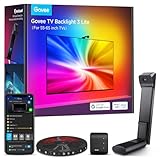
Govee TV Backlight 3 Lite, 11.8 ft (for 55–65 inch TVs)
Who it suits: Bedroom-TV owners who are not building a Hue system — anyone who wants the wall behind the bedroom television to follow the film, tonight, for one price, with nothing else on the shopping list.
The mechanism is a camera, and in a bedroom that difference is worth understanding rather than glossing. The strip itself uses four-in-one beads with a dedicated warm-white emitter, so when the film ends it settles into honest bias lighting rather than a colored glow. There is no bridge, no sync box and no subscription: strip, camera, control box and mains adapter are the whole purchase, at a single mid-range price — check the current price on Amazon. Control runs through the Govee app and voice assistants — which, from a bed, means the backlight can be killed with a sentence rather than a search for a remote.
The compromises are the camera’s terms, and one of them is specific to this room. The bedroom-specific point is simpler: the camera sits visibly on top of the television, in the room where you sleep. It faces the screen, not the room, and it is there to read colors — but a buyer who is uncomfortable with a camera device in the bedroom should know it is part of the kit before ordering, not discover it in the box. For most bedrooms, those terms are easily worth it: the TV wall, synced, in one box, with nothing else to buy.
- Screen sync with no stack: the camera reads the picture itself, so the TV’s built-in apps sync too — no Bridge, no sync box, no subscription.
- RGBICW four-in-one beads with a real warm-white emitter for after-film bias light; app and voice control; adapter included.
- One complete kit — check the current price on Amazon — the whole bedroom TV wall with no hub and no add-ons.
Honest limitation: Camera sync is an interpretation of the screen, not the HDMI signal — it needs the camera mounted on the set and calibrated, syncs only its own strip, and some buyers will not want a camera device in the bedroom at all.
Choose it if the bedroom TV should glow with the film this weekend, for one price. Skip it if you are building a Hue entertainment setup with many lights moving together — that is the Play Gradient’s expensive, genuine specialty.
PAUTIX Addressable CCT Smart IC COB LED Strip Lights, 32.8 ft
Who it suits: Bedrooms where the main event is white light — a ceiling cove that washes the room, a dressing area or vanity run, a long crown line — and buyers who want that white dotless, tunable and long enough to do the whole run in one kit.
A bedroom plan made only of color is a plan for a gaming den, not a place to sleep. The kit is complete — the strip, a 24V supply and the maker’s smart controller — with Alexa voice control above the app, which from a bed is the control path that matters. Its price sits in the middle of this guide’s range — check the current price on Amazon — well below the flagship feature strips per foot, buying density and white quality across a run long enough for a real cove. In the plan below, this is the bedroom’s ceiling and the second room’s working light — the light the household actually lives under.
The compromises are volatility and the smart layer’s terms. This strip’s price moves around more than any other pick in the guide — it has spent real time well above its lowest levels — so check the current price on Amazon on the day you order and re-add any plan built on it; it earns its place across its range, but the total moves with it. It is also, by design, white-only: its animation is done in shades of white, which reads as calm in a cove and as a limitation at a party. Within those terms — dotless, tunable, animated, long, white — nothing else in this guide does what it does.
- Dotless and tunable at once: 560 LEDs per meter of addressable COB, with flowing effects across 2700K–6500K — warm for the evening, neutral for the morning mirror.
- A real run: 32.8 ft in one kit, with 24V supply, smart controller and Alexa voice control included — check the current price on Amazon.
- The plan’s living light: fixture-grade white for the cove and dressing areas a bedroom is actually used in.
Honest limitation: Its price is the volatile one in this guide, so check the current price on Amazon before building a plan total on it; effects live in PAUTIX’s app rather than in the voice assistants, and it is white-only by design.
Choose it if your bedroom’s main run is a cove, crown line or dressing area in white. Skip it if you want color in that run — take the M1 or the COB Pro for the feature, and let this strip carry the rooms you live in.
Govee RGBIC LED Strip Lights, 100 ft (2 x 50 ft)
Who it suits: The rest of the house. This pick is in a bedroom guide for one honest reason: it is where the money a bedroom cannot absorb should go — two other rooms’ perimeters, a living-room cove, a hallway — bought by the hundred feet instead of by the feature.
The arithmetic is the whole review. Per foot, this is by far the cheapest light in the guide — check the current price on Amazon. Set that beside the feature strips above, which cost many times more for every foot they cover, and the structure of a sane $500 plan explains itself: density where eyes land, footage where they do not. A bedroom that has taken its COB Pro headboard and its PAUTIX cove is finished; this kit is what finishes the apartment around it, and it is the reason the plan below lights five spaces instead of one. The strip trims at its printed cut marks, under the standing rule that the cut-off piece is scrap.
The compromises are physics, finish and price movement. The emitters are spaced diodes: hidden in a cove or behind a lip they read as a line of light, but in direct view — and above all at pillow distance, in a bedroom — they read as dots, which is exactly why this strip is not the bedroom pick despite its price. Its white is mixed from the color emitters rather than produced by a dedicated channel, and Govee publishes no total lumen or CRI figure we could verify: this is atmosphere, bought by the foot and priced like it. Its price has also spent time well above its best levels, so check the live price on Amazon before you count it in a plan — at its best, it is the plan’s outstanding value.
- The most footage in the guide: 100 ft as two 50 ft rolls, and the lowest cost per foot here — check the current price on Amazon.
- One kit, one app: a single control box and 24V/48W adapter run the whole hundred feet, with app, voice and music sync.
- The plan’s engine: covers two rooms’ perimeters for less than one flagship feature strip costs.
Honest limitation: A single adapter feeding 100 ft invites far-end voltage drop; spaced emitters dot in direct view and fail the pillow test outright; and the kit’s price moves — check the live price on Amazon before counting it in a plan.
Choose it if the rooms beyond the bedroom need 60 to 100 feet of perimeter color. Skip it if you were about to put it in the bedroom itself — footage you stare at from a pillow belongs to the COB Pro or the M1.

Comparison Table
| Product | Format & length | Light & control | Best bedroom use | Link |
|---|---|---|---|---|
| Govee COB LED Strip Light Pro | COB strip, 9.8 ft, 1,260 LEDs/m | Segmented RGBICW color with real warm white; Matter + Govee app | The headboard feature — the run you see from the pillow | Check on Amazon |
| Govee LED Strip Light M1 | Dense strip, 16.4 ft, 60 LEDs/m | RGBICW with real white channel; Matter + Govee app | A cove, headboard wall or under-bed run with scenes | Check on Amazon |
| Philips Hue Play Gradient Lightstrip, 65 in | Diffused gradient strip, 65 in, cut to size | Flowing multicolor gradient; Hue app via Bridge, sync via Sync Box or TV app | The bedroom TV wall for Hue households, plus wake-up routines | Check on Amazon |
| Govee TV Backlight 3 Lite | TV strip kit, 11.8 ft for 55–65 in TVs, camera included | RGBICW screen sync by camera; app + voice, no hub | The bedroom TV wall, complete, in one box | Check on Amazon |
| PAUTIX Addressable CCT Smart IC COB | COB strip, 32.8 ft, 560 LEDs/m | Addressable tunable white with flowing effects; app + Alexa | Ceiling coves and dressing areas in dotless white | Check on Amazon |
| Govee RGBIC LED Strip Lights, 100 ft | Standard strip, 2 x 50 ft rolls, one 24V/48W adapter | Segmented RGBIC color; app + Alexa/Google voice, music sync | Not the bedroom — the other rooms the leftover budget lights | Check on Amazon |
How to Choose an LED Strip Light for a Bedroom
- Budget the bedroom first, and let it be small. A bedroom honestly needs one feature run, perhaps one white run, perhaps a TV backlight — roughly $150 to $290 of the strips in this guide. Decide that allocation before anything else; the plans in the next section show where the rest of a $500 budget legitimately goes, and the broader shortlist in Best Led Strip Lights Under $500 covers the same picks as a whole-home purchase.
- Judge density from the pillow, not from the doorway. Bedroom light is viewed lying down, two to four feet away, in the dark. Spaced emitters that pass in a living room fail here. If the strip or its reflection will be visible from the bed, density is the purchase: COB at 560–1,260 LEDs per meter disappears, 60 per meter blends, standard spaced strips dot.
- Ask where the white comes from. A bedroom runs on warm white for most of its lit hours. RGB strips fake white by mixing colors, and the result leans cold and blue — daylight’s signal at midnight. A dedicated white channel (the RGBICW picks) or a tunable-white COB strip (the PAUTIX, 2700K–6500K) produces whites a bedroom can actually live under.
- Score control from the bed. The hierarchy that matters at 11 p.m. is: a schedule set once (routines that ramp light down at night and up before the alarm), then voice from the pillow, then a remote on the nightstand, then — last and worst — a bright phone screen in a dark room. Buy the highest rung you will genuinely use, and no higher.
- Read the Matter fine print before paying for it. On the M1, Matter carries a single color along the strip; the sunset gradients and scenes live in Govee’s app. If your home is Matter-only on principle, judge the strip as the plain — if excellent — strip Matter will actually receive.
- Count the ecosystem toll before the strip. Hue’s strips are components: the Bridge is a significant extra purchase that unlocks the system and its routines, and the Play Gradient’s screen sync needs a sync box — itself pricier than the strip — or a sync app beyond that. The Govee and PAUTIX picks here need no hub at all. Compare the price of the working system, never the strip alone.
- Fix anything above the bed mechanically. Adhesive backing is the most-complained-about component in this category, and gravity works all night. A strip over a sleeper goes in aluminum channel or on clips fixed to the headboard or wall — the tape is a positioning aid, not the mount.
- Mind the 2 a.m. details. Control boxes and adapters carry standby lights; a bright status LED across a dark bedroom is a real, recurring annoyance with a simple fix — position the control box where its glow is hidden, behind the headboard or inside the nightstand run, when you install. Check, too, that the strip dims low enough in its app to serve as a night light; a strip whose floor is still bright is a strip you will stop using at night.
- Plan the cut before you buy. The smart strips here trim at printed marks, and the cut-off section cannot be reconnected and lit. Buy the length that covers the run with the offcut as waste, and settle corners and gap jumps with connectors and planning before ordering.
- Budget the channel as part of the strip. Aluminum channel — a six-pack of 1 m lengths of the Muzata U1SW type is a small line item — straightens and diffuses the line of light, protects the strip, and holds it when adhesive gives up. At this budget, a plan without a channel line is a plan to re-stick strips in year two.
What $500 Buys When the Bedroom Comes First
Plan one: the bedroom done properly, and the rest of the home with the change. Start where the room starts: the COB Pro on the headboard and the M1 as the second feature — a cove, a headboard wall, an under-bed run. If the bedroom has a television, the TV Backlight 3 Lite completes the room, sync included, nothing else to buy. That is the honest ceiling of what one bedroom can absorb — every job in the room done at flagship quality, inside the bedroom’s share of the budget. Now spend what is left where it belongs: the PAUTIX 32.8 ft takes white light to the kitchen or a second room’s cove, and the 100 ft Govee covers two more rooms’ perimeters. Add two six-packs of aluminum channel and a small allowance for clips and connectors, and the whole five-kit project still lands inside the $500 budget with change left over — the bedroom at its best, three or four more spaces lit, and no hub anywhere in the house.
Plan two: the all-Hue version, at first-party retail. A Hue household can run this budget inside one ecosystem, and the bedroom is where the argument is strongest, because the Bridge at the center of the plan is the component that buys the wake-up routines. The honest build: the Gradient Lightstrip Ambiance (80 inch), at the top of the category’s retail range, for the living room’s feature run, the 33 ft Solo lightstrip, also a flagship-tier kit, for the long perimeter — the bedroom’s cove is its natural home — and the Bridge that turns both into a system, plus channel. Two of those three are discussed here rather than linked, because their current US Amazon listings could not be pinned to this guide’s verification standard; judge them by their makers’ published positioning, and check the current price on the day — the shape of the plan does not depend on any single offer. One specification deserves its sentence even in prose: Signify rates the Solo line at 1,700 lumens at 4000K — a maker figure — in every length, so the 33 ft strip is not brighter than the 10 ft; the same rated output is spread over three times the length. In a bedroom cove that gentle, even wash is arguably the point — but know that the longer version’s premium over the short one buys length, not light. And note what even the all-Hue plan proves: spent entirely inside the priciest ecosystem in the category, $500 still buys a system and several rooms — not a strip.
Plan three: the one way to aim the whole budget at the bedroom — and overshoot it. The only configuration that can consume $500 “on the bedroom” is the Hue sync stack on a bedroom television: the Play Gradient plus the Sync Box 8K plus the Bridge adds up to more than this guide’s entire budget at the makers’ prices, before any other light in the room is bought. Bundle offers on the sync box with the strip soften that, but the Bridge is still needed on top. Look at what the money buys: most of it is not light at all, but a video processor and a hub. What it buys in return is genuinely the best TV sync in the category — pixel-signal analysis, an entertainment area that can pull other Hue lights into the picture, 4K/120 and 8K support. The bedroom question is whether a movie-night feature, however good, is where a bedroom’s lighting budget should live, when the same room’s headboard, cove and routines can be finished inside the bedroom’s modest share of the budget and the backlight in plan one syncs the same television from one complete kit. Buy the stack as a home-theater purchase, knowingly — or step down, and let the tighter shortlist in Best Led Strip Lights For Bedrooms Under $300 show how much of this room $300 already finishes.
Will an LED Strip Light Fit Your Bedroom?
Physically, strips fit anywhere — that is their appeal — so the bedroom questions are placement, power and the room’s other lives. Placement first: the headboard run is measured across the bed, not the wall — about five feet for a queen headboard, six and a bit for a king — which is why the 9.8 ft COB Pro covers either with returns to spare, while a ceiling perimeter in a typical 12 by 14 ft bedroom runs to roughly fifty feet and belongs to the PAUTIX, the M1 extended, or the bulk kit. Every run starts within reach of an outlet, because the adapter’s lead is short and a strip cannot be powered from its far end; in a bedroom that usually means the nightstand outlet is doing quiet structural work in the plan, and the control box wants to land where its standby glow is hidden from the pillow. Renters face the adhesive question in its sharpest form — removal, deposits, and how much of the plan is portable to the next home; the apartment-specific picks in Best Led Strip Lights For Apartments Under $500 score exactly those trade-offs. In a small bedroom the distances shrink until every diode is a close-up, and the dedicated shortlist in Best Led Strip Lights For Small Rooms Under $500 leans on density for precisely that reason. And in a modern interior, where the strip is often the only visible light source and no shade forgives it, the finish of the light itself becomes the design decision; the style-first shortlist in Best Led Strip Lights For Modern Homes Under $500 scores exactly that.
Two installation rules protect both the strips and the sleeper. Second, respect the cut marks and the voltage: cut only where the strip says to cut, never power a strip from a supply that did not come with it or match its voltage, and keep adapters and control boxes out of the ensuite’s splash zones and steam — none of the six picks here is waterproof, and a bedroom strip has no business inside a shower.
Common Buying Mistakes
- Shopping for a $500 bedroom strip. There is not one — flagship kits top out far below this budget — so any listing that seems to be one is a bundle, a marketplace markup, or a different product wearing the name. A bedroom’s honest strip budget is roughly $150 to $290; the rest of $500 belongs to other rooms or to ecosystem hardware.
- Putting a spaced-diode strip where a pillow can see it. Bulk RGBIC strips are excellent value per foot and fail the pillow test completely — dots in direct view, doubled in reflections. Bedroom features are bought by density, not by footage.
- Buying RGB as white light. Mixed RGB “white” leans cold and blue, and a bedroom at midnight is the worst place in the house for it. Night-time white needs a dedicated white channel or a tunable-white strip.
- Paying a marketplace markup for the Play Gradient. Third-party sellers have asked far more than Hue’s own store price for a strip in the flagship tier; check the seller and the current price on Amazon before paying shortage-era money.
- Forgetting the Bridge — and the sync box — in the Hue math. The strip plus a Bridge plus a sync box is a system costing several times the strip alone. It is a good system, but it is not a one-box purchase, and in a bedroom it is a movie feature, not sleep lighting.
- Assuming Matter means full features. On the M1, Matter carries a single color; the sunset gradient you were imagining lives in Govee’s app. Check what your platform actually receives before paying the flagship premium.
- Trusting adhesive above the bed. The plan budgets channel for a reason; a strip that lets go at 3 a.m. lands on the sleeper. Anything over a bed is fixed mechanically — channel, clips, brackets.
- Cutting first and reading the manual second. Cut sections cannot be reconnected on these smart strips; the offcut is waste, permanently. Measure the headboard, buy the covering length.
- Ignoring the standby glow. A control box’s status light across a dark bedroom is a nightly annoyance bought in advance. Plan where the box sits — hidden from the pillow — during installation, not after.
- Powering a long run from wherever the outlet happens to be. One adapter feeding 100 feet from one end is how far ends end up dim and off-color; plan the electrical path, not just the light path.
Final Recommendation
- The bedroom itself, done properly: the COB Pro on the headboard and the M1 on the second feature — the heart of plan one.
- Best-looking single run: Govee COB LED Strip Light Pro, 9.8 ft.
- Best premium feature run: Govee LED Strip Light M1, 16.4 ft.
- Hue households, bedroom TV plus routines: Philips Hue Play Gradient Lightstrip, 65 inch — bought from a seller you recognize, with the Bridge and sync costs counted before, not after.
- The bedroom TV without the stack: Govee TV Backlight 3 Lite, 11.8 ft — complete in one box.
- Coves and dressing areas: PAUTIX Addressable CCT Smart IC COB Strip, 32.8 ft.
- The leftover budget: Govee RGBIC LED Strip Lights, 100 ft (2 x 50 ft) — for the rooms that are not the bedroom.
Our top two frame this tier’s real decision, which in a bedroom is not which strip to buy but where the room ends. The five-kit plan is the distributed answer: the bedroom finished at flagship quality inside its share of the budget, fixture-grade white where the household lives, bulk color where footage matters, and a synced TV wall, with channel in the budget and change left over. None of the strips above pretends to cost $500, be verified in brightness, or be waterproof. Decide the bedroom’s runs first, weigh every kit against the footage it actually covers, count every hub before the strip that needs it, fix anything above the bed like you mean it, check the current prices on Amazon — and let the rest of the house have the rest of the money.
Frequently Asked Questions
Is there really no LED strip light that costs $500?
Not as a single strip kit from a major maker, as far as this guide’s research could verify. The flagship kits from Philips Hue and Govee sit at the very top of the category’s price range — and even they land far below this budget. Amazon marketplace offers have exceeded the makers’ own prices — the Play Gradient’s listing carried heavy reseller markups during the 2021 shortage and elevated third-party offers since — but those are seller markups on flagship strips, not $500 products. The only ways to genuinely spend $500 are a multi-kit plan across several rooms, or an ecosystem stack like Hue’s strip plus Bridge plus Sync Box 8K, where most of the money buys hardware that is not a strip at all.
How much of a $500 budget should one bedroom actually get?
Roughly $150 to $290, on the evidence of the plans above. A headboard feature at flagship density (the COB Pro), a second feature or cove run (the M1, or the PAUTIX in white) and a complete bedroom TV backlight (the Govee 3 Lite) finish the room. Past that point the room is finished — additional strips have nowhere honest to go — and the remaining money does more good in the kitchen, the living room or a second bedroom, which is exactly how plan one in this guide spends it.
Can an LED strip actually help me wake up?
It can help at the margins, and the mechanism is scheduling rather than brightness claims. What no strip here can honestly claim is a measured brightness sufficient for clinical light therapy; the lumen figures in this category are maker figures with no common standard, and this guide treats them that way. Buy the routine and the warm white; do not buy a medical promise.
Why does my RGB strip’s “white” look wrong at night?
Because it is not white. The fixes are a dedicated white channel — the RGBICW chips in the COB Pro, M1 and TV Backlight 3 Lite produce white from a white emitter — or a white-only strip like the PAUTIX, whose 2700K setting is genuinely warm. If the run’s main job is night-time light, this question outranks every scene mode on the box.
Is it safe to mount a strip above the bed?
Yes, if it is mounted like furniture rather than like tape. The bedroom-specific rule is mechanical — adhesive backing alone is not a mount for anything above a sleeper, because backing ages, paint varies and gravity does not sleep. Put the run in aluminum channel or on clips fixed to the headboard or wall, with the adhesive as a positioning aid, and the installation is as permanent as you intend it to be.
Does the Govee TV backlight’s camera watch the room?
The camera faces the television, not the room: it mounts at the top of the set and reads the colors at the screen’s edges, which is how it syncs the strip to the picture — including the TV’s own built-in apps, which HDMI-based sync boxes cannot see. Choose with both facts in hand.
Can I cut these strips to fit my headboard, and rejoin the pieces?
You can cut the smart strips here at their printed cut marks — and on them, the piece you cut off cannot be reconnected and lit again. That is the rule that surprises buyers most, so plan around it: measure the headboard or cove, buy the length that covers it, and treat the trimmed remainder as waste. If a layout needs a corner turn, a gap jump or two separately powered sections, settle the connectors and the second kit before ordering rather than improvising with a cut piece that will never light.