Disclosure: As an Amazon Associate, dailyhomedecorating.com earns from qualifying purchases. Links on this page are affiliate links; they cost you nothing extra. Prices and availability change often, so check the current Amazon listing before you buy.
The best infrared saunas all work from one elegant idea: instead of heating the air in a cabin until the air heats you, radiant panels warm your body directly, the way sunlight warms skin on a cool day while the breeze stays fresh. The result is a sauna experience at noticeably gentler air temperatures, in cabins that plug into ordinary rooms, warm up quickly and invite the short, frequent sessions that modern schedules actually allow. Three verified cabins from Dynamic Saunas anchor this guide — the Barcelona, the Andora and the Cordoba — all built in Canadian hemlock, all sized for one or two people, and separated by the questions infrared shoppers really need answered: far-infrared or full-spectrum, how the panels are arranged around the bench, what low-EMF design means in practice, and how much cabin two people honestly need. This guide discusses infrared purely as warmth, comfort and relaxation at home; it attaches no medical, detox or weight-loss claims to the technology, because the pleasure of radiant heat has never needed them.
Infrared attracts two kinds of buyer who should not be sold the same cabin. The first is converting from traditional sauna and wants to know what will feel familiar and what will feel like a different species of heat. The second is new to sauna entirely and wants the gentlest possible doorway into the ritual — no stones, no steam, no forbidding temperatures. Both are served here, but by different details: the convert needs panel coverage and top temperatures discussed honestly, the newcomer needs warm-up times, session craft and the confidence that a cabin in a spare room is a normal thing to own. The three picks divide the answers cleanly.
Key Takeaways
- All three picks are Dynamic Saunas cabins in Canadian hemlock with low-EMF far-infrared panels, 360-degree heating and Bluetooth audio.
- The Barcelona is the compact one-to-two-person cabin, the natural first infrared sauna for a spare room or home gym.
- The Andora is the dedicated two-person cabin, spacious where the Barcelona is efficient.
- The Cordoba adds full-spectrum panels — near and mid infrared alongside far — for buyers who want the complete wavelength range.
- Far-infrared is the warmth every model here shares; full-spectrum is an addition, not a replacement, and suits enthusiasts rather than beginners.
- Panel placement matters as much as panel power: surrounding coverage heats evenly and shortens the perceived warm-up.
In this guide
Quick Picks: Best Infrared Saunas at a Glance
| Pick | Spectrum | Seats | Known for |
|---|---|---|---|
| Dynamic Barcelona | Far infrared + red light therapy | 1–2 | Compact daily ritual |
| Dynamic Andora | Far infrared + red light therapy | 2 | Roomy two-person comfort |
| Dynamic Cordoba | Full spectrum + red light therapy | 2 | Complete wavelength range |
Three cabins, one manufacturer, and a decision that reduces to space and spectrum. The Barcelona fits the tightest rooms and the solo ritual. The Andora gives a couple their own bench territory without stepping outside the far-infrared formula. The Cordoba is for the buyer who has read about wavelengths and wants all of them, in a spacious two-person cabin. Because the three share a maker, their hemlock, controls philosophy and panel style are consistent, which makes this comparison unusually clean: you are choosing dimensions and spectrum, not gambling between build cultures.
Each cabin links to its Amazon listing, where dimensions, panel counts and electrical requirements can be verified before ordering. All three were verified against catalogue data before inclusion, and each carries its official product image beside its review section.
How Did We Choose These Infrared Saunas?
Judging infrared cabins requires criteria the traditional sauna world does not use. Panel coverage came first: where the emitters sit relative to the bench — behind the back, beneath the calves, at the front — because radiant heat only warms what it can see, and a cabin with panels on one wall leaves the rest of the body to the mercy of warm air it barely heats. Second, spectrum honesty: whether a cabin is far-infrared only or genuinely full-spectrum, and whether the listing says so in plain words. Third, EMF design, since the occupants sit centimetres from electrical panels for thousands of hours across a cabin’s life, and low-EMF engineering is a reasonable thing to demand. Fourth, the timber and the build, because hemlock’s calm behaviour under gentle heat cycling is part of why these cabins age well. Fifth, session craft: warm-up speed, control placement, lighting and audio, the small things that decide whether twenty minutes in the cabin feels like a spa or a cupboard.
Context for the convert: a traditional sauna is a high-heat, social, occasionally steamy event; an infrared cabin is a lower-temperature, personal, repeatable one. Neither is the other’s upgrade. This guide therefore evaluates the three cabins as infrared saunas on their own terms, and leaves the traditional comparison to the broader home sauna guide readers can find linked at the end.

Dynamic Saunas Barcelona — the Compact Far-Infrared Cabin
Badge: Best first infrared sauna
| Spec | Detail |
|---|---|
| Spectrum | Low EMF far infrared, 360-degree heating |
| Capacity | 1–2 person |
| Build | Solid Canadian Hemlock |
| Extras | Red light therapy, Bluetooth audio |
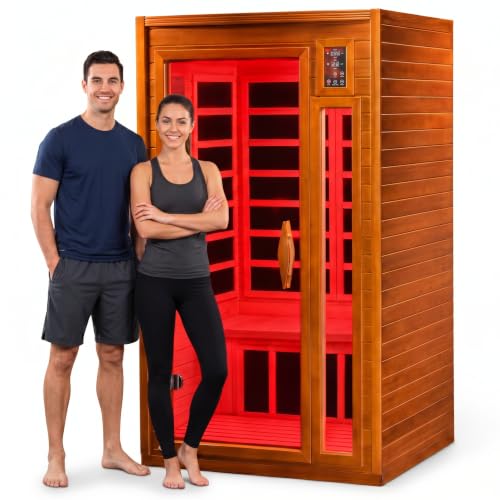
The Barcelona is the cabin that introduces most households to infrared, and its design understands the assignment: a one-to-two-person hemlock box that assembles in a spare room, surrounds its bench with far-infrared panels so the warmth arrives from several directions at once, and asks nothing of the house beyond a sensible electrical supply. Sessions here are the infrared archetype — the cabin ready quickly, the air warm rather than fierce, the body heated directly by the panels until the whole person, rather than the room, feels like the heated object. Twenty to thirty unhurried minutes is the natural session shape, and the cabin’s compactness makes it a daily appliance rather than a weekend destination.
The red light therapy panels give the Barcelona a second, quieter register — many owners use them for the gentle, glowing wind-down at a session’s end — and the Bluetooth connection means the cabin’s soundtrack is a podcast, an audiobook chapter or deliberate silence. Solo users get a private ritual that fits a morning; couples get a cosy one that fits an evening, provided both accept that two-person in a compact cabin means friendly proximity. Buyers who know they want territorial seating should step directly to the Andora or Cordoba and skip the negotiation.
Strengths
- Surrounding panel layout heats the body evenly at gentle temperatures
- Compact footprint brings infrared to ordinary spare rooms
- Quick readiness suits short, frequent, daily sessions
Trade-offs
- Far-infrared only; no near or mid wavelengths
- Two-person use is cosy rather than spacious
- No traditional high-heat or steam experience
Best for: beginners and solo ritualists in modest spaces. / Not suited for: couples wanting generous seating or spectrum completists.

Dynamic Saunas Andora — the Roomy Two-Person Cabin
Badge: Best for couples
| Spec | Detail |
|---|---|
| Spectrum | Low EMF far infrared, 360-degree heating |
| Capacity | 2 person, spacious cabin |
| Build | Canadian Hemlock |
| Extras | Red light therapy, Bluetooth audio |
Where the Barcelona is efficient, the Andora is generous. It is Dynamic’s spacious two-person far-infrared cabin, and the extra room changes the session’s character: two adults sit with their own space, legs can stretch, and the ritual becomes a shared half-hour rather than a coordinated squeeze. The panel arrangement keeps the line’s 360-degree philosophy, so the larger volume does not dilute the warmth — the body is still the heated object, surrounded by low-EMF emitters, with the hemlock interior keeping the air smelling faintly of warm, clean wood.
Couples are the obvious audience, but the Andora also suits the tall or broad solo user who finds compact cabins more enclosure than embrace. Its ritual profile is evening-shaped: two people, low light from the red light panels, music through the Bluetooth, and a conversation slowing to the pace radiant heat imposes. Installation remains infrared-simple — a homeowner assembly project and a sensible circuit — which means the upgrade from the Barcelona is measured in floor tiles, not in building work. For households whose sauna will be a shared habit, that floor space is the best money in this guide.
Strengths
- Genuine two-person space without leaving the far-infrared formula
- Even surrounding heat in a larger cabin volume
- Same simple installation and hemlock build as its siblings
Trade-offs
- Needs more floor than the compact Barcelona
- Far-infrared only, like the Barcelona
- Solo users may find the space more than the ritual needs
Best for: couples and larger solo users wanting room to relax. / Not suited for: the tightest spare corners.

Dynamic Saunas Cordoba — the Full-Spectrum Cabin
Badge: Best for spectrum enthusiasts
| Spec | Detail |
|---|---|
| Spectrum | Full spectrum infrared with red light therapy |
| Capacity | 2 person, spacious cabin |
| Build | Canadian Hemlock |
| Extras | Bluetooth audio |
The Cordoba is the infrared completist’s cabin. Alongside the far-infrared panels its siblings carry, it adds near and mid infrared emitters, so the cabin covers the full infrared range in one room. The near wavelengths are the ones associated with the surface warmth you feel instantly on entry, the far with the deep, enveloping steadiness of a settled session, and owners who care about the technology — who have read the wavelength charts and want the whole spectrum rather than a house speciality — are exactly the buyers this model was drawn for. The cabin itself is the spacious two-person hemlock design, with red light therapy and Bluetooth completing the now-familiar Dynamic pattern.
Honesty about the spectrum question belongs here: for pure warmth and relaxation, far-infrared alone satisfies most users completely, and this guide claims no additional health effect for the fuller range. The Cordoba’s case is experiential and enthusiast-driven — a more layered sensation of heat, a cabin that leaves no wavelength uninvited — and for the buyer who would otherwise spend the Barcelona’s first year wondering about the upgrade, buying the complete instrument first is the economical peace of mind. Everyone else can save the step and lose nothing they would have noticed.
Strengths
- Near, mid and far infrared in one spacious cabin
- Layered heat sensation that enthusiasts specifically seek
- Full two-person room with the line’s hemlock quality
Trade-offs
- Premium step whose benefits are experiential, not essential
- Largest footprint of the three cabins
- Beginners may never use the spectrum’s full range knowingly
Best for: infrared enthusiasts and couples wanting the complete technology. / Not suited for: first-time buyers on a tight footprint or budget.
What Do Far, Mid and Near Infrared Actually Mean?
Infrared is light the eye cannot see, arranged in a spectrum, and sauna makers divide it by wavelength. Far infrared, the longest of the three bands used here, is the sauna industry’s workhorse: it is the wavelength range most associated with the deep, gentle warming these cabins are known for, and every model in this guide is built around it. Mid infrared sits in the middle of the range and is included in full-spectrum cabins to broaden the radiant mix. Near infrared, the shortest band, is closest to visible red light and is felt most immediately at the skin’s surface; it is also the band neighbouring the red light therapy panels these cabins carry. A far-infrared cabin is therefore not a partial product — it is the classic infrared sauna — while a full-spectrum cabin layers the additional bands around that classic core for a more varied sensation of heat.
Panel technology carries the same vocabulary further. Emitters differ in construction — ceramic, carbon and hybrid panels appear across the wider market — and in how evenly they spread their output across a wall. The practical questions for a buyer are simpler than the physics: how much of the bench’s surroundings are panelled, how quickly the cabin reaches a comfortable state, and how the warmth feels at the twenty-minute mark, when first impressions have faded. On those questions the three cabins here behave as a family — surrounding coverage, quick readiness, steady comfort — with the Cordoba’s spectrum as the one genuine variable.
How Do You Run a Good Infrared Session?
Infrared rewards a slightly different craft from traditional sauna. Because the air is gentler, the session’s work is done by exposure and time: give the cabin its short warm-up, enter when the panels are at strength, and settle for a session measured in tens of minutes rather than in endurance. Hydrate before and after as a matter of routine. Sit so the panels can see you — radiant heat is line-of-sight, and a body curled away from the emitters is a body half in shadow — and use a towel on the bench as both hygiene and comfort. The red light setting makes a natural closing movement, a few quiet minutes as the session’s heat settles. As with every sauna form, the discipline is comfort-led: begin shorter and cooler, build gradually across the first weeks, leave immediately if you feel unwell, keep alcohol out of the ritual entirely, and let anyone with a medical condition, a pregnancy or heat-sensitive medication take their doctor’s counsel before the first session rather than after a difficult one.
Frequency is infrared’s home advantage. The cabins’ quick readiness and moderate temperatures suit the pattern owners actually keep — several shorter sessions a week, fitted around work and family — rather than the weekly ceremony traditional heat often becomes. Households choosing infrared for that rhythm should protect it in the siting decision: the cabin belongs beside the bedroom or the bathroom, on the path of an ordinary morning, not at the end of an expedition.
What Mistakes Do Infrared Sauna Buyers Make?
The first is expecting traditional sauna from a radiant cabin — buying infrared and then judging it by the fierce air heat and steam it never promised. The second is under-sizing: two adults in a cabin bought for its footprint rather than its bench discover the truth in the first shared session, which is why this guide separates the Barcelona’s cosiness from the Andora’s and Cordoba’s room so plainly. Third, buyers chase spectrum before coverage, paying for wavelengths in a cabin whose panels face only one wall; surrounding placement matters more to the body than the band list. Fourth, some site the cabin far from a shower and watch the ritual fade. Fifth, new owners treat the first session as the template — too long, on day one — instead of building the habit gently. Each error is a mismatch between expectation and instrument, and the cure is the reading you have just done.
Final Recommendation: Which Infrared Sauna Should You Buy?
Buy the Barcelona if this is your first cabin, your space is modest, or your ritual is mainly solo — it is the complete infrared experience in its most efficient form. Buy the Andora if the sauna is a couples’ ritual and far-infrared is all the spectrum you want; its room is the upgrade that matters nightly. Buy the Cordoba if you want the full wavelength range in that same spacious cabin and know you would miss it if it were absent. All three keep the same promise — radiant warmth, quickly ready, in a hemlock room of your own — at three sizes of commitment. For the wider sauna landscape, compare every kind of home sauna compared and portable sauna tents for small spaces, and for the rest of a restful home, sheets for deep sleep and pillows matched to side sleepers.
A Tour of the Panels: Where the Heat Comes From
Sit on the bench of one of these cabins in your imagination and look around. Behind your back, panels warm the body’s largest surface without a hot spot. Along the front wall, emitters face the shins and the front of the body that back panels cannot see. Beneath or behind the calves, lower panels answer the coldest complaint in sauna design, the chilly lower leg. That surrounding arrangement — the 360-degree heating these listings describe — is the difference between a cabin that heats a person and a cabin that heats a corner. When comparing any infrared models, in this guide or beyond it, reconstruct this tour from the listing’s photographs and panel count, because a body’s-eye view predicts the session better than any wattage figure.
The bench itself deserves its sentence: hemlock slats stay comfortable at infrared temperatures, the backrests angle where spines actually rest, and the floor’s gentle warmth in panelled cabins removes the last cold note from the experience. Small things, accumulated, are what a daily ritual is made of — which is why this guide keeps returning to placement, coverage and craft rather than to headline numbers.
Red Light Therapy in These Cabins: What It Is and Is Not
The red light panels fitted across this Dynamic range bathe the cabin in visible red light during use. Owners value the ambience — a warm, low glow that turns the session’s final minutes into something close to candlelight — and the gentle surface warmth that accompanies it. This guide describes that experience and claims nothing beyond it: no treatment, no cure, no outcome is promised for the red light feature here, and readers who encounter grander claims elsewhere should apply the same scepticism they would bring to any wellness marketing. As a lighting design choice inside a relaxation ritual, the feature earns its place honestly, and that is the basis on which it is recommended.
Infrared for Renters and the Almost-Permanent
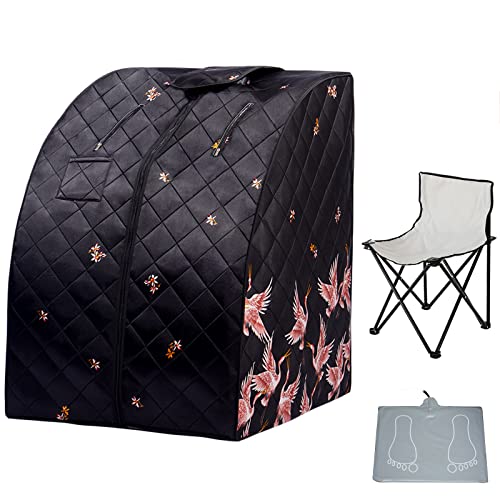
Because these cabins assemble from panels and run at moderate temperatures without steam, they occupy a useful middle ground between furniture and fixture. A long-term renter with a spare room and a landlord’s blessing can install one without altering the property’s fabric, and a homeowner can move a cabin to a new house as a kit rather than abandoning it as a conversion. That portability changes the purchase’s emotional arithmetic: the cabin is an appliance with a room inside it, bought for the household rather than for the address. Households in transition — a posting, a renovation planned in stages, a house that may be sold — should weigh this quality heavily, because it is the infrared cabin’s structural advantage over every built-in alternative.
Warm-Up, Energy and the Economics of a Daily Habit
Infrared’s practical magic is readiness. A traditional cabin asks its owner to plan around a long heat-up; these cabins reach a comfortable state quickly, which converts the sauna from an appointment into an impulse — the twenty minutes before a shower, the half-hour after a run. Energy follows the same shape: a session is a modest, bounded draw at moderate temperatures, and a household can estimate its own cost from the cabin’s rating and the local tariff with the same simple arithmetic this site recommends for every appliance. The honest summary is that infrared is the sauna technology most compatible with frequent, ordinary use, and frequency — as the home sauna guide also argues, from its different angle — is the variable that decides whether any cabin earns its floor space.
For Converts: What Will Feel Familiar, What Will Not
Traditional sauna people entering an infrared cabin should recalibrate three expectations. The air will not strike them at the door; the warmth builds on the skin instead, over the first minutes, until the whole body is enveloped. There will be no steam moment, no bucket, no stones — the ritual’s punctuation marks are different: the panels’ glow, the red light’s closing minutes, the quiet. And the session will likely run longer and gentler, with conversation, reading or music playing the role that endurance plays in high heat. What will feel familiar is the ending: the same unhurried cool-down, the same shower, the same particular calm that made them sauna people in the first place. Most converts keep both loyalties — the barrel or the spa for occasions, the infrared cabin for Tuesdays — and this guide sees no contradiction in that whatsoever.
Verifying the Cabin on Its Listing Page
Check the spectrum claim in words: far-infrared only, or full-spectrum with near and mid included, as the Cordoba states. Count the panels described and locate them in the photographs against the bench positions this guide toured. Confirm the low-EMF design claim explicitly if it matters to you, as it should. Verify dimensions, ceiling requirement and the delivery route, then the electrical specification against your home’s supply. Finally, confirm the timber as Canadian hemlock and the accessories in the box — the three cabins here share a maker’s pattern, but bundles are listing-specific and a sauna is a heavy thing to correct after delivery.
The Geometry of Two: Reading Cabin Dimensions Like a Seating Plan
Cabin dimensions lie politely until they are translated into bodies. When a listing says two-person, reconstruct the bench: two adults seated side by side need honest width per person, knees need depth in front of the bench, and the door’s swing needs the room in front of the cabin, not just inside it. The Barcelona’s two-person rating means two friendly adults in a compact warmth; the Andora’s and Cordoba’s spacious rating means two adults with territory. Solo buyers should run the same translation in reverse — a spacious cabin is a luxury of stretch for one person too, and tall users in particular should measure the bench length against their own favourite sitting sprawl. Paper dimensions become a seating plan the moment you assign each number to a knee, an elbow or a shoulder, and cabins bought on that translation are never regretted in the first shared session.
Scent, Sound and the Senses Inside the Cabin
An infrared cabin is a small sensory room, and its pleasures are specific. The hemlock warms to a faint, clean wood scent, nothing like the resinous blast of a cedar barrel — a difference traditionalists should note, since scent is half of sauna memory. The soundscape is the household’s own: panels are silent, so the cabin takes the character of its Bluetooth choice, from music to a favourite voice to nothing at all. Light is the third sense the design plays with — ordinary cabin lighting for a bright morning session, the red glow for the evening’s end. Owners who curate these three channels deliberately find the cabin becomes the most atmospheric small room in the house; owners who ignore them still get the warmth, which is, after all, the point — but the ritual’s memorability lives in the details.
One Variable at a Time: the Three Cabins Compared Honestly
Because these cabins share a maker, their comparison can be run with unusual discipline, variable by variable. Timber: identical in spirit — Canadian hemlock throughout, with its pale calm and low resin — so no choice hides there. Heat coverage: the same surrounding philosophy throughout, so no choice hides there either. Audio, red light and controls follow the family pattern. The decision therefore stands on exactly two legs. The first is room: the Barcelona’s compactness against the honest spaciousness of the other two, a question your floor plan and your elbows answer together. The second is spectrum: far-infrared’s classic sufficiency against the Cordoba’s complete range, a question only your own curiosity about the technology can answer. Buyers who find both legs pointing the same way have an easy order to place. Buyers split between them should let room win, because space is felt at every session while spectrum is felt as a nuance — and a cabin that fits the household’s bodies will be used long after a cabin that merely fits its reading has become a cupboard with panels.
There is a third, quieter variable worth naming: time. A first cabin bought compact and loved will teach a household its true pattern within a year — how often, how long, how many people, at what hours. Some households graduate from that education to a larger or fuller-spectrum cabin with complete confidence; others discover the compact ritual was the destination. The Barcelona’s role as the range’s doorway is therefore not a compromise position. It is the correct first instrument for a household still learning its own warmth.
A Week of Infrared: How the Habit Actually Forms
Monday’s session is the shortest — twenty minutes before the shower, the week opened in warmth rather than in a scroll. Wednesday’s is the social one, two people in the Andora or Cordoba, the day’s news told at the heat’s pace. Friday’s is the long one, the red light on, the working week deliberately concluded. Sunday’s belongs to whoever wakes first and wants the house’s quietest hour. Notice what the week never contains: a production. No stones to charge for an hour, no garden to cross, no occasion to justify the effort — and that absence is precisely the infrared proposition, a sauna woven into the ordinary until the ordinary itself becomes warmer. Households deciding between this technology and any other should interrogate their own calendars with that week in mind, because the calendar, not the catalogue, is where saunas succeed or fail.
Infrared and the Rest of the House’s Warmth
A closing domestic note. The infrared cabin joins a household’s existing ecology of warmth — the bath, the heated floor if fortune provided one, the good blanket, the winter sun through a south window — and it behaves differently from all of them in one respect: it is warmth with walls, a place rather than a temperature. That placeness is why owners speak of their cabins the way they speak of rooms, and why the siting advice in this guide treats the cabin as interior design as much as equipment. Put it where mornings pass, light it for evenings, keep its path to the shower short, and the house gains not an appliance but a destination — the warm room, known to everyone who lives there, that winter evenings reorganise themselves around.
Introducing Guests to Infrared: a Host’s Script
Guests meeting infrared for the first time arrive with traditional expectations and need three sentences of orientation: the air will feel gentler than they expect and the warmth will build on the skin; they can leave at any moment and nobody will comment; water is waiting outside and the shower is through that door. Hosts who give those sentences find their guests relax into the radiant rhythm within minutes, and many become the cabin’s most enthusiastic repeat visitors — infrared’s gentleness makes it the easiest sauna form to share with the uninitiated. Keep first sessions short, keep the red light for the finale, and let the cabin make its own argument, which it does, quietly and completely, in about twenty minutes.
Safety, Gathered in One Place
The infrared cabin’s gentleness does not exempt it from the household doctrine of heat. Sessions are built gradually, hydration is routine, alcohol is excluded, and anyone who feels unwell leaves at once. Readers with cardiovascular or other medical conditions, pregnancies or heat-sensitive medications should have their doctor’s view before the first session. Children belong in the cabin only supervised, briefly and at gentle settings. The cabin itself is ventilated after use, kept dry, and installed exactly to its electrical specification. Held to those lines, an infrared cabin is among the most uneventful appliances a house can run — and around warmth, uneventful is the highest available praise.
Why Radiant Heat Feels Different: the Plain-English Physics
Stand in weak winter sunshine in a coat and you have felt the infrared principle with your own skin: the air is cold, the sunlit side of you is warm, and no contradiction exists because radiation and air temperature are separate channels of heat. A traditional sauna works the opposite channel — it heats air until the air can heat you, which demands fierce temperatures and makes opening the door a weather event. The infrared cabin works the sun’s channel. Its panels radiate; the radiation lands on skin and bench and becomes warmth exactly where it lands; the air, warmed only secondhand, stays at temperatures that let occupants breathe easily, talk normally and stay longer. That is the entire technical story behind every difference this guide has described — the quick readiness, the moderate thermometer readings, the line-of-sight importance of panel placement, the gentleness that makes infrared the beginner’s doorway and the daily user’s habit. A buyer who understands the two channels stops asking which sauna is hotter and starts asking the better question: which channel of heat does my household want to live with?
A Note on Claims You Will Meet Elsewhere
Infrared is marketed, in some corners of the internet, with a enthusiasm that outruns any evidence a household guide can stand behind — promises about the body that this page has deliberately never made. The reader’s defence is the one this site applies to every wellness-adjacent shelf: enjoy the warmth, the ritual and the relaxation, which are real and sufficient; require documents and professionals for anything beyond them; and let a cabin be chosen, as these three were, on timber, panels, placement and craft. A technology this pleasant needs no mythology, and a buyer this well informed needs no protecting from anything except exaggeration.
Assembly Day: What Putting One of These Cabins Together Feels Like
Infrared cabins arrive as a flat kit of hemlock panels — walls with their emitters already fitted, a bench, a roof, a door — and assembly is closer to erecting clever furniture than to building a room. Two people, a clear floor, the manual followed in sequence, and an unhurried few hours are the whole recipe; the panels locate and fasten by design, the electrics connect within the cabin’s own harness, and the only professional in the story is the electrician consulted beforehand about the supply. First power-on is its own small ceremony: run the cabin empty, let new timber and new panels breathe through a heat cycle, and only then take the first short session. Households that treat assembly day as part of the ritual — music on, no deadline pressing — consistently report smoother builds than households racing a dinner reservation, a truth about flat-pack projects that this guide passes on free of charge.
The Three Cabins and the Houses They Suit
Picture the Barcelona in a converted box room of a terraced house, where its compactness turns dead space into the owner’s favourite twenty minutes and its panels warm a single occupant with no wasted volume. Picture the Andora in a family bathroom’s generous dry end or a principal bedroom’s alcove, where two people end the day side by side and the cabin’s hemlock reads as furniture the room was always missing. Picture the Cordoba in a home gym or a garden room, where its full spectrum serves the household’s most committed heat enthusiast and its spaciousness hosts the weekend’s long session. The three pictures share a wall colour — hemlock, patience, warm light — and differ only in the lives arranged around them, which is exactly how a model range should work and exactly how this one should be chosen: not by asking which cabin is best, but by recognising which picture is your house.
Frequently Asked Questions
How hot does an infrared sauna get compared with a traditional one?
Infrared cabins run at noticeably gentler air temperatures than traditional saunas, because the panels warm the occupants directly rather than relying on very hot air. The experience is a deep, enveloping warmth rather than a blast, and many users find they can stay comfortably for the longer, slower sessions infrared suits. Converts from traditional sauna should expect a different sensation, not a weaker version of the same one, and judge it after several sessions rather than one.
Is full-spectrum infrared worth it over far-infrared?
For warmth and relaxation alone, far-infrared — the core of all three cabins here — satisfies most owners completely. Full-spectrum adds near and mid wavelengths for a more layered sensation, which enthusiasts value and beginners rarely miss. This guide claims no extra health effect for the broader range. If you are the kind of buyer who researches wavelengths for pleasure, the Cordoba exists for you; if you are not, the Barcelona and Andora lose nothing you would have used.
What does low EMF mean in an infrared cabin?
EMF refers to the electromagnetic fields produced by electrical components, and infrared panels are electrical components the user sits very close to. Low-EMF design, a stated feature of all three cabins here, means the maker has engineered the panels and wiring to keep those fields low at the seating position. Shoppers who care about the question should look for exactly that explicit design claim, as these listings make, rather than assuming any cabin addresses it.
How long should an infrared session last?
Build gradually toward the session length that feels restorative — for many users somewhere in the twenty-to-forty-minute region — starting shorter in the first weeks and letting comfort, not bravado, set the pace. Hydrate before and after, rest afterwards, and leave the cabin immediately if you feel dizzy or unwell. People with medical conditions or heat-sensitive circumstances should set their pattern with their doctor’s advice, not with a guide’s generalities.
Where can an infrared cabin be installed?
Almost any dry, level indoor space with the electrical supply the listing specifies: spare rooms, home gyms, large bathrooms’ dry zones and converted dressing rooms all serve. Infrared’s freedom comes from its moderate temperatures and absence of steam, which spare the host room the moisture duties a steam sauna imposes. Measure the cabin, the ceiling and the delivery route, confirm the circuit, and the installation is a homeowner assembly project rather than a building one.
Can I read or use a phone inside an infrared cabin?
Many owners read in the cabin’s moderate heat, and paper books thrive in it; electronics are a judgement call, since heat and devices are uneasy companions and manufacturers of phones rarely bless sauna use. The wiser ritual, most owners conclude, is the one the cabin quietly enforces: audio through the Bluetooth if wanted, eyes resting, and the small digital fast that has become one of infrared sauna’s accidental virtues. A book that can tolerate warmth is the classic compromise.
How long do infrared panels last?
Infrared emitters are solid-state components with no moving parts and no consumables, and in a well-kept cabin they are expected to serve for many years of regular sessions. The cabin’s timber, door and controls will ask for ordinary household attention long before the panels ask for any. As with any appliance of this size, confirm the warranty terms on the listing for the specific model, and keep the purchase documentation with the house’s other appliance records.
Do infrared saunas need special maintenance?
Very little. Ventilate the cabin after sessions so it dries, wipe benches and backrests, and treat the hemlock only as the manufacturer directs — gentle cleaning rather than chemicals. Panels themselves are fit-and-forget components with no consumables. The cabin’s real maintenance is the household’s: towels laundered, the room kept on the daily path, and the ritual kept frequent enough that the sauna remains furniture in use rather than furniture in storage.
Far-infrared or full-spectrum in a small apartment — which fits better?
In a compact flat the deciding factors are footprint, warm-up habit and how the corner will feel between sessions, rather than wavelength bragging rights. A far-infrared cabin such as the Barcelona warms up promptly, asks little of a small room and settles into a spare corner without dominating it, which suits solo morning sessions before work. A full-spectrum cabin such as the Cordoba adds near and mid panels for a more layered warmth, yet it also asks for a little more floor area and a little more patience while every panel comes up to temperature. Neither choice changes the comfort promise at the heart of this guide: gentle radiant warmth, a quiet bench and a door you can close on the day. Measure the corner honestly, picture the cabin standing there in February as well as on delivery day, and favour whichever specification leaves walking space, opening clearance and a calm sightline from the doorway. In tight homes the smaller, simpler spectrum usually wins because it gets used on ordinary Tuesdays, not only on unhurried weekends.
What does a comfortable session routine look like, including hydration?
Keep the routine deliberately plain so it survives busy weeks. Drink a glass of water before you step in, set out a second glass and a towel for afterwards, and let the cabin warm while you change. Begin with shorter sittings in the first week, then lengthen them gradually until the session feels unhurried rather than endured. Sit or recline in the position you can genuinely relax in, breathe slowly, and treat restlessness or light-headedness as the signal to step out, cool down and finish for the day. Afterwards, rest for a few minutes, drink again, and shower lukewarm if you want to rinse off before dressing. Leave the cabin door ajar so the interior airs and dries fully before the next use. Most owners find that this unremarkable sequence — water, warmth, rest, water again — is what turns an occasional novelty into a sustainable evening habit, because nothing in it depends on willpower, special clothing or equipment beyond the cabin itself and a clean towel waiting on the bench.
The infrared decision, stripped of its wavelength charts, is a decision about how warmth should behave in a modern home: quickly ready, gently held, frequently used, and quiet about it. The three cabins in this guide deliver that behaviour at three sizes of ambition, from the Barcelona’s efficient doorway to the Cordoba’s complete spectrum, and the household that matches the cabin to its rooms and its rituals will find, a season later, that the warmest room in the house is also the most used one — which is the only ranking this technology has ever really cared about.
So choose by room and by ritual, and let the spectrum settle itself. If your spare corner is small and your mornings are yours alone, the Barcelona is waiting with its panels warm. If your evenings are shared, the Andora’s bench has room for the conversation. If your curiosity about the technology is itself part of the pleasure, the Cordoba completes the instrument. In every case what arrives is the same quiet marvel — a hemlock room that warms people instead of air — and a household habit that, once formed, feels less like a purchase than like a climate the house always should have had.
One more consideration for the household still weighing infrared against the wider sauna world: the two technologies age differently in a family’s affections. Traditional heat tends to become the house’s celebration — the weekend, the guests, the snow day — while infrared becomes its habit, the warm quarter-hour folded into ordinary time until the ordinary time is unrecognisable without it. Neither role is lesser; they are different tenses of the same pleasure. But a buyer choosing a first and only sauna should know which tense their household speaks, because a cabin bought for celebrations and used as a habit, or bought for habits and saved for celebrations, is a cabin working against its own design. Read your calendar once more, choose the tense that matches it, and the three cabins in this guide — or the traditional alternatives in the wider comparison — will sort themselves with almost no further help.
Finally, keep the paperwork. The manual, the electrical specification and the purchase record belong in the house file beside the boiler’s and the roof’s, because a cabin is a decade-scale resident and its future owners — or its future home, if it travels with you — will thank the household that documented it. Then close the file, warm the panels, and take the session the whole purchase was for: twenty quiet minutes in a hemlock room, warmed like sunlight, in the middle of an ordinary day.
Buy the cabin your rooms can hold and your week can fill, and infrared will repay you in the currency it deals in: unhurried warmth, on ordinary days, without ceremony or apology. The Barcelona, the Andora and the Cordoba are three sizes of that single promise, built in the same pale hemlock and lit by the same quiet glow — and the right one is simply the one whose door your household will still be opening, gladly, when the novelty has long since become the routine.
A parting practical note: whichever cabin you choose, order it when you can give its arrival a clear weekend — a measured site, a ready circuit, a helper on standby and no guests promised a session by Sunday. Infrared rewards the unhurried in assembly as faithfully as in use, and a cabin built calmly on Saturday will be warming its first, properly gentle session before the weekend is out.
And if the choice between the three still feels close after all this reading, let the tie be broken by the simplest evidence available: sit on your own floor, against the wall where the cabin would stand, at the hour you would use it, and notice whether you are picturing yourself alone with a book or beside the person you live with, and whether the technology’s details genuinely interest you or merely impress you in print. The picture that forms is the specification that matters. Order the cabin in it.
Warmth, in the end, is a household’s most repeatable luxury, and infrared is its most repeatable form: no ceremony, no construction, no wait worth mentioning between the wish and the fact. Barcelona, Andora or Cordoba — compact, roomy or complete — the cabin you choose will be warm before your tea is, and that small, reliable miracle, repeated across a winter, is what this entire guide has been recommending in three sizes.