Disclosure: As an Amazon Associate, dailyhomedecorating.com earns from qualifying purchases. Links to Amazon on this page are affiliate links; they cost you nothing extra. Prices and availability change often, so check the current Amazon listing before you buy.
The best inflatable hot tubs for cold weather are separated from the rest of the inflatable market by two specifications that summer shoppers never think about: freeze protection for the pump and liner, and insulation serious enough to hold soaking temperature when the air is doing its worst. An ordinary inflatable in a hard freeze is not a hot tub having a bad day; it is equipment at risk, because water expands, pumps crack, and liners stiffen and split. The best inflatable hot tubs for cold weather solve that with automatic freeze-protection heating, insulated walls and covers, and construction that keeps its pressure and shape in the cold. This guide ranks the verified cold-capable inflatables in the pool for this site, two of them with explicit Freeze Shield systems and one with the class’s strongest insulated cover, and adds three prose-only types that describe the supporting equipment and formats a cold-climate buyer should know.
There is also an honest ceiling to state at the start. Inflatable spas have operating limits in extreme cold that hard-shell spas, with their insulated cabinets and plumbing inside the thermal envelope, handle more gracefully. In the coldest continental weather, even a freeze-protected inflatable works hard, costs more to run, and deserves a sheltered site, an insulated base, and an owner who checks on it. Within those truths, the modern cold-rated inflatable is a revelation: a steaming soak under a black January sky, from a spa that arrived in a box. The state-specific companions in this lot, Best Hot Tubs For Minnesota and Best Hot Tubs For Michigan, apply this guide’s principles to the two hardest spa climates in the country.
Use the Quick Picks to identify the cold-rated shortlist, then read the reviews for how each model behaves when the temperature falls, because that behavior, not the summer specification, is the product you are buying. The buying guide explains the cold-weather checklist in full, and the how-to sections cover winter siting, running, and the spring and autumn decisions that bracket the season.
Where to Buy
The linked picks are sold on Amazon, where you can check current price, availability, and delivery before the season turns. Begin with the Coleman SaluSpa Miami Energy-Efficient AirJet Inflatable Hot Tub, whose Freeze Shield system leads this category, and confirm it through its Check on Amazon link. The other linked picks are the Bestway SaluSpa Cancun Energy-Efficient Inflatable Hot Tub — Check on Amazon — and the INTEX 28425EH PureSpa Bubble Massage Spa Set — Check on Amazon. The prose-only types describe accessories and formats available from the same retailers and spa suppliers; in cold climates, buy the ground insulation and cover accessories with the spa, not after the first freeze warning.
In this guide
Quick Picks
| Pick | Badge | Why it earns its place |
|---|---|---|
| Coleman SaluSpa Miami Energy-Efficient AirJet Inflatable Hot Tub | Best Overall | Freeze Shield protection plus EnergySense insulation and 120 AirJets: the complete cold-weather inflatable. |
| Bestway SaluSpa Cancun Energy-Efficient Inflatable Hot Tub | Best Value | The same Freeze Shield and insulation package in a presentable, accessible package. |
| INTEX 28425EH PureSpa Bubble Massage Spa Set | Best Insulated Cover | A high-density thermal cover and gentle water care for cold but not extreme climates, with honest limits. |
| Insulated Ground Mat and Base System (Type) | Best Supporting Upgrade | The under-spa insulation layer that cold-climate owners call the cheapest heat they ever bought. |
| Thermal Blanket and Cover Upgrade (Type) | Best Heat Retention Add-On | A floating thermal layer and upgraded cover that cut overnight losses in any inflatable. |
| Sheltered Enclosure and Windbreak Setup (Type) | Best for Exposed Sites | Shelter that stops wind from stripping heat and makes winter soaking civilized. |
Key Takeaways
- Freeze protection is the entry ticket: without it, an inflatable should be drained and stored before hard freezes.
- Insulation decides winter running costs: walls, cover, and the base beneath the spa all count.
- Wind is a heat thief equal to cold; a sheltered site is a specification, not a luxury.
- Keep power uninterrupted to a freeze-protected spa in winter; the protection only works while it runs.
- Start winter with fresh water, a clean filter, and a tested routine, because mid-winter maintenance is miserable.
- Extreme cold has limits even for rated spas; know your model’s guidance and respect it.
How These Picks Were Chosen
Linked picks come from the verified supplement pool, with manufacturer features and specifications in the spec boxes. Selection for this keyword applied a cold filter to the whole inflatable class: explicit freeze-protection systems ranked first, insulation packages and cover quality second, and construction that retains pressure and integrity in low temperatures third. The Intex is included with its limit stated plainly, because its cover and water care make it the right choice for cold-but-not-extreme climates and honesty about that boundary serves buyers better than exclusion. The prose-only types cover the accessory layer, ground insulation, thermal blankets, and shelter, because in cold weather the system around the spa decides as much as the spa.
Excluded were all inflatables with no freeze protection and no insulation story, which in this guide’s judgment are summer products regardless of their marketing season, and any suggestion that a standard inflatable can simply be left running through a hard freeze on hope. The pool’s cold-plunge entry was excluded as a different product for a different ritual. No static prices, ratings, or invented specifications appear; cold performance is described from the manufacturers’ stated systems and established thermal principles.
A note on method: freeze-protection claims are the manufacturers’ own, reported as such, and buyers in the coldest regions should confirm their specific model’s low-temperature guidance on the listing and in the manual before relying on it through a continental winter.
The 6 Best Inflatable Hot Tubs for Cold Weather — Reviewed

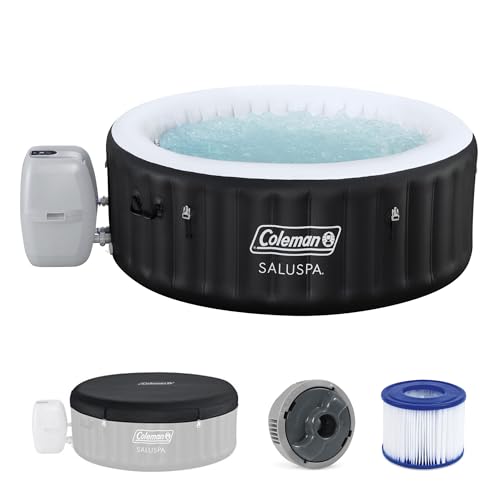
Coleman SaluSpa Miami Energy-Efficient AirJet Inflatable Hot Tub
Our badge: Best Overall
The Coleman SaluSpa Miami Energy-Efficient AirJet Inflatable Hot Tub is the cold-weather inflatable against which the class is judged. Its Freeze Shield automatic heating function protects the pump and liner from cold-weather damage, which is the difference between a spa that lives outdoors through winter and one that must be drained at the first frost. Its EnergySense insulated walls and cover are designed to keep water warmer with less energy than comparable spas, its MaxHold fabric beams and three-layer Tritech shell hold pressure and resist punctures in a season when materials are least forgiving, and its 120 AirJets and digital panel, heating to 104 degrees Fahrenheit, deliver the full soak at the end of the coldest day. The ChemConnect dispenser keeps chlorine steady, and the power-saving timer can schedule heat up to forty days ahead.
Strengths
- Freeze Shield protection designed for year-round outdoor operation.
- Insulation package that directly attacks winter running costs.
- Strong bubble action and sturdy construction for the harshest season.
Trade-offs
- Extreme continental cold still stresses any inflatable; shelter and base insulation remain essential.
- Protection depends on uninterrupted power; outages in a freeze need a plan.
- Comfort capacity is two adults, as with the class.
| Color | Black |
|---|---|
| Size | Energy Efficient 2.0 |
| Dimensions | 71 x 71 x 26 inches |
| Weight | 101.2 pounds |
Winter ownership with the Coleman is a routine of small certainties: the cover sealed after every soak, the base insulated from the slab, the power never casually switched off, and a weekly test of water that stays steadier than summer owners expect because cold water is chemically calmer. The spa repays that routine with the finest experience in this entire lot of guides: stepping through frost into steaming water while the garden is silent and white. Owners in genuinely cold states should still site it in the lee of the house, because wind protection is worth more than any single feature on the specification sheet.
Best for: cold-climate buyers who want an inflatable that truly winters outdoors / Not suited for: sites with unreliable winter power or no shelter at all
Choose the Coleman as the cold-weather default. Skip it only if your winters are mild enough that the Intex’s water virtues matter more. Check on Amazon

Bestway SaluSpa Cancun Energy-Efficient Inflatable Hot Tub
Our badge: Best Value
The Bestway SaluSpa Cancun Energy-Efficient Inflatable Hot Tub carries the same cold-weather essentials as the Coleman, Freeze Shield protection for pump and liner, insulated energy-efficient walls and cover, MaxHold beams in a three-layer Tritech shell, 120 bubble jets, a ChemConnect dispenser, and a power-saving timer, in a grey wicker finish and at the more accessible end of the linked range. For cold-climate buyers whose budget is spoken for by the rest of winter, it is the complete answer without a redundant dollar in it.
Strengths
- Full Freeze Shield and insulation package at a value position.
- Strong bubble action and simple, schedulable controls.
- Presentable finish for gardens that remain visible in winter.
Trade-offs
- Couples-scale capacity in honest use.
- No usable dimensions or weight in the pool data; verify on the listing before siting.
- Same extreme-cold and power-continuity caveats as its sibling.
| Color | Grey Wicker |
|---|---|
| Size | Energy Efficient 2.0 |
The Cancun’s winter life mirrors the Coleman’s routine, and its savings should be spent where cold owners know they matter: the insulated base, a windbreak or screen on the weather side, and a spare filter set so mid-winter maintenance never waits on a delivery. So equipped, it delivers the same steaming January evenings as its sibling, and the household will not be able to say what the saved money would have bought in the spa itself, because in specification terms it bought nothing that winter can detect.
Best for: value-focused cold-climate buyers / Not suited for: groups or the very coldest exposed sites without shelter
Choose the Cancun for the complete cold package at the gentler price point in the range. Skip it if maximum interior room is the priority. Check on Amazon

INTEX 28425EH PureSpa Bubble Massage Spa Set
Our badge: Best Insulated Cover
The INTEX 28425EH PureSpa Bubble Massage Spa Set enters this guide with its boundary stated in its badge: it is the pick for cold weather in climates where cold means frosty nights and chilly weeks rather than sustained deep freezes. Its included cover, with high-density thermal-resistant foam, is credited by Intex with improving energy efficiency substantially by minimizing heat loss, and heat loss through the top is where winter spas bleed most. The Fiber-Tech walls are firm, the built-in hard water treatment keeps water gentle, saltwater readiness simplifies care, and the 68 to 104 degree Fahrenheit range covers the full soaking spectrum. What it does not claim is a freeze-protection system for the pump and liner, and this guide will not claim it on the spa’s behalf.
Strengths
- Class-leading insulated cover for overnight and between-soak heat retention.
- Gentle water systems suit daily winter routines.
- Generous 210-gallon, four-person interior for the class.
Trade-offs
- No Freeze Shield equivalent; sustained hard freezes are outside its honest brief.
- Owners in cold states should plan a drain-and-store date or a sheltered, monitored site.
- Bubble action is calm rather than vigorous.
| Color | Tan |
|---|---|
| Size | 4-Person |
| Weight | 99.66 pounds |
For the large band of buyers whose winters are real but moderate, the Intex may be the best cold-weather purchase here, because its cover attacks the dominant loss and its water care suits the daily rhythm winter soaking becomes. The discipline it asks is a weather eye: when a genuine arctic spell is forecast beyond its brief, drain it, dry it, and store it, and let the spa live to soak in spring. Owners who respect that boundary report years of service; the spa punishes only the owners who ask it to be a different product.
Best for: cold-but-moderate climates and cover-led efficiency / Not suited for: sustained sub-zero outdoor operation
Choose the Intex where winters are chilly rather than continental. Skip it where January is a serious opponent, and take a Freeze Shield model. Check on Amazon
Insulated Ground Mat and Base System (Type)
Our badge: Best Supporting Upgrade
The insulated ground mat and base system, interlocking foam mats, insulated spa pads, and purpose-made ground insulation sold for inflatable spas, is the least glamorous and most cost-effective cold-weather purchase in this guide. Described as a type, it addresses the loss nobody sees: heat conducting downward into a cold slab or frozen ground for the entire life of the spa. Owners who add base insulation to a cold-rated spa consistently describe it as the cheapest heat they ever bought, because it works every hour, in every weather, without electricity.
Strengths
- Cuts downward heat loss continuously and cheaply.
- Protects the spa’s underside and softens the site.
- Fits any inflatable and transfers to its replacement.
Trade-offs
- Adds a small setup step and must be kept drained and level.
- Foam products vary; choose dense, outdoor-rated material.
- Does nothing for wind or top losses, so it complements rather than replaces cover discipline.
Install the base before the spa is filled, obviously, and extend it slightly beyond the footprint so the rim of insulation is not the first thing to get wet and freeze. In genuinely cold gardens this layer, the sealed cover, and a windbreak form the three-part system that lets a Freeze Shield spa live up to its name, and skipping any leg of the three is how cold owners manufacture the problems they then blame on the spa.
Best for: every cold-climate inflatable owner / Not suited for: nobody, though warm-climate owners gain least
Choose the base system with the spa, not after the first bill. Skip it only in genuinely mild climates.
Thermal Blanket and Cover Upgrade (Type)
Our badge: Best Heat Retention Add-On
A floating thermal blanket, cut to the water’s surface and used under the main cover, together with an upgraded insulated cover where the supplied one is thin, forms the second accessory layer of cold-weather ownership. Described as a type, the blanket attacks evaporation and surface loss, the dominant channel by which a hot spa cools, and it also keeps the main cover’s underside cleaner. In overnight terms the combination is the difference between a spa that greets the morning near temperature and one that spends the day reheating.
Strengths
- Targets the largest heat-loss channel directly.
- Reduces evaporation and the chemical drift that follows it.
- Fits any spa whose cover leaves room for improvement.
Trade-offs
- One more layer to remove and replace at every soak.
- Blankets age and must be replaced when they waterlog or tear.
- Must be sized and handled so it never interferes with filtration intakes.
The routine is simple: blanket off and draped to drain while you soak, blanket back on the surface before the cover closes. Owners who find the extra step irksome usually discover the energy arithmetic persuades them by the second winter month. Pair it with the base system above and a mid-range spa will hold temperature like a dearer one, which is the cold-climate version of this lot’s recurring lesson, that systems beat objects.
Best for: owners whose overnight temperature drop is the main cost / Not suited for: households that know an extra daily step will be skipped
Choose the blanket where top loss dominates. Skip it if the supplied cover already performs and discipline is scarce.
Sheltered Enclosure and Windbreak Setup (Type)
Our badge: Best for Exposed Sites
The sheltered setup, a windbreak screen, a pergola with a roof, a gazebo, or a purpose-built spa enclosure, is the cold-weather upgrade that improves the soak itself and not just the bill. Wind strips heat from water, cover, and bather alike, and it turns the walk to the spa into the worst part of the evening. Described as a type because it is built rather than bought in a box, shelter converts an exposed slab into a spa room, extends the season at both ends, and protects the cover and shell from weather and debris between soaks.
Strengths
- Cuts wind-driven heat loss and makes winter soaking comfortable.
- Protects the spa, cover, and bathers from weather and overlooking.
- Creates the room-like setting that turns a spa into a destination.
Trade-offs
- The largest project in this guide, with cost and possibly permissions to match.
- Enclosures must ventilate; a sealed steamy box creates its own problems.
- Fixed shelter commits the spa’s site more than the inflatable format implies.
Even a single screen on the weather side captures much of the benefit, which is the pragmatic version most owners build first. Add light, a hook for robes, and a path that drains rather than ices, using the staging ideas in Best Robes For Outdoor Hot Tubs, and the cold-weather spa becomes what its brochures promise: a warm room that happens to have no walls. In the coldest states this is not an accessory decision but the decision, as Best Hot Tubs For Colorado discusses for exposed mountain sites.
Best for: exposed, windy, or overlooked sites / Not suited for: renters or gardens about to be redesigned
Choose shelter where wind is the enemy. Skip it on naturally protected sites and spend the money on insulation instead.
Comparison Table
| Pick | Freeze Protection | Insulation Story | Cold Role | Check price on Amazon |
|---|---|---|---|---|
| Coleman SaluSpa Miami | Freeze Shield | EnergySense walls and cover | Primary cold spa | Check price on Amazon |
| Bestway SaluSpa Cancun | Freeze Shield | Insulated energy-efficient build | Value cold spa | Check price on Amazon |
| INTEX PureSpa | Not claimed | High-density thermal cover | Moderate-cold spa | Check price on Amazon |
| Ground Mat / Base (Type) | n/a | Under-spa insulation | Loss prevention | Check price on Amazon |
| Thermal Blanket (Type) | n/a | Surface loss control | Overnight retention | Check price on Amazon |
| Shelter / Windbreak (Type) | n/a | Wind loss control | Site system | Check price on Amazon |
How to Choose the Best Inflatable Hot Tubs for Cold Weather
Make Freeze Protection Non-Negotiable
If the spa will hold water outdoors through freezing nights, an automatic freeze-protection system that keeps the pump and liner safe is the first line of the specification, and its absence is a decision to drain and store before winter, made at purchase whether you admit it or not. Confirm the system on the listing and in the manual, and understand what it protects and what it assumes, above all uninterrupted power and a cover in place.
Stack the Insulation: Walls, Cover, Base
Cold loss happens on every face of the spa, so evaluate the whole stack. Insulated walls slow the sides, a dense sealed cover slows the top, and a ground layer slows the bottom that most buyers forget. A spa strong on all three, like the linked Freeze Shield models on an insulated base, will hold temperature at a fraction of the cost of a spa strong on one, and the difference compounds across a five-month season.
Site for Wind Before You Site for Views
The lee of the house, a fence corner, or a screen on the weather side is worth more than a panorama you will admire through steam for ninety seconds. Wind cools the water, the cover, and the bather, and it makes the uncovered minutes, entry and exit, miserable enough to shorten the season by weeks. Choose the sheltered site and manufacture the view with planting and light.
Plan Power Like a Winter System
A freeze-protected spa is a small winter utility: it must stay powered, its outlet and protection must be outdoor-rated and reliable, and the household must know that switching it off at the wall in a cold snap is the one unforgivable act. If your power is unreliable in winter storms, weigh that honestly against the drain-and-store strategy, because protection that stops in the storm’s second day protects nothing.
Running an Inflatable Spa Through Winter
Enter winter prepared: fresh water balanced before the cold sets in, a clean filter plus a spare, the cover’s straps and seal inspected, the base insulation in place, and the timer set so the spa lives at an efficient holding temperature and rises for your evenings. During the season, test weekly, keep sanitizer steady with the dispenser or your chosen system, and shock after heavy use with the routine in Best Shock For Hot Tubs, remembering that cold water changes chemistry slowly and forgives small delays that summer would punish. Brush snow off the cover rather than letting it accumulate into a sagging, freezing load, and keep the path to the spa cleared and salted, because the most dangerous part of a winter soak is the walk.
In spring, drain, clean, and inspect the whole system while the season’s lessons are fresh: seams, valve, cover underside, and pump behavior. Owners who run a freeze-protected spa year after year treat autumn as a service season and spring as an audit, and their spas repay the rhythm. Owners in the drain-and-store camp should store the spa clean, fully dry, and out of freezing damp, with the pump protected per the manual.
Problem: The spa loses several degrees overnight — Audit the stack in order: cover seal, thermal blanket, base insulation, wind exposure; the fix is almost always a layer, not the heater.
Problem: A power cut is forecast during a freeze — Keep the cover sealed and undisturbed to hold heat, restore power as the first priority, and follow the manufacturer’s guidance for outages; do not open the spa to check on it repeatedly in the cold.
Problem: Ice forms at the edges — Verify the freeze-protection system is running and the water is circulating, check the temperature setting, and treat persistent icing as a signal to drain before damage rather than after.
Problem: Winter water care drifts — Test on the weekly rhythm regardless of the cold, dose with the dispenser system, and remember that cloudy winter water is usually a filter asking for its rinse.
Why Winter Is the Inflatable Spa’s Finest Season
It is worth saying plainly, because summer marketing will not: a hot tub earns its keep in the cold. The contrast between frosty air and steaming water is the experience the entire category exists to deliver, and an inflatable that can hold that contrast in January delivers more delight per dollar than any summer soak at any price. That is why the cold specification matters out of proportion to its lines on the feature list, and why owners who buy the Freeze Shield models, insulate the base, and shelter the site describe their spas as winter appliances that happen to work in summer, rather than the reverse. Buy for January and July will take care of itself.
Cold Snaps, Polar Air, and Knowing the Limit
Every cold-rated inflatable has a floor beneath which the honest advice is to drain it. When a genuine polar outbreak is forecast, the kind that makes national news and bursts pipes in heated homes, the spa’s protection system is fighting weather beyond its design brief, and the owner’s job is to decide early: keep power and cover discipline and monitor, if the model guidance supports it, or drain, dry, and store the vulnerable components before the worst arrives. The decision is cheap when made a day early and expensive when made a day late. Households in the coldest states should build this decision into their autumn planning rather than improvising it by headlamp, and the state guides in this lot exist to localize exactly that judgment.
Common Buying Mistakes
Buying a Summer Inflatable for a Winter Dream
No freeze protection and thin insulation cannot be argued into winter service. Buy the cold specification or plan the storage, in writing, at purchase.
Forgetting the Ground
The slab is a heat sink attached to your spa all winter. Base insulation is the cheapest line in the whole cold-weather system and the most commonly skipped.
Siting for the View Into the Wind
A beautiful exposed site will cost you heat, comfort, and weeks of season. Shelter first, scenery second, and manufacture the view inside the shelter.
Switching the Spa Off to Save Money in a Freeze
That is how freeze protection is defeated and pumps are lost. Economy in winter comes from insulation and holding temperatures, never from interrupting protection.
Starting Winter With Tired Water and Filters
Mid-winter maintenance is the worst maintenance. Enter the season fresh, stocked, and tested, and the spa will ask little of you until spring.
The Daily Winter Routine: Fifteen Minutes That Save the Spa
Cold-weather inflatable ownership compresses into a daily quarter hour, and households that ritualize it report the fewest dramas. Morning: glance at the temperature reading and the cover’s state, brush off any snow load before it becomes weight the seams must argue with, and confirm the pump’s hum, the sound of a spa whose circulation, and therefore freeze protection, is alive. After the day’s soak: skim, check the filter’s honesty, run the oxidizer rhythm the chemistry guides prescribe for the system in the water, and settle the insulated cover like tucking in a child, edges sealed against the wind that does the real stealing. Evening in a cold snap: one extra check that power is on and temperature is holding, because the night is when a tripped breaker becomes a frozen pump by morning. None of these minutes is skilled; all of them together are the difference between the inflatable that winters for years and the one that becomes a cautionary tale told at the feed store. The routine also has a social form: households that soak together check together, and the spa’s care stops depending on one person’s memory, which is the true freeze protection no product sells.
Storing the Spa for the Off-Season, If You Must
Some households will drain and store despite this guide’s winter enthusiasm, and they deserve the storage done properly. Choose a mild day, clean the water’s last cycle, and drain completely, tipping and sponging the last liters that the drain leaves behind, because stored moisture is mold’s invitation. Wash the interior with the gentle methods of this lot’s cleaning guides, rinse, and then dry, really dry, a day of air with the spa loosely open, before any folding happens. Deflate fully, fold loosely rather than creasing sharply, since cold-stiffened vinyl remembers folds as cracks, and store indoors, off concrete, away from rodents, whose opinion of stored vinyl is culinary, with the pump, hoses, and filter stored alongside and the repair kit on top. In spring, inflate and inspect before filling, seams, valves, and the base, run a cleaning cycle, and the spa returns to service as if winter were a rumor. The households that store well find the inflatable’s multi-season life matches the manufacturer’s optimism; the ones that fold it wet in November meet a different spa in April, and the difference was never the product.
Wind, the Invisible Enemy: Sheltering the Inflatable Spa
Cold alone rarely defeats an inflatable spa; cold moving at speed does, and wind deserves a section of its own in any honest winter guide. Wind strips heat from the spa’s exposed walls and lid far faster than still air at the same temperature, works at the cover’s edges to lift and leak warmth, and drives snow and debris against the seams and the pump housing where they do the most harm. The defenses are landscape rather than product: site the spa in the lee of the house, a fence, or a hedge where the property offers one, and where it does not, a simple windbreak panel or a section of privacy screening on the prevailing-wind side changes the spa’s microclimate more than any accessory sold for it. A spa sheltered from wind holds temperature on less electricity, keeps its cover seated, and feels dramatically calmer to sit in, since the soaker’s exposed head and shoulders live in the same wind the walls do. Owners choosing a winter site should stand in the yard on a blustery day before the spa is filled, because the right corner announces itself to a person willing to be cold for five minutes, and a spa placed by that test will thank them every night of the season.
Guests in Winter: Hosting Around a Small Spa
The inflatable’s winter social life has its own etiquette, and hosts who learn it keep both the guests and the water happier. Numbers first: an inflatable that seats its rated count in summer seats fewer in winter, because winter bathers arrive with more body, more stillness, and no desire to be the one whose shoulders live above the waterline, so the honest winter capacity is the summer figure minus one, and the host who plans the evening in two soakings serves everyone better than the host who packs the tub. The station matters more in winter: robes and towels staged at the spa’s edge, a mat or duckboard for the exit, sandals that survive the frozen path, and a warm drink waiting indoors, since a guest’s memory of the evening is disproportionately the memory of the cold walk’s ending. Water care follows the party rule from this lot’s chemistry guides, oxidize after the crowd, because four guests in a small volume is the heaviest load the water will ever carry, and the host who builds that dose into the evening’s closing ritual wakes to clear water instead of a chemistry mystery. Winter hosting in a small spa is intimate by necessity, and the households that embrace the intimacy, fewer people, longer talks, the snow falling on the cover’s edge, tend to rate these evenings above every summer pool party they have ever thrown.
The Midwinter Inspection: A Ten-Minute Tour in January
Once in the deep middle of winter, the inflatable spa deserves a deliberate inspection rather than the daily glance, and January, when the season’s stresses have accumulated and its failures are still preventable, is the appointed month. Walk the spa as an inspector: the seams, pressed and eyeballed for any lifting or whitening that speaks of stress; the valves, snug and uncracked; the base, where meltwater and ice conspire, checked for the abrasion that a frozen puddle’s edge can work on vinyl across a hundred small movements. Open the pump housing’s story next, listening for any new note in its hum, confirming the filter’s honesty and the intake’s freedom from the season’s debris, because the pump in January is not an appliance but a life-support system whose failure the cold will not forgive. Check the cover’s underside and its insulation core for the waterlogging that doubles its weight and halves its virtue, and the electrical run, cord, outlet, and breaker, with the respect due to the spa’s single point of total failure. Log the tour in the spa book with the same brevity as the water readings, because next January’s inspector, who is also you, will want to know what normal looked like. Ten minutes, once, in the hardest month: it is the cheapest insurance in this entire guide, and the households that buy it are the ones whose winter spas become five-winter spas.
The Second Winter: What Year Two Teaches That Year One Could Not
An inflatable spa that survives its first winter has passed an examination; its second winter is a different and subtler test, because the enemies change from the cold itself to the owner’s relaxed attention. The vinyl that was inspected weekly in year one gets glanced at monthly in year two, the filter’s rhythm slips by days that become weeks, and the small seam stress that a January inspection would have caught in its cheap season announces itself in February at full price. The households whose spas reach a fifth winter share a recognizable trait: they kept the first year’s rituals after the novelty that powered them expired, because they understood the rituals were never about enthusiasm, they were the maintenance the material requires, as unglamorous and as effective as oiling a hinge. Year two is also when the honest verdict on the whole experiment arrives, since a household that has soaked through two winters owns data no review can give it, the true frequency, the true costs, the true place of the spa in the family’s winter happiness, and can decide about permanence, replacement, or upgrade with the authority of experience. Treat the second winter with the first winter’s respect, and the little spa will keep teaching at that level for years.
The Case for Keeping It Up All Year
This guide has treated winter as the inflatable’s proving ground, and it should close its teaching by retiring the assumption underneath most purchases, that the spa is a winter novelty to be packed away when the weather turns kind. The households that keep their inflatables running through the year discover the spa’s second personality: in summer it is the cool-down’s partner at a lower temperature after the garden’s work, the children’s supervised splash headquarters, the evening seat that costs almost nothing to keep warm when the air does half the heating. The year-round rhythm also spares the spa its most dangerous events, the repeated folding, storing, and re-inflating that work its seams and invite the storage failures the earlier sections catalogued, so that a spa kept gently in service can outlast a spa repeatedly retired. The water care stays the same, the filter keeps its rotation, and the owner’s skills compound instead of rusting each autumn. Winter made the case for the inflatable’s toughness; the year makes the case for its permanence, and owners who grant it both tend to stop calling it the temporary spa somewhere around the second July.
Final Recommendation
The top pick for cold weather is the Coleman SaluSpa Miami Energy-Efficient AirJet Inflatable Hot Tub: Freeze Shield protection, real insulation, strong bubble action, and light-touch water care in one complete winter system. The runner-up is the Bestway SaluSpa Cancun, the same cold package at a gentler point in the range, through its Check on Amazon link. Moderate-cold buyers should consider the INTEX PureSpa for its cover and water care with its freeze boundary respected, and every cold buyer should budget the insulated base, a thermal blanket where overnight loss bites, and shelter where wind rules the site. Buy the system, not just the spa, and winter becomes your spa’s finest season.
Frequently Asked Questions
Can an inflatable hot tub really stay out all winter?
Yes, if it has an automatic freeze-protection system like the Freeze Shield models here, stays powered, wears its insulated cover, and sits on insulation in a reasonably sheltered site. Without freeze protection, the safe answer is to drain and store the spa before hard freezes arrive.
What temperature can cold-rated inflatables handle?
Limits vary by model and are stated by each manufacturer; this guide reports the systems rather than inventing thresholds. Check your model’s guidance on its listing and manual, and treat extreme polar outbreaks as drain-or-monitor decisions even for rated spas.
How much more does winter running cost?
It depends on climate, holding temperature, insulation, and tariff, but the stack in this guide, insulated walls, sealed cover, base insulation, and shelter, is precisely what keeps the winter figure proportionate. The expensive winter spa is the uninsulated one reheating from cold daily.
Should I keep the spa at full temperature all winter?
Most owners hold a moderate temperature and raise it for planned soaks using the timer, balancing readiness against cost. Freeze protection must remain active regardless, so never switch the spa off at the wall during freezing weather to save money.
What happens if the power goes out in a freeze?
Keep the cover sealed and untouched to conserve the water’s heat, restore power first when it returns, and follow the manufacturer’s outage guidance. A full, covered spa holds usable heat for a considerable time; repeated opening to check is the fastest way to lose it.
Is a hard-shell spa better for very cold climates?
For sustained extreme cold, hard-shell spas with insulated cabinets and enclosed plumbing are the more robust tool, and this lot’s state guides say so plainly for the coldest regions. The cold-rated inflatables serve the large majority of cold-climate households at a fraction of the commitment, provided their system is complete.


