Affiliate disclosure: Daily Home Decorating participates in the Amazon Services LLC Associates Program. As an Amazon Associate, we earn from qualifying purchases. Product specifications and availability can change; confirm the current manufacturer label and listing before buying.
If you are searching for the best headphones for working with saws, first decide whether you need hearing protection, audio, or both. Ordinary headphones and active noise cancellation can make a workshop feel quieter, but they are not hearing protectors unless the product is specifically labeled with a Noise Reduction Rating (NRR). For saw work, start with a properly fitting, NRR-labeled earmuff or earplug, then choose optional Bluetooth or level-dependent sound features only if the hearing protector’s manufacturer says they are compatible with the way you work.
For a simple over-ear option, the 3M PELTOR X5A is a passive earmuff designed for high-noise environments. The Howard Leight Impact Sport adds electronic sound amplification to a low-profile earmuff, while the 3M WorkTunes Connect combines hearing-protector earmuffs with Bluetooth audio. All three models have Amazon catalog listings with product images below. The right fit depends on your noise exposure, the seal around your ears, your other protective equipment, and whether music or communication could distract you from a cut.
There is no universal “best” protector for every saw. A table saw, miter saw, circular saw, and shop vacuum create different noise patterns, and the real exposure at your ear depends on distance, room acoustics, time near the machine, and other tasks running at once. For workplace use or repeated high-noise exposure, rely on a noise assessment and appropriate hearing-conservation program. For a home shop, use the tool manual and the protector’s instructions, wear protection consistently, and do not treat headphones as a substitute for safer equipment, maintenance, or reduced exposure.
Quick picks
- Best passive earmuff for high noise: 3M PELTOR X5A, when its higher attenuation and fit are appropriate for the measured exposure.
- Best electronic option for hearing useful ambient sounds: Howard Leight Impact Sport, used only as its manufacturer directs and without assuming sound amplification replaces exposure assessment.
- Best Bluetooth-enabled hearing-protector style: 3M WorkTunes Connect, for users who want audio in an earmuff that is labeled as hearing protection. Keep audio low enough to remain aware of the work area.
These are product-format suggestions, not a guarantee that a particular model is adequate for your saw, exposure, head shape, or workplace. Check the NRR on the current package and compare it with guidance from a qualified safety professional when exposure may be hazardous.
Verified product examples

ASIN: B01GTMAH1Y. A passive, over-the-head model for users comparing 3M’s X5 series. Confirm the current NRR, fit, and compatibility with glasses or other PPE in the manufacturer’s documentation.
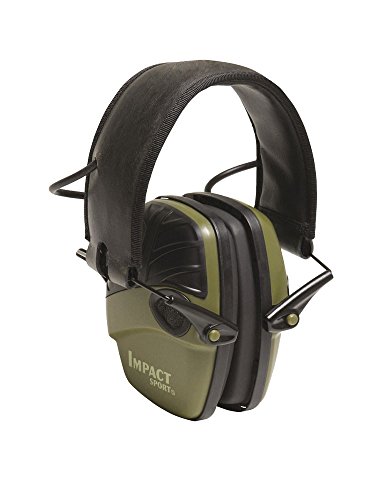
ASIN: B001T7QJ9O. An electronic model with sound-amplification features. Read the current user instructions, check the protector’s rating and seal, and test whether the controls are easy to use without looking away from your work.

ASIN: B0D2SBMBYY. A Bluetooth-enabled earmuff option. Product variations can have different features or ratings, so match the model number on the listing to the manufacturer’s current instructions before purchase.
Amazon listing data and product images can change. Confirm that the product page still matches the model you intend to buy. If you want more options, use this Amazon search for NRR-rated earmuffs for woodworking, then verify the rating on the product label and manufacturer site. Bluetooth headphones, earbuds, and ANC headsets without a hearing-protection label should not be assumed to protect hearing.
What counts as a headphone for saw work?
People use “headphones” to describe several different products: music headphones, Bluetooth headsets, active-noise-cancelling headphones, electronic earmuffs, passive earmuffs, and sometimes earplugs with audio. Their appearance can be similar, but their purpose and protection claims are not. The most important distinction is whether the product is designed and labeled as a hearing protector and provides an NRR under the applicable rules.
A consumer headphone can reduce how much noise you notice while providing no certified attenuation. Active noise cancellation uses electronics to counter some sound; NIOSH says ANC should not be considered hearing protection unless the product is labeled with an NRR. A comfortable seal alone does not prove that a consumer headset reduces hazardous exposure to a known level. Choose a device that carries a hearing-protection rating and follow its fit and maintenance instructions.
Passive earmuffs reduce sound by enclosing the outer ear with cushions and a shell. They do not need batteries for their basic attenuation. Electronic earmuffs also use microphones and circuitry to pass or shape lower-level sounds while limiting louder sounds, depending on design and product instructions. Communication or Bluetooth features add another layer of convenience, but their presence does not make the underlying protector more suitable for every exposure.
Earplugs are a separate option and can be easier to use with other head-worn PPE. For some environments, a combination of properly fitted earplugs and earmuffs may be required. NIOSH advises double hearing protection for exposures at or above 100 dBA or for impulse sounds in occupational contexts. That is a signal to get a proper exposure assessment and follow workplace requirements, rather than trying to solve a severe-noise problem by buying a consumer headset with the biggest advertised number.
How saw noise changes the choice
Different saws create different sound patterns. A table saw may run for repeated periods and be accompanied by dust collection. A miter saw produces shorter bursts during crosscuts, often with a loud impact-like start and stop. A circular saw moves with the cut, so the worker may be closer to the tool or may use it in a room with different reflections. A reciprocating saw can create irregular vibration and noise in demolition work. These examples describe work patterns, not sound-level predictions; the actual exposure must be measured or assessed.
Consider all nearby noise, not just the saw motor. A shop vacuum, compressor, router, impact driver, neighboring machines, or hard reflective walls can add to exposure. A task that takes only a few minutes can still involve repeated cuts over a long session. If you use hearing protection only when a machine sounds especially loud, you may miss exposure that builds up across multiple tasks.
For more context on common home-shop equipment, see our guides to table saws, miter saws, and circular saws. Those guides help compare tool types; they do not provide a personal noise measurement or replace the saw maker’s operating instructions.
How to choose hearing protection for a workshop
1. Start with the noise and the required protection
In a workplace, the employer should first consider whether noise can be eliminated, reduced at the source, or limited through work practices. Hearing protectors are important when noise remains, but they are not the only control. NIOSH describes an 85 dBA recommended exposure limit and advises selecting protection that reduces exposure appropriately. The actual protector selection should be based on exposure information and fit, not only the highest number printed on the package.
For a home shop, you may not have a formal exposure assessment. That does not make a consumer headphone an adequate substitute. Look for a recognized NRR label, read the protector instructions, and choose a product that seals correctly while remaining compatible with your saw work. If the tool is very loud, exposure is frequent, or you have concerns about ringing or hearing changes, seek qualified workplace-safety or medical guidance. Do not rely on an internet article to diagnose hearing damage.
2. Treat NRR as a product rating, not a promise about your ears
The NRR printed on the package is determined under a test method; it does not guarantee that every person will get that amount of real-world reduction. NIOSH notes that the package rating may not reflect the protection a specific wearer receives and identifies individual fit testing as the best way to check protector performance in workplaces. Fit, wearing time, cushion condition, hair, glasses, facial hair, and other PPE can all affect a seal.
A high NRR is not automatically better for every task. NIOSH advises aiming for enough reduction to bring exposure into a suitable range and warns against overprotection because it can reduce awareness and cause people to remove their protectors. If you need to hear a coworker, an alarm, or a change in the tool, the solution is not necessarily to choose the least-protective product. Instead, select the right level with exposure guidance and use approved communication methods.
3. Check the seal around glasses and other gear
Earmuff cushions need contact with the head around the ear. Thick eyeglass temples, a respirator strap, a hard-hat suspension, a face shield, or a hood can break that seal. NIOSH specifically lists potential compatibility problems between earmuffs and head-worn PPE or eyeglasses. If you wear glasses, try the protector with the exact frames you use in the shop. If you wear a hard hat or respirator, check whether a compatible attachment or alternative protector is approved for that equipment.
Check the seal each time you put the earmuffs on. Move hair, clothing, and straps away from the cushions. A product that fits at home without other PPE may not fit the same way at a jobsite. Replace worn, cracked, hardened, or flattened cushions and follow the manufacturer’s parts schedule. Do not modify the headband, cut the cushions, or add aftermarket parts unless the manufacturer approves them.
4. Choose the style you will wear consistently
Comfort matters because protection works only while it is worn correctly. Over-ear muffs can be easy to put on and remove between tasks, but they may feel hot or heavy during long sessions. Earplugs are smaller and can work with other PPE, but they require correct insertion and may be uncomfortable for some people. Canal-cap protectors can be convenient for intermittent work, but fit and rating still matter.
Try the protector for a short period with the safety glasses and headwear you actually use. Check pressure around the temples, space for earrings or glasses, adjustment range, and whether the cups sit fully over the ears. If a protector causes pain or does not seal, do not force yourself to keep wearing it; find another properly rated option. A more expensive model that sits unused is a poor safety purchase.
5. Decide whether you need audio or communication
Audio can make a long session feel more pleasant, but music can compete with awareness of the tool, workpiece, or people nearby. If you choose Bluetooth, prefer controls that are easy to reach without looking down, and set audio at a level that does not mask important communication or warnings. Follow the product manual and workplace rules. Do not use a phone, adjust a playlist, or answer a call while operating a saw.
Electronic sound-amplification models may help users hear speech or ambient sound at lower levels while limiting louder sounds, but they are not universal sound-level monitors. They may have operating limits, battery dependence, microphone behavior, or environmental constraints. Verify the manufacturer’s description and do not assume a feature labeled “sound amplification” or “environmental awareness” replaces a hearing-conservation plan.
Product comparisons
3M PELTOR X5A: passive over-ear coverage
The X5A is a passive earmuff in 3M’s PELTOR X series. 3M describes X5 hearing protectors for very high-noise environments and lists an NRR of 31 dB for the X5 family. This can make it a candidate when a noise assessment indicates a high-attenuation over-ear model is appropriate. Do not select it solely because its rating is numerically large. It still needs a correct seal and may not be enough on its own for every exposure.
The passive design keeps the core protection simple: no Bluetooth pairing, no music controls, and no electronic sound pass-through. That can be useful in a workshop where simplicity is preferred. The bulkier shell may be less comfortable with certain eyewear, hard hats, or confined work positions. Try it with your complete PPE setup and check 3M’s current compatibility information.
Choose a passive earmuff when you want a straightforward protector, are comfortable with its fit, and have confirmed the attenuation level suits the job. For occasional yard work or a small shop, a lower-profile style may be more convenient. For sustained high exposures, confirm the full noise-control plan rather than treating one product as a complete solution.
Howard Leight Impact Sport: electronic sound features
Howard Leight’s Impact Sport is an over-the-head electronic earmuff. Honeywell’s product guide lists the Impact Sport with an NRR of 22. Its sound-amplification feature can be useful in some settings where communication is relevant, but the product is marketed for shooting and should be checked carefully for suitability in a woodworking or construction task. Read the user manual to understand how the electronics behave and what sounds are passed through.
Electronic earmuffs require batteries and working controls. Before starting a cut, confirm the device is powered, adjusted, and not set in a way that distracts you. If the sound-enhancement function fails, do not assume the electronic mode can substitute for passive protection unless the manufacturer says so. The product’s fit, seal, and NRR remain important; electronic features do not cancel the need to wear it correctly.
Some saw work requires the operator to be fully focused and to hear the tool’s normal operating cues. Do not depend on amplified microphones as a substitute for attention, inspection, or a safe shutdown procedure. Where a sound cue or alarm is safety critical, test the actual arrangement and follow site policy before using it.
3M WorkTunes Connect: audio in a hearing-protector form factor
WorkTunes Connect is an earmuff-style wireless hearing protector with Bluetooth features. 3M’s product information describes the hearing-protection rating for the corresponding model, but product listings can combine or confuse variations. Check the exact model number on the box, current user manual, and Amazon listing. Do not rely on a seller’s title alone when one version may have different electronics, fit, or rating than another.
This style may appeal to a user who wants audio without putting an ordinary earbud beneath an earmuff. It can be convenient for a long task, but audio still needs restraint. Use a moderate volume and pause music before talking with another person or setting up a cut. Bluetooth connection quality, battery charge, and button location matter less than fit and attention; confirm those details before committing to a purchase.
Audio-enabled protectors are not for every task or user. Some workplaces prohibit music around moving machinery. Some home-shop tasks demand a high degree of listening awareness. If audio distracts you, choose a passive protector instead. Never wear a non-rated headset under these muffs unless the product maker and safety guidance allow the combination.
What not to buy for saw protection
Do not treat ordinary over-ear music headphones as protective equipment. Even a model with impressive active noise cancellation may lack an NRR. Do not rely on earbuds, gaming headsets, or noise-cancelling consumer headphones unless they are also specifically labeled and approved as hearing protectors for the intended use. A headset can make the saw seem quieter while still allowing damaging sound to reach the ear.
Do not buy used earmuffs without checking their condition and history. Cushions can be compressed, cracked, or contaminated, and an unknown product may not have the expected rating. Do not assume that replacement cushions from a different model maintain the original seal. Use manufacturer-recommended parts and inspect protectors before each use.
Do not choose protection only by price or by the largest NRR. Fit, exposure, comfort, communication, other PPE, and consistent use all matter. For occupational environments, follow the employer’s hearing conservation program and consult a qualified safety professional. If protection is uncomfortable or incompatible, ask for an alternative rather than working unprotected.
Care, storage, and replacement
Keep earmuff cushions clean according to the manufacturer’s instructions. Store the protector in a clean, dry place away from heat, solvents, and direct sunlight. Do not leave it where wood dust, metal chips, or finish can build up on the cushions. Clean microphones and controls only by the method specified in the manual; liquid can damage electronics or alter the seal.
Replace cushions and foam inserts on the schedule provided by the manufacturer or sooner if they are cracked, sticky, flattened, or unable to seal. If the headband no longer applies even pressure or a cup is damaged, replace the protector or approved part. Keep batteries fresh in electronic models and test operation before work. Never start a cut and then troubleshoot a headset while the blade is moving.
If a protector has been dropped, crushed, modified, or exposed to chemicals, inspect it and consult the manufacturer about continued use. A cosmetic appearance does not prove that the headband tension or cushion seal is intact. For workplace use, document inspections and replacement as required by your program.
Frequently asked questions
Are Bluetooth headphones enough for using a table saw?
Only if the exact product is labeled as a hearing protector with an NRR and the rating, fit, and use instructions suit your exposure. Bluetooth by itself is an audio feature, not a protection rating. If the headphones are ordinary consumer headphones or earbuds, do not count them as saw hearing protection.
Does active noise cancellation protect hearing from a saw?
Not automatically. NIOSH says active noise cancellation should not be considered hearing protection unless the device is labeled with an NRR. Choose a hearing protector with the required rating and follow its fit instructions. ANC and a hearing-protection rating are different things.
Should I use earplugs and earmuffs together?
In some occupational situations, double protection is appropriate. NIOSH advises providing earmuffs over earplugs for exposures at or above 100 dBA or for impulse sounds. The appropriate combination depends on measured exposure and fit. Follow the workplace’s assessment and use both devices as instructed.
Is a higher NRR always better?
No. The right level depends on exposure and fit. NIOSH advises avoiding overprotection because it can make communication and awareness harder and may lead people to remove the device. The package rating also may not reflect the protection a particular wearer receives. A fit test is the best workplace check when available.
Can I wear glasses with earmuffs?
Sometimes, but the temples can break the cushion seal and reduce attenuation. Try the earmuffs with the same glasses and other PPE you use in the shop. Look for an approved compatible design if needed, and do not bend or modify the cushion to make it fit.
Can I listen to music while cutting?
Follow workplace rules and the protector manual. Music can distract from communication, alarms, and the workpiece. If you use an audio-enabled protector, set a low volume and pause it before setup, adjustment, conversation, or any step where attention is critical. Never handle a phone or change tracks while operating the saw.
What is the best option for occasional DIY cuts?
There is no universal pick. Choose a comfortable, NRR-labeled protector that fits correctly and works with your safety glasses. A passive earmuff may be simple; an earplug may fit better with other PPE. If the noise level is high or exposure is frequent, get appropriate guidance rather than guessing from a product page.
Bottom line
The best headphones for working with saws are hearing protectors first and headphones second. Pick an NRR-labeled model that fits, works with your glasses or other PPE, and suits the assessed noise exposure. The 3M PELTOR X5A, Howard Leight Impact Sport, and 3M WorkTunes Connect offer different passive, electronic, and audio-enabled styles, but none is a replacement for exposure controls, correct fit, or consistent use. If a device has ANC or Bluetooth but no hearing-protection rating, do not count it as protective equipment.
Sources and further reading
- NIOSH: providing hearing protection and choosing protectors
- 3M: PELTOR X5 earmuffs product information
- 3M WorkTunes Connect user manual
- Honeywell/Howard Leight: Impact Sport product information
- Walker’s: Razor Slim electronic earmuff product information
Certain content that appears on this site comes from Amazon. This content is provided “as is” and is subject to change or removal at any time. Product examples and images are supplied through Amazon Creators API; confirm specifications and availability on the current listing.