Where to buy
Check the latest price, availability and delivery on Amazon. Orders are placed on Amazon. We may earn a commission from qualifying purchases.
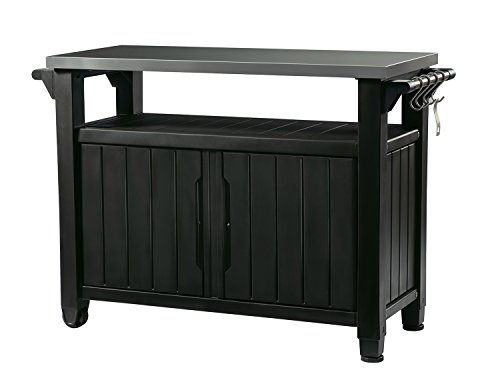
- Best hosting anchor: Keter Unity XL Portable Outdoor Table and Storage Cabinet — check price on Amazon
- Best timing system: MEATER Block 4-Probe WiFi Smart Meat Thermometer — check price on Amazon
- Best last-check tool: ThermoWorks Thermapen ONE — check price on Amazon
- Best crowd sear surface: GrillGrate Interlocking Grill Grates, 4-Panel Set — check price on Amazon
- Best batch-cooking surface: Lodge Double Play Reversible Cast Iron Grill/Griddle LDP3 — check price on Amazon
- Best safe cleaning pick: Kona Safe/Clean Bristle-Free Grill Brush — check price on Amazon
The onlyfire rotisserie and pizza combo kit — the natural centrepiece pick for entertaining — is covered in prose only, because we could not verify a clean US price sighting for its exact listing at research time. Read the full guide ↓
Disclosure: As an Amazon Associate, dailyhomedecorating.com earns from qualifying purchases. Links to Amazon on this page are affiliate links; they cost you nothing extra. Listing details such as price and availability change often, so check the current Amazon listing before you buy.
Entertaining outdoors is a performance with no intermission, and the best grill accessories for outdoor entertaining under $1500 are the ones that make the host look calm while six dishes land within ten minutes of each other. That is the lens for every pick in this guide. One honesty note first, because it shapes everything: no single home grill accessory legitimately costs anywhere near $1500, so this budget is spent the way it should be — as a complete hosting system. Prep and serving infrastructure, a temperature system that schedules the meal for you, surfaces that cook for a crowd in batches instead of in apologies, and a cleaning standard safe enough for other people’s children. The system below was assembled function by function, verified listing by listing, and deliberately left with a reserve, because a party budget that cannot cover ice, fuel and a spare probe is not finished either.
What actually goes wrong at grill parties is rarely the food. It is the timing: the chicken is ready forty minutes before the guests, the burgers go on when the corn is done, the host is trapped at the grill performing doneness guesses while everyone else holds warm drinks and makes conversation with the cook’s back. It is the traffic: one side shelf, three trays, a raw board and a cooked board negotiating the same square foot. And it is the trust: guests eat what you hand them, standing up, in the dusk, which makes the host the food-safety system — temperature discipline and a grate cleaned with something that cannot shed a metal bristle into a burger are not fussiness at a party, they are the job. In 2026 the US Consumer Product Safety Commission recalled over three million Weber wire-bristle brushes in February and over ten million Nexgrill brushes in March, after bristles were swallowed and required medical treatment. If you feed other people from your grill, that recall is addressed to you personally, and this guide’s bristle-free cleaning pick is chosen accordingly.
The entertaining system therefore spends differently from a pure cooking system. The prep cabinet doubles as a serving and drinks station, because hosting infrastructure beats cooking gadgetry when twelve people are hungry. The four-probe thermometer hub is the highest-value electronic in the guide, not because it is clever but because its time-to-finish estimates let you be a guest at your own party. Batch surfaces — the sear panels for a full grate of burgers, the cast-iron plate for onions, smash burgers and breakfast-for-dinner parties — matter more than single-portion finesse. And the centrepiece, for kettle owners, is a rotisserie: food that cooks itself theatrically while you pour drinks. It is covered in prose only, for a verification reason stated plainly in its review.
Below: quick picks, the selection method, detailed reviews written from the host’s chair — what each item does at minute thirty of a party, not just minute one — a comparison table, a how-to-choose section on planning a hosting system, the entertaining-specific mistakes that burn this budget, and a FAQ. Everything linked was verified as a real listing with a recorded price sighting during research; the one prose-only pick says why it is prose-only.
In this guide
Quick Picks: The Best Grill Accessories for Outdoor Entertaining Under $1500, Chosen for Hosts
Six linked components that run a party. The rotisserie centrepiece follows in prose in the detailed reviews.
| Hosting role | Pick | What it does at a party | Link |
|---|---|---|---|
| Prep + serving station | Keter Unity XL Portable Outdoor Table and Storage Cabinet | Prep counter before guests arrive, serving and drinks station after — one anchor, two shifts | Check on Amazon |
| Meal scheduling | MEATER Block 4-Probe WiFi Smart Meat Thermometer | Four proteins reporting finish-time estimates, so the host can leave the grill and join the party | Check on Amazon |
| Final verification | ThermoWorks Thermapen ONE | One-second checks on every piece before it is served — the host’s food-safety signature | Check on Amazon |
| Full-grate searing | GrillGrate Interlocking Grill Grates, 4-Panel Set | A whole load of burgers seared evenly with flare-ups tamed — no burnt offerings at scale | Check on Amazon |
| Batch flat-top work | Lodge Double Play Reversible Cast Iron Grill/Griddle LDP3 | Onions, smash burgers and sides in continuous batches while the grate handles the mains | Check on Amazon |
| Guest-safe cleaning | Kona Safe/Clean Bristle-Free Grill Brush | A grate cleaned with coils, not bristles — the pre-party clean you can swear by | Check on Amazon |
How These Picks Were Chosen
Every candidate was auditioned against a party timeline, not a solo cook. The questions were hosting questions: Does it help three dishes finish together? Does it free the host or chain them closer to the grill? Does it serve twelve as gracefully as four? Does it still make sense when the cook is also pouring drinks, answering the door and being asked where the bathroom is? Products that shine for a solitary weeknight — however excellent — ranked below products that survive a crowd, and that ranking is the main thing that distinguishes this variant of the system from our general and backyard builds.
Verification followed the series rule without exception: linked picks are real Amazon listings, confirmed against manufacturer information, each with a genuine price sighting for that exact product recorded during research and documented in the accompanying notes. The rotisserie and pizza combo kit — the most entertaining product in the entire category — failed the price-sighting requirement for its exact listing, so it is recommended in prose with honest instructions to check the listing yourself. A party guide that invents a price for its centrepiece would deserve the evening it gets.
Guest safety was treated as a selection criterion, not a footnote. The 2026 CPSC recalls — Weber’s wire-bristle brushes in February, Nexgrill’s in March, tens of millions of units in total across the year, with swallowed bristles and surgical removals among the reported outcomes — disqualify an entire brush design from any table but especially from a host’s. The Kona coil brush cannot shed individual bristles. Likewise, temperature picks were chosen for verifiability at serving time: a host handing food to other people’s families needs readings they can defend, which is why the reference-grade instant-read is in this system and novelty thermometers are not.
Batch capacity was the fourth filter. Entertaining punishes one-at-a-time tools. The sear panels cover a full grate; the cast-iron plate runs continuous batches of the sides and smash burgers that keep a crowd fed while mains finish; the cabinet’s counter stages trays in sequence — raw out, resting, serving — instead of stacking them in hope. Anything whose throughput collapsed at eight servings was cut, whatever its solo brilliance.
Finally, the arithmetic. At the prices sighted during research, the six linked components use well under two-thirds of the $1500 ceiling, and adding the prose-only centrepiece at its typical position still leaves a hosting reserve. That reserve is load-bearing: ice, fuel, drip pans, a second set of tongs so a guest can help, paper goods, and the replacement probe you will need the week before the big party, not the week after. Entertaining budgets fail at the margins; this one is built with margins.
Detailed Reviews: From the Host’s Chair
1. Keter Unity XL Portable Outdoor Table and Storage Cabinet — Prep Counter, Then Party Station
Who it suits: The host whose patio currently forces a choice between a prep surface and a serving surface — and who has been using the top of a cooler for both.
The Unity XL’s stainless-topped, 78-gallon resin cabinet works two shifts at a party, and that is its entire case. Shift one, before guests: it is the prep counter and pantry — trays staged, tools hung, charcoal and pans in the cabinet, the raw board at working height instead of on a chair. Shift two, as food lands: wheel it a few feet, wipe the top, and it becomes the serving station and drinks bar, with the cabinet now holding ice-adjacent supplies, spare tongs, napkins and the dessert that has not been announced. Hosts do not need more cooking gadgets nearly as much as they need this surface area that changes jobs on cue.
Pros: One purchase covers the two scarcest party resources — counter space and storage. Resin body and stainless top clean fast between shifts and shrug off spills, rain and sauce. Casters make the two-shift routine a one-person job. Enclosed storage keeps the pre-party patio looking like a venue instead of a worksite.
Honest limitation: Assembly is a real project; do it the weekend before the party, not the morning of. The footprint is substantial, and on a crowded patio the cabinet competes with guests for square footage — rehearse its two positions in advance. Resin doors and hinges are practical, not luxurious; this is infrastructure, and it should be bought as infrastructure.
Choose it if you host more than a few times a season and lack outdoor counter space. Skip it if your patio already has a built-in bar or counter — spend the share on serving ware and the reserve.
2. MEATER Block 4-Probe WiFi Smart Meat Thermometer — The Host’s Schedule
Who it suits: The host who wants to attend their own party. If your current hosting style is “standing at the grill, narrating temperatures,” this is the purchase that retires it.
Four wire-free probes go into four proteins — the brisket, the chicken, the pork, the early-arriving vegetarian’s stuffed peppers if you like — and report internal and ambient temperatures over WiFi to the app, with finish-time estimates, while the bamboo block’s standalone display shows all four channels to whoever walks past the grill. The entertaining value is not the data; it is the permission the data gives you. You can pour drinks, because the chicken will announce itself. You can start the burgers when the app says the roast has twenty minutes, because the meal is being scheduled by instruments instead of by hope. Resting, slicing and serving stop being a scramble and become the plan.
Pros: Four channels match a real party menu. Time estimates synchronize dishes — the single hardest hosting skill, automated. WiFi range survives the host’s actual movements between kitchen, patio and guests. Wire-free probes ride a rotisserie, which no wired system can do.
Honest limitation: Probes have temperature ceilings and are not searing tools; burgers and steaks belong to the instant-read. The block’s replaceable batteries drain faster under heavy WiFi use — fresh batteries before a big party is cheap insurance, and the kind of detail hosts should calendar. Four probes also assume a four-protein menu; intimate hosts may be better served by a single-probe version and a larger reserve.
Choose it if you cook multi-dish parties. Skip it if your entertaining is one protein and a salad — timing is not your bottleneck.
3. ThermoWorks Thermapen ONE — The Signature on Every Plate
Who it suits: The host serving chicken, burgers or pork to people who trust them — which is every host, and why this tool is non-negotiable in the entertaining build.
About a second per reading, reference accuracy, a backlit auto-rotating display for dusk service: the Thermapen is how a host checks the last burger and the middle chicken thigh with the same confidence as the first, in front of an audience, without slowing the line. At a party, doneness is a promise made to each guest individually, including the ones who asked for medium and the ones whose kids eat what lands in front of them. The probes in the big cuts cover the plan; the Thermapen covers every actual piece of food at the moment it leaves the grill, which is the moment that matters.
Pros: Speed keeps verification invisible — no queue of guests watching you stab food repeatedly. Accuracy ends the cut-it-open-and-see era, so servings look as good as they are cooked. Works on every dish and every cooker at the party, including the oven sides. The dusk-readable display suits real party hours.
Honest limitation: Premium-priced and single-purpose; it verifies, it does not monitor. ThermoWorks sells mainly direct and warns marketplace sellers are unauthorized; our linked listing is the one verified in research, but check the seller before buying, or order from the maker.
Choose it if you serve food to guests, full stop. Skip it only if you already own a genuinely fast, accurate instant-read.
4. GrillGrate Interlocking Grill Grates, 4-Panel Set — Twelve Burgers, Zero Casualties
Who it suits: The host whose party menu is a full grate — burger night, steak night, a dozen chicken thighs — and whose current results include two burnt, two pale and a flare-up performance at the worst moment.
The anodized aluminium panels, with their raised rails and valleys, even out the surface temperature across the whole grate and catch the drippings that cause flare-ups, converting them to flavour instead of flame. Entertaining is where both virtues cash out: evenness means the twelfth burger cooks like the first, so nobody gets the apology portion, and flare-up control means the grill does not erupt theatrically while you are holding a tray and a conversation. The sear marks are the visible dividend — food that looks catered, off a home grill, in front of witnesses.
Pros: Batch consistency — the entertaining metric that matters most. Flare-ups tamed at exactly the scale where they embarrass. Sear quality upgrades modest grills to party standard. Panels lift out for cleaning between events and move to your next grill.
Honest limitation: Measure your grill’s depth and size the panels before ordering; partial coverage is fine, wrong depth is a return. Valleys need cleaning after greasy parties or performance fades. And the panels improve a grill’s manners, not its capacity — a tiny grill still cooks a party in shifts, whatever sits on it.
Choose it if full-grate cooking is your party style. Skip it if your parties centre on one large roast — your money belongs to the rotisserie and the probes.
5. Lodge Double Play Reversible Cast Iron Grill/Griddle LDP3 — The Batch Engine
Who it suits: The host who understands that parties are won on sides and seconds: onions caramelizing beside the burgers, smash burgers in rotation, bacon for the brunch party, quesadillas for the kids while the adults’ food finishes.
The pre-seasoned cast-iron plate — flat on one side, ribbed on the other, sized to span burners or sit across the grates — adds a flat top to the party line. Its thermal mass holds temperature through batch after batch, which is the difference between a serving rhythm and a recovery pause between every round. While the grate runs the mains, the Lodge runs the accompaniments that make a grill party feel abundant: a pile of onions, peppers blistering, halloumi, flatbreads warming at the edge. Between parties it lives on the stovetop, so its cost-per-use keeps falling all winter — the rare party purchase that is also a Tuesday purchase.
Pros: Continuous batch throughput for the foods crowds actually graze on. No coating, no electronics, nothing to fail the morning of the event. Doubles indoors year-round. Modest share of the budget for an entire extra cooking method.
Honest limitation: Heavy — over nine pounds — and it wants drying and a light oiling after washing, so assign its cleanup to the host, not a helpful guest with a soaking sink. It covers part of a grill, so plan the grate layout: mains zone, Lodge zone, warming edge. On a small grill those zones get tight.
Choose it if your parties involve batches, sides or breakfast. Skip it if a dedicated griddle already anchors your setup.
6. Kona Safe/Clean Bristle-Free Grill Brush — The Pre-Party Clean You Can Swear By
Who it suits: Every host, and it should be bought before the next party rather than after the next scare.
The Kona’s head is three rows of continuous stainless coils. Dipped in water and scrubbed over the hot grate, it steam-cleans without a single individual bristle — and individual bristles are the whole story of 2026 in this category: the CPSC recalled over three million Weber wire-bristle brushes in February and over ten million Nexgrill brushes in March because detached bristles were sticking to grates and food and being swallowed, with medical treatment and surgery among the outcomes. A host’s grate feeds people who did not choose your equipment and cannot inspect it. Cleaning it with the one brush design that cannot shed is not a preference at a party; it is the duty of care, discharged for the smallest money in this guide.
Pros: Eliminates a federally recalled hazard from your guests’ food. Coil heads outlast bristle heads and work on porcelain, ceramic, steel and cast iron. The steam method fits the pre-party hour: hot grate, wet brush, sixty seconds, done. Long handle keeps the cleaner clear of the heat while the first guests are arriving.
Honest limitation: Heavy carbon takes a little more patience than a bristle scour once did — build the clean into your party prep the day before for a deep session, and use the steam pass for day-of. Inspect the coils each season and replace the brush if a coil is damaged.
Choose it if you ever cook for guests. Skip it only if your grate is already cleaned by a bristle-free coil or steam system — and retire any wire-bristle brush before your next event, whoever it belongs to.
7. Onlyfire Rotisserie and Pizza Combo Kit for 22-Inch Kettles — Prose-Only Centrepiece
Who it suits: The kettle-owning host who wants the party to have a centrepiece that cooks itself: a chicken turning slowly over coals, bronzing evenly, basting itself, while the host is anywhere else.
The stainless ring kit combines a motorized rotisserie with a pizza stone and peel arrangement for 22-inch kettles — two party formats in one ring. Rotisserie night and pizza night are the two most repeatable formats in backyard entertaining, and both share the host-friendly trait of long, unattended cooking punctuated by short, theatrical interventions. Pair the rotisserie with the wire-free probes above — cables cannot ride a spit, probes can — and the centrepiece even reports its own temperature. This pick is prose-only because we verified the product and its Amazon listing identity but did not capture a clean US price sighting for that exact listing during research; search the product name, confirm the fit for your kettle, and check the current price on the listing itself. Fit is absolute — 22-inch kettles only.
Choose it if your parties run on a 22-inch kettle. Skip it for any other grill format; buy that maker’s own rotisserie system instead, from the reserve.
Comparison Table
| Component | Hosting role | Key verified spec | Watch out for |
|---|---|---|---|
| Keter Unity XL | Prep → serving station | Stainless top; 78 gal storage per maker; casters | Assemble before party week; footprint |
| MEATER Block | Meal scheduling | 4 wire-free probes; WiFi; finish-time estimates | Fresh batteries before big events |
| Thermapen ONE | Serving verification | ~1-second readings; backlit display | Check seller; maker sells mainly direct |
| GrillGrate set | Full-grate searing | Anodized aluminium rails/valleys | Size panels to grill depth |
| Lodge LDP3 | Batch flat-top | 16.75 x 9.5 in cast iron, reversible | Host-only cleanup; dry storage |
| Kona Safe/Clean | Guest-safe cleaning | Bristle-free coil head; steam method | Deep-clean day before, steam day-of |
| Onlyfire combo (prose) | Centrepiece | Rotisserie + pizza ring for 22-in kettles | Fit absolute; check listing price |
How to Choose Entertaining Accessories: Plan the Party, Then the Products
Write the party timeline first. Pick your biggest typical event and schedule it backwards from serving: what rests, what finishes last, what can hold. The accessories that survive this exercise are the ones that move a dish from the “hope” column to the “scheduled” column — monitoring with finish estimates, holding space, batch surfaces. Anything that does not move a dish does not make the list.
Count servings, then double the traffic. A grate that feeds six feeds six; a party of six generates twelve people’s worth of trips, trays and questions. Buy infrastructure for the traffic, not the headcount: counter space, a second set of tongs from the reserve, room to set down a hot pan without a negotiation.
Separate the roles ruthlessly. One surface preps, one serves, one cooks. The cabinet in this system earns its place because it can be the first two in sequence. Systems fail at parties when one square foot is asked to be all three at once — that is where raw meets cooked, and where hosts lose their calm and occasionally their food-safety standards.
Make safety boring and automatic. Bristle-free cleaning, verified temperatures, a raw-to-cooked tool discipline, handwashing access — build them into the setup so they happen without willpower at minute forty of the party. After the 2026 wire-brush recalls, “we have always used this brush” is not a standard; the coil brush is cheap precisely so that no host has an excuse.
Rehearse the layout once, at low stakes. A Tuesday family cook in the party configuration exposes the missing landing zone, the cabinet door that swings into the grill, the probe block out of WiFi comfort. Fix it Tuesday and the Saturday party inherits a tested system instead of a debut.
Protect the reserve like it is a pick. Ice, fuel, batteries, a spare set of tongs, drip pans, paper goods: the reserve is what the last hour of every party is actually made of. A system that spent its final dollar on hardware will borrow from next season’s budget at the worst exchange rate — mid-party.
Common Mistakes Hosts Make at This Budget
Buying cooking toys instead of hosting infrastructure. The third specialty gadget loses to the first real serving surface every single party. Guests remember flow and food temperature; they do not remember that the host owned a specialty gadget.
Timing by intuition with a crowd watching. One underdone chicken in front of twelve people rewrites your reputation for a season. Instruments with finish estimates exist precisely because hosts are distracted — by hosting.
Serving without verifying. The probe was in one chicken; you served four. The instant-read pass over every piece is thirty seconds that a host cannot afford to skip and guests cannot afford for you to skip either.
Keeping the wire-bristle brush for “one more season.” The CPSC spent 2026 recalling those brushes by the tens of millions — Weber in February, Nexgrill in March — after swallowed bristles and surgeries. At a party, the person who swallows one is your guest. There is no budget line that outranks replacing it.
Letting the centrepiece upstage the system. A rotisserie is a delight; a rotisserie bought instead of monitoring, surfaces and serving space is a photo opportunity surrounded by cold sides. Centrepieces come last in the buying order, however the heart votes.
No plan for dark. Parties drift past sunset. Backlit thermometer displays, a lit serving station and a visible path from grill to table belong in the plan — funded, again, by the reserve that gadget-first budgets spend away.
Final Recommendation
Host with a system: the Keter cabinet prepping in the afternoon and serving at night, the MEATER Block scheduling four proteins while you pour the first round, GrillGrates turning a full grate of burgers into a uniform batch, the Lodge plate running onions and seconds without pause, the Thermapen signing off every piece at the pass, and a bristle-free Kona guaranteeing that the grate your guests’ food touched was cleaned by the one design regulators never had to recall. Add the kettle rotisserie when the basics are boringly reliable. That is what $1500 buys a host: not more cooking — more party, with the cooking quietly handled.
Frequently Asked Questions
What is the single best entertaining purchase in this system? The four-probe thermometer hub, because timing is the host’s scarcest resource. Its finish-time estimates are what let you leave the grill, and leaving the grill is what makes it a party.
How much of the $1500 do the linked picks actually use? Well under two-thirds, at the prices sighted during research — with the prose-only rotisserie still leaving a hosting reserve for fuel, ice, batteries and serving supplies. Prices move; check each listing before your event, not during it.
Why is the rotisserie not linked? We verified the product and its Amazon listing identity but could not capture a clean US price sighting for that exact listing during research. Rather than guess, we recommend it in prose and ask you to check the current listing — the same standard every pick in this guide was held to.
Is a wire-bristle brush really a party risk? Yes, and a documented one: in 2026 the CPSC recalled over three million Weber wire brushes and over ten million Nexgrill brushes after bristles detached, entered food and were swallowed, with medical treatment and surgery reported. Guests cannot inspect your grate; clean it with a bristle-free design.
Do I need both the probe hub and the instant-read for a party? They do different jobs at a party: the hub schedules the big items while you host; the instant-read verifies every individual piece as it is served. Parties are exactly the setting where both jobs are running at once.
What should I buy first if the party is next month? In order: the bristle-free brush, the Thermapen, the probe hub, the cabinet, the surfaces, the centrepiece. That sequence fixes safety, then timing, then flow — the order in which parties actually fail.
Three Party Formats, Run on This System
Systems earn their keep inside actual events, so here is the same equipment running the three formats backyard hosts repeat most. Notice what does not appear in any of them: a trip back to the house for a forgotten essential, a doneness argument, a host missing their own party.
Format one: burger night for twelve. The cabinet preps in the afternoon — patties portioned on trays in the cabinet’s shade, onions sliced, cheese staged — then wheels aside as the serving station. The Lodge takes the first shift: onions caramelizing in batches, held warm at its edge. The GrillGrates take the main shift, twelve burgers across two loads, every one seared on the rails with no flare-up theatre, each load verified with the Thermapen as it comes off — thirty seconds a load, no cut-open casualties. The probe hub sits this format out, correctly: burger night is an instant-read event, and a system that knows which of its tools to leave in the cabinet is a system that understands itself. Total host time trapped at the grill: the cooking itself, and nothing else.
Format two: the long Sunday roast. A brisket or a pair of chickens, guests arriving across an afternoon, no fixed serving time announced. This is the probe hub’s home fixture: four channels in the food from the start, finish estimates updating as the cook develops, the host circulating with a drink because the meat is being watched by something that does not get distracted. The cabinet works its double shift. The rotisserie — for kettle hosts who took the prose-only pick — turns the chicken version of this format into theatre that requires nothing from the host but carving. The Thermapen signs off each slice at the board. The party’s defining sentence, “eat whenever it’s ready,” stops being an apology and becomes the design.
Format three: pizza night. For kettle owners, the prose-only combo kit’s second personality: the ring and stone over a full chimney of coals, dough stretched at the cabinet, guests assembling their own at the serving station — the one format where the guests do the hosting labour voluntarily and call it the fun part. The Lodge handles the overflow work — vegetables pre-charred, a flatbread batch for the impatient — and the instant-read, surprisingly, earns its place checking the occasional chicken skewer for the guest who does not do pizza. The lesson across all three formats is the system’s real thesis: the accessories divide the labour so the host can be a person at the party, and every format fails without a different one of them — which is what makes it a system rather than a list.
The Host’s Pre-Party Checklist (Built From This System)
The day before: deep-clean the grate with the bristle-free brush on a cool grate, then inspect the coils. Charge or replace the probe block’s batteries — fresh power before a big event is the cheapest insurance in hosting. Confirm fuel: charcoal in the cabinet, or the gas tank’s weight checked by hand, with the reserve’s spare plan known. Wash and dry the Lodge plate, oil it lightly, and stage it where the cooking plan wants it.
The morning of: set the station — cabinet in its prep position, tools hung, trays stacked in cooking order: raw, resting, serving. Walk the layout once with empty hands and once carrying a tray; fix whatever the tray walk exposes. Check the thermometer pair against each other in a glass of ice water if you want ceremony-level confidence; the flagship tools in this system hold their calibration, but hosts sleep better for having looked.
An hour before guests: light the fire or preheat, probes in the long cooks, the hub’s estimates noted and the serving time worked backwards from them — not announced until the instruments agree it is real. Steam-pass the grate with the wet coil brush. Set the cabinet’s second shift: the serving surface wiped, the drinks side stocked, so the mid-party transformation is a wheel and a wipe rather than a rebuild. Then pour yourself the first drink. A system at this tier exists so that the host’s party starts when the guests’ does — the checklist is how that promise is kept.
Holding, Resting and Serving: The Half of Entertaining Nobody Sells
Between the grill and the guest stands the least glamorous and most decisive territory in entertaining: the minutes when cooked food waits. Accessories marketing ignores it because resting meat is not a product; hosts cannot, because it is where a well-cooked meal becomes a well-served one — or cools into a story about what the grill did right and the evening did wrong. The system in this guide was quietly designed around it, and it is worth making the design explicit.
Resting is a station, not a surface. Large cuts need real rest — loosely tented, on a board with a juice groove, somewhere that is neither the raw zone nor the serving traffic. In this system that somewhere is the cabinet’s top in its second shift, at the end away from the drinks, with the probe still reporting as the temperature coasts. The host who plans the rest into the layout never performs the desperate alternative: slicing too early on the raw board while three guests hold plates. If your parties feature one big centrepiece, the resting plan is the plan; everything else is scheduling around it.
Holding the early finishers. Dishes refuse synchronization at the margins: the corn is early, the chicken is late, the first burgers must wait for the second load. The tools are already in the system — the Lodge plate at the grill’s cool edge becomes a warming surface with thermal mass to lend, the cabinet stages finished trays under cover rather than under flies, and the probe hub’s estimates let you deliberately sequence so that the dish that holds best is the one asked to hold. What the host must supply is the decision, made in advance: know each dish’s holding tolerance before the party, and let the fragile foods finish last by design rather than by luck.
Serving temperature is a promise kept twice. Food verified hot at the grill can still arrive lukewarm if the serving system is an afterthought — cold plates, a long walk, a queue at the board. Warm the serving platters while the grill rests; it costs nothing but foresight. Serve in smaller batches from the holding zone rather than one heroic pile that cools from the outside in. And keep the Thermapen in the host’s pocket at the pass: the final verification, done visibly and without fuss, is the gesture guests remember as competence — the cook who checks is the cook they trust, and trust is the entire currency of being fed in someone’s backyard.
Scaling Down: The Same System on a Weeknight
A hosting system that only works at full deployment will be resented by the household that cooks on Tuesdays, so it is worth noting how gracefully this one shrinks. The cabinet stays where it lives — no setup, because infrastructure that needs setting up does not get used. The hub stays in its cabinet spot; for a two-person weeknight cook, one probe comes out, or none does, and the Thermapen runs the whole small show exactly as it does the last pass of a party. The Lodge, which lives half its life on the stove anyway, treats a Tuesday smash-burger night as a home game. The panels never leave the grill. The brush’s sixty-second hot pass is the same at two servings as at twelve. Nothing in the system needs an audience to justify its existence, and that is the final test this guide applies to entertaining gear generally: buy the party version only of things you would happily use alone. The hosts who love their equipment in February are the ones still hosting with it in August — and their guests can tell the difference without knowing why.
A Note on Gifts, Registries and Borrowed Gear
Entertaining equipment has a social afterlife worth one paragraph. Hosts receive grill gifts constantly, and the well-meant ones cluster exactly where this system is already strong — tool sets, novelty thermometers, and, stubbornly, wire-bristle brushes in gift packaging. The gracious policy is also the safe one: thank warmly, integrate what genuinely fills a role, and quietly retire what duplicates or endangers, because a recalled-design brush does not become acceptable by arriving with a bow. If you are the giver rather than the host, this guide doubles as a shopping list with the guesswork removed: the bristle-free brush and the instant-read are the two gifts no equipped host resents receiving twice — one is a consumable-adjacent safety item, the other is the spare that lives in the kitchen while its twin lives at the grill. And if your parties run on borrowed gear — a neighbour’s kettle, a friend’s extra table — the system’s portability is its courtesy: everything except the cabinet travels in a car boot, works on someone else’s patio, and comes home the same night, which is how informal lending libraries of good equipment form between households that host in rotation.
One closing observation from every host who has run a system like this for a full season: the compliments change. Guests stop praising individual dishes and start praising the evening — how relaxed it felt, how everything arrived together, how the cook was somehow always in the conversation. That is the sound of infrastructure working. Nobody thanks a prep cabinet or a thermometer hub out loud, and that invisibility is precisely the return on this tier of spending: the equipment disappears, and the party is what remains.


