Where to buy
Check the latest price, availability and delivery on Amazon. Orders are placed on Amazon. We may earn a commission from qualifying purchases.
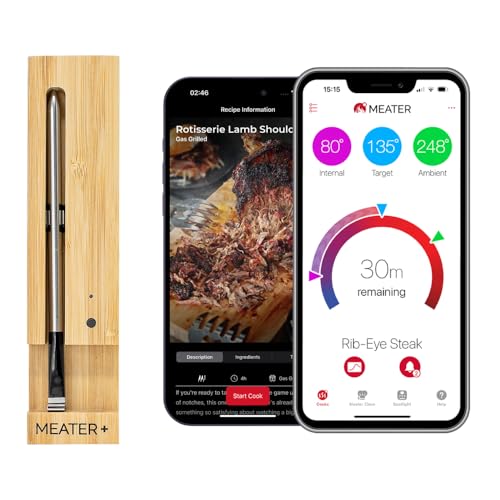
- Best apartment pick overall: MEATER Plus Smart Wireless Meat Thermometer — Check on Amazon
- Best instant verification: ThermoWorks Thermapen ONE Instant-Read Thermometer — Check on Amazon
- Best for shared balcony cookouts: TempPro TP829 Wireless Meat Thermometer with 4 Probes — Check on Amazon
- Best safe cleaning pick: GRILLART Grill Brush and Scraper, Bristle Free, 18 Inch — Check on Amazon
- Only where charcoal is explicitly allowed: Weber Rapidfire Chimney Starter 7416 — Check on Amazon
- Prose-only in this guide: onlyfire Rotisserie and Pizza Combo Kit for 22-Inch Kettle Grills, and the Keter Unity XL prep cart — both discussed honestly below as poor fits for most balconies.
Read the full guide ↓
Disclosure: As an Amazon Associate, dailyhomedecorating.com earns from qualifying purchases. Links to Amazon on this page are affiliate links; they cost you nothing extra. Listing details such as price and availability change often, so check the current Amazon listing before you buy.
The best grill accessories for apartments under $500 are not a shrunk copy of a backyard kit, and this guide refuses to pretend otherwise. Apartment grilling runs under three constraints a house never imposes: a lease or building rulebook that may ban open flame, charcoal, or grilling on the balcony entirely; a cooking footprint measured in single square feet, where every accessory must earn its storage place indoors afterwards; and neighbours close enough that smoke management and quick, controlled cooks are a courtesy as well as a preference. So read the $500 in the title the way this guide uses it — as a total budget for a compact, storable, rule-compliant kit — and read every pick below through those three filters first. Anything that failed them was cut, however good it is in a garden.
Start with the rulebook, because it decides your grill before accessories matter. Many apartment buildings and local fire codes prohibit charcoal and open-flame grills on balconies, and some prohibit balcony grilling altogether, pushing residents to a shared courtyard grill or an electric grill indoors-adjacent setup. We cannot know your building’s rules, and no accessory purchase fixes a lease violation — so this guide is written for the common compliant scenarios: an electric or small gas grill on a balcony where grilling is allowed, or a shared grill in a communal area you walk to with a carry kit. Temperature tools, safe cleaning and smart carrying gear dominate, because they are universal across every scenario. The one charcoal-specific pick is included only for readers whose buildings explicitly allow charcoal in a designated area, and it is labelled that way every time it appears. If your building bans grilling outright, the honest advice is to spend this budget on the thermometer pair and the brush for the shared grill your building does provide, and bank the rest.
What does the apartment version of a $500 kit look like when it is built honestly? Two thermometer systems that live in a kitchen drawer, not a shed: a wire-free probe that lets you close the lid and step back inside — balcony doors and smoke alarms being what they are — and a fast instant-read to verify doneness in seconds at the end. A four-probe monitor earns its place for the specific apartment ritual of the shared-grill cookout, where three households’ food shares one grate and nobody’s chicken can hide. A bristle-free brush, because a shared or balcony grate deserves the same safety standard as any other, and because wire bristles near neighbours’ food is a risk with an audience. Everything linked below was sighted during research at prices that together sit well under the total ceiling — apartment kits should come in under budget, because the constraint was never money; it was space, rules and smoke. Two popular backyard upgrades are covered as prose-only with clear skip reasoning: a kettle rotisserie ring that assumes a 22-inch charcoal kettle almost no balcony can host, and a full-size prep cart that is simply too wide for the average balcony door swing.
In this guide
Quick picks: the best grill accessories for apartments under $500 at a glance
| Pick | Best for | Apartment logic | Buy |
|---|---|---|---|
| MEATER Plus Smart Wireless Meat Thermometer | Closed-lid cooks monitored from indoors | One small probe + charger block; no cables across the balcony | Check on Amazon |
| ThermoWorks Thermapen ONE | Fast, certain doneness checks | Pocket-size; one-second reads end guesswork and lid-open time | Check on Amazon |
| TempPro TP829, 4 Probes | Shared-grill cookouts, mixed loads | Four channels on one receiver; no app or account needed | Check on Amazon |
| GRILLART Grill Brush and Scraper, Bristle Free, 18 Inch | Safe cleaning of your grill or the shared grill | Bristle-free — no shed-wire risk near anyone’s food | Check on Amazon |
| Weber Rapidfire Chimney Starter 7416 | Designated charcoal areas only | Fluid-free lighting = less smoke and no fluid storage indoors | Check on Amazon |
| onlyfire Rotisserie and Pizza Combo Kit (22-inch kettle) | Almost no apartments — see review | Assumes a large charcoal kettle; prose-only reality check | Prose-only — see review |
Building a kit for a courtyard or terrace rather than a balcony? The priorities shift back toward prep space and storage — see Best Grill Accessories For Backyards Under $500 for the unrestricted version of this budget, and Best Grill Accessories For Small Patios Under $500 for the middle ground.
How we chose these picks
Every candidate was passed through the apartment filters before its merits were even considered. Filter one: legality and lease reality. Anything requiring open flame beyond the grill itself, or fuel storage that typical leases frown on, was demoted or caveated. Filter two: the storage test. If a pick cannot live in a kitchen drawer, a slim cupboard or a single carry tote, it does not belong in an apartment kit — which is why the excellent full-size prep cart from our base guide appears here only as a prose-only discussion of when to skip it. Filter three: smoke and time. Apartment cooks are short cooks, ideally — gear that shortens lid-open time, verifies doneness instantly and monitors from indoors reduces both smoke and neighbour friction. Only after those filters did normal criteria apply: verified product identity, a price sighting for that exact product during research, published specifications we could check, and a recall screen before inclusion.
Two deliberate calls deserve explanation. First, the thermometer count is high for a small-space guide — three systems across six picks — because temperature is the apartment griller’s whole game. You cannot run a big offset smoker to forgive mistakes, you often cannot leave food resting on a warm grate while you check it twice, and on a shared grill your food competes for space and heat zones. Certainty, delivered fast, is the accessory category that pays. Second, we kept the chimney starter in the guide despite many buildings banning charcoal, because a large minority of apartment dwellers grill at designated charcoal stations in courtyards and parks adjoining their buildings. For them, fluid-free lighting matters doubly: no lighter-fluid bottle stored in a small flat, and a cleaner, shorter smoke plume. It is labelled, caveated and skippable — gas and electric readers should route its budget share to a spare brush and probe care, as the final recommendation explains.
Safety screening matched the base guide: bristle-free cleaning only, because the wire-bristle ingestion hazard does not shrink with your square footage, and a recall check on every pick before it earned a link. Where verification of a current price for an exact listing failed — the kettle rotisserie kit — the pick stayed prose-only with the reason stated in its review, rather than inheriting a link on reputation.
Detailed reviews
1. MEATER Plus Smart Wireless Meat Thermometer — best apartment pick overall
Who it suits: Balcony grillers cooking whole chickens, thick steaks, salmon fillets or a small roast on an electric or gas grill, who want to monitor from the kitchen instead of hovering over a smoky railing.
The MEATER Plus is a single wire-free probe with a dual personality: the tip reads the food’s internal temperature (maker limit 212°F), the ceramic end reads the grill’s ambient temperature (to 527°F), and its bamboo charging block repeats the Bluetooth signal for a listed range of up to 165 feet — through a balcony door and into your kitchen, in typical layouts. The app estimates time-to-target from the cook’s curve, which for apartment cooking is more than a convenience: it lets you time the indoor sides to finish with the grill items, in a kitchen where everything happens within six feet of everything else. Storage is the hidden win. Probe plus block occupy less drawer space than a serving spoon, charge where they sit, and present no cables to wash, route or melt — a real consideration when your grill’s lid is small and its grate crowded.
Pros: Nothing crosses the balcony but you. Dual food-and-ambient sensing catches a small grill’s notorious hot spots and dying elements before they ruin dinner. The guided app shortens the learning curve for new grillers, who are over-represented in apartments. Footprint is effectively zero between cooks.
Honest limitation: One probe means one item gets certainty and the rest get the Thermapen treatment at the end — plan the menu accordingly. The ambient ceiling means it comes out before any aggressive direct searing. And Bluetooth through concrete and steel varies by building; the repeater block helps, but test your layout on a low-stakes cook first.
Choose it if you cook closed-lid items and want indoor monitoring. Skip it if your grilling is exclusively fast and thin — burgers and skewers — where the instant-read below is the whole answer.
Check on Amazon — check price on Amazon; sighted during research in the sensible premium band for wire-free probes.
2. ThermoWorks Thermapen ONE — the one-second truth-teller
Who it suits: Every apartment griller, but especially users of shared courtyard grills, where your window on the grate is short and other people’s food is not your problem to overcook.
The Thermapen ONE is ThermoWorks’ flagship instant-read: a folding-probe thermometer specified to read in one second with accuracy of ±0.5°F, an auto-rotating backlit display, and an IP67 waterproof body. Those specifications translate into apartment virtues precisely. One second per check means the lid is open for moments, not minutes — less smoke into your flat and your neighbour’s, less heat lost from a small grill that recovers slowly. Certified-grade accuracy ends the poke-and-pray cycle on chicken, the protein apartment grillers most often serve and most often ruin in both directions. The rotating display reads from either hand at any angle over a railing, and the whole tool rinses under a tap and goes back in the drawer.
Pros: Speed and accuracy are the category’s benchmark, full stop. Battery life is measured in thousands of hours on a common AAA cell. It serves the indoor kitchen identically — roasts, bread, reheated leftovers — so its cost-per-use in a small home beats any single-purpose gadget. The waterproof rating shrugs off balcony rain and sink splashes alike.
Honest limitation: It is a premium price for a thermometer, and third-party Amazon availability can price above the maker’s direct store — compare before you buy, and note this listing is sold via marketplace sellers rather than Amazon itself in the sightings we found. It also monitors nothing continuously: it answers questions, it does not watch the cook, which is why it pairs with, rather than replaces, a leave-in probe.
Choose it if you want one thermometer for grill and kitchen that you will keep for years. Skip it if your budget must stretch across many categories at once — the multi-probe system below covers more food per dollar, and a basic instant-read habit can be added later.
Check on Amazon — check price on Amazon, and compare the colour variants, which are separate listings.
3. TempPro TP829 Wireless Meat Thermometer with 4 Probes — the shared-grill diplomat
Who it suits: Anyone whose apartment grilling happens at a communal grill or a friend-filled balcony session, where several foods — and several owners’ expectations — share one grate.
The TP829 (TempPro, previously ThermoPro) pairs four colour-coded wired probes with a transmitter and a dedicated handheld receiver, listed to 1,000 feet line-of-sight, with no app and no account. On a shared grill this architecture is diplomacy in hardware form: your chicken on red, the neighbour’s steak on blue, a grate-temperature probe on yellow, and every owner watches their own channel on one screen instead of lifting the lid to poke at intervals. The receiver works with greasy hands, survives being passed around, and makes alarms a public event rather than a private phone buzz nobody acts on. Back home it stores as one transmitter, one receiver and a coil of probes in a single drawer slot.
Pros: Four channels at this price band remains unmatched value. No pairing, no Wi-Fi, no phone dependency — ideal for courtyard grills far from your router. Preset and custom alarms suit mixed-experience groups. Colour-coding ends cable-tracing arguments.
Honest limitation: The wired probes are the format’s tax: cables must be routed carefully on small grills, kept from lid pinch points, and stored loosely coiled to survive. Headline range is a line-of-sight figure that concrete buildings will cut down. If your grilling is solo and single-item, this is more system than you need.
Choose it if shared grills or group sessions are your reality. Skip it if you grill alone on a small balcony — the MEATER and Thermapen pairing covers you with less to store.
Check on Amazon — check price on Amazon; sighted during research at a price that makes it the kit’s value anchor.
4. GRILLART Grill Brush and Scraper, Bristle Free, 18 Inch — clean grill, clear conscience
Who it suits: Every apartment griller — and doubly, anyone who cleans a shared grill, where your maintenance habits affect people beyond your household.
This GRILLART brush replaces the traditional wire-bristle head with a bristle-free woven stainless cleaning surface and an integrated scraper, on an 18-inch handle. The safety reasoning is identical to our base guide and worth repeating in the apartment context: wire bristles can fatigue and shed onto grates, transfer to food, and cause serious internal injury — a documented hazard that safety regulators have warned about for years. On a shared courtyard grill, a shed bristle is not only your risk; it is the next family’s. A bristle-free head cannot shed what it does not have, and it is safe across porcelain, cast-iron and steel grates, so one brush serves whatever grill your building provides. The steam method — dip, apply to a hot grate — keeps cleaning chemical-free, a genuine plus when the grill sits metres from open windows.
Pros: Zero bristle-shed risk, for your food and everyone else’s. Works on any grate material you will meet in apartment life. The scraper edge handles the carbon ridge that pads alone miss. Slim enough to store hanging inside a cupboard door.
Honest limitation: It trades some scouring aggression for safety; a neglected shared grill may need a soak-and-repeat session rather than one pass. The head is a consumable — inspect the weave regularly and replace the brush when it loosens, which at this price band is a painless habit.
Choose it if you clean any grill at all — and if a wire-bristle brush currently lives in your kitchen, replacing it is the cheapest safety fix in this guide. Skip it only if you already own a bristle-free brush in good condition.
Check on Amazon — check price on Amazon; a value-band pick that outperforms its line in the budget.
5. Weber Rapidfire Chimney Starter 7416 — only where charcoal is explicitly allowed
Who it suits: Apartment dwellers whose buildings provide a designated charcoal area — a courtyard station, a rooftop pad where permitted, a ground-floor patio — and nobody whose lease or local code says otherwise. Read your rules first; this pick is conditional by design.
Where charcoal is allowed, the Rapidfire (model 7416, aluminized steel) is the cleanest way to light it: a chimney that starts a full load of briquettes with newspaper or starter cubes and no lighter fluid at all. For apartment life the fluid-free part matters twice over. There is no solvent bottle to store in a small flat, and there is no fluid flare or lingering chemical smell drifting across a courtyard of open windows. The cone-shaped internal grate lights the load quickly and evenly, and the dual-handle design — main handle with heat shield plus an assist handle — gives controlled pouring at a shared station where footing and space may be improvised.
Pros: Eliminates lighter fluid from storage and from flavour. Fast, even lighting shortens the smoky phase of a charcoal cook — a neighbour-relations feature as much as a cooking one. The design is the long-running category benchmark, built to survive years of heat cycles.
Honest limitation: It is dead weight — and a lease risk — anywhere charcoal is banned, which is many apartment buildings. It is also a seriously hot object for twenty minutes per cook and needs a stone, concrete or steel parking spot at the station; never a wooden deck or a plastic table. Store it dry or expect surface rust.
Choose it if your building explicitly allows charcoal somewhere you can use it. Skip it if you grill on gas or electric — most apartment readers should, and your budget share is better spent in the final recommendation’s redistribution.
Check on Amazon — check price on Amazon; among the lowest-cost items in the kit when it applies at all.
6. onlyfire Rotisserie and Pizza Combo Kit — the honest skip for most apartments (prose-only)
Who it suits: Almost nobody in this guide’s audience — and we include it to explain why, because it tops generic accessory lists that ignore where you live.
The kit itself is genuinely good hardware: a stainless ring (maker model F-BRK6055-SS1) that converts a 22-inch kettle into a rotisserie with an electric spit, or into a pizza oven using the included 15-inch stone and peel. The apartment problem is everything around the hardware. It presupposes a 22-inch charcoal kettle, which most balconies cannot legally or practically host; a mains outlet at the grill for the motor; storage for a wide steel ring in a home where the storage test already eliminated a prep cart; and charcoal smoke volumes that test neighbour relations on a good day. If you are the exception — a ground-floor unit with a private garden terrace and a kettle your lease blesses — then the guidance from our base guide applies in full: verify the exact model listing on Amazon yourself, because we could not sight a current, reliable US price for this exact listing during research, which is why it carries no buy link here either.
Pros (for the rare fitting reader): Two new cooking methods from one ring; self-basting rotisserie results; real high-heat pizza from a kettle. Honest limitation: Fit, fuel, power, storage and smoke all argue against it in typical apartment conditions, and its price could not be verified for linking.
Choose it if your “apartment” comes with a private terrace garden and a permitted kettle. Skip it if you hesitated at any item in that sentence — the thermometer trio above will improve your actual cooking far more.
No buy link for this pick — see the verification note above.
A parallel word on the Keter Unity XL prep cart from our base guide: at 52.7 inches wide it is an excellent anchor for a patio and a poor guest on a balcony, where it typically blocks the door swing or the railing you cook against. Apartment staging is better solved with a tray-based system — carry everything out in one tray, work from the tray, carry everything back — and a small folding side table if your balcony allows one. Spend the cart’s share on temperature certainty instead, as this kit does.
Comparison table
| Pick | Job in the kit | Storage footprint | Key verified spec | Watch out for |
|---|---|---|---|---|
| MEATER Plus | Wire-free monitoring from indoors | One drawer slot | 165 ft listed range via repeater block; internal to 212°F, ambient to 527°F | One probe; building materials cut range |
| Thermapen ONE | Instant doneness verification | Pocket / drawer | 1-second read; ±0.5°F accuracy; IP67 | Premium price; marketplace seller pricing varies |
| TempPro TP829 | Multi-food / shared-grill monitoring | One drawer slot | 4 colour-coded probes; RF receiver; 1,000 ft listed range | Cable routing on small grills |
| GRILLART Bristle Free 18in | Safe cleaning, any grate | Hangs in a cupboard | Bristle-free woven head + scraper; 18 in handle | Consumable head; inspect weave |
| Weber Rapidfire 7416 | Fluid-free charcoal lighting (where allowed) | Cupboard / station bin | Aluminized steel; cone grate; dual handles | Only where charcoal is permitted |
| onlyfire Combo Kit | Rotisserie + pizza (rare fit) | Large ring — fails most storage tests | Model F-BRK6055-SS1; 15 in stone + peel | Prose-only; kettle, power, smoke assumptions |
For the comfort side of a balcony budget — light and warmth for the evenings you eat out there — see Best Outdoor String Lights For Apartments Under $500 and Best Patio Heater For Apartments Under $500, both written for the same rule-conscious audience.
How to choose: the apartment decision order
Step one is legal, not culinary. Read your lease and your building’s grill policy, and check local balcony-grilling rules. Establish which scenario you are in — balcony gas or electric, designated charcoal area, shared grill only, or no grilling — before spending anything. Every later step depends on it.
Step two: fund certainty. Whichever scenario applies, the Thermapen ONE and a leave-in system convert guesswork into numbers. Solo balcony cooks: MEATER Plus plus Thermapen. Shared-grill regulars: TP829 plus Thermapen. Buy the pair that matches your venue first.
Step three: fund safety and cleanliness. The bristle-free brush is non-negotiable kit, and on a shared grill it is also good citizenship. Add a simple carry system — a sturdy tray or tote — so the kit travels as one object.
Step four: spend what is left on your scenario, not on a catalogue. Charcoal-area readers add the chimney. Everyone else should resist filling the budget with objects that fail the storage test; money unspent is a legitimate outcome of a $500 ceiling, and the headroom covers replacement probes, brush renewals and the occasional splurge ingredient instead.
Common mistakes
Buying backyard gear for a balcony. Full-size carts, kettle rings and offset-smoker accessories fail on rules, space or both. If a pick cannot pass your door and your lease, it is not a deal at any price.
Assuming the rules from your last building. Grill policies vary by building, city and insurer. The five minutes spent reading your current lease is the highest-value step in this entire guide.
Storing lighter fluid indoors out of habit. If you light charcoal at a designated area, the chimney removes the fluid bottle from your flat entirely — safer storage and better-tasting food in one move.
Cleaning a shared grill with a wire-bristle brush. Your shed bristle can end up in a stranger’s dinner. Bristle-free is the only defensible choice on communal equipment.
Hovering with the lid open. Small grills lose heat fast and smoke spreads sideways into windows. Monitor from indoors where you can, and verify with a one-second instant-read instead of repeated lid lifts.
Storing probes loose in a junk drawer. Kinked cables and bent tips are how apartment thermometer kits die. Keep the MEATER in its block and coil TP829 cables loosely in one pouch.
Final recommendation
For the typical apartment reader — balcony gas or electric grill, solo or paired cooking — the kit is the MEATER Plus and the Thermapen ONE as your certainty pair, the GRILLART brush as your safety baseline, and nothing else until your habits prove a gap. Add the TP829 the month you start cooking for friends at a shared grill; add the chimney only if a designated charcoal area enters your life. The linked picks together land far under the $500 ceiling at the prices sighted in research, and that is the correct shape for this variant: apartments tax space and rules, not budget. Put the headroom toward quality ingredients and the small consumables that keep the kit alive. Readers whose homes turn out to have more outdoor room than the word apartment suggests should cross-shop Best Grill Accessories Under $500 for the full base kit, prep cart included.
The apartment carry kit: packing the system for a shared grill
Most apartment grilling, looked at honestly, is a transport problem wearing a cooking costume. The grill lives somewhere you do not — a courtyard, a rooftop deck, a ground-floor common area — and everything this guide recommends must travel there in one trip, work without infrastructure, and travel back clean. So it is worth specifying the carry kit as a system, because the picks above were chosen partly for how they pack. The whole linked kit, minus the conditional chimney, fits in a single sturdy tote or a large reusable grocery bag with room for ingredients: the MEATER sits charged in its bamboo block, the Thermapen rides in the same small pouch as the TP829’s coiled probes, the transmitter and receiver nest beside them, and the brush travels head-down in a plastic sleeve or wrapped in the towel that will serve at the grill. One bag, one tray of food, one trip. If your kit needs two trips, it will eventually be left behind, and a thermometer in a drawer at home monitors nothing.
Pack in reverse order of use, so the bag unpacks itself at the grill. The brush goes in last and comes out first — a shared grill gets its bristle-free clean before your food touches it, both for hygiene and because the previous user’s residue is a variable you can delete in ninety seconds. Thermometers next: probes into food as it goes on, receiver somewhere visible that is not the grill’s hot side shelf. The Thermapen stays in a pocket, not the bag, because its entire value is being present at the moment of doubt — the final five minutes of an apartment cook, when three items finish at once on a small grate, is a Thermapen solo performed at one-second intervals. Pack a small spray bottle of water for the steam-clean, a roll of paper towels, and foil for resting; these consumables weigh nothing and their absence is felt immediately. The chimney, where charcoal is allowed, travels separately by its handle and parks on the station’s concrete or steel, never on a communal wooden bench — shared spaces remember scorch marks longer than they remember good brisket.
Shared-grill etiquette is an accessory too, and it is free. Book or claim the grill in whatever way your building expects, and leave a time buffer rather than a hard stop, because a shared grill running forty minutes late is a neighbour dispute with a menu. Clean before and after — the bristle-free brush makes the after-clean fast enough that skipping it becomes indefensible — and leave the grate better than you found it, since the next user’s first impression of the commons is your last act there. Keep your thermometer probes and tools visibly yours and gathered; communal areas dissolve small objects. And manage smoke like a citizen: the fluid-free chimney lighting, the lid discipline the thermometers enable, and choosing fattier, smokier cooks for the courtyard rather than the balcony are not just techniques, they are the social licence that keeps the building’s grill policy permissive for everyone, including you.
Back home, the kit’s apartment virtues complete themselves in the reset. Everything returns to one drawer or one shelf of one cupboard — the storage test from the selection criteria, now operating as a daily habit. Probes get wiped and coiled loosely the same evening, because dried sauce on a cable is tomorrow’s hygiene problem and kinked storage is next season’s dead probe. The MEATER goes back into its block so it is charged for a weeknight whim, not discovered empty before a Saturday cookout. The brush, rinsed and dried, hangs inside the cupboard door where it cannot shed anything onto anything — a non-issue for a bristle-free head, but a good posture toward all grill tools. Five minutes of reset is what makes the next session start at the grill instead of at the shops, and in apartment life, where every cook is already a small expedition, that difference decides whether grilling becomes a habit or remains an event.
It is also worth naming what this kit deliberately does not try to do, because apartment readers are marketed at relentlessly. It does not try to replicate a backyard: no smoker the size of a wardrobe, no cart, no kettle theatre. It does not try to make a prohibited setup compliant — if your building bans grilling, the kit’s honest core, the Thermapen and the brush, serves you at whatever grill you can legally reach, from a friend’s garden to a park’s public grates, and the rest of the budget waits for a home where it can work. And it does not chase the ceiling: the linked picks land far under $500 at the prices sighted in research, and the remainder is not a shortfall but the correct apartment outcome — money held against a future move, a better grill when the lease allows one, or simply better ingredients for the grill you have. Apartment cooking rewards precision, portability and good citizenship; this kit is those three things, packed in one bag.
Care in a small home: the kit’s upkeep, drawer edition
Apartment gear dies differently from backyard gear: rarely from weather, often from storage. The MEATER’s probe wants washing to its marked line, thorough drying, and a permanent home in its charging block — a probe left loose in a cutlery drawer will be bent by a ladle within the month, and a probe stored uncharged will be empty on the one Saturday you need it. Keep the block somewhere it can actually charge; a block in a closed drawer with no cable is a very elegant paperweight. The TP829’s cables are the kit’s most fragile citizens: coil them in wide loops, never wrap them around the transmitter, and never close a cupboard door on a trailing cable, which is the apartment version of slamming them in a grill lid. Wipe probes while warm after each session, because in a small kitchen, yesterday’s sauce on a cable becomes the whole drawer’s smell by Thursday.
The Thermapen asks almost nothing — a rinse, a fold, a drawer — but earns one habit: check its reading against the MEATER once in a while on the same piece of meat. Two instruments that agree are certainty; two that disagree are information, usually about probe placement. The brush wants a rinse and air-drying on its hook, plus a monthly thumb across the weave; a bristle-free head stored damp in a closed tote will not shed, but it will not smell like a success either. The chimney, where you own one, lives at the charcoal station or in a ventilated corner — never in a sealed indoor cupboard while it still carries ash dust, and only ever stored bone dry, because a small flat has no tolerance for a rusting, ashy cylinder perfuming the coats. None of this takes more than minutes; all of it is the difference between a kit that is ready in one bag and a kit that is theoretically owned.
Where the apartment budget actually goes — and where it stops
It is worth tracing the money explicitly, because the shape of the spend is this variant’s whole argument. Of the $500 ceiling, the thermometer trio claims the majority — and should, because in apartment conditions temperature certainty is doing the work that space, fuel capacity and a second grill do in a backyard. The brush claims the smallest share and returns the largest safety margin. The chimney, for the minority who can use one, claims a modest share and deletes a stored hazard. And then the budget stops, with a substantial remainder unspent, and that remainder is not an unfinished shopping list — it is the variant working as designed. Apartment readers are sold completeness constantly: the full set, the matching system, the cart that would complete the balcony. Resist the framing. Completeness in a small home is measured by whether everything owned is used monthly and stored invisibly, not by whether a budget was exhausted.
If the remainder burns a hole, there are exactly three respectable destinations for it. The first is a genuinely better grill when your lease and balcony allow one, since every accessory in this kit transfers to it unchanged — thermometers and brushes are grill-agnostic, which is precisely why they were safe first purchases. The second is a modest stock of the consumables the kit actually consumes: spare probe cables for the TP829, a second bristle-free brush so one is always dry, starter cubes if the chimney is yours. The third is ingredients, said without irony: the difference between adequate and excellent apartment grilling, once temperature is certain and the grate is clean, is almost never another gadget — it is better chicken, thicker steaks, and the confidence to cook them for friends. A budget that ends in groceries understood its assignment.
One last check before you order
Run this five-minute audit before any money moves. One: re-read your lease’s grill clause and your building’s current notice board, because policies change with insurers and seasons, and last year’s permission is not this year’s. Two: stand in your cooking spot and name, out loud, where each item in the kit will be used and where it will sleep; any item without two answers waits. Three: confirm your grill type against each pick — the chimney needs charcoal that is allowed, the probes need food worth monitoring, the brush needs only a grate, which is why it is the one unconditional purchase in the guide. Four: open each linked listing and check the current price and the exact model against the names in this guide, because listings drift and variants multiply; the kit’s totals were sighted during research, and your checkout is the final verification. Five: decide the remainder’s job in advance — grill upgrade fund, consumables, or ingredients — so the unspent budget is a plan rather than a temptation. An apartment kit bought this way arrives compliant, storable and used weekly, which is the only definition of a good apartment purchase that has ever mattered.
FAQ
Can I grill on my apartment balcony at all? It depends on your lease, building policy and local fire code — many buildings ban charcoal or open flame on balconies, and some ban balcony grilling entirely while providing a shared grill area. Check your documents before buying anything; no accessory makes a prohibited setup compliant.
Why does an apartment guide spend so much of the budget on thermometers? Because small grills and shared grills punish guesswork: heat zones are tight, recovery is slow and lid-open checking costs heat and makes smoke. Fast, accurate temperature tools fix more apartment meals than any other category.
Is the chimney starter worth it if my building has a charcoal area? Yes — it removes lighter fluid from your indoor storage, lights quickly and evenly, and shortens the smoky phase of the cook, which neighbours at a shared station will appreciate.
Why is there no wire-bristle brush recommended? Loose wire bristles can shed onto grates, transfer to food and cause serious injury. On shared equipment the risk extends to other households, so every cleaning pick here is bristle-free by design.
Why are the rotisserie kit and prep cart not linked? The rotisserie kit could not be price-verified for its exact listing during research, and both products fail the typical apartment tests of space, fuel rules and storage. They are discussed honestly as prose-only so you can judge the rare case where they fit.
What if my building bans grilling completely? Buy the Thermapen ONE and the bristle-free brush for whatever shared or park grilling you do, keep the rest of the budget, and revisit the kit if you move. A smaller spend that matches your rules beats a full kit in storage.
How do I keep smoke down on a small balcony where grilling is allowed? Work the levers this kit gives you: light and cook with the lid down as much as the food allows, since the thermometers exist precisely so you do not need to look; trim excess fat that drips and flares; keep the grate clean with the bristle-free brush so old residue does not smoke anew each session; and favour faster, leaner cooks on the balcony while saving long, fatty smokes for the courtyard grill if your building offers one. None of this eliminates smoke — grilling is smoke — but the difference between a managed plume and a rolling cloud is usually these four habits, and neighbours judge the average, not the exception. If complaints arrive anyway, treat them as data about timing and menu rather than as a verdict on grilling itself, and adjust the smokiest cooks to the shared space permanently.


