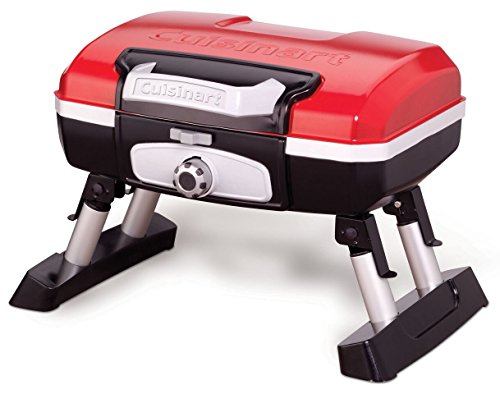
Where to buy
Check the latest price, availability and delivery on Amazon. Orders are placed on Amazon. We may earn a commission from qualifying purchases.
- Best overall for small patios: Cuisinart CGG-180T Petit Gourmet Portable Tabletop Gas Grill — Check on Amazon
- Best for the smallest patios and storage: Cuisinart Grillster Portable Gas Grill (CGG-059) — Check on Amazon
- Best for family cooking on a modest patio: Royal Gourmet GT1001 Stainless Steel Portable Grill — Check on Amazon
- Best searing on a small patio: Char-Broil Grill2Go X200 Portable Gas Grill — Check on Amazon
- Best when the patio hosts a group: Megamaster 1-Burner Portable Gas Grill (820-0065C) — Check on Amazon
- Best slim cart, if the patio truly fits it: Char-Broil Classic Series 2-Burner Gas Grill (463637626) — Check on Amazon
Read the full guide ↓
Disclosure: As an Amazon Associate, dailyhomedecorating.com earns from qualifying purchases. Links to Amazon on this page are affiliate links; they cost you nothing extra. Listing details such as price and availability change often, so check the current Amazon listing before you buy.
The best gas grill for small patios under $200 is chosen by a tape measure before it is chosen by a burner specification. A small patio imposes three budgets at once — the money budget this series always respects, the floor budget of square feet that must also hold chairs, a table and the people using them, and the storage budget for the twenty-three hours a day the grill is not cooking. The grills that win on small patios are the ones that respect all three: compact footprints that cook honestly for their size, lids that latch and legs that fold so the grill stores in a closet or a deck box, and fuel that comes in a one-pound canister instead of a tank that needs its own permanent corner. This guide is built around those three budgets, and it begins with measuring, because on a small patio the wrong grill is not an inconvenience — it is the patio’s largest piece of furniture, resented daily.
The good news is that this price tier is the small patio’s natural home. Under $200, the gas grill market is dominated by tabletop and briefcase portables — exactly the formats a small patio wants — plus one compact cart grill slim enough to deserve an honest hearing. The picks below include the lightest grill in this series, the most storage-friendly, the best family cooker that still folds away, an infrared searing specialist in a latching case, a value-priced big tabletop for the small patio that hosts, and that slim cart, included with a clear-eyed account of the patio dimensions it actually requires. Two famous names sit above this budget on list price — the Weber Q1200 and the Cuisinart Chef’s Style CGG-306 — and appear only as unlinked stretch picks; the Coleman RoadTrip line, priced far above the tier, is excluded. Every linked pick is verified, with an independent price sighting inside the budget, and the one pick whose price lives at the tier’s ceiling is flagged in its review.
One safety frame before the picks, because small patios shrink clearances by design. A gas grill needs room around it — away from siding, railings, overhangs and anything combustible — and a stable, heat-safe surface under it. If your patio is part of an apartment or condo building, the lease, HOA and fire-code questions come first, and the companion apartments guide in this series covers them in full; do not let a small footprint talk you into a space that cannot legally or safely hold a flame. Assuming your patio passes that test, read on: measure first, then choose.
Measure First: The Small-Patio Sizing Guide
The cooking footprint is the grill’s own rectangle plus the human rectangle in front of it. A tabletop grill on a stand or table needs its surface — roughly two feet by a foot and a half for the briefcase picks here — plus standing room for the cook and swing room for the lid. Measure the corner you intend, then stand in it and mime opening a lid and turning with a platter. If the mime is comedy, the corner is too small, and the answer is a smaller pick or a different corner, not optimism.
The storage footprint is where small-patio grills are truly chosen. The briefcase picks here fold or latch into packages that live on a closet shelf, in a deck box or under a bench — the Grillster at roughly ten pounds and briefcase-sized, the Petit Gourmet close behind. The larger tabletop picks store like small suitcases. Only the cart pick stores as furniture, permanently, in the patio itself. Decide where your grill sleeps before you decide what it cooks; on a small patio, the sleeping arrangement is the one you live with daily.
The clearance budget is non-negotiable geometry: space between the grill and the wall, the railing, the overhang above and anything that burns or melts. Small patios tempt corner-cramming, and corner-cramming is how siding scorches. If the only spot on your patio puts a hot grill against the house, your patio’s correct grill is a briefcase model you carry to a better spot — a driveway edge, a yard corner, a park — not a bigger risk in a smaller space.
In this guide
Quick Picks
Each row names a small-patio situation and the grill shaped for it. Check the current price on Amazon before you buy — one pick lives at the top of this tier, and its live price is part of the decision.
| Small-patio situation | Pick | Why it stands out | Link |
|---|---|---|---|
| Best overall for small patios | Cuisinart CGG-180T Petit Gourmet | A briefcase grill that cooks for two or three and stores in a closet; check price on Amazon | Check on Amazon |
| Best for the smallest patios | Cuisinart Grillster (CGG-059) | About ten pounds, shelf storage, a dishwasher-safe plate; check price on Amazon | Check on Amazon |
| Best for family cooking | Royal Gourmet GT1001 | A warming rack and family-sized grate in a folding tabletop package; check price on Amazon | Check on Amazon |
| Best searing | Char-Broil Grill2Go X200 | Infrared heat in a rugged latching case; it sits at the top of this tier, so check the live price on Amazon first | Check on Amazon |
| Best when the patio hosts | Megamaster 1-Burner Portable (820-0065C) | The largest claimed cooking area here, still folding away after the party; check price on Amazon | Check on Amazon |
| Best slim cart, if it fits | Char-Broil Classic Series 2-Burner | Two zones and a warming rack in the slimmest cart footprint here; check price on Amazon | Check on Amazon |
How These Picks Were Chosen
The budget filter was strict and identical across this series: a genuine propane gas grill, sold on Amazon in the United States, with a verified listing and at least one independent sighting of that exact model at or under this tier’s ceiling. That is why the Weber Q1200 and Cuisinart CGG-306 appear only as unlinked stretch picks and why no charcoal or electric model appears at all. The small-patio lens then applied its own three tests. Footprint honesty: maker dimensions and weights were cross-checked, and cooking areas were read as primary grate only, because a small patio feels every inflated inch. Storage reality: every portable pick had to fold or latch into a package a closet, deck box or shelf can hold, since a grill stored on the patio is a grill spending the floor budget all day. And session fit: the picks had to cook a real meal for their stated household without turning a small patio into a staging warehouse of platters and side tables.
We did not cook on these grills in our own homes. Specifications were cross-checked across manufacturer listings, independent reviews and retailer data, and every model was checked against the U.S. Consumer Product Safety Commission recall database; none of the six picks, and neither stretch pick, is subject to a CPSC recall. Disagreements are flagged where they live: the Petit Gourmet’s grate is 145 square inches by its maker’s specification though the listing rounds it to 150; the Grill2Go X200’s nominal 200 square inches measures closer to 187 in independent testing; the Megamaster’s 360 square inches is a total that includes its warming rack. On a small patio, honest numbers are not pedantry — they are the difference between a grill that fits the plan and one that becomes the plan’s problem.
Detailed Reviews: The Best Gas Grill for Small Patios Under $200, Pick by Pick
1. Cuisinart CGG-180T Petit Gourmet — Best Overall for Small Patios
Who it suits: The small-patio household of one to three people that wants grilling to be a normal weeknight event — grill on the patio table, dinner for two or three, grill back in the closet before dessert.
The Petit Gourmet is the format perfected: about 13.5 pounds in tabletop form, a locking lid, folding legs and a carry handle, with a 145-square-inch porcelain-enameled grate over a 5,500 BTU stainless burner, twist-start ignition and a lid gauge. On a small patio its virtues are spatial as much as culinary. It occupies a tabletop, not a territory. It heats quickly and sips its one-pound canister, so a small household is not paying cart-grill fuel overhead for two chicken breasts. And when the meal ends it cools, latches and stores indoors, returning the patio to chairs and people. The maker’s capacity claim runs to eight burgers at full stretch; the comfortable truth is a generous dinner for two or three in one round, which on a small patio is the household it was built for.
Pros: The best balance of cooking ability and disappearance in this guide; quick heat-up; frugal fuel use; an established model with easy parts availability; a mid-tier price with no ceiling anxiety.
Honest limitation: The 5,500 BTU burner is the gentlest here — wind and winter slow it, and hard searing takes patience. The grate crowds past three servings. And it needs a stable, heat-safe table: on a small patio, confirm yours is up to the heat and the weight before the first cook, or budget a simple stand.
Choose it if your patio and household are both small and your grilling is frequent. Skip it if you cook for four or more regularly — the GT1001 below keeps the folding format and adds the grate. Check on Amazon
2. Cuisinart Grillster (CGG-059) — Best for the Smallest Patios and Storage
Who it suits: The patio measured in single square feet and the storage measured in inches: the studio’s terrace, the tiny townhouse slab, the household whose grill shelf is a closet shelf.
At roughly ten pounds, the Grillster is the lightest gas grill in this guide, and its party trick is an enameled steel cooking plate — about 146 to 148 square inches over an 8,000 BTU burner — that lifts out and goes in the dishwasher. For small-patio life that cleanup matters out of proportion: no yard hose, no scraping over a patio that is also the living room’s view, just a plate in the rack and a briefcase back on the shelf. The stainless lid locks, the legs fold, and the burner is respectably strong for its size — noticeably stronger than the Petit Gourmet’s — so weeknight proteins cook with a proper crust despite the grill’s luggage-class dimensions.
Pros: The smallest storage story here; dishwasher cleanup; fast, even contact cooking; a carry anyone can manage one-handed; a comfortable mid-tier price.
Honest limitation: The flat plate cooks by contact, not open flame: no char lines, and fatty food sits in its juices unless managed. Capacity is two, three at a stretch, at one temperature. It is a small household’s grill in the strictest sense — guests mean rounds.
Choose it if storage is your scarcest resource. Skip it if you want open-grate cooking or feed more than three at a sitting. Check on Amazon
3. Royal Gourmet GT1001 — Best for Family Cooking on a Modest Patio
Who it suits: The household of three or four whose patio is modest rather than tiny — room for a table and chairs and a grill station, but not room for a cart — and whose grilling is family dinner, several nights a week.
The GT1001 is a stainless tabletop grill with a U-shaped 10,000 BTU burner spreading heat across a 214-square-inch primary grate, a 71-square-inch warming rack above it, a lid thermometer and a slide-out grease tray. That arrangement is the small patio’s family answer: a full meal — proteins on the grate, buns and finished food on the rack — in one session, without a cart’s permanent footprint. At a little under 18 pounds with folding legs and a latching lid, it stores in a deck box or garage corner between sessions. Run it on one-pound canisters for occasional use, or add the adapter hose and a tank kept in the patio’s one good corner if it becomes the household’s daily cooker.
Pros: The most complete family cooking setup that still folds away; stainless build; a thermometer and grease tray that make daily use civilized; enough grate for a family meal in one round.
Honest limitation: One burner, one zone — a mixed menu cooks in sequence, not in parallel. It is the widest portable here, so measure the table or stand it will occupy. The chrome warming rack shows wear before the rest of the grill does.
Choose it if your patio fits a station and your household is three or four. Skip it if every inch is contested — the two Cuisinarts above — or if two-zone cooking matters more than storage — the cart below. Check on Amazon
4. Char-Broil Grill2Go X200 — Best Searing on a Small Patio
Who it suits: The small-patio cook whose menu runs to steaks, chops and skewers, and who wants the best sear this tier offers from a grill that stores like a suitcase and shrugs off being moved twice a week.
The X200’s TRU-Infrared system — Amplifire in current listings — heats an emitter plate with a 9,500 BTU burner, delivering even, flare-up-resistant heat across a nominal 200-square-inch grate that independent testing measures closer to 187. The firebox and lid are cast aluminum in a high-impact frame with stainless latches and carry handles, and the burner and lid carry the longest warranty among the portables here. On a small patio, infrared has a second, quieter virtue: fewer flare-ups means less smoke drama in a confined space, and even heat means a small grate cooks like a bigger one because its edges work as well as its center.
Pros: The best searing and the most even small-grate heat in this guide; flare-up resistance that suits confined spaces; cast aluminum that does not rust; a rugged latching case; longer burner and lid warranty than its rivals.
Honest limitation: It runs hot by nature — low-and-slow is a fight, and delicate food needs attention. At roughly 20 to 22 pounds it is the heaviest portable here, a real consideration if storage is up stairs. And its price sits at the ceiling of this tier: sightings run at or just under the line, so if the live Amazon price has drifted over, take the GT1001 or the Petit Gourmet instead.
Choose it if searing is your menu’s headline and storage is a shelf, not a staircase. Skip it if you cook delicate food often, carry far, or find it priced above the tier. Check on Amazon
5. Megamaster 1-Burner Portable (820-0065C) — Best When the Small Patio Hosts
Who it suits: The small patio with a social life: a household of two or three most days that hosts six to eight on the good weekends, and needs one grill that covers both without owning the patio full time.
The Megamaster claims the largest cooking area in this guide — 360 square inches in total, warming rack included — behind an 11,000 BTU stainless burner, the strongest single burner among the portables here. Discounted honestly, the primary grate is still the roomiest tabletop surface in the guide, which is what a hosting night on a small patio consumes: burgers in waves, dogs along the edges, buns on the rack. Push-button ignition, a lid thermometer, folding legs and a locking lid keep it a genuine portable at about 14.4 pounds, and its value-end price — comfortably inside the tier in every sighting we found — leaves budget for the stand and the cover that complete a small-patio station.
Pros: Capacity per dollar nothing here approaches; a strong burner; light for its size; folds away after the party, returning the patio to its owners.
Honest limitation: The grate’s center outruns its edges — arrange food accordingly. The headline area counts the warming rack. Enamel and paint finishes need the cover and indoor storage this guide already prescribes; left out, they age first among these picks.
Choose it if your small patio hosts and your budget is strict. Skip it if your household is two and your parties are rare — the Petit Gourmet fits your life better and your closet too. Check on Amazon
6. Char-Broil Classic Series 2-Burner (463637626) — Best Slim Cart, If the Patio Truly Fits It
Who it suits: A narrow slice of small-patio owners: those whose patio, measured honestly, offers a permanent corner with clearance on all sides, room for the cook to work, and no need to reclaim the space for seating — and who grill often enough that a parked, tank-fed, two-zone grill earns its territory.
The Classic is the slimmest route to real cart cooking in this guide: two stainless in-line burners at 20,000 BTU, a 280-square-inch porcelain-coated primary grate, a 130-square-inch warming rack, two metal side shelves and piezo ignition, over a standard 20-pound tank. Its assembled width is compact by cart standards, and for the patio that fits it, the payoff is the thing no portable offers — two heat zones, family throughput, cheap tank fuel and a grill that is always set up, always ready, never fetched from a closet. For a household that grills four nights a week, that readiness is a genuine quality-of-life feature.
Pros: True two-zone cooking; the largest primary grate here; warming rack and side shelves; tank economics; always-ready convenience.
Honest limitation: It spends the floor budget permanently — measure with the cook standing at it, the lid open and the tank door swung, not from the catalog’s width alone. Clearance rules still apply in full: a slim cart against the siding is a hazard with a smaller footprint, not a solution. Materials are budget porcelain-coated steel with short warranty coverage by premium standards, and assembly is an afternoon’s project.
Choose it if — and only if — the tape measure, the clearance and the calendar all say yes. Skip it in every other small-patio situation; the five folding picks above exist precisely for you. Check on Amazon
Comparison Table
The six picks side by side, read through the small-patio lens: storage and footprint first. Cooking areas are manufacturer figures — the reviews flag the totals that include warming racks or measure smaller in testing. Prices are deliberately not printed: check the current price on Amazon for the grill you choose.
| Pick | Type | Burners / Output | Cooking area | Weight | Storage story |
|---|---|---|---|---|---|
| Cuisinart CGG-180T Petit Gourmet | Briefcase portable | 1 burner, 5,500 BTU | 145 sq in (maker figure) | About 13.5 lb | Closet shelf, latched |
| Cuisinart Grillster CGG-059 | Briefcase portable | 1 burner, 8,000 BTU | About 146–148 sq in plate | About 10 lb | Smallest package here |
| Royal Gourmet GT1001 | Tabletop portable | 1 U-burner, 10,000 BTU | 214 sq in + 71 sq in warming rack | About 17.8 lb | Deck box or garage corner |
| Char-Broil Grill2Go X200 | Briefcase portable, infrared | 1 burner, 9,500 BTU | 200 sq in nominal (measures less) | About 20–22 lb | Latching case, shelf or trunk |
| Megamaster 1-Burner Portable | Tabletop portable | 1 burner, 11,000 BTU | 360 sq in total claimed, incl. warming rack | About 14.4 lb | Folds away after hosting |
| Char-Broil Classic Series 2-Burner | Cart grill | 2 burners, 20,000 BTU | 280 sq in primary + 130 sq in warming rack | Full-size cart | Permanent patio corner only |
How to Choose the Best Gas Grill for Small Patios Under $200
Let the storage decision lead. On a small patio the grill’s resting state is its main state. If it cannot live in a closet, a deck box or on a shelf, it will live on the patio — so be certain the patio can spare it before choosing anything that does not fold. This single decision eliminates the cart for most small patios and ranks the briefcase picks by the size of the package they make when latched.
Match the grate to the household, not the guest list. A primary grate of 145 to 200 square inches cooks dinner for two or three; 214 to 280 cooks for four to six. The twice-a-year party is served by rounds, by a borrowed second grill, or by the Megamaster’s honest capacity — not by buying a daily grill sized for a crowd and tripping over it for fifty weeks. Small patios punish oversizing every day and reward it twice a year.
Solve the surface before the grill arrives. Every tabletop pick needs a stable, level, heat-safe place to sit — a metal stand, a stone or metal-topped table, never a wobbly plastic folding table and never the railing. If your patio lacks such a surface, its price belongs in the grill’s budget line, and a slimmer pick plus a proper stand beats a bigger grill on a bad table in every way that matters, safety first among them.
Keep fuel small unless the patio earns a tank. One-pound canisters fit small-patio storage and small-patio sessions; keep one spare, store both upright and ventilated, and detach after cooking. The exception is the daily-cooking household, where the adapter hose and a tank in the patio’s one good corner end the canister errand — a legitimate upgrade for the GT1001 or Megamaster household, and the cart’s native arrangement for the patio that fits it.
Think vertically and seasonally. Small patios reward vertical thinking: a shelf or hooks for tools instead of a side table, a deck box that is also a bench, a cover that lets a portable winter in the corner it summers in. And think about the patio’s other seasons — the grill that stores away in October returns a patio to its owners for the months when nobody grills, which on a small patio is not a minor gift.
Small-Patio Grill Sessions: Making a Compact Station Cook Like a Big One
A small patio does not limit what comes off the grill nearly as much as it limits the choreography around it, and choreography is a solvable problem. Stage the session the way a small kitchen stages a big dinner: everything portioned and seasoned indoors before the grill lights, one tray out and one tray back, and a landing spot — the corner of the patio table, a small side stool — declared in advance for the cooked food. The briefcase picks in this guide heat in minutes, so the old habit of lighting the grill and then prepping is backwards on a small patio; prep first, light second, and the grill’s small fuel supply and the cook’s small workspace are both spent only on cooking.
Cook in the order the patio dictates. The item that tolerates holding goes first and waits, covered, at the table; the item that must be eaten hot goes last and walks straight to plates. Use the lid as the small patio’s second burner: lid-down cooking on these compact grills is faster, steadier and thriftier with fuel, and it keeps smoke and spatter contained in a space where the seating is never far from the grate. Vegetables, the small patio’s secret weapon, cook in the margins of whatever else is happening — peppers and onions in the corners, corn at the edges — turning one grate into a whole menu without a single extra appliance on the floor.
End the session like a small patio demands: burn off, brush, cool, latch, store. Five minutes, done while the plates are still warm. The small-patio households that grill weekly are not the ones with the biggest grills; they are the ones whose routine has no friction in it — no hauling, no scraping session postponed to a weekend that never comes, no grill squatting in the chair’s spot as a daily reminder of its own upkeep. Every pick in this guide was chosen to make that routine possible. The routine itself is yours, and it is worth more than any single specification in the comparison table above.
What About a Stand, a Cover and Other Small-Patio Extras?
Three extras compete for the money a small-patio buyer saves by choosing a briefcase grill, and they rank clearly. First, the surface: if your patio lacks a stable, heat-safe table, a simple folding stand or metal prep table is not an extra at all — it is the grill’s other half, and it should be bought with the grill, sized to fold or store in the same closet. Second, the cover, for any grill that will spend nights on the patio rather than in the closet: at this tier the cover is the difference between finishes that last and finishes that chalk, especially for the enamel and painted picks. Third, fuel discipline: the spare canister, and — for the household that finds itself grilling three nights a week — the adapter hose, which quietly converts a portable habit into a tank routine and pays for itself in avoided canisters.
What not to buy: the accessory ecosystem that gathers around popular grills — specialty racks, novelty tools, a second grate for a grill whose grate is not the constraint. On a small patio, every object must justify its storage twice, once in inches and once in the sessions it actually serves. The households that love their small patios keep the kit to tongs, a brush suited to the grate, a thermometer habit and the three ranked extras above. Everything else is a closet negotiating with itself.
Seasonal Small-Patio Grilling: Spring Through Winter
A small patio changes with the seasons, and the grill that fits it should change roles with them. Spring is the recommissioning: leak check, burner ports brushed clear, the winter’s storage dust burned off in a first empty heat cycle before any food appears. It is also the season when a small patio’s grill earns its keep most quietly — weeknight dinners moving outdoors again, cooked on a briefcase grill that asks nothing of the patio but a table. Summer is peak session season, when the sizing and clearance decisions made at purchase are tested by frequency; the households that measured honestly grill without thinking about the grill at all, which is the entire point.
Autumn is the small patio’s best grilling season and the one its owners underuse: cooler air makes a hot grate pleasant, the briefcase picks’ modest burners lose their summer wind excuse, and a patio that felt tight in July feels private in October. Winter separates the formats honestly. The portables keep working — stored warm indoors, carried out for a session, back inside before they are cold — while their smaller fireboxes ask for longer preheats and a windbreak’s worth of positioning. The cart, if your patio earned one, wants its cover checked and its tank valve closed between sessions. None of this is effort peculiar to small patios; it is simply the calendar every grill lives by, compressed into a space where each season’s version of the patio is a slightly different room.
Common Mistakes Small-Patio Buyers Make
Measuring the grill and forgetting the cook. Catalog dimensions describe a box; a grilling session includes a person, an open lid, a platter and a path to the kitchen. Patios that fit the box and not the session produce grills that are technically present and practically unusable.
Buying the cart for a patio that needed a briefcase. The most expensive small-patio mistake is permanent: a parked grill consuming the seating corner, resented daily, used weekly at best. If the measurement section at the top of this guide made you hesitate, believe the hesitation.
Cramming the grill into the corner that fits. Clearance is measured from combustible construction — siding, wooden rails, the overhang — and a small patio does not dilute heat. A grill that only fits against the wall does not fit.
Trusting the headline cooking area. Warming racks hold buns; they do not cook burgers, and totals that include them describe parties the primary grate cannot throw. This guide prints the split for every pick; plan your household’s dinner on the primary number.
Skipping the leak check in a confined space. Small patios concentrate everything, including a gas leak’s consequences. The soapy-water check at setup, at the season’s start and after any long storage takes two minutes and is the entire price of cooking with gas in a small space with a clear conscience.
Final Recommendation
Most small patios should buy the Cuisinart Petit Gourmet: it cooks a small household’s dinner properly, then disappears into a closet and gives the patio back. The very smallest spaces and storage belong to the Grillster, whose dishwasher plate and ten-pound carry make it the easiest grill in this guide to live with. Families on modest patios should take the Royal Gourmet GT1001 and its warming rack; steak-first cooks, the Grill2Go X200, provided its live price sits inside the tier; hosts, the Megamaster and its honest capacity. The Char-Broil Classic is the right answer only for the small patio that measures like a big one. Choose by your tape measure and your closet, and a small patio grills far above its size. If two picks still tie after the measuring is done, let the tie be broken by the meal you cook most and the storage you will actually use: the household that grills twice a week and stores in a closet should weight the latch and the handle; the household that grills twice a month and stores in a deck box should weight the grate and the burner. There is no wrong answer left at that point — only the answer that fits the patio you measured, the household you feed, and the storage you honestly have, which is the answer this whole guide was written to help you find with confidence.
Frequently Asked Questions
What size gas grill is right for a small patio?
For most small patios, a tabletop or briefcase portable with a primary cooking surface around 145 to 215 square inches is the sweet spot: dinner for two to four, a footprint that shares the patio with furniture, and storage that leaves the patio empty between sessions. Step up to the larger tabletop picks only if your household is four or your patio hosts; step to a cart only if a measured corner with full clearance truly exists.
Can I put a full-size cart grill on a small patio?
Only if the patio passes three tests at once: a permanent corner with clearance from walls, rails and overhangs; working room for the cook with the lid open; and no need to reclaim the space for seating or storage. Most small patios fail at least one test, which is why this guide frames the cart as the exception and the folding portables as the rule. Measure with the cook standing in the space, not from the product’s width alone.
Where do I store a gas grill on a small patio?
The portables here are designed to store indoors — cooled, cleaned and latched — in a closet, a deck box or on a shelf, with the propane canister detached and stored upright in a ventilated spot away from heat. Storing the grill itself on the patio under a cover is the fallback, and stainless or cast-aluminum models tolerate it best. A full-size tank, if you use one, stays outdoors and upright, never in a sealed indoor space.
Is a one-pound propane canister enough for patio grilling?
For the sessions these grills are built for, yes: roughly one to two hours of cooking per canister depending on the burner, which covers a small household’s dinner with room to spare. Keep one spare so a fading canister never interrupts a meal, and if the grill becomes a daily cooker, add the adapter hose for a full-size tank — the fuel economics flip quickly at that tempo.
Do I need a stand for a tabletop grill on a small patio?
You need a stable, level, heat-safe surface; whether that is a stand, a metal or stone-topped table, or a purpose-built grill cart depends on your patio. Never cook on a wobbly or plastic surface, and never balance a tabletop grill on a railing. Some models in this class offer stand versions or siblings — check the listing for the exact configuration you are buying, since the linked picks here are the tabletop versions verified inside this budget.
How close can a gas grill be to the house on a small patio?
Keep it as far from siding, railings and overhangs as your patio honestly allows, and treat ten feet from combustible construction as the planning ideal — the standard model fire codes use in multifamily settings, and a good habit in any home. If your patio cannot offer real clearance, the safe answer is a briefcase portable used in a space that can, not a smaller distance accepted in silence. Apartment and condo readers must also check their lease, HOA and local fire code, which can prohibit patio grilling outright.
Can a small-patio grill cook for guests, or only for the household?
Both, with the right expectations: the briefcase picks serve guests in rounds — appetizers and a first course while the mains cook — and the Megamaster in this guide was included precisely for the small patio that hosts, with the largest honest capacity of the portables here. What a small patio cannot do is host and sprawl at once; the party that works is the one whose menu was planned in rounds, which most guests experience as a leisurely meal rather than a limitation.
What is the best small-patio grill for a household that grills almost every day?
Frequency changes the ranking: a daily grill earns its accessories. The GT1001 becomes the strongest candidate — stainless build, a thermometer, a grease tray made for routine — paired with the adapter hose and a tank so fuel stops being a per-session errand. The Petit Gourmet remains the pick if the household is two and the sessions are short. What daily use rules out is treating fuel and cleanup as afterthoughts: on a small patio, the daily grill is the one whose tray empties in seconds and whose grate brushes clean in a minute, because that routine, repeated daily, is the real product you are buying.
Will a tabletop grill damage my patio table or deck?
It can if the surface is wrong: heat radiates downward and outward, and grease finds its way to whatever is beneath. Use a stable, heat-safe, noncombustible surface — metal or stone, never plastic or a bare wooden table you care about without protection — keep the grease tray emptied, and give the grill its clearance on every side. Treated that way, a tabletop grill and a small patio coexist for years without a mark between them.
Related Guides
Fitting out the rest of the small patio? These guides from the same series cover the neighboring decisions:


