Where to buy
Check the latest price, availability and delivery on Amazon. Orders are placed on Amazon. We may earn a commission from qualifying purchases.
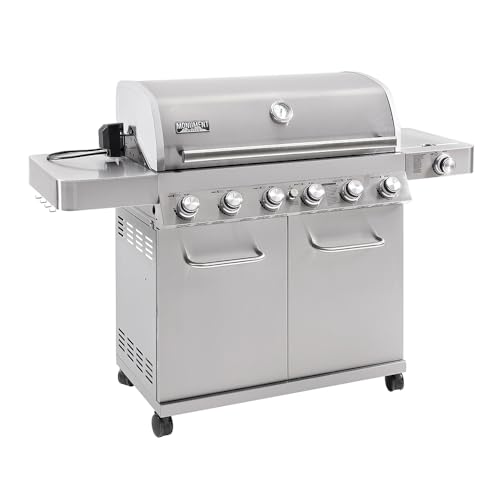
- Best for big backyard gatherings: Monument Grills 77352 6-Burner Gas Grill — Check on Amazon
- Best all-round backyard grill: Weber Genesis E-415 Liquid Propane Gas Grill — Check on Amazon
- Best for whole-meal backyard cooking: Weber Genesis E-335 Liquid Propane Gas Grill — Check on Amazon
- Best for flare-prone foods and griddle nights: Charbroil Pro Series Amplifire 4-Burner Gas Grill — Check on Amazon
- Best for smaller yards: Weber Genesis E-325s Liquid Propane Gas Grill — Check on Amazon
- Best rotisserie setup (dealer pick, no Amazon link): Broil King Baron 590 Pro — see the review below
Read the full guide ↓
Disclosure: As an Amazon Associate, dailyhomedecorating.com earns from qualifying purchases. Links to Amazon on this page are affiliate links; they cost you nothing extra. Listing details such as price and availability change often, so check the current Amazon listing before you buy.
The best gas grill for backyards under $1500 is not simply the biggest grill the budget allows — it is the grill that matches how a backyard actually gets used. A yard changes the equation compared with a patio or balcony: there is room for a full-size cart, room to stand back from the heat, room for a prep table and a crowd drifting between the grill and the cooler. It also introduces variables patio guides ignore — wind across an open lawn, a longer walk to the kitchen, winter weather with no roof over the grill, and gatherings that swell from six people to sixteen when the neighbors wander over. The picks in this guide were chosen for that reality: capacity when the yard fills up, heat that holds in a breeze, storage and side space that reduce trips indoors, and construction that survives being a permanent outdoor resident.
Two philosophies divide the list. The capacity-first grills — the six-burner Monument and the four-burner Genesis E-415 — treat the backyard as an event space and give you the grate area and zoning to feed it. The cook-first grills — the E-335 with its sear zone and side burner, the Charbroil with its infrared system and included griddle, and the rotisserie-driven Broil King — treat the backyard as an outdoor kitchen and optimize for what you can make, not just how much. The E-325s closes the list as the honest pick for smaller yards, where a three-burner footprint leaves room for the rest of outdoor life. Every pick sits under the same $1500 ceiling, every linked pick has a verified listing behind it, and the one dealer-only grill is labeled as such rather than dressed up with a link we could not verify.
A word on permanence: a backyard grill lives outside in a way patio grills often do not. It takes the thunderstorm, the pollen season and the freeze. That is why this guide weighs lid weight, cart construction and cover discipline more heavily than our other guides, and why the care section at the end is not filler — in a backyard, maintenance is the difference between a ten-year grill and a rusty five-year lesson.
In this guide
Quick Picks: best gas grill for backyards under $1500
| Pick | Best for | Burners | Primary cooking area | Link |
|---|---|---|---|---|
| Monument Grills 77352 | Big yards and big gatherings | 6 + side | 634 sq in | Check on Amazon |
| Weber Genesis E-415 | Best all-round backyard grill | 4 | 646 sq in | Check on Amazon |
| Weber Genesis E-335 | Whole meals cooked outside | 3 + sear + side | 513 sq in | Check on Amazon |
| Charbroil Pro Series 4-Burner | Flare-up control and griddle versatility | 4 + side | 802.9 sq in total per listing | Check on Amazon |
| Weber Genesis E-325s | Smaller yards, premium build | 3 + sear zone | 513 sq in | Check on Amazon |
| Broil King Baron 590 Pro | Rotisserie and heavy cast iron | 5 + side + rear rotisserie | 570 sq in | Prose-only — dealer sales, no verified Amazon listing |
The short version: hosts with a big yard and a bigger guest list should start with the Monument — nothing else here feeds a crowd as cheaply per burger. Households that grill several nights a week for themselves and entertain monthly should take the E-415’s even heat and parts support. Cooks who make sauces, sides and seared steaks in the same session belong on the E-335. Chicken-and-burger households tired of flare-ups, and anyone curious about flat-top cooking, belong on the Charbroil. Smaller yards that still want a decade-long grill take the E-325s. Rotisserie devotees take the Baron and a trip to a dealer.
How we chose these backyard gas grills
Backyard duty shaped the filters. Capacity was measured in primary grate area — the surface food actually cooks on — rather than the inflated totals listings prefer. Wind performance mattered: a backyard grill sits in open air, so we favored lids with real mass, burners known for stable flames, and fireboxes that hold temperature when a gust crosses the yard. That is one reason the Genesis models rank so high here; their heavier lids and enclosed carts shrug off weather that makes lightweight grills hunt for temperature. Year-round outdoor living mattered too, so we looked at cart materials, wheel size for crossing a patio-to-lawn edge, and whether the grease system can be serviced without dragging the grill across the yard.
Verification followed this series’ standing rule: a pick earns an Amazon link only with a verified ASIN and a price sighting for that exact model at or under the $1500 ceiling. The Broil King Baron 590 Pro is a legitimate backyard contender sold through dealers, and since we could not verify a standard Amazon listing for it, it appears without a link. One familiar premium model is absent entirely: the Napoleon Prestige 500 RSIB currently sells above this ceiling at major retailers and its infrared side-burner grid was covered by a manufacturer safety notice, so it fails two filters at once. Recall checks were run on every pick that remains; none has an open recall on the grill itself.
Finally, we considered the backyard as a system. A grill at this tier anchors a space that usually includes seating, shade and storage, so the guide closes with how the grill interacts with the rest of the yard — and links to the companion guides in this series for readers building the whole picture.
The 6 best gas grills for backyards under $1500, reviewed
1. Monument Grills 77352 — best for big yards and big gatherings
Who it suits: households whose backyard is the neighborhood’s default gathering spot — graduation parties, team dinners, Fourth of July — plus large families who cook in volume every week, not just on holidays.
Six burners, 72,000 BTU of main output, a 12,000 BTU side burner, 634 square inches of primary grate and 900 square inches in total: the 77352’s specification reads like a grill from the tier above this one. In a backyard the numbers translate into working room. A full load of burgers still leaves a corner for corn; two beer-can chickens stand beside a tray of peppers; a meal-prep Sunday can run forty chicken thighs in two waves instead of four. The included rotisserie kit, the LED-lit knobs for evening cooks and the clear-view lid window all suit a yard’s rhythm, where cooking continues past sunset and the cook is also hosting. The stainless cabinet swallows the tank and gives the grill a finished look from the house — no small thing when the grill is the largest object in the view from your kitchen window.
Pros: unmatched capacity per dollar in this guide; six-burner zoning that scales from two burners on a Tuesday to all six on a Saturday; rotisserie kit and side burner included; big wheels and casters that handle the patio edge better than small-footed rivals; a window in the lid for checking food without venting heat into a breeze.
Honest limitation: Monument’s dealer and parts network is younger and thinner than Weber’s — you are buying from the manufacturer’s ecosystem, not a shelf in every hardware store. The grill is also a lot of stainless to keep looking sharp in an uncovered yard, and its sheer size can overwhelm a modest backyard both visually and spatially: pace out the footprint before ordering. Heat evenness is good, a step behind the Genesis models’ consistency.
Choose it if your yard hosts crowds regularly. Skip it if your typical cook is four servings — the E-325s will preheat faster, sip propane and leave the yard feeling larger. Check on Amazon
2. Weber Genesis E-415 — best all-round backyard grill
Who it suits: the household that grills constantly, entertains often, and wants one grill with no apologies — the anchor purchase for a backyard that is still being built around it.
Four PureBlu burners at 48,000 BTU under 646 square inches of porcelain-enameled cast-iron grate make the E-415 the largest and most even-heating Weber in this series. In backyard terms, its virtues are composure: the heavy lid and enclosed firebox hold a low-and-slow zone steady through a breezy afternoon, the grates take a full load of cold meat without sagging in temperature, and the front-pull grease tray services in seconds between a cook and the guests arriving. The Crafted frame system means the backyard kitchen can grow — a griddle for pancake mornings, a pizza stone for Friday nights — on the same firebox, which suits a yard that evolves over years.
Pros: the most even heat and the largest primary grate of any Weber here; build quality and warranty depth that make a decade of outdoor living realistic; excellent wind composure for an exposed yard; parts available everywhere, forever, which matters most on the grill that lives farthest from a store’s delivery route — your own backyard, in year eight.
Honest limitation: no side burner and no dedicated sear burner; the sear comes from the main burners at full output, which is effective but slower to recover after the lid opens for a crowd. It is also the closest pick here to the ceiling, so verify the live price against your budget — and it is a substantial assembly that deserves two people and a free afternoon.
Choose it if you want the backyard’s permanent centerpiece. Skip it if a side burner is central to how you cook — the E-335 trades a burner for exactly that. Check on Amazon
3. Weber Genesis E-335 — best for whole-meal backyard cooking
Who it suits: cooks who treat the backyard as a second kitchen: steak searing on the grate, sauce on the side burner, vegetables resting on the rack, all within arm’s reach of the picnic table.
The E-335 combines three PureBlu burners (39,000 BTU) and 513 square inches of primary grate with the two additions that multiply what a backyard cook can do: a 13,000 BTU sear zone that crusts steaks properly, and a 12,000 BTU side burner that holds a pot of beans, a pan of onions or a kettle for sweet corn without a trip indoors. That last point is the backyard-specific one — the farther the grill sits from the kitchen door, the more a side burner earns its shelf. The grill locker storage keeps the griddle and tools at the grill, and the 57.7-inch width leaves room on a standard patio slab for a prep table beside it.
Pros: the most complete outdoor-cooking station in this guide relative to its size; genuine sear performance; Genesis build, grease system and parts support; a footprint that suits mid-size yards without surrendering capability.
Honest limitation: for the biggest backyard gatherings, 513 square inches means cooking in waves while the Monument’s crowd eats in one round. The exposed side burner also loses low simmers to a stiff breeze unless you position the grill with its back to the wind or use a lidded pot — a real backyard consideration that patio reviews, sheltered by fences and walls, tend to understate.
Choose it if your backyard cooking is varied and meal-complete. Skip it if your gatherings regularly exceed ten people — capacity wins, take the Monument or E-415. Check on Amazon
4. Charbroil Pro Series 4-Burner — best for flare-prone foods and griddle nights
Who it suits: backyard cooks whose menu runs fatty and flame-sensitive — skin-on chicken, burgers for a crowd, marinated ribs — and families who would use a flat-top as often as a grate.
The Amplifire infrared system is the story: an emitter plate between burner and food stops dripping fat from ever meeting open flame, so the flare-ups that scorch chicken skin and force the constant shuffle on open-flame grills largely disappear. In a backyard feeding a crowd, that calm is worth real money — the cook can talk to guests instead of standing guard with a spray bottle. The included griddle insert converts the grill to a flat-top for smash burgers, breakfast on the patio and fajita night, and the Gas2Coal tray option adds charcoal cooking in the same box for the purist in the family. Four burners plus a side burner and a listed 802.9 square inches of total cooking area round out a genuinely versatile backyard appliance.
Pros: flare-up control that changes crowd cooking from vigilance to relaxation; griddle included; even infrared heat across the grate; cabinet storage; a long burner warranty.
Honest limitation: the emitter plates live in the grease path and must be cleaned regularly — in a backyard where the grill may sit a week between cooks, that means a standing habit, not an occasional one, or performance fades and the plates corrode early. Infrared heat also behaves differently at the low end; delicate vegetables and fish need a lighter touch than open-flame cooks expect. The warranty splits by component, with the firebox covered for a much shorter term than the burners.
Choose it if flare-ups are your nemesis or griddle cooking tempts you. Skip it if you want the set-and-forget maintenance profile of a Genesis. Check on Amazon
5. Weber Genesis E-325s — best for smaller yards
Who it suits: modest backyards, garden-adjacent patios and households of two to five who want premium construction without surrendering half the yard to the grill.
The E-325s brings the full Genesis recipe — three PureBlu burners at 39,000 BTU, a dedicated sear zone, porcelain-enameled cast-iron grates, the front-access grease system and the long warranty — in the line’s three-burner footprint. Its expandable top grate is the backyard trick: raised, it adds a second cooking level that takes total space to 787 square inches for the occasional big cook, while everyday cooking stays in the efficient three-burner box. In a smaller yard that flexibility is the whole argument — the grill is sized to the household’s Tuesdays and stretches for its Saturdays, and the space it saves is space the garden, the dog and the seating keep.
Pros: Genesis longevity in the smallest footprint here; sear zone included; expandable rack for occasional crowds; historically the friendliest price in the Genesis line, leaving backyard budget for the seating and shade that make the space.
Honest limitation: no side burner, and the three-burner ceiling is real — a standing weekly gathering of ten will outgrow it. Porcelain-enamel grates want gentle cleaning to protect the coating through years of outdoor life.
Choose it if your yard is modest and your household is too. Skip it if the yard is big and the guest list is bigger — that is the Monument’s brief. Check on Amazon
6. Broil King Baron 590 Pro — best rotisserie setup (prose-only)
Who it suits: backyard traditionalists who cook whole birds and roasts on the spit, value heavy cast iron, and like buying equipment from a local dealer who assembles and services it.
Five Dual-Tube burners deliver 45,000 BTU beneath some of the heaviest cast-iron cooking grates in this class, and the Baron’s party piece is its dedicated rear rotisserie burner with a heavy-duty rotisserie kit — the setup that turns a backyard Sunday into rotisserie chicken, prime rib or a leg of lamb with almost no active work. Total cooking area reaches about 820 square inches including the warming rack, 570 of it primary. The Flav-R-Wave tents protect the burners and vaporize drippings, the lid is reassuringly massive against a breeze, and the whole grill has the overbuilt feel that has kept Broil King’s Canadian-made lines in backyards for decades.
Pros: the best rotisserie hardware in this guide; heavy grates that sear and hold heat through a full load; dealer assembly and service; a build that shrugs off outdoor life.
Honest limitation: dealer-channel purchasing — we could not verify a standard Amazon ASIN and price for this model, so it is reviewed without a link, and pricing on Pro IR configurations can approach this guide’s ceiling, so confirm the exact build’s price at the dealer. The bare cast-iron grates also need oiling discipline in a humid backyard to stay rust-free.
Choose it if rotisserie cooking is a weekly ritual. Skip it if you want online ordering and the deepest self-serve parts market — the E-415 is your grill.
Comparison table
| Grill | Main burners | Primary area | Backyard strength | Watch out for |
|---|---|---|---|---|
| Monument 77352 | 6 + side | 634 sq in (900 total) | Crowd capacity and zoning | Younger brand; big footprint |
| Weber Genesis E-415 | 4 | 646 sq in | Even heat, wind composure, longevity | No side/sear burner; near ceiling |
| Weber Genesis E-335 | 3 + sear + side | 513 sq in | Whole meals without kitchen trips | Waves for the largest crowds |
| Charbroil Pro Series 4-Burner | 4 + side | 802.9 sq in total per listing | No flare-ups; included griddle | Emitter plates need regular cleaning |
| Weber Genesis E-325s | 3 + sear zone | 513 sq in (787 total) | Premium build, smaller-yard fit | No side burner |
| Broil King Baron 590 Pro | 5 + side + rotisserie | 570 sq in (820 total) | Rotisserie burner and kit | Dealer-only purchase |
Match the row to your yard’s calendar: the grill that wins your biggest Saturday is not always the grill that wins your fifty ordinary weeknights, and the honest pick is the one whose strength column describes your most common cook. Readers still furnishing the rest of the yard will find the matching tier in our Best Fire Pit For Backyards Under $1500 guide, and those who prefer charcoal for part of the menu should compare the Best Charcoal Grill For Backyards Under $1500 picks before deciding the yard needs only one fuel.
How to choose a gas grill for a backyard
Size the grill to the yard’s real calendar. Count your five largest cooks of last year and your thirty ordinary ones. If the large cooks were gatherings of twelve-plus, capacity rules and the Monument or E-415 earn their footprint. If the large cooks were eight and the ordinary ones were four, a three-burner Genesis is the honest size, and the money saved furnishes the yard. Oversized grills in small yards also create a daily tax: longer preheats, more propane, and a patio that feels like a kitchen appliance showroom.
Plan the grill’s station, not just the grill. A backyard grill wants a level, non-combustible pad with the manual’s clearance from siding, fences and overhangs; a landing surface beside it for trays — a side burner shelf, a prep table or the grill’s own shelves; and a route to the kitchen that does not cross the play area or the dog’s patrol path. Wind is a placement variable too: a grill backed to the prevailing breeze keeps its lid temperature steadier and its side burner lit. Spend ten minutes on placement before the grill arrives and every cook afterward is easier.
Decide the fuel run. Backyards are where natural gas earns its consideration: if the house has or can cheaply gain a gas stub at the grill station, the NG version of a Genesis ends tank management forever. If not, propane’s flexibility lets you reposition the grill as the yard evolves — but budget for a second tank, because a backyard cookout is exactly when an empty tank chooses to announce itself. Buy the fuel configuration that matches the plan; conversions belong to manufacturer kits only.
Think in seasons. A backyard grill is a four-season resident. In sun-belt yards the enemies are UV, dust and grease film; in northern yards, freeze-thaw and snow load on the lid. Either way the prescription is the same: a fitted cover, a monthly burn-off in the off-season to keep moisture and spiders out of the venturi tubes, and an annual deep clean before peak season. If your yard has no storage and harsh winters, weight the enclosed-cart models and heavier lids more heavily in your choice.
Leave budget for the yard around the grill. The complete backyard station includes the cover, a second tank, a prep surface, lighting for evening cooks — the Monument’s LED knobs help, but a yard light or a grill light helps more — and the seating that turns cooking into gathering. Our Best Patio Umbrella For Homeowners Under $1500 and Best Outdoor Storage Shed Under $1500 guides cover the shade and storage pieces at this same tier, and staging those purchases across a season is how most good backyards actually get built.
Common mistakes when buying a backyard grill
Placing the grill for the photograph, not the cook. The prettiest spot — centered on the patio, framed by the garden — often lacks a landing surface, sits in the wind tunnel between house and fence, or puts the smoke path directly through the seating. Place for workflow and wind first; the grill will look fine wherever it works well.
Forgetting the delivery path. Premium grills arrive in large cartons and assemble into carts over five feet wide. A narrow side gate, a flight of deck stairs or a soft lawn after rain can turn delivery day into a problem. Measure the route from curb to pad, and consider dealer delivery for the dealer-channel pick.
Buying capacity for the party you host once. The once-a-year graduation party can be cooked in waves, catered in part, or handled with a borrowed second grill. The other fifty weeks pay for oversizing daily. Buy for the ninety-percent cook; rent, borrow or batch for the exception.
Letting the grease tray become a yard hazard. A full tray in an open backyard attracts animals and becomes a fire risk on the next high-heat cook. Backyard grills sit farther from the cook’s daily path than patio grills, so put tray checks on a schedule — every few cooks, not when you smell it.
Skipping the cover because the yard is “sheltered.” Pollen, sap, bird lime and UV do not care about your fence. An uncovered premium grill in a backyard ages in dog years; a covered one ages in human years. This is the cheapest sentence in the entire guide to act on.
Final recommendation
For the classic backyard brief — a permanent grill that feeds family weeknights and swells for weekend gatherings — the Weber Genesis E-415 is the safest pair of hands in this guide: even heat, serious capacity and a decade of parts behind it. If your yard’s gatherings are the main event, the Monument 77352 feeds them for remarkably little money per square inch. And if the yard is small but the standards are high, the E-325s proves a three-burner can be a ten-year grill. Choose by your calendar, cover it the day it arrives, and the backyard will do the rest.
Backyard grill care: the seasonal rhythm
Spring opening: deep-clean the cookbox, clear the burner ports and venturi tubes after winter storage, leak-test the connections with soapy water, and cook a sacrificial load of onions or a fatty first meal to re-season the grates. Summer rhythm: burn-off after cooks, brush while warm, empty the grease tray every few sessions, and wipe stainless before pollen and grease bake into a film. Autumn closing, for cold climates: clean thoroughly so residue does not feed corrosion all winter, oil bare cast iron lightly, close the tank valve, cover the grill, and store the tank outdoors, upright and disconnected if the grill moves into a garage — the tank itself never moves indoors. Households that keep this rhythm are the ones whose premium grills reach the decade the price promised; the grills that fail early almost always failed at the calendar, not at the factory.
The backyard as a system: where the grill fits
A premium grill rarely arrives in a finished yard; more often it is the purchase that starts the yard. It helps to think of the backyard as four stations that should agree with each other. The cooking station is the grill on its pad, with landing space and, ideally, the prep and storage that keep the cook outside: a small deck box or the storage in our Best Outdoor Storage Shed For Homeowners Under $1500 guide swallows the tools, the spare grates and the cover when guests come. The eating station — table, chairs, shade — should sit close enough for conversation with the cook and far enough that diners are out of the smoke path; in most yards that means offset, not opposite. The gathering station, often a fire pit for after dinner, belongs downwind and at a comfortable remove from the grill’s heat and the tank. And the storage station, wherever covers, tanks and seasonal gear live, decides whether the yard looks composed in February or like a project abandoned mid-sentence.
The grill choice interacts with all four. A six-burner Monument demands a larger cooking pad and pushes the eating station farther out; a three-burner Genesis leaves room for the table to stay close. An enclosed cart keeps the cooking station tidy in view of the house; an open cart asks for the storage station to work harder. None of this requires buying everything at once — the staged approach, grill first, then shade, then storage, then the fire pit, is how most of the yards in this guide’s audience actually came together — but placing the grill with the finished picture in mind prevents the classic outcome: a beautiful grill marooned in the wrong corner, with the table exiled to the far fence.
What a decade of backyard ownership actually costs
The purchase price is the loudest number and the least important one over a decade. The real ledger of a backyard grill reads: propane — a tank refill rhythm that scales with how often you cook and how large the firebox is, which is why the six-burner costs more to run even at identical menus; wear parts — flavorizer bars or emitter plates, an igniter, eventually a set of grates, all modest on the Weber and Charbroil ecosystems and the reason parts availability was a selection filter; consumables — covers every few years, brushes, a thermometer battery at the worst moment; and time — the seasonal rhythm described above, roughly an hour a month in season. Against that ledger, the premium tier’s argument is that the frame, firebox and burners do not join the replacement list. A cheap grill’s ledger looks smaller per line and then includes a second grill.
There is one more line backyard buyers forget: the cost of the cooks that go wrong. Uneven heat ruins food in proportion to how much food is on the grate, and a crowd cook on a bad grill wastes more groceries than a month of propane. The even-heating picks in this guide — the Genesis models especially — pay part of their premium back in un-ruined dinners, a return no specification sheet lists and every experienced backyard cook recognizes.
A worked example: the sixteen-person backyard cookout, grill by grill
Abstract capacity numbers become clear when you run one menu through every pick. Take the standard backyard test: sixteen burgers, a dozen sausages, corn for everyone, and a tray of peppers and onions, served within the same twenty minutes. On the Monument 77352 this is a single relaxed round — burgers across four burners, sausages on the fifth zone, corn on the warming rack, peppers on the side — with the cook free to hold finished food in the cold corner. On the E-415 it is also one round, tighter: burgers in a full grid, corn on the rack, vegetables in a grill basket at the edge, and the timing managed by someone who has done it twice. On the E-335 the menu becomes two waves, but the waves are pleasant ones — sear-zone burgers first, held warm while sausages and corn finish, the side burner keeping onions caramelizing throughout — and the last wave eats fresher than the Monument’s first.
On the Charbroil the same menu highlights a different virtue: the fatty burgers and sausages that would flare on open flame cook calmly on the emitter plates, and the cook’s attention goes to timing instead of firefighting; capacity sits between the E-335 and the E-415 in practice. On the E-325s the cookout is a planned two-wave operation with the top grate earning its keep for corn and resting meat — entirely feasible, noticeably busier. On the Baron, the menu changes shape: this is the grill where the host swaps half the burgers for a rotisserie chicken carved at the table, and the grate load drops to a comfortable single round. None of these outcomes is a failure; they are different evenings. The pick is right when the evening it produces is the one your backyard actually hosts.
The weeknight version of the test matters as much. Four chicken breasts and a zucchini: the E-325s and E-335 preheat fastest and use the least propane; the Monument lights two of six burners and does fine while heating a lot of empty steel around the food. Over a summer of weeknights, that difference is real money and real minutes — which is why this guide keeps refusing to crown the biggest grill as simply the best.
Placement and safety in an open yard
A backyard removes the balcony’s legal questions and replaces them with physics. Keep the grill on a level, non-combustible surface — a concrete or paver pad, not decking boards if the manual advises against it and never on dry grass — with the clearance from siding, fences, eaves and outdoor furniture that the manufacturer specifies. Think about the smoke path: a grill placed where the prevailing breeze carries smoke across the dining table or into a neighbor’s open windows will generate more friction than any other backyard decision, and moving a grill is free while moving a patio is not. Keep the tank upright and secured in the cart, the hose routed where feet and mower wheels will not find it, and a clear, lit path between grill and kitchen for the cook carrying a tray in the dark.
Two yard-specific hazards deserve names. The first is the unattended grill during a gathering: hosts get pulled into conversation while fatty food flares, so the discipline is a designated cook for each course rather than a grill that supervises itself — and it is one more argument for the Charbroil’s flare-resistant system in a party yard. The second is children and pets treating the grill as furniture: a premium cart is heavy and stable, but its side shelves invite leaning and its lid stays hot long after the burners close. A simple house rule — the grill zone is an adult zone until the cook declares it cool — plus a cover on the cooled grill, closes both risks. Keep an extinguisher rated for grease fires within reach of the house door, know that water spreads burning grease rather than quenching it, and close the tank valve first in any emergency: starving the fire beats fighting it.
FAQ
What size gas grill does a typical backyard need?
For a household of four to six that entertains monthly, 500–650 square inches of primary cooking area — the range most of this guide occupies — is the sweet spot. Regular gatherings of twelve or more justify the Monument’s six burners; couples and small families are better served by a three-burner and a furnished yard.
Is a six-burner grill overkill for a backyard?
Only if it never gets used at capacity. Six burners also mean finer heat zoning and a true cold zone for resting food, which big-household cooks use weekly. If your largest regular cook is eight burgers, it is overkill — buy the E-325s and a better patio set.
Should a backyard grill be propane or natural gas?
Natural gas suits a permanent station with an existing or affordable gas line; propane suits evolving yards and repositioning. They are separate factory configurations, so decide before ordering, and never improvise a conversion.
How do I keep wind from ruining a backyard cook?
Position the grill with its back to the prevailing wind, prefer heavy-lidded models like the Genesis line, keep the lid closed as much as the recipe allows, and use lidded pots on a side burner. A grill station planned with wind in mind outperforms a more powerful grill placed in a gust path.
Can I leave a premium grill outside all winter?
Yes, with preparation: a thorough clean, a fitted cover, the tank valve closed, and an off-season burn-off now and then in milder spells. Bare cast-iron grates should be oiled first. In severe climates a garage corner is kinder — but the propane tank stays outdoors regardless.
Why is the Broil King not linked?
Broil King sells through dealers in the US and we could not verify a standard Amazon listing and price for the Baron 590 Pro. Rather than invent a link, we review it as a prose-only pick and say plainly where it is sold.
How far should a backyard grill sit from the house?
Follow the clearance in your grill’s manual — manufacturers commonly specify a minimum distance from combustible surfaces on the sides and rear, and the grill should never sit under an eave or overhang unless the manual explicitly allows it. Beyond the manual, place the grill so its smoke path misses windows and seating; a few extra feet of walking beats a season of smoke in the dining room.
Is it worth running a natural gas line to a backyard grill?
If the grill station is permanent and the line run is short, often yes: the convenience compounds over a decade of cooks, and you never face an empty tank mid-gathering. If the yard layout may change, or the trench run is long and costly, propane’s flexibility usually wins. Either way, buy the grill in the fuel configuration you intend to use.
What accessories should a backyard grill budget include from day one?
A fitted cover, a second propane tank if you chose propane, an instant-read thermometer, a bristle-free coil brush, and a grill light if your cooks run past sunset. Together they cost a fraction of the grill and protect all of it — the cover guards the finish and firebox, the spare tank guards the gathering, and the thermometer guards the food. Everything else — griddles, pizza stones, rotisserie upgrades on grills without them — can arrive as the yard and the cook develop, which is the natural order of a backyard that gets better every season.
Should I build a permanent pad or island for a grill at this tier?
A simple level pad of concrete or pavers is worth it for any pick here — it stabilizes the cart, keeps wheels out of the lawn and defines the cooking station. A full built-in island is a different project with a different budget: at this tier the honest route is a freestanding premium grill now, which keeps the yard flexible, and an island conversation later if the layout proves permanent. If you do go built-in, shop the drop-in head through a dealer and budget the structure, gas work and counter separately — none of the cart grills in this guide converts into a drop-in.


