Where to buy
Check the latest price, availability and delivery on Amazon for the linked picks. Orders for those picks are placed on Amazon. We may earn a commission from qualifying purchases. Two picks in this guide are dealer-sold ceramic grills with no standard Amazon offer, and they are listed without an Amazon link on purpose.
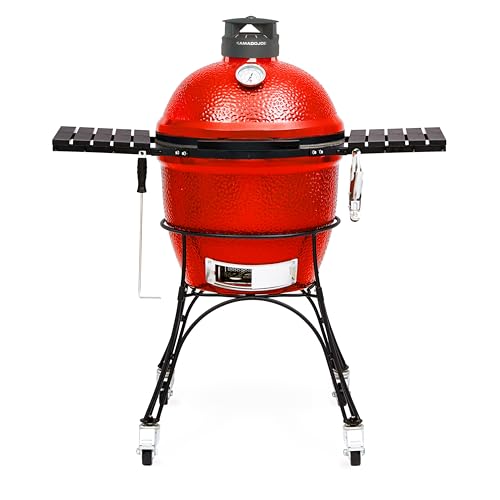
- Best overall for a permanent backyard spot: Kamado Joe Classic Joe Series II 18-Inch Ceramic Charcoal Grill and Smoker with Cart (KJ23RHC) — Check on Amazon
- Best two-zone backyard cooker: Primo Oval Large 300 Ceramic Kamado Grill (PGCLGH) — sold through authorised dealers; see the review below for how to buy it well
- Biggest backyard grate: Weber Summit Kamado E6 Charcoal Grill, Black (18201001) — Check on Amazon
- Best dealer-supported classic: Big Green Egg Large — sold through authorised dealers; see the review below for how to buy it well
- Best rust-proof backyard grill: PK Grills PK360 Cast Aluminum Charcoal Grill and Smoker (PK360-BTBX-D) — Check on Amazon
- Best high-frequency backyard griller: Weber Performer Deluxe Charcoal Grill, 22-Inch, Touch-N-Go Gas Ignition, Black (15501001) — Check on Amazon
Read the full guide ↓
Disclosure: As an Amazon Associate, dailyhomedecorating.com earns from qualifying purchases. Links to Amazon on this page are affiliate links; they cost you nothing extra. Listing details such as price and availability change often, so check the current Amazon listing before you buy.
Choosing the best charcoal grill for backyards under $1500 is the happiest version of this decision, because a backyard removes the constraints that dominate every other setting. Weight stops mattering — a grill that gets placed once and lives there can be as heavy as it wants. Footprint stops mattering. What remains is the pure question: which charcoal cooker, given a permanent home outdoors, cooks the widest range of food the best for the longest time? That is why the ceramic kamados lead this ranking, and why the order below puts completeness and cooking flexibility ahead of portability entirely.
A backyard also changes the economics. A grill that lives outside year-round earns its keep weekly, weathers every season, and anchors an outdoor cooking space that can grow around it — prep table this year, pergola and seating later. At this budget you are not buying a season; you are buying the centre of that space for a decade or more. The picks below are ranked for exactly that life: how completely each arrives, how it handles both a Tuesday burger night and a Saturday brisket, and how gracefully it ages under a cover in real weather.
The backyard-specific traps are different, too. Delivery is a pallet at the kerb, not a grill on the patio — plan the path, the gate width and a second pair of hands. Placement matters more than buyers expect: level, non-combustible, clear of fences and overhangs, close enough to the kitchen door that winter cooks stay pleasant. And the dealer question looms largest here, because a backyard is where a Big Green Egg or a Primo in a built-in table makes its strongest case. This guide prices those cases honestly.
In this guide
Quick Picks: The Best charcoal grill for backyards under $1500 at a Glance
| # | Grill | Best for | Cooking area | Body |
|---|---|---|---|---|
| 1 | Kamado Joe Classic II 18-Inch | Best overall for a permanent backyard spot | 250 sq. in. main grate (two-tier Divide & Conquer system) | Ceramic body, stainless steel grates, cast iron cart |
| 2 | Primo Oval Large 300 | Best two-zone backyard cooker | 300 sq. in. main grate, 495 sq. in. with optional racks | Ceramic, made in the USA, stainless steel grates |
| 3 | Weber Summit Kamado E6 24-Inch | Biggest backyard grate | 452 sq. in., 24-inch hinged stainless steel grate | Dual-wall insulated steel, porcelain-enamelled |
| 4 | Big Green Egg Large 18-Inch | Best dealer-supported classic | 262 sq. in., 18.25-inch grid | Ceramic body, dealer-assembled packages |
| 5 | PK360 Cast Aluminum Grill & Smoker | Best rust-proof backyard grill | 360 sq. in. hinged cooking grate | Cast aluminium capsule, stainless steel grate |
| 6 | Weber Performer Deluxe 22-Inch | Best high-frequency backyard griller | 363 sq. in., 22-inch hinged plated-steel grate | Porcelain-enamelled steel kettle on a cart |
How These Picks Were Chosen
Backyard picks were scored on the life the grill will actually live. Completeness came first: a permanent grill should arrive ready to cook, with its stand, shelves and indirect-cooking hardware accounted for inside the budget. Cooking range came second — every pick had to sear hard and smoke low, because a backyard anchor grill gets asked to do both. Third was weather endurance: material, warranty and parts support for a cooker that lives outdoors for years. Fourth was capacity for real backyard entertaining, from family dinners to a dozen burgers without a queue.
As across this batch, linked picks carry confirmed Amazon listings for the exact models, with price sightings recorded in the research notes, and the two dealer ceramics — Primo and Big Green Egg — are reviewed in full without links, because they are not sold through a standard Amazon offer and their ceramic warranties require authorised-dealer purchase. No pick has a CPSC recall. One deliberate inclusion deserves a note: the Performer Deluxe stays in a backyard guide at this ceiling because frequency beats versatility for many households, and a grill that lights in minutes gets used three times as often as one that feels like an event.
The Six Picks in Detail
1. Kamado Joe Classic II 18-Inch — Best overall for a permanent backyard spot
The Classic II is the grill this tier is really about. Kamado Joe’s 18-inch ceramic cooker arrives on a cast iron cart with locking casters, folding side shelves, the Divide & Conquer two-tier cooking system, a pair of half-moon heat deflectors, an ash tool and a grill gripper in the box — which matters, because its main ceramic rival sells almost all of that separately. The Air Lift hinge is the feature owners mention most: it counterbalances the heavy ceramic dome so the lid feels dramatically lighter than it is and stays where you leave it, which makes one-handed grate checks realistic instead of a two-handed lift. The Kontrol Tower top vent is cast aluminium, holds its setting when you open the lid, and sheds rain better than a simple daisy wheel.
In use, the thick ceramic walls are the story. Once the fire is settled, the Classic II holds a low smoking temperature for hours on a modest load of lump charcoal, then climbs to genuine steak-searing heat with the vents opened up. The two-tier grate system lets you run a direct and an indirect zone at different heights at the same time — searing over the coals on the low tier while vegetables finish up top — and the slide-out ash drawer means cleanup is a pull and a tip into the bin rather than a scoop-and-scrape session inside a hot firebox. The gasket is a wire mesh fibreglass design that seals well and is cheaper to replace than old-style felt.
In a backyard, the Classic II’s case is total: place it once on a level pad, and the combination of cart, shelves, deflectors and ash drawer makes it the easiest ceramic to own from day one. Backyard owners planning an outdoor kitchen later should know the standalone version of this grill drops into built-ins — the cooking unit you buy now is not wasted if the patio grows.
Who it suits: Choose it if you want one grill that smokes, roasts, bakes and sears for a decade or more and you have a permanent, level spot for it.
Pros:
- Arrives complete: cart, shelves, deflectors and two-tier grates in the box
- Air Lift hinge makes the heavy dome genuinely one-hand friendly
- Slide-out ash drawer is the easiest ash cleanup in the class
- Ceramic holds low temperatures for hours and still sears hard
Honest limitation: At roughly 228 pounds on the cart it is a place-it-once grill: fine on a paved patio, miserable on gravel, grass or up a flight of stairs, and the ceramic body can crack if it is dropped or knocked hard in transit.
Choose it if: Choose it if you want one grill that smokes, roasts, bakes and sears for a decade or more and you have a permanent, level spot for it.
Skip it if: Skip it if you need to move your grill often, store it in a tight corner, or want maximum grate area per dollar — kettle designs give you more square inches for far less money.
2. Primo Oval Large 300 — Best two-zone backyard cooker
Primo is the only maker in this guide building oval kamados, and the shape is not a styling exercise. An oval firebox lets you put a genuine fire on one side and a genuine empty zone on the other — a full direct/indirect split that round kamados approximate with half deflectors but never quite match. For two-zone cooking, reverse searing and keeping finished food warm while the next batch cooks, the Oval Large is the most flexible fire layout here. It is also the only American-made ceramic in the guide, built in Missouri, with a 300-square-inch main grate that stretches to 495 square inches on the optional rack system.
Buying one takes more planning than the other picks, and this guide is honest about that. The Oval Large is sold as a grill head: it needs a cradle, a cart or a built-in outdoor kitchen to sit in, and the complete all-in-one packages with cradle and side shelves price above this guide’s ceiling — only the head itself sits inside it. Primo sells through dealers rather than a standard Amazon offer, and the Amazon listing for this model typically shows no featured offer, which is why this pick carries no Amazon link here: the right way to buy it is through an authorised Primo dealer who can deliver, place and register the grill for warranty.
A backyard is where the Primo’s oval earns its premium. With room to place it in a cradle or a built-in table, the true two-zone fire becomes the centre of a real cooking station: brisket resting on the cool side while beans catch drippings below and steaks sear over the fire. If an outdoor kitchen is even a someday plan, the head-only format stops being a drawback and becomes the point.
Who it suits: Choose it if two-zone control is your top priority, you are building an outdoor kitchen or already own a suitable cart, and you are happy buying through a dealer.
Pros:
- Oval shape gives the truest direct/indirect two-zone split in the guide
- Made in the USA with a strong ceramic warranty through dealers
- Rack system expands cooking area substantially for big cooks
- Excellent for reverse searing and mixed batches
Honest limitation: Grill head only at this tier: a cradle, cart or built-in is an extra purchase, and a complete factory package prices above the $1,500 ceiling of this guide.
Choose it if: Choose it if two-zone control is your top priority, you are building an outdoor kitchen or already own a suitable cart, and you are happy buying through a dealer.
Skip it if: Skip it if you want a complete, ready-to-roll grill delivered by Amazon inside this budget — the Kamado Joe and Weber picks arrive ready to cook.
Dealer purchase: buy through an authorised dealer so the ceramic warranty registers in your name — see the buying notes in the review above.
3. Weber Summit Kamado E6 24-Inch — Biggest backyard grate
Weber’s answer to the ceramic kamado is built from steel, and that single decision changes everything about owning it. The Summit Kamado E6 wraps a 24-inch cooking surface — the largest in this guide — in dual-wall insulated steel with an air gap, so it holds heat and sips charcoal like a ceramic cooker but cannot crack if it gets knocked, and it weighs far less than a comparable ceramic grill. The porcelain-enamelled finish is the same family of coating Weber has used on kettles for decades, and the One-Touch cleaning system sweeps ash into a removable catcher exactly as it does on a kettle.
The cooking system is pure Weber, scaled up. The hinged stainless steel Gourmet BBQ System grate lifts at the sides for adding charcoal mid-cook and accepts Weber’s range of inserts; the charcoal grate itself has two positions, dropped low for slow smoking with the diffuser plate in place, raised for direct searing. A built-in lid thermometer, a large lid damper and Weber’s Rapidfire lid damper arrangement give you the airflow control, and the three-leg stand with locking casters keeps the whole thing stable and rollable on hard surfaces. There is no cart table on the E6 — that is the more expensive S6 — so plan on a side table of your own.
For the backyard cook who hosts, the E6’s 24-inch grate is the headline: two briskets, a turkey with trimmings space, or burger production for a full patio without batch anxiety. Steel construction suits backyards where kids, dogs and garden tools share space with the grill — knocks that would end a ceramic cooker’s life are cosmetic here.
Who it suits: Choose it if you cook for a crowd, want kamado efficiency without ceramic fragility, and already like how a Weber kettle behaves.
Pros:
- 24-inch grate is the biggest cooking surface in this guide
- Steel body cannot crack and is much lighter than ceramic rivals
- One-Touch ash sweeping and kettle-style familiarity
- Two-position charcoal grate plus diffuser covers smoking and searing properly
Honest limitation: The E6 stand has no work surface at all, and the grill is wide — measure your gate, your storage corner and your cover size before you order, because 24 inches of kamado is a lot of patio.
Choose it if: Choose it if you cook for a crowd, want kamado efficiency without ceramic fragility, and already like how a Weber kettle behaves.
Skip it if: Skip it if your space is tight, you need side shelves built in, or you prefer the look and ritual of a traditional ceramic kamado.
4. Big Green Egg Large 18-Inch — Best dealer-supported classic
The Large is the original kamado for most American buyers — the most popular size in the Big Green Egg range, with an 18.25-inch grid that handles a whole turkey, a dozen burgers or a couple of pork butts, and a ceramic body that holds low temperatures for very long cooks on one load of lump. The ecosystem around it is the deepest in kamado cooking: the convEGGtor for indirect heat, tiered EGGspander racks, pizza stones, woks and a dealer network that stocks parts and runs classes in most metro areas. Owners keep these for decades, and the ceramic carries a limited lifetime warranty.
The buying process is the catch, and this guide will not pretend otherwise. Big Green Egg sells only through authorised dealers — the grill is not sold on Amazon or general marketplaces, and buying from an unauthorised reseller can void the warranty, which is exactly why this pick has no Amazon link. The Egg is also priced as a body, not a setup: it must sit in a Nest, a table or a concrete support (the maker warns that placing it on a combustible surface without proper support voids the warranty), and the convEGGtor most owners consider essential is a separate purchase. Bought as the maker’s own Nest package with the essentials included, a Large lands right at the top of this guide’s budget.
The backyard is the Egg’s natural home, and the dealer model works best here: local delivery crews place a 162-pound ceramic exactly where you want it, a table or nest can be part of the same order, and parts live on a shelf across town. Backyard buyers building a permanent station should price the Egg-in-a-table seriously against every cart in this guide.
Who it suits: Choose it if you value a local dealer relationship, the accessory ecosystem and the classic kamado experience, and you are budgeting for a complete package.
Pros:
- The deepest accessory ecosystem and dealer network in kamado cooking
- Ceramic holds low temperatures for very long cooks
- Limited lifetime ceramic warranty through authorised dealers
- Huge owner community, classes and resale value
Honest limitation: Dealer-only purchase with no Amazon route, and the headline price is for the Egg alone — Nest, convEGGtor and tools are extra, so budget for the package, not the body.
Choose it if: Choose it if you value a local dealer relationship, the accessory ecosystem and the classic kamado experience, and you are budgeting for a complete package.
Skip it if: Skip it if you want transparent online pricing and everything in one box — the Kamado Joe Classic II includes the cart, shelves and deflectors the Egg charges extra for.
Dealer purchase: buy through an authorised dealer so the ceramic warranty registers in your name — see the buying notes in the review above.
5. PK360 Cast Aluminum Grill & Smoker — Best rust-proof backyard grill
The PK360 comes from a design older than the kamado craze: the Portable Kitchen capsule from 1952, rebuilt in thick cast aluminium. Aluminium is a brilliant grill material — it cannot rust, it conducts heat evenly so there are no scorching hot spots over the coals, and it reflects radiant heat back onto the food. The capsule shape with four vents — two below the fire, two in the lid — gives the most precise two-zone control of any grill in this guide: shut one side down and the PK360 will hold a gentle indirect temperature for hours; open everything and it sears like a furnace.
Everything about the PK360 is built to be serviced rather than replaced. The capsule lifts off the stand, the hinged stainless grate flips for fire access, the ash plugs knock out for cleanup, and the whole grill breaks down flat enough to travel — competition teams cook on these for a reason. The stand version here includes side shelves and a lower shelf, the thermometer is built into the lid, and the castings carry the kind of warranty confidence you expect from a grill owners hand down. It will not match a kamado for all-night fuel efficiency, but for grilling-first cooks who also smoke on weekends, it is arguably the smartest shape in this guide.
Backyard PK360 owners tend to be the ones who cook on it most: the capsule shrugs off rain seasons that eat steel grills, and its two-zone precision makes it the best pure grilling instrument here. It also moonlights — lift the capsule off and it travels to the lake house or the tailgate, which no other pick in this ranking can claim.
Who it suits: Choose it if grilling quality and two-zone control matter more than raw capacity, and you want a grill that shrugs off coastal air and wet climates.
Pros:
- Cast aluminium never rusts and heats exceptionally evenly
- Four-vent system is the most precise two-zone control here
- Capsule lifts off the stand for travel and easy cleaning
- Built to be repaired and kept for decades
Honest limitation: The 360-square-inch grate is honest family size, not crowd size, and the low capsule profile means no room for a beer-can chicken with the lid shut on larger birds — check your tallest regular cook fits.
Choose it if: Choose it if grilling quality and two-zone control matter more than raw capacity, and you want a grill that shrugs off coastal air and wet climates.
Skip it if: Skip it if you regularly cook for eight or more, or you want the set-and-forget fuel efficiency of a sealed ceramic kamado for overnight smokes.
6. Weber Performer Deluxe 22-Inch — Best high-frequency backyard griller
Not everyone shopping at this level wants a kamado, and the Performer Deluxe is the reminder of how far the classic kettle can be developed. Weber takes the 22-inch kettle — 363 square inches, porcelain-enamelled bowl and lid — and mounts it in a proper cart with a large work table, tool hooks, a charcoal storage bin, wire bottom shelf and rolling casters. The headline feature is the Touch-N-Go ignition: a small gas burner under the charcoal grate lights the coals at the push of a button, no chimney, no lighter cubes, no newspaper ash blowing around the patio.
The details are the mature ones. The hinged Gourmet BBQ System grate flips up for adding fuel and accepts Weber’s insert range; the Tuck-Away lid holder parks the lid instead of leaving it on the ground; the One-Touch system sweeps ash into a high-capacity removable catcher; and a built-in lid thermometer and timer are mounted where you can actually read them. It will never sip charcoal like a sealed kamado or hold 225 degrees untouched overnight — thin steel sheds heat — but for weeknight grilling speed, searing performance and sheer ease of ownership, it earns its place in a guide at this ceiling as the pick for people who grill four nights a week rather than smoke four times a year.
In a backyard with a kamado already on the patio, the Performer is still the grill that gets lit on weeknights — that is its backyard argument. As a sole grill it suits the household whose calendar is grilling-first: fast gas-lit starts, a real work table, and enough grate for family dinners, with slow cooks handled competently rather than brilliantly.
Who it suits: Choose it if you grill far more than you smoke, light charcoal several times a week, and want a complete cart station well inside the budget.
Pros:
- Gas ignition lights charcoal in minutes with no chimney
- Big work table, storage bin and cart make it a complete station
- 363 sq. in. grate with hinged, insert-ready cooking system
- Lightest full-size pick here — easy to move and store
Honest limitation: Thin steel cannot match kamado fuel efficiency or overnight temperature stability, and the ignition uses small disposable gas canisters that are one more consumable to keep in stock.
Choose it if: Choose it if you grill far more than you smoke, light charcoal several times a week, and want a complete cart station well inside the budget.
Skip it if: Skip it if long low-and-slow cooks are the point of the purchase — that is what the ceramic and insulated-steel picks above are for.
Comparison Table
| Grill | Cooking area | Weight | Fire control | How you buy it |
|---|---|---|---|---|
| Kamado Joe Classic II 18-Inch | 250 sq. in. main grate (two-tier Divide & Conquer system) | About 228 lb on its cart | 225–750°F maker-rated range | Amazon (check price) |
| Primo Oval Large 300 | 300 sq. in. main grate, 495 sq. in. with optional racks | About 152 lb, grill head only | Maker-rated for low smoking through high-heat searing | Authorised dealer |
| Weber Summit Kamado E6 24-Inch | 452 sq. in., 24-inch hinged stainless steel grate | About 147 lb on a three-leg stand | Two-position charcoal grate for smoking or searing | Amazon (check price) |
| Big Green Egg Large 18-Inch | 262 sq. in., 18.25-inch grid | About 162 lb for the Egg itself | Maker-rated from low smoking to high-heat searing | Authorised dealer |
| PK360 Cast Aluminum Grill & Smoker | 360 sq. in. hinged cooking grate | About 90 lb with stand and shelves | Four-vent airflow system for precise two-zone control | Amazon (check price) |
| Weber Performer Deluxe 22-Inch | 363 sq. in., 22-inch hinged plated-steel grate | About 91 lb on its cart | Touch-N-Go gas ignition lights charcoal in minutes | Amazon (check price) |
How to Choose the Best Charcoal Grill for Backyards Under $1500 and Place It Well
Decide the grill’s permanent address first. Walk the yard with the delivery in mind: gate width, path surface, steps. Then judge the spot itself — level and non-combustible underfoot, clear of fences, siding and low branches, sheltered from the worst wind without being under any roof or overhang, and close enough to the house that carrying food in January is not an expedition. A simple paver or concrete pad transforms a kamado’s stability and a kettle’s manners.
Choose ceramic, steel or aluminium by your weather and your temperament. Ceramic holds heat best and asks care in handling. Insulated steel gives most of the performance with none of the fragility. Cast aluminium ignores rust entirely. All three outlive thin-steel grills by years; the right one is the one whose weaknesses you will never personally test.
Size for your biggest regular cook, not your biggest imaginable one. A family of four that hosts eight twice a year is perfectly served by an 18-inch kamado plus a warming strategy; the 24-inch E6 earns its footprint when crowds are monthly. Oversizing costs fuel on every small cook, forever.
Plan the station around the grill. Side shelves or a prep table at elbow height, a heat-proof landing zone for hot grates, dry charcoal storage within reach, and lighting for evening cooks. The seating side of the yard deserves the same planning — see Best Patio Dining Set Under $1500 for sets sized to a grill-centred patio, and Best Adirondack Chair Under $1500 if the fire-side chairs come next.
Common Mistakes Backyard Buyers Make in This Tier
Siting the grill for the view instead of the cook. The far corner looks great in photos and guarantees the grill gets used half as often. Proximity to the kitchen door wins every winter.
Letting the pallet surprise you. Premium ceramics arrive freight, kerbside, at 200-plus pounds in the crate. Arrange the second person, the route and the pad before delivery day, and inspect the ceramic before signing anything.
Running a kamado on a wooden table not built for it. Kamados need their maker’s nest, cradle or a properly built non-combustible support — improvised wooden stands are both a fire risk and, for some brands, a warranty void.
Buying capacity instead of a cover, charcoal storage and tools. The unglamorous accessories decide whether a premium backyard grill is a pleasure in year three. Budget them from the start; the step-down guides at Best Charcoal Grill For Backyards Under $700 show what the same money logic looks like lower down the range.
Forgetting the neighbours in the other direction — smoke drift over the fence. A kamado on lump, lid closed, is a considerate cooker; a chimney of briquettes lit at dawn under a bedroom window is not. Position and fuel solve most of it.
Building the Backyard Around the Grill: Zones, Fuel and Seasons
Zone the yard like a kitchen. Hot zone at the grill with its landing space, prep zone beside it, a cold zone for drinks and finished food, and seating close enough for conversation but out of the smoke path. Once the grill is placed, everything else in the yard gets easier to arrange — including the ambience pieces in Best Fire Pit For Backyards Under $1500, which belong at seating distance from the grill, never beside it.
Store fuel like you mean it. Lump charcoal absorbs moisture and lights badly when damp. A lidded, dry store near the grill — a deck box or a sealed bin in the garage — keeps a premium grill performing like one. Buy charcoal ahead in dry months rather than emergency bags in the rain.
Cook across the seasons deliberately. Kamados are at their best in cold weather, when insulation turns a January pork shoulder into a non-event. Kettle and capsule grills ask for wind shelter in winter but reward it. A backyard anchor grill that only cooks from May to September is returning half its value; the owners who get their money’s worth are the ones whose grill smoke rises in every month of the year.
A Year With a Backyard Anchor Grill: Seasonal Rhythms Worth Planning For
Spring is commissioning season. A new premium grill deserves two or three low-stakes cooks before it hosts anything: a roast chicken to learn the vents, a burger night to learn the hot spots, a first pork shoulder to learn the long game. Check the gasket seal with a strip of paper around the lid, confirm the thermometer against boiling water, and set the charcoal store up dry before the weather turns. This is also the moment to register the warranty and file the receipt — future you, mid-warranty-claim, sends thanks.
Summer is volume season, and the backyard anchor earns its footprint. The pattern that works: one long cook most weekends, with the grill’s residual heat used deliberately — vegetables while the meat rests, flatbreads while guests arrive, a skillet dessert as the fire fades. Kamados and the PK360 both reward cooking in sequence rather than in single dishes. Keep the ash drawer or catcher on a weekly rhythm in heavy season; ash holds moisture, and moisture is the enemy of every material in this guide.
Autumn is arguably the premium grill’s finest season. Cool air sharpens the contrast between a sealed cooker’s stability and the weather outside it, and the backyard menu turns to roasts, chillies in Dutch ovens, and smoked birds. It is also gasket season: inspect the seal before winter, replace it on a mild day if it is fraying, and oil steel hardware lightly where the maker recommends it.
Winter separates anchor grills from fair-weather purchases. A kamado lit in January, holding a shoulder steady while snow falls, is the single best advertisement this tier has — insulation does not care about the calendar. Keep the cover breathable and the vents closed between cooks, clear snow from around the base rather than off a hot lid, and never shock hot ceramic with cold water. Owners who cook year-round amortise a premium grill to a cost per cook that budget grills cannot touch — which was the point of the purchase all along.
The Backyard Starter Kit Worth Buying With the Grill
Buy four things with the grill itself: the fitted cover, an instant-read thermometer, heat-resistant gloves for grate work, and dry charcoal storage sized for a full bag of lump. Add in the first season, based on evidence: a pizza stone if the kamado’s oven mode gets used, a raised rack if ribs keep colliding with capacity, a quality grill brush matched to your grate material — brass or coil on porcelain and stainless, never a tired wire brush shedding bristles near food. Everything else in the accessory catalogue is a response to a cook you have actually attempted. Backyard owners who follow that order end up with a drawer of tools they use; owners who buy the catalogue end up with a garage sale.
Head-to-Head: Settling the Backyard Shortlist
Classic II versus Big Green Egg is the backyard’s oldest argument, and in a permanent setting it comes down to philosophy. Kamado Joe sells completeness: one order, one delivery, every core accessory in the box. Big Green Egg sells an ecosystem and a relationship: a local dealer, a wall of add-ons, classes and decades of community knowledge. Equipped identically, their prices converge — so choose the ownership style you prefer, because the cooking difference is smaller than the ownership difference.
Round versus oval matters more in a backyard than anywhere, because a backyard removes the space excuses. The Primo’s oval is the better instrument for genuinely two-zone cooking — full briskets beside a live fire, courses in sequence — while round kamados answer with tiers and deflectors that approximate the same tricks. Hosts who cook mixed menus weekly feel the difference; households cooking one protein at a time rarely do.
The E6’s backyard case strengthens the longer you project ownership. No ceramic to crack when a ladder falls or a teenager reverses a mower into the patio, the largest grate when the yard fills with people, and Weber parts support measured in decades. Backyards are high-traffic places; durability there is not an abstraction.
Where the PK360 and Performer fit is as the yard’s second grill that becomes the first grill used. Serious backyards converge on two fires: the anchor for weekends, the quick light for weekdays. Buying the anchor first and the quick grill second — in either order — is the most reliable path this guide can offer.
One last backyard consideration settles many shortlists: who else will use the grill? A partner who grills twice a year needs a lid they can lift and vents they can read, which favours the Kamado Joe’s hinge and the Weber’s familiar dials. Teenagers learning to cook need forgiving temperature behaviour, which favours insulation over thin steel. A household of confident cooks can optimise purely for food. The best backyard grill is a household decision wearing a product decision’s clothes, and the picks above were ranked with the whole household in the yard.
Final Recommendation
For a permanent backyard spot, the Kamado Joe Classic II is the most complete premium charcoal purchase in this guide — everything in the box, nothing to add before the first cook. The Primo Oval Large is the connoisseur’s alternative for two-zone cooking and future outdoor kitchens, the Summit Kamado E6 the capacity and durability answer, and the Big Green Egg the dealer-supported classic. The PK360 and Performer Deluxe serve the grilling-first households honestly. Place any of them well, keep them covered and fed with dry lump, and a backyard stops needing another grill for a very long time.
Check the Kamado Joe Classic II 18-Inch on Amazon
Check the Weber Summit Kamado E6 24-Inch on Amazon
Check the PK360 Cast Aluminum Grill & Smoker on Amazon
FAQ
What size kamado does a backyard actually need?
For most households, 18 inches is the sweet spot: a whole chicken, a pork shoulder or a family steak night fits comfortably, and fuel use stays sensible. Step up to the 24-inch Summit Kamado E6 when you regularly cook for eight or more or want two large cuts at once.
Can a kamado stay outside all winter?
Yes — that is what it is built for. Use a cover, keep vents closed when idle, and store charcoal dry. Ceramic and insulated steel both handle cold well; avoid moving a ceramic grill when it is hot or in freezing rain, and never pour water into a hot kamado.
Is it worth paying for dealer delivery of a ceramic grill?
Usually, yes. Dealers place a 150-to-230-pound ceramic grill exactly where it belongs, remove the pallet, and register your warranty. Against the cost of a cracked base from a driveway drop, delivery is cheap insurance.
Kamado or kettle for a backyard, honestly?
If slow smoking and baking are real parts of your cooking, a kamado. If your log is 90 percent grilling, a premium kettle station or the PK360 will be used more and cost less to run. Many serious backyards end up with one of each — the kamado for weekends, the kettle for Tuesdays.
What surface should the grill stand on?
A level, non-combustible surface: pavers, concrete or the maker’s own stand on a solid base. Keep clearance from fences and siding, never grill under a roof or overhang, and keep a clear, trip-free path between the grill and the house.
Should a backyard kamado sit on a pad or straight on the lawn?
On a pad — level, stable and non-combustible. A heavy ceramic on soft or sloping ground settles unevenly, stresses its stand and makes lid behaviour unpredictable. A simple paver or concrete pad sized to the stand, with working room around it, is the cheapest upgrade in this entire guide.
How close can a backyard kamado sit to a fence or the house?
Follow your grill maker’s manual for its stated clearances, keep the cooker on its non-combustible pad with open air above it, and leave a comfortable working margin from fences, siding and stored items — heat radiates, lids swing and cooks move around a hot grill with trays in hand. In practice, a backyard anchor spot should feel roomy rather than squeezed: if you have to sidestep along a fence to reach the handle, the spot is too tight, and moving the pad a short distance is cheaper than a scorched fence or a spoiled cook. When in doubt, more clearance is always the right answer.


