Disclosure: As an Amazon Associate, dailyhomedecorating.com earns from qualifying purchases. Links to Amazon on this page are affiliate links; they cost you nothing extra. Prices and availability change often, so check the current Amazon listing before you buy.
Foam promises side sleepers the one thing fiber cannot: support that does not collapse by midnight. But foam comes in solid, shredded, contoured, gel-infused, and latex-blend forms, and shoppers hunting for the best foam pillows for side sleepers need to know which form fills the shoulder gap, roughly the width of one shoulder, without pushing the head too high or cooking it by 2 a.m. The best foam pillows for side sleepers are not simply the firmest foams; they are the foams whose density, shape, and temperature behavior match a side sleeper’s geometry, and this guide separates those from the foams that merely feel impressive in a squeeze test.
Every linked pick below comes from a verified product pool, with specifications checked against the manufacturer’s own listing, so the dimensions and details in the spec boxes are the ones you can rely on. The six picks span the foam family honestly: a latex-blend cutout pillow designed for side sleeping, a ventilated gel solid foam, two shredded gel foams, and two contour foams with different adjustment stories. You will also find related reading woven through the guide, starting with Best Type Of Pillows For Side Sleepers, because foam is one answer to the type question, not the whole of it.
Read the Quick Picks table first if you are in a hurry, then the full review of the two or three foams that match your frame and mattress. The buying guide and how-to sections that follow are where most readers avoid the classic foam mistakes: density chosen by machismo, a contour judged on night one, and a solid foam bought for a shoulder it was never shaped to accommodate. By the end you should know exactly which foam belongs on your bed, and just as importantly, which ones to skip.
Where to Buy
All six picks in this guide are sold on Amazon, which is where you should check the current price, availability, size options, and delivery details before buying, since all of those change often. The first pick is listed with a direct name link; every linked pick also carries a Check on Amazon link so you can compare the live listings side by side.
- Eli & Elm Ergonomic Side Sleeper Pillow, Queen — Check on Amazon
- Weekender Cooling Gel Memory Foam Pillow, Queen — Check on Amazon
- QUTOOL Cooling Shredded Memory Foam Pillows, Queen Set of 2 — Check on Amazon
- EPABO Contour Memory Foam Pillow, Queen — Check on Amazon
- Royal Therapy Memory Foam Contour Pillow, Queen — Check on Amazon
- Coop Home Goods Eden Cool Adjustable Pillow, King — Check on Amazon
In this guide
Quick Picks
| Pick | Badge | Why it earns its place |
|---|---|---|
| Eli & Elm Ergonomic Side Sleeper Pillow, Queen | Best Overall | A latex-blend foam in a shoulder cutout shape, the most side-sleeper-specific design in the pool. |
| Weekender Cooling Gel Memory Foam Pillow, Queen | Best Cooling | Solid gel foam with ventilation holes, for side sleepers who want foam support without foam warmth. |
| QUTOOL Cooling Shredded Memory Foam Pillows, Queen Set of 2 | Best Adjustable | Shredded gel foam you tune by the handful, in a two-pack with a cool-touch cover. |
| EPABO Contour Memory Foam Pillow, Queen | Best Contour | A classic wave contour with two loft edges, for side sleepers who want shaped, predictable support. |
| Royal Therapy Memory Foam Contour Pillow, Queen | Best for Foam Pillows for Side Sleepers | A layered contour whose removable middle layer gives two heights, with a moisture-wicking bamboo-blend cover. |
| Coop Home Goods Eden Cool Adjustable Pillow, King | Best Premium | The reference shredded foam, gusseted and gel-infused, for side sleepers who have exhausted fixed options. |
Key Takeaways
- For foam pillows for side sleepers, form matters more than brand: cutout, contour, shredded, and solid foams solve different parts of the shoulder problem.
- The Eli & Elm is the safest first choice for dedicated side sleepers, because its shape addresses the shoulder directly and its fill adjusts.
- Shredded foams forgive a wrong loft guess; solid and contour foams reward a correct one with years of consistency.
- Give any new foam shape at least a week, and a contour up to two, before judging it; foam and bodies both need time to adapt.
- No pillow treats a medical condition. Persistent pain, numbness, or worsening symptoms need a clinician, not a different foam.
- Care decides lifespan: foam cores are never laundered, so washable covers and protectors do the hygiene work.
How These Picks Were Chosen
The starting point was a verified pool of pillows with manufacturer-confirmed specifications, and every linked product in this guide comes from that pool. Products were judged first on honest fit for side sleeping in foam: does the form fill the shoulder gap and hold it under load at hour six, or is it a foam pillow being stretched into a search it does not belong to? Low, soft foams that bottom out under a side sleeper’s head were excluded from the leading roles even when they are fine pillows for other positions. The forms were deliberately varied, because a foam guide that lists one form six times has answered nothing.
The second filter was support you can verify: published dimensions, weight, size, and construction, all of which appear in the spec boxes exactly as the pool records them. The third filter was everyday practicality, meaning washable covers, sensible care, and sizes that fit standard bedding. Finally, each pick had to earn a distinct role. Readers comparing neighboring searches will also find Best Memory Foam Pillows For Neck Pain useful, because the contour question and the side-sleeping question overlap heavily in the same bedrooms.
A note on method and honesty: this guide is built from verified specifications, manufacturer information, and established category knowledge about foam density, loft, and sleep positions. It does not claim hands-on laboratory testing, and it avoids the invented precision of star ratings and review counts, which change constantly and tell you little about whether a foam fits your body. Where a product has a real limitation, that limitation is stated in its Trade-offs, because a guide that only praises is an advertisement, not a guide.
The 6 Best Foam Pillows for Side Sleepers — Reviewed

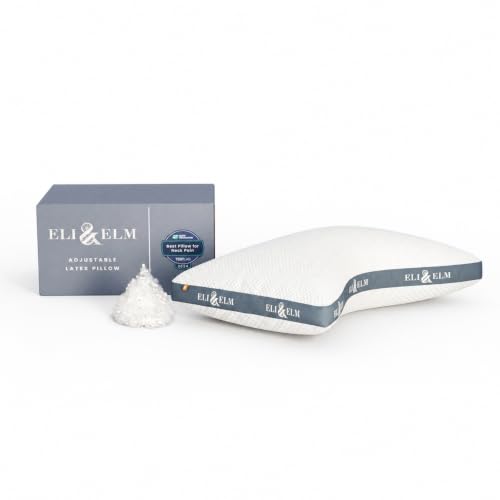
Eli & Elm Ergonomic Side Sleeper Pillow, Queen
Our badge: Best Overall
The Eli & Elm Ergonomic Side Sleeper Pillow is a U-shaped side sleeper pillow, built around adjustable latex and fiber fill in a breathable cover with a shoulder cutout design. Strictly, its fill is a latex blend rather than a memory foam, and it leads a foam guide anyway, because the cutout shape is the most important foam-form idea a side sleeper can buy: the shoulder rests into the curve, so the pillow’s height goes to the neck and head, where it is needed, instead of crushing the shoulder joint that happens to be in the way.
Strengths
- Curved cutout lets the shoulder sit naturally under the pillow
- Adjustable fill lets you fine-tune loft and firmness
- Breathable latex blend sleeps cooler than dense foam
Trade-offs
- Designed for side sleeping, so back sleepers get less from the shape
- Large queen footprint takes more bed width than a standard pillow
- Premium positioning in the range compared with basic bed pillows
| Size | Queen (U.S. Standard) |
| Dimensions | 28.99999997042 x 16.99999998266 x 0.0393700787 inches |
| Weight | 6.39 pounds |
| Color | Pillow |
Latex-blend foam behaves differently from memory foam, and side sleepers feel the difference in the first minute: it responds instantly instead of molding slowly, so the support is there when you land, not ten seconds later, and turning over does not mean waiting for a new crater to form. The fill adjusts through a zippered liner, so the cutout’s promise can be tuned to your actual shoulder rather than the average one. Through a full night, the construction holds its height at the neck edge, which is where cheaper shaped pillows quietly give up.
This is a specialist’s pillow and makes no apology for it. Back sleepers get little from the shape, stomach sleepers should look elsewhere entirely, and the queen footprint is a real claim on a shared bed. For the committed side sleeper who has tried rectangular foams and found them all guilty of the same shoulder crime, this is the form that answers the complaint directly, and the one most likely to end the search.
Best for: dedicated side sleepers who wake with a cramped shoulder / Not suited for: back or stomach sleepers looking for one all-purpose pillow
Choose it if the profile above sounds like your nights; skip it if the trade-offs describe you. Check on Amazon

Weekender Cooling Gel Memory Foam Pillow, Queen
Our badge: Best Cooling
The Weekender Cooling Gel Memory Foam Pillow is a ventilated gel memory foam pillow, built around gel-infused memory foam with ventilation holes and a washable zippered cover. It is the solid-foam representative in this guide, chosen because it answers solid foam’s two classic side-sleeper objections: the five-inch medium-firm profile is a sensible side-sleeping height for average frames, and the gel infusion plus drilled ventilation tackle the warmth that makes many side sleepers, faces buried in foam, abandon solid pillows by August.
Strengths
- Gel infusion and ventilation holes move heat away from the head
- Medium-firm contouring suits side, back, and stomach positions
- Also offered in a travel and camping size for trips away
Trade-offs
- Solid foam loft is fixed at five inches in the queen size
- Foam core itself is not washable, only the cover
- New foam can need a day or two of airing before first use
| Size | Queen |
| Dimensions | 29 x 16 x 5 inches |
| Weight | 2 pounds |
| Color | Blue |
Solid foam’s virtue is consistency: the support at the edges is the support at the center, it never needs shaking back into shape, and it will feel the same in month twelve as in week two. For a side sleeper whose measurements suit five inches of medium-firm foam, that consistency is deeply restful, and the ventilation genuinely changes the temperature story, because air can move through the pillow instead of only around it. The cover zips off and washes, which handles hygiene for a core that must never be laundered.
The fixed loft is the gamble, stated plainly above: too high for narrow shoulders on a soft mattress, too low for broad shoulders on a firm one, and unchangeable either way. Measure before you buy using the alignment test in the buying guide, and let the foam air for a day or two on arrival. If your numbers fit, this is the simplest foam ownership in the guide; if they do not, the shredded picks below exist precisely for you.
Best for: hot sleepers who want foam support without the warm feel / Not suited for: sleepers who prefer a soft, moldable shredded fill
Choose it if the profile above sounds like your nights; skip it if the trade-offs describe you. Check on Amazon

QUTOOL Cooling Shredded Memory Foam Pillows, Queen Set of 2
Our badge: Best Adjustable
The QUTOOL Cooling Shredded Memory Foam Pillows are adjustable shredded memory foam pillows, built around CertiPUR-US shredded gel memory foam with a double-sided cooling cover. Shredded is the foam form for side sleepers who have been burned by fixed lofts: the pieces mold around the head and ear, the loft adjusts by the handful, and the air between the pieces keeps the whole arrangement fresher than a solid block. In a two-pack with a cool-touch cover, this set is the adjustable foam answer for couples and hot sleepers alike.
Strengths
- Zippered access makes loft and firmness fully adjustable
- Cooling side of the cover feels cool to the touch for hot sleepers
- Set of two queen pillows covers both sides of the bed
Trade-offs
- Shredded fill needs a day or two of airing after unpacking
- Cooling effect is strongest in a cool room and fades as the cover warms
- Generous loft out of the bag is too much for stomach sleepers until adjusted
| Size | Queen(Pack of 2) |
| Dimensions | 29.9999999694 x 19.9999999796 x 0.0393700787 inches |
| Weight | 7.3 pounds |
| Color | White-cooling Basic |
For side sleeping, start with the loft high: shredded foam compresses more under load than its handful feel suggests, and the generous fill as shipped is closer to a side sleeper’s answer than to excess. The moldability is the midnight virtue; you can punch a hollow for a sore ear, build the edge under the neck, and reshape everything in seconds when you roll over, and no solid or contour foam offers that negotiation. The gel in the shreds and the cool side of the cover manage the temperature that face-down-in-foam sleeping generates.
Air the pair for a day or two on arrival, tune each pillow to its own sleeper rather than matching them, and expect the cooling cover’s effect to be a strong first impression that settles into simple freshness. If one side of the bed is a back or stomach sleeper, the two-pack still works, because their pillow can be thinned in a way a fixed pair never allows. This is the foam form most likely to fit a household whose measurements nobody knows yet.
Best for: couples and hot sleepers who both want adjustable support / Not suited for: anyone who wants a single low, soft pillow with no setup
Choose it if the profile above sounds like your nights; skip it if the trade-offs describe you. Check on Amazon
EPABO Contour Memory Foam Pillow, Queen
Our badge: Best Contour
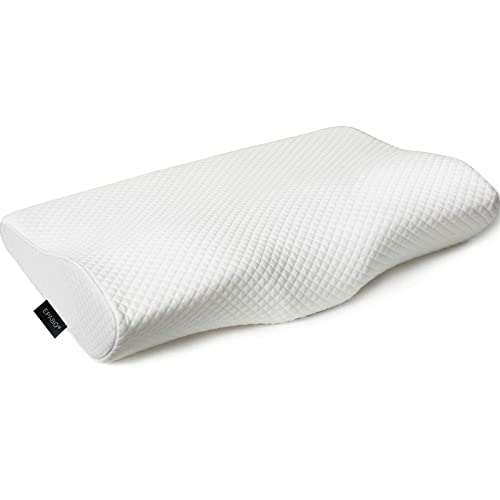
The EPABO Contour Memory Foam Pillow is a contour memory foam pillow, built around contoured memory foam with a breathable rayon-blend pillowcase included. The contour form, a higher roll for the neck, a lower edge as an alternative, and a dip for the head, is the classic foam answer for sleepers who want the pillow to hold a position rather than be punched into one. For side sleepers, the higher edge fills the shoulder gap with shaped support that does not drift, bunch, or need rebuilding at 3 a.m.
Strengths
- Shaped contour cradles the neck curve for back and side sleeping
- Two loft edges let you flip the pillow for a higher or lower side
- Included pillowcase is soft, breathable, and easy to remove
Trade-offs
- Contour shape takes one to two weeks to get used to for some sleepers
- Shaped design suits back and side sleeping better than stomach sleeping
- Foam should never be laundered, only spot cleaned
| Size | Queen(24*15*4.8 inches) |
| Dimensions | 15.2 x 9 x 6.1 inches |
| Weight | 1.95 pounds |
| Color | White |
Contour foam asks for an honest adaptation period, and this guide will not shorten it: the first nights feel structured and deliberate, and the second week is the fair test, a point the category’s own guidance repeats. What you get for the patience is predictability. The shape is the same every night, the neck roll does not migrate, and side sleepers who toss will find the pillow’s geography unchanged when they return to it. The included pillowcase is soft and breathable, and the foam itself is spot-clean only, as all memory foam is.
Fit is binary in a way shredded foam’s is not: the two edges give you two heights, and if neither matches your shoulder and mattress, no adjustment exists. Measure first, use the alignment test, and be honest about whether you sleep still enough for a shaped pillow to stay relevant all night. For the side sleeper who does, and who values a setup that never needs rebuilding, the contour form’s discipline is its charm.
Best for: back and side sleepers who want a shaped, supportive pillow / Not suited for: stomach sleepers or anyone who hates a structured feel
Choose it if the profile above sounds like your nights; skip it if the trade-offs describe you. Check on Amazon

Royal Therapy Memory Foam Contour Pillow, Queen
Our badge: Best for Foam Pillows for Side Sleepers
The Royal Therapy Memory Foam Contour Pillow is a contour memory foam pillow with an adjustable layer, built around layered memory foam with a removable middle layer and a bamboo rayon washable cover. It answers the contour form’s binary-fit problem in the simplest possible way: remove the middle layer and the pillow gets lower. For side sleepers between heights, or households whose mattress may change, that single layer of adjustability converts a gamble into a choice, and the moisture-wicking bamboo-blend cover keeps the shaped surface comfortable against the skin.
Strengths
- Removable middle layer gives two loft options in one pillow
- Contour shape supports the neck curve for back and side sleeping
- Moisture-wicking bamboo-blend cover sleeps comfortably cool
Trade-offs
- Contour shape is not designed for stomach sleeping
- Ventilated foam still sleeps warmer than latex or kapok
- Adjustment is by whole layer, not fine-grained like shredded fill
| Size | Queen 24 x 14 x 5″ |
| Dimensions | 24 x 14 x 5 inches |
| Weight | 1.15 pounds |
| Color | White |
The layered design also changes the feel subtly: the foam is engineered with ventilation in mind, and the layered construction gives a slightly more forgiving first contact than a single dense contour block, while the shape underneath still does the positional work. Side sleepers should start with the full stack, because side sleeping is the high-loft job, and remove the layer only if the alignment test shows the head tipping. Back sleepers sharing the model will often prefer it thinner, which makes this a rare contour that can serve two sleepers differently across a household.
Adjustment by whole layer is coarser than shredded fill’s handfuls, and the foam sleeps warmer than the latex-blend leader in this guide, both stated in the Trade-offs. The cover washes, the foam does not, and the usual contour adaptation period applies. If the EPABO’s two edges bracket your size but neither lands on it, this pillow’s removable layer is the tiebreaker, and for many side sleepers it is the contour that finally fits.
Best for: back and side sleepers who want contour support they can lower / Not suited for: stomach sleepers or fans of a soft, squashy pillow
Choose it if the profile above sounds like your nights; skip it if the trade-offs describe you. Check on Amazon

Coop Home Goods Eden Cool Adjustable Pillow, King
Our badge: Best Premium
The Coop Home Goods Eden Cool Adjustable Pillow is an adjustable shredded memory foam pillow, built around gel-infused cross-cut memory foam blended with microfiber, in a breathable Lulltra cover. It closes this guide as the premium shredded option: the gusseted construction that keeps fill honest at the corners, the extra bag of fill that makes the tuning range the widest here, and a cover fabric that feels a step above the category. For the side sleeper who has tried a contour, a solid foam, and a basic shredded pillow, this is the form perfected rather than reinvented.
Strengths
- Fully adjustable loft with an extra bag of fill included
- Gel-infused fill and breathable cover for a fresher sleep surface
- Gusseted edge keeps fill distributed instead of bunching at the corners
Trade-offs
- King size is bulky on smaller beds and in standard cases
- Dialing in the loft takes a few nights of adding and removing fill
- Heavier than a standard fiber pillow, so it is less handy for travel
| Size | King |
| Dimensions | 6.49999999337 x 1.49999999847 x 8 inches |
| Weight | 5.16 pounds |
| Color | Classic |
What the premium buys, concretely, is distribution and range. Lesser shredded pillows pass their first month and then develop a thin middle and fat corners; the gusset and the fill blend here resist that migration, so the loft you tuned in week one is the loft you sleep on in month six. The king size gives a side sleeper length to hug and to fold, and the weight that comes with it keeps the pillow planted. The gel infusion keeps the foam fresher than the category’s older reputation suggests.
The costs are the tuning week, the bulk, and the simple fact that a king shredded pillow is a commitment in a small bed. Buy it when the search has narrowed to getting shredded foam exactly right, rather than as a first experiment, for which the QUTOOL set is the gentler entry. Set once, in small handfuls over several nights, this is the foam pillow side sleepers most often describe as the end of the search.
Best for: sleepers who have never found a ready-made loft that fits / Not suited for: anyone who wants a pillow that is perfect the first night with no adjusting
Choose it if the profile above sounds like your nights; skip it if the trade-offs describe you. Check on Amazon
Comparison Table
| Pick | Type | Size | Weight | Check price on Amazon |
|---|---|---|---|---|
| Eli & Elm Ergonomic Side Sleeper Pillow, Queen | U-shaped side sleeper pillow | Queen (U.S. Standard) | 6.39 pounds | Check price on Amazon |
| Weekender Cooling Gel Memory Foam Pillow, Queen | ventilated gel memory foam pillow | Queen | 2 pounds | Check price on Amazon |
| QUTOOL Cooling Shredded Memory Foam Pillows, Queen Set of 2 | adjustable shredded memory foam pillow set | Queen(Pack of 2) | 7.3 pounds | Check price on Amazon |
| EPABO Contour Memory Foam Pillow, Queen | contour memory foam pillow | Queen(24*15*4.8 inches) | 1.95 pounds | Check price on Amazon |
| Royal Therapy Memory Foam Contour Pillow, Queen | contour memory foam pillow with adjustable layer | Queen 24 x 14 x 5″ | 1.15 pounds | Check price on Amazon |
| Coop Home Goods Eden Cool Adjustable Pillow, King | adjustable shredded memory foam pillow | King | 5.16 pounds | Check price on Amazon |
The table is a shortcut, not a verdict: read it as a form map, and match the form to your shoulder, your mattress, and your tolerance for tuning. Readers working through the rest of the bed often find Best Cushions For Sofas a helpful companion read on how foam choices behave across a whole home.
How to Choose the Best Foam Pillows for Side Sleepers
Start With Your Sleep Position, Not the Marketing
Every foam decision for side sleepers starts with the position you actually sleep in, not the one you intend to adopt. Side sleepers need loft that fills the space between ear and mattress and a form that holds it: cutouts and high contours for still sleepers, shredded fills for restless ones. Back sleepers sharing a household purchase need medium, forgiving forms. Stomach sleepers should leave foam’s supportive end alone entirely. Spend one night noticing where you wake up and how much you move, because movement, as much as position, sorts the forms in this guide: the more you move, the more moldable your foam should be. Readers who split positions should also read Best King Size Pillows For Side Sleepers on using length as a side sleeper’s second tool.
Measure Loft Against Your Frame and Mattress
Loft is the foam decision in one number, and it is the most common reason foam pillows get returned. Broad shoulders need more loft on the side; a softer mattress lets the shoulder sink, which reduces the loft you need; a firm mattress does the opposite. A simple home test is to lie in your sleep position and have someone check whether your nose lines up with the center of your chest. Fixed foams must pass that test as shipped, in one of their offered heights or edges; adjustable foams let you converge on it over a week. Measure first, and let the measurement, not the marketing, shortlist your forms.
Choose the Fill for Feel, Temperature, and Care
Within foam, the feel spectrum runs from shredded, moldable and forgiving, through layered contours, to solid blocks, consistent and unchangeable, with latex blends at the responsive, springy end. Temperature follows structure: shredded and ventilated foams move air, gel infusions buffer heat, dense solid foam holds it, and every foam sleeps warmer than kapok or plain fiber. Care is uniform and non-negotiable: foam cores are never laundered, so the cover and protector carry the hygiene, and a foam whose cover does not remove and wash is a foam to skip.
Check Size Against Your Bed and Cases
Standard, queen, and king foams differ by several inches in length, and shaped foams have their own sizing logic: a contour’s width must accommodate your turning habits, and a cutout’s queen footprint needs bed width to spare. Measure your cases before you order, because a compressed foam is a different, harder foam, and check shaped pillows against standard case dimensions, since some contours fit cases loosely and shift inside them. Readers furnishing a whole room at once may also want Best Bench Cushion Sofas for the seating side of the same refresh.
Plan the Trial Week Properly
Judge any foam over at least a week of real nights, and a contour over two, with your own mattress, your own case, and your usual routine. Change one variable at a time: if you also buy a new topper the same week, you will never know which change helped. Keep notes for the first three mornings, and if the foam is adjustable, change the fill in small steps every second night rather than all at once. A foam that is nearly right on night two is usually exactly right by night seven.
How to Break In a New Foam Pillow Faster
Setup decides more than shoppers expect. When your foam arrives, give it the full expansion and airing time it needs, which is up to one or two days for compressed products, and resist judging it before that time has passed; a half-expanded foam is a wrong measurement, not a wrong pillow. Fit the case you actually sleep on, set the pillow in your real sleep position, and run the alignment test before the first night. For shredded foams, fluff by hand and redistribute the fill evenly; for contours, identify the high and low edges in daylight so the first night is not an experiment conducted by touch.
Over the first week, tune one thing at a time and keep a simple record of the mornings. Most disappointment with foam is really an adaptation problem wearing a product problem’s clothes, and the fix is patience plus one variable at a time. If you are comparing approaches across searches, Best Leg Pillows For Side Sleepers covers the lower half of the side-sleeping setup, because knees and ankles obey the same geometry as the head.
Problem: The foam feels perfect in the shop test and wrong at 3 a.m. — Shop tests compress foam for seconds; sleep loads it for hours. Judge only after full nights, and prefer adjustable forms when you cannot test properly.
Problem: Your ear and jaw ache on a contour foam. — The shaped surface is too unyielding for your sleeping style. Move to a shredded, moldable foam, or confirm the diagnosis by placing a thin soft pillow over the contour for a week.
Problem: The foam sleeps warmer than expected. — Switch to a breathable cotton case, drop any thick protector for a thin one, and check whether the room, not the pillow, is the heat source.
Problem: A new foam smell lingers. — Air the pillow in a ventilated room for a day or two before first use, and wash the removable cover; the smell from new foam fades and is not a reason to sleep on it immediately.
Solid Versus Shredded Foam for Side Sleeping
This is the part of the decision most listings skip, and it is where the right foam for side sleepers is actually made. Solid foam, including contours, offers one engineered behavior: consistent support, no maintenance, no drift, and a fit that is either right or wrong as shipped. Shredded foam offers a negotiated behavior: support you assemble yourself, gentler on the ear, reshaped nightly, and dependent on your willingness to tune it. When a sleeper’s measurements are known and stable, solid forms reward them with years of identical nights. When measurements are unknown, changing, or shared between two different sleepers, shredded forms forgive what solid forms cannot. Returns in this category so often describe a good foam bought in the wrong form for the buyer’s situation.
The practical way through is to test deliberately. Change the foam and nothing else for a week. Note the mornings, not the evenings, because how you wake is the data that matters: where your head ended up, whether the foam kept its shape or its fill distribution, and whether you reached for a second pillow. Patterns across five or six nights beat any single-night verdict, and they point clearly at the adjustment to make, whether that is loft, form, or a different pick from the six above entirely.
Foam Density and That Too-Firm First Week
Zoom out one level and a foam pillow is part of a system: mattress, bedding, room temperature, and routine all lean on each other. Density deserves a plain explanation, because it is the word listings use to imply quality without information. Denser foam supports more and lasts longer, and feels firmer at the same loft; the right density is the one that holds your head at the aligned height without your ear complaining, and that is a fit question, not a maximization question. A foam that feels too firm in week one is often a foam whose loft is slightly too high for your mattress, which is why adjustable and layered forms exist.
Longevity belongs in this conversation too. A foam that suits you is worth maintaining: protectors washed monthly, covers washed on schedule, cores kept dry and out of prolonged heat, and a realistic replacement horizon of two to three years for shredded foam, longer for solid and latex constructions. Buying one right foam and caring for it beats cycling through cheap ones, for your sleep and for the household budget, and it is the pattern satisfied side sleepers almost always describe.
Households add a final variable: two side sleepers rarely need the same foam. Different shoulders, different mattresses sides wearing at different rates, different temperature preferences, and different tolerances for tuning all push partners toward different forms, and the two-pack and adjustable picks in this guide exist partly to make that divergence affordable and simple. The healthiest pattern is to treat the bed as two sleep systems sharing a mattress: tune each side independently, wash covers on a shared schedule, and resist the symmetry urge that makes one partner sleep on the wrong foam for the sake of a photograph. When both sides are right, the bed looks after itself, and the foam conversation in the household ends, which is the true measure of a successful purchase in this category. If a partner’s foam envy emerges, and it does, the shredded picks are the cheapest peace treaty in bedding, because one purchase can be split, tuned two ways, and judged independently on each side of the bed over the same two weeks.
One more foam variable deserves honest treatment before the mistakes section: break-in is real, and it is not a defect. Fresh memory foam is firmer than the same foam a month later, because the cells soften slightly with use and warmth; fresh shredded foam is looser than it will be once the pieces have settled into their arrangement. Judging either in the first forty-eight hours measures the packaging, not the pillow. Retailers know this, which is why sleep trials exist, and why the trial-week method in this guide insists on full nights across at least seven days before any verdict. Give the material its settling period, keep the room at your normal sleeping temperature while you judge, since foam firmness is temperature-sensitive, and the pillow you evaluate in week two is the pillow you actually bought.
Common Buying Mistakes
Buying loft by guess instead of by position
Choosing the tallest, firmest foam because it looks supportive, then spending a month with your head tipped. Measure against your sleep position and frame first, and prefer adjustable options when you are unsure.
Judging a foam in ten minutes
Squeezing a foam in a shop or lying on it for one evening tells you about its surface, not its night-long behavior. Commit to a week of real nights, and two for a contour, before deciding.
Ignoring the pillowcase and protector
A case that is too small compresses the foam and changes its loft, and a thick protector can undo a ventilated foam entirely. Match sizes exactly and keep protectors thin unless you need a barrier.
Expecting a pillow to treat a medical problem
Foams support comfortable positioning; they do not treat pain conditions, breathing disorders, or injuries. Chasing cures through purchases delays the professional help that actually addresses those problems.
Buying a matched pair when your needs differ
Partners rarely need the same foam, and two identical contours often means one sleeper compromising. Buy for each sleeper separately, even if the bed looks slightly less symmetrical in a photograph.
Final Recommendation
For most readers searching for the best foam pillows for side sleepers, start with the Eli & Elm Ergonomic Side Sleeper Pillow, Queen. Its cutout form and adjustable latex-blend fill answer the side sleeper’s shoulder problem more directly than any rectangular foam can. If you would rather tune a conventional shape, the runner-up is the QUTOOL Cooling Shredded Memory Foam Pillows, Queen Set of 2: Check on Amazon. Between those two, most side sleepers will find their foam, and the rest should use the trial-week method in this guide to identify exactly which variable, loft, shape, or density, their nights are asking them to change.
Frequently Asked Questions
Why does my foam pillow feel too high on my side?
Because loft is relative to your shoulder and mattress, not an absolute number. A foam that is right on a firm mattress can be too high on a soft one where your shoulder sinks less than expected, and narrow shoulders need less height than broad ones. Use the nose-to-chest alignment test, and if the foam is fixed, exchange the height; if it is shredded or layered, remove fill or the middle layer in small steps.
Do foam pillows sleep hot for side sleepers?
They can, because side sleepers bury more of the head in the pillow, but modern forms fight back: shredded fills move air between pieces, ventilated solid foams move it through holes, and gel infusions buffer the buildup. Pair any foam with a breathable case and a thin protector, and most hot sleepers find the current generation a different experience from the foam of a decade ago.
How long should I try a new pillow before deciding?
Give it at least a week of full nights, and two weeks for a contour or cutout shape. Your neck and shoulders adapt gradually, and first-night impressions are unreliable in both directions. Adjust adjustable fills in small steps every second night during that period rather than making one large change.
How often should a pillow be replaced?
Shredded foam typically serves two to three years before the pieces soften unevenly, solid foam and latex blends longer with good care. The real test is functional: if the foam no longer returns to its shape promptly, or the fill will not redistribute evenly, its support is spent regardless of its age.
Does pillow size really matter, or is it just bedding fashion?
It matters mechanically. A pillow compressed by a too-small case loses loft and gains unwanted firmness, while a shaped foam in a loose case shifts when you turn. Match the case to the pillow, and choose the size for your bed width and turning habits.
What should I do if my symptoms get worse with a new pillow?
Stop using it and go back to the setup that felt better, then reassess. A pillow should never be pushed through worsening pain, numbness, or disturbed sleep that persists. Those are signals to talk to a clinician, who can check for causes no foam can address.


