Disclosure: As an Amazon Associate, dailyhomedecorating.com earns from qualifying purchases. Links to Amazon on this page are affiliate links; they cost you nothing extra. Prices and availability change often, so check the current Amazon listing before you buy.
Waking up with a stiff, aching neck sends thousands of people shopping for a shaped foam pillow, and the marketing aimed at them is loud. This guide takes the calmer route: memory foam cannot cure anything, and no pillow treats neck pain. What the best memory foam pillows for neck pain shoppers can choose is a contour, loft, and foam behavior that keeps the neck comfortably supported and neutral through the night, so sleep stops adding to the problem. If neck pain persists, is severe, follows an injury, or comes with numbness or weakness, a clinician or physical therapist is the right next step, not another pillow.
Every linked pick below comes from a verified product pool, with specifications checked against the manufacturer’s own listing, so the dimensions and details in the spec boxes are the ones you can rely on. The six picks are the pool’s memory foam family in its real variety: two wave contours with different adjustment stories, a butterfly contour with a removable height piece, a ventilated solid foam for back and side sleepers who dislike contours, an extra-soft solid TEMPUR pillow, and a shredded adjustable for sleepers who want foam’s molding without a fixed shape. You will also find related reading woven through the guide, starting with Best Pillows For Your Neck, because the pillow is only one part of a neck-friendly sleep setup.
Read the Quick Picks table first if you are in a hurry, then the full review of the two or three foams that match your sleep position. The buying guide and how-to sections that follow are where most readers avoid the classic mistakes: judging a contour on night one, choosing a loft that pushes the head forward, and expecting a purchase to do a professional’s job. By the end you should know exactly which foam belongs on your bed, and just as importantly, which ones to skip.
Where to Buy
All six picks in this guide are sold on Amazon, which is where you should check the current price, availability, size options, and delivery details before buying, since all of those change often. The first pick is listed with a direct name link; every linked pick also carries a Check on Amazon link so you can compare the live listings side by side.
- EPABO Contour Memory Foam Pillow, Queen — Check on Amazon
- Royal Therapy Memory Foam Contour Pillow, Queen — Check on Amazon
- ZAMAT Adjustable Cervical Memory Foam Pillow — Check on Amazon
- Weekender Cooling Gel Memory Foam Pillow, Queen — Check on Amazon
- TEMPUR-Pedic TEMPUR-Cloud Pillow, Standard 2-Pack — Check on Amazon
- Coop Home Goods Eden Cool Adjustable Pillow, King — Check on Amazon
In this guide
Quick Picks
| Pick | Badge | Why it earns its place |
|---|---|---|
| EPABO Contour Memory Foam Pillow, Queen | Best Overall | The classic wave contour with two loft edges, the most predictable shaped support in the pool. |
| Royal Therapy Memory Foam Contour Pillow, Queen | Best Adjustable | A contour with a removable middle layer, so its height can come down without buying a second pillow. |
| ZAMAT Adjustable Cervical Memory Foam Pillow | Best for Memory Foam Pillows for Neck Pain | A butterfly contour with armrest wings and a height piece, shaped around the neck from every side. |
| Weekender Cooling Gel Memory Foam Pillow, Queen | Best Cooling | Ventilated gel foam in a conventional shape, for sleepers who want foam support without a contour. |
| TEMPUR-Pedic TEMPUR-Cloud Pillow, Standard 2-Pack | Best Premium | Extra-soft one-piece TEMPUR material that adapts closely, for sleepers who find contours too firm. |
| Coop Home Goods Eden Cool Adjustable Pillow, King | Best Shredded Alternative | Shredded foam that molds like memory foam but adjusts by the handful and reshapes nightly. |
Key Takeaways
- For neck comfort, neutral support matters more than brand: the head should rest level, with the neck’s curve supported and the chin neither pushed down nor tipped back.
- The EPABO contour is the safest first choice for most readers, because its two edges give two chances at the right height in one purchase.
- Give any contour up to two weeks of nights before judging it; shaped foam asks for an adaptation period, and night one is not evidence.
- No pillow treats neck pain or any medical condition. Persistent, severe, or worsening symptoms need a clinician, not a different pillow.
- Adjustable and layered foams forgive a wrong height guess, which is the most common reason neck pillows get returned.
- Care decides lifespan: foam cores are never laundered, so washable covers and protectors do the hygiene work.
How These Picks Were Chosen
The starting point was a verified pool of pillows with manufacturer-confirmed specifications, and every linked product in this guide comes from that pool. Products were judged first on honest fit for the search: is it genuinely a memory foam pillow whose shape, loft options, and behavior suit a neck-conscious sleeper, or is it a popular pillow being stretched into a search it does not belong to? Soft fiber pillows with no structural story were excluded, however pleasant they are for other purposes. The forms were deliberately varied across contour, layered contour, butterfly, solid, and shredded, because the right foam form depends on sleep position and stillness, and a guide that lists one form six times has answered nothing.
The second filter was support you can verify: published dimensions, weight, size, and construction, all of which appear in the spec boxes exactly as the pool records them. The third filter was everyday practicality, meaning washable covers, sensible care, and sizes that fit standard bedding. Finally, each pick had to earn a distinct role. Readers comparing neighboring searches will also find Best Contour Pillows For Neck Pain useful, because it isolates the shaped end of this same family and compares contours against each other directly.
A note on method and honesty: this guide is built from verified specifications, manufacturer information, and established category knowledge about foam behavior and sleep positions. It does not claim hands-on laboratory testing, it makes no medical claims, and it avoids the invented precision of star ratings and review counts, which change constantly and tell you little about whether a foam fits your body. Where a product has a real limitation, that limitation is stated in its Trade-offs, because a guide that only praises is an advertisement, not a guide.
The 6 Best Memory Foam Pillows for Neck Pain — Reviewed
EPABO Contour Memory Foam Pillow, Queen
Our badge: Best Overall
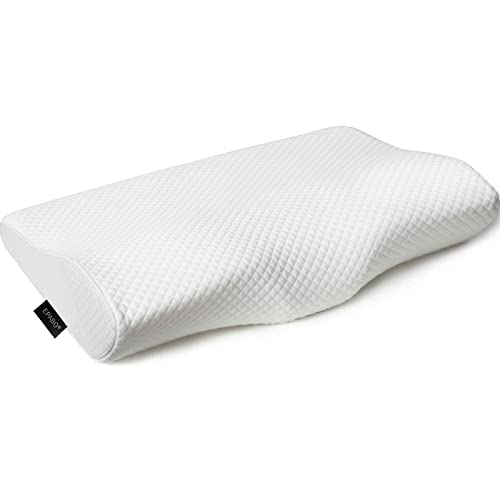
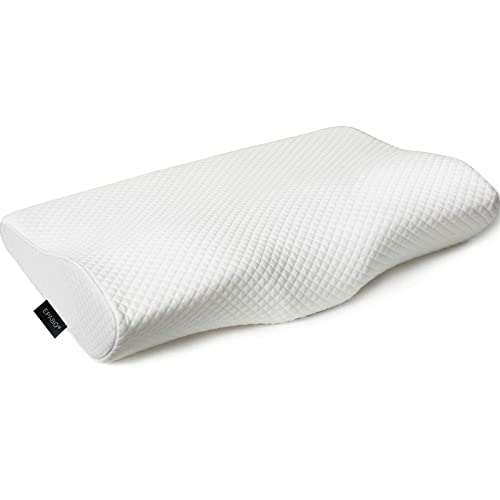
The EPABO Contour Memory Foam Pillow is a contour memory foam pillow, built around contoured memory foam with a breathable rayon-blend pillowcase included. Its wave profile, a higher roll for the neck, a dip for the head, and a lower second edge, is the shape most people picture when they picture a neck pillow, and it leads this guide because it is the most predictable version of the idea: the geometry is fixed, the support is consistent from the first night to the hundredth, and the two edges give back and side sleepers two heights to test without spending twice.
Strengths
- Shaped contour cradles the neck curve for back and side sleeping
- Two loft edges let you flip the pillow for a higher or lower side
- Included pillowcase is soft, breathable, and easy to remove
Trade-offs
- Contour shape takes one to two weeks to get used to for some sleepers
- Shaped design suits back and side sleeping better than stomach sleeping
- Foam should never be laundered, only spot cleaned
| Size | Queen(24*15*4.8 inches) |
| Dimensions | 15.2 x 9 x 6.1 inches |
| Weight | 1.95 pounds |
| Color | White |
Positioning is the whole skill with a contour: the roll goes under the neck, not under the head, and the head settles into the dip, so the neck’s curve is supported rather than suspended. On the side, the higher edge fills the shoulder gap; on the back, many sleepers prefer the lower edge, and discovering which edge belongs to which position is the productive work of the first week. Expect the foam to feel firmer and more deliberate than any pillow you have owned, and expect that feeling to fade into unremarkability, which is the contour succeeding.
The included case is soft and breathable, and the foam itself is spot-clean only. The honest risks are the adaptation period and the binary fit: if neither edge matches your frame and mattress, there is no third option inside this pillow, and the layered Royal Therapy below exists for exactly that case. For the still sleeper whose measurements suit it, this is the reference neck contour in the pool and the natural starting point for the whole search.
Best for: back and side sleepers who want a shaped, supportive pillow / Not suited for: stomach sleepers or anyone who hates a structured feel
Choose it if the profile above sounds like your nights; skip it if the trade-offs describe you. Check on Amazon

Royal Therapy Memory Foam Contour Pillow, Queen
Our badge: Best Adjustable
The Royal Therapy Memory Foam Contour Pillow is a contour memory foam pillow with an adjustable layer, built around layered memory foam with a removable middle layer and a bamboo rayon washable cover. It takes the same wave-contour idea as the EPABO and adds the one feature contour buyers most often wish for by week two: a way to make the pillow lower. Remove the middle layer and the whole profile drops, which converts the contour gamble into a two-position choice, and the moisture-wicking bamboo-blend cover keeps the shaped surface comfortable.
Strengths
- Removable middle layer gives two loft options in one pillow
- Contour shape supports the neck curve for back and side sleeping
- Moisture-wicking bamboo-blend cover sleeps comfortably cool
Trade-offs
- Contour shape is not designed for stomach sleeping
- Ventilated foam still sleeps warmer than latex or kapok
- Adjustment is by whole layer, not fine-grained like shredded fill
| Size | Queen 24 x 14 x 5″ |
| Dimensions | 24 x 14 x 5 inches |
| Weight | 1.15 pounds |
| Color | White |
Start with the full stack if you sleep on your side, because side sleeping is the high-loft job, and remove the layer if the alignment test shows your head tipping or your chin drifting down. Back sleepers will often land on the thinner configuration from the start. The layered construction gives a slightly more forgiving first contact than a single dense contour block, while the shape underneath still does the positional work, and the cover, rayon from bamboo, wicks moisture in a way plain polyester cases do not.
Adjustment by whole layer is coarser than shredded fill’s handfuls, and the foam sleeps warmer than latex or kapok, both stated plainly above. The adaptation period still applies; a removable layer does not repeal it. Buy this contour when you like the contour idea but your measurements sit between the standard heights, which, in practice, is a large share of the people who start this search.
Best for: back and side sleepers who want contour support they can lower / Not suited for: stomach sleepers or fans of a soft, squashy pillow
Choose it if the profile above sounds like your nights; skip it if the trade-offs describe you. Check on Amazon

ZAMAT Adjustable Cervical Memory Foam Pillow
Our badge: Best for Memory Foam Pillows for Neck Pain
The ZAMAT Adjustable Cervical Memory Foam Pillow is an adjustable contour cervical pillow, built around odorless memory foam in a butterfly contour shape with a bamboo-blend cooling cover. The butterfly design surrounds the neck more completely than a wave contour: a central cavity for the head, a contoured roll for the neck, and wings that give side sleepers’ arms a resting place. A removable piece in the base adjusts the height, and the foam is notably odorless for sensitive sleepers, a small detail that matters in a product your face rests on for a third of your life.
Strengths
- Removable base piece lets you adjust the pillow height
- Butterfly shape includes armrest wings for side sleeping
- Odorless foam and washable cooling cover suit sensitive sleepers
Trade-offs
- Unusual shape does not fit every standard pillowcase neatly
- Adjustment range is modest compared with shredded-fill pillows
- Contour feel is firmer than a traditional bed pillow
| Size | 24 x 14 x 3.74 inches |
| Dimensions | 24 x 14 x 0.0393700787 inches |
| Color | White and Light Grey |
The central cavity is the idea to understand: instead of the head resting on top of the pillow, it settles into a shallow cradle, which keeps it centered and lets the neck roll do its supporting work without the head wandering off the shape by midnight. Back sleepers feel this most; side sleepers get the wings, which solve the where-do-my-arms-go problem that shaped pillows usually create. The double pillowcase arrangement, a stretchy liner plus the washable bamboo-blend outer, keeps the foam protected and the surface cool.
Fit notes: the shape is compact, the case fit is idiosyncratic, and the height adjustment, while real, is a modest range rather than a transformation. Give the butterfly the same two-week fairness you would give any contour, and use the base piece early, while you are learning the shape, rather than after you have decided. For the sleeper who wants the most neck-specific shaping the pool offers, with a height escape hatch included, this is the pick.
Best for: sleepers who want contour support with some height control / Not suited for: anyone who moves between many positions all night
Choose it if the profile above sounds like your nights; skip it if the trade-offs describe you. Check on Amazon

Weekender Cooling Gel Memory Foam Pillow, Queen
Our badge: Best Cooling
The Weekender Cooling Gel Memory Foam Pillow is a ventilated gel memory foam pillow, built around gel-infused memory foam with ventilation holes and a washable zippered cover. Not every neck-conscious sleeper wants a shaped pillow, and this is the guide’s answer for them: a conventional rectangular form in medium-firm memory foam that contours gently to the head, neck, and shoulders without imposing a geometry. The gel infusion and drilled ventilation answer memory foam’s warmth problem, which matters when the face and neck are the contact area.
Strengths
- Gel infusion and ventilation holes move heat away from the head
- Medium-firm contouring suits side, back, and stomach positions
- Also offered in a travel and camping size for trips away
Trade-offs
- Solid foam loft is fixed at five inches in the queen size
- Foam core itself is not washable, only the cover
- New foam can need a day or two of airing before first use
| Size | Queen |
| Dimensions | 29 x 16 x 5 inches |
| Weight | 2 pounds |
| Color | Blue |
The trade the Weekender offers is support without structure: the foam molds, the height is a sensible middle, and nothing about the shape needs learning, which makes it the easiest first memory foam for a sleeper graduating from fiber. Side sleepers with average frames and back sleepers alike can use it on night one, and the ventilation genuinely changes the temperature experience compared with the solid foams of a decade ago. The zippered cover washes, and the pillow’s consistency across months is solid foam’s traditional virtue.
The fixed five-inch loft is the limit, and for a neck-focused search it is a real one: too high for some back sleepers, whose chin will drift down, and unchangeable. Measure with the alignment test before buying, and air the foam for a day or two on arrival. If a contour trial has already failed you because the shape itself was the problem, this conventional foam is the sensible second attempt.
Best for: hot sleepers who want foam support without the warm feel / Not suited for: sleepers who prefer a soft, moldable shredded fill
Choose it if the profile above sounds like your nights; skip it if the trade-offs describe you. Check on Amazon
TEMPUR-Pedic TEMPUR-Cloud Pillow, Standard 2-Pack
Our badge: Best Premium
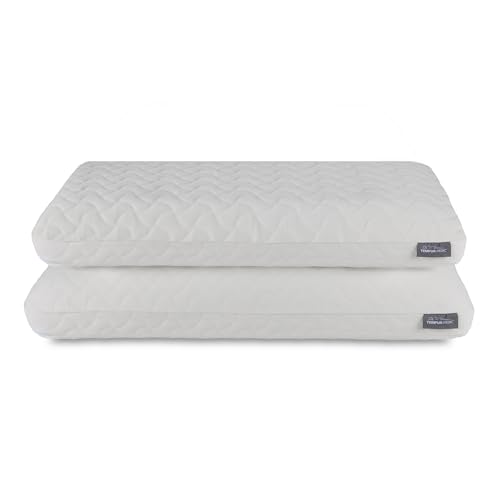
The TEMPUR-Pedic TEMPUR-Cloud Pillow is a solid memory foam pillow, built around a single piece of extra-soft TEMPUR material with a washable knit cover. TEMPUR material is the original memory foam story, and this extra-soft version is the guide’s premium answer for sleepers who find every contour too firm and every shaped pillow an imposition: one piece of foam that adapts precisely to the head, neck, and shoulders, in a conventional shape that asks nothing of the sleeper’s habits. The two-pack outfits both sides of the bed in the same material.
Strengths
- One-piece foam adapts closely to the head, neck, and shoulders
- Extra-soft feel suits sleepers who dislike firm contour pillows
- Removable, washable cover keeps the pair easy to maintain
Trade-offs
- Solid foam cannot be adjusted, so the loft is fixed
- Foam pillows should not be machine washed, only the cover
- Two-pack format means both pillows share the same soft feel
| Size | 2 |
| Weight | 6.61 pounds |
| Color | White |
The extra-soft feel is the point and the limit in one. For a back sleeper whose neck dislikes pressure, a foam that yields closely and distributes contact evenly can be the most comfortable surface in this guide, and the material’s slow, dense response is unmistakably premium in the hand. For a broad-shouldered side sleeper, the same softness means the head sinks further than the alignment test wants, and no adjustment exists to correct it. Neck comfort is personal enough that both of those sleepers are right, which is why this pillow sits at the premium end rather than the overall top.
The hypoallergenic cover removes and washes, the foam itself never goes near water, and the pair format means a partner gets the same feel whether it suits them or not, so buy it for a bed whose sleepers share a preference, or accept a spare. If contours have felt like equipment and ordinary foam like a brick, this is the material-first alternative, and the most luxurious surface in the guide.
Best for: back sleepers who want gentle, close-conforming support / Not suited for: side sleepers with broad shoulders who need high, firm loft
Choose it if the profile above sounds like your nights; skip it if the trade-offs describe you. Check on Amazon

Coop Home Goods Eden Cool Adjustable Pillow, King
Our badge: Best Shredded Alternative
The Coop Home Goods Eden Cool Adjustable Pillow is an adjustable shredded memory foam pillow, built around gel-infused cross-cut memory foam blended with microfiber, in a breathable Lulltra cover. It closes the guide as the escape route from shaping altogether: shredded foam molds like memory foam, because it is memory foam, but it can be added to, removed from, punched into a neck roll, or thinned to a back sleeper’s sheet, nightly, by hand. For the neck-conscious sleeper whose position changes too much for a fixed contour, that negotiability is the feature.
Strengths
- Fully adjustable loft with an extra bag of fill included
- Gel-infused fill and breathable cover for a fresher sleep surface
- Gusseted edge keeps fill distributed instead of bunching at the corners
Trade-offs
- King size is bulky on smaller beds and in standard cases
- Dialing in the loft takes a few nights of adding and removing fill
- Heavier than a standard fiber pillow, so it is less handy for travel
| Size | King |
| Dimensions | 6.49999999337 x 1.49999999847 x 8 inches |
| Weight | 5.16 pounds |
| Color | Classic |
The gusseted edge keeps the fill distributed, so the shape you build under your neck at lights-out is still there at 4 a.m., which is where lesser shredded pillows fail the neck mission specifically. The extra bag of fill widens the tuning range beyond any contour’s two heights, and the gel infusion keeps the molded surface fresher than traditional foam. In king size there is length to spare for hugging, folding, and building the exact topography a restless sleeper needs.
The costs are the tuning week, the bulk, and the absence of imposed structure: a shredded pillow will never hold a therapeutic-looking shape, because it is not trying to. If your neck wants a pillow that adapts to you rather than instructing you, and your sleep involves more movement than a contour tolerates, this is the memory foam for you, and for many searchers it is where the neck-pillow journey quietly ends.
Best for: sleepers who have never found a ready-made loft that fits / Not suited for: anyone who wants a pillow that is perfect the first night with no adjusting
Choose it if the profile above sounds like your nights; skip it if the trade-offs describe you. Check on Amazon
Comparison Table
| Pick | Type | Size | Weight | Check price on Amazon |
|---|---|---|---|---|
| EPABO Contour Memory Foam Pillow, Queen | contour memory foam pillow | Queen(24*15*4.8 inches) | 1.95 pounds | Check price on Amazon |
| Royal Therapy Memory Foam Contour Pillow, Queen | contour memory foam pillow with adjustable layer | Queen 24 x 14 x 5″ | 1.15 pounds | Check price on Amazon |
| ZAMAT Adjustable Cervical Memory Foam Pillow | adjustable contour cervical pillow | 24 x 14 x 3.74 inches | See listing | Check price on Amazon |
| Weekender Cooling Gel Memory Foam Pillow, Queen | ventilated gel memory foam pillow | Queen | 2 pounds | Check price on Amazon |
| TEMPUR-Pedic TEMPUR-Cloud Pillow, Standard 2-Pack | solid memory foam pillow | 2 | 6.61 pounds | Check price on Amazon |
| Coop Home Goods Eden Cool Adjustable Pillow, King | adjustable shredded memory foam pillow | King | 5.16 pounds | Check price on Amazon |
The table is a shortcut, not a verdict: the right row is the one whose form, contour, layered, butterfly, solid, or shredded, matches how still you sleep and how much tuning you will actually do. Readers working through the wider bedroom picture often find Best Cushion Choice For Kincaid Sofas a helpful companion read on supportive cushioning beyond the bed.
How to Choose the Best Memory Foam Pillows for Neck Pain
Start With Your Sleep Position, Not the Marketing
Every neck-pillow decision starts with the position you actually sleep in, not the one you intend to adopt. Back sleepers need a contour or medium foam that supports the neck’s curve without pushing the chin toward the chest, which is the single most common fit error in this category. Side sleepers need height that fills the shoulder gap, from a contour’s high edge or a well-filled shredded pillow. Stomach sleepers should be honest that most neck-focused foams are not built for them, and choose the lowest, softest option or none. Spend one night noticing where you wake up, not where you fall asleep, and buy for that position; Best Neck Pillows For Neck Pain compares the shaped options by form if you want the wider view first.
Measure Loft Against Your Frame and Mattress
Loft is the neck decision in one number. Too high, and the head tips forward or sideways; too low, and the neck hangs unsupported. A softer mattress lets the shoulder sink, which reduces the loft a side sleeper needs; a firm mattress does the opposite. Use the alignment test at home: lying in your position, your nose should line up with the center of your chest, and on your back your chin should rest level, not pressed down. Adjustable and layered foams exist because this measurement is personal, and they are the safest buy when you are between the standard heights, which most people are.
Choose the Fill for Feel, Temperature, and Care
Within memory foam, shredded molds and adjusts, solid adapts as one piece, and contours impose a shape. Temperature follows structure: ventilated and gel-infused foams move or buffer heat, dense solids hold it, and every foam in this guide sleeps warmer than latex or kapok would. Care is uniform: foam cores are never laundered, so a removable, washable cover is close to non-negotiable, and a thin protector extends the foam’s life by keeping oils and moisture out of it. Choose the form whose daily behavior you will still enjoy in month six, not the one with the most dramatic first squeeze.
Check Size Against Your Bed and Cases
Contour and cervical pillows are smaller than standard bed pillows, and their cases are their own; check what case a shaped pillow needs before assuming your existing ones fit, because a contour compressed by a tight case is a different, wrong pillow. Shredded and solid picks here follow standard, queen, and king sizing, with the usual rule: match the case to the pillow exactly. Readers furnishing a whole room at once may also want Best Cleaner For Patio Furniture Cushions for the seating side of the same household refresh.
Plan the Trial Week Properly
Judge any neck foam over at least a week of real nights, and a new contour over two, with your own mattress, your own case, and your usual routine. Change one variable at a time: if you also change your mattress topper the same week, you will never know which change helped. Keep notes for the first three mornings, because memory edits quickly, and adjust heights in the smallest steps available, an edge flip, a layer, a handful, every second night rather than all at once. A foam that is nearly right on night three is usually exactly right by night ten.
How to Position a Contour Pillow Correctly, Step by Step
Setup decides more than shoppers expect. Place the contour so the roll sits under the curve of your neck and your head rests in the dip, not perched on the roll; this single placement error accounts for most contour disappointment. On your back, start with the lower edge if your frame is slight or your mattress soft, and the higher edge if you are broader or the mattress is firm. On your side, use the higher edge and check that your head is level rather than tipped toward the bed. Give the foam its full expansion and airing time first, up to a day or two for compressed products, because a half-expanded contour measures wrong and judges worse.
Over the first two weeks, tune one thing at a time and keep brief morning notes: where the head ended up, whether the pillow migrated, whether you woke reaching for the old pillow. Most disappointment in this category is really an adaptation problem wearing a product problem’s clothes, and the fix is patience plus one variable at a time. If you are comparing approaches across searches, Best Bed Pillows For Neck Pain covers the non-contour route for sleepers who conclude that shaped foam is simply not for them.
Problem: The contour pushes your chin toward your chest. — The loft is too high for back sleeping on your mattress. Flip to the lower edge, remove a middle layer if your model has one, or move the pillow slightly down so the roll meets the neck, not the head.
Problem: You wake up off the pillow entirely. — The shape and your movement do not agree yet. Give it the full adaptation period; if it persists, a shredded foam that follows you is the better form for your sleep style.
Problem: The foam feels like a brick in a cold room. — Memory foam firms up when cold. Warm the room slightly or accept a softer first hour; if the effect dominates your winters, a latex or shredded form will suit your house better.
Problem: A new foam smell lingers. — Air the pillow in a ventilated room for a day or two before first use, and wash the removable cover; the smell from new foam fades and is not a reason to sleep on it immediately.
Contour Shapes Decoded: Waves, Butterflies, and Center Cavities
This is the part of the decision most listings skip, and it is where the right memory foam for neck comfort is actually made. The wave contour, EPABO and Royal Therapy here, is the generalist shape: a roll, a dip, two heights, suited to back and side sleepers who sleep fairly still. The butterfly, the ZAMAT, adds a center cavity and arm wings, surrounding the neck more completely and suiting back sleepers who want to be held in place. Unshaped foams, the Weekender, the TEMPUR-Cloud, and the shredded Coop, decline to impose geometry at all, and suit movers, skeptics, and anyone whose previous contour experiment failed on shape rather than height. When the form matches the sleeper’s stillness and position, almost any well-made foam feels good; when it does not, even an excellent foam disappoints.
The practical way through is to test deliberately. Change the pillow and nothing else for two weeks. Note the mornings, not the evenings, because how you wake is the data that matters. Patterns across ten or more nights beat any single-night verdict, and they point clearly at the adjustment to make, whether that is an edge, a layer, a handful of fill, or a different pick from the six above entirely.
The Two-Week Adjustment Period Nobody Warns You About
Zoom out one level and a neck pillow is part of a system: mattress, daytime posture, screen habits, and routine all lean on each other. A pillow chosen for comfortable neutral support will underperform if your days are spent with your head pushed toward a screen for ten hours, and no guide should pretend the night shift can undo the day shift alone. Before replacing a neck pillow for the second time, it is worth checking the system, and worth a professional’s eyes if the pattern persists, because recurring neck trouble has causes that bedding cannot reach.
Longevity belongs in this conversation too. A foam that suits you is worth maintaining: protectors washed monthly, covers washed on schedule, cores kept dry, and a realistic replacement horizon of two to three years for shredded foam, longer for solid constructions that still spring back evenly. Buying one right foam and caring for it beats cycling through cheap ones, for your sleep and for the household budget, and it is the pattern satisfied sleepers in this category almost always describe.
Partners deserve a paragraph of their own, because neck-pillow purchases are so often made in pairs by well-meaning symmetry. Two sleepers with different shoulders, different mattress wear on their own side of the bed, and different tolerances for structured foam will rarely converge on the same contour, and forcing the match means one of them spends the adaptation period adapting to the wrong pillow. The healthier pattern, visible in the picks above, is to treat each side of the bed as its own fitting: one partner in a wave contour, the other in a shredded foam tuned by hand, covers washed on the same schedule, verdicts reached independently. The bed will look marginally less like a hotel photograph and considerably more like a place where two specific people sleep well, which is the actual goal. If budget forces a sequence rather than a pair, fit the sleeper with the stronger preference first; the other side’s experiment gets cheaper and smarter from everything the first one teaches you about your mattress, your cases, and your household’s real tolerance for shaped foam.
Common Buying Mistakes
Buying loft by guess instead of by position
Choosing the tallest contour because it looks most supportive, then spending a month with your chin pushed down. Measure against your sleep position and frame first, and prefer adjustable or layered options when you are unsure.
Judging a contour in ten minutes
Lying on a shaped foam for one evening tells you about its novelty, not its behavior. Commit to two weeks of real nights before deciding, unless it clearly worsens your sleep, in which case stop and reassess.
Ignoring the pillowcase and protector
A case that is too small compresses a contour and changes its geometry, and a thick protector can undo a cooling cover entirely. Use the case the shape was designed for, and keep protectors thin.
Expecting a pillow to treat a medical problem
Memory foam supports comfortable positioning; it does not treat neck pain, disc problems, or any other condition. Chasing cures through purchases delays the professional help that actually addresses those problems.
Buying a matched pair when your needs differ
Partners rarely need the same contour, and two identical shaped pillows often means one sleeper compromising. Buy for each sleeper separately, even if the bed looks slightly less symmetrical in a photograph.
Final Recommendation
For most readers searching for the best memory foam pillows for neck pain, start with the EPABO Contour Memory Foam Pillow, Queen, understood as a comfort choice: its two edges give the classic contour its best chance of fitting your frame, at the simplest place in the range. If your measurements sit between standard heights, the runner-up is the Royal Therapy Memory Foam Contour Pillow, Queen: Check on Amazon. Between those two, most back and side sleepers will find their foam, and anyone whose symptoms persist through a fair trial should take that information to a clinician, where it belongs.
Finally, a word about expectations, because this category attracts more magical thinking than any other in bedding. A well-fitted memory foam pillow removes a genuine obstacle to comfortable sleep: a neck left unsupported, tipped, or pushed forward for eight hours. Removing that obstacle can change how your mornings feel, and that change is worth having. It does not follow that a pillow can resolve neck trouble with roots in injury, arthritis, disc problems, or years of daytime posture, and any listing that promises otherwise is telling you something about the listing rather than the foam. Buy for fit, position it carefully, judge it over two honest weeks, and take whatever it cannot fix to a professional who can examine you. That sequence, purchase second and professional assessment never skipped, is how the sleepers who end this long and often frustrating search successfully actually got there in the end.
Frequently Asked Questions
How long does it take to get used to a contour pillow?
Allow up to two weeks of full nights. The first nights feel structured and unfamiliar for almost everyone; by the second week the shape either disappears into the routine, which is success, or continues to fight your sleep style, which is information. Adjust the height early in that period, an edge flip or a layer change, rather than enduring a wrong height out of stubbornness.
Should a memory foam pillow feel firm or soft?
Supportive rather than either extreme: it should hold your head at the aligned height without a hard pressure point, and yield enough that your ear and jaw are not bearing the load. Firmness impressions vary with room temperature, because memory foam firms in the cold, so judge it in the room you sleep in, at the temperature you sleep at.
How long should I try a new pillow before deciding?
Give it at least a week of full nights, and two weeks for a contour or butterfly shape. Your neck and shoulders adapt gradually, and first-night impressions are unreliable in both directions. Adjust heights in small steps every second night during that period rather than making one large change.
How often should a pillow be replaced?
Solid memory foam typically serves several years, shredded foam two to three, with covers and protectors replaced as they wear. The functional test is recovery: foam that no longer returns to its shape promptly, or that has developed a permanent hollow, has finished its service whatever its age.
Does pillow size really matter, or is it just bedding fashion?
It matters mechanically, and with contours it matters geometrically: the shape only works at its designed dimensions, in its designed case. Match cases exactly, and check a shaped pillow’s footprint against your bed and your turning habits before ordering.
What should I do if my symptoms get worse with a new pillow?
Stop using it and go back to the setup that felt better, then reassess. A pillow should never be pushed through worsening pain, numbness, weakness, or disturbed sleep that persists. Those are signals to talk to a clinician promptly, who can check for causes no pillow can address.


