Where to buy
Check the latest price, availability and delivery on Amazon. Orders are placed on Amazon. We may earn a commission from qualifying purchases.
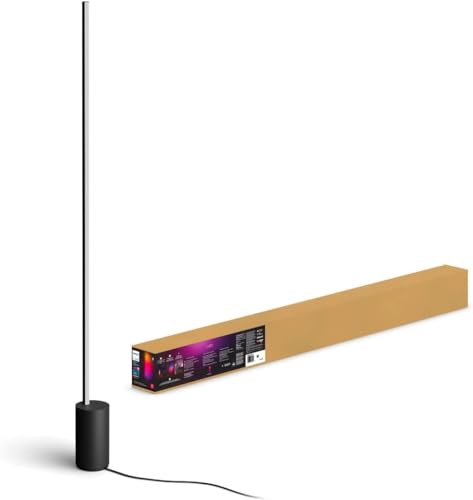
- Best overall for small spaces: Philips Hue Signe Gradient Floor Lamp, Black — Check on Amazon
- Govee Floor Lamp 2, RGBICWW Smart Floor Lamp with Matter — Check on Amazon
- Brightech Sky LED Torchiere Floor Lamp, Dimmable, Black — Check on Amazon
- Brightech Maxwell LED Shelf Floor Lamp with Shelves, Black — Check on Amazon
See 2 more Amazon options
- Govee Tree Floor Lamp with 3 Rotatable Lights, Matter Compatible — Check on Amazon
- SAFAVIEH Landen Leaf Floor Lamp, Antique Gold Finish, Fabric Shade — Check on Amazon
Read the full guide ↓
Disclosure: As an Amazon Associate, dailyhomedecorating.com earns from qualifying purchases. Links to Amazon on this page are affiliate links; they cost you nothing extra. Listing details such as price and availability change often, so check the current Amazon listing before you buy.
Finding the best floor lamp for small spaces under $400 starts with admitting what a small space actually is: not a small home, but the leftover geometry inside any home — the corner the sofa orphaned, the sliver between the bookshelf and the wall, the dark end of the hallway, the reading nook that exists only because a chair fits there. Those spaces share one rule: a lamp must fit the geometry that already exists, because the geometry will not move for the lamp. That is why this guide judges every pick first on shape — wall-hugging, corner-filling, ceiling-using, shelf-doubling — and only then on light. The budget helps more than you might expect. The mainstream floor lamp market tops out far below $400, so this ceiling reaches the top of the orderable range, including the one lamp in the category that claims almost no floor at all because it lights the wall instead of the room. What it should not buy is bulk: a wide, sprawling lamp in a small space is not a statement, it is an obstruction, and you will find none recommended here.
The honesty notes for this tier, up front. Almost every brightness figure in this category is a maker’s figure with no shared measurement standard behind it, and almost no floor lamp publishes a verified color rendering index, so we report makers’ claims as claims and judge by direction and placement: light on a wall glows, light on a ceiling fills, light through a shade warms a corner, light aimed at a page reads. We also have to be straight about the money: most small-space problems are solved well below this ceiling, and several picks here sit far under it. The $400 headroom earns its keep only where it buys thinness, a wall effect, or zoning that a cheaper lamp cannot do. Readers whose small space is an entire small apartment will find the floor-plan-first version of this argument in Best Floor Lamp For Small Apartments Under $400, and those furnishing a small bedroom should see Best Floor Lamp For Small Rooms Under $300, where the same geometry is judged at bedside scale.
Our headline pick for most small spaces is the Philips Hue Signe Gradient, because the classic small-space problem — a corner too tight for furniture but too dark to ignore — is precisely the problem a wall-washing pole was invented to solve. If your small space has no free wall, start with the Brightech Sky instead and let the ceiling do the work. Below: the quick picks table, detailed notes on all six lamps, a comparison table, a small-space buying checklist, the placement mistakes that shrink a room, and answers to the questions tight corners always raise.
In this guide
Quick Picks
Short on time, or comparing several options at once? Each row below names a small-space situation and the lamp that suits it, with a link to the listing.
| Small-space situation | Pick | Why it stands out | Link |
|---|---|---|---|
| Best overall for small spaces | Philips Hue Signe Gradient Floor Lamp | Lights the wall, not the floor plan — almost no floor claimed | Check on Amazon |
| Best slim pole | Govee Floor Lamp 2 (H607C) | Full-range white plus gradient color in the gap behind furniture | Check on Amazon |
| Best corner uplight | Brightech Sky LED Torchiere Floor Lamp | A room’s worth of ceiling bounce from a 10-inch base | Check on Amazon |
| Best space-doubling lamp | Brightech Maxwell LED Shelf Floor Lamp | A lamp that is also three shelves, in 10×10 inches | Check on Amazon |
| Best corner zoning | Govee Tree Floor Lamp, 3 Rotatable Lights | Three aimed heads make one corner serve three spots | Check on Amazon |
| Best traditional nook lamp | SAFAVIEH Landen Leaf Floor Lamp | A shaded socket lamp sized for the reading corner | Check on Amazon |
How These Picks Were Chosen
The first filter was the budget, applied honestly: every lamp below is a real Amazon listing whose recommended configuration sits at or under $400 in the United States — and most sit well under it, because in small spaces the scarce resource is not money but inches, and inches are not sold by the dollar. We would rather show you the lamps that fit than pad the list toward the ceiling. Where a price moves with deals or finishes, we say so and tell you to check the current price on Amazon before ordering.
The second filter was geometry, applied as four small-space tests. Claim: how much floor does the lamp actually take — a wall-hugger and a slim pole claim almost none, a torchiere claims a disc, a shelf tower claims a square and repays it. Surface: what does the lamp light — small spaces reward lamps that light the boundary surfaces (the wall behind, the ceiling above) because lit boundaries make a space read larger, while a bright object mid-space makes it read smaller. Reach: can the light get where the space needs it — into the nook, over the chair, down the hall’s dark end — from the one spot the lamp can stand? And tolerance: small spaces are high-traffic by definition, so bases had to be weighted, felted or frame-stable enough for the bumps a tight plan guarantees. The wide-stance tripod, a fine lamp in a generous corner, failed the claim test outright and appears nowhere below; in small spaces its stance is the whole floor budget spent on legs.
We did not use these lamps ourselves. We read maker listings and specification pages, compared base dimensions and weights, light direction, dimming methods and warranty terms, and treated every brightness figure as a maker’s claim rather than a measurement. Where a maker’s figures conflict between production runs, we note the conflict instead of printing the flattering number. Where a listing was vague about a dimension, we say so rather than guess — in a guide about inches, guessed inches are a disservice.
The 6 Best Floor Lamps for Small Spaces Under $400
Philips Hue Signe Gradient Floor Lamp, Black
Who it suits: Anyone with a tight corner and a free wall — the small living room whose end wall sits dark, the hallway-adjacent nook, the space behind the sofa where a normal lamp would be all base and no benefit.
The Signe solves the small-space equation by refusing its terms. Instead of standing in the room and lighting it, a slim aluminum pole, about 57.4 inches tall, stands against the wall and lights the wall: a seamless gradient of color washing upward, multiple hues blending along a single fixture, so the boundary of the space becomes the light source. Signify rates the output at up to 2,550 lumens at 4000K and 1,800 lumens at 2700K — maker figures, as always in this category — but the honest translation is genuine ambient brightness for an indirect lamp, enough to carry a small room’s base layer on its own. In a small space that indirectness is worth more than the number: a lit wall reads as distance, so the room feels larger after dark, and there is no visible fixture in the sightline announcing itself as an object the space could not afford. It speaks Bluetooth out of the box for app control in the room, and joins the full Hue ecosystem — scenes, routines, voice assistants, entertainment sync — with a Hue Bridge. This guide links the black version; a white version exists under its own listing, and an oak finish sits at the very top of this budget by the maker’s pricing, so confirm the finish and check the current price on Amazon before ordering — it is the priciest pick in this guide.
The conditions are real and geometric. The Signe needs its wall: reasonably clear, reasonably light in color, and close behind the lamp’s standing spot. A small space whose walls are dark-painted, fully shelved or mostly window gives it nothing to paint on, and no discount on the pole will fix that — survey the wall before the lamp. Signify publishes no CRI, so treat its white as pleasant rather than color-accurate. Its light is indirect only; it will make a nook glow and will not put a readable pool on a book in that nook. The full feature set needs the Bridge, a further purchase this budget can absorb but should count. And the LED is integrated and sealed. Where the wall exists, though, the exchange is unmatched in this guide: the category’s flagship lighting effect in exchange for the few inches behind a sofa — the precise trade every small space is trying to make.
- Claims wall, not floor: a flagship gradient effect from the sliver behind the furniture.
- Maker-rated up to 2,550 lumens at 4000K — a small room’s ambient layer, from an invisible source.
- Bluetooth out of the box, full Hue ecosystem with a Bridge — check price on Amazon, and confirm the finish.
Honest limitation: Needs a clear, light-colored wall directly behind it; no published CRI; indirect light only; full features need a Bridge bought separately; integrated LED.
Choose it if your small space has a wall to give. Skip it if the walls are dark or covered — the Sky below asks for a ceiling instead, and every room has one of those.

Govee Floor Lamp 2 (H607C), RGBICWW Smart Floor Lamp
Who it suits: Small spaces that change jobs — the corner that is a reading spot by day and the room’s evening glow by night, the sliver beside the desk, the gap behind the armchair — anywhere a few inches must hold a whole range of light.
The Floor Lamp 2 is the small-space all-rounder: a slim pole, about 55 inches tall and only about 3 kilograms, that fits the gaps furniture leaves — behind the sofa, between shelf and wall, beside the bed — and still behaves like a lighting system rather than a night-light. Its segmented RGBICWW strip paints gentle gradients up the pole’s length while dedicated white diodes handle honest illumination. Govee rates it at 1,725 lumens, a maker’s figure as always, with a white range from 2200K candle-warm to 6500K daylight, more than 80 scene modes, music sync, and Matter over Wi-Fi alongside Alexa, Google and SmartThings. That range is what a small space actually needs from its one lamp: cool, alert white when the corner is a workspace, candle-warm when it is a reading nook, a soft gradient when it is neither and the room just wants to feel finished. Check the current price on Amazon; in our research sightings it sat in the lower-middle of this guide’s range. One caveat from our notes: at least one crawl of this listing showed no featured offer available, so confirm a live offer and the configuration on the listing before ordering.
The trade-offs are the slim pole’s trade-offs, stated plainly. At about 3 kilograms it is a light object — a virtue for rearranging and for carrying between rooms, a caution in a high-traffic squeeze, where it belongs tucked behind furniture rather than freestanding in the pass-through. Its brightness is mood-and-ambient: it will make a small room feel lit and will not turn a desk into a workstation. The LED is integrated, no CRI is published, and its smart features live in an app on a 2.4GHz network — in a small space that also means its cord and its corner should be planned together, because a pole this slim usually stands far from the outlet it wants. None of that dents its role: when the space offers only inches, this is the lamp that makes inches feel like enough, and it is the natural partner to a heavier anchor lamp in the way small rooms are actually lit — one fixture for glow, one for work.
- The slimmest full-range lamp in this guide — it lives in the gaps other lamps cannot enter.
- Warm-to-cool white (2200K–6500K claimed) plus segmented gradient color in one pole.
- Matter over Wi-Fi with Alexa, Google and SmartThings — check price on Amazon.
Honest limitation: Integrated LED with no published CRI; ambient rather than task brightness; light weight needs a tucked-away position; features depend on the app and network.
Choose it if your small space offers a sliver and demands a system. Skip it if the corner must also light a desk properly, or stand unguarded in a traffic squeeze.

Brightech Sky LED Torchiere Floor Lamp, Dimmable, Black
Who it suits: Dark small spaces of every kind — the windowless den corner, the north-facing nook, the small room whose one ceiling fixture is a dim dome — where the lamp must disappear into a corner and the light must come from the ceiling it borrows.
The Sky’s small-space logic is that the ceiling is the one surface a tight room always has free. From a base about 10 inches across — a disc that slides into the corner behind a chair and is forgotten there — it aims all of its output upward, bounces it off the ceiling and returns it as even, shadow-soft ambient light. In a small room that geometry overperforms, because the ceiling is close and the walls join the bounce, so a single corner lamp can carry the whole space’s base layer. A note on its output figure, because honesty about this model requires it: Brightech’s claimed lumens for the Sky have differed between production runs — figures around 2,190 lumens in the long-running specification and higher claims on newer listings — and since these are maker figures with no shared standard, we print the conservative reading and the conclusion independent roundups keep reaching, which is that in the real world this lamp lights a small-to-medium room on its own. The color is fixed at 3000K warm white, the head pivots to angle the wash toward the room’s darker half, and a touch dimmer on the pole steps through three brightness levels with memory. This guide links the black finish; other finishes exist under their own listings, so confirm the finish and check the current price on Amazon — it sits at the very bottom of this guide’s range in every finish.
Two details suit it to tight quarters beyond its size. Its base concentrates nearly all of the lamp’s weight in a felt-covered disc: stable in the bump-rich environment of a small room, and the felt lets it slide on hardwood and laminate without scratching when the corner gets cleaned or rearranged — which in small spaces is often. And Brightech backs it with a 3-year warranty and US-based support, rare in this category at any price. The honest limits: the LED is integrated and rated by the maker at 20,000 hours, so the lamp’s life is finite in a way a bulb lamp’s is not; the 3000K color never changes, which is warm for close work; the dimmer steps rather than sweeps; and a tall person standing close can see into the bowl. For the dark small space, the proposition remains the guide’s simplest: ten inches of corner, a ceiling’s worth of light, and most of the budget left over for whatever the room needs next.
- Ceiling-bounce uplight sized for small rooms — the base layer from a 10-inch corner disc.
- Felt-covered weighted base: stable against bumps and slides on hard floors without scratching.
- Three-level touch dimmer with memory, pivoting head, 3-year warranty — check price on Amazon.
Honest limitation: Integrated, non-replaceable LED with a fixed 3000K color and a stepped (not smooth) dimmer; maker output claims vary by production run.
Choose it if your small space is dark and its ceiling is free. Skip it if you need the light low and local — a shaded corner lamp like the Landen below keeps light at seated height instead.

Brightech Maxwell LED Shelf Floor Lamp, Black
Who it suits: Small spaces that are small because objects have nowhere else to go — the corner where the books, remotes, chargers and mail currently colonize the floor, and where a lamp that is also furniture solves two problems with one footprint.
The Maxwell reframes the small-space question: instead of asking how little floor a lamp can take, it asks how much floor a lamp can justify. Its footprint is 10 by 10 inches, and inside that square stand three open shelves under a fabric-shaded light — so the corner holds the lamp, the current reading, the phone and its charger, the remote and the small plant, in the vertical volume a small space otherwise wastes. The frame stands 63 inches tall, Brightech describes the construction as wood, and the light source is a 9.5W LED bulb Brightech rates at 800 lumens and 3000K warm white. That bulb is replaceable — a small-space virtue that compounds, because furniture that earns its footprint tends to be kept for years, and a kept lamp should not die with its first bulb. Operation is a pull chain, and the simple switched load pairs perfectly with a smart plug if the household wants scheduling or voice control without buying a smart lamp. Check the current price on Amazon, as pricing varies by finish. Note that the Maxwell family includes wireless-charging and drawer editions under different listings; this guide links the standard LED shelf version, so confirm the configuration on the live listing before ordering.
Honesty about both halves of the proposition. The light is ambient corner light — 800 maker-rated lumens through a fabric shade warms a seating area and will not illuminate a room or a desk; in a small space that is often exactly the layer wanted, but it must not be bought as a main source. The shelves are display shelves, rated for books and small objects, not storage furniture; load them with that humility, heaviest items low, and the four-post frame is a stable presence that rocks as a unit rather than levering over. Assembly is required, and there is no built-in dimmer — levels belong to the bulb or plug. Within those terms, the Maxwell is the only pick here that leaves a small space with more capacity than it found, and in genuinely tight homes that is not a gimmick but the whole point. The apartment-scale version of the same bargain anchors Best Floor Lamp For Small Apartments Under $300 at the tier below.
- Lamp plus three shelves in a 10×10-inch footprint — the only pick that increases a small space’s capacity.
- Replaceable LED bulb (800 maker-rated lumens, 3000K) in furniture built to be kept.
- Pull-chain simple, smart-plug friendly — check price on Amazon, and confirm the shelf edition.
Honest limitation: Ambient corner light only; light-duty display shelves; assembly required; no built-in dimming — levels come from your bulb or plug.
Choose it if your small space’s problem is objects, not darkness. Skip it if the space needs real illumination — the Sky — or a slimmer claim — the Floor Lamp 2.

Govee Tree Floor Lamp with 3 Rotatable Lights, Matter Compatible
Who it suits: One-corner households — the compact living area where a single corner must serve the reading chair, the screen and the room at once, and where running three lamps is not a lighting plan but a tripping hazard.
The Tree concentrates a small room’s whole lighting plan into roughly a square foot of corner. Three heads on one pole rotate independently — the arms sweep 350 degrees horizontally and tilt 90 degrees vertically — so one head pools light over the reading chair, one washes the wall behind the screen, and one bounces off the ceiling for the room’s base glow, all from a single outlet. In a small space that consolidation is the feature: one base to fit, one cord to route, one footprint to keep out of the walkway, instead of three. Govee rates the three heads at up to 1,500 lumens combined, about 500 per head; a maker’s figure with no shared standard behind it, read honestly as flexible ambient light rather than task power. Each head carries full RGB color plus white with Govee’s LuminBlend mixing, dozens of scenes and music sync, and the lamp speaks Matter, tying into Alexa, Google Home or SmartThings rather than living only in its maker’s app. Check the current price on Amazon: it sits comfortably inside this budget, well below the ceiling.
The small-space audit is about the corner and the claims. A square foot is a modest claim, but in a small room every corner is contested — the Tree earns its corner only if its three aims genuinely cover the chair, the screen and the room; placed where one head is wasted on a wall of shelves, it is an expensive pole. Its weight is moderate, so the corner should sit out of the direct traffic line, and its per-head output is ambient: aimed close over a chair it reads well, expected to light a desk across the room it will not. The LEDs are integrated, and the features ride on an app and a 2.4GHz network. Weighed fairly, the Tree is the small space’s zoning system — the lamp for the home whose rooms are few but whose evenings are varied — and its natural rival is not another lamp but the decision to run two simpler ones, which costs more floor and more outlets. Small spaces usually cannot afford that decision, which is why the Tree is here.
- Three independently aimed heads: a whole small room’s lighting plan from one corner and one outlet.
- Roughly a square foot of floor replaces up to three separate lamps.
- Full color plus white with Matter support — check price on Amazon.
Honest limitation: Integrated, non-replaceable LEDs; app and network dependence; per-head output is ambient, not task-grade; the corner must be out of the traffic line and all three aims must earn their keep.
Choose it if one corner must serve the chair, the screen and the room. Skip it if a single calm glow is all the space needs — the Floor Lamp 2 or the Landen does it with less machinery.
SAFAVIEH Landen Leaf Floor Lamp, Antique Gold Finish
Who it suits: The traditional reading nook inside any home — a chair, a side table and a small square of floor that want warm, shaded, seated-height light from a lamp with no software in it and a bulb anyone can replace.
Not every small space wants a system; some want a glow in exactly one chair-sized place, and the Landen is this guide’s answer for them. A metal stem in an antique gold leaf finish — a finish, honestly noted, not solid brass — stands 63.5 inches tall and carries a fabric drum shade about 15 inches across, a footprint and presence sized for the corner beside a reading chair rather than the middle of a room. Inside the shade is a standard E26 socket. The listing quotes 800 lumens, but with a socket lamp that figure describes the bulb pictured; fit your own and you choose the brightness, the color temperature and the color rendering for the nook — warm and high-rendering for reading, softer for evenings — forever, for the price of a bulb. The shade does the small-space work: it keeps the light local and low, pooled at seated height where a nook wants it, instead of broadcasting across a room that may be doing something else. Pricing for this listing moves around more than most in this guide, so check the current price on Amazon and avoid buying at a spike; in our research sightings it sat far below this guide’s ceiling.
The honest limits are the traditional lamp’s limits. It does not dim on its own — levels come from a dimmable bulb with a plug-in dimmer or a smart bulb, which in a nook is often the preferred arrangement anyway, since the control can live at the chair. Its light is ambient and local by design: it will warm its corner beautifully and will not lift a dark room, so a genuinely dark small space should start with the Sky and add the Landen for the chair. The fabric shade is its fragile part, and its stem-lamp stability is conventional — fine in its corner, no match for the weighted bases here in a traffic squeeze. What it returns is the oldest bargain in lighting: a lamp that works identically for decades, serviced by a bulb, asking nothing of your network or your patience. In a guide of systems, the nook that simply wants to glow is entitled to exactly that. Buyers furnishing the nook at the tier below will find its relatives ranked in Best Floor Lamp Under $150.
- Fabric drum shade pools warm light at seated height — the reading nook’s exact layer.
- E26 socket: brightness, color and rendering are your bulb choice, replaceable forever.
- No app, no account, no network — check price on Amazon, and buy on a dip.
Honest limitation: No built-in dimming; local ambient light only, not a room-filler; the fabric shade is fragile and its price moves around, so timing matters.
Choose it if your small space is a nook that wants to glow. Skip it if the space is dark overall — the Sky first — or you want scenes and schedules, which are the Govee picks’ trade.

Comparison Table
| Product | Type | Light source | Best small-space use | Link |
|---|---|---|---|---|
| Philips Hue Signe Gradient | Wall-wash design pole | Integrated LED, gradient color | The tight corner with a free wall | Check on Amazon |
| Govee Floor Lamp 2 (H607C) | Slim smart pole | Integrated LED, RGBICWW | The sliver behind furniture, all day | Check on Amazon |
| Brightech Sky LED Torchiere | Torchiere uplight | Integrated LED, fixed 3000K | The dark corner that must light the room | Check on Amazon |
| Brightech Maxwell LED Shelf Lamp | Shelf tower lamp | Replaceable LED bulb | The corner drowning in small objects | Check on Amazon |
| Govee Tree Floor Lamp | Multi-head smart pole | Integrated LED, color + white | One corner serving chair, screen and room | Check on Amazon |
| SAFAVIEH Landen Leaf Floor Lamp | Traditional shaded lamp | Replaceable E26 bulb | The reading nook’s warm, local glow | Check on Amazon |
How to Choose a Floor Lamp for a Small Space Under $400
- Measure the space, not the room. Small-space shopping fails when buyers measure the room and imagine the lamp in its best corner. Measure the actual spot — the width behind the sofa, the depth of the nook, the corner’s clearance on every side — and tape the candidate base’s outline on the floor for a day. The tape test is free and it is never wrong.
- Light the boundaries. A small space reads larger when its edges are lit and smaller when a bright object sits in its middle. Wall wash (Signe), ceiling bounce (Sky) and tall gradient poles (Floor Lamp 2) all spend light on the boundary surfaces. Buy the boundary your space lacks: the dark wall, the low ceiling, the unlit end.
- Make the footprint earn its keep. Every square foot in a small space has competing bidders. A lamp justifies its claim by combining jobs — shelves (Maxwell), three zones (Tree), a ceiling fixture’s work (Sky) — or by claiming almost nothing (Signe, Floor Lamp 2). A lamp that does one job from a large footprint is the small space’s worst bargain at any price.
- Route the cord on paper first. In tight geometry the cord is half the installation. The lamp’s spot must reach an outlet with the cord behind furniture or along a wall — never across the walkway, where in a small space it becomes both a trip line and a pull-down lever. If the only route crosses open floor, choose a different spot or a different lamp.
- Weight the base for the traffic you have. Small spaces are bump-rich by definition. Weighted and felted bases (the Sky) and four-post frames (the Maxwell) forgive the contact; light poles (the Floor Lamp 2) must be tucked behind furniture where the traffic cannot reach them. Match the lamp’s stability to the spot’s exposure, honestly.
- Keep the light local or total — on purpose. A nook wants a local pool at seated height (Landen); a dark room wants a total ambient layer (Sky, Signe). The small-space mistake is the middle purchase: a mid lamp that half-lights everything and serves nothing. Decide which of the two jobs your space needs before you shop.
- Read brightness as geometry, not numbers. Listing lumens are maker claims with no shared standard, and in a small space direction matters more than output anyway — the ceiling is close, the walls are near, and a modest lamp with the right geometry outperforms a powerful one aimed at nothing.
- Spend on thinness, not size. At this tier the premium buys a wall effect that claims no floor, zoning that deletes other lamps, and bases engineered for tight traffic. It does not buy a brighter small space by default — the strongest ambient lamp here is among the cheapest. Keep the change for the space’s next problem.
What $400 Buys a Small Space — and What It Doesn’t
Here is the tier’s honest shape for tight geometry. The money buys the category’s one true small-space flagship: a gradient lamp that lights the wall and leaves the floor to furniture. It buys zoning systems that consolidate three lamps into one corner and one outlet, and shelf furniture that turns a lamp’s footprint into storage. It buys bases weighted and felted for bump-rich rooms, and dimming fine enough to tune a nook by the hour. Those are the upgrades small spaces feel, because they are measured in inches unclaimed and jobs combined.
What $400 does not buy is area, and honesty requires saying so in a guide about small spaces. No lamp makes a tight corner generous; the best ones make it useful and make it glow. It does not buy brightness by default — geometry beats budget in rooms where the ceiling is close — and it does not repeal the category’s physics: five of these six light engines are sealed, a shelf lamp’s shelves are light-duty, and a light pole still needs protection from traffic. Spend the $400 on the claim your space can afford — wall, corner or square foot — and on the boundary your room has left dark, and the purchase will read as space gained rather than space spent.
Common Buying Mistakes
- Buying a wide-stance tripod for a small space — its legs spend the whole floor budget before the light is even considered.
- Skipping the tape test and discovering the base blocks the room’s only comfortable path.
- Placing a bright lamp mid-space, where it shrinks the room visually, instead of lighting a wall or ceiling boundary.
- Routing a cord across open floor — in a small space, a trip line and a pull-down lever in one.
- Ranking lamps by printed lumen numbers, which are maker claims with no shared measurement standard behind them.
- Buying a wall-wash lamp for dark or fully covered walls — it has nothing to paint on.
- Expecting a shaded nook lamp to lift a whole dark room, or an ambient pole to light a desk.
- Overloading a shelf lamp beyond display weight, or ordering its charging/drawer edition when the shelves were the point.
Final Recommendation
- Most small spaces: Philips Hue Signe Gradient — the wall becomes the light, the floor stays yours — check the current price on Amazon, confirm the finish, and budget the Bridge for the full system.
- A sliver and a schedule: Govee Floor Lamp 2 — full-range light tucked behind the furniture.
- Darkness in a corner: Brightech Sky — a ceiling’s worth of light from ten felt-covered inches.
- Objects before light: Brightech Maxwell — shelves that happen to glow.
- One corner, three jobs: Govee Tree — chair, screen and room from a single outlet.
- The reading nook: SAFAVIEH Landen — a shade, a socket and a bulb you choose.
Our top two for small spaces are the Signe, because it makes the trade every tight room dreams of — a flagship effect for a few inches of floor — and the Sky, because it makes the opposite trade just as well, turning the one surface a small room always has free, its ceiling, into the light. Between them they cover most of the small spaces in most homes. Add the Floor Lamp 2 where only a sliver exists, the Maxwell where the corner is drowning in objects, the Tree where one corner must work three shifts, and the Landen where a nook simply wants to glow. Tape the footprint, walk the wall, route the cord on paper, check the current price on Amazon and confirm the configuration on the listing, and buy the lamp that makes your small space feel chosen rather than leftover.
Frequently Asked Questions
What type of floor lamp is best for a small space?
The type that lights a boundary instead of occupying the middle: wall-wash lamps (the Hue Signe) and uplight torchieres (the Brightech Sky) claim a sliver or a small disc and spend their light on the wall or ceiling, which also makes the space read larger. Slim smart poles fit the gaps behind furniture; shelf lamps justify a square footprint by doubling as storage. The type to avoid is the wide-stance tripod, whose footprint spends a small space’s whole floor budget on legs.
How do I make a small space feel bigger with lighting?
Light the edges and dim the middle. A washed wall or a bounced ceiling pushes the room’s boundaries outward visually, while a bright lamp standing mid-space becomes an object the eye measures the room against. Keep light sources out of the sightline where you can — indirect and gradient lamps excel here — and use dimming to keep the ambient layer gentle, with brighter pools only where a task happens. Two modest lamps at opposite boundaries will enlarge a room more than one powerful lamp in its center.
Can one floor lamp light a small room on its own?
Yes, if its geometry is a boundary geometry: the Sky’s ceiling bounce carries a small room’s ambient layer alone, and the Signe’s wall wash does the same where a suitable wall exists. What one lamp cannot also be is the reading light and the desk light at full quality — a nook still wants its own local pool, which is why guides like this one pair an ambient anchor with a chair lamp. In a small space that pairing usually costs less floor than one oversized lamp attempting everything.
Where should a floor lamp go in a small space?
In the corner the furniture has already orphaned, behind the sofa’s end, or in the sliver beside a bookshelf — anywhere its base leaves the walkway untouched and its cord reaches an outlet along a wall or behind furniture. Aim matters as much as placement: uplights want ceiling above them, wall-wash lamps want a clear light-colored wall behind them, and shaded lamps want a chair beside them. Tape the base outline on the floor and live with it for a day before ordering; the right spot survives the tape test, the wrong one announces itself within an hour.
Are shelf floor lamps worth it in small spaces?
When the corner’s real problem is objects, yes — the Maxwell’s three shelves hold the books, chargers and remotes that otherwise colonize the floor, in the same 10-by-10 inches a plain lamp would claim. The honesty notes: its light is ambient corner light, not a room’s main source; its shelves are display-weight, not storage furniture; and it needs assembly. Bought as furniture that glows, it is one of the few lamps that leaves a small space with more capacity than it found; bought as a lamp that happens to have shelves, it will disappoint on light alone.
Is it worth spending the full $400 on a lamp for a small space?
Only where the money buys space back: the Signe’s wall effect that claims almost no floor, or zoning that deletes two other lamps and their cords. It is not worth spending for raw brightness — in a small room the cheapest ambient lamp here performs like the dearest, because the ceiling and walls are close — or for a large, impressive object, which a small space experiences as a cost. Many tight rooms will be best served by the Sky or the Floor Lamp 2 and most of the budget unspent, and that is a successful outcome of this guide, not a compromise.