Where to buy
Check the latest price, availability and delivery on Amazon. Orders are placed on Amazon. We may earn a commission from qualifying purchases.
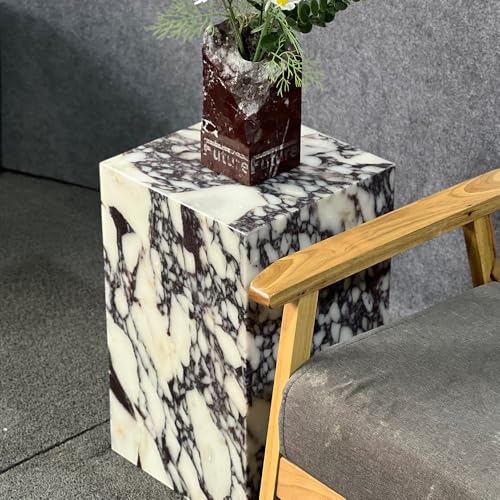
- Best overall for modern homes: FutureStone Luxury Marble Side Table in Calacatta Viola — Check on Amazon
- Nathan James Amalia End Table with Faux Marble Top — Check on Amazon
- Christopher Knight Home Hoyt Wood End Table in Walnut — Check on Amazon
- Nathan James Jasper Mid-Century End Table with Fluted Drawer Doors — Check on Amazon
- Yoobure C-Shaped End Table with Charging Station — Check on Amazon
- WELLAND Solid Teak Live Edge End Table — Check on Amazon
Read the full guide ↓
Disclosure: As an Amazon Associate, dailyhomedecorating.com earns from qualifying purchases. Links to Amazon on this page are affiliate links; they cost you nothing extra. Listing details such as price and availability change often, so check the current Amazon listing before you buy.
The best end table for modern homes under $2000 has a harder job than its traditional counterpart, because modern rooms are unforgiving. In a layered, traditional living room, a slightly ordinary table disappears into the pattern. In a modern room — low sofa, open floor, three colors and a great deal of deliberate empty space — every object is on stage, and the end table is the object closest to the audience. It will be looked at, from above, at reading distance, every day. Modern design also has a materials ethic that a $2000 ceiling finally lets you honor: if it looks like marble, it should be marble; if it looks like wood, wood all the way through. The premium modern table is not the most decorated one. It is the one whose form is so resolved, and whose material is so honest, that it needs nothing else in the room to justify it.
This guide applies that standard to six verified tables, and the results span the modern spectrum. The FutureStone pedestal in genuine Calacatta Viola leads — a square column of violet-veined stone that functions as much as sculpture as furniture, and arrives with no assembly because there is nothing to assemble: it is one material, honestly worked. The Nathan James Amalia follows as the mid-century icon, white-topped and splay-legged, the silhouette that defined the modern living room for a generation. The Christopher Knight Home Hoyt brings the era’s other great idea, the biomorphic shaped top, in warm walnut. The Nathan James Jasper answers modernism’s storage problem with fluted cabinetry — texture without ornament, clutter behind doors. The Yoobure C-table is modernism as utility: a powered, cantilevered surface that treats charging cables as a design problem and solves it. And the WELLAND teak closes the list as the organic-modern counterpoint, solid wood with a live edge, proof that contemporary rooms need one natural, irregular note to keep all that geometry human.
All six sit inside the under-$2000 frame — check price on Amazon for the current figure on each — but they spend the budget in philosophically different ways: one buys stone, one buys an icon, one buys a shape, one buys concealment, one buys function, and one buys a tree. The reviews below take each philosophy seriously, because in a modern home the end table is never just an end table. It is a position statement with a lamp on it.
In this guide
Quick Picks
In a hurry? This table matches each pick to the modern style it serves best.
| Buyer type | Pick | Why it stands out | Link |
|---|---|---|---|
| Best overall for modern homes | FutureStone Luxury Marble Side Table, Calacatta Viola | Genuine marble pedestal — sculpture and table in one honest material | Check on Amazon |
| Best mid-century icon | Nathan James Amalia End Table | The definitive white-top, splayed-leg silhouette; endlessly compatible | Check on Amazon |
| Best biomorphic shape | Christopher Knight Home Hoyt End Table | Guitar-pick walnut top — modernism’s organic curve, brand-backed | Check on Amazon |
| Best modern storage | Nathan James Jasper End Table | Fluted doors give texture without ornament and hide the clutter | Check on Amazon |
| Best functional modern | Yoobure C-Shaped End Table with Charging Station | Cantilevered C-form with built-in power — cables solved as design | Check on Amazon |
| Best organic modern | WELLAND Solid Teak Live Edge End Table | Solid teak with a live edge — the one natural note a geometric room needs | Check on Amazon |
How These Picks Were Chosen
We did not hands-on test these tables. Each model was verified against its Amazon listing and maker information — materials, dimensions, construction, features — and then judged by modern design’s own criteria rather than by generic furniture standards. Material honesty came first: in a modern room, a surface is a claim, and we checked the claims. The marble pick is natural stone throughout; the teak is solid teak throughout; and the one laminate in the guide, the Amalia’s faux marble top, is identified as such in its review and judged as a design icon and value pick, never passed off as stone. Form came second: pedestal, splayed leg, biomorphic top, fluted cabinet, cantilever and live edge — six distinct formal ideas, because a modern guide that lists six near-identical tables has understood nothing about modernism.
Proportion came third, and it is where modern rooms are least forgiving. A modern sofa sits lower than a traditional one — arms commonly in the low-to-mid twenties of inches — so table height must be matched to the actual seat, and visual weight matters as much as measured size: a stone pedestal occupies a room’s attention far beyond its footprint, while a splayed-leg table nearly vanishes beneath its top. We note visual weight in every review. Finally, we required each pick to earn its place in a composed room: either as a focal object (the marble, the teak), as a perfectly compatible supporting player (the Amalia, the Hoyt), or as the piece that removes a modern eyesore — visible clutter, visible cables (the Jasper, the Yoobure). Readers refining the tier below should see Best End Table For Modern Homes Under $1000, where the same formal questions are asked at half the ceiling.
A note on the budget itself: modern design rewards restraint in spending as in form. Two of these picks cost a small fraction of the ceiling, deliberately. A modern room is an ensemble — sofa, light, rug, table — and the guide’s value picks exist so the ensemble can be balanced rather than one object gorging on the whole budget while the lamp above it flickers with compromise.
The 6 Best End Tables for Modern Homes Under $2000
FutureStone Luxury Marble Side Table in Calacatta Viola
Who it suits: Contemporary, minimalist and gallery-leaning rooms that need one material-true focal object beside the sofa — and owners who understand stone care as part of the aesthetic ritual.
Begin with the material, because the material is the design. Calacatta Viola is a white Italian marble veined in violet and wine-dark red, quarried rather than manufactured, so the pattern on the table that arrives at your home exists on no other object. FutureStone forms it into a square pedestal — top and body in natural marble, polished, contemporary in style — and ships it with no assembly required, which is another way of saying the table has no joints, no hardware and no visual noise: a single stone idea, executed at furniture scale. In a modern living room, where the sofa is likely a low expanse of neutral upholstery, this pedestal does what modern rooms ask of their few objects. It holds the lamp, and it holds the room.
Placement is the craft. A stone pedestal wants breathing room — a few inches of visible floor around its base, a lamp chosen as carefully as the table, and nothing else competing on its surface beyond a book and a drink. It pairs naturally with boucle, linen and leather, and its violet veining gives a strict black-and-white scheme the single color note designers always end up adding. Weight is part of the presence: this is the most planted object in the guide, indifferent to bumps, and its delivery should be planned like a small sculpture’s — two people, a decided position, felt protection under the base on hard floors.
The care contract is marble’s eternal one, and modernists, to their credit, usually accept it as philosophy: the stone is not stain resistant, it etches under acids, and it records use as patina. Coasters are not a burden in a modern home; they are a designed object too, and this table gives you an excuse to buy beautiful ones. Check price on Amazon — stone colorways rotate through stock — and if your room’s scheme wants a quieter stone, the same maker’s travertine-look and Arabescato variants exist in the same pedestal family, though the Viola is the one with something to say.
- Genuine natural Calacatta Viola marble — veining unique to each piece, no two alike.
- Monolithic square pedestal form; arrives fully assembled, zero visual hardware.
- Functions as the room’s focal sculpture while doing full end-table duty.
Honest limitation: Real marble etches and stains without coaster discipline, is very heavy to place, and its dramatic veining will fight a room that already has a loud pattern in play.
Choose it if your modern room needs one honest, spectacular material. Skip it if you want matched pairs, quiet surfaces or zero-maintenance ownership.
Nathan James Amalia End Table with Faux Marble Top
Who it suits: Mid-century modern rooms above all — but also Scandinavian, Japandi and transitional spaces that need the lightest possible visual footprint beside the sofa.
If the marble pedestal is modernism’s monument, the Amalia is its folk song: a round white top on three splayed solid wood legs, model 32402 in the Nathan James catalog, and quite possibly the most widely owned modern end table in America. Its endurance is not an accident. The proportions are the mid-century ideal — a top that floats, legs that taper, nothing between the eye and the floor — and the white-and-pale-wood palette is the rare combination that agrees with grey sofas, camel sofas, boucle sofas and the green velvet sofa you have not bought yet. In modern rooms, where every object is scrutinized, the Amalia’s special gift is that it is never the problem.
Precision about the top, as this guide always insists: it is a marble-pattern laminate over engineered wood, not stone. In a modern context that fact cuts both ways, and we judge it fairly. The purist loses material honesty; the pragmatist gains a surface with no etching, no sealing, no coaster anxiety, on a table light enough to move with one hand when the room is rearranged — and modern rooms, with their modular sofas and rotating art, are rearranged constantly. The legs are genuinely solid wood, the base carries pre-applied furniture pads, and the price band — check price on Amazon — is the guide’s lowest, which in ensemble terms means the Amalia plus an exceptional lamp will outperform a maximal table under a mediocre light, every evening, in every modern room.
Its limitations are a light build that suits calm rooms better than boisterous ones, and a laminate surface that cannot be refinished if deeply marked. Neither diminishes its role here: it is the supporting player so good that designers keep casting it. In a modern home that already owns its statement — art, a sculptural sofa, the marble coffee table — the Amalia is frequently the correct end table precisely because it declines to compete.
- The definitive mid-century silhouette: round white top, three splayed solid wood legs.
- Near-zero visual weight — the top floats and the floor shows through beneath.
- Value pricing frees budget for the lamp and art a modern room really shows off.
Honest limitation: The top is faux marble laminate, not stone — material purists should look to the FutureStone — and it cannot be refinished after deep damage.
Choose it if your room already has its focal point and needs perfect support. Skip it if the end table itself must be the room’s material statement.
Christopher Knight Home Hoyt Wood End Table in Walnut
Who it suits: Mid-century and warm-modern rooms that find pure geometry cold, and buyers who want a designed shape with an established brand standing behind it.
Modernism’s second great idea — after the straight line — was the biomorphic curve, and the Hoyt is that idea at end-table scale. Its top is a softened triangle, a guitar-pick shape 20.08 inches across at its widest, standing 22.05 inches high on tapered wood legs in a warm walnut finish. The shape is not whimsy; it is problem-solving. The broad curve faces the room and receives a lamp like a stage; the tapered end slides toward the wall, using the dead corner of the sofa gap that round and square tops waste. Christopher Knight Home, one of Amazon’s longest-established furniture brands, publishes the dimensions to the hundredth of an inch and asks only light assembly — a confidence in the details that modern buyers, who read specifications the way traditionalists read reviews, will appreciate.
In the room, walnut is the warm modernist’s material: darker and richer than the pale Scandinavian palette, lighter in spirit than black, and the natural partner to the low, long sofas and credenzas of the mid-century scheme. The Hoyt’s visual weight is low-to-medium — present, shaped, but never blocky — which makes it the guide’s easiest pick to pair asymmetrically: one Hoyt beside the sofa, something else entirely beside the reading chair, and the room looks curated rather than mismatched. At its price band — check price on Amazon — that curatorial flexibility costs a fraction of the ceiling.
The trade-offs are a top smaller than a square cabinet’s (lamp, book, drink — yes; the full tea service — no) and a light frame that belongs in the room’s calm zones. The walnut finish wants coasters for hot and wet items, as all finished wood does. None of this dents its standing as the guide’s most purely likeable shape: the table modern-room owners point at when guests ask where it is from.
- Biomorphic guitar-pick top — modernism’s organic curve, genuinely useful geometry.
- Warm walnut finish with tapered wood legs; 22.05-inch classic height.
- Established brand, precise published dimensions, light assembly.
Honest limitation: The shaped top trades surface area for fit, and the light build is a calm-zone piece, not a household workhorse.
Choose it if your modern room needs warmth and curve. Skip it if you need maximum surface or enclosed storage.
Nathan James Jasper Mid-Century End Table with Fluted Drawer Doors
Who it suits: Modern households whose minimalism keeps being sabotaged by real life — remotes, cables, chargers, mail — and who need the room’s calm to be a system, not a performance before guests.
Every modern room has a secret: minimalism is mostly storage. The Jasper is that secret, furniture-grade. Behind doors faced in fine vertical fluting — the texture that has become contemporary cabinetry’s signature, all rhythm and shadow, no applied ornament — sits enclosed storage sized for the modern living room’s actual debris: remotes, game controllers, charging cables, the tablet, the notebook. Brass handles and a natural brown finish warm the fluting’s discipline. Closed, the Jasper reads as a tailored mid-century cabinet; the room reads as serene; the connection between those two facts is the entire product.
As an end table it does the standard duties with a cabinet’s planted stability — lamp on top, drink beside it, no wobble, no spindly legs interrupting the floor plane that modern rooms like to keep continuous. Nathan James backs it as a current model from an established brand, which matters when a door needs adjusting in year two. It sits mid-range in this guide’s budget — check price on Amazon — and for modern homes it may be the highest-value spend here, because it does not merely occupy the modern room; it maintains it. Pair it with the fluted media console you have been considering and the room’s whole storage wall speaks one language — the same coordination logic we apply in Best Console Table For Modern Homes Under $2000.
Honest costs: fluted grooves collect dust and want a soft brush rather than a flat cloth; door storage is a fraction slower than an open shelf for the remote you grab hourly (solve it by keeping exactly one remote out, in a designed tray, and everything else behind the doors); and the cabinet footprint needs a measured gap, not a guessed one. For the modern household, these are small prices for a room that stays the way the photographs promised.
- Fluted-door storage — contemporary texture that hides the modern room’s debris.
- Cabinet build keeps the floor plane clean and the stance completely planted.
- Brass handles and natural brown finish warm minimal schemes.
Honest limitation: Grooves need brush dusting, and the cabinet footprint is the widest here — measure the sofa gap before ordering.
Choose it if your minimalism needs infrastructure. Skip it if you want an open, leggy silhouette and own nothing worth hiding.
Yoobure C-Shaped End Table with Charging Station
Who it suits: Modern homes that actually run on devices — which is to say, modern homes — especially open-plan rooms where a cable snaking to a wall outlet reads as a design failure.
The most modern object in this guide has no famous silhouette and no precious material. It has a thesis: the charging cable is a permanent feature of contemporary life, so furniture should absorb it. The Yoobure’s C-shaped frame slides its base under the sofa and cantilevers its top over the seat — modernism’s beloved cantilever, put to domestic work — while its second tier carries a charging station with two USB ports and two AC outlets on a 6.5-foot cord. Phones, tablets, laptops and the lamp itself plug in at arm’s reach. The floor stays bare. The wall outlet disappears from the composition. Yoobure even places the station on the second tier rather than the top, so a spilled drink does not reach the power — systems thinking, in a side table.
Stylistically it is industrial-modern and deliberately quiet: a frame and boards in a rustic-toned finish that supports a room rather than auditioning for it. That quietness is its modern virtue. Not every object in a contemporary room should be a statement; the Yoobure is infrastructure with good posture, and it frees the room’s statement budget — in every sense — for the pieces that face the door. Its price band, check price on Amazon, is among the guide’s lowest, which makes the strategy explicit: solve power perfectly and cheaply, then spend the ceiling on stone, wood or art.
Limits, honestly: it is board-and-frame construction, not heirloom joinery, and no one will mistake it for the marble pedestal across the room. The C-form is stable as designed — base tucked under the sofa — and less planted freestanding in open floor. And powered furniture asks the dry-tier discipline described in its review: drinks on top, devices below, never the reverse. For the household whose sofa is also an office, a cinema and a charging depot, it is not the compromise pick. It is the correct one.
- Built-in power: 2 USB ports and 2 AC outlets, protected on the second tier.
- Cantilevered C-form puts a surface over the seat and erases cable runs.
- Quiet industrial-modern styling that supports stronger pieces in the room.
Honest limitation: Utility construction rather than fine furniture, and it must stay tucked under the sofa to be at its most stable.
Choose it if cables and charging are your modern room’s visible problem. Skip it if every piece in your room must be a material statement.
WELLAND Solid Teak Live Edge End Table
Who it suits: Organic-modern, Japandi and warm-minimalist rooms — any contemporary space that has discovered, usually after living in it, that pure geometry needs one piece of nature to feel finished.
Designers have a rule of thumb: a modern room needs something in it that was not drawn with a ruler. The WELLAND is that something, at the highest material standard in this guide after the marble. It is solid teak — top, frame and base, no veneer, no engineered core — in a compact 18 by 18 inch square standing 20 inches high, and its top preserves the tree’s live edge: a smoothed, undulating contour that no factory setting can reproduce. Teak brings its own modern credentials beyond honesty. It is dimensionally stable, naturally oil-rich and moisture-resistant, and it ages by deepening toward amber — a material with a past and a future, in rooms that otherwise risk feeling frozen at the moment of purchase.
In composition, the teak works hardest beside the coolest elements: against a grey or white sofa, under a black metal lamp, next to glass and chrome, its warmth is the room’s temperature control. At 20 inches it suits the low-slung seating modern rooms favor, and its versatility — end table now, plant stand or bedside piece after the next redesign — matches the way modern households actually iterate their spaces. Its price band is the accessible end of premium, check price on Amazon, which for solid hardwood of this character is the guide’s quiet bargain.
The modernist caveats are real: a live edge is an irregularity, and a strict symmetrical scheme — matched pairs, aligned grids — will experience it as an error rather than an accent; buy it singly, as the room’s one organic note, or not at all. Its lower height also pairs with low sofas, not high traditional arms. Within an organic-modern scheme, though, it is the piece guests touch — literally, people run a hand along a live edge — and a room people want to touch is a room that has solved modernism’s coldness problem.
- Solid teak throughout with a preserved live edge — the room’s one unrepeatable form.
- Natural oils resist moisture; the wood deepens in tone as it ages.
- Compact 18 x 18 inch footprint; end table, plant stand or bedside versatility.
Honest limitation: The irregular edge defeats strict symmetry and matched pairs, and the 20-inch height suits low modern seating only.
Choose it if your geometric room needs warmth and one natural note. Skip it if your scheme is a strict grid that must match perfectly.
Comparison Table
| Product | Material | Best modern use | Link |
|---|---|---|---|
| FutureStone Marble Side Table, Calacatta Viola | Natural marble stone | The focal sculpture beside a low contemporary sofa | Check on Amazon |
| Nathan James Amalia | Faux marble laminate, solid wood legs | Weightless mid-century support in any modern scheme | Check on Amazon |
| Christopher Knight Home Hoyt | Wood, walnut finish | Warm biomorphic curve for mid-century rooms | Check on Amazon |
| Nathan James Jasper | Wood cabinet, fluted doors, brass handles | Minimalism’s storage infrastructure | Check on Amazon |
| Yoobure C-Shaped Table with Charging Station | Board and frame with powered tier | Cable-free open-plan living and sofa working | Check on Amazon |
| WELLAND Live Edge End Table | Solid teak | The organic note in Japandi and warm-minimalist rooms | Check on Amazon |
How to Choose an End Table for a Modern Home
- Assign the table a role: focal, supporting, or infrastructure. Modern rooms fail when every piece auditions for the lead. Decide whether this table is the room’s material statement (marble, teak), its perfect supporting player (Amalia, Hoyt), or its hidden system (Jasper for clutter, Yoobure for cables) — then buy the best version of that role.
- Demand material honesty, or knowingly trade it. At this ceiling, genuine stone and solid wood are available; choose them when the table is focal. A laminate is a legitimate choice for a supporting piece — chosen openly, as with the Amalia — but never pay focal prices for a supporting material.
- Match height to low modern seating. Modern sofa arms often sit lower than traditional ones. Measure yours; the band to aim for is level with the arm to two inches below. The guide spans 20 inches (teak, for low-slung sofas) to the classic 22-inch Hoyt.
- Weigh visual weight, not just dimensions. A stone pedestal dominates beyond its footprint; a splayed-leg table nearly disappears. Sketch the room’s balance: one heavy anchor per sightline is a good rule, with light pieces around it.
- Plan pairs consciously. Manufactured pieces (Amalia, Hoyt, Jasper, Yoobure) pair exactly and suit symmetrical modern schemes. Natural pieces (marble, live-edge teak) are singles by nature — deploy one as the accent and let the other side differ deliberately.
- Solve cables as a design brief. In an open modern room, a visible cable run is a composition error. Either choose the powered C-table, or plan the lamp’s cord route — along the sofa’s back, under the rug’s edge — before the furniture is placed.
- Leave negative space in the budget. The modern ensemble — table, lamp, rug, art — should be funded as one composition. The guide’s value picks exist so no single object starves the rest of the room.
Styling a Modern End Table
Because modern rooms show everything, the styling of the table matters almost as much as the table, and the discipline is consistent across all six picks: less, placed precisely. The classic modern arrangement is a triangle of heights — the lamp tallest, a single book or small stack in the middle, one low object (a ceramic, a small plant, a designed coaster set) at the base. Resist the fourth object. On the marble and teak, whose surfaces are themselves the decoration, even the triangle can shrink to lamp and book; the veining and the grain are the third element, and adding more is gilding. On the Amalia and Hoyt, whose tops are quiet, the objects carry more of the styling load, which is why their owners tend to rotate small pieces seasonally — the table as a plinth for a changing still life.
Light deserves its own sentence in a modern room, because the end table exists to hold it. Choose the lamp with the table, not after it: a lamp’s base footprint must sit comfortably inside the top with the book beside it, and its shade’s lower edge should land near seated eye level so the light pools on the page rather than glaring across the room. Matte black, brushed brass and frosted glass are the modern lamp vocabularies; match the metal to the room’s other metal — the Jasper’s brass handles, for instance, quietly request a brass lamp — and the composition resolves. The same ensemble thinking governs the room’s larger surfaces, as Best Coffee Table For Modern Homes Under $2000 details; modern rooms succeed or fail as systems, never as individual purchases.
Common Buying Mistakes
- Buying six statements. A modern room with a sculptural sofa, a marble table, a live-edge bench and a dramatic lamp has no hierarchy and reads as noise. Assign roles and let most pieces support.
- Paying stone prices for stone-look. Laminate has honest uses at honest prices; the mistake is paying a premium for a photograph of marble when the genuine article sits in the same budget.
- Ordering natural materials as a matched pair. Marble veining and live edges are unique per piece; symmetry schemes need manufactured picks, ordered together.
- Ignoring the low modern sofa. A traditional-height table beside a low-slung contemporary sofa towers over the arm and breaks the room’s horizontal calm. Measure the arm.
- Leaving cables to chance. One visible cord across an open floor undoes a thousand dollars of composition. Choose powered furniture or plan the route.
- Overfilling the surface. A modern end table styled with seven objects is a shelf with anxiety. Lamp, book, one object — then stop.
- Matching every metal and wood tone exactly. Modern rooms look curated when materials converse, not when they clone. Walnut beside pale oak beside brass is a palette; five identical finishes is a showroom.
- Forgetting delivery physics. A stone pedestal needs two people, a planned position and floor protection — logistics are part of modern minimalism too, since a scratched floor is very visible in an empty-looking room.
Final Recommendation
- Most modern homes: FutureStone Luxury Marble Side Table in Calacatta Viola.
- Best supporting player: Nathan James Amalia.
- Warm mid-century schemes: Christopher Knight Home Hoyt.
- Minimalism that must survive real life: Nathan James Jasper.
- Open-plan, device-driven rooms: Yoobure C-Shaped Table with Charging Station.
- Organic-modern and Japandi rooms: WELLAND Solid Teak Live Edge End Table.
Our top two for modern homes are the FutureStone marble pedestal — the guide’s one true material monument, and the piece that most completely justifies a premium ceiling in a contemporary room — and the WELLAND teak, its organic opposite, for rooms whose modernism runs warm. Between them they state the modern choice cleanly: geometry or nature as the room’s soul, with the Amalia, Hoyt, Jasper and Yoobure as the finest supporting systems Amazon offers at any tier. Assign the role, measure the sofa arm, check the live listing for your finish, and buy the piece your room’s composition is missing — not the piece that merely caught your eye.
Pairing End Tables With Modern Sofas and Lighting
The end table’s most important relationship in a modern room is with the sofa it serves, and the pairing rules are more specific than “match the style.” Height is the first: modern sofas sit low and long, with arms frequently in the low twenties of inches, so a table that would suit a traditional rolled-arm sofa can tower absurdly over a contemporary one. This guide’s span — 20 inches for the teak, 22.05 for the Hoyt, cabinet and pedestal heights in the classic band for the Jasper and FutureStone — exists because modern seating itself spans that range; measure your arm and buy to it, not to the category average. Depth is the second relationship: a modern sofa’s seat is often deep, which pushes the seated reader further from the table than tradition assumes. That is the C-table’s hidden modern virtue — it brings the surface to the reader instead of asking the reader to lean — and it is why a slightly larger top earns its place beside a deep low sofa even in a strict minimalist scheme.
Lighting is the second pairing, and modern rooms expose bad lighting faster than any other style because there is nothing else to look at. The lamp on a modern end table should be chosen as part of the same purchase: its base must sit inside the top with room for the book beside it, its shade’s lower edge should meet seated eye level, and its material should converse with the table’s — brass with the Jasper’s handles, matte black against the marble’s white and violet, a pale ceramic on the walnut Hoyt. Two identical lamps on two different tables is a legitimate modern device for tying an asymmetric pairing together; two different lamps on matched tables does the same work in reverse. What modern rooms cannot absorb is the afterthought lamp, bought in a hurry, glowing at the wrong height in the wrong tone — it will be the brightest object in a dark, minimal room every single evening.
The third pairing is with the room’s floor. Modern schemes favor large, quiet rugs and expanses of visible hard floor, and the end table sits at the boundary between them. Leggy picks — the Amalia above all — belong where the rug’s pattern or the floor’s grain deserves to show through beneath the table. Solid picks — the pedestal, the cabinet — belong where the composition needs an anchor at the rug’s edge. Felt pads under every foot and base are non-negotiable on modern hard floors, not as housekeeping but as design protection: a scratch across an expanse of pale oak is, in a minimal room, a visible event. Get the three pairings right — sofa height, lamp, floor — and any of this guide’s six tables will look less like a purchase and more like a decision the architect made.
Modern Dialects: Matching the Table to Your Variant
“Modern” names a family of styles rather than one, and the final refinement this guide owes you is matching its six picks to the dialect your home actually speaks. Contemporary minimalism — white walls, low neutral sofa, art as the only color — is the FutureStone’s native land, with the Amalia as its supporting player and the Yoobure as its hidden infrastructure; the room’s drama is stone and art, and everything else is discipline. Mid-century modern, the warm dialect of walnut, taper and fluting, belongs to the Hoyt and the Jasper in combination: the shaped top at one seat, the fluted cabinet at the other, brass recurring in the lamp between them. Japandi and organic modern — pale wood, linen, plants, calm — is the WELLAND’s dialect first and the Amalia’s second, the live edge supplying the nature the style is built around. Industrial modern, all frame and function, is the Yoobure’s home ground, where its powered honesty reads as integrity rather than utility. Most real homes speak a blend, and the blend is legitimate: the rule is only that one dialect leads and the others support, in the end tables as in everything else. Choose the lead by the piece you love most in this guide, let the second pick come from a neighboring dialect, and the room will read as a voice rather than an argument — which, in the end, is all that modern style has ever asked of furniture.
A Note on Buying Modern Furniture Online
Modern furniture is bought online more than any other style, because its buyers read specifications — and that habit deserves one caution and one encouragement. The caution: modern pieces photograph larger and lighter than they live, because they are shot in empty white studios at wide angles. Trust the published dimensions over the photograph every time, tape the footprint on your floor, and check the finish name against the maker’s own description rather than the room scene. The encouragement: modern design’s specification culture works in your favor. Every pick in this guide publishes its materials and dimensions plainly enough to verify before purchase — stone or laminate, solid or veneer, inches to the hundredth — which means the modern buyer who reads carefully is rarely surprised. Read the listing the way you would read a contract, because at this ceiling it is one, and the room you composed on paper will be the room that arrives.
Frequently Asked Questions
What style of end table suits a modern living room best?
The styles that work share three traits: honest materials, resolved simple forms, and low visual clutter. Pedestals in real stone, splayed-leg mid-century tables, fluted cabinets and organic solid-wood pieces all qualify, in different modern dialects — contemporary, mid-century, minimalist and Japandi respectively. The right choice is the one whose dialect matches your room’s.
Is real marble worth it in a modern home?
When the table is the room’s focal piece, yes: genuine marble’s veining and cool luminosity cannot be reproduced by prints, and modern rooms — with few objects, each scrutinized — expose substitutes fastest. When the table is a supporting piece, a good faux-marble design at a fraction of the price is the smarter allocation, and the savings belong in the room’s lighting.
How do I keep a modern end table from looking cluttered?
Style by the rule of three: lamp, one book or small stack, one low object — then stop. Hide the rest: enclosed storage like the Jasper’s fluted cabinet exists precisely so modern surfaces can stay composed while modern life continues behind the doors. A weekly two-minute reset maintains it.
Can I mix two different end tables in one modern room?
Yes — asymmetry is a legitimate modern strategy, and often the better one with natural materials, which cannot match anyway. Keep a linking element between the two sides (shared metal tone, shared height band, or a shared material family) so the pairing reads as curated rather than accidental.
What height end table works with a low modern sofa?
Level with the sofa arm or up to two inches below it. Low-slung modern sofas often have arms in the low twenties of inches, which is why this guide spans a 20-inch teak table for the lowest seating up to classic 22-inch designs. Measure your own arm; averages furnish other people’s rooms.


