Where to buy
Check the latest price, availability and delivery on Amazon. Orders are placed on Amazon. We may earn a commission from qualifying purchases.
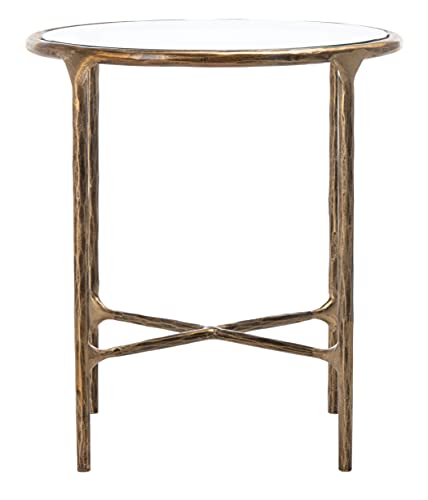
- Best for modern homes overall: SAFAVIEH Couture Jessa Round End Table, Brass and Tempered Glass — Check on Amazon
- SAFAVIEH Couture Jessa Tall Round End Table, Brass and White Marble — Check on Amazon
- SAFAVIEH Couture Valentia Round Marble Accent Table, Green — Check on Amazon
- Kate and Laurel Aja Round Side Table, Mango Wood, Walnut Brown — Check on Amazon
- American Trails Ridgefield End Table, Solid Walnut Top — Check on Amazon
- Christopher Knight Home Hoyt Wood End Table, Walnut — Check on Amazon
Three of these six picks use genuine marble or tempered glass, and two arrive fully assembled — modern rooms show materials honestly, so these picks are specified honestly.
Read the full guide ↓
Disclosure: As an Amazon Associate, dailyhomedecorating.com earns from qualifying purchases. Links to Amazon on this page are affiliate links; they cost you nothing extra. Listing details such as price and availability change often, so check the current Amazon listing before you buy.
The search for the best end table for modern homes under $1000 is really a search for restraint with substance. Modern rooms are unforgiving: with clean lines, open sightlines and few objects competing for attention, every piece is on display — including its materials. A printed marble effect or a wobbly leg cannot hide in a modern scheme the way it might among layered traditional furniture. The good news is that a $1000 ceiling buys the real things modern design actually specifies: tempered glass on a brass frame, genuine white and green marble, and warm walnut and mango wood to keep all that stone and metal from turning the room cold.
The modern end table also has a compositional job. Beside a low, linear sofa it is often the only vertical accent and the only round form in a grid of rectangles — the curve that softens the scheme, the metallic note that repeats the lighting, the stone that echoes the kitchen beyond. Height runs lower in modern rooms, because modern sofas sit lower; several picks here are deliberately in the 18 to 24 inch band rather than the traditional 26. Proportion, not decoration, is what you are buying.
Our short answer: the Safavieh Couture Jessa in brass and glass for the quintessential modern gesture — light, round, fully assembled, and honest about its materials. The tall Jessa in white marble is its narrower sibling for tighter compositions, the Valentia in green marble is the sculptural statement, and the walnut picks — Ridgefield, Hoyt and Aja — supply the warmth. Each review below judges its pick as modern furniture first: line, material truth and proportion, with the practical limits stated plainly. If your scheme is still forming, best sofa under $1000 and best console table under $1000 cover the larger modern pieces, and our general guide to the best end table under $1000 widens the material palette further.
In this guide
Quick Picks: best end table for modern homes under $1000
Every pick below sits under the $1000 ceiling at the time of writing — check price on Amazon on the live listing before you buy, because prices and stock move.
| Buyer type | Pick | Why it stands out | Link |
|---|---|---|---|
| Best for modern homes overall | Jessa Brass and Glass End Table | brass-finish metal frame; tempered glass top; fully assembled; 25 lb; model SFV9505A | Check on Amazon |
| Best narrow marble | Jessa Tall Marble End Table | brass-finish metal frame; white marble top; fully assembled; 24 lb; model SFV9504C | Check on Amazon |
| Best sculptural statement | Valentia Green Marble Accent Table | solid green marble throughout; sculptural pedestal; 35 lb; model SFV9704C | Check on Amazon |
| Best warm wood accent | Aja Round Side Table | mango wood with walnut brown finish, handcrafted in India; slanted geometric legs; 7.45 lb; model 221950 | Check on Amazon |
| Best substantial walnut | Ridgefield Walnut End Table | 1-inch solid American walnut top; 27 lb; 200 lb stated capacity; model 625-13 | Check on Amazon |
| Best mid-century proportions | Hoyt Walnut End Table | rubberwood with walnut finish; tapered tripod base; 40 lb stated maximum; light assembly; 7.7 lb; model 299915 | Check on Amazon |
How we chose these best end table for modern homes under $1000 picks
The shortlist for this lens was verified the same way as the rest of the series — brand, model number and dimensions checked against maker or major retailer listings — and then judged by modern criteria. Material truth came first: glass is tempered glass, marble is marble, wood is named by species or honestly described. Form came second: we favoured circles, pedestals and clean rectangles over applied decoration, and we noted where a pick’s warmth keeps a scheme human. Proportion was checked against modern seating, which sits lower than traditional sofas, so heights between 18 and 24 inches scored as features rather than flaws when the design intends them.
We also valued arrival condition: modern furniture shows every flaw, so fully assembled picks — which cannot be mis-built — scored well, and handmade solid-wood pieces were assessed with the understanding that grain variation is character, not defect. Storage was deliberately deprioritised in this lens; modern rooms usually assign clutter to closed joinery elsewhere, and the table’s job is composition. If your household needs the table itself to hide things, our family guide makes the opposite trade and says so. No static prices are printed anywhere here: check price on Amazon on the live listing, and treat the $1000 figure purely as the ceiling that makes genuine stone, glass and solid walnut available in one shortlist.
1. Jessa Brass and Glass End Table — Best for modern homes overall
Who it suits: modern living rooms with low sofas and plenty of upholstery and wood already — rooms that need light and metal, not another solid block.
The Jessa glass table is modern design doing its favourite trick: occupying space without filling it. The 18-inch round tempered glass top floats on a brass-finish frame, so the rug pattern continues underneath, sightlines stay open, and the only strong note is the warm metal — which will quietly repeat your lighting and hardware finishes across the room. At 20 inches it is proportioned for low modern seating, arriving fully assembled because a design this simple should never be a construction project. The 25 lb frame gives it more substance than its transparency suggests. Style it with one object and negative space; glass rewards editing and exposes hoarding, which is precisely its modernist point.
Pros
- Tempered glass keeps the composition light and the rug visible
- Brass finish warms minimal schemes and echoes modern lighting
- Fully assembled, with a low profile made for modern sofas
Honest limitation: Glass reports fingerprints and dust faithfully, and the 20-inch height is wrong beside a tall traditional arm — this is a modern-proportion table and makes no apology for it.
Choose it if your seating is low, your palette needs metal and air, and you edit your surfaces rather than fill them. Skip it if your room is traditional, your sofa arms are high, or your surfaces hold many objects permanently.
Spend time with the Jessa and its secondary virtues emerge: the glass top is the easiest surface in this guide to keep pristine, the brass frame picks up the warmth of evening lighting beautifully, and the table’s transparency means it can stand in front of a window or a prized rug without visually taxing either. It also photographs exactly as it looks in person, which is rarer than it should be — what arrives is the object in the listing, at the stated size, ready in the minute it takes to unbox.
Check the Jessa Brass and Glass End Table on Amazon and compare the current listing measurements with your sofa arm height before ordering.
2. Jessa Tall Marble End Table — Best narrow marble
Who it suits: narrow modern gaps — beside a low sofa or between two lounge chairs — where a 12-inch footprint and a marble top deliver the whole design idea.
The tall Jessa takes the same brass language and compresses it: a 12-inch round of genuine white marble at 24 inches high, on a brass-finish frame, fully assembled. It is the modern drink table perfected — exactly enough surface for a glass and a phone, at exactly the height a low sofa arm wants, in a footprint that fits the sliver between seat and wall that wider tables waste. The marble’s veining does the decorative work so the form can stay severe, and at 24 pounds the small table feels machined rather than flimsy when you set a drink down. In a modern scheme, a pair of these flanking a sofa is a stronger statement than one large table.
Pros
- Genuine white marble top in a tiny 12-inch footprint
- 24-inch height suits modern sofa arms precisely
- Fully assembled; substantial 24 lb feel
Honest limitation: The top is a drink-and-phone surface, not a lamp stand — a lamp base will consume it. Marble also asks for coasters and quick attention to acidic spills.
Choose it if your gap is narrow, your scheme is minimal, and the table’s job is a drink at elbow height. Skip it if you need to land a lamp or a stack of books beside the seat.
The tall Jessa has a stylist’s secret: because its footprint is only a foot square, it can stand in the visual gaps modern rooms leave — between a sofa and a floor lamp’s arc, at the elbow of a chaise, flanking a bed in a modern bedroom. The marble’s coolness suits it to drinks in a way wood never quite matches, and a pair used symmetrically is one of the most reliable compositions in contemporary interiors. Buy two at once if symmetry is the plan; natural stone varies, and pairs bought together tend to be closer in character.
Check the Jessa Tall Marble End Table on Amazon and compare the current listing measurements with your sofa arm height before ordering.
3. Valentia Green Marble Accent Table — Best sculptural statement
Who it suits: confident modern rooms that need one sculptural object — and buyers who collect design pieces rather than merely furnishing.
The Valentia is a solid block of green marble, pedestal and top carved from the same stone language, 10 inches across, 17.5 inches tall, and 35 pounds of it. In a modern interior it functions the way a plinth functions in a gallery: a concentrated mass that anchors a corner and gives the eye a destination. The green stone is the boldest material note in this guide — against white walls, pale upholstery and black accents it reads as art that happens to hold a drink. Its height suits low lounge chairs rather than sofas, and its stability is absolute for its size. Buy it as you would buy a sculpture: because the room is incomplete without it, not because you needed somewhere for a mug — though it will hold the mug beautifully.
Pros
- Solid green marble throughout; every piece’s veining is unique
- Gallery-plinth presence in a 10-inch footprint
- Immovably stable at 35 lb despite its size
Honest limitation: It is a drink table, full stop: no lamp, no book stack, and at 17.5 inches it sits low beside standard sofas. Green is also a commitment — it will set a colour note the room must answer.
Choose it if you design rooms around singular objects and your seating is low. Skip it if you want a neutral, hard-working side table that disappears.
The Valentia rewards owners who understand object placement: it needs air around it, a plain wall behind it, and light that rakes across the stone to show the veining. Given those, it outperforms tables three times its price at making a room feel collected. Its green is deep enough to read as a neutral in low light and as a jewel in daylight, which gives the same corner two moods. This is also the pick most likely to be asked about by guests — modern rooms are quiet, and the Valentia is the one permitted exclamation.
Check the Valentia Green Marble Accent Table on Amazon and compare the current listing measurements with your sofa arm height before ordering.
4. Aja Round Side Table — Best warm wood accent
Who it suits: modern rooms that lean warm — walnut tones, mid-century references, Japandi calm — and need a small round wooden counterpoint.
The Aja supplies modernism’s necessary warmth. Handcrafted in India from mango wood in a walnut brown finish, its 15-inch round top stands on slanted geometric legs that give the simple form its energy — a quiet sculpture in wood rather than stone. At 23 inches it meets a modern sofa arm honestly, and at just 7.45 pounds it can migrate: sofa side in the evening, entryway in the morning, plant stand when the room changes, as modern rooms do. The handmade grain variation is the decoration; there is nothing applied, nothing printed. It is the pick for schemes built from wood, linen and light rather than metal and glass, and it pairs naturally with the low, calm furniture those schemes favour.
Pros
- Warm mango wood balances glass-and-metal modern palettes
- Geometric slanted legs give a simple form real presence
- Featherweight and versatile — moves wherever the scheme needs it
Honest limitation: The light build is not for leaning, and the 15-inch top is a curated surface — lamp or object, not both. Handmade variation means your grain will differ from the listing photograph.
Choose it if your modern scheme is warm and wooden, and you value flexibility. Skip it if you need storage, maximum stability, or a wide working surface.
The Aja’s handmade character deserves emphasis in a modern context: machine-perfect rooms can feel sterile, and one object with visible grain variation and hand-worked legs restores the human note without breaking the scheme’s discipline. Its walnut brown finish sits comfortably against the pale woods and black accents modern rooms favour, and its lightness means stylists can audition it in three positions in as many minutes. It is the pick for rooms that are edited often — the table that follows the design around.
Check the Aja Round Side Table on Amazon and compare the current listing measurements with your sofa arm height before ordering.
5. Ridgefield Walnut End Table — Best substantial walnut
Who it suits: modern rooms with architectural scale — large sofas, open plans — that need a substantial wooden anchor rather than a delicate accent.
Not every modern table is slight. The Ridgefield’s inch-thick solid American walnut top, 26 by 24 inches, brings the material honesty modernism was founded on — nothing printed, nothing imitated — at a scale that holds its own beside a big modular sofa. The sharp-angled legs keep the slab contemporary rather than rustic, the 200 lb stated capacity is engineering you can feel, and walnut’s grain is the only pattern the piece needs. At 26 inches it is the tallest pick in this lens, suiting higher modern arms and sectionals. In an open-plan space, a pair of these bookending a long sofa gives the room its rhythm: stone or glass can happen elsewhere; here, wood does the grounding.
Pros
- Full inch of solid American walnut — modern material honesty
- Large 26 x 24 top scales with big modern seating
- Stated 200 lb capacity; a planted, architectural feel
Honest limitation: No storage, and the square form is assertive — in a small or delicate scheme it can dominate. Walnut wants coasters and occasional oiling to stay at its best.
Choose it if your modern room is spacious and needs a warm, weighty anchor. Skip it if your space is small, or your scheme is built on lightness and transparency.
In modern settings the Ridgefield works best treated as architecture: aligned with the sofa’s lines, carrying one substantial lamp, its big walnut plane echoing a kitchen island or a dining top elsewhere in an open plan. The solid top’s edge profile and grain become the room’s wood reference, so choose other wooden pieces as relatives rather than rivals. Owners report the same long-term satisfaction as with all honest timber — the table at year five looks like the table at year one, only more itself.
Check the Ridgefield Walnut End Table on Amazon and compare the current listing measurements with your sofa arm height before ordering.
6. Hoyt Walnut End Table — Best mid-century proportions
Who it suits: mid-century modern rooms — tapered legs, walnut finishes, low-slung seating — and buyers furnishing a scheme on the sensible side of the ceiling.
The Hoyt is the mid-century note in this guide: a guitar-pick-shaped rubberwood top in a walnut finish on a tapered tripod base, 20 inches across and 22 high — proportions lifted straight from the period modernism keeps quoting. The tripod footprint is a practical gift in styled rooms, standing steady on rugs and finding floor contact where four legs rock. Light assembly means the legs attach simply, and at 7.7 pounds the finished table repositions as easily as the scheme evolves. The maker states a 40 lb maximum, which fairly describes its job: lamp, book, drink, object — the curated modern surface, not a storage platform. As an entry point into this guide’s material standards, it is the most accessible way to get the proportions right.
Pros
- Authentic mid-century proportions and tripod base
- Walnut-finish rubberwood warms modern palettes
- Light, easy to assemble and effortless to reposition
Honest limitation: The stated 40 lb maximum and 7.7 lb build define it as an accent, not a workhorse; the walnut finish is a finish, not solid walnut, and this guide notes the difference honestly.
Choose it if your scheme is mid-century or warm-modern and the table’s load is light and curated. Skip it if you need heirloom mass or storage — the Ridgefield and the drawer picks serve better.
The Hoyt’s charm is proportion, and proportion is the cheapest-looking thing to get wrong and the most expensive-looking to get right. Its guitar-pick top gives more usable surface than a circle of the same width while keeping the soft outline modern rooms want, and the tripod base reads as a deliberate design gesture beside low seating. Treat it as the scheme’s friendly piece — the one that keeps a rigorous room from feeling like a showroom — and load it lightly, as its stated capacity advises.
Check the Hoyt Walnut End Table on Amazon and compare the current listing measurements with your sofa arm height before ordering.
Comparison table: best end table for modern homes under $1000 at a glance
Modern buyers should read this table by material and height: glass at 20 inches, marble at 17.5 and 24, walnut at 22 to 26. In modern rooms, those numbers are design decisions — match them to your sofa’s arm and your scheme’s material palette, not just to the gap.
| Pick | Dimensions | Key specification | Link |
|---|---|---|---|
| Jessa Brass and Glass End Table | 18″W x 18″D x 20″H | brass-finish metal frame; tempered glass top; fully assembled; 25 lb; model SFV9505A | Check on Amazon |
| Jessa Tall Marble End Table | 12″W x 12″D x 24″H | brass-finish metal frame; white marble top; fully assembled; 24 lb; model SFV9504C | Check on Amazon |
| Valentia Green Marble Accent Table | 10″W x 10″D x 17.5″H | solid green marble throughout; sculptural pedestal; 35 lb; model SFV9704C | Check on Amazon |
| Aja Round Side Table | 15″W x 15″D x 23″H | mango wood with walnut brown finish, handcrafted in India; slanted geometric legs; 7.45 lb; model 221950 | Check on Amazon |
| Ridgefield Walnut End Table | 26″W x 24″D x 26″H | 1-inch solid American walnut top; 27 lb; 200 lb stated capacity; model 625-13 | Check on Amazon |
| Hoyt Walnut End Table | 20.08″W x 20.08″D x 22.05″H | rubberwood with walnut finish; tapered tripod base; 40 lb stated maximum; light assembly; 7.7 lb; model 299915 | Check on Amazon |
Materials, build quality and care in this price range
Modern furniture stands or falls on material specification, because there is nowhere for a substitution to hide. The marble in this guide is marble — white in the tall Jessa, green in the Valentia — with the weight, coolness and care requirements of real stone: coasters as habit, acidic spills wiped promptly, and veining that varies because nature, not a printer, made it. The glass in the Jessa is tempered, the correct specification for a horizontal surface in daily use, and it asks only for a microfibre cloth to stay invisible.
The woods divide honestly. The Ridgefield’s top is solid American walnut, an inch of it, refinishable and permanent. The mango wood pieces — Aja handcrafted in India — are solid timber with a walnut brown finish, bringing warmth and grain variation. The Hoyt’s rubberwood carries a walnut finish: a real wood, honestly finished to a colour, and this guide names it as such rather than letting a title imply solid walnut. In modern rooms, where every material is a statement, that kind of naming is the difference between specification and decoration.
Care follows the material, not the price. Stone wants coasters; glass wants a cloth; walnut wants occasional oil and rewards it by deepening in colour. None of the six needs specialist products, and the fully assembled picks remove the other modern risk — a mis-built joint visible across a minimal room.
Matching these picks to real rooms
The low-slung sofa composition: a tall Jessa at one end, a glass Jessa at the other — same brass language, different silhouettes, heights matched to the arms. The asymmetry inside one material family is a reliable modern formula.
The gallery corner: the Valentia alone with a low chair and a floor lamp, wall bare behind it. Resist adding anything; the composition is the restraint.
The warm minimal room: the Aja beside the sofa, the Ridgefield anchoring the larger seating, wood against linen and pale walls, with the Hoyt completing a mid-century scheme in a second room. Modern homes are sequences of rooms; repeating the material palette — walnut tones, brass, stone — is what makes the sequence read as one home.
How to choose the right end table for your room
Proportion before product. Modern sofas sit low, so measure the arm before shopping: many modern arms fall between 20 and 24 inches, lower than the traditional band. A table level with the arm looks intentional; a traditional-height table beside a low sofa looks like a mistake from another room. The lower picks in this guide exist because modern seating demands them.
Build a material palette of three. Cohesive modern rooms repeat a small set of materials — say walnut, brass and glass, or marble, black metal and pale wood. Choose the end table to repeat a material already present in lighting, hardware or flooring, and let it introduce at most one new note. The green marble Valentia is that one new note, used deliberately.
Use shape against the grid. Modern seating is rectilinear; a round table breaks the grid and softens the composition, while a square slab reinforces it. Most rooms benefit from the curve. Pedestal forms also keep legs from tangling visually with sofa legs — a small thing that reads as calm.
Edit the surface. A modern table displays whatever sits on it, so plan the objects: lamp or object or drink, rarely all three on a small top. If your reality is remotes and chargers, be honest and take the storage route in our family guide instead — modernism fails when it fights the household. Finally, respect arrival quality: fully assembled pieces cannot be mis-built, and handmade wood varies by grain, which is character to plan around, not a defect to return. Complete the scheme with best end table for small spaces under $1000 if the room is compact, or step down a tier with best end table under $700.
What the $1000 ceiling should actually buy you
In a modern home, the $1000 ceiling should buy certainty: certainty that the material is what its name says, that the dimensions are exact enough to compose with, and that the object will look in your room the way it looked in the listing. Minimal interiors amplify error — a veneer edge, a wobble, a finish that reads orange under your lighting — so the premium is really paying for the absence of surprises. Fully assembled construction, published model numbers and honest material naming are the modern buyer’s quality signals, and every pick in this guide was required to show them.
The ceiling should also buy proportion options that budget ranges cannot offer: genuinely low tables for low seating, genuine stone in small formats, solid walnut at architectural scale. Modern design is a system of relationships — table to arm, stone to light, wood tone to floor — and the money is well spent when it buys the exact relationship your room needs rather than a generic approximation of it. If a mid-priced pick achieves the relationship, buy it without guilt and spend the remainder on the lamp; modern rooms are finished by lighting more often than by furniture.
Spending less than the ceiling: where the value sits
Modern value hides in an unexpected place: the picks that arrive fully assembled and materially honest at the middle of the range often deliver more design per dollar than the statement piece at the top. The two Jessa tables are the examples — genuine stone and glass, exact dimensions, no construction risk — and for many rooms the tall marble Jessa alone achieves the entire brief. The statement spend, on the Valentia or the solid walnut Ridgefield, is justified when the room’s composition genuinely turns on that object: a corner that needs a focal point, a sofa that needs an anchor. Bought for a room that does not need them, they are expensive; bought for the room that does, they are the cheapest way to finish it, because nothing else will be purchased for that corner again.
Judge modern value by cost per year of looking right. A proportion error is visible every day and cannot be styled away, which makes an exactly right mid-priced table better value than an almost-right expensive one. Measure the arm, fix the palette, and then let the budget follow the specification rather than the reverse. The rooms that result look like the expensive ones in photographs — because the photographs, too, were composed by proportion and material first, and price tags never.
Placement, setup and the first week with your table
Place a modern end table the way you would hang art: position, step back, assess, adjust. Check the table against the sofa arm from the room’s entrance, not just from beside it, because modern compositions are read from across the room. Align pedestals and slabs deliberately — centred on the arm’s depth reads intentional; drifting reads accidental. Give stone and glass pieces the light they were chosen for, and test the surface with the actual objects it will hold before committing: lamp, book and glass, arranged once with care, then left alone.
In the first week, edit rather than add. Modern surfaces fail by accumulation, so adopt the rule that a new object on the table retires an existing one. Dust glass and stone weekly with a microfibre cloth — thirty seconds that keeps the materials performing — and oil solid walnut when it begins to look dry rather than to a calendar. The reward for this light discipline is a room that continues to look like the day it was composed, which is the entire modern promise.
Long-term ownership: pairs, longevity and when to upgrade
Modern rooms evolve by editing, and the end table is usually the piece that moves first — from sofa side to chair side, from living room to bedroom — as the composition changes. That is an argument for buying objects with independent integrity: a marble disc or a walnut slab reads as a complete piece anywhere, while a table designed only as half of a matched suite looks lost alone. If a pair is the plan, buy both together, especially in natural stone and handcrafted wood, where batch character is real and later additions will differ visibly under modern lighting.
Longevity in modern furniture is stylistic as much as physical. Forms based on proportion and material — circles, pedestals, slabs — outlast forms based on the decoration of a particular year, which is why this guide’s picks avoid applied ornament almost entirely. Physically, stone and glass are effectively permanent, solid walnut is refinishable, and finished woods ask only to be kept out of harsh direct sun. Upgrade when the seating changes, not when the feed does: a modern room’s discipline is that objects earn their place and then keep it, and a well-chosen end table should hold its position for as long as the sofa it serves.
Common mistakes to avoid
Buying imitation materials for a modern room. Minimal rooms expose everything. Printed marble and plastic-coated finishes that pass in a busy traditional scheme fail under modern scrutiny — at this budget, insist on the real material or an honestly named finish.
Defaulting to traditional height. A 26-inch table beside a 21-inch modern sofa arm makes every reach awkward and every proportion wrong. Measure the arm; modern seating usually wants a lower table.
Matching wood tones exactly. Chasing a perfect walnut match between table, floor and media unit produces a showroom, not a room. Modern schemes work by material families and contrast — let the wood be close kin, not a clone.
Over-accessorising the top. Three objects is a composition; seven is storage. If the surface must hold seven things, the honest answer is a storage table, styled rooms notwithstanding.
Ignoring the rug. Glass and pedestal tables reveal the rug beneath them — a feature when the rug is good, a spotlight when it is not. Check what your transparent or open table will actually frame.
Final recommendation
Buy the Jessa brass and glass table if your modern room needs its classic gesture: round, light, warm-metal, and fully assembled, it improves almost any low modern sofa it stands beside. Choose the tall marble Jessa when the gap is narrow, and the Valentia when the room is brave enough for a green stone exclamation point. The walnut picks stand ready when the scheme needs warmth instead of shine.
Measure your sofa arm, decide your material palette, then check price on Amazon on the live listings for your final two candidates — seeing the current finish options side by side settles most ties. Under $1000, modern buyers are not paying for decoration; they are paying for material truth and proportion, and every pick here delivers both.
Delivery, inspection and returns: a practical checklist
Modern furniture allows no hiding place for transit damage, so inspect like a gallery. Unpack in good, neutral light; examine stone tops for chips at the edge, where marble is most vulnerable, and glass for scratches visible at a raking angle. Natural veining and grain variation are character and will not match the listing photograph exactly — damage is a different category, and the distinction is easiest to defend with photographs taken before the table is moved into place. Fully assembled pieces should arrive with joints tight; any movement in a pedestal or frame is a reason to contact the seller immediately, not to reach for a tool.
Then compose before you commit. Live with the table in position for a day, viewing it from the room’s entrance at morning and evening light, before removing packaging to the recycling. Modern pieces interact with light more than any other furniture — brass warms, marble cools, walnut deepens — and the evening view is the one you will live with most. Keep the order details and your room measurements together; if an exchange is needed, the conversation is about specifications, and specifications are a language this guide has deliberately taught you to speak.
Frequently asked questions
What height end table suits a modern sofa?
Level with the sofa arm, which on modern seating is often 20 to 24 inches — lower than traditional sofas. Several picks in this guide are deliberately in that band. Measure your arm rather than assuming; two inches of error is visible in a minimal room.
Is marble practical in a modern living room?
Yes, with a coaster habit. Marble is heavy, stable and cool to the touch, and modern drink tables use it in small, manageable surfaces. Wipe acidic spills — citrus, wine, coffee left standing — promptly to avoid etching the polish.
Glass or wood for a small modern room?
Glass keeps sightlines open and lets a rug show through, making the room feel larger. Wood adds warmth and hides minor wear. Many modern schemes use one of each: glass beside the sofa, wood beside a chair, tied together by a repeated metal or colour note.
Do modern end tables have storage?
Usually not — modern rooms typically assign storage to closed cabinets and joinery, leaving the end table as pure composition. If your household needs the table itself to hide remotes and chargers, a drawer model from our family guide is the more honest purchase.
Why do some modern tables arrive fully assembled?
Simple forms are easy to mis-build and hard to hide flaws in. Fully assembled picks arrive exactly as designed, with joints set by the maker — a genuine quality advantage in furniture where every line is visible.
How many materials should a modern room mix?
Two to three per room is the working rule: for example walnut, brass and glass, or marble, black metal and pale upholstery. The end table should usually repeat a material already present rather than introduce a fourth. The exception is a single deliberate statement piece, such as green marble, used once.
Do modern end tables work in traditional rooms?
The wooden picks here — Ridgefield, Aja, Hoyt — cross over easily, because honest materials belong in most schemes. The glass and marble pieces are more committed to contemporary settings. Mixing one modern table into a traditional room usually refreshes it; the reverse is equally true.
Can I mix a pair of different modern end tables?
Yes — it is often the stronger composition. Keep one element constant, such as the brass finish across the two Jessa tables, or the walnut tone across wooden picks, and let silhouette and height vary with each side’s job. Symmetry of material, asymmetry of form is a reliable modern formula.
How do I stop a modern room feeling cold with stone and glass tables?
Balance the hard materials with the room’s soft layer: upholstery, a rug with texture, curtains, and one warm wood piece such as the Aja or Ridgefield. The tables supply the architecture; textiles supply the temperature. Lighting on a warm setting in the evening completes the correction.
Brass, black or chrome for a modern end table?
Repeat the metal your room already speaks. Brass warms pale, minimal schemes and pairs naturally with walnut; black suits monochrome and high-contrast rooms; chrome is the coldest and most architectural, best where the scheme already includes glass and steel. The two Jessa tables here use brass because it is the most forgiving of the three across modern palettes.
How do I protect a marble top in daily use?
Coasters as a permanent fixture, not an occasional courtesy, and a prompt wipe for anything acidic — citrus, wine, tomato, coffee left standing. Sealers exist for marble and the maker’s care guidance governs whether to use one. Treated this way, marble keeps its polish for years; treated casually, it records every ring as a dull etch.
Related guides
Keep planning the room with these companion guides on this site:


