Affiliate disclosure: Daily Home Decorating may earn a commission if you buy through links in this article, at no extra cost to you. As an Amazon Associate, we earn from qualifying purchases. The Amazon product images and catalog descriptions below were retrieved through Amazon Creators API. These marketplace examples are modern style-inspired sofas, not authenticated Danish designs, and have not been physically tested by us.
The best Danish design sofas combine useful proportions, thoughtful materials, and a clear design point of view. But “Danish design” is often used loosely in online listings. This guide separates documented Danish furniture and licensed reissues from contemporary sofas that simply borrow a minimalist or mid-century look. We explain what to verify, how to compare wood frames and upholstery, how to measure for delivery, and how to choose a sofa for the way you sit. Current Amazon catalog examples are included as accessible style alternatives; they are not represented as Danish-made pieces. For broader sofa advice, browse our Home & DIY section.
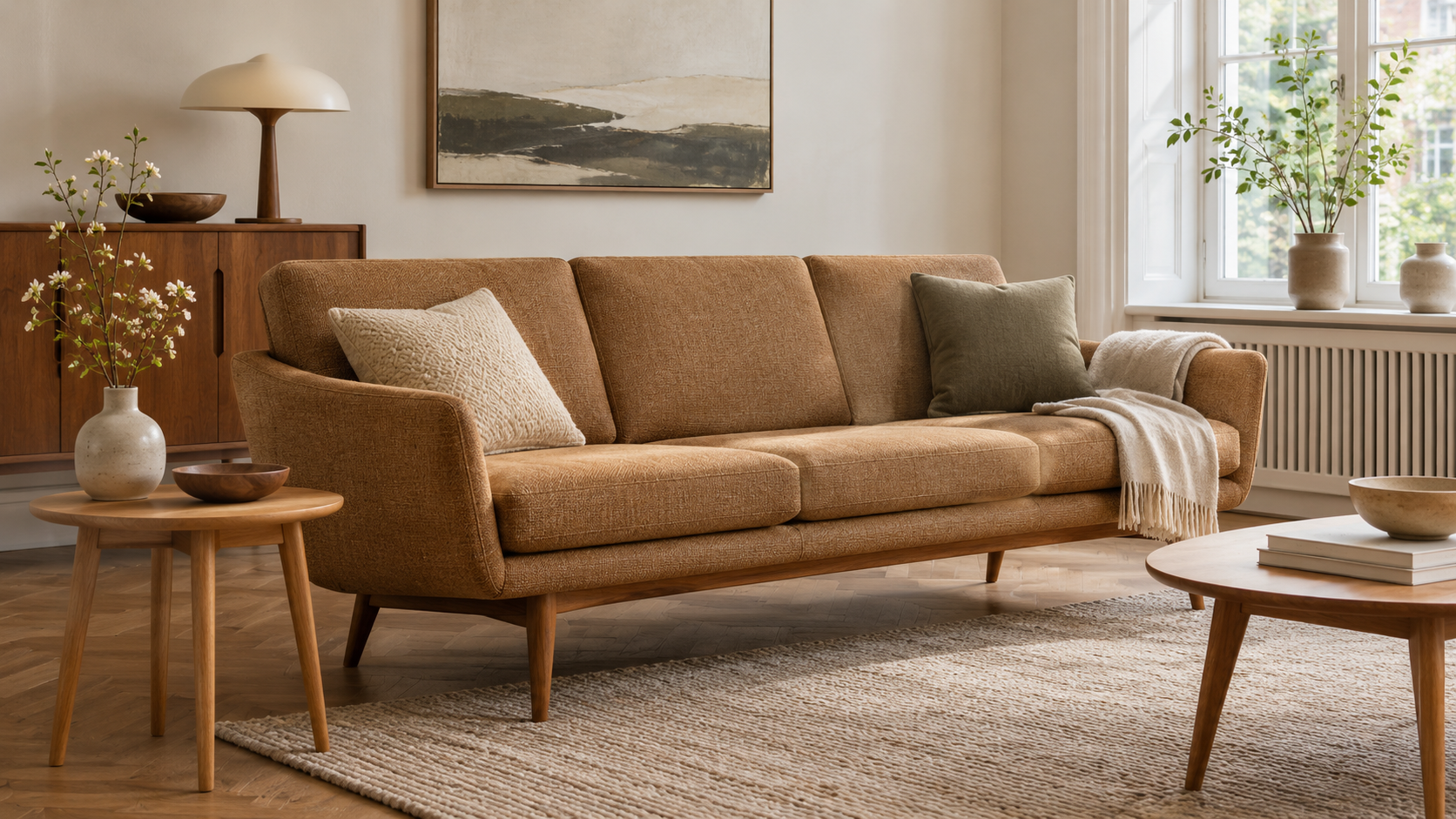
What makes a sofa Danish in design?
“Danish design” is not a single sofa shape or a guarantee of Danish manufacture. It describes a design tradition associated with functional furniture, careful proportions, material quality, and craft, while modern Danish furniture also includes industrial production and changing forms. Designmuseum Danmark traces the movement across multiple generations, from functional tradition to organic and later high-tech approaches. A sofa inspired by this lineage may have a restrained outline, visible wood, a clear structural frame, and upholstery that supports everyday use. Yet those visual cues alone do not prove origin, designer, age, or construction. When you shop, distinguish a Danish-made piece, an original vintage design, an authorized reissue, and a contemporary sofa that borrows Scandinavian styling. Each category has different documentation, price, repairability, and resale considerations.
Our practical shortlist: authentic pieces and accessible interpretations
For documented heritage design, look at established licensed makers and current reissues of named designs, then verify the manufacturer, designer attribution, materials, and production location on the official listing. The Radiohus Sofa by Vilhelm Lauritzen is an example of a specific Danish design with a documented history; official project information describes the design as dating to 1936. Classic Danish pieces from designers such as Finn Juhl or Grete Jalk may be expensive and are often distributed through specialist dealers. For a lower-cost visual reference, Amazon currently lists modern wood-frame sofas from brands including Christopher Knight Home and Furniture of America. These are contemporary interpretations, not authenticated Danish heritage designs. We include them as accessible style examples and link directly to the exact catalog ASINs returned by Amazon Creators API. Verify current materials, dimensions, seller, and return terms.
Best for a warm wood-frame look: Christopher Knight Home Sabbo
The Sabbo listing describes an 87.5-inch modern sofa with a wooden frame and brown upholstery. It may suit someone seeking a warm-toned, mid-century-adjacent profile at a more accessible price point than a documented vintage or licensed Danish piece. Read the full specifications to determine what “wooden” refers to, whether the frame is solid wood or a mixed construction, and what the legs and supports are made from. The word “modern” in a title is a style description, not a country-of-origin statement. Compare the seat depth and cushion construction with your needs. If the listing’s exact upholstery or dimensions have changed, use the ASIN page to check the live option. This is a modern-style alternative, not a Danish-made or designer-authenticated sofa.
Best for a curved minimalist silhouette: 94.5-inch neutral sofa
A current Amazon listing describes a 94.5-inch curved sofa in beige with a minimalist look and an extra-deep seat. A curved silhouette can soften a rectilinear room and create a conversational focal point. It is not a classic Danish sofa by itself, but it shares a simple, sculptural approach that some shoppers associate with contemporary Scandinavian interiors. Because the seat is described as deep, check the listed depth and seat height, then consider whether shorter users will need a lumbar cushion. Curved pieces need more clearance than a straight sofa because their footprint extends into the room. Confirm the full width, depth, package dimensions, material description, and delivery access before ordering.
Best for textured upholstery: Antetek boucle sofa
The Antetek listing describes a 78-inch three-seat boucle sofa with wooden legs. This type of compact contemporary couch may be a fit for a small apartment or a room where a shorter profile matters. Boucle texture adds visual warmth to a simple silhouette, but it has a different appearance and care profile from smooth wool, leather, or classic Danish upholstery. Ask whether the fabric is synthetic, natural, or blended, and read the care details on the current listing. Boucle can catch debris in the loops, so vacuuming and cleaning instructions are worth reviewing if the sofa will see daily family use. Confirm whether the wood legs are structural or decorative, and whether assembly is required. It is a style-inspired modern sofa, not an authenticated Danish model.
Best for a darker sculptural look: Christopher Knight Home curved sofa
A Christopher Knight Home 81-inch curved boucle listing describes a dark-brown upholstered sofa with a wooden base. This option may appeal in a room where a curved outline and dark grounded color are more important than a visible, finely shaped hardwood frame. Check the exact wood species and base construction rather than assuming the product title signals solid teak or walnut. Dark upholstery can help a sofa read as a strong focal point, although lint and dust may show on some fabrics. A low, curved sofa also affects sightlines and circulation; mark its true footprint on the floor before buying. As with any marketplace purchase, confirm seller identity, current availability, the color selected, shipping, return eligibility, and the care directions attached to the exact product.
Authentic heritage versus Danish-inspired
An authentic historical design should have evidence: a named designer, model, documented manufacturer, and credible provenance if vintage. A licensed reissue should state the original designer and current producing company, and ideally explain which aspects are faithful to the original. A Danish-inspired modern sofa may borrow a tapered leg, restrained palette, or exposed wood but lack a Danish designer, manufacturing location, or historical connection. None is automatically a bad choice; they are different purchases. The heritage piece is about design lineage and documentation as well as use. The inspired option may offer accessible pricing or readily available upholstery. Be cautious with vague marketing such as “Scandinavian style” if the product page does not specify materials or origin. Do not pay an authenticity premium based only on a silhouette or a seller’s keyword.
The design tradition is broader than one mid-century look
Danish furniture design is often reduced online to teak, tapered legs, and a compact 1950s profile. The history is broader. Designmuseum Danmark’s Danish Modern exhibition presents a journey across decades and includes functionalist, organic, pop, and later high-tech approaches. That means shoppers can appreciate Danish design without treating every sofa as the same shape or color. Some pieces emphasize a light wooden frame and loose cushions; others use sculptural upholstery or a more substantial silhouette. The practical test is whether the design solves its intended function and whether the construction is documented. If you want a historically informed purchase, look at museum collections and maker archives alongside retail listings. This context helps you avoid mistaking a trend aesthetic for the entire story of Danish furniture.
Craft and proportion: what to inspect in person
A carefully designed sofa should feel coherent when viewed from the front, side, and back. Look at the relationship between frame and upholstery, the thickness of visible rails, arm height, seat depth, and how the back supports a seated person. On a wood-frame model, check joints, transitions, and whether the frame appears designed to carry load rather than merely decorate the outside. On a fully upholstered model, inspect seam alignment, cushion shape, and how the fabric wraps around corners. The Designmuseum Denmark’s material on Danish furniture makers highlights the relationship between craftsmanship and design thinking; it is a useful lens for looking beyond a product photo. If the sofa is vintage, have a qualified restorer inspect its frame, springs, and upholstery before purchase.
Wood species, finish, and visible frame
Teak, oak, walnut, and beech each have different color, grain, and maintenance characteristics. Product listings sometimes use broad phrases like “wooden legs” without identifying species or finish. Ask for a precise material description and whether the wood is solid, veneer, engineered wood, or a mix. A darker stain can make a less expensive species resemble walnut in photos; that does not make it walnut. Natural wood can vary from piece to piece, and finish sheen changes how scratches and dust show. If a visible frame is a key part of your reason for buying, inspect close-up images or a sample in person. For vintage wood, examine joints, repairs, structural movement, and finish condition. A historically desirable shape is not enough if the frame is unstable or costly to restore.
Upholstery and cushion construction
Danish modern sofas may use leather, wool, cotton blends, or contemporary performance textiles, depending on the design and producer. Do not assume a heritage silhouette means a particular fill or upholstery standard. Ask for the fiber content, cleaning code, cushion fill, suspension system, and whether seat cushions are reversible or replaceable. Sit on a showroom sample for several minutes. Notice whether the cushion bottoms out, whether the front edge supports your legs, and whether the back encourages upright sitting or lounging. If you have pets or children, ask about abrasion and cleaning, not just stain resistance. A hard-wearing cover can extend practical life, but performance labels do not make fabric indestructible. Keep the care card and order code where you can find them later.
Choose a sofa for how you sit
A classic low-profile sofa may photograph beautifully but feel too low for someone with knee or mobility limitations. Seat height, seat depth, and cushion firmness have more influence on daily comfort than a style label. A deep seat may work for lounging with legs tucked up, while a shallower seat can feel better for upright conversation. If several people share the sofa, test it with different heights and preferred sitting positions. Check whether arm height supports reading or makes a good pillow rest. Ask if the seat cushions are fixed or loose and how easily they can be rotated. Style research can narrow the silhouette; comfort should come from testing the actual design or comparing precise measurements with a sofa you already enjoy.
Measure the full footprint and traffic paths
Measure the wall, but also map the sofa’s depth and the path people will use to cross the room. A sofa with a sculptural back or curved arms can project farther than the front view suggests. A chaise or attached lounge section can consume circulation space. Tape the exact footprint on the floor, including arm width and leg position, then place a coffee-table outline in front. Keep a practical walking path through the room and check nearby doors, windows, heaters, and outlets. For a curved sofa, use a flexible string or paper template to represent the front arc rather than relying on a rectangular bounding box. Photograph the layout and review it from the doorway. That small exercise can prevent an attractive purchase from making the room difficult to move through.
Plan for delivery before ordering
Measure every narrow point from the exterior entrance to the final room: front door, hallway, stairway, landing, elevator, and tight turns. Include handrails, door closers, and low ceiling areas. Ask the seller for package dimensions and confirm whether legs or other parts can be removed. A sofa that fits the living room may not fit the stairwell. If buying vintage, determine who will move it and whether the frame can tolerate the route. Marketplace shipping terms may be different from local furniture delivery, and return shipping for a large item can be complicated. Get the delivery method and access restrictions in writing. If a path seems close, take photos with a tape measure in place and ask the seller or carrier before paying.
New, vintage, and licensed reissue: three paths
A new contemporary sofa is easiest to purchase through standard retail channels and may have current warranty support. A vintage original can offer character and historical interest, but upholstery, foam, and suspension may need restoration. A licensed reissue can combine an acknowledged design with modern production, yet prices, materials, and construction vary by maker. Compare the actual costs: asking price, restoration, shipping, taxes, and any replacement cushions. For vintage pieces, request provenance documentation and inspect for repairs or later substitutions. For reissues, confirm the authorized producer and model number. For new inspired furniture, judge it on its own specifications rather than treating it as a substitute for an original. All three can work in a home; the right choice depends on budget, use, authenticity priorities, and maintenance tolerance.
How to verify a designer or model claim
Search for the claimed designer and model on the manufacturer’s official site, museum collection records, or a reputable design archive. Compare the listed proportions, frame details, and upholstery with the item offered for sale. A product seller may use a designer’s name loosely to attract search traffic; check whether that person actually designed the sofa and whether the maker is authorized. For vintage items, ask for labels, receipts, provenance, and clear images of the underside and joints. A certificate alone is not conclusive if it lacks a verifiable issuer. If the model is rare or expensive, consult a specialist dealer or appraiser. Do not rely on stock images to prove authenticity; photograph the exact piece and its identifying marks.
Build a cohesive living room around the sofa
Danish-inspired rooms often balance the sofa with warm wood, simple lighting, tactile textiles, and open space, but there is no required matching set. A wood-frame sofa can work beside a different timber if undertones are compatible. Repeat a color or material once or twice elsewhere in the room, such as in a side table, picture frame, or lamp base. Keep visual weight balanced: a low sofa can feel lost against tall shelving, while a bulky coffee table can overpower a light frame. Use a rug large enough to anchor the front feet and leave comfortable access around it. Avoid filling every surface with decor; negative space helps a simple silhouette remain visible. These choices should support daily use rather than recreate a staged showroom exactly.
Keep the room personal rather than period-themed
A Danish modern sofa can be the one historical anchor in a room with contemporary art, a patterned rug, or family pieces. Reproducing a whole period interior may feel less natural than combining objects you use and enjoy. Consider the sofa’s scale and color first, then add supporting furniture gradually. A large teak coffee table, matching sideboards, and several similar silhouettes can make a room feel visually heavy. Contrasting a sculptural sofa with a plain table can help its frame stand out. If you are buying a replica or an inspired design, avoid presenting it as an original designer piece. Describe it accurately and let its materials and usefulness define the room. Honest sourcing also makes future resale conversations clearer.
Care for upholstery and wood
Follow the maker’s care instructions for the exact fabric and finish. Vacuum upholstery with a suitable attachment, blot spills rather than scrubbing, and test any cleaner in a hidden spot. Leather requires products compatible with its finish. Wood frames may need dusting and careful protection from standing water, heat, and direct sun. Avoid generic oil or polish unless the manufacturer approves it; the wrong product can change the sheen or damage a finish. Vintage finishes may be fragile and should be assessed before cleaning. If cushions are removable, ask whether rotating or flipping them is recommended. Save the order specification and care card. For a significant stain or structural problem, contact a professional restorer instead of experimenting on the most visible area.
Budget beyond the sticker price
Authentic Danish designs and licensed reissues may cost substantially more than modern style-inspired sofas. The purchase price is only part of the decision. Include delivery, assembly, tax, fabric upgrades, maintenance, and likely cushion replacement. A vintage sofa may require new foam or upholstery immediately; request a written estimate before purchase. A lower-priced marketplace model can also involve assembly, room-of-choice delivery limits, or return freight. Compare total cost with the service life and repairability you realistically expect. If the budget is tight, prioritize a sturdy frame and comfortable dimensions over a designer label. If provenance is central to the purchase, budget for verification and specialist delivery. Make the comparison transparent by writing down the model, materials, condition, warranty, and all added charges.
Red flags in online listings
Be cautious when an item’s designer attribution, country of manufacture, wood species, frame material, or dimensions are missing or contradictory. A listing that says “Danish modern” may be using a search phrase rather than describing its origin. Stock photos without a clear view of the back and joinery make quality assessment harder. A seller who cannot provide the exact model, current condition, or return terms is a risk, particularly for expensive vintage items. Marketplace reviews can identify recurring concerns but do not prove authenticity or predict your personal comfort. Ask direct questions and keep the answers. If a price seems unusually low for an authenticated design, seek independent confirmation before sending payment. Use a protected payment channel and verify the seller’s identity.
A simple comparison scorecard
Compare candidates across five essentials: fit, comfort, construction, provenance, and total cost. For fit, record overall width, depth, seat height, and delivery route. For comfort, record the cushion feel and posture that worked in person. For construction, note frame material, joinery, suspension, cushion fill, and repairability. For provenance, distinguish Danish manufacture, designer-authenticated model, authorized reissue, or inspired styling. For cost, include delivery, care, restoration, and likely replacements. Rate each item against your own priorities instead of using one generic “best” ranking. A sofa that scores highly on authenticity may not suit a small apartment; a compact modern piece may be practical but lack heritage value. The scorecard shows which trade-offs you are actually making and helps compare online and showroom options fairly.
Frequently asked questions
Is every Scandinavian-style sofa Danish? No. Scandinavian design includes several countries, and a Danish-inspired appearance does not establish where a sofa was designed or made. Is teak required for Danish modern style? No. Teak is one familiar material, but Danish furniture spans other woods, upholstery, and periods. Should I buy vintage? Consider condition, provenance, restoration cost, and comfort. What should I check first? Verify exact dimensions, construction, fabric, delivery, and authenticity claims. Are Amazon examples below authentic Danish designs? No; they are modern wood-frame or minimalist style options returned through the Amazon catalog. They are included as accessible alternatives, not heritage recommendations. Where can I learn about historical pieces? Use official maker archives and museum resources, including Designmuseum Danmark and the Danish Architecture Center. What if I want a real custom size? Contact a maker that explicitly builds to dimensions and request a written specification.
Final recommendation
For the best Danish design sofa, first decide whether you are buying a documented Danish design, a licensed reissue, or a contemporary sofa influenced by Scandinavian forms. If the history matters, verify the designer and manufacturer through primary sources and inspect the exact piece. If daily comfort and price matter more, compare accessible modern alternatives by dimensions, frame description, upholstery, delivery, and return terms. A warm wood frame and clean profile can bring a Danish-inspired feel to a room without making the item a Danish original. Measure the space and delivery route, try the seat when possible, and keep the product details. For further room and sofa advice, browse our Home & DIY guides.
Christopher Knight Home Sabbo 87.50″ Modern Sofa Couch, Wooden Home Sofa Living Room, Oversized Cloud Couch for Bedroom, Home Office, Brown

Christopher Knight Home Sabbo 87.50″ Modern Sofa Couch, Wooden Home Sofa Living Room, Oversized Cloud Couch for Bedroom, Home Office, Brown. This is a contemporary style-inspired sofa, not a Danish heritage or designer-authenticated piece. Review exact materials, dimensions, seller, current availability, delivery, and returns on the live listing.
Check the current Amazon listing.
94.5″ Modern Curved Sofa Couches for Living Room, Oversized 3 Seat, Beige | Luxury Minimalist Style, Extra Deep & Wide Comfy Seat, No Assembly Boneless Couch for Office, Apartment

94.5″ Modern Curved Sofa Couches for Living Room, Oversized 3 Seat, Beige | Luxury Minimalist Style, Extra Deep & Wide Comfy Seat, No Assembly Boneless Couch for Office, Apartment. This is a contemporary style-inspired sofa, not a Danish heritage or designer-authenticated piece. Review exact materials, dimensions, seller, current availability, delivery, and returns on the live listing.
Check the current Amazon listing.
Antetek 78″ Modern Sofa Couch, Comfy Deep Seat Teddy Fabric Cloud Sofa, Upholstered 3-Seater Boucle Couch, Oversized Loveseat for Living Room, Bedroom, Office, Apartment, Beige

Antetek 78″ Modern Sofa Couch, Comfy Deep Seat Teddy Fabric Cloud Sofa, Upholstered 3-Seater Boucle Couch, Oversized Loveseat for Living Room, Bedroom, Office, Apartment, Beige. This is a contemporary style-inspired sofa, not a Danish heritage or designer-authenticated piece. Review exact materials, dimensions, seller, current availability, delivery, and returns on the live listing.
Check the current Amazon listing.
Christopher Knight Home 81 inch Curved Boucle Sofa with Wooden Base Indoor Couch Upholstered Modern Living Room Sofa Comfortable Wood Frame Seating for Home Lounge, Dark Brown

Christopher Knight Home 81 inch Curved Boucle Sofa with Wooden Base Indoor Couch Upholstered Modern Living Room Sofa Comfortable Wood Frame Seating for Home Lounge, Dark Brown. This is a contemporary style-inspired sofa, not a Danish heritage or designer-authenticated piece. Review exact materials, dimensions, seller, current availability, delivery, and returns on the live listing.
Check the current Amazon listing.
Primary design references
For a deeper historical context, see Designmuseum Danmark’s Danish Modern exhibition, the museum’s overview of furniture craft and design thinking, and the Danish Architecture Center’s profile of Grete Jalk. Official sources help distinguish a named design history from broad style marketing.
Amazon listings, product titles, images, materials, prices, sellers, and availability can change. Verify specifications and terms before buying. Amazon-linked examples are not represented as authenticated Danish furniture.