Affiliate disclosure: Daily Home Decorating may earn a commission if you buy through links in this article, at no extra cost to you. As an Amazon Associate, we earn from qualifying purchases. Product images and catalog information below were retrieved through Amazon Creators API; we have not physically tested these items. Amazon products in this guide are modular alternatives, not made-to-measure sectional sofas.
The best custom-made sectional sofas let you solve a room-specific problem: an awkward corner, exact wall length, preferred chaise side, unusual seating needs, or a fabric choice that standard stock does not offer. “Custom” can mean several different things. Some makers let you choose upholstery and piece arrangement from a fixed set of sizes. Others let you configure a sectional module by module or change dimensions in increments. A truly made-to-measure sofa may require a design consultation and a higher price, but it can make sense when a standard footprint will not fit.
This guide separates tailored upholstery and configurations from actual custom sizing, compares several current maker programs, and explains what to measure before ordering. Brand options, dimensions, lead times, fabrics, and terms change, so verify them directly. See current programs from BenchMade Modern, Room & Board, Kincaid, and Crate & Barrel. For more living-room layout ideas, browse our Home & DIY guides.
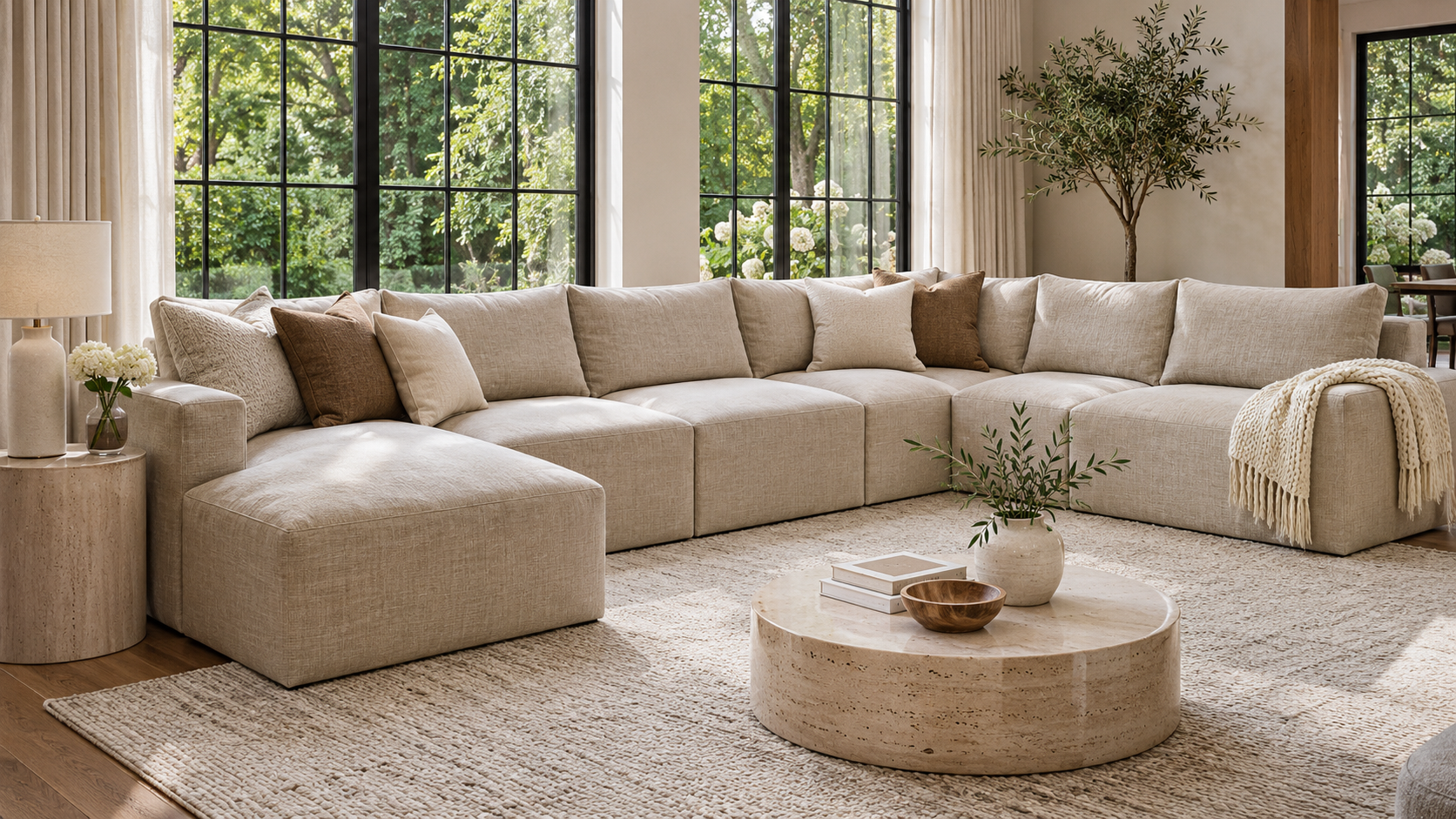
Quick picks by what “custom” means
- Best for adjustable size and upholstery: BenchMade Modern offers custom sizes and fabric choices on selected sectional models; check the exact model’s size steps and lead time.
- Best for designing a complete layout in a branded line: Room & Board’s custom sectional planner lets shoppers select pieces and fabrics on eligible styles.
- Best for sofa configuration and upholstery options: Kincaid’s Design Your Own programs list different scale platforms, widths, depths, arm/base options, and cushion choices.
- Best for choosing a retail collection and fabric: Crate & Barrel offers sectional configurations and upholstery variants, but do not assume the width itself can be custom-sized.
- Best lower-cost alternative if rearrangeable modules are enough: compare a standard modular sectional, while recognizing that modular does not necessarily mean made to measure.
These are shopping categories based on current manufacturer descriptions, not in-person testing or a claim that one maker is best for every buyer. Verify the current model’s customization limits before paying.
What counts as a custom-made sectional?
A sofa can be “custom” because you select fabric, color, cushion fill, leg finish, orientation, or modules, even if its dimensions are fixed. Made-to-order usually means the maker builds the selected combination after you place the order; it does not always mean you can specify any width. Modular means individual components can be rearranged or combined. A custom-sized sectional gives you more direct control over dimensions, often within a defined range or increment. Fully bespoke work may allow a unique length, angle, arm, or seat depth, but can require a designer, upholsterer, and clear drawings. Ask exactly which dimensions can change: total width, each side, seat depth, overall depth, height, and chaise length. A brand page showing many configurations can still use standard modules. Determine the level of customization before comparing products or calling a piece “made to measure.”
1. BenchMade Modern: choose a style, size, configuration, and fabric
BenchMade Modern describes a process where shoppers choose a style and configuration, then select fabric and custom dimensions. Its company information says selected sofas are made to order and that sizing can be adjusted in defined increments. This makes it a strong lead if an exact room measurement is the main reason to customize. The collection includes different silhouettes, from more tailored profiles to deep lounge designs, so compare the model’s seat depth, cushion construction, arm design, and compatible modules rather than treating customization as a comfort feature. Request swatches and use any available design consultation before committing. Measure with a floor template and confirm the manufacturer’s tolerance, delivery access, and current production time. The brand’s factory and shipping process can change, so read the latest FAQ and order terms. A custom dimension can fit a room better, but it also makes returns and resale less straightforward; make sure the scale is right before the order enters production.
2. Room & Board: build a layout from eligible sectional pieces
Room & Board’s custom sectional pages present model-specific layouts and fabric choices. Metro, for example, is described as offering a design-any-layout approach and selectable fabrics, while other lines differ in cushion feel and frame. The distinction is important: a custom planner can help you create a precise arrangement from available pieces without making every piece a unique custom width. Check the available armless seats, corner pieces, chaises, bumpers, and connectors for the exact collection. Room & Board also identifies product origin and construction details on many model pages; compare those specifics rather than assuming all collections share a frame or cushion. When you configure a shape, record the complete overall dimensions and export or save the design if the planner allows it. Verify the return terms, fabric swatch options, delivery service, and whether the layout’s components can be carried through your entry path.
3. Kincaid: select a scale platform and personalize the upholstery
Kincaid’s Design Your Own upholstery program lists Custom Select, Studio Select, and Comfort Select as different scale and comfort platforms. The current manufacturer page describes Custom Select widths around 83–102 inches, Studio Select as a smaller platform with widths around 75–85 inches, and Comfort Select at around 88–108 inches with a deeper, lounge-oriented seat. The page also lists arm, base or leg, and back-cushion choices for the programs. These ranges are not a promise that every size is available for every sofa, fabric, or sectional. Confirm the model and exact configuration with an authorized dealer. Kincaid’s official sofa catalog shows which specific models are available as sectionals and provides dimensions. The brand’s cushion options can affect the feel and appearance; if that is important, compare the available fills at the same time as the frame and size. Ask for a written order specifying style, fabric, depth, arm, cushion, and sectional pieces.
4. Crate & Barrel: compare configurable collections, not custom widths by default
Crate & Barrel offers a range of sofa and sectional collections with selected fabric and configuration choices. Axis and Lounge, for instance, appear in multiple sofa and sectional forms; the specific available pieces vary by collection. This can be useful when you want a particular style in a different layout, but it should not be mistaken for custom-cut dimensions. Check the exact sectional designer, the full list of components, and whether the configuration allows a left- or right-facing chaise. Verify whether the fabric choice is made to order and what that means for timing, cancellation, and returns. If you need a sectional to fit an unusual niche, measure first and ask customer service whether a standard configuration actually satisfies your dimensions. A well-chosen standard module may solve the problem without custom construction, but avoid ordering a close fit that blocks a door or leaves no path to a window.
5. When to choose a modular sectional instead
A modular sofa is a good alternative when your goal is flexibility rather than exact made-to-measure size. Separate pieces may let you create an L-shape today, split the modules into a sofa and chair later, or reconfigure a guest area after moving. The trade-off is that the modules have fixed dimensions and the exact upholstery choices may be narrower than a custom program. Check whether the seats connect securely, whether arms can be moved, and which pieces are compatible. A modular sofa may not stay aligned on a slick floor without connector hardware or non-slip pads. Confirm whether the listed price includes all pieces pictured or only a starter set. Before choosing this route, draw the planned shapes and verify each option’s total footprint. The Amazon examples below illustrate adjustable or modular layouts; they are not made-to-measure sofas and may offer fewer customization choices than a design-your-own retailer.
Choose custom dimensions only when the room calls for them
A custom width can solve a genuine constraint, such as a narrow wall between built-ins or an awkward bay window. It can also be an unnecessary complication if a standard-size sofa fits. Before paying for a custom dimension, mark the proposed sofa footprint with painter’s tape and use cardboard or paper templates for unusually deep chaises. Include the coffee table, side tables, walking paths, door swings, and space to reach windows. Check whether the custom size changes seat proportions or only the overall frame width. A longer sofa may add seats, but it may also add a longer cushion, different support, or wider arms; ask for a dimension drawing. Consider future room changes and resale. A nonstandard size may be harder to sell or move into another home. Measure delivery routes too: custom sizing does not necessarily mean the piece arrives in smaller boxes.
Select the sectional shape and orientation
Start with the room’s traffic pattern and primary viewing direction. An L-shaped sectional can define a corner, while a U-shaped layout creates a conversation area but occupies more floor space. A chaise adds a longer lounge position and commits the layout to a side unless the model is reversible. A bumper sectional may use a lower ottoman-like end piece rather than a full second arm. Write down “left arm facing” or “right arm facing” from the perspective of someone looking at the sofa, and confirm how the manufacturer defines orientation. Do not rely on a photo; images can be mirrored. Ask whether pieces can be reconfigured after delivery and whether matching modules can be ordered later. If the sectional floats in a room, consider the back appearance and outlet locations. A custom design should have a clear drawing showing the shape, dimensions, arm positions, and upholstery before order approval.
Comfort customization: seat depth, height, and cushion fill
A custom sectional can still be uncomfortable if the proportions are wrong. Compare seat height and depth to a sofa or chair you already like. A deep seat can be relaxing for taller users or lounging but can make upright posture difficult for shorter users. A higher seat may be easier to rise from, but that depends on cushion compression and leg length. Cushion fill also changes maintenance: foam and fiber constructions may keep a more tailored outline; down or feather blends can have a softer, more relaxed feel and often require fluffing. Ask whether the selected model allows you to customize cushion fill or only the upholstery and layout. Sit on the closest showroom version, and be precise about which sample you tested. Request written specifications that state the cushion package, back style, and seat construction, since broad model names can have multiple variants.
Fabric swatches and performance needs
Swatches help you compare color and texture in the actual room. Request several options and look at them in daylight and evening lighting beside flooring, paint, rugs, and wood finishes. Performance fabric can be useful in a high-use room, but product labels differ: check what stain resistance, abrasion ratings, fading, and cleaning instructions the maker actually states. If you have pets, consider claw snags and shedding, not only stain claims. For a sunny room, ask about colorfastness and placement guidance. For leather, compare finish and natural variation. A made-to-order textile can be final sale or have a longer lead time; read the current terms before choosing a non-stock color. Save the swatch name, code, and date with the order confirmation in case you need a replacement piece or a future matching ottoman.
Budget, delivery, warranty, and lead time
The initial price may not include all sectional components, delivery, assembly, fabric upgrades, or a special-size surcharge. Ask for a quote that lists each module and the total delivered amount. Custom furniture often requires a production interval, and the production estimate may exclude shipping and delivery scheduling. Verify the current timeline rather than relying on a past review. Ask what happens if the order is delayed or arrives damaged, and how long you have to report a problem. Read warranty terms for the frame, suspension, cushions, upholstery, and mechanisms separately. A warranty may distinguish defects from normal softening or wear. If the design is custom or made to order, check cancellation and return rules before submission. Do not assume that because a manufacturer offers swatches or design help, a custom configuration is returnable. Keep a copy of the finalized drawing and invoice.
Questions to ask before approving the design
Request a complete dimensioned drawing of the sectional, including overall width on both sides, depth, height, seat depth, seat height, arm width, and chaise length. Ask which dimensions are custom and which are fixed modules. Confirm the orientation and identify the pieces by name. Ask what connector hardware is included, how pieces are joined, and whether the layout can be rearranged. Verify the fabric name, color code, cushion package, leg finish, and back style. Ask whether the quoted lead time includes delivery, what access conditions could prevent installation, and whether packaging removal is included. Confirm if the sofa can be modified after production begins and what the remedy is for measurement discrepancies. If you have an unusual room, send a measured floor plan and doorway photos to the retailer. Do not approve a rendering alone; the final written specification should match the configuration you want.
Common mistakes when buying a custom sectional
Buyers often confuse choosing a fabric with choosing a custom size. They may also approve a layout without understanding the orientation, forget to include a wall vent or door swing, or treat a modular sectional as if any extra module will fit later. Another mistake is relying on the sofa’s total width while ignoring chaise depth and walking clearance. A custom piece can look beautiful on screen but feel wrong if seat height or cushion fill is not tested. People sometimes order a fabric from a tiny online swatch image without seeing a physical sample. Others focus on a sale price before confirming the complete module list and delivery costs. Finally, custom does not always mean fully bespoke: read the size increments and fixed options. The retailer should explain the limits clearly, and you should keep a copy of that explanation with the final design.
A practical custom sectional decision path
First, decide whether you need custom size, custom fabric, or simply a different arrangement of modules. If a standard sofa can fit with clear circulation, compare standard models before paying for extra customization. If you need a specific width, look for a maker that lets you set dimensions and publishes its tolerances. If only the sectional shape is unusual, a piece-based design tool may be enough. If upholstery is the main issue, request swatches and compare fabric performance. Then test seat depth and cushion feel, approve a dimension drawing, verify all delivery routes, and review the warranty and return terms. For shoppers who only want flexibility at a lower price, a modular sectional can be a reasonable compromise, provided fixed dimensions work for the room. This decision path helps prevent paying for a custom feature that does not solve the actual problem.
Modular alternative: Living&Giving 128-inch Customizable U-Shaped Modular Sectional

The Amazon Creators API listing describes a 128-inch U-shaped modular sofa with reversible chaise modules and three ottomans. It is a preconfigured marketplace modular product, not a bespoke sectional made to an exact room measurement. It may be a practical comparison if reconfigurable pieces matter more than made-to-measure sizing. Confirm the actual assembled dimensions, included modules, upholstery, packaging, assembly, and current seller details.
View the current Living&Giving 128-inch Customizable U-Shaped Modular Sectional listing on Amazon.
Modular alternative: HONBAY Modular U-Shaped Sectional with Storage

This listing describes a modular U-shaped sectional with storage. Treat the listed layout as a configurable product arrangement, not an invitation to order custom dimensions. Verify the exact module count, seat width, overall footprint, connector hardware, package sizes, and storage location. A modular design can adjust to a room by rearranging pieces, but it may not provide fabric or frame customization.
View the current HONBAY Modular U-Shaped Sectional with Storage listing on Amazon.
Modular alternative: Cloud Couch 160-inch Down-Filled Modular Sectional with Ottoman

The catalog title describes a large 160-inch U-shaped modular sectional with an ottoman and washable, replaceable covers. It is a very large, preconfigured marketplace example; it is not made to a custom room size. Check the precise layout, box dimensions, cover material and care, return window, and whether the delivered modules fit your entry path before purchase.
View the current Cloud Couch 160-inch Down-Filled Modular Sectional with Ottoman listing on Amazon.
Frequently asked questions
What is the difference between custom and modular sofas?
Custom can mean made-to-order fabrics or dimensions. Modular means fixed modules can be rearranged. A modular sofa may not have custom sizes, and a made-to-order sofa may have a fixed layout.
Are custom sectional sofas worth it?
They may be worth the premium when a room has unusual dimensions or you need a specific fabric or configuration. If a standard footprint works, customization may add cost and lead time without solving a real problem.
Can I choose the exact width of a custom sectional?
Some brands allow dimension changes in defined increments; others offer standard modules and fabric selections only. Confirm the exact model’s size range and tolerance in writing.
Can I return a custom-made sofa?
Policies depend on the retailer, configuration, and fabric. Read cancellation and return terms before placing the order, especially for special-order or custom-size furniture.
How should I measure for a custom sectional?
Measure both wall spans, total depth, circulation routes, doors, windows, vents, and the delivery path. Tape the complete footprint and include chaise extension and side tables.
Is the Amazon modular sofa customizable?
Some listings offer rearrangeable modules or reversible chaise pieces, but that is not the same as custom sizing or custom upholstery. Confirm included pieces and exact dimensions on the listing.
What upholstery is best for a family sectional?
Choose based on the maker’s care details, household use, pets, sunlight, and cleaning routine. “Performance” is not a universal guarantee; check the exact fabric specifications and warranty.
Final recommendation
If exact sizing is the primary need, start with a maker that publishes custom dimensions and request a drawing before ordering. BenchMade Modern and Room & Board provide current examples of custom-size or design-your-layout programs; Kincaid offers selectable scale platforms and upholstery choices, while Crate & Barrel has configurable collections. Verify the exact model because customization varies. If the room only needs a flexible shape, a modular sectional may be simpler and less costly, but it will have fixed dimensions. Measure twice, test seat comfort, compare swatches in your lighting, and get delivery and return terms in writing.
Explore our Home & DIY section for more sofa and room-planning guides.
Certain product titles, images, specifications, availability, and offers supplied through Amazon Creators API may change. Amazon alternatives are modular products and not custom made-to-measure sectionals. Confirm size, layout, included pieces, seller, and terms before buying.