Where to buy
Check the latest price, availability and delivery on Amazon. Orders are placed on Amazon. We may earn a commission from qualifying purchases.
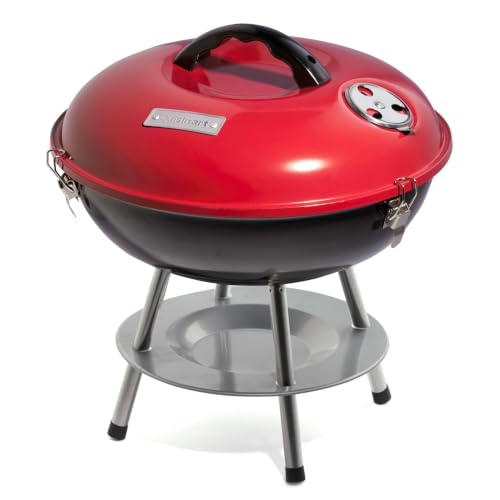
- Best for most apartment dwellers — where charcoal is allowed: Cuisinart 14-Inch Portable Charcoal Grill (CCG-190RB, Red) — Check on Amazon
- Best durable pick for a permitted patio: Weber Smokey Joe 14-Inch Portable Charcoal Grill — Check on Amazon
- Best for occasional, storage-first grilling: Gas One CG-14 14-Inch Portable Charcoal Grill — Check on Amazon
- Best refined kettle, if you find it in-tier: Weber Smokey Joe Premium 14-Inch Portable Charcoal Grill (prose-only pick — see review below for why)
- Best if your complex allows it and you host: Weber Jumbo Joe 18-Inch Charcoal Grill (prose-only pick — see review below for why)
- Only for ground-floor yards, not balconies: Char-Griller Portable Charcoal Grill and Side Fire Box (E82424) (prose-only pick — see review below for why)
Read the full guide ↓
Disclosure: As an Amazon Associate, dailyhomedecorating.com earns from qualifying purchases. Links to Amazon on this page are affiliate links; they cost you nothing extra. Listing details such as price and availability change often, so check the current Amazon listing before you buy. Picks marked prose-only are recommended on merit but carry no purchase link, because we could not verify a live in-budget offer for that exact model when this guide was written.
Shopping for the best charcoal grill for apartments under $75 has to start with the sentence most guides bury: in a great many apartment buildings, a charcoal grill on the balcony is simply not allowed — by the lease, by the building’s insurance, by local fire code, or by all three. Open-flame and charcoal devices are commonly prohibited on balconies of multi-family buildings and within a set distance of the structure, and charcoal is usually the first fuel banned because it produces embers, ash and long cooling times that gas does not. So this guide does two jobs. First, it tells you how to check whether charcoal grilling is permitted where you live, because no grill is worth an eviction notice or a fire. Second, for the many renters who do have a permitted space — a ground-floor patio, a townhouse yard, a complex with a shared grilling area, a duplex with a landlord’s written blessing — it ranks the small charcoal grills that genuinely fit apartment life: compact, light, sealed for storage, and easy on the neighbors.
Start with the check, before any product. Read your lease for the words grill, barbecue, balcony and open flame. Then ask your property manager directly, and get a yes in writing — an email counts. If the answer covers only the shared grilling area, that is still a yes worth having, and it changes what you should buy: a grill you carry downstairs wants a locking lid and a light body above every other feature. If the answer is no for charcoal but yes for electric, respect it and shop electric instead; if the answer is no entirely, a portable grill for parks and campsites may still make sense, stored cold and clean, and used away from home. What never makes sense is grilling charcoal on a prohibited balcony anyway. Balcony fires from grills are a recurring, well-documented cause of apartment building fires, the liability lands on the tenant, and a lease violation can follow you to your next rental application.
Assuming you have a permitted space, apartment fit comes down to four things. Footprint: every grill here is a 14-inch tabletop or a short-leg kettle that works on a sturdy stand, because floor space is the scarcest resource you own. Storage: the grill will live in a closet, on a shelf or in a storage unit, so a lid that locks shut — sealing ash inside — is not a luxury, it is the feature that makes indoor storage clean. Smoke manners: small grills burn small fires, which is a genuine virtue near neighbors’ windows, and every pick here can run a modest two-to-four-person fire instead of a chimney’s worth of excess charcoal. Weight: you will move this grill more often than a homeowner moves theirs, so pounds matter. The ranking below follows those priorities, which is why the lightest full-featured grill leads it.
The short version: where charcoal is permitted, most apartment dwellers should start with the Cuisinart CCG-190 — dual vents, a locking lid, an ash catcher and a body light enough to shelve — check price on Amazon. If your permitted space is a real patio and the grill will live outdoors, the Weber Smokey Joe’s enamel is the durability upgrade. And if your lease says no, believe it, and let this guide’s safety section save you money instead of spending it.
In this guide
Quick Picks
Short on time, or comparing several options at once? Each row below names a buyer type and the product that suits it.
| Buyer type | Pick | Why it stands out | Link |
|---|---|---|---|
| Best for most apartment dwellers — where charcoal is allowed | Cuisinart 14-Inch Portable Charcoal Grill (CCG-190RB, Red) | Lightest full-featured option: dual vents, locking lid, ash catcher — easy to store indoors; check price on Amazon | Check on Amazon |
| Best durable pick for a permitted patio | Weber Smokey Joe 14-Inch Portable Charcoal Grill | Enamel durability for a grill that lives on a permitted patio; check price on Amazon | Check on Amazon |
| Best for occasional, storage-first grilling | Gas One CG-14 14-Inch Portable Charcoal Grill | Cheapest and most closet-friendly way in — for the few cooks a year an apartment allows; check price on Amazon | Check on Amazon |
| Best refined kettle, if you find it in-tier | Weber Smokey Joe Premium 14-Inch Portable Charcoal Grill | Smokey Joe quality with a tidier ash pan — availability permitting | Prose-only — see review |
| Best if your complex allows it and you host | Weber Jumbo Joe 18-Inch Charcoal Grill | 240 sq in for permitted ground-floor patios where you actually host | Prose-only — see review |
| Only for ground-floor yards, not balconies | Char-Griller Portable Charcoal Grill and Side Fire Box (E82424) | A backyard fixture — included to be ruled out honestly for most apartments | Prose-only — see review |
How we chose the best charcoal grill for apartments under $75 picks
The filters from our general under-$75 research applied — verified models, verified in-tier offers for linked picks, genuine two-vent fire control, no recalled products — with three apartment-specific additions. First, every pick had to store indoors gracefully: a locking or securable lid, a footprint that fits a closet shelf or storage bin, and a weight one person can carry comfortably. Second, every pick had to run a small, controllable fire, because smoke discipline near neighbors is part of apartment grilling whether we print it or not. Third, we weighted ash containment heavily: a grill whose ash travels sealed inside it is a grill a landlord’s rules and a renter’s closet can both live with.
Two familiar names appear prose-only. The Weber Jumbo Joe and the Char-Griller barrel are fine grills that are wrong for most apartments — one is a stretch in price and size, the other is a 37-pound fixture — and they are included so you can see them ruled in or out honestly rather than discover the mismatch after delivery. The Smokey Joe Premium is prose-only for the availability reason stated in its review.
Before you buy: the apartment charcoal checklist
1. Lease first. Search your lease for grill, barbecue, balcony, patio and open flame clauses. Many leases ban charcoal specifically while permitting electric, and some ban all grills on balconies while allowing them in yards or shared areas.
2. Ask, in writing. Email your property manager: is a small charcoal grill permitted, and where — balcony, patio, yard, shared grilling area? Keep the reply. Verbal permission from a leasing agent who later leaves is worth little.
3. Know the local pattern. Many fire codes prohibit open-flame cooking devices on balconies of multi-unit buildings and within about ten feet of combustible structures, with exceptions for some single-family and townhouse situations. Your building’s rules can be stricter than the code, and the stricter rule is the one that governs you.
4. Plan the cold routine. Charcoal ash holds heat for many hours. The grill cools where it cooked — outside, in the permitted spot — until it is completely cold, ash goes into a metal container, and only then does the grill come inside to its shelf. If your space cannot accommodate that routine, it cannot accommodate charcoal.
5. Think about smoke. Grilling under a neighbor’s open window, on a still evening, is legal in many places and inconsiderate in all of them. Small fires, a lidded grill and sensible timing keep the peace that keeps permissions intact.
Detailed reviews
Cuisinart 14-Inch Portable Charcoal Grill (CCG-190RB, Red) — Best for most apartment dwellers
Key specs: 14-inch tabletop grill · chrome-plated cooking grate · dual vent system · three lid locks · fire bowl with ash catcher · very light, only a few pounds.
Who it suits: you have a permitted patio, yard corner or shared grilling area, a closet shelf for storage, and a headcount of two to four.
The Cuisinart CCG-190 is the value play of this tier, and it knows it. Where the Weber spends your money on enamel and longevity, the Cuisinart spends it on convenience per dollar: a 14-inch chrome-plated grate, a dual-vent system with an intake below the fire and an exhaust in the lid, three latches that lock the lid down for one-handed carrying, and a small ash catcher hanging under the fire bowl. Cuisinart rates the grate generously — treat the usable cooking space as roughly the same class as other 14-inch grills — and the whole unit weighs only a few pounds, which makes it the easiest grill here to grab from a closet shelf with one hand while carrying a tray of food with the other.
In use, the dual vents are the feature that punches above the price. Many ultra-budget grills give you a lid vent and nothing else, which means the fire gets air whether you want it to or not. Here you can choke the intake to calm a flare-up or open both ends to get a small fire properly hot for searing. The locking lid matters more than it sounds: it turns the grill into a sealed metal container for transport, so yesterday’s ash stays inside the grill instead of dusting the inside of your car or storage bin.
The honest limitation is material thickness. The steel is thin, the finish is not porcelain enamel, and this is not a buy-it-for-a-decade grill — expect the fire bowl to show its age first, especially if it lives outdoors uncovered. The grate is chrome-plated rather than heavier plated steel, so aggressive wire-brush scrubbing will wear it. Buy it as a light, cheap, genuinely functional grill for a few seasons of regular use, store it dry, and it is excellent value. Buy it expecting Weber longevity and you will be disappointed.
Pros
- Dual vents give real fire control at a budget price
- Three lid locks seal the grill shut for clean, one-handed transport
- Featherweight — the easiest pick here to store on a shelf or in a closet
- Ash catcher under the fire bowl keeps small messes contained
Honest limitation: Thin steel and non-enamel finish — a few-seasons grill, not a decade grill.
Choose it if storage and carrying matter as much as cooking — the locking lid, ash catcher and featherweight body are built for exactly your routine. Skip it if your only space is a prohibited balcony. No grill in this guide changes that answer; see the checklist above.
Check on Amazon — check price on Amazon for the current listing, colors and delivery options.
Weber Smokey Joe 14-Inch Portable Charcoal Grill — Best durable pick for a permitted patio
Key specs: 14-inch kettle · 147 sq in cooking area · porcelain-enameled steel bowl and lid · plated-steel cooking grate · aluminum dampers · Tuck-N-Carry lid lock on current production.
Who it suits: your permitted space lets the grill live outdoors on a stand — a ground-floor patio or townhouse yard — and you want enamel that shrugs off weather between cooks.
The Smokey Joe is the grill that defines this entire price tier, and it earns that position the honest way: it is a real Weber kettle, shrunk rather than cheapened. The bowl and lid are porcelain-enameled steel, the same rust-resistant finish Weber puts on its full-size kettles, and that single fact separates it from nearly everything else under $75. Painted budget grills start flaking and rusting at the fire line within a season or two; porcelain enamel is baked on and shrugs off the heat cycling that kills thin finishes. The cooking grate is plated steel over a 14-inch fire bowl, giving 147 square inches of cooking area — enough for a half-dozen burgers at once, a spatchcocked chicken if you bank the coals to one side, or a couple of steaks with room to move them off direct heat.
Heat control comes from aluminum dampers in the lid and bowl, and this is where kettle geometry matters. Because the bowl is deep and round, a small charcoal fire sits at a sensible distance below the food, and closing the vents genuinely slows the fire down instead of just trapping smoke. Owners who learn the two basic vent positions — wide open for searing, half closed for gentler cooking — can cook far more than burgers on it. Current production adds the Tuck-N-Carry lid lock, which clips the lid down for carrying and doubles as a lid holder while you cook, solving the oldest small-grill annoyance: where to put a hot lid when your hands are full of tongs and a plate.
The honest limitation is capacity and ash. One hundred forty-seven square inches is a hard ceiling — this is a grill for one to four people, not a crowd — and there is no enclosed ash catcher, so ash management means letting the bowl cool and tipping it into a metal container. The legs are short, so it wants a sturdy table, a tailgate or a heat-safe stand rather than the ground. None of that is a flaw at this price; it is the trade you make for genuine enamel and Weber parts support, including replacement grates that are still easy to find years later.
Pros
- Porcelain-enameled bowl and lid resist rust far better than painted budget steel
- Real kettle vent control — dampers genuinely change fire behavior
- Tuck-N-Carry lid lock makes it easy to carry and holds the lid while cooking
- Replacement grates and parts are widely available
Honest limitation: 147 sq in caps you at roughly six burgers — no room for a crowd.
Choose it if the grill will live outside and you want the finish that lasts, with Weber parts support behind it. Skip it if you must carry the grill downstairs to a shared area every time — the Cuisinart’s lighter, sealed format travels better.
Check on Amazon — check price on Amazon for the current listing, colors and delivery options.
Gas One CG-14 14-Inch Portable Charcoal Grill — Best for occasional, storage-first grilling
Key specs: 14-inch portable grill · 3-point locking lid · dual venting system · compact folding-leg tabletop format.
Who it suits: you grill a handful of times a season — park trips, a permitted shared area, a friend’s yard — and the grill spends its life in a closet.
The Gas One CG-14 is the cheapest route into real charcoal cooking in this guide, and it is a better grill than its bargain positioning suggests. The design copies the proven 14-inch locking-lid formula: a round fire bowl, a lid that clamps down at three points so the whole unit carries like a bucket, and a dual venting system with airflow control at the bowl and the lid. That vent pairing is the detail to care about, because it is what separates a grill you can actually cook on from a metal bowl that simply burns charcoal under food. With the intake partly closed, a small fire settles down for sausages and chicken pieces; opened up, it sears burgers and hot dogs exactly the way a tailgate grill should.
Size is the whole story here, in both directions. Fourteen inches of grate is dinner for two to four people cooked in a single batch, or a larger group’s food cooked in honest relays — burgers first, then dogs, then corn while people eat the first round. The grill’s small footprint and folding format mean it stores in a car trunk corner, a camper cabinet or the bottom of a hall closet, and it sets up in minutes with no tools worth mentioning. For a first charcoal grill, a camping grill, or a spare grill kept for park cookouts where a lost or damaged unit would not sting, that combination is hard to argue with.
The honest limitation is build weight. At this end of the market the steel is thin, the grate is light, and nothing about the CG-14 pretends to be a ten-year appliance. Treat it roughly, leave it out in the rain, and it will rust on a budget timeline. Treat it as what it is — an inexpensive, functional, genuinely portable charcoal grill — keep it dry between uses, and it returns far more cooking than its price suggests.
Pros
- Lowest-cost way into real charcoal grilling in this guide
- 3-point locking lid keeps ash sealed inside during transport
- Dual venting allows basic but genuine temperature control
- Packs small enough for a trunk corner, camper or closet
Honest limitation: Thin, light steel throughout — durability is budget-grade, store it dry.
Choose it if the budget and the storage space are both tight, and occasional use does not justify more grill. Skip it if you grill weekly; thin steel on a weekly schedule ages fast, and the Cuisinart or Weber will serve you better.
Check on Amazon — check price on Amazon for the current listing, colors and delivery options.
Weber Smokey Joe Premium 14-Inch Portable Charcoal Grill — Best refined kettle, if you find it in-tier
Key specs: 14-inch kettle · 147 sq in cooking area · porcelain-enameled bowl and lid · lid lock and lid holder · ash catcher pan.
Who it suits: you want the Smokey Joe formula with a tidier ash pan for a permitted patio, and you find it stocked at a fair price.
The Smokey Joe Premium takes the standard Smokey Joe’s proven 14-inch porcelain-enameled kettle and fixes its two most-mentioned annoyances. The lid gains a proper lock that also parks the lid on the side of the bowl while you cook, and the vent arrangement moves to the sides of the lid with a shallow ash catcher pan beneath the bowl, so ash disposal is a lift-out pan rather than a tip-the-whole-grill exercise. The cooking fundamentals are identical — 147 square inches, the same deep kettle bowl, the same excellent parts support — which is precisely the point: this is the refined version of the tier’s benchmark grill.
Why is it prose-only in this guide? Because at the time of writing we could verify the model and its specifications, but we could not verify a live Amazon offer for this exact listing at or under the $75 tier line, and this guide does not attach purchase links it cannot stand behind. It is included because shoppers comparing 14-inch kettles will run into it, and the honest advice is simple: if you find it in stock from a reputable seller within this budget, it is arguably the nicest 14-inch kettle Weber makes; if the only offers are marked up well past the standard Smokey Joe, the standard model is the smarter buy and gives up very little.
The honest limitation, beyond availability, is the same capacity ceiling as every 14-inch grill here — this is a one-to-four-person cooker — and the side-vent layout is a matter of taste: some longtime kettle users prefer the standard model’s bowl damper for fine fire control. Neither point diminishes it; both are worth knowing before you pay a premium for the Premium.
Pros
- All the standard Smokey Joe’s enamel durability, with a better lid system
- Ash catcher pan makes cleanup tidier than the base model
- Same 147 sq in kettle cooking performance and Weber parts support
Honest limitation: No verified in-tier Amazon offer at time of writing — availability is the catch.
Choose it if you catch it in-tier from a reputable seller — the ash system suits apartment cleanup routines well. Skip it if you have to pay a steep markup for it; the standard Smokey Joe plus a metal ash can does the same job for less.
Prose-only pick: no purchase link — see the review above and the sources note for this guide for the verification reason.
Weber Jumbo Joe 18-Inch Charcoal Grill — Best if your complex allows it and you host
Key specs: 18-inch portable kettle · 240 sq in cooking area · porcelain-enameled bowl and lid · Tuck-N-Carry lid lock · about 18 lb.
Who it suits: you have a permitted ground-floor patio or townhouse yard and actually host four to six people — the one apartment situation where 18 inches earns its space.
The Jumbo Joe is the grill most people actually want when they shop this tier — an 18-inch Weber kettle with 240 square inches of cooking area, the same porcelain-enameled construction as the Smokey Joe, and a Tuck-N-Carry lid lock that keeps it genuinely portable at about 18 pounds. That extra four inches of grate diameter is transformative in practice: 240 square inches holds around ten burgers, gives you a real two-zone fire with a hot side and a safe side, and makes indirect cooking — a beer-can-style chicken, a rack of ribs curled to fit, a tray of peppers beside the steaks — realistically possible instead of theoretical.
So why is it prose-only here? Honesty about the tier. The Jumbo Joe’s normal selling price sits above the $75 line this guide is built around — it is a step-up purchase, not an under-$75 purchase, and printing a check-price link under an under-$75 headline would mislead you. It earns its place in this guide as the documented stretch option: the grill to buy if you read the 14-inch reviews, recognize the capacity ceiling will frustrate you within a month, and can flex the budget once rather than buying twice. Weber’s warranty support on the bowl and lid and the easy availability of the 18-inch grate size reinforce that logic.
The honest limitation is the format: like the Smokey Joe, it is a short-leg tabletop kettle, so it needs a sturdy stand, table or heat-safe surface at a comfortable height, and 18 pounds plus a load of ash is a two-hand carry. It is portable in the car-and-go sense, not the hike-it-in sense. Within those bounds, it is the best charcoal cooking experience anywhere near this budget.
Pros
- 240 sq in — real two-zone fires and indirect cooking become possible
- Same porcelain-enamel durability and Weber support as the Smokey Joe
- Still genuinely portable at about 18 lb with a locking lid
Honest limitation: Normally sells above this $75 tier — a deliberate stretch, not a budget pick.
Choose it if hosting is your real use case and the budget can stretch past the tier once. Skip it if you have a balcony, a closet and a dream. This grill needs a yard-scale permission and a table to sit on.
Prose-only pick: no purchase link — see the review above and the sources note for this guide for the verification reason.
Char-Griller Portable Charcoal Grill and Side Fire Box (E82424) — Only for ground-floor yards, not balconies
Key specs: Tabletop barrel grill · about 250 sq in cooking area · cast-iron cooking grates · heavy steel body, roughly 37 lb and up · doubles as an offset side fire box.
Who it suits: you rent a house or ground-floor unit with a real yard and want barrel capacity — the only rental scenario this heavyweight fits.
The Char-Griller E82424 is the odd one out in this guide, and for some backyards it is the right one. Instead of a kettle, it is a small horizontal barrel grill with cast-iron cooking grates and roughly 250 square inches of cooking area — the largest grate in this lineup — built from noticeably heavier steel than the portable kettles. It also leads a double life: Char-Griller designed it to bolt onto the side of its barrel smokers as an offset fire box, so it can burn a fire that feeds smoke into a bigger cooker, or stand alone on a table as a grill in its own right.
That barrel shape changes the cooking. The long grate suits skewers, sausages, corn and anything else that cooks in rows, and the cast-iron grates hold serious heat for sear marks that thin wire grates cannot match. The weight — roughly 37 pounds before fuel — is the trade: this is a move-it-twice-a-year tabletop, not a carry-to-the-park grill. It lives on a sturdy outdoor table or stand in the backyard, and that is exactly the use case it suits.
Why prose-only? Two honest reasons. Its typical selling price sits above this $75 tier, and at the time of writing it was primarily sold direct and through home-center channels rather than a verifiable in-tier Amazon offer, so this guide will not attach a purchase link it cannot verify. The honest limitation matches: heavy, needs seasoning and oiling of the cast iron to prevent rust, and overkill for anyone who mainly wants a light grill to store in a closet. For a backyard cook who wants barrel capacity and cast iron near this budget, it is the connoisseur’s stretch pick.
Pros
- Largest cooking area here — about 250 sq in with cast-iron grates
- Heavy steel body holds heat better than thin portable kettles
- Doubles as an offset fire box for Char-Griller barrel smokers
Honest limitation: Roughly 37 lb — a backyard fixture, not a portable; typically priced above this tier.
Choose it if a landlord-approved yard is genuinely yours and the grill can live on a stand outdoors. Skip it if you live above the ground floor, or anywhere the grill must be carried or stored indoors. It is roughly 37 pounds of no.
Prose-only pick: no purchase link — see the review above and the sources note for this guide for the verification reason.
Comparison table
Side by side, with the apartment-specific facts — storage format and carry — up front.
| Pick | Format | Cooking area | Standout feature | Format notes | Best for | Link |
|---|---|---|---|---|---|---|
| Cuisinart 14-Inch Portable Charcoal Grill (CCG-190RB, Red) | 14 in | 14-inch class | Chrome-plated grate, dual vents | Tabletop, locking lid | Tightest budgets, storage-first buyers | Check on Amazon |
| Weber Smokey Joe 14-Inch Portable Charcoal Grill | 14 in | 147 sq in | Porcelain-enameled kettle | Tabletop / short legs | Couples, small households | Check on Amazon |
| Gas One CG-14 14-Inch Portable Charcoal Grill | 14 in | 14-inch class | Locking lid, dual vents | Tabletop, folding format | First grill, camping and park cookouts | Check on Amazon |
| Weber Smokey Joe Premium 14-Inch Portable Charcoal Grill | 14 in | 147 sq in | Porcelain-enameled kettle, ash pan | Tabletop / short legs | Weber fans who find it in stock in-tier | Prose-only |
| Weber Jumbo Joe 18-Inch Charcoal Grill | 18 in | 240 sq in | Porcelain-enameled kettle | Tabletop / short legs | Anyone who can stretch past the tier | Prose-only |
| Char-Griller Portable Charcoal Grill and Side Fire Box (E82424) | Barrel | About 250 sq in | Cast-iron grates, heavy steel | Backyard tabletop fixture | Backyard cooks wanting barrel capacity | Prose-only |
How to choose a charcoal grill for apartment life
Let the permission choose the category. Written permission for a private patio points to a kettle that can live outdoors. Permission limited to a shared grilling area points to the lightest locking-lid grill you can carry in one trip with your food. No permission points away from charcoal entirely — toward electric indoors, or toward a portable grill used at parks and campsites. Shopping in that order prevents the most expensive apartment mistake: a grill you are not allowed to light.
Prioritize the storage story. Measure the shelf or closet corner the grill will occupy, lid locked, stone cold. Fourteen-inch tabletops fit standard storage bins and closet shelves; kettles on stands do not store at all — they live where they cook. If the grill lives outdoors, enamel stops being a luxury and becomes the pick.
Keep the fire small on purpose. Apartment grilling rewards modest charcoal loads: less smoke, faster cooling, cheaper cooks. Every pick here is sized for that discipline. A half chimney is a full apartment dinner’s worth of fire for most meals, and it halves your ash and cooling time as well.
Build the ash routine before the first cook. You need a small metal container with a lid, kept outside or in the permitted area, and a house rule: ash waits a full day before it moves. That routine, plus a grill that locks its ash inside for the trip to the shelf, is the whole safety system — simple, boring, and exactly what landlords and fire codes want to hear.
For the rest of a small outdoor space, our Best Adirondack Chair For Apartments Under $75 and Best Deck Box For Apartments Under $75 guides cover seating and the storage that makes a small patio work, and the Best Grill Accessories For Apartments Under $75 guide covers the tools sized for small-space cooking.
Common apartment grilling mistakes
Assuming the balcony is fine. The costliest mistake is skipping the lease and the email. Buildings ban balcony charcoal for concrete reasons — embers, ash, smoke and structure fires — and “nobody complained yet” is not permission. Check first; it takes ten minutes.
Bringing the grill inside warm. A charcoal grill that is still cooling produces carbon monoxide and holds ember heat for hours. It cools outside, in the permitted spot, until it is cold to the touch all over. No exceptions for rain, lateness or small size.
Dumping ash too soon. Ash insulates embers so well that a load can stay live long after the cooking ends. Ash waits a full day, then goes into a metal container — never a plastic bin, never a cardboard box, never the dumpster directly.
Grilling under an overhang or awning. Even where patio grilling is permitted, a grill belongs in the open air, away from walls, railings, stored items and anything overhead. Heat and embers rise; give them nothing to meet.
Buying for the party. Apartment cooks host rarely and dine in twos and fours constantly. The 14-inch grill that fits the closet serves the real routine; the big grill that fits the fantasy serves the storage unit.
Final recommendation
If your lease and your landlord say yes — in writing — the Cuisinart CCG-190 is the apartment pick: light, sealed, vented and cheap enough that a future move or a rule change will not sting — check price on Amazon. If the grill will live on a permitted patio, step up to the Smokey Joe’s enamel. If the answer was no, the most valuable thing in this guide is the checklist, not a product: spend nothing, keep the deposit and the record clean, and take a portable grill to the park instead. Apartment grilling done right is a permission, a small fire, a cold grill and a shelf it fits on — get those four things in that order and the cooking is the easy part.
Setting up the space around the grill? See Best Fire Pit For Apartments Under $75 for what is and is not realistic for renters, and Best Outdoor Wall Light For Apartments Under $75 for lighting a small patio without wiring.
If charcoal is allowed: the apartment grilling routine that keeps it allowed
Permissions survive on behavior. Most apartment grilling arrangements end not with a rule change but with a complaint — smoke through a window, ash on a walkway, a grill left cooling in a shared path. The routine below is designed around that reality: it keeps the cooking good and the evidence invisible, which is what makes a property manager’s yes a durable yes.
Before the cook. Check the wind: a breeze carrying smoke toward open windows is a reason to shift the grill within your permitted spot or shift the timing by an hour. Set up the full station before lighting — grill on its stand, metal ash can in place, food tray, tongs, and a spray-free flare-up plan, which on a lidded grill means closing a vent, not reaching for water. Tell close neighbors if the relationship supports it; a heads-up converts smoke from an intrusion into a known, brief event, and an offered burger has ended more grilling disputes than any lease clause.
During the cook. Keep the fire modest — on a 14-inch grate, a half chimney is a full dinner — and keep the lid on as much as the food allows, because lid-on cooking is both better cooking and less smoke. Avoid the two great smoke generators: fatty food dripping onto a wide-open fire, and a fresh load of charcoal lighting mid-session. If a second load is needed, light it in the chimney beside the grill rather than piling raw coals onto the fire, where they smolder and smoke for ten minutes.
After the cook. Vents closed, lid on, grill left exactly where it stands until it is completely cold — overnight is normal and fine. The next day, ash goes into the lidded metal container, the grate gets its brush, and the cold, locked grill goes back to its shelf. Nothing about that sequence leaves a trace in a shared space, and that invisibility is the point: the best apartment grilling is the kind nobody else in the building ever has a reason to think about.
If you use a shared grilling area. Arrive with everything in one trip — the locking-lid picks in this guide exist for this walk — leave the area cleaner than you found it, and take your ash home in the sealed grill only when it is fully cold, or dispose of it in the area’s metal receptacle if one is provided. Shared amenities survive on users who treat them as borrowed, and complexes withdraw them over exactly the messes this routine avoids.
Frequently asked questions
Are charcoal grills allowed in apartments?
Often not on balconies. Many leases, building policies and local fire codes prohibit charcoal and other open-flame devices on balconies of multi-family buildings and near the structure, while permitting them in yards, ground-floor patios or shared grilling areas — or not at all. There is no universal answer, which is why this guide’s first step is your own lease and a written answer from your property manager.
What happens if I grill on my balcony anyway?
Realistically: a lease violation if discovered, potential fines under local code, liability for any damage, and — the reason the rules exist — a genuine fire risk to your home and your neighbors’. Ember and ash accidents are a recurring cause of apartment fires. It is not a risk category worth entering for a burger.
What is the best alternative if charcoal is banned in my building?
If electric grills are permitted, an electric grill on the balcony is the usual compliant route. If no balcony grilling is allowed, a small portable charcoal grill used at parks, campsites and friends’ yards still earns its keep — several picks in this guide are built for exactly that carry-and-cook pattern.
How do I store a charcoal grill in an apartment?
Stone cold, ash removed into a metal container, lid locked. Stored that way, a 14-inch grill fits a closet shelf, a storage bin or the top of a wardrobe. The locking lid is what makes it clean: ash and soot stay inside the grill, not on your shelves.
How long does charcoal ash stay hot?
Longer than you think — ash insulates embers, and a load of ash can hold live heat for many hours, sometimes into the next day. The safe routine is a full day of cooling in the grill, outdoors, before ash moves into a metal container.
Will a small charcoal grill bother my neighbors?
A small lidded grill burning a modest load of charcoal produces brief, manageable smoke — far less than a large kettle burning a full chimney. Timing helps: cook when windows are likelier closed, keep the lid on, and avoid marathon sessions under open windows. Consideration is what keeps informal permissions alive.


